
Tourism
Sheedi: The Afro-Pakistani Community That’s Kept its African Roots and Culture Alive


A growing conversation on African diaspora history has turned attention to the Sheedi community in Pakistan, an Afro-Pakistani population with deep ancestral links to East Africa and a centuries-old presence on the Indian subcontinent.
The renewed spotlight follows a widely shared social media post by cultural traveler Amina Mamaty, who documented her visit to the Sheedi community during a recent trip to Pakistan. In the video, Mamaty describes the encounter as one of the most meaningful experiences of her journey.
The video reveals how African-descended communities exist far beyond the region’s most commonly associated with Black history.
African Roots, Asian Homeland
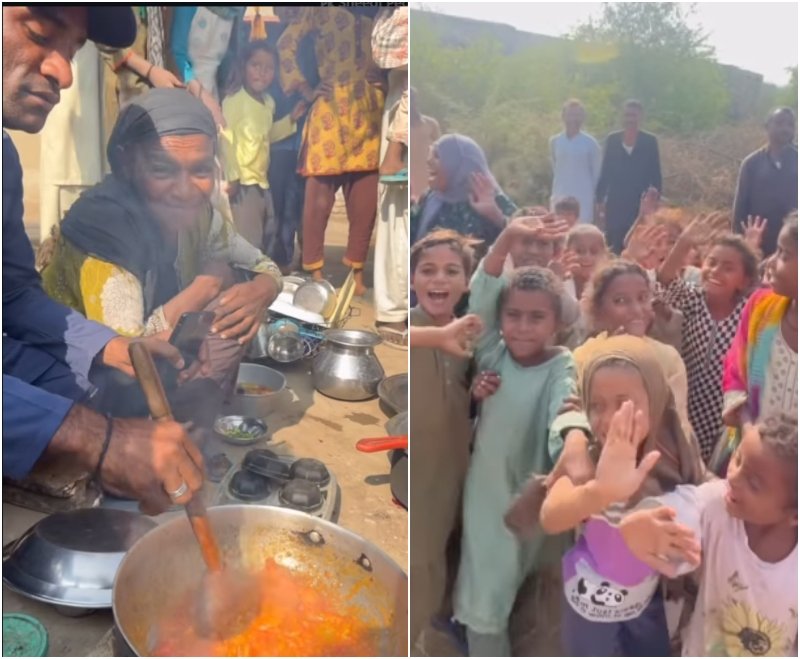
Historical accounts indicate that the Sheedi trace their ancestry to East Africa, particularly the Swahili Coast, encompassing parts of present-day Tanzania and neighboring countries.
Their arrival in South Asia dates back several centuries, linked to Indian Ocean trade routes, military service, and forced migration during the era of the transcontinental slave trade.
Today, the Sheedi are concentrated mainly in Sindh and Balochistan, where they are fully embedded in Pakistani society. They speak local languages, participate in regional traditions, and identify as Pakistani citizens, while retaining cultural elements connected to their African heritage.
Music and rhythm remain among the most visible expressions of that heritage. Drumming and dance, observers note, continue to play a central role in community celebrations, reflecting cultural continuities that have survived generations.
A Story That Resonates Across Continents
Mamaty’s reflections emphasised not only history but lived experience. She described a strong sense of communal warmth, joy, and openness, noting that the Sheedi welcomed her “like family.” Members of the community expressed hope that more people of African descent, particularly women, would visit and engage with their story.
For global audiences — including Africans and people of African descent in the diaspora — the Sheedi narrative challenges narrow ideas of where African identity exists. Scholars say it highlights the Indian Ocean dimension of the African diaspora, which is often overshadowed by transatlantic histories.
Relevance for Africa and the Diaspora
For African countries such as Ghana, which has positioned itself as a hub for diaspora reconnection through initiatives like the Year of Return, the Sheedi story reinforces the idea that African heritage is both global and interconnected. It also underscores the importance of recognising lesser-known diaspora communities whose histories complicate simplistic views of migration, identity, and belonging.
As interest continues to grow online, cultural historians suggest the Sheedi community’s visibility may encourage deeper academic research, cultural exchange, and tourism, while contributing to broader conversations about Africa’s global legacy.












There are some dishes that merely feed you, and then there is Tuo Zaafi—the Northern Ghanaian staple that practically hugs you from the inside.
Known affectionately as “TZ” or “Saakbo” among the Frafra, this soft, smooth dumpling of corn or millet flour has migrated from the rural compounds of the North to become a street food sensation in Accra’s bustling Nima and beyond. But to call it just “street food” misses the point entirely.
What makes TZ a must-taste isn’t merely its texture—that pillowy, less-sticky cousin of banku—but the ritual that surrounds it. The name itself tells a story: from the Hausa tuo (stirring) and zaafi (hot), a nod to the arm-work required to paddle this dough into submission.
Yet the real magic happens when it meets its soulmate: a slimy, aromatic ayoyo soup,stained green with jute leaves and turbocharged with dawadawa, that fermented locust bean that tastes as umami exploded.
@chefabbys Final Episode of my Outdoor Ghana Staple Food Series and on todays menu is TUOZAFI with Ayoyo Soup and Stew! This is so delicious. With the training I got from my Hajia friend , I'm glad I made this. #foryou #fyp #foryoupage #viral ♬ OZEBA – Rema
Here’s the thing nutritionists won’t stop whispering about: TZ is secretly a superhero. That slippery soup? Lowers cholesterol. The whole combination? A balanced meal that keeps diabetics stable and skin glowing.
But honestly, locals don’t eat it for the health kick. They eat it because nothing else says “you are home” quite like this.
Anthropologists studying the Dagaaba observe that households will prepare TZ for guests even when they‘ve cooked something else for themselves.
It is the edible handshake, the carbohydrate cordiality. So when you finally tip that hot, shea-butter-garnished ball into the peppery soup, you’re not just tasting grain and greens. You’re tasting generations of welcome.
Sights and Sounds
Beyond the Summit: What They Don‘t Tell You About Climbing Ghana’s Mountain Afadjato

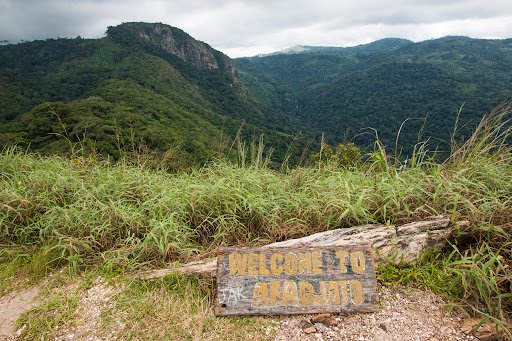
At 885 meters above sea level, Mountain Afadjato isn’t trying to compete with the giants of the world. It doesn’t have snowcaps or death-defying cliffs. But for those who make the pilgrimage to the Volta Region, this lush, green behemoth offers something better than altitude—it offers a story.
Standing on the border of Ghana and Togo, Afadjato (often called Mount Afadja) is officially the highest point in Ghana. But the locals in the surrounding villages of Liati Wote and Gbledi won’t just rattle off statistics; they’ll tell you the meaning behind the name.
Derived from the Ewe word Avadzeto, it translates loosely to “at war with the bush”. According to lore, an irritating plant grew on its slopes that gave early settlers and hunters a tough time. That stubbornness is embedded in the mountain’s DNA.
As you climb, you’ll realize that this peak isn’t just a landmark; it’s a living memory of resilience.
The Climb: A Test of Will
If you arrive expecting a gentle amble through the forest, think again. The path starts innocently enough, winding through farms and thickets, but soon the angle sharpens. The real Ghana—the one you don’t see from the window of a car—reveals itself in the fine details: the bright flash of a butterfly (over 800 species flutter through this region), the call of the colobus monkey hidden in the canopy, and the gradual shift in vegetation as you ascend.
@ishoot.ghana Before: ‘We got this!’ 💪🏾 After: ‘Mount Afadjato got us!’ 😅 What a climb! @escape_accragh @Scanty Explores! #MountAfadjato #GhanaTravel #VisitGhana #HikingGhana #ExploreGhana #GhanaTourism #GhanaAdventures #WestAfricaTravel #HikingWithFriends #TravelVibes #BeforeAndAfter ♬ Real Thing – Kwesi Arthur
Hiking Afadjato takes about 45 minutes to an hour to reach the top if you’re in decent shape, though some energetic souls have sprinted up in under 20 minutes.
The trail is manageable for most, but there’s a moment—usually halfway up—where the humidity hits, and your legs start to burn. It’s here that the mountain lives up to its “warrior” namesake. You dig deep, you push through, and then suddenly, the trees part.
The View That Pays the Debt
At the top, the wind greets you first. Then comes the silence. Looking out over the Volta Region, you see the rolling hills of the Agumatsa range disappear into Togo.
From this vantage, the villages below look like toy models scattered on a green carpet. It’s a view that reminds you that Ghana is so much more than coastlines and castles—it’s a land of high places and wide skies.
But the summit isn’t the only reason to come here. The real magic of Afadjato lies at its base.
Why You Should Visit Now
Visiting this mountain isn’t just a physical challenge; it’s an investment in community-driven tourism. The fees paid at the tourist center in Liati Wote go directly back into local projects and conservation efforts—a model that keeps the trail clean and the villages prosperous.
Plus, the location is a hub for adventure. After descending (on shaky legs, mind you), you’re just a short drive from the Wli Waterfalls, the highest waterfall in West Africa, or the tranquil Tagbo Falls, perfect for cooling off.
You can also visit the Tafi Atome Monkey Sanctuary or drive up to Amedzofe, the highest habitable town in Ghana, where an iron cross planted by German missionaries in 1939 still stands rust-free atop Mount Gemi.
The Final Word
Mountain Afadjato is not about conquering. The mountain isn’t your enemy; it’s an elder. It stands there patiently, watching over the Volta Region, waiting for you to come and listen.
Whether you come for the fitness challenge, the butterflies, or just to say you stood on top of Ghana, you’ll leave with something unexpected—a quiet understanding that the highest points in life aren’t just about the view, but about the climb itself.
Tourism
Emirates Resumes Limited Flights from Dubai as Middle East Airspace Slowly Reopens Amid Ongoing Conflict


Dubai / Accra – March 3, 2026 – Emirates has begun operating a “limited number” of flights out of Dubai starting Monday evening (March 2, 2026), becoming one of the first major carriers to partially resume services after widespread airspace closures triggered by the escalating US-Israel-Iran conflict.
The Dubai-based airline posted an update on its website prioritizing customers with earlier bookings and warning passengers:
“Please do not go to the airport unless you have been notified.”
All other flights remain suspended until further notice, with Emirates continuing to monitor the situation and promising updates via its website and social media channels.
Etihad Airways has similarly started limited repatriation, cargo, and repositioning flights from Abu Dhabi, though scheduled commercial services are suspended at least until 2 p.m. UAE time on Wednesday (March 4). Qatar Airways gave no firm resumption timeline for Doha operations due to ongoing Qatari airspace closure. Gulf Air reported multiple cancellations and suspensions to/from Bahrain, stressing safety as its top priority.
Virgin Atlantic and British Airways have kept services to Dubai, Riyadh, Tel Aviv, Amman, and other Middle East destinations suspended or rerouted. BA advised passengers due to fly to affected cities up to March 15 to rebook free of charge by March 29, while urging non-urgent callers to avoid contact centres amid high volumes.
Dubai Airports confirmed a small number of flights were permitted from Dubai International (DXB) and Al Maktoum International (DWC) on Monday, with operations still heavily restricted. Heathrow Airport reported cancellations and delays due to regional airspace closures.
Aviation analytics firm Cirium reported that 40.3% of the 32,003 scheduled Middle East flights since Saturday (March 1) have been cancelled, underscoring the scale of disruption caused by Iranian missile and drone attacks, US-Israeli strikes, and precautionary airspace shutdowns across the Gulf.
For Ghanaian travelers, diaspora communities, and businesses reliant on Gulf routes, the partial resumption offers cautious hope, though full normalcy remains distant. Ghana’s Ministry of Foreign Affairs continues to advise nationals in the region to shelter in place, register with missions, and avoid non-essential travel.
The conflict—sparked by US-Israeli operations that killed Iran’s Supreme Leader Ayatollah Ali Khamenei and followed by Iranian retaliation—has grounded thousands, stranded sports teams (including Ghana’s Black Queens), disrupted remittances, and raised fears of prolonged energy and trade shocks for Africa.



-

 News2 days ago
Ghana Gears Up for Vibrant 69th Independence Day Celebrations: Parades, Plays, Poetry, and Heritage in Focus
-

 Ghana News2 days ago
Newspaper Headlines Today: Tuesday, March 3, 2026
-

 Tourism2 days ago
Emirates Resumes Limited Flights from Dubai as Middle East Airspace Slowly Reopens Amid Ongoing Conflict
-

 Ghana News2 days ago
Ayawaso East By-Election Results Trickle in, ECG Audits Fast-Reading Meters, and Other Trending Topics in Ghana (March 3, 2026)
-

 Commentary2 days ago
At a glance: US‑Israel attack on Iran
-

 Ghana News2 days ago
Ghana’s Top Muslim Leader Condemns Khamenei Assassination, Calls for New World Order Based on ‘Right Over Might’
-

 Business2 days ago
Ghana’s Mega Infrastructure Push: 10 Game-Changing Projects Set to Transform the Country in 2026
-

 Fashion & Style2 days ago
The New Wave of “Afro-Minimalism”: Redefining Luxury Beyond the Print