
Commentary
Mark Carney’s Davos Era-Defining Message: The World Has Changed, and Canada Is Preparing for It

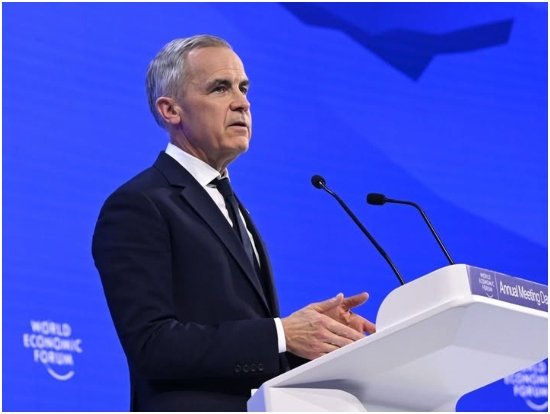
Canadian Prime Minister Mark Carney’s address on January 20, 2026, in Davos was not merely a speech—it was a strategic communiqué. Beneath its philosophical tone and moral framing lies a carefully calibrated geopolitical repositioning of Canada and, by extension, other middle powers navigating the collapse of the post–Cold War order.
What makes the speech era-defining is not its diagnosis—many leaders privately acknowledge the same realities—but Carney’s decision to say them out loud, in Davos, and to do so without euphemism.
1. Naming the End of the “Rules-Based Order” Without Naming Its Architect
Carney never explicitly says “the United States,” yet American power looms over every paragraph.
By calling the rules-based order a “useful fiction” and admitting that enforcement was always asymmetric, Carney is doing something rare among Western leaders: publicly acknowledging that hegemony, not law, sustained global order.
The hidden message:
- The era in which middle powers outsourced their security, trade stability, and moral authority to U.S. leadership is over.
- Washington can no longer guarantee predictability—and is now a source of risk as often as protection.
This is not anti-Americanism. It is post-American realism.
2. “Living Within the Lie” as a Direct Rebuke to Diplomatic Hypocrisy
The Václav Havel metaphor is the intellectual core of the speech—and its sharpest blade.
When Carney urges countries to “take the sign out of the window,” he is indicting:
- Selective outrage over sovereignty violations
- Silence when allies weaponize trade, finance, or sanctions
- Moral inconsistency masked as pragmatism
The subtext is unmistakable: middle powers have enabled coercive systems by pretending they still work.
This is a quiet rebuke to:
- European states that decry Russian coercion but tolerate economic pressure from allies
- Countries that condemn tariffs when used against them but justify them when imposed by partners
Carney is arguing that hypocrisy is no longer a survival strategy.
3. The Strategic Warning to Middle Powers: Fortress Sovereignty Is a Trap
Carney acknowledges the instinct toward strategic autonomy—food, energy, minerals, defence—but warns that unilateral fortification leads to fragmentation, poverty, and instability.
Hidden geopolitical signal:
- The Global South’s turn inward is understandable—but dangerous if done alone.
- Sovereignty must be pooled, not isolated, if it is to remain meaningful.
This is particularly relevant for:
- Africa’s regional blocs
- ASEAN
- Latin American middle economies
- Secondary European powers
Carney is offering an alternative to both dependency and isolation.
4. “Values-Based Realism”: A Rebranding of Power Politics With Moral Limits
Carney’s phrase “values-based realism” is not accidental branding—it is a direct counter to:
- China’s interest-based pragmatism
- America’s increasingly transactional alliances
- Europe’s rule-heavy but power-light diplomacy
What he is really saying:
- Values without power are performative.
- Power without values is unstable.
- The future belongs to states that can combine both.
Canada’s emphasis on defence spending, industrial policy, AI, critical minerals, and trade corridors is meant to prove that ethics must be backed by capacity.
5. Variable Geometry: The End of Universal Multilateralism
Carney effectively pronounces the death of one-size-fits-all multilateralism.
By advocating “different coalitions for different issues,” he is:
- Acknowledging the paralysis of the UN system
- Accepting that legitimacy will increasingly come from effectiveness, not universality
This is a subtle but profound shift:
- From global consensus to functional legitimacy
- From institutions to networks
- From permanence to adaptability
It also signals that countries unwilling to act will simply be bypassed.
6. The Greenland Passage: A Direct Shot Across Washington’s Bow
Carney’s explicit support for Greenland’s right to self-determination and his opposition to tariffs linked to Arctic security is the speech’s most concrete geopolitical signal.
Read plainly:
- Canada rejects coercive security economics—even from allies.
- Arctic sovereignty is non-negotiable.
- NATO unity does not mean unconditional compliance.
This is Canada asserting strategic adulthood.
7. The Quiet Invitation to the Global South
Though framed around “middle powers,” the speech is also an open hand to:
- African states seeking leverage beyond great power competition
- Latin American economies wary of extractive partnerships
- Asian states balancing China–U.S. rivalry
Carney’s message:
You do not have to choose a hegemon. You can help build a third path—if you are willing to invest in your own strength and align with others honestly.
8. The Core Hidden Message: Legitimacy Is Becoming Scarce—and Valuable
Perhaps the most important subtext is this:
- As hard power proliferates, legitimacy becomes the rarest currency.
Carney argues that legitimacy—earned through consistency, restraint, and cooperation—can still shape outcomes if wielded collectively.
This is a call for:
- Moral coordination, not moral grandstanding
- Strategic honesty, not diplomatic nostalgia
Conclusion: A Declaration Without Declaring
Mark Carney did not announce a new alliance, doctrine, or bloc. But he did something arguably more consequential: he named the world as it is and invited others to stop pretending.
This speech marks:
- The intellectual end of post–Cold War complacency
- The emergence of middle powers as agenda-setters, not spectators
- A transition from rule-worship to rule-building
In Davos, Carney didn’t mourn the old order.
He closed the door on it—and turned to those ready to walk forward.
Here is the full text of Carney’s speech:
It’s a pleasure – and a duty – to be with you at this turning point for Canada and for the world.
Today, I’ll talk about the rupture in the world order, the end of a nice story, and the beginning of a brutal reality where geopolitics among the great powers is not subject to any constraints.
But I also submit to you that other countries, particularly middle powers like Canada, are not powerless. They have the capacity to build a new order that embodies our values, like respect for human rights, sustainable development, solidarity, sovereignty, and territorial integrity of states.
The power of the less powerful begins with honesty.
Every day we are reminded that we live in an era of great power rivalry. That the rules-based order is fading. That the strong do what they can, and the weak suffer what they must.
This aphorism of Thucydides is presented as inevitable – the natural logic of international relations reasserting itself. And faced with this logic, there is a strong tendency for countries to go along to get along. To accommodate. To avoid trouble. To hope that compliance will buy safety.
It won’t.
So, what are our options?
In 1978, the Czech dissident Václav Havel wrote an essay called The Power of the Powerless. In it, he asked a simple question: how did the communist system sustain itself?
His answer began with a greengrocer. Every morning, this shopkeeper places a sign in his window: “Workers of the world, unite!” He does not believe it. No one believes it. But he places the sign anyway – to avoid trouble, to signal compliance, to get along. And because every shopkeeper on every street does the same, the system persists.
Not through violence alone, but through the participation of ordinary people in rituals they privately know to be false.
Havel called this “living within a lie.” The system’s power comes not from its truth but from everyone’s willingness to perform as if it were true. And its fragility comes from the same source: when even one person stops performing — when the greengrocer removes his sign — the illusion begins to crack.
It is time for companies and countries to take their signs down.
For decades, countries like Canada prospered under what we called the rules-based international order. We joined its institutions, praised its principles, and benefited from its predictability. We could pursue values-based foreign policies under its protection.
We knew the story of the international rules-based order was partially false. That the strongest would exempt themselves when convenient. That trade rules were enforced asymmetrically. And that international law applied with varying rigour depending on the identity of the accused or the victim.
This fiction was useful, and American hegemony, in particular, helped provide public goods: open sea lanes, a stable financial system, collective security, and support for frameworks for resolving disputes.
So, we placed the sign in the window. We participated in the rituals. And largely avoided calling out the gaps between rhetoric and reality.
This bargain no longer works.
Let me be direct: we are in the midst of a rupture, not a transition.
Over the past two decades, a series of crises in finance, health, energy, and geopolitics laid bare the risks of extreme global integration.
More recently, great powers began using economic integration as weapons. Tariffs as leverage. Financial infrastructure as coercion. Supply chains as vulnerabilities to be exploited.
You cannot “live within the lie” of mutual benefit through integration when integration becomes the source of your subordination.
The multilateral institutions on which middle powers relied— the WTO, the UN, the COP – the architecture of collective problem solving – are greatly diminished.
As a result, many countries are drawing the same conclusions. They must develop greater strategic autonomy: in energy, food, critical minerals, in finance, and supply chains.
This impulse is understandable. A country that cannot feed itself, fuel itself, or defend itself has few options. When the rules no longer protect you, you must protect yourself.
But let us be clear-eyed about where this leads. A world of fortresses will be poorer, more fragile, and less sustainable.
And there is another truth: if great powers abandon even the pretence of rules and values for the unhindered pursuit of their power and interests, the gains from “transactionalism” become harder to replicate. Hegemons cannot continually monetize their relationships.
Allies will diversify to hedge against uncertainty. Buy insurance. Increase options. This rebuilds sovereignty – sovereignty that was once grounded in rules, but will be increasingly anchored in the ability to withstand pressure.
As I said, such classic risk management comes at a price, but that cost of strategic autonomy, of sovereignty, can also be shared. Collective investments in resilience are cheaper than everyone building their own fortress. Shared standards reduce fragmentation. Complementarities are positive sum.
The question for middle powers, like Canada, is not whether to adapt to this new reality. We must. The question is whether we adapt by simply building higher walls – or whether we can do something more ambitious.
Canada was amongst the first to hear the wake-up call, leading us to fundamentally shift our strategic posture.
Canadians know that our old, comfortable assumption that our geography and alliance memberships automatically conferred prosperity and security is no longer valid.
Our new approach rests on what Alexander Stubb has termed “values-based realism” – or, to put it another way, we aim to be principled and pragmatic.
Principled in our commitment to fundamental values: sovereignty and territorial integrity, the prohibition of the use of force except when consistent with the UN Charter, respect for human rights.
Pragmatic in recognising that progress is often incremental, that interests diverge, that not every partner shares our values. We are engaging broadly, strategically, with open eyes. We actively take on the world as it is, not wait for a world we wish to be.
Canada is calibrating our relationships so their depth reflects our values. We are prioritising broad engagement to maximise our influence, given the fluidity of the world order, the risks that this poses, and the stakes for what comes next.
We are no longer relying on just the strength of our values, but also on the value of our strength.
We are building that strength at home.
Since my government took office, we have cut taxes on incomes, capital gains and business investment, we have removed all federal barriers to interprovincial trade, and we are fast-tracking a trillion dollars of investment in energy, AI, critical minerals, new trade corridors, and beyond.
We are doubling our defence spending by 2030 and are doing so in ways that builds our domestic industries.
We are rapidly diversifying abroad. We have agreed a comprehensive strategic partnership with the European Union, including joining SAFE, Europe’s defence procurement arrangements.
We have signed twelve other trade and security deals on four continents in the last six months.
In the past few days, we have concluded new strategic partnerships with China and Qatar.
We are negotiating free trade pacts with India, ASEAN, Thailand, Philippines, Mercosur.
To help solve global problems, we are pursuing variable geometry— different coalitions for different issues, based on values and interests.
On Ukraine, we are a core member of the Coalition of the Willing and one of the largest per-capita contributors to its defence and security.
On Arctic sovereignty, we stand firmly with Greenland and Denmark and fully support their unique right to determine Greenland’s future. Our commitment to Article 5 is unwavering.
We are working with our NATO allies (including the Nordic Baltic to further secure the alliance’s northern and western flanks, including through Canada’s unprecedented investments in over-the-horizon radar, submarines, aircraft, and boots on the ground. Canada strongly opposes tariffs over Greenland and calls for focused talks to achieve shared objectives of security and prosperity for the Arctic.
On plurilateral trade, we are championing efforts to build a bridge between the Trans-Pacific Partnership and the European Union, creating a new trading block of 1.5 billion people.
On critical minerals, we are forming buyer’s clubs anchored in the G7 so that the world can diversify away from concentrated supply.
On AI, we are cooperating with like-minded democracies to ensure we will not ultimately be forced to choose between hegemons and hyperscalers.
This is not naive multilateralism. Nor is it relying on diminished institutions. It is building the coalitions that work, issue by issue, with partners who share enough common ground to act together. In some cases, this will be the vast majority of nations.
And it is creating a dense web of connections across trade, investment, culture on which we can draw for future challenges and opportunities.
Middle powers must act together because if you are not at the table, you are on the menu.
Great powers can afford to go it alone. They have the market size, the military capacity, the leverage to dictate terms. Middle powers do not. But when we only negotiate bilaterally with a hegemon, we negotiate from weakness. We accept what is offered. We compete with each other to be the most accommodating.
This is not sovereignty. It is the performance of sovereignty while accepting subordination.
In a world of great power rivalry, the countries in between have a choice: to compete with each other for favour or to combine to create a third path with impact.
We should not allow the rise of hard power to blind us to the fact that the power of legitimacy, integrity, and rules will remain strong — if we choose to wield it together.
Which brings me back to Havel.
What would it mean for middle powers to “live in truth”?
It means naming reality. Stop invoking the “rules-based international order” as though it still functions as advertised. Call the system what it is: a period of intensifying great power rivalry, where the most powerful pursue their interests using economic integration as a weapon of coercion.
It means acting consistently. Apply the same standards to allies and rivals. When middle powers criticise economic intimidation from one direction but stay silent when it comes from another, we are keeping the sign in the window.
It means building what we claim to believe in. Rather than waiting for the old order to be restored, create institutions and agreements that function as described.
And it means reducing the leverage that enables coercion. Building a strong domestic economy should always be every government’s priority. Diversification internationally is not just economic prudence; it is the material foundation for honest foreign policy. Countries earn the right to principled stands by reducing their vulnerability to retaliation.
Canada has what the world wants. We are an energy superpower. We hold vast reserves of critical minerals. We have the most educated population in the world. Our pension funds are amongst the world’s largest and most sophisticated investors. We have capital, talent, and a government with the immense fiscal capacity to act decisively.
And we have the values to which many others aspire.
Canada is a pluralistic society that works. Our public square is loud, diverse, and free. Canadians remain committed to sustainability.
We are a stable, reliable partner—in a world that is anything but—a partner that builds and values relationships for the long term.
Canada has something else: a recognition of what is happening and a determination to act accordingly.
We understand that this rupture calls for more than adaptation. It calls for honesty about the world as it is.
We are taking the sign out of the window.
The old order is not coming back. We should not mourn it. Nostalgia is not a strategy.
But from the fracture, we can build something better, stronger, and more just.
This is the task of the middle powers, who have the most to lose from a world of fortresses and the most to gain from a world of genuine cooperation.
The powerful have their power. But we have something too – the capacity to stop pretending, to name reality, to build our strength at home, and to act together.
That is Canada’s path. We choose it openly and confidently.
And it is a path wide open to any country willing to take it with us.”





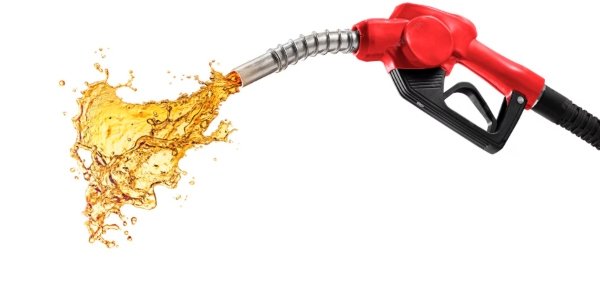
Conventional wisdom dictates that rising prices should lead to falling demand. However, this article challenges that notion by delving into the complex and often counterintuitive relationship between global oil prices and petrol consumption in Ghana. Drawing on recent research analyzing market data from 2016 to 2024, Rafael Adjpong Amankwah reveals that higher crude oil prices do not automatically suppress demand. Instead, factors like consumer hoarding behavior in anticipation of future hikes and the essential nature of petrol for transport and logistics can keep consumption stable or even cause it to spike temporarily.
Rising oil prices could trigger unexpected petrol demand in Ghana
Fuel prices may rise again soon, but what if higher prices don’t actually reduce petrol consumption in Ghana?
Discussions about rising global crude oil prices are once again dominating energy market conversations, raising concerns about higher petrol prices and increased transport costs across Ghana.
Yet the relationship between oil prices and petrol consumption may not be as straightforward as many assume. Conventional economic theory suggests that when fuel prices rise, consumers should reduce consumption. However, recent research analyzing Ghana’s petrol market reveals a more complex pattern of behavior.
The study finds that crude oil prices exhibit a positive relationship with petrol consumption, indicating that higher prices do not necessarily suppress demand as standard models predict.
This pattern reflects several structural characteristics of Ghana’s economy.
First, alleged BDC’s stockpiling increases the potential for increased purchases(demand) vis a vis consumption as consumers often engage in anticipatory or hoarding behavior when price increases are expected.
Second, global crude oil price increases do not necessarily reduce petrol consumption in Ghana in the short run. Petrol is an essential input for transport, logistics, and small business operations, meaning substitution possibilities are limited. As a result, consumption may remain stable or even increase due to inventory adjustments and expectations of further price hikes
These findings also carry an important methodological implication that Traditional symmetric demand models, which assume that price increases and decreases produce equal but opposite responses in consumption, appear to misrepresent the dynamics of Ghana’s petrol market.
When asymmetric price behavior such as the Rock-and-Feathers effect interacts with structural demand constraints, consumption responses become more complex than standard theory predicts.
Using monthly national data from 2016 to 2024 and applying a nonlinear econometric approach, the study examined how crude oil prices, exchange rates, inflation, and domestic fuel taxes affect petrol consumption.
The findings show that petrol consumption in Ghana responds asymmetrically to price changes. In practical terms, this means that price increases and price decreases do not affect consumption in the same way.
The research also highlights the importance of exchange rate movements. Because Ghana imports most of its refined petroleum products, a depreciation of the cedi significantly increases the local cost of fuel and tends to reduce consumption.
Perhaps the most influential factor identified in the study is domestic fuel taxation. Changes in taxes, levies and margins have a stronger effect on petrol consumption than movements in global crude oil prices. In particular, reductions in fuel taxes tend to stimulate consumption much more strongly than tax increases suppress it.
These findings suggest that policymakers seeking to manage fuel demand, inflation, and fiscal stability should pay close attention to domestic fuel pricing structures rather than focusing solely on international oil price movements.
As global oil markets face renewed volatility, understanding how Ghanaian consumers and businesses respond to fuel price changes will become increasingly important for economic planning and energy policy
Understanding the behavioral responses behind fuel consumption is critical for managing energy affordability, fiscal stability, and economic resilience.
The next time fuel prices rise in Ghana, the assumption that “higher prices reduce consumption” may need to be reconsidered.
In reality, the dynamics of petrol demand are shaped by behavioral responses, policy decisions, and exchange rate pressures, not just global crude oil prices. Understanding these asymmetries could be the difference between reacting to fuel price shocks and actually managing them.
Rafael Amankwah is a professional in Ghana’s downstream energy sector with a background in energy economics and investment strategy. He is passionate about advancing sustainable energy solutions and applies research, behavioral insights, and innovation to support smarter energy policies and business models.
Commentary
Ghana Must Choose Diplomacy Over Alignment in the Israel–Iran Crisis: Lessons from Ghana’s Peacekeeping and Non-Aligned Legacy

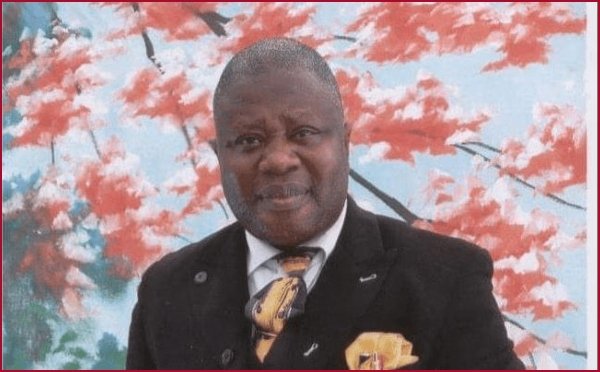
In an open letter to Israel’s ambassador, author Seth K. Awuku argues that Ghana must resist pressure to take sides in the escalating Israel-Iran conflict. Drawing on the recent wounding of Ghanaian peacekeepers in Lebanon and the nation’s non-aligned legacy, he calls for a return to diplomacy, restraint, and the protection of national interest over strategic alignment. Read the full commentary below.
Ghana Must Choose Diplomacy Over Alignment in the Israel–Iran Crisis: Lessons from Ghana’s Peacekeeping and Non-Aligned Legacy
By: Seth K. Awuku
Your Excellency Ambassador Roey Gilad,
I extend sincere diplomatic courtesy and appreciation for your prompt humanitarian response following the missile strike that wounded Ghanaian peacekeepers in southern Lebanon.
In times of shared sorrow, words carry profound weight. Your description of the attack as “tragic” and “catastrophic,” along with your wishes for the swift recovery of the injured soldiers, reflects genuine compassion. Ghana receives such gestures with gratitude, for they affirm our shared humanity amid the smoke of conflict.
Yet only two days earlier, on March 5, during a public briefing in Accra, you urged Ghana to “join its voice” in confronting Iran and to support a strategic change in its leadership to end threats and instability.
That appeal, understandable from Israel’s perspective, now stands in painful contrast to the fresh wounds suffered by Ghanaian soldiers serving under the United Nations. Tragedy, once named, requires more than sympathy—it demands reflection.
The attack of March 6 tore through the Ghanaian battalion headquarters in southern Lebanon, leaving two soldiers critically injured and another traumatized. Ghanaian peacekeepers have served in Lebanon for decades, often under dangerous and unpredictable conditions.
These events revive older concerns about the security of our personnel abroad and the broader risks that accompany escalating regional conflict.
They also follow a troubling incident in December 2025 at Ben Gurion International Airport, where several Ghanaians including members of an official delegation were detained for hours and subjected to questioning and searches that Ghana later described as humiliating and degrading. Such incidents, when repeated, inevitably strain trust.
Reciprocity, transparent investigation, accountability, and credible assurances against recurrence are essential to rebuilding confidence.
Your Excellency, during the Israel–Hamas War in November 2023, I addressed an open letter to your predecessor, Shlomit Sufa, cautioning that if the conflict escalated unchecked, it “may not be like other wars; it may be apocalyptic in scope and possibly destructive of our globe.” That warning was offered not in division, but in concern for the safety and future of all peoples caught in the widening arc of war.
Recent missile exchanges between Israel and Iran demonstrate the growing lethality of modern warfare and the alarming vulnerability of civilian populations – even in countries equipped with advanced defense systems. Ghana, however, does not possess such protections.
Our security priorities focus primarily on internal stability and peacekeeping obligations. We do not have missile interception systems, sophisticated air defenses, or the strategic infrastructure necessary to withstand retaliatory strikes in a wider regional confrontation. Alignment in conflicts of this magnitude, without equivalent protection, exposes vulnerabilities that Ghana cannot afford. Our ports, markets, infrastructure, and communities would all be at risk should tensions expand beyond the Middle East.
Precisely because great powers often allow strategic rivalries to overshadow the urgency of peace, middle powers like Ghana carry a different kind of responsibility. Our diplomatic tradition, shaped by the non-aligned vision of Kwame Nkrumah, strengthened through decades of peacekeeping, and inspired by the global statesmanship of Kofi Annan, places upon us a quiet but meaningful moral authority.
We can call for restraint without appearing weak, advocate dialogue without conceding defeat, and remind the world that wisdom in diplomacy is often measured not by the volume of power, but by the courage to prevent catastrophe.
The Hebrew Scriptures offer a powerful reminder of the difference between victory and legacy. In 1 Chronicles, King David is told he cannot build the temple because he has shed too much blood. Instead, that task falls to his son Solomon, whose name signifies peace and rest. True greatness, the text suggests, lies not only in the victories of war but in the achievements of peace.
History also remembers another figure: Samson, the blinded warrior who in despair pulled down the pillars of the temple, destroying himself and his enemies alike. If modern conflicts are pushed toward such desperation; if nuclear doctrines or catastrophic retaliation ever become reality, the consequences would extend far beyond the borders of any single nation. Ghana therefore pleads for wisdom over pride and restraint over escalation.
In moments such as this, the measure of leadership is not found in the power to escalate conflict, but in the wisdom to pause, reflect, and choose the harder path of peace.
May the calm voice of diplomacy silence the roar of war.
May the wounded recover before new wounds are inflicted.
May the pain of mistrust fade like morning mist across the savanna.
And may history remember not the clash of weapons, but the courage of those who chose dialogue over destruction.
With respect for your office, hope for the recovery of the injured, and a shared aversion to catastrophe,
I remain,
By Seth K. Awuku
Principal, Sovereign Advisory
Former Immigration and Refugee Lawyer (Ottawa, Canada)
Writer on international law, diplomacy, and refugee governance
Commentary
Influencer Shanell R. Oliver Delivers Powerful Message to All Blacks: “We Are One African People Living in Different Places”
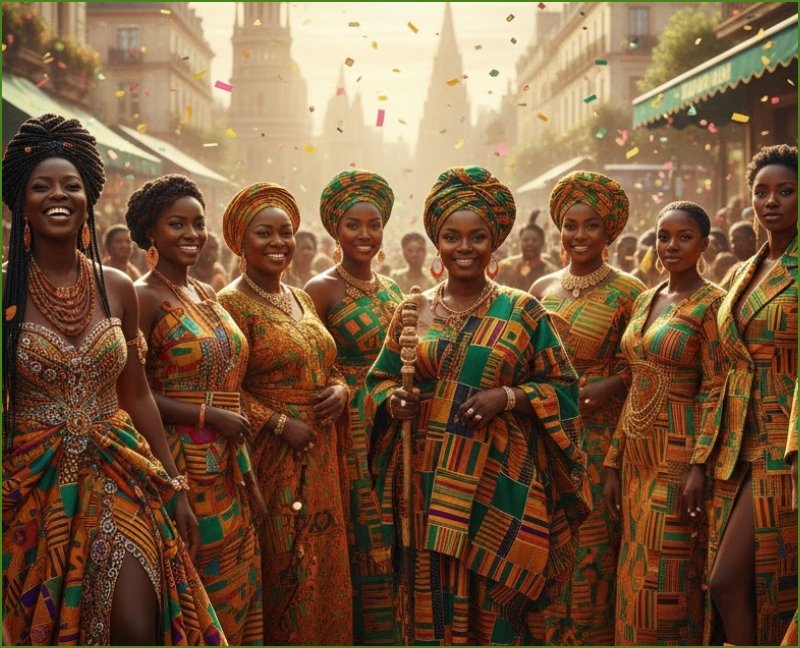
Accra, Ghana – March 6, 2026 – U.S.-based influencer Shanell R. Oliver (@shanellroliver) shared a viral Facebook video reminding the global African diaspora of their shared West and Central African roots, urging unity across borders and continents.
In the emotional post, Oliver reminds Blacks across the world that more than 12.5 million Africans were forcibly trafficked during the transatlantic slave trade, with over 90% originating from the same core regions: the Congo Kingdom, Akan States (including modern Ghana), Yoruba and Dahomey lands (Nigeria and Benin), Igbo heartlands, and Senegambia. This common ancestry links African Americans, Afro-Brazilians, Haitians, Jamaicans, Trinidadians, Cubans, Dominicans, and Afro-descendant communities in Colombia, Venezuela, and beyond.
“Our spiritual systems, drum patterns, foods, dances, languages, and resistance movements all mirror each other because we come from one cultural foundation,” Oliver says in the video. “European invaders scattered us, but they couldn’t scatter our identity.”
She points to DNA evidence showing that 70% of African Americans trace roots to Nigeria, Ghana, Benin, Cameroon, Congo, and Angola—the same zones that shaped Afro-Brazilian and Caribbean cultures.
The message resonates deeply on Independence Day, when Ghanaians and the diaspora celebrate shared heritage and resilience.
Oliver closes with a call to recognition: “We’re not different kinds of Black. We are one African people living in different places. And we are finally remembering that.”
The post has sparked widespread shares and comments across the diaspora, reinforcing the enduring connection between continental Africans and their kin worldwide.


Renowned Global Bodies Warn Middle East War Will Scuttle Africa’s 2026 Growth

Ex-President Akufo-Addo and President Mahama Exchange Pleasantries on Easter

Mahama Calls Christ’s Birthplace an ‘Epicentre of War’, New Airport Concourse Planned and Other Big Stories in Ghana Today
-
 Ghana News2 days ago
Ghana President Convenes Emergency Cabinet Meeting to Cushion Ghanaians from Soaring Fuel Prices
-
 Ghana News2 days ago
Mahama Calls Christ’s Birthplace an ‘Epicentre of War’, New Airport Concourse Planned and Other Big Stories in Ghana Today
-
 Ghana News2 days ago
Ex-President Akufo-Addo and President Mahama Exchange Pleasantries on Easter
-
 Business2 days ago
Renowned Global Bodies Warn Middle East War Will Scuttle Africa’s 2026 Growth