
Diaspora Investment Guide
Ghana’s “Raw Material” Export Era Ends: These 3 Value-Added Products Emerge as 2026 Goldmines


Accra, Ghana – Ghana’s traditional model of exporting raw agricultural commodities is rapidly giving way to a value-addition economy in 2026, driven by tightening export regulations, a surging global demand for processed foods and clean beauty products, and a combined market opportunity now valued at over $2.5 billion for three high-margin categories.
Export and agribusiness analysts say the smartest entry points for new and existing exporters right now are:
Processed Shea Butter & Derivatives

With the government actively moving toward a full ban on raw shea nut exports in 2026 (building on earlier restrictions), the window for unprocessed shea is closing fast.
The global “clean beauty” and natural cosmetics wave has created explosive demand for refined shea butter, shea-based creams, soaps and hair products.
Ghana, already the world’s leading shea producer, is ideally positioned to shift from raw-nut supplier to finished-goods exporter.
Dried Mango & Pineapple

Shelf-stable, lightweight, and commanding premium prices in health-conscious European and U.S. markets, dried fruits avoid the spoilage losses that plague fresh produce.
Exporters can source from smallholder farmers, partner with local drying facilities, and ship finished retail packs — capturing far higher margins than raw fruit crates.
Roasted, Salted & Spiced Cashew Nuts
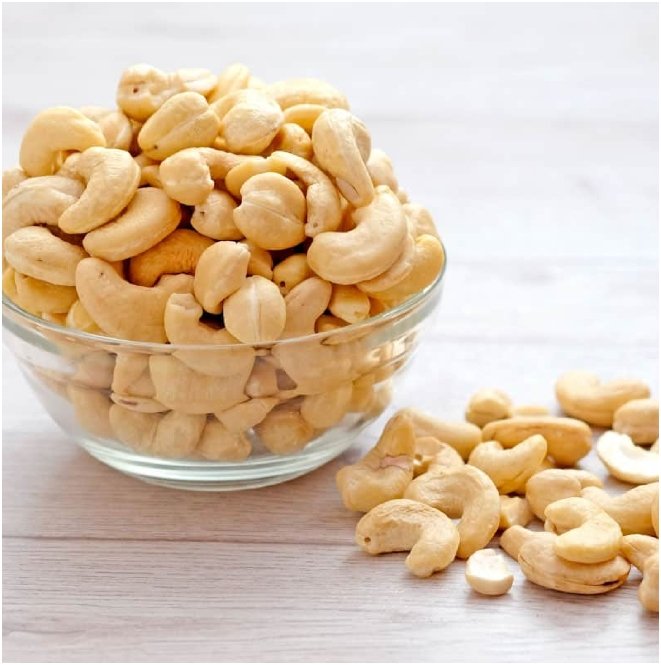
Instead of shipping raw cashews to Vietnam or India for processing and re-importing finished nuts at lower margins, Ghanaian players are increasingly roasting, seasoning and packaging cashews locally for direct retail placement in supermarkets worldwide.
The retail-ready format delivers significantly higher value per kilogram and strengthens domestic processing capacity.
The shift is not optional. Recent policy signals — including proposed raw-sheanut export restrictions and incentives for agro-processing under the current administration’s Resetting Ghana agenda — make value addition the only sustainable path for long-term profitability in these sectors.
“You don’t even need to own a farm,” noted Anna Spio, an Ghanaian export consultant, in a widely shared analysis. “Find a reliable local processor, build or co-brand a finished product, and take it global. The game in 2026 is value addition — not raw volume.”
The three categories are seen as low-to-medium entry barriers for serious exporters: dried fruits require drying kilns and packaging lines, processed shea needs refining and cosmetic-grade certification, and roasted cashews demand roasting equipment and food-safety compliance.
All benefit from existing raw-material supply chains, AfCFTA market access, and growing diaspora demand in North America and Europe.



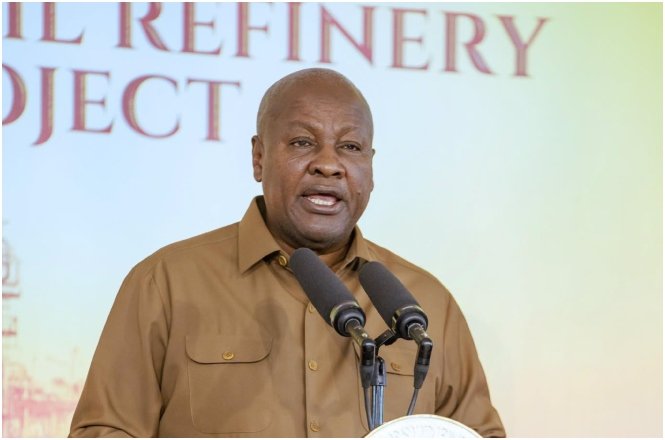
President John Dramani Mahama recently cut the sod for Phase II of the Sentuo Oil Refinery Expansion Project. This US$1.2 billion investment will raise Ghana’s refining capacity from 40,000 to 100,000 barrels per day. The ceremony was more than a groundbreaking event – it was a declaration that Ghana’s energy sector is open for business and that the diaspora is invited.
Here is why Ghana’s energy sector represents one of the most compelling investment opportunities for the global Ghanaian diaspora right now.
1. Macroeconomic stability has returned – and it’s real
When President Mahama assumed office in January 2025, Ghana’s economy was emerging from one of its most difficult periods. Inflation had peaked at 23.8 per cent, the currency was volatile, and investor confidence was weakened.
Eighteen months later, the picture is dramatically different.
| Indicator | December 2024 | April 2026 |
|---|---|---|
| Inflation | 23.8% | 3.4% |
| International Reserves | US$8.9 billion | US$13.8 billion |
| GDP Growth | – | ~6% in 2025 |
| GDP | – | US$114 billion |
Inflation has collapsed from 23.8 per cent to 3.4 per cent. International reserves have strengthened from approximately US$8.9 billion to nearly US$13.8 billion. The Ghana cedi has stabilised and appreciated against major international currencies. Ghana’s economy expanded by approximately 6 per cent in 2025, with GDP crossing US$114 billion, making Ghana one of Africa’s leading economies.
Ghana’s Ambassador to the United States, Victor Emmanuel Smith, has described political stability, credibility, and predictability as the country’s “most powerful tools for attracting global investment”. As one investor at the Economic Dialogue in Atlanta put it:
“Stability is the new alpha. Ghana offers exactly what global capital is now searching for – peaceful rule, democratic governance, and peaceful transitions”.
2. Upstream oil and gas: US$3.5 billion in new commitments
Ghana’s upstream petroleum sector is experiencing a renaissance. Partners in the Jubilee and TEN fields have committed US$2 billion by 2028 to increase oil and gas production, while Sankofa field partners have pledged another US$1.5 billion to boost gas output.
This US$3.5 billion injection is funding new well developments across productive fields and scaling domestic natural gas production from 270 million to 350 million standard cubic feet per day.
President Mahama confirmed that production from the Jubilee field has increased significantly, from approximately 60,000 barrels per day to about 85,000 barrels per day currently. For the first time in several years, Ghana is poised to record an increase in crude oil production, reversing a multi-year decline.
What this means for diaspora investors:
- GNPC is seeking global investors for over 20 new oil and gas exploration fields
- The Voltaian Basin – Ghana’s most significant frontier onshore opportunity – is open for strategic partnerships. GNPC’s exploration subsidiary, ExplorCo, is poised to begin onshore drilling before the end of 2026
- The Accra-Keta Basin offers more than 15 new ocean locations for drilling, ranging from shallow waters to ultra-deep-sea zones
- A new “sliding scale” royalty system adjusts tax cuts dynamically based on production levels and oil prices, ensuring fair terms even when market conditions change.
3. Downstream refining: Sentuo’s expansion changes the game
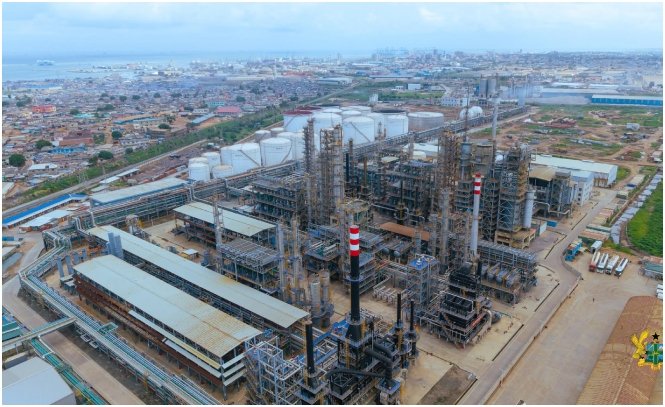
The Sentuo Oil Refinery expansion is transformative. Upon completion, Ghana’s refining capacity will more than double from 40,000 to 100,000 barrels per day. Employment at the facility will rise from about 800 to 1,500 workers.
But the significance goes far beyond jobs.
President Mahama’s vision is clear:
“Ghana should not be known merely as a producer of crude oil. Ghana should be recognised as a nation that refines, processes, and adds value to its resources, and also become a net exporter of petroleum products”.
When Sentuo completes Phase II and the Tema Oil Refinery is fully operational, Ghana will have more than enough capacity to feed local demand – and export the rest to neighbouring countries.
The government has already demonstrated its commitment to local refining. In a deliberate and strategic decision, one million barrels of crude oil from the Jubilee Field were allocated for refining at Sentuo.
What this means for diaspora investors:
- The Petroleum Hub Project – a US$60 billion integrated energy and petrochemical complex in Jomoro, Western Region – will comprise three refineries with a total capacity of 900,000 barrels per day
- The hub offers opportunities for diaspora investment in refinery development, petrochemical facilities, logistics infrastructure, and energy transition projects.
4. Ghana is positioning itself as West Africa’s energy hub
Ghana’s ambition extends beyond self-sufficiency. The country is positioning itself as the preferred energy and industrial hub for the West African sub-region.
The numbers tell the story. Once Sentuo and Tema Oil Refinery are fully operational, Ghana will have enough capacity to export refined petroleum products to neighbouring countries – strengthening the cedi, improving the balance of payments, and deepening industrial capacity.
Energy Minister John Abdulai Jinapor has confirmed that the government has “reversed the power deficit situation, declining oil production and the weakened investor confidence” through the Reset Agenda. The energy sector is now experiencing renewed growth and stability.
5. Local content: A deliberate invitation to diaspora businesses
President Mahama has been explicit: local content “must be viewed not merely as a regulatory obligation, but as a critical pillar of our national development strategy”.
The government expects “meaningful participation by Ghanaian companies throughout the value chain” and “deliberate investment in skills development”.
Dr Tony Aubynn, CEO of the Petroleum Hub Development Corporation, has called for a “bold and forward-looking economic partnership between Ghana and its diaspora community”. His message to diasporans is clear:
“The Petroleum Hub is a game-changing national asset, and we need our diaspora as co-investors, innovators, and partners in expanding Ghana’s energy economy”.
What this means for diaspora investors:
- Diaspora bonds for energy and industrial infrastructure, offering competitive returns backed by transparent governance
- Co-investment frameworks enabling diaspora investors to partner with institutional investors, private equity funds, and state-backed entities
- Financing local startups and SME supply chains in logistics, maintenance, fabrication, technology solutions, and energy services
- The diaspora can play a catalytic role in financing Ghana’s next generation of energy and industrial startups.
6. Investment incentives are attractive and transparent
Ghana has created a compelling incentive framework for investors, including:
- 10-year corporate tax holiday for qualifying enterprises
- Exemptions from import duties on qualifying equipment and inputs
- Unrestricted repatriation of profits and dividends
- No minimum capital requirement for companies owned by Ghanaians (including those in the diaspora)
- A “one-stop-shop” system for permits, giving investors a single, fast-track approval process with a strict deadline
The Ghana Investment Promotion Centre (GIPC) has stressed the need for “diaspora capital to be channelled into transparent and well-governed investment structures”. Ghana maintained its 6th position on the African continent to invest in 2025 and 2026, according to Rand Merchant Bank.
7. The 24-Hour Economy and Accelerated Export Development Programme
President Mahama’s flagship 24-Hour Economy initiative is designed to maximise the utilisation of infrastructure, industry, labour, logistics, ports, and energy systems around the clock. It presents enormous opportunities for investors in logistics, industrial parks, warehousing, cold-chain systems, transport, agro-processing, manufacturing, retail, ICT, and energy.
The program is aligned with the Accelerated Export Development Programme and the government’s vision of building “a productive, export-oriented, industrialised and technology-driven economy that creates opportunities for our people and competitive returns for investors”.
8. How to get started
For diaspora investors ready to engage, here is a practical roadmap:
| Step | Action |
|---|---|
| 1 | Register with the Ghana Investment Promotion Centre (GIPC) – enterprises with foreign ownership are required to register before commencing operations |
| 2 | Explore incentives under the Free Zones Scheme, including tax holidays and duty exemptions |
| 3 | Connect with the Petroleum Hub Development Corporation (PHDC) for large-scale energy projects |
| 4 | Explore the GNPC’s investment opportunities in exploration, production, and the Voltaian Basin |
| 5 | Consider diaspora bonds and co-investment frameworks for energy infrastructure |
| 6 | Leverage the “one-stop-shop” permit system for streamlined approvals |
The bottom line
Ghana’s energy sector is not just growing – it is transforming. US$3.5 billion in upstream commitments, a refining capacity poised to double, a US$60 billion Petroleum Hub on the horizon, and a government that has made local content and diaspora engagement central to its industrial strategy.
President Mahama’s words at the Sentuo ground-breaking captured the moment:
“This investment is a powerful vote of confidence in our future and in the vast opportunities that Ghana continues to offer”.
For the global Ghanaian diaspora, that vote of confidence is also an invitation.
Business
Ghana’s $5 Billion Export Boom Creates Prime Entry Point for Diaspora-backed Processing Plants – Here’s How

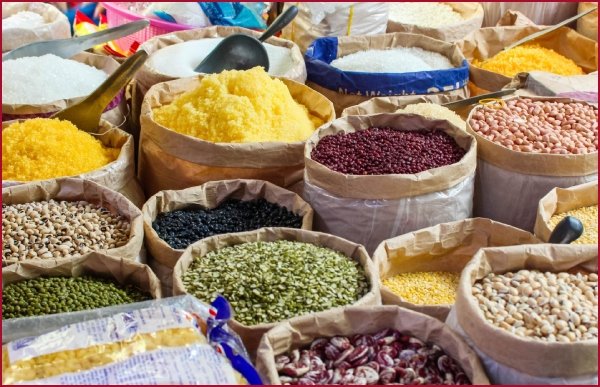
Ghana’s non-traditional export sector has shattered the $5 billion mark for the first time, recording a historic 30.7 per cent surge to $5.006 billion in 2025.
But for diaspora investors watching from abroad, the real story lies not in the headline number, but in what it reveals: a massive, untapped opportunity in agro-processing that could multiply returns while transforming Ghana’s industrial base.
Processed and semi-processed products now account for more than 83 per cent of total non-traditional export earnings, with cocoa derivatives alone — including butter, paste, and powder — contributing over US$3 billion. Yet officials acknowledge that Ghana is still exporting the bulk of its agricultural produce at intermediate stages, leaving billions in potential value on the table for investors willing to build the final processing and packaging infrastructure that commands premium prices in Western supermarkets.
The diaspora opportunity: capturing the “missing middle”
For Ghanaian diaspora investors with capital, global retail networks, and a desire to scale African value chains, the timing could not be more opportune. The government has made diaspora engagement a central pillar of its economic transformation agenda, with the Ghana Investment Promotion Centre (GIPC) establishing a dedicated Diaspora Desk to provide regulatory guidance, aftercare services, and access to verified land through an in-house land bank.
“Value addition in agro-processing, digital financial services, and green construction is gaining traction, driven partly by diaspora-led innovation,” said Kwame Kesse-Agyepong, Head of Investment and Business Development at the GIPC.
He noted that Ghana is already seeing strong interest from diaspora entrepreneurs across manufacturing, fintech, renewable energy, and tourism.
Key commodities driving the export surge — cashew nuts, shea nuts, coconut, yams, mangoes, and processed agricultural products — offer prime entry points for diaspora-backed ventures. Yams alone recorded a sharp 559 per cent increase in exports. Each of these products presents opportunities for investments in drying, milling, refining, cold-chain logistics, quality-certified packaging, and branded finished goods for export to Europe, North America, and Asia.
Policy tailwinds and incentives
The government has rolled out a suite of incentives designed to attract diaspora capital into the real sector:
- A new e-visa system launching in the first quarter of 2026 with reduced fees specifically for the global African diaspora.
- The Accelerated Export Development Program, chaired by President Mahama, targeting US$10 billion in non-traditional export earnings by 2030.
- Ghana’s Free Zones Scheme offering a 10-year corporate tax holiday, exemptions from import duties, and unrestricted repatriation of profits and dividends.
- The Feed the Industry Program, strengthening the link between agriculture and industry by ensuring a steady supply of raw materials for agro-processing.
- Reforms abolishing the US$200,000 minimum capital requirement for joint ventures with Ghanaian participation and the US$500,000 minimum for wholly foreign-owned enterprises.
Additionally, the Bank of Ghana is working with commercial banks to develop investment-linked remittance products aimed at channelling diaspora inflows — which reached a record US$7.8 billion in 2025 — into infrastructure projects and long-term capital formation.
A strategic gateway to Africa
Beyond Ghana’s borders, diaspora investors gain a strategic advantage: access to the African Continental Free Trade Area (AfCFTA), the world’s largest free-trade zone by number of participating countries. Africa now accounts for 30.36 per cent of Ghana’s non-traditional export earnings, largely driven by intra-ECOWAS trade. By establishing processing plants in Ghana, diaspora investors can export value-added goods duty-free to 1.4 billion Africans while also leveraging Ghana’s AGOA benefits for the US market.
The road ahead
GEPA CEO Francis Kojo Kwarteng Arthur has appealed for an increase in the Authority’s share of the import levy from 10 per cent to 20 per cent to accelerate progress toward the US$10 billion target by 2030.
“If 10 per cent can generate over $5 billion in export earnings, then 20 per cent will yield even greater results in foreign exchange generation, job creation and industrial transformation,” he said.
For diaspora investors, the message from Accra is clear: the export boom has created a runway. The question is who will capture the value.
Business
From $50bn Food Imports to Solar’s 90% Price Drop: 5 High-Growth Sectors for Africa Investors in 2026

For decades, foreign investment in Africa has followed a familiar pattern: land, real estate, and natural resource extraction. But a new wave of data suggests that the continent’s most lucrative opportunities lie elsewhere, in solving everyday problems that billions of dollars have overlooked.
While affordable housing and commercial real estate remain viable entry points, investors seeking higher returns and deeper impact are increasingly turning to five sectors where demand already outstrips supply, and where local competition has yet to catch up. These are not speculative bets on future trends. They are responses to problems Africans experience every single day.
Here are the top five sectors to consider, based on current market data.
1. Agri-Food Processing: Capturing the Value That Is Being Exported
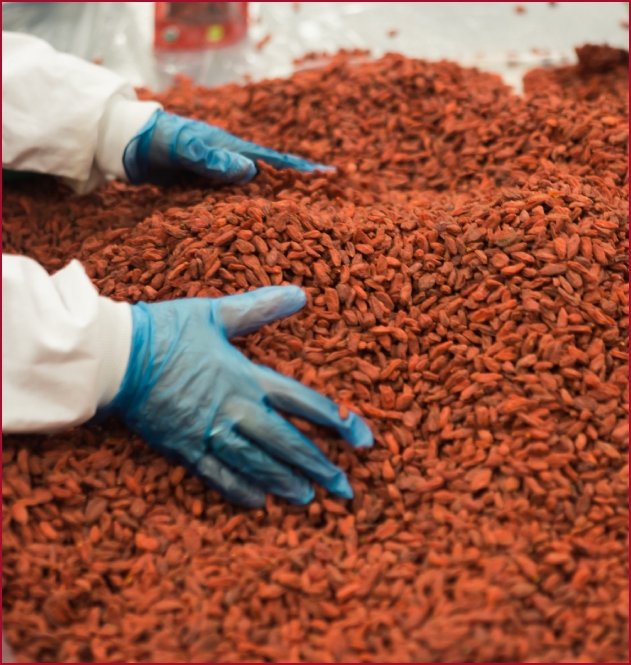
Africa grows some of the world’s finest cocoa, cashews, and coffee. Then it exports those crops raw—at the lowest possible price—only to import back processed, packaged, and branded food at 10 to 20 times the markup. The continent is effectively paying someone else to add value to its own products.
The numbers are striking: Africa currently imports $50 billion worth of processed food every year. That represents a massive opportunity to build processing facilities on the continent itself, capturing margins that are currently exported overseas. Investors in agri-food processing are seeing annual returns between 20 and 35 percent, and the demand is already present.
The opportunity: Build the mills, roasteries, and packaging plants that turn raw commodities into finished goods—right where the crops are grown.
2. Waste Management and Recycling: Getting Paid Twice

African cities generate an estimated 174 billion tons of waste annually. Less than half of that is properly collected. Of the waste that is technically recyclable—roughly 7 percent—only about 4 percent actually gets recycled.
The business model is straightforward: collect, sort, and sell to processors. Companies in this sector get paid twice—once for the collection service and again for the sale of recyclable materials. Barriers to entry are relatively low, and revenue is recurring. As urban populations continue to grow, the waste stream only expands.
The opportunity: Build collection networks and sorting facilities in underserved urban centers, turning a mounting environmental crisis into a predictable revenue stream.
3. Last-Mile Logistics: Moving E-Commerce’s Next Wave

African e-commerce exploded from $27 billion in 2020 to $75 billion in 2025. But the delivery infrastructure—particularly last-mile logistics—has not kept pace. Addresses across numerous countries remain informal. Roads are congested. Traditional courier services charge rates that exceed what most people earn in a day.
The fix is already visible in cities across the continent: motorcycle and tricycle fleets. Someone has to move the packages that millions of new online shoppers are ordering, and that someone can be an investor-backed logistics operation. With e-commerce projected to continue its rapid growth, the demand for reliable, affordable delivery will only intensify.
The opportunity: Build or scale fleets of two- and three-wheeled delivery vehicles, paired with route optimization technology, to serve the continent’s booming online retail sector.
4. Solar Energy Services: Powering 600 Million People Off the Grid
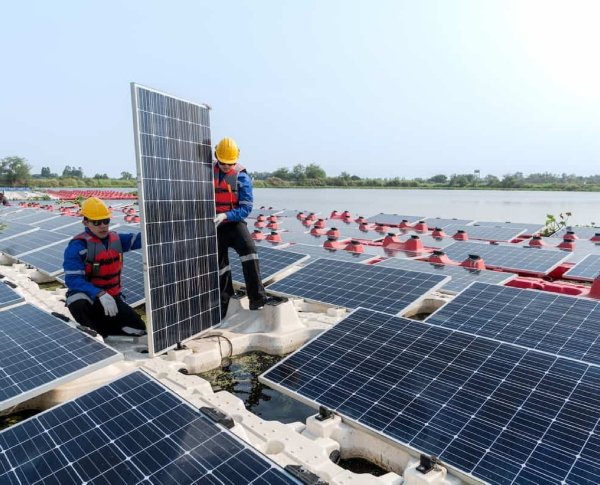
Across Africa, an estimated 600 million people have no reliable access to electricity. Paradoxically, many of them are already paying more for energy—through kerosene, diesel generators, and batteries—than those connected to the grid. The costs are higher, the air is more polluted, and the service is less reliable.
The good news is that solar costs have dropped by approximately 90 percent in the last decade. This makes decentralized solar systems economically viable for households, clinics, and small businesses that have never been connected to a national grid. Customers can pay via mobile money, creating a recurring revenue model that scales. The infrastructure gap is huge, and the social impact is profound.
The opportunity: Install pay-as-you-go solar systems for off-grid households and businesses, combining clean energy with mobile payment technology.
5. Digital Services for Local Businesses: Serving Millions of New Internet Users

By 2030, an estimated 60 percent of Africans will be online with full internet access. That represents hundreds of millions of new internet users who will need services, information, and commerce platforms. But local businesses—clinics, restaurants, boutiques, tradespeople—largely lack websites, social media presence, or digital marketing capabilities.
This gap creates an opportunity for digital service providers: build the platforms, offer the training, and manage the online presence for small and medium enterprises that are otherwise invisible to the new wave of connected consumers. The sector is scalable, low-capital relative to infrastructure plays, and positioned at the intersection of two massive trends: digital adoption and small-business growth.
The opportunity: Launch digital agencies, SaaS platforms, or training programs that help millions of local businesses establish an online presence and access digital customers.
Why These Sectors Work Now
What unites these five sectors is not glamour or hype. They are, in many ways, “boring” and “unsexy” businesses. But they solve problems that people experience every single day: hunger (food processing), waste (recycling), delivery (logistics), darkness (solar energy), and invisibility (digital services).
These are not future bets or speculative technologies. The demand is already here. The margins are proven. And for investors willing to look beyond real estate, the returns—both financial and social—are substantial.


Dressing for Your Shape: How Strategic Styling Can Transform Everyday Fashion

The Scale Can Lie: Why Lifting Weights May Help You Lose More Fat

Ghana’s Timeline Erupts: Showboy’s Crude Plea, Asantewaa’s Silence, and a Nation Divided
-

 Ghana News17 hours ago
OBITUARY: Gamal Gorkeh Nkrumah, Son of Ghana’s Founding President, Dies in Cairo
-

 Festivals & Events2 days ago
LALID LIVE 2026: An Evening of Entertainment and Connection in Accra
-

 Sights and Sounds1 day ago
EPP BookShop at Legon: A Destination for Students, Families and Book Lovers
-

 Health & Wellness20 hours ago
Walking Is More Than Exercise: Small Steps That Can Transform Your Health
-

 Festivals & Events15 hours ago
MaddFest 2027: Welcome the New Year with a Night of Celebration in Accra
-

 Taste GH2 days ago
From Waakye to Fufu: How to Enjoy Ghanaian Food and Eat Well
-

 Homes & Real Estate1 day ago
Building Smarter in Ghana: Could Plastic Rebar Clips Improve Construction Efficiency?
-

 Arts and GH Heritage21 hours ago
Inside Togo’s Abandoned Colonial Building, African Artists Reclaim Cultural Memory