
Ghana News
Ghana Commits Billions to Healthcare Amid Country’s Push for Vaccine Self-Sufficiency


Ghana’s government has outlined sweeping health sector investments in the 2025 national budget, pledging billions of cedis to strengthen healthcare delivery and accelerate progress toward vaccine self-sufficiency.
The commitments, announced by Deputy Finance Minister Thomas Nyarko Ampem on behalf of Finance Minister Dr. Cassiel Ato Forson at the Ghana Vaccine Manufacturing Investment Forum held last month, mark a decisive shift in health financing and policy direction.
Major Budget Commitments
According to Ampem, the 2025 budget makes unprecedented allocations to healthcare:
- GH¢9.8 billion for the National Health Insurance Scheme (NHIS): The National Health Insurance Levy (NHIL) will be fully allocated under law, enabling timely claims payment, funding the Free Primary Health Care initiative, and closing gaps caused by aid cuts. This represents a steep increase from GH¢5.9 billion in 2024.
- GH¢17.8 billion for the Ministry of Health: A significant boost compared to GH¢11.1 billion in 2024, reflecting stronger government prioritization of healthcare delivery.
- MAHAMACARES Medical Trust Fund: A newly launched initiative to cover the cost of care and medication for non-communicable diseases not currently under the NHIS.
- Rural Healthcare Expansion: Metropolitan, Municipal, and District Assemblies (MMDAs) are set to receive at least 80% of the District Assemblies Common Fund (DACF), with 10% dedicated to constructing two CHPS compounds in each district — adding more than 500 health facilities across rural communities.
“These measures mark a remarkable shift in focus and speed for improved healthcare delivery under this government,” Ampem said at the event held on August 6, 2025, at the Kempinski Gold Coast Hotel in Accra.
Linking Budget Priorities to Vaccine Manufacturing
Speaking under the theme “Accelerating Vaccine Development and Manufacturing in Ghana: The Role of Financing Institutions and Development Partners,” the deputy finance minister said the improved fiscal environment provides a strong foundation for local vaccine production.
With global vaccine support from Gavi expected to phase out by 2030, he noted that Ghana must act urgently to develop domestic production capacity, reduce dependence on imports, and safeguard national health security.
“A stable and improving economy means we can generate more resources for vaccine development and attract critical partnerships and investments,” Ampem said, framing vaccine manufacturing as both a moral and economic imperative.
Building on Existing Foundations
Ghana already has a strong platform to build on:
- *A growing pharmaceutical industry,
- *The Ghana National Vaccine Institute,
- *An internationally recognized Food and Drugs Authority (FDA), and
- *A dedicated research community.
Ampem cited examples from India and Rwanda, where focused leadership and economic stability enabled major breakthroughs in local vaccine manufacturing. Ghana, he argued, is well-positioned to follow suit.
A Call for Partnerships
The Deputy Finance Minister stressed that vaccine manufacturing must not be viewed only as a commercial opportunity but as a strategic investment for future generations.
He urged stakeholders from financial institutions to development partners to move beyond dialogue and commit to purposeful action.
“The investments we make in vaccines today will protect generations tomorrow,” he declared.
The Ghana Vaccine Manufacturing Investment Forum took place on 6th August 2025 at the Kempinski Hotel, Accra.
The strategic event brought together key industry stakeholders, to discuss the crucial role of financing institutions and development partners in accelerating vaccine development in Ghana.
President John Dramani Mahama was Special Guest of Honour and led discussions on the government’s strategic direction for strengthening the country’s pharmaceutical and biotechnology sectors.



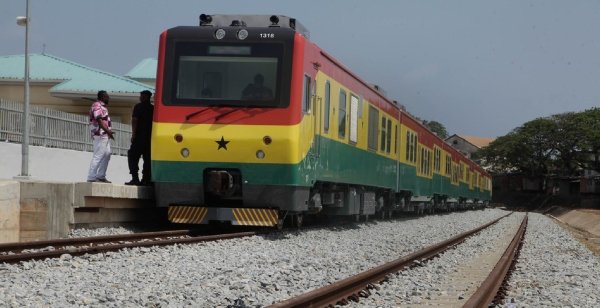
Accra, Ghana – The European Commission has approved a €20 million (a little over $23 million) grant to support the implementation of the European Train Control System (ETCS Level 1) on Ghana’s Tema-Mpakadan railway line, in a major boost to the country’s efforts to modernise its rail infrastructure and improve operational efficiency.
The 97-kilometre standard-gauge railway, commissioned in 2024 for US$449 million, has been operating significantly below capacity due to a non-functional signalling system.
This currently restricts operations to a single train movement at a time, limiting both passenger and freight services despite rising demand. Dr Frederick Appoh, Chief Executive Officer of the Ghana Railway Development Authority (GRDA), confirmed the grant approval following engagements at the recent EU-Africa Business Forum in Abidjan.
The funding follows the submission of an Aide Mémoire on sustainable transport four months ago. The project’s identification phase has now been completed, with formal approval granted in Brussels on March 27, 2026.
Implementation will proceed through several key stages, including a Quality Review Committee assessment in May 2026, validation by the NDICI Committee of EU Member States in September, and an expected EU Financing Decision in October, with first disbursements targeted for December 2026.
Once completed, the ETCS Level 1 system will enable safe multiple train operations through advanced supervision and movement authority. Dr Appoh said the upgrade will significantly improve capacity, reliability, safety, and overall utilisation of the line as a strategic national asset.
The project aligns with President John Dramani Mahama’s vision to revitalise the Volta Corridor and position Ghana’s railway sector as a key driver of economic growth and regional connectivity.
Ghana News
Prof Prempeh Slams Supreme Court, Police Officer Killed in Road Crash and Other Big Stories in Ghana Today

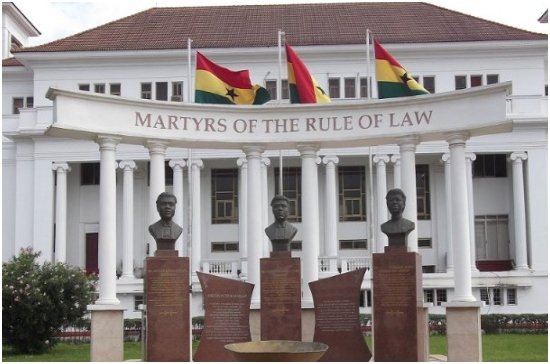
We have curated the most relevant and impactful stories from Ghana for your enjoyment and awareness.
Prof Prempeh Descends on Supreme Court and AG Over Suit Against OSP
Executive Director of the renowned think tank Center for Democratic Development, Ghana (CDD-Ghana), Prof. Henry Kwasi Prempeh, has launched a strong criticism of the Supreme Court and the Attorney-General’s Department over a suit filed against the Office of the Special Prosecutor (OSP). He described the legal action as an attempt to undermine the OSP’s independence and accused the judiciary and the AG of shielding corruption. Prof. Prempeh maintained that the move sets a dangerous precedent and weakens public confidence in anti-corruption institutions.
Read the full story here
Right Move, Wrong Timing – COMAC CEO Questions Govt’s Delay on Fuel Price Relief
The Chief Executive Officer of the Chamber of Oil Marketing Companies (COMAC) has described the government’s planned intervention to reduce fuel prices as “the right move” but criticized the timing as too slow. He noted that the delay is compounding hardship on consumers already struggling with the recent sharp increases in petrol and diesel prices. The CEO called on the government to act more swiftly to implement relief measures before the situation escalates further.
Read the full story here
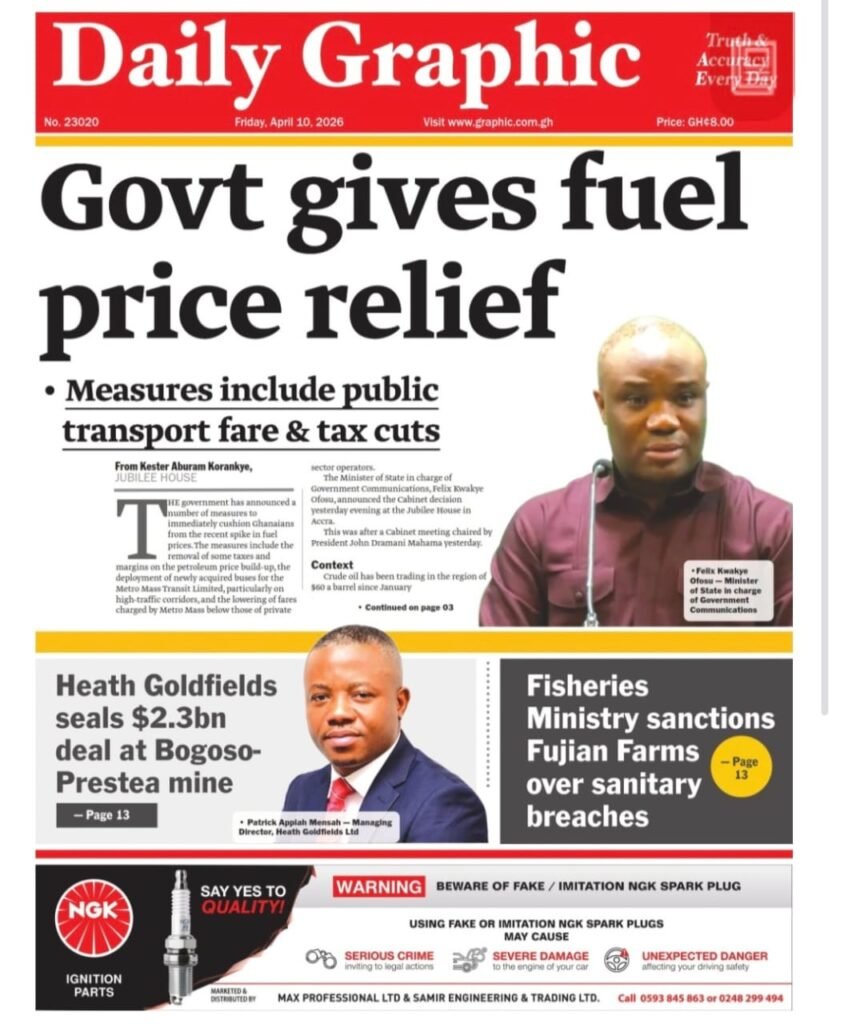
Mahama Enforces Fuel Coupon Ban for Ministers as Cabinet Moves to Slash Fuel Taxes
President John Dramani Mahama has directed that all government ministers and political appointees stop using fuel coupons with immediate effect. The directive comes as the Cabinet considers slashing certain fuel taxes and levies to provide relief to consumers following the recent price surge. The move is part of broader efforts by the government to demonstrate leadership and sacrifice amid the current economic pressures caused by global fuel price increases.
Read the full story here
NRSA Stands Firm on Toyota Voxy Ban Despite Transport Operators’ Opposition
The National Road Safety Authority (NRSA) has maintained its ban on the use of Toyota Voxy vehicles for commercial transport operations, despite strong opposition from transport unions and operators. The Authority cited safety concerns and the vehicle’s unsuitability for commercial passenger services. It has given operators a grace period to comply or switch to approved vehicles, insisting that the decision is non-negotiable and aimed at protecting public safety.
Read the full story here
Police Officer Killed in Road Crash at Atortorkorpe in Ada
A police officer has been killed in a tragic road accident at Atortorkorpe in the Ada area of Greater Accra. The officer lost his life while on duty when the vehicle he was travelling in was involved in a crash. Police have commenced investigations into the circumstances surrounding the accident as colleagues mourn the loss of their fellow officer.
Read the full story here
Ex-Black Stars Player Accuses Family of Stealing His 8-Bedroom House
A former player of the Black Stars has accused members of his own family of allegedly stealing his eight-bedroom house. The ex-footballer claims the property was taken from him through fraudulent means while he was away. The case has sparked public interest and is currently under police investigation.
Read the full story here

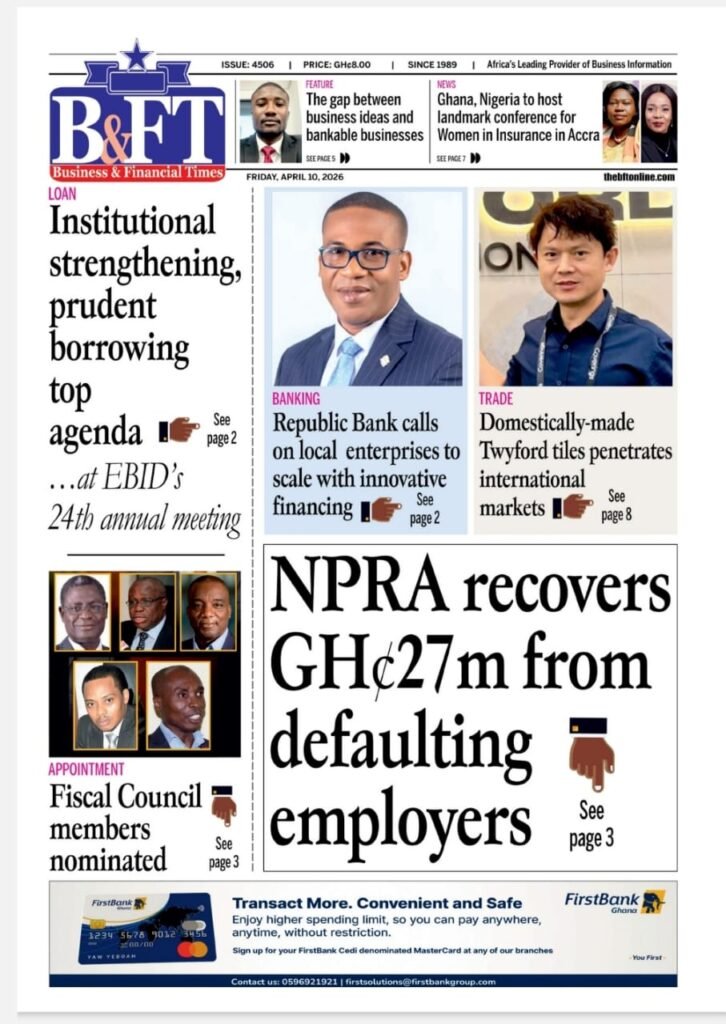
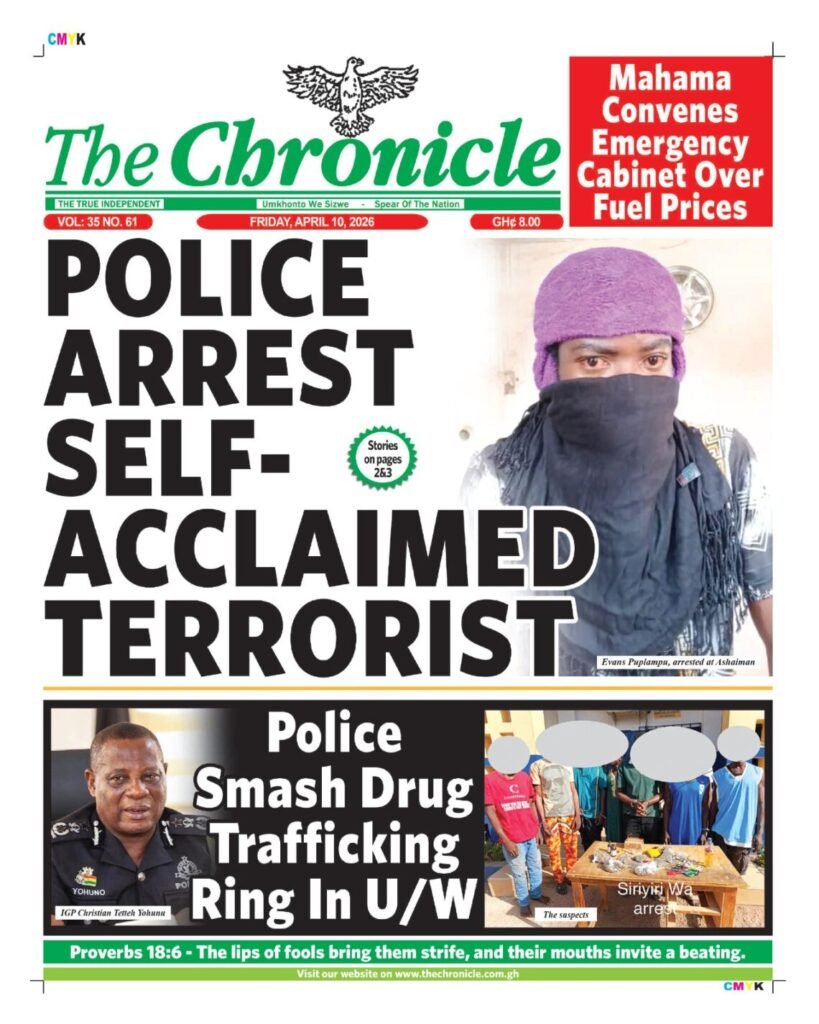
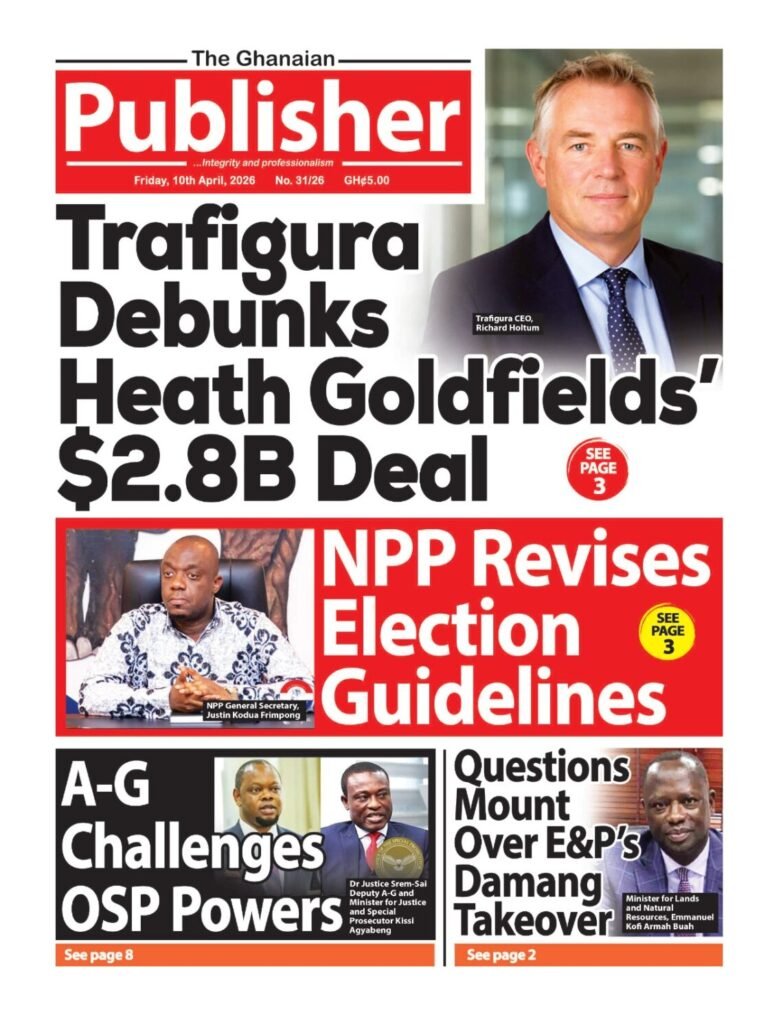
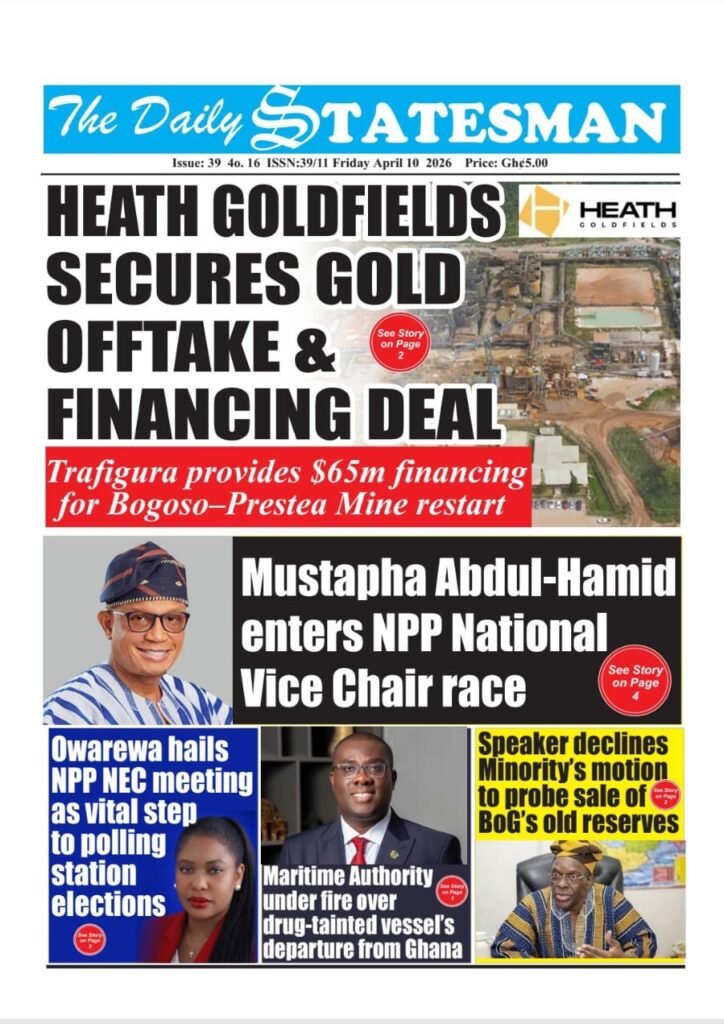
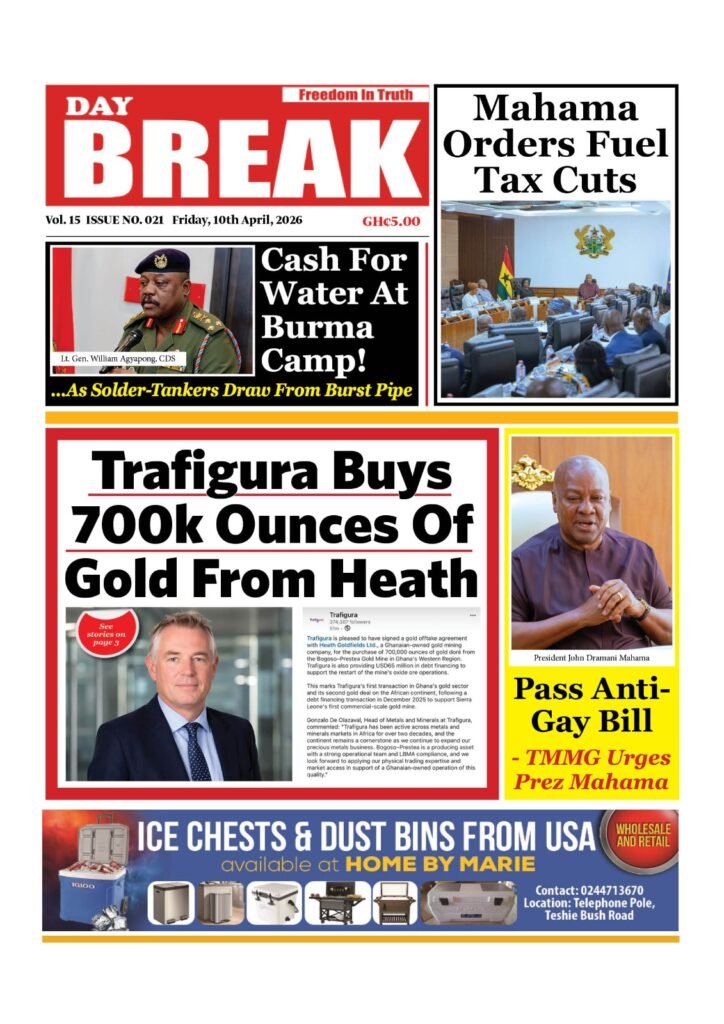
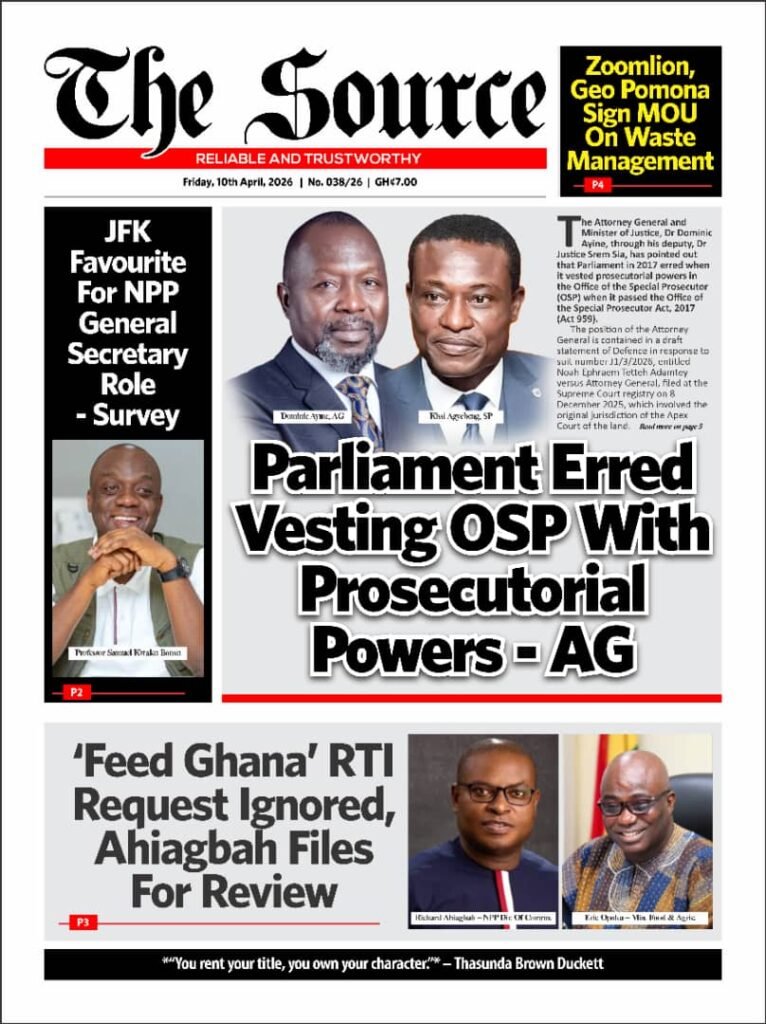
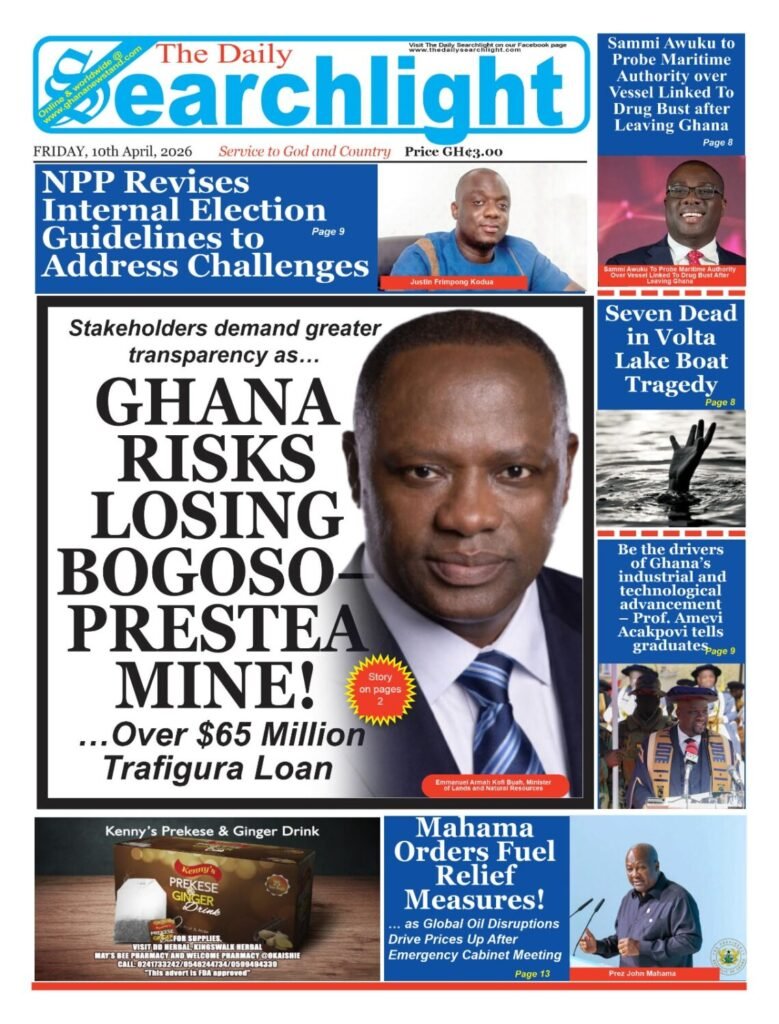
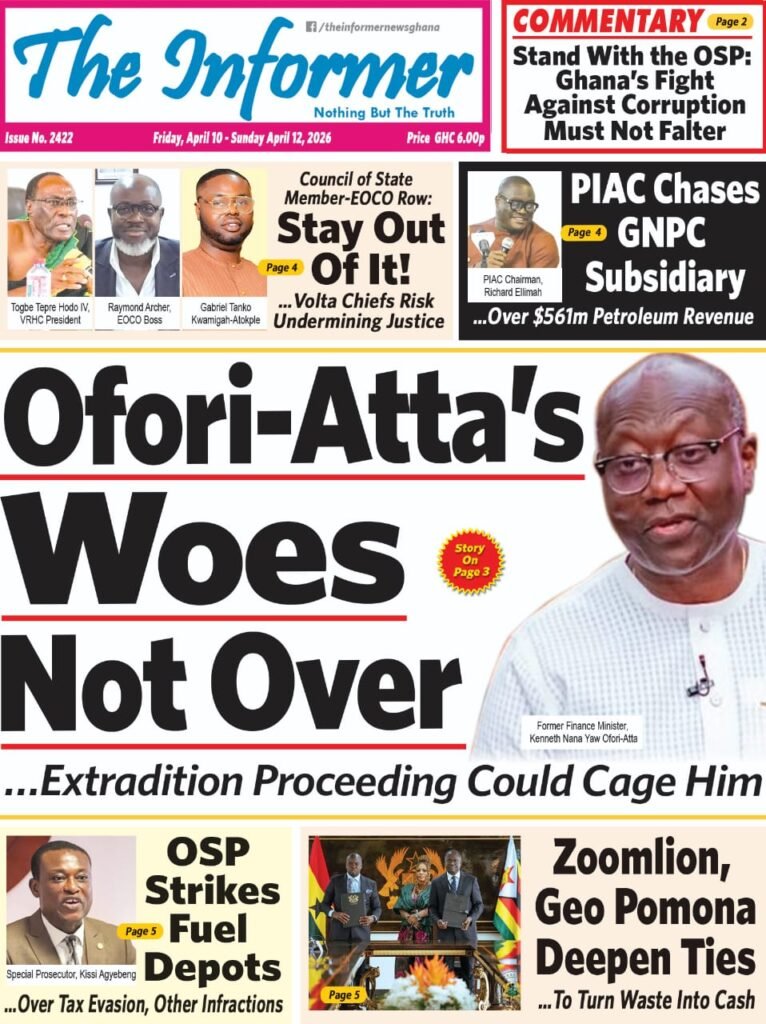
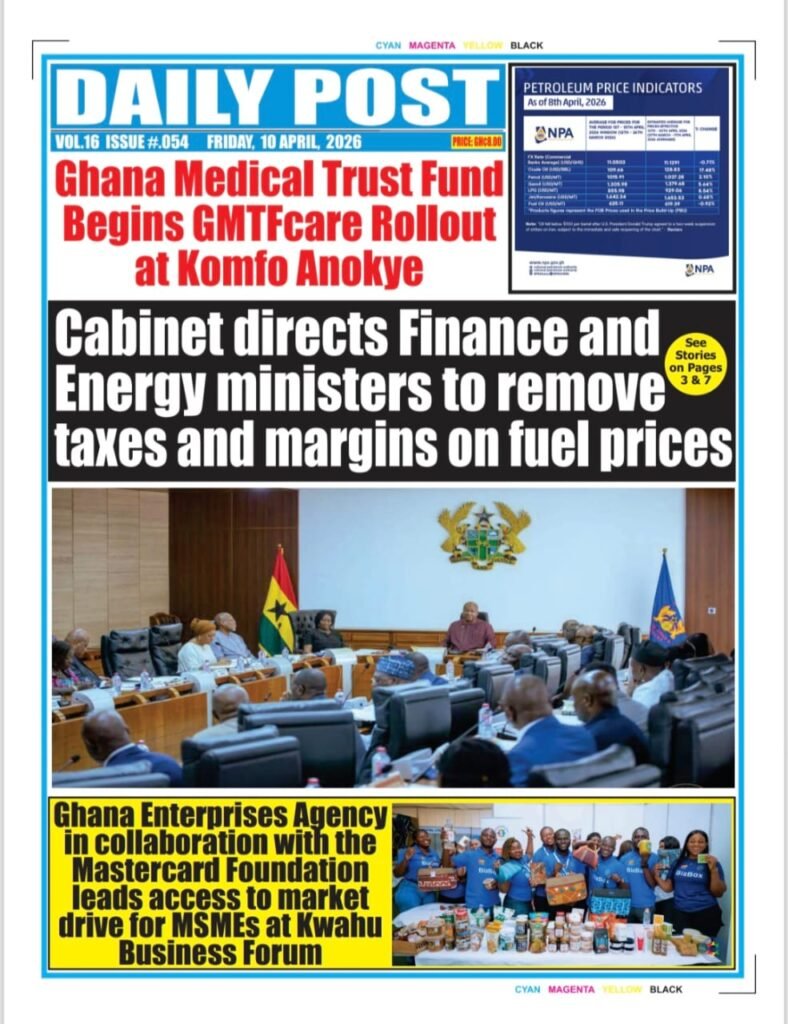
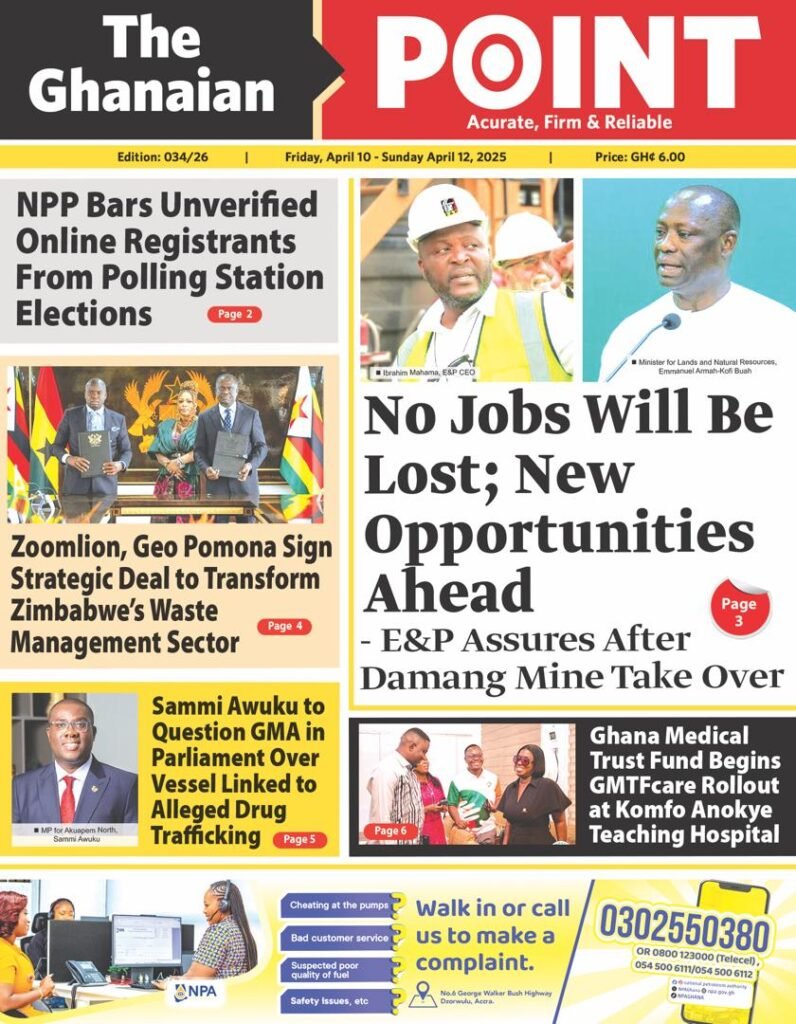
Friday, April 10, 2026. Stay informed with today’s front pages of Ghanaian newspapers, all in one place.









EU Approves $23 Million Grant to Upgrade Ghana’s Tema-Mpakadan Railway

Ghana Nears Approval of Cannabis Licences as Country Prepares to Launch Regulated Industry

Prof Prempeh Slams Supreme Court, Police Officer Killed in Road Crash and Other Big Stories in Ghana Today
-

 Opinion17 hours ago
Open Letter to the British Ambassador on Reparatory Justice: Ghana’s Call to the British Government
-

 Festivals & Events2 days ago
Celebrating Black Voices in Fiction at the 2026 Black Girl Book Fair
-

 Ghana News5 hours ago
Newspaper Headlines Today: Wednesday, April 10, 2026
-

 Ghana News2 days ago
Ghana Celebrates Link to NASA’s Historic Artemis II Lunar Mission Through Astronaut Christina Koch
-

 Taste GH14 hours ago
Smoke, Sweetness and Street Life: The Timeless Charm of Ghana’s Roasted Corn
-
 Ghana News18 hours ago
7 Dead, 2 Missing After Boat Capsizes on Volta Lake in Ghana
-

 Taste GH2 days ago
Ivory Coast Roots, Ghanaian Soul: The Irresistible Rise of Akyeke and Tilapia
-

 Business17 hours ago
3 Things Ghana is Doing to Reduce Fuel Prices Amid Global Uncertainty