
Ghana News
Ghanaian Couple Found Dead in Morocco: The Painful Rise of ‘Digital First’ Tragedy Reporting


ACCRA, Ghana — Before their families could be notified, before Moroccan authorities could complete their initial investigation, the faces of Kassim Awudu and his Nigerian girlfriend were already circulating across social media platforms.
They were discovered by friends and strangers alike, not through official channels, but through viral images of their own deaths.
The couple was found lifeless in their Morocco apartment on February 26, 2026, after friends forced open the door with the landlord’s assistance. According to reports, they may have been dead for approximately three days before discovery. But in a troubling hallmark of the digital age, the tragedy didn’t remain private for long.
“All the people in the apartment ran away due to documentation issues, fearing the police would come and interrogate them,” a resident told Kofi TV, describing how neighbors fled rather than face authorities.
What they left behind, however, was a scene that would soon be broadcast across the internet.
When Grief Goes Viral Before Notification
The Morocco incident represents a growing global phenomenon: families learning of their loved ones’ deaths through social media rather than proper official channels. The sequence is tragically predictable—images surface, they are shared rapidly across WhatsApp and Facebook, and by the time authorities locate next of kin, the news has already reached them through the cruelest possible medium.
This experience mirrors cases worldwide. In Kosovo, Vahide Mustafa first learned of her husband Nysret’s death from a news story that appeared on her Facebook feed in February 2023. He had died while working at a quarry. The media reached his family before official notification could occur.
“Everyone who knew us called and came here,” Mustafa recalled. “We were speechless; we didn’t even realise what had happened.”
The trauma was compounded when she discovered that media outlets had used a photograph of her husband cropped from a picture they had taken together—a private memory transformed into public content without consent.
“It was posted on Facebook hundreds of times,” she said. “It was a picture he took with me, and they just cropped the picture and posted it.”
The Ethics Vacuum in Citizen Journalism
The line between bearing witness and exploitation has become dangerously blurred. What some defend as “citizen journalism” increasingly functions as voyeurism packaged as information sharing.
An editorial from the Times of Malta delivered a stark assessment: “Sharing graphic images of accidents, injuries or death on social media is not citizen journalism but voyeurism. It is not public service but public spectacle: gory, irresponsible and unethical”.
Real journalism operates within ethical frameworks, weighing the public’s right to know against an individual’s right to dignity. But when bystanders armed with smartphones bypass these considerations entirely, the results can be devastating for grieving families.
In Bangladesh, similar concerns have emerged following multiple national tragedies. Following a plane crash at Milestone School and College, “graphic images of bodies, bloodied uniforms, and weeping children circulated with merciless speed. No warning. No pause.”
The country’s experience with the July Uprising and the Rana Plaza tragedy before it transformed social media platforms into “unwitting archives of national trauma—unfiltered and unbearable.”
The Algorithm Economy of Suffering
Behind the rapid spread of such content lies a structural problem: platforms are designed to reward the shocking.
As one analysis noted, “The equation is brutally simple: the more shocking the image, the more traction it garners. Nuanced analysis is eclipsed by visual shock. Algorithms reward outrage. Trauma becomes content.”
This creates what psychologists call emotional numbing—a condition where repeated exposure to distressing stimuli blunts the capacity to feel. When every scroll brings a new tragedy, the human psyche learns to protect itself by detaching. The consequence extends beyond individual desensitization to societal erosion: “Suffering becomes routine, injustice loses its urgency. Victims are reduced to symbols.”
Toward a More Compassionate Digital Culture
The solution requires multiple approaches.
For the families of Kassim Awudu and his Nigerian girlfriend, that mindfulness comes too late. The digital machine has already consumed their tragedy—their images circulated, their deaths speculated upon, their privacy irrevocably breached.
The question remains whether their experience will prompt reflection among those who shared, or whether the next tragedy will follow the same painful pattern: bodies discovered, images captured, families notified last.
As one commentary on the phenomenon observed: “We do not need less citizen journalism. We need better citizen journalism”.






Ghana has introduced new regulations requiring certain gold exporters to refine gold dore locally before it can be shipped abroad, a move aimed at capturing more of the value generated by the country’s most valuable natural resource.
Effective September 1, the Ghana Gold Board (GoldBod) barred Self-Financing Aggregators (SFAs) from exporting gold dore purchased under arrangements with approved offtakers unless it is first refined in Ghana. Dore is semi-refined gold that requires further processing before it can be turned into bullion.
The directive, issued by GoldBod’s Compliance Directorate on August 24, implements the Ghana Gold Board Act, 2025 (Act 1140), which established GoldBod as the authority overseeing the buying, selling, assaying, refining, and export of gold in Ghana.
A Push for Local Value
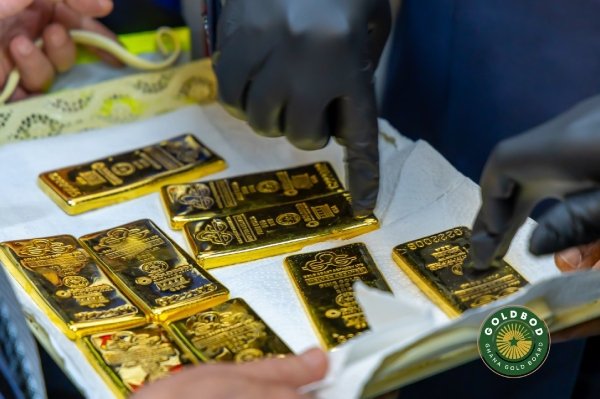
For Clement Edem Asare Morjah, chief executive of United Gold International Limited, a licensed SFA, the policy marks a significant change in how Ghana handles its most valuable natural resource.
“For the first time since independence, we have a government determined to make sure Ghana benefits from our biggest resource, gold,” he said.
Morjah said refining gold locally could allow Ghanaian companies to capture margins that have historically gone to overseas processors.
“In the entire value chain between refining and raw processed gold, the cost in between is a lot of margins. Historically, we have lost this to the outside world for decades. This is the first time deliberate government policy is trying to address this anomaly,” Morjah said.
But he added the short notice had created challenges for companies with existing contracts, which may now have to be amended. GoldBod had required SFAs to amend existing offtake agreements by August 31. Export applications would only be processed after GoldBod confirms that the gold has been refined locally, applicable charges have been settled, and other regulatory requirements have been met.
Building a Gold Industry
Prince Kwame Minkah, GoldBod’s media relations officer, said the policy was intended to ensure Ghana captured more of the economic benefits from its gold.
“Ghana is one of the top gold-producing countries in the world, so we need to truly maximise national benefits,” he said. “Value addition is key.”
He said the policy was consistent with President John Mahama’s vision that, by 2030, Ghana’s natural resources should be exported with a certain level of value addition.
“The value addition is what will culminate in the building of a gold industry in Ghana,” Minkah said.
Local refining, he added, could create jobs, reduce the amount of money paid overseas for processing, and provide refined gold for industries such as jewellery manufacturing. GoldBod also plans to develop a gold village modelled on Dubai’s Gold Souk, he said.
Ghana’s Refining Capacity
Ghana has four licensed gold refineries, including Gold Coast Refinery and Royal Ghana Gold Refinery. Gold Coast Refinery, which opened in 2016, has a stated capacity of up to two tonnes a week, while Royal Ghana Gold Refinery, commissioned in August 2024, has a daily capacity of 400 kilogrammes (882 pounds).
GoldBod has supply agreements with both refineries. Under its agreement with Gold Coast Refinery, GoldBod supplies at least one metric tonne of gold a week. Gold Coast Refinery is also in partnership with South Africa’s Rand Refinery.
Minkah said GoldBod was building what he described as “the largest refinery on the African continent” in Ghana.
A Booming Gold Sector
Ghana produced nearly six million ounces, or about 185 tonnes, of gold in 2025, with small-scale mining accounting for about 3.1 million ounces (96 tonnes), up from 1.9 million ounces (59 tonnes) the previous year.
Gold export earnings reached about $20 billion in 2025, nearly double the $10.3 billion recorded in 2024, while total merchandise exports stood at about $31.1 billion. The surge has increased the government’s focus on bringing more of the gold value chain under domestic control.
George Darkwa, a gold and mineral expert, said the refining requirement was a positive development for the industry.
“It is a positive move that will enhance value retention and formalisation,” he said, urging foreign investors to support Ghana’s efforts to develop its domestic gold industry.
Tougher Enforcement
GoldBod said exporting, or attempting to export, unrefined dore in breach of the new requirements would violate licence conditions. Possible sanctions include the refusal or suspension of export approvals, suspension or revocation of licences, administrative penalties, and other enforcement measures.
The board said the directive was intended to strengthen regulation while retaining more domestic value through refining and other forms of value addition.
For Morjah, the benefits could eventually extend beyond the companies directly affected by the new rule. Once refined, gold becomes bullion that can meet recognised standards, he said, making its quality and value more predictable.
“Give it time,” Morjah said. “Everybody will understand the benefit. When you’re doing business, you don’t only think about your individual benefit as a company. You must think about the body corporate as a nation.”

Ghanaian-American entrepreneur Kofi Asante has secured $50 million in seed funding for Bluecore Energy, a startup developing small, modular nuclear reactors mounted on floating barges to deliver zero-emission power directly to ports, data centers, and critical infrastructure.
The raise comes just two months after Bluecore Energy emerged from stealth with a $10 million oversubscribed pre-seed round, and represents a major milestone for a founder building in one of the world’s most challenging and heavily regulated industries.
Bluecore Energy, headquartered at the Port of Long Beach in California, is developing water-cooled nuclear power reactors designed to operate aboard floating energy barges. The company’s initial system is being built to power the equivalent of approximately 15,000 homes, or to scale up to meet the power needs of a major port.
“Traditionally, getting more electricity at scale can take many years; rather than waiting years for new power infrastructure to reach the point of demand, our floating nuclear power plant is designed to bring the power source directly to it in the matter of days,” Asante said.
The startup has assembled a team that reads like a who’s who of elite engineering talent: SpaceX engineers, Black nuclear engineers, former Toyota manufacturers, Black Ivy League PhDs from Blue Origin, and one of the first women to serve as a nuclear submarine officer.

Since January, Asante has devoted himself full-time to Bluecore Energy, and the company’s progress has been rapid. In the first nine months since its founding, Bluecore has secured a port terminal, taken delivery of barges, initiated engagement with the Nuclear Regulatory Commission (NRC), engaged the U.S. Coast Guard, signed a Memorandum of Understanding between the U.S. Department of Transportation’s Maritime Administration (MARAD) and the Port of Long Beach, and built a mission-driven team of nuclear scientists, Navy nuclear submarine and ship officers, and rocket and automotive leaders.
“Less than 2 months ago, we came out of stealth. In the first 9 months from founding the company we now have a port terminal secured, barges delivered, test reactor, Nuclear Regulatory Commission (NRC) engagement kicked off, US Coast Guard engaged, MOU between U.S. Department of Transportation’s Maritime Administration (MARAD) and the Port of Long Beach signed, and a mission driven team of nuclear scientists, navy nuclear submarine and ship officers, rocket and automotive leaders,” Asante wrote on LinkedIn.
“Our focus is simple. Create and deliver zero-emission energy as safely and quickly as possible. Over 3 billion people live within an hour of water. We want to power them all. Excited about our pace, but not satisfied until everyone has access to clean energy,” he added.
The seed round was led by Silverton Partners, with continued participation from existing investors including Slauson & Co., Harlem Capital, Precursor Ventures, LMNT, Visible Hands VC, Karman Ventures, and Hartbeat Ventures. New investors joining the round include MaC Ventures, Collab Capital, Vanderbilt, Black Angel Group, and NBAYoungboy, among others.
The Port of Long Beach, where Bluecore is headquartered, is one of the world’s largest ports and has been striving to become one of the greenest. By deploying floating nuclear power plants directly to ports and coastal infrastructure, Bluecore aims to provide a scalable, clean energy solution for the estimated 3 billion people worldwide who live within an hour of water.
The company’s technology represents a potential paradigm shift in how ports, coastal cities, and maritime operations access reliable power — moving away from fossil fuels without waiting for traditional grid infrastructure to catch up.
For Asante, a Ghanaian-American founder, the raise is also a testament to the growing presence of diaspora-led innovation in some of the most capital-intensive and technically demanding sectors of the global economy.

Here are the top front page stories from Ghanaian newspapers published on Thursday, September 10, 2026.
Daily Graphic
- Main: TUC cautions against 5-year presidency
- Also: 15,000 Health workers earn average GH¢600 monthly – HSWU; Don’t share unverified CSSPS slips • Education Ministry to public
B&FT (Business & Financial Times)
- Main: Q1 2026 growth holds steady at 6.2% …as industry rebounds on oil
- Also: CBG to disburse GH¢55m to women, youth-led businesses under GWYESCO; Heavy medicine imports expose industry to external shocks; ASM tax gap offers new route to higher mining revenue – Chamber of Mines
The Overseer
- Main: PLOT TO REMOVE AFENYO & DMB’s 3RD-TERM BID: BAWUMIA CAMP BACKS JOHN BOADU
- Also: Ghana Clears University Of Memphis Debt After $3.5m Payment; All 6,300 GES Staff With Salary Arrears Have Been Paid – Finance Ministry Rejects Claims; Mahamacares Helping Patients Overcome Catastrophic Medical Costs In First Year
The Archives
- Main: DON’T STOP ‘BP’ DRUGS OVER ERECTILE DYSFUNCTION! …Cardiologist Warns Men
- Also: Frustration, Anxiety At CSSPS Resolution Centres …Parents Spend Hours, Nights Seeking Help; KATH Hails MahamaCares Impact …As GH¢4m Medical Equipment Boost Lands; Failed NPP Youth Leader Withdraws From Race
The Hawk Newspaper
- Main: FOUR GHANAIANS KILLED IN SOUTH AFRICA’S ‘AFROPHOBIC’ ATTACKS
- Also: ‘I’LL TAKE YOUR SEAT IN 2028’ – Moses Abor takes on Sam George in Prampram battle; ‘WHERE IS OUR MONEY?’ – Akufo-Addo appointees press Ato Forson over unpaid funds; BIG PUSH, GALAMSEY BLAMED FOR GHANA’S 8,578 FIBRE CUTS
Day Break
- Main: You’ll Be Red-Listed! …Muntaka Warns Recruits With Forged WASSCE Results
- Also: SHS Brouhaha: Avoid Prospectus Ghana …NCPTA Warns Parents; Jobs Coming! …GEXIM-Backed Cashew Factory To Start In November; Pay Miners Well …Minerals Commission Tightens Grip On Contract Mining
The Insight
- Main: MARITIME DEP BOSS ACCUSED …Of Interference In Spintex Land Dispute Case
- Also: Jamaica Files Slavery Reparations Petition With King Charles; Education Ministry Warns Public Against Circulation Of Fake CSSPS Placement Slips; Anti-Corruption Agenda: GACC Puts Mahama’s Record Under Scrutiny Today; GoldBod And The Golden Enclave Economy: A Struggle For Economic Survival Or Resource Nationalism
Africa Today
- Main: World Bank Flags GoldBod Operations …As Insufficiently Monitored, Says Jerry Ahmed
- Also: Mahama Swears In Independent Fiscal Council To Guard Public Purse; Akyem Oda MP Endorses Boakye Agyarko’s NPP Chairmanship Bid; TCDA Strengthens Shea Sector …As CEO Leads Inputs Distribution In Tamale
The National Enquirer
- Main: MINERALS COMMISSION TARGETS CONTRACTORS … Over underpriced mining bids
- Also: Afriyie-Ankrah Hails Mercy Ships’ Life-Saving Mission; KATH Hails Ghana Medical Trust Fund …As GH¢4m Equipment Boost Arrives; Maritime Authority Deputy Director Accused Of Using Land Guards in Spintex Land Dispute
Daily Democrat
- Main: Adeiso Residents Warn Okyehene Mponuahene -Don’t Step On Our Lands
- Also: KATH Hails GMTF’s One-Year Impact As Historic; Education Ministry Exposes Fake CSSPS Placement Slips; Galamsey: Forestry Commission arrests 12 illegal miners in Atewa Forest; Akandoh Takes Free Healthcare To Ghanaian Communities
The Spyder
- Main: TUC to Gov’t: Don’t Rush the Constitution
- Also: Sleeping for a Seat: Parents, Children Spend Nights on GNAT Hall Car Park as Placement Crisis Drags On; Silent Killer: 70% of Ghanaians Unaware they have High Blood Pressure – Cardiologist Warns; Coding Dream, Slow Start: Just 102 Trained Under Ghana’s 1m-Coder Plan?
The Dispatch
- Main: IGP TETTEH YOHUNO GIVES DATA ON OPERATIONAL SUCCESSES & THANKS GOVT. FOR MASSIVE SUPPORT
- Also: NPP CHAIRMANSHIP RACE – PAUL AOFOCO PICKS No 3; IT IS DIFFICULT TO BE AN HONEST POLITICIAN IN GHANA – TOP POLITICIAN; BETWEEN 40% & 50% OF DEATHS IN GHANA LINKED TO HEART DISEASE & STROKE – CARDIO BOSS
The Daily Searchlight
- Main: PHASE OUT BOARDING SCHOOLS! …Ghana Should Rather Invest in Quality Day Secondary Schools – Prof Adei
- Also: NPP Chairmanship Balloting Over As John Boadu Secures No. 1 Slot; UTAG-UG Kicks Against GTEC Recruitment of University Lecturers; TUC Rejects Dual Citizenship Proposal for Parliamentary Candidates
Daily Guide
- Main: NPP Top Posts: John Boadu, Sly Tetteh Pick No.1 Slot
- Also: BECE/WASSCE Results: We Need Honest National Conversation – Afenyo-Markin; TUC Opposes Dual Citizens Becoming MPs; GPRTU Suspends 30% Proposed Fare Increment
The Ghanaian Times
- Main: Time to reinvent Ghana’s agriculture •Tech, specialised training hold the key – Professor Adom-Asamoah
- Also: A new Bono takes shape • Minister touts unprecedented infrastructure drive; Economy expands by 6% in Q2 – GSS; PSC to link public servants’ pay to performance – Prof. Agyeman; Type 2 diabetes becoming common among children – Expert


-

 Ghana News3 hours ago
Ghanaian-American Founder Kofi Asante Raises $50M to Build Floating Nuclear Power Plants
-

 Ghana News1 day ago
Top Headlines From Ghanaian Newspapers: Wednesday, Sept. 9, 2026
-
 Ghana News1 day ago
Ghana’s Persistence Pays Off: AU Formally Commits to Tabling Xenophobia Petition in January 2027
-

 Ghana News1 day ago
Game-Changing Move: Ghana Sets Up New Fiscal Council to Scrutinize Government Spending and Win Back Investors
-

 Reels & Social Media Highlights2 days ago
Medikal in Church and ‘Cheater’ Memes
-

 Commentary15 hours ago
The Guns Turned Inward: Niger’s Mutiny and Russia’s Fragile Bargain in the Sahel | By Joseph McCarthy
-

 Health & Wellness2 days ago
Health Isn’t Slow—Our Expectations Are Too Fast
-

 Ghana News3 hours ago
Top Headlines From Ghanaian Newspapers: Thursday, Sept. 10, 2026