
Uncategorized
Ghana Urges Protection of Civilian Lives After Ghanaian, Indian, and Bangladeshi Nationals Injured in Drones Strike Near Dubai Airport

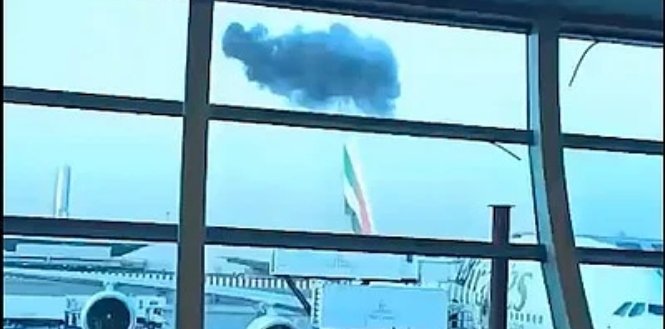
A drone incident in the vicinity of Dubai International Airport has resulted in injuries to four foreign nationals, including two Ghanaian citizens, according to official statements from Ghanaian authorities and the Dubai media office.
The incident, which occurred earlier on March 11, has thrust the busy international travel hub into the spotlight of the ongoing regional tensions. The Dubai media office confirmed that two drones fell near the airport, causing minor to moderate injuries.
Among the wounded are two Ghanaian nationals, one Bangladeshi national, and one Indian national, who reportedly sustained moderate injuries.
Ghana’s Swift Response and Condemnation
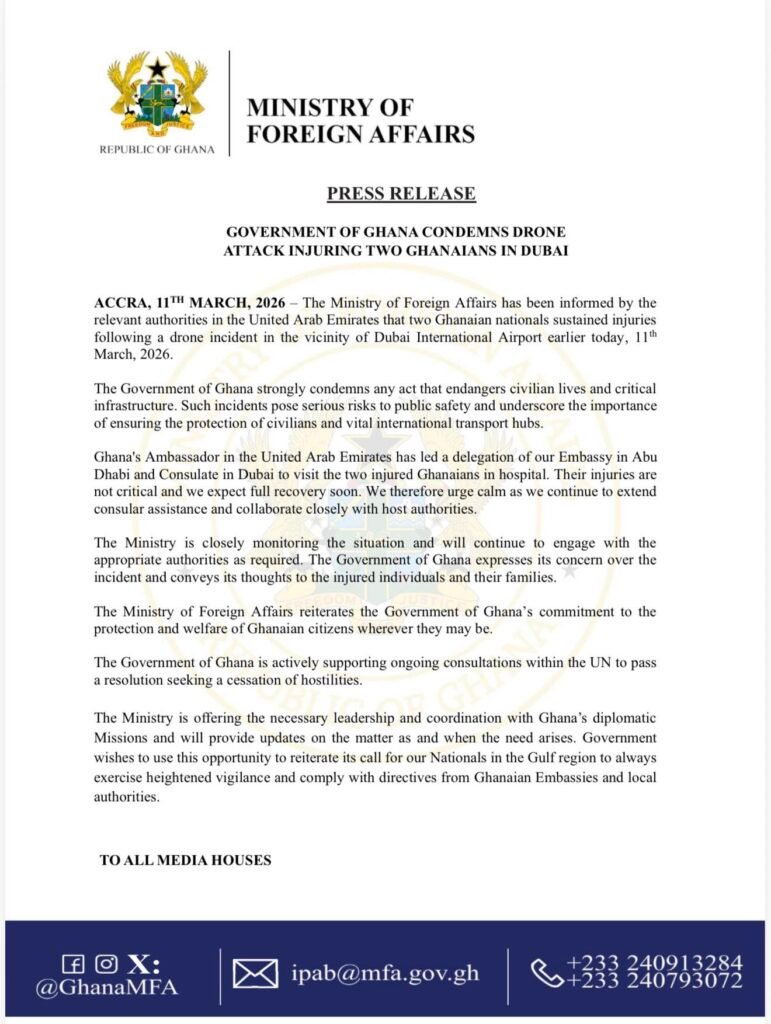
In a press release issued from Accra on Tuesday, March 11, 2026, the Ghanaian Ministry of Foreign Affairs confirmed that it was informed of the incident by relevant authorities in the United Arab Emirates.
The Government of Ghana issued a strong condemnation of the attack, stating that it “strongly condemns any act that endangers civilian lives and critical infrastructure.” The statement emphasized that such incidents “pose serious risks to public safety and underscore the importance of ensuring the protection of civilians and vital international transport hubs.”
Providing immediate consular support, Ghana’s Ambassador to the UAE led a delegation from the Embassy in Abu Dhabi and the Consulate in Dubai to visit the two injured Ghanaians in the hospital. Officials have confirmed that their injuries are not critical and that a full recovery is expected.
“We therefore urge calm as we continue to extend consular assistance and collaborate closely with host authorities,” the Ministry stated.
The Incident at the Airport
The attack unfolded near one of the world’s most saturated air travel hubs. According to reports from the scene, the drones were part of a hostile incursion and were intercepted by the UAE’s air defense systems. However, debris from the intercepted drones fell within the airport’s vicinity, leading to the collateral injuries.
“The drones were coming from the direction they’re being intercepted,” a reporter on the ground noted, explaining the complex security situation. Despite the nearby strike, authorities confirmed that air traffic at Dubai International was operating as normal, even as the armed forces remained active with air defense systems and fighter copters hovering to neutralize further threats.
A Region on Edge
The injuries to the Ghanaian, Indian, and Bangladeshi nationals highlight the far-reaching human impact of the escalating geopolitical conflict in the Gulf region. Analysts suggest the UAE is increasingly facing collateral damage from the wider tensions involving Iran, America, and Israel.
“We are seeing the impact in many of these pockets causing collateral damage and casualties to civilians,” explained a journalist on the ground. The situation marks an unprecedented security challenge for the UAE, a nation that has not seen such direct armed conflict in its modern history since its formation in 1971.
Call for Vigilance and International Action
In response to the incident, the Government of Ghana has reiterated its call for its nationals in the Gulf region to “always exercise heightened vigilance and comply with directives from Ghanaian Embassies and local authorities.”
Furthermore, Ghana is actively supporting ongoing consultations at the United Nations to pass a resolution seeking a cessation of hostilities. The Ministry of Foreign Affairs stated it is closely monitoring the situation and will continue to engage with appropriate authorities to ensure the welfare of its citizens.
As the situation develops, the four injured nationals remain under medical care, with their respective embassies providing support. The incident serves as a stark reminder of the vulnerability of critical infrastructure and civilian populations amidst the volatile security climate in the Middle East.











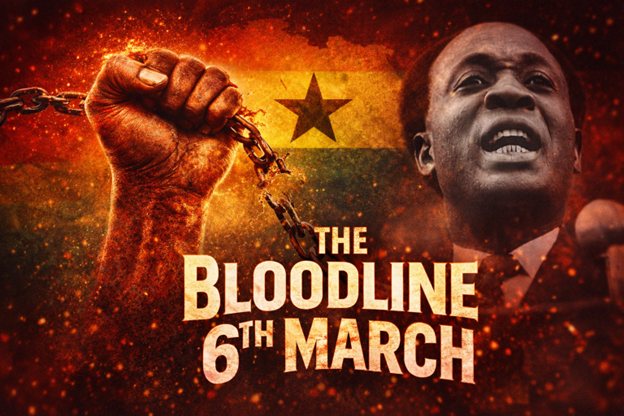
In a powerful opinion piece titled “The Bloodline of March 6th,” Ghanaian writer and cultural commentator Emmanuel Creppy traces a profound historical thread connecting the 1844 Bond of 1844 to Ghana’s independence in 1957, arguing that the date was no coincidence but a deliberate act of historical continuity and unfinished resistance.
The bloodline of March 6th
By Emmanuel Creppy
As a young man, I sat at the feet of my grandparents, listening to the rhythmic cadence of their voices as they spoke of heroes. In those moments, I didn’t just hear names; I felt the presence of giants. I grew up believing these men were “superheroes,” men who stood up when the world expected them to kneel.
But as I grew older, I noticed a painful void. When I turned on the television or browsed global streaming platforms, the stories of my ancestors were either missing or told through distorted lenses—glorifying the wrong moments or softening the edges of our resistance. That silence is no longer acceptable.
1844 — Before 1957
Under immense military, political, and economic pressure, several coastal chiefs signed what became known as the Bond of 1844. Some signed under duress, uncertainty, or the hope of survival within a tightening colonial grip. Others believed compromise was the only available shield.
But among them, King Kaku Ackah I of Nzema refused.
He understood something simple but dangerous: freedom cannot be borrowed. Once sovereignty is diluted on paper, generations inherit the cost. For that refusal, he was isolated and removed—not because he was weak, but because defiance exposes systems.
He did not end colonial rule. But he refused to legitimize it. And sometimes, refusal itself is history’s first reply.
The 113-Year Reply
History does not forget—it waits.
In 1957, when Kwame Nkrumah of Nkroful, a son of Nzema soil, declared Ghana independent, he was not only ending colonial rule. He was responding to unfinished resistance.
Whether by strategy or symbolism, choosing March 6 closed a historical loop that began in 1844. This was not a coincidence. It was continuity. A grandson finishing work began before his birth.
Where sovereignty was wounded in 1844, it was restored in 1957. Where one Nzema king stood alone, another son of the same soil stood with a nation.
But Nkrumah did not stand alone. The independence movement was a coalition of forces—educated elites, traditional rulers, market women, ex-servicemen, and youth across the Gold Coast. Figures like Eduardo Mondlane, though Mozambican, found solidarity in Accra’s rising Pan-African energy; George Padmore from Trinidad helped shape Nkrumah’s vision; J.B. Danquah and the Big Six, despite later political divergences, provided the intellectual and organizational architecture that made mass mobilization possible.
The United Gold Coast Convention (UGCC) and later the Convention People’s Party (CPP) were vessels carrying the hopes of millions—not one man, not one lineage, but a people awakening to their collective power.
And yet, there is something that still moves me about that Nzema thread—that a king from that soil refused in 1844, and a son of that same soil declared freedom in 1957. It tells me that resistance, even when it seems to fail, plants seeds. The bloodline of March 6th is not just about who gave birth to whom. It is about who remembered. Who refused to let the story die.
This is the African spirit—suppressed, delayed, but never defeated.
A Call to the Creative Tribe: Let Us Ring the Bell
This is not a loud call. It is a listening one — a responsibility.
To writers, filmmakers, musicians, historians, archivists, and cultural workers: we cannot keep these stories locked in memory alone. We must return—to the towns, the elders, the soil—and record what is still alive before silence claims it.
And here is the good news: some of us have already started. I think of Akosua Adoma Owusu, whose films bend time and place until you feel our grandparents in the room again. I think of Makeba Boateng who speaks fashion, remembering the trailblazers who clothed the revolution.
I think of Manifest, whose lyrics carry the wisdom of elders into rhythms our young people actually dance to. I think of Nana-Ama Danquah and Kobena Brako (Ben Brako), who have spent years making sure our voices appear on pages that last. There are others—too many to name—, but their work tells me the lions are learning to write. The field is still wide, though. So many stories still sit at the edge of dying, waiting for someone to come sit with them.
Short films, archives, documentaries, books of memory, and living records must replace erasure. Oral history carried us far—but now, we must document.
As the old saying goes: “Until the lion learns how to write, every story will glorify the hunter.”
It is time for the lions to write—carefully, honestly, and together.
And writing, here, means more than ink on paper. It means building institutions—archives, film funds, cultural policy—that ensure the next generation inherits not silence, but song. It means placing King Kaku Ackah’s refusal beside Nkrumah’s declaration beside the filmmaker’s lens beside the griot’s memory not as artifacts, but as living tools for the liberation still ahead.
But one question remains, and it may define the next chapter:
Was March 6 the end of the battle—or only the moment Africa learned it could win?
Or, as Nkrumah himself warned, is the battle only truly won when Africa is totally liberated?
Perhaps the answer lies not in the past, but in what we—the creative tribe—choose to build with what the past has given us.

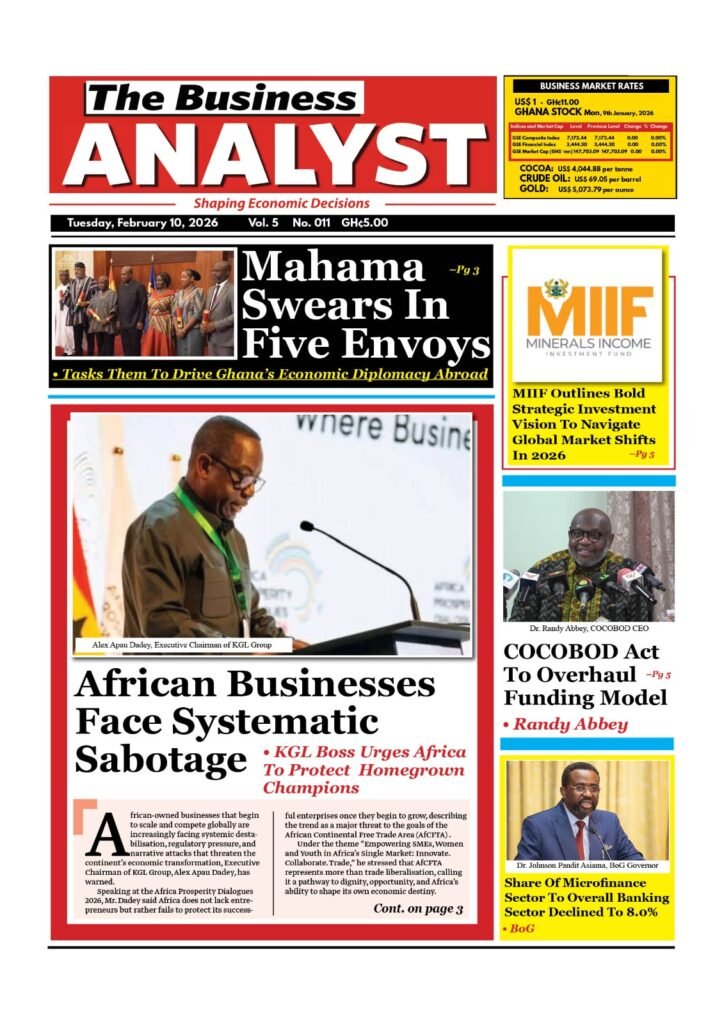
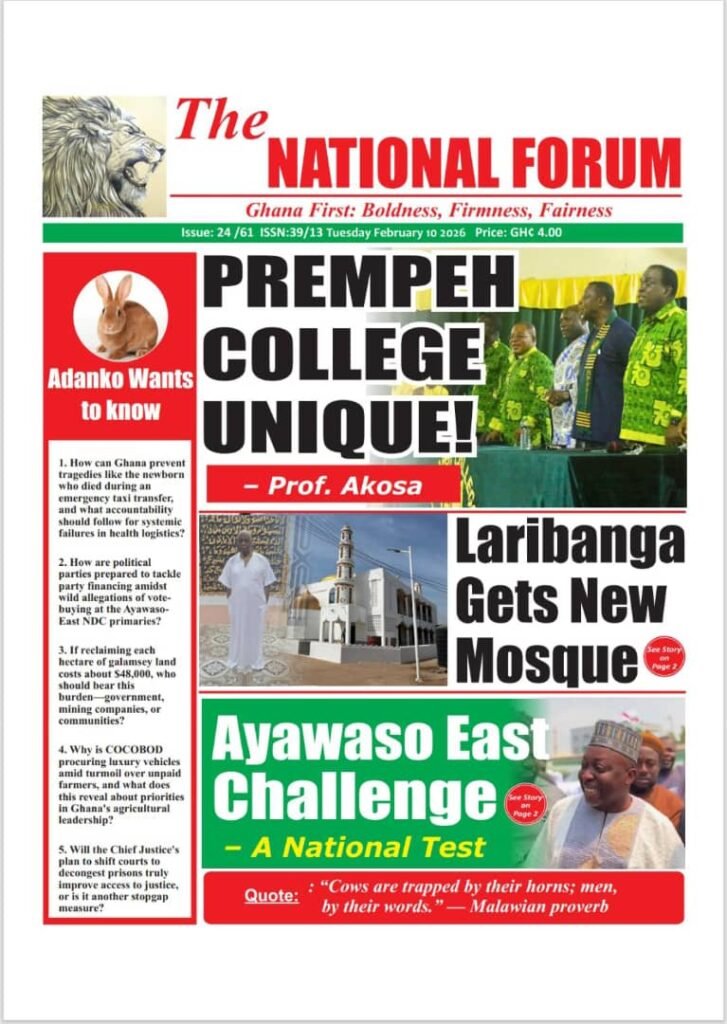
Stay informed with today’s front pages of Ghanaian newspapers, all in one place. Newspapers for February 25, 2026.
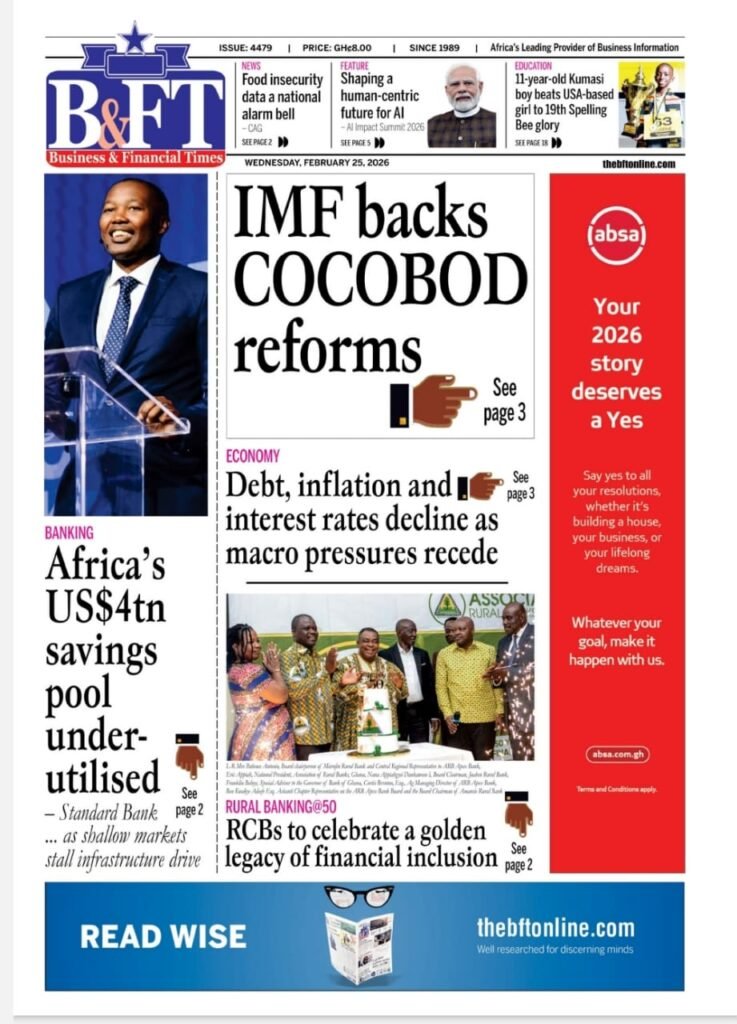

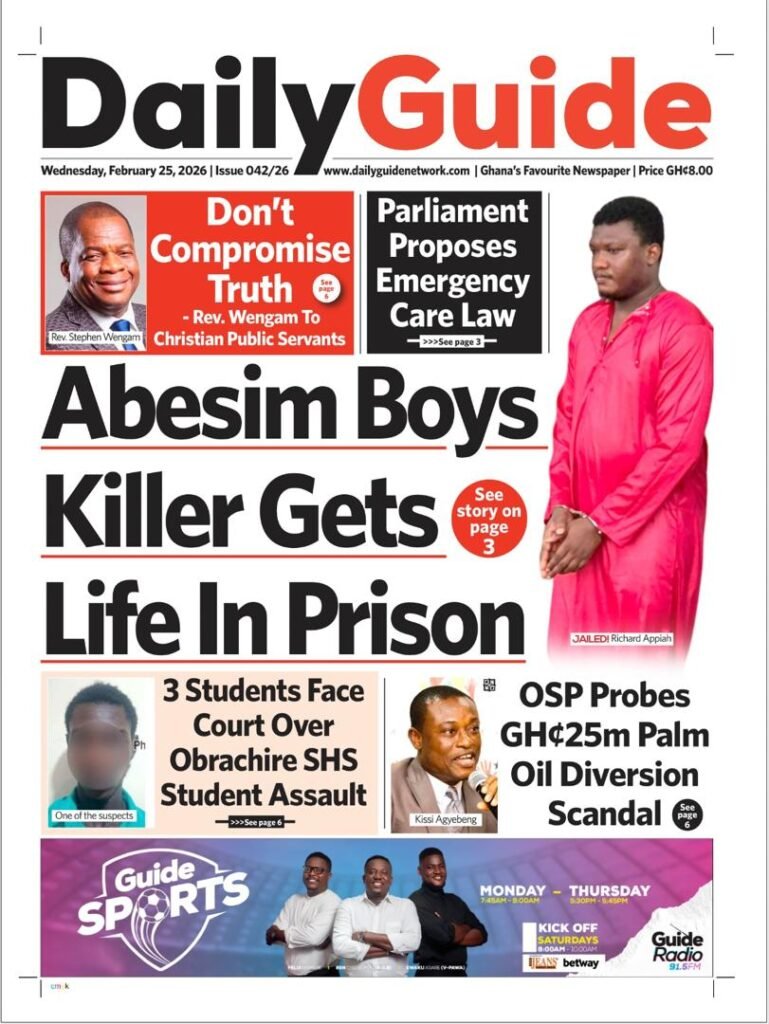
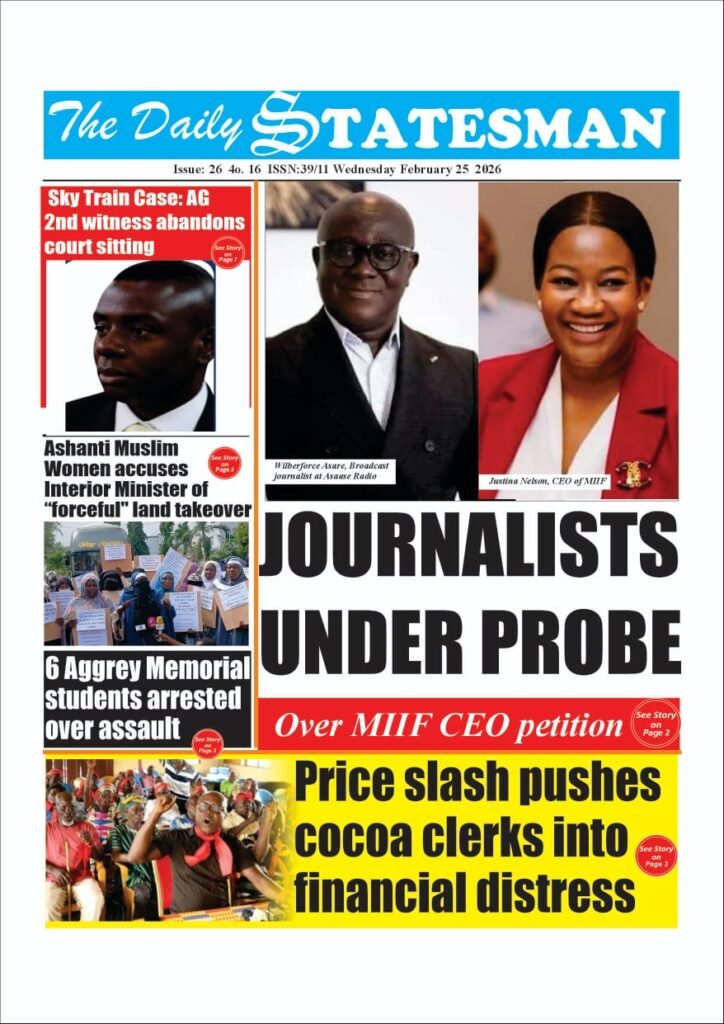
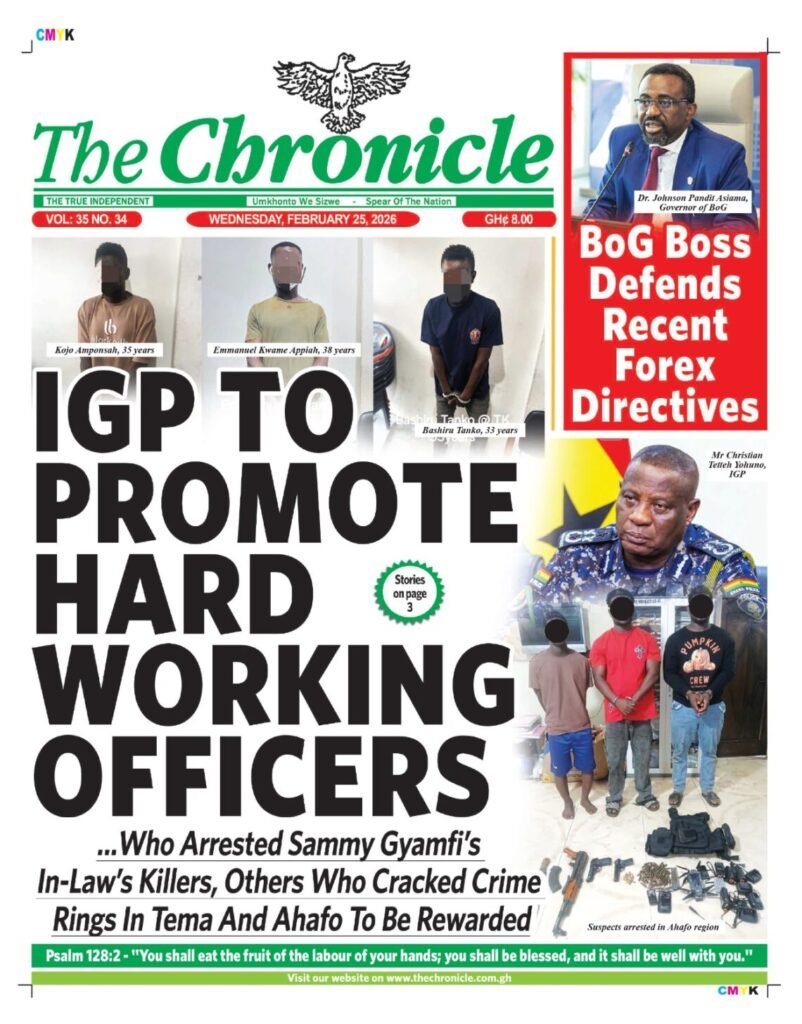






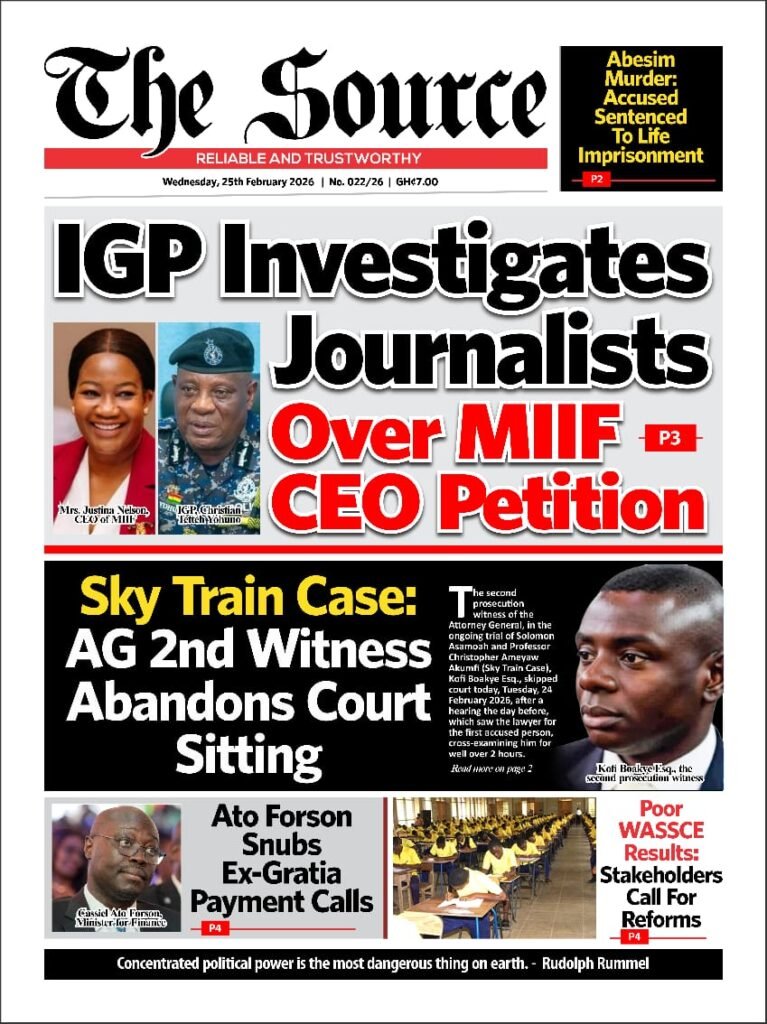
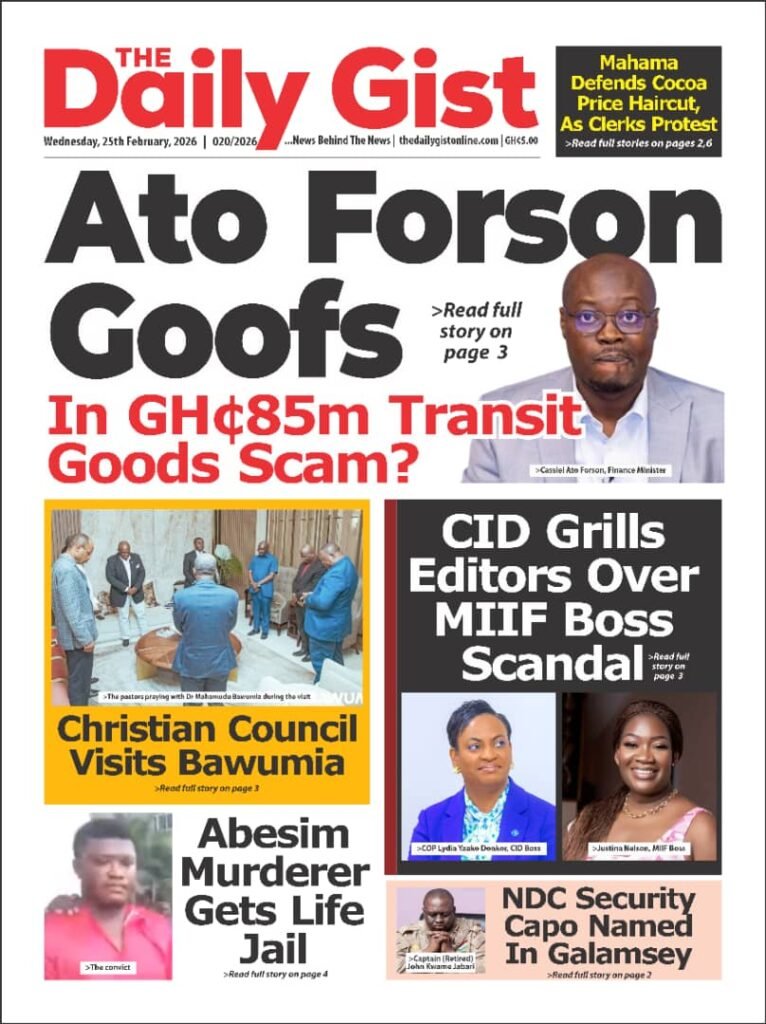



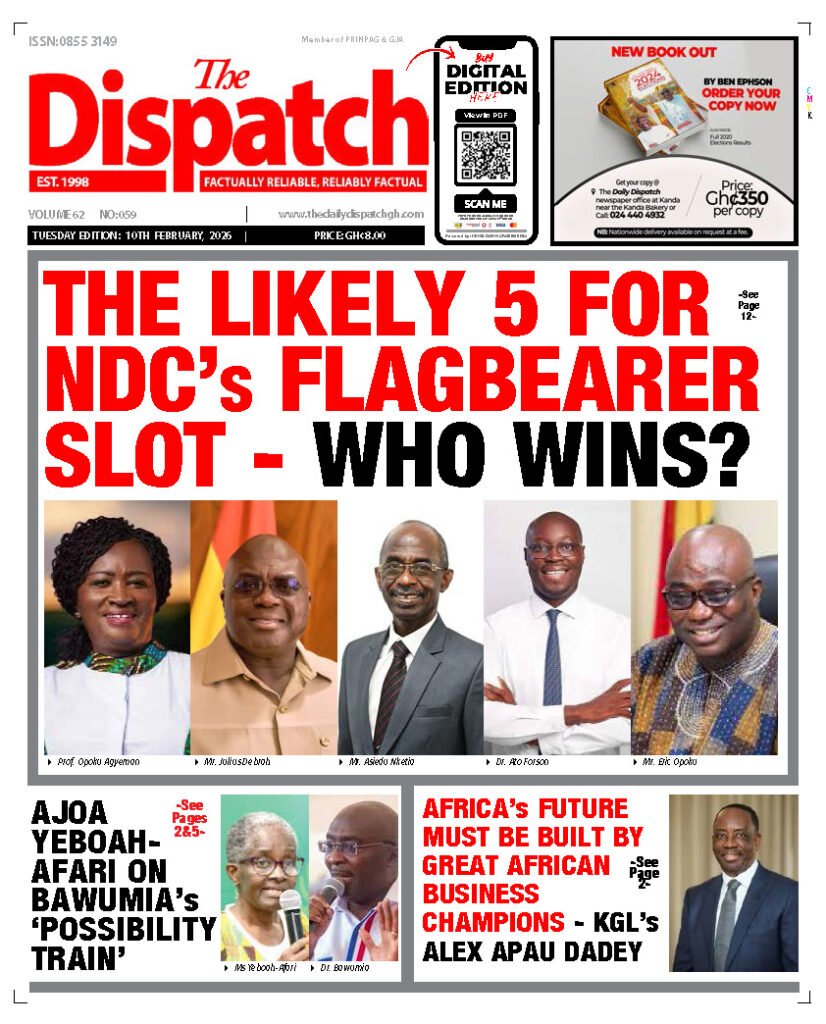
Stay informed with today’s front pages of Ghanaian newspapers, all in one place.










The Taste of the Sidewalk: Chasing Ghana’s Perfect Bite of Ghana’s Kofi Broke Man

The Night They Banned the Song: How a Highlife Guitar Felled a General and Renamed an Airport

5 Realistic Guide to Weight Loss on Ghanaian Foods
-

 Ghana News2 days ago
Newspaper Headlines Today: Wednesday, March 18, 2026
-
 Ghana News2 days ago
UK Engages Ghana on Counterterrorism and Maritime Security
-
Ghana News23 hours ago
Newspaper Headlines Today: Thursday, March 19, 2026
-
 Ghana News2 days ago
Two Scrap Dealers Lynched, Video of Mahama’s Reaction After Atta Mills’ Death Resurfaces and Other Trending Issues Today (March 18, 2026)
-

 Ghana News23 hours ago
New Video Captures Victims Piloting Microlight Before Fatal Crash, Dormaahene Breaks Down in Tears and Other Trending Issues Today (March 19, 2026)
-
 Ghana News2 days ago
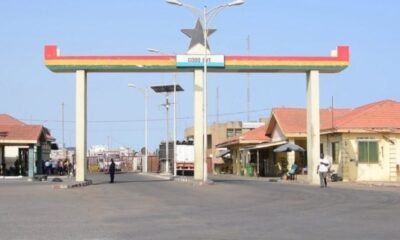
Germany Hands Over Four Operational Shelters to Ghana Immigration Service at Aflao Border
-
 Ghana News22 hours ago
Ghana to Table Landmark UN Resolution on Slave Trade in September
-

 Ghana News22 hours ago
54 Ghanaian Soldiers Return Home After Successful Hurricane Relief Mission in Jamaica