
Business
Ghana Restricts Bidding for Gold Fields’ Damang Mine to Locally Owned Companies

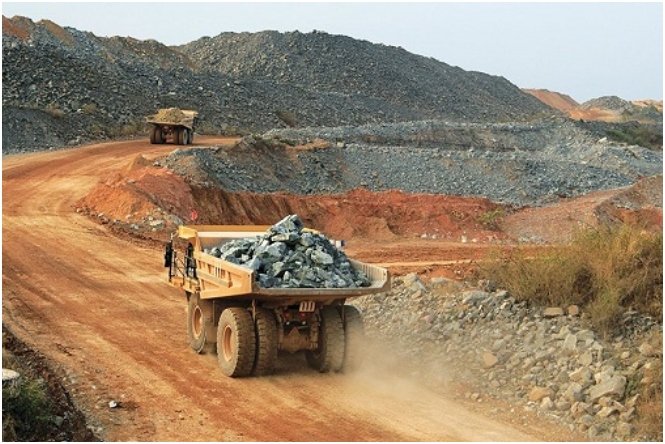
Accra, Ghana – Ghana has limited the tender process for the takeover of Gold Fields Ltd.’s Damang gold mine to companies that are 100% owned by Ghanaian citizens, as the government prepares to assume full control of the asset in April 2026.
The decision, outlined in a notice dated March 24 and signed by Lands and Natural Resources Minister Emmanuel Armah-Kofi Buah, reflects the country’s broader push to increase local ownership and participation in its mining sector. The deadline for submitting offers is Tuesday, March 31, 2026.
Gold Fields, which has operated Damang for nearly 30 years, saw its mining lease expire last year. The government granted a 12-month extension to ensure a smooth transition, during which the company restarted mining activities and submitted a detailed feasibility study to extend the mine’s operational life. Damang produced 88,000 ounces of gold last year.
Under the tender requirements, the successful bidder must have proven experience in open-pit gold mining, the capacity to operate the mine for at least another decade, and access to more than $500 million in funding for project development. The eventual owner will take over the asset on April 18.
This move aligns with a continental trend of African governments seeking greater control and revenue shares from their natural resources. In Ghana, major mines are still largely owned by multinational companies such as AngloGold Ashanti, Newmont, and China’s Zijin Mining. The Damang transition is being watched closely as a test case for increasing indigenous involvement in the sector.
Gold Fields is also negotiating a lease extension for its larger Tarkwa operation. Since 2000, the company has invested approximately $5 billion in its Ghanaian operations and contributed around $2.9 billion to the state through taxes, royalties, and dividends. It currently employs more than 7,000 people in the country, 99% of whom are Ghanaian nationals.









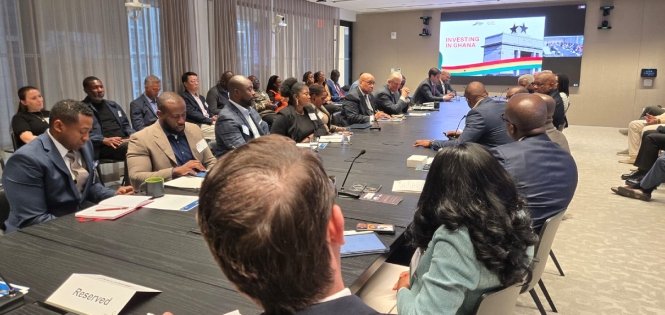
Ghana’s Ambassador to the United States, Victor Emmanuel Smith, has issued a clarion call to the Ghanaian diaspora, urging them to partner with American investors to drive development and create jobs back home.
Speaking at the seventh Investment Roundtable held at Orrick’s New York office in New York City, Ambassador Smith reaffirmed that Ghana has strategically positioned itself to enhance private-sector participation, manage external debt prudently, and exit the International Monetary Fund (IMF) stabilization program with both confidence and credibility.
The Ambassador highlighted the transformative investment opportunities emerging in Ghana, noting that significant hurdles have been overcome to stabilize the economy under President John Dramani Mahama. He reiterated that Ghana is open for business and ready to receive strategic partnerships.
“Ghana has laid the groundwork for sustainable growth. We are inviting our diaspora and their American counterparts to join us in building an economy that works for all,” Ambassador Smith said.
The roundtable, which forms part of the Embassy’s ongoing focus on expanding access and driving impactful investment, also featured remarks from Abdul Razak, Deputy CEO of the Ghana Investment Promotion Corporation (GIPC). Razak outlined the investment opportunities and incentives available under the GIPC Act, designed to support priority sectors for industrial transformation under the Mahama administration.
The event marked the latest in a series of strategic engagements aimed at fostering direct investment into Ghana, with a particular focus on job creation and long-term development.
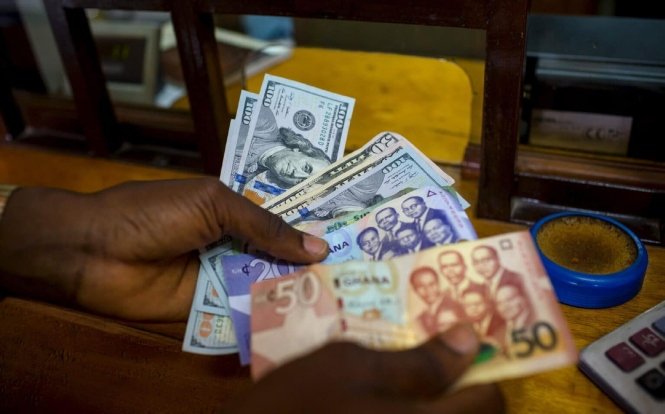
Ghana’s cedi is forecast to face continued depreciation pressure against the US dollar in the coming week.
At the same time, Zambia’s kwacha is expected to remain relatively stable, according to currency traders and bank analysts.
The cedi traded at 10.93 to the dollar on Thursday, March 26, 2026, compared with 10.90 a week earlier, according to London Stock Exchange Group data.
Traders cited persistent dollar demand from the energy, manufacturing, and commerce sectors that continues to outstrip supply in the interbank market.
Ronald Mensah, a trader at Stanbic Bank Ghana, told CNBC Africa: “The cedi continues to face modest depreciation pressure as demand persistently outpaces supply, with the Bank of Ghana’s FX intermediation auction providing only a partial offset.”
He added that, barring a meaningful shift in liquidity conditions, the currency’s relative weakness looks set to extend into the near term.
Andrews Akoto, head of trading at Absa Bank Ghana, echoed the view, noting that FX liquidity conditions are likely to remain tight in the coming week.
In contrast, Zambia’s kwacha strengthened to 19.02 per dollar on Thursday from 19.75 a week earlier. Traders attributed the stability to improved liquidity conditions and increased hard currency sales ahead of end-month obligations.
Access Bank noted in a market update that liquidity has improved, likely due to anticipated foreign exchange inflows in preparation for a government bond auction.
“These factors could continue to support the kwacha in the near-term,” the bank said.
The divergent trends highlight ongoing challenges for Ghana’s currency amid high import demand and limited dollar supply, while Zambia benefits from better liquidity positioning.
The developments come as African currencies continue to navigate global commodity price movements, domestic fiscal pressures, and varying levels of central bank intervention.
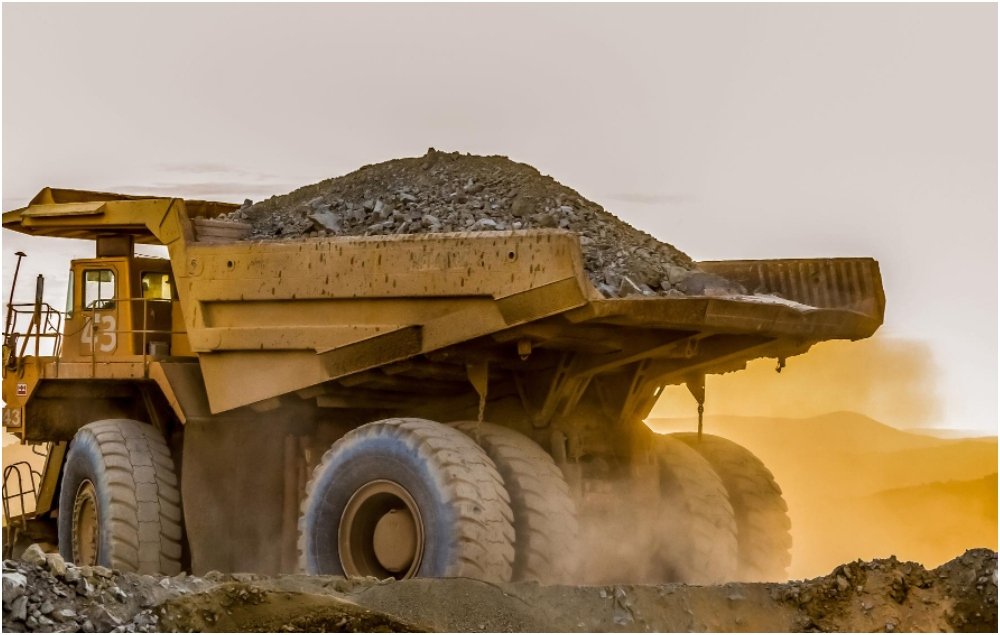
Accra, Ghana – Gold Fields has confirmed that preparations for the handover of its Damang Mine to the Government of Ghana are progressing smoothly.
The transfer is scheduled to take place in April 2026 following the non-renewal of the company’s mining lease.
The South African gold producer stated that it has worked closely with government officials and the transition team over the past year to ensure continuity of operations and a well-managed transfer of ownership. Mining activities at Damang were successfully restarted in May 2025, and the company has continued to invest in the asset, including the completion and submission of a detailed feasibility study to the Government of Ghana in December 2025.
“As part of the commitment to sustain ongoing operations at Damang, mining activities were successfully restarted in May 2025. Gold Fields has continued to invest in the mine, including by completing and providing to the Government of Ghana a detailed feasibility study in December 2025 – setting Damang up for an extended life of mine,” the company said in a statement.
The feasibility study projects that, with an estimated capital injection of roughly US$600 million, the Damang mine could continue producing for another nine years at an average annual output of around 150,000 ounces. However, Gold Fields emphasised that these figures are based on its own operational assumptions, and any new operator under state control may adopt a different approach.
Gold Fields CEO Mike Fraser reiterated the company’s commitment to supporting a stable transition while maintaining strong relationships in Ghana’s mining sector.
“We remain committed to contributing in Ghana’s mining sector and maintaining solid relationships with our stakeholders,” he said.
Since 2000, Gold Fields has invested approximately US$5 billion in its Damang and Tarkwa operations and contributed about $2.9 billion to the Ghanaian state through taxes, royalties, and dividends. The company currently employs more than 7,000 people in Ghana, 99% of whom are Ghanaian nationals, and has invested over $100 million in community development initiatives spanning health, education, and infrastructure.
The handover aligns with the government’s broader push for greater local participation and value addition in the mining sector. However, the government has not yet issued any formal public statement on the latest developments regarding the Damang transition.
The Damang Mine, located in Ghana’s Western Region, has produced more than four million ounces of gold over its operational lifetime and is viewed as a strategically important asset as Ghana seeks to diversify its mineral revenue base beyond traditional gold production.


Ghana’s Foreign Minister Slams UK Conservative Leader Kemi Badenoch Over Slavery Reparations Remarks

Claim Rawlings Did Not Die from COVID-19, Airfares Rise Over New Levy and Other Big Stories in Ghana Today

Newspaper Headlines Today: Wednesday, April 1, 2026
-

 Global Update2 days ago
UK-France Led Coalition Intensifies Push to Reopen Strait of Hormuz as the World Faces Soaring Fuel Costs
-
 Ghana News2 days ago
Ghana to Build Global Coalition Around CARICOM’s 10-Point Reparations Plan
-
 Ghana News1 day ago
Dr. Arikana Chihombori-Quao to Headline Upcoming Pan-African Unity Summit in Ghana
-

 Ghana News1 day ago
Black Stars Coach Sacked, Mahama Blasts Critics of UN Slavery Reparations Motion, and Other Big Stories in Ghana Today
-
 Ghana News2 days ago
Court Moves NAM1 Trial to Virtual Hearing, Israel Explains Voting Against UN Slave Trade Motion, and Other Trending Stories
-
 Opinion1 day ago
Between Memory and Partnership: Ghana’s Moral Test on Reparatory Justice
-

 Opinion2 days ago
Why Ghanaian Officials Must Know About and Prepare for the Hidden Risks of a Mass Black American Return to Ghana
-
 Ghana News1 day ago
Newspaper Headlines Today: Tuesday, March 31, 2026