
Business
Ghana Government Committed to Local Reinvestment of Petroleum Funds to Drive Energy Infrastructure and 24-Hour Economy

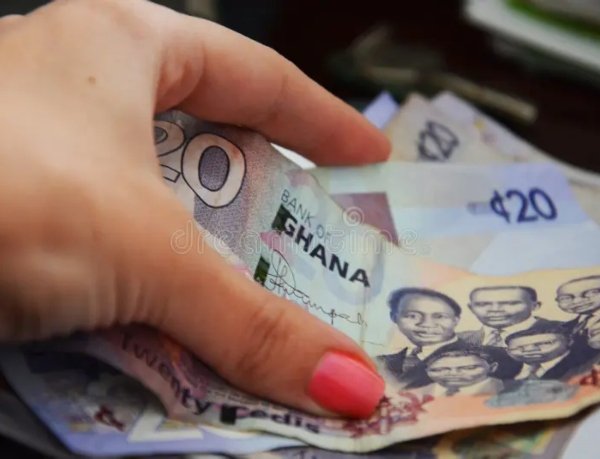
The Ghanaian government is advancing plans to redirect a portion of the Ghana Petroleum Funds (GPFs) toward domestic investments in energy and industrial projects, a bold policy shift designed to boost power reliability, create jobs, and support the flagship 24-Hour Economy initiative.
Technical Advisor to the Ministry of Finance Dr. Theo Acheampong outlined the proposal during a technical roundtable in Accra, organized by the Natural Resource Governance Institute (NRGI) and the Public Interest and Accountability Committee (PIAC).
The plan seeks to amend the Petroleum Revenue Management Act (PRMA) to allow investments beyond traditional low-risk foreign securities, channeling funds into commercially viable infrastructure such as thermal power plants, gas processing facilities, and related energy developments.
Under current rules, the GPFs—comprising the Stabilisation Fund and Heritage Fund—have accumulated approximately US$1.46 billion since 2011, generating average annual returns of about 1% (US$194.9 million total). Finance Minister Dr. Cassiel Ato Forson highlighted in the 2026 Budget Statement that this conservative approach limits economic impact, proposing new qualifying instruments to invest domestically for higher long-term returns and tangible benefits.
Proponents argue the move would enhance energy security, lower costs, stimulate industrial growth, and align with national priorities like the 24-Hour Economy by ensuring reliable power supply. Safeguards, including escrow arrangements and political-risk guarantees, are being highlighted to mitigate exposure.
However, the proposal has sparked debate among civil society and experts. PIAC Chair Richard Kojo Ellimah called for robust monitoring, while NRGI’s Africa Director Nafi Quarshie described it as a “consequential policy shift” that alters the balance between risk and security, warning of concentrated economic and political risks, potential blurring of the Heritage Fund’s savings purpose, and challenges to fiscal discipline without strong rules and oversight.
Policy experts from the Africa Centre for Energy Policy (ACEP) suggested a merged fund model with an initial 40% allocation to domestic projects, scaling to 60% if performance exceeds foreign benchmarks, with reversion to full foreign investment if unsuccessful.
The discussions follow recent PRMA amendments in December 2025, which expanded investment options and withdrawal mechanisms. PIAC has urged comprehensive stakeholder engagement, enhanced transparency, parliamentary oversight, and a full Act review to protect future generations and maintain the funds’ stabilisation role.
As Ghana seeks to maximize petroleum revenues amid global energy transitions, this proposed reinvestment strategy could mark a pivotal step toward greater domestic economic leverage—if balanced with prudent governance.









Accra, Ghana – March 4, 2026 – The National Communications Authority (NCA) has formally proposed to cancel the exclusivity clause in Next-Gen Infraco’s (NGIC) 5G licence, a decision that—if approved—would end NGIC’s ten-year sole right to deploy and operate 5G networks in Ghana and allow other operators to roll out 5G services independently.
In a Notice of Proposed Licence Amendment issued under Section 14 of the Electronic Communications Act, 2008 (Act 775), the NCA stated that removing the exclusivity provision is “in the public interest” and will achieve four key objectives:
– Promote competition and innovation in 5G services
– Enhance consumer choice and service quality
– Accelerate nationwide digital transformation
– Ensure optimal and efficient use of spectrum as a national resource
The proposed change would take effect 90 days from the date of the notice unless NGIC successfully objects during the statutory consultation period. The NCA emphasized that the amendment follows due process and aligns with its mandate to regulate the sector transparently and in the national interest.
NGIC was awarded the 5G licence in 2024 with the exclusive right to build and operate a shared 5G network until 2034. All mobile network operators (MNOs) wishing to offer 5G services were required to partner with NGIC. As of early 2026, NGIC has deployed only 49 sites nationwide: 43 in Greater Accra, 2 in Ashanti, and one each in Western, Northern, Bono, and Central regions.
The NCA also disclosed that NGIC is currently in default of its licence fee instalment payments and said the Authority is addressing the matter under the relevant licence conditions and statutory provisions.
Implications for Ghana’s Telecoms Sector
The proposed removal of exclusivity is widely seen as a potential game-changer for Ghana’s digital economy. Industry analysts and telecom executives have long argued that a single-provider model risks delaying nationwide coverage, limiting innovation, and keeping 5G prices high.
Samuel Nii Narku Dowuona, a telecom policy commentator, told Ghana News Global that true 5G competition would accelerate enterprise solutions in mining, oil & gas, manufacturing, healthcare (e.g., real-time telemedicine from ambulances), and agriculture (e.g., precision farming via IoT sensors).
“5G is great for enterprise solutions,” Dowuona said. “Businesses can provide services more efficiently to clients. Think of an ambulance fitted with 5G gadgets communicating in real time with a doctor at a hospital—such a solution could have saved lives in recent emergencies.”
The NCA’s move signals a shift toward a more competitive 5G landscape, potentially allowing MTN, Vodafone, AirtelTigo, and other operators to deploy their own networks or negotiate better terms with NGIC.
Faster rollout could also help Ghana close the digital divide, improve e-government services, attract foreign tech investment, and support President Mahama’s 24-Hour Economy agenda.
NGIC has not yet publicly responded to the proposed amendment. The NCA reiterated its commitment to fair, predictable regulation that balances investment incentives with consumer benefits and efficient spectrum use.
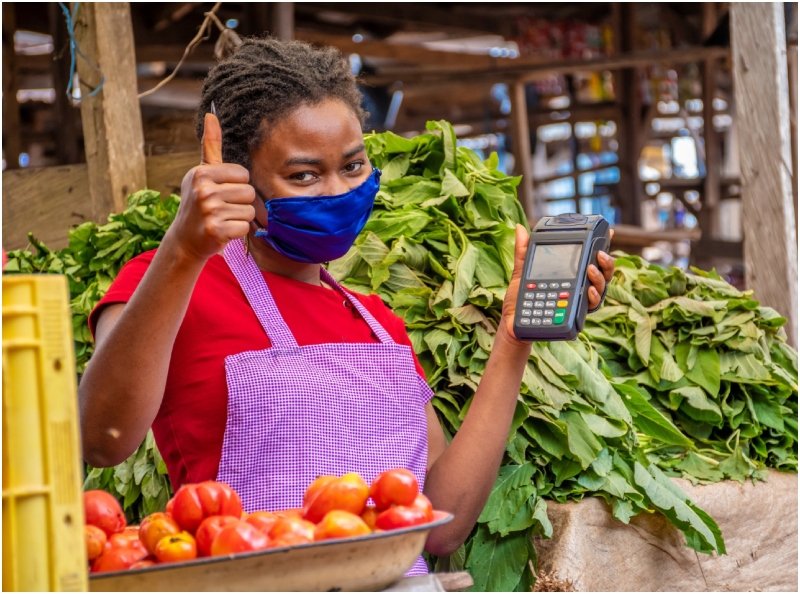
Accra, Ghana – March 4, 2026 – Ghana’s inflation rate continued its remarkable downward trajectory, falling to 3.3% in February 2026—the 14th consecutive monthly decline and the lowest level since the 2021 rebasing of the Consumer Price Index (CPI).
According to fresh data released by the Ghana Statistical Service, the CPI rose from 255.9 in February 2025 to 264.4 in February 2026, translating into a year-on-year inflation rate of 3.3%. This marks a dramatic improvement from the 23.1% recorded in February 2025—a 19.8 percentage point reduction within 12 months.
On a month-on-month basis, prices increased modestly by 0.8% between January and February 2026, reflecting controlled short-term pressures.
Key highlights from the report include:
Food & non-alcoholic beverages inflation slowed sharply to 2.4% (from 3.9% in January), offering welcome relief to households.
Non-food inflation rose slightly to 4.0% (from 3.8%).
Imported inflation dropped significantly to 0.6% (from 2.0%), signaling reduced external price pressure.
Locally produced goods inflation eased to 4.5% (from 4.6%).
Goods inflation fell to 3.2% while services inflation declined to 3.7%.
Regional variation remained: the Savannah Region recorded the lowest rate at -5.6%, while the North East Region posted the highest at 8.9%.
The sustained easing underscores the effectiveness of recent monetary and fiscal measures under the current administration, including tighter policy coordination, improved supply chains, and reduced import costs following cedi stability.
With inflation now firmly anchored in low single digits for the first time in years, policymakers and economists are shifting focus to maintaining this momentum amid external risks—particularly volatile global energy prices and geopolitical tensions in the Middle East that could reverse gains.
The Ghana Statistical Service will release the March 2026 CPI figures next month.
Business
Ghana’s Mega Infrastructure Push: 10 Game-Changing Projects Set to Transform the Country in 2026
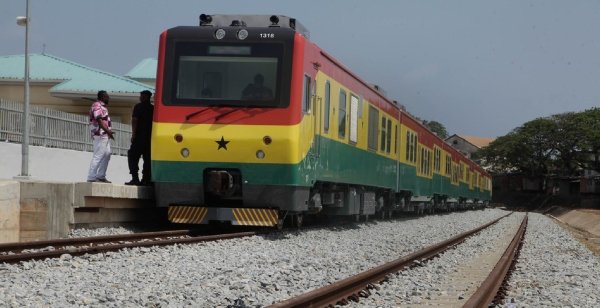
Accra, Ghana – March 3, 2026 – Ghana is in the midst of one of the most ambitious infrastructure drives in its history, with ten massive projects—ranging from railways and highways to solar parks, gas processing plants, and a landmark petroleum hub—poised to reshape transportation, energy, trade, and economic opportunity across the country and West Africa.
A recent viral video breakdown highlights these “megaprojects” as the backbone of Ghana’s development agenda under President John Dramani Mahama’s administration, emphasizing their role in modernizing mobility, boosting industrial output, ensuring energy security, and positioning Ghana as a regional economic powerhouse.
Top 10 Megaprojects Driving Ghana Forward
1 Big Push Roads Network
The flagship of Ghana’s GH¢30.8 billion infrastructure plan, this nationwide programme includes over 32 major road projects—dual carriageways, bridges, and interchanges—along critical corridors such as Accra–Kumasi, Tema–Aflao, and Cape Coast–Takoradi. Sod-cutting ceremonies began in 2025, with rapid progress expected in 2026. The network aims to slash congestion, cut transport times, lower logistics costs, and unlock trade, agriculture, and manufacturing growth.
2 Ghana Petroleum Hub
A $60 billion mega-development in the Jomoro Municipality near the western border, the hub integrates exploration, refining, storage, and export facilities. Groundwork accelerates in 2026, promising thousands of jobs, foreign investment, and a shift from net importer to regional energy leader.
3 Big Push Road Interchanges
Eight major interchanges along the Accra–Kumasi corridor target chronic urban congestion, supporting the 24-Hour Economy by improving traffic flow, reducing delays, and boosting productivity for commuters and businesses.
4 Trans-ECOWAS Railway
A proposed 530 km standard-gauge corridor linking Ghana’s eastern and western borders to Togo and Côte d’Ivoire. Feasibility studies continue, with potential construction start in 2026, aiming to revolutionize regional trade and connectivity.
5 Dawa Solar Park Phase 1
Ground broken in November 2025, this 100 MW solar facility in the Dawa Industrial Enclave near Accra is set for completion by December 2026. Phase 2 will double capacity to 200 MW, offering industrial users a 10% energy discount and significantly cutting carbon emissions.
6 OCTP Gas Processing Upgrade
Offshore Cape Three Points (OCTP) facility expanded to 270 million standard cubic feet per day in 2025, supplying ~70% of Ghana’s domestic gas and ~34% of electricity. The upgrade strengthens energy security and reduces reliance on imported fuels.
7 Amer Power Plant Relocation
Relocation of the Amer plant from Aboadze to Anwomaso in the Ashanti Region (ongoing since 2024) optimizes distribution, reduces transmission losses, and improves reliability for northern regions.
8 Bui Hydro-Solar Hybrid Phases 2 & 3
Adding 150 MW of solar to the existing Bui hydroelectric plant in the Bono Region, this hybrid expansion enhances renewable output, preserves water resources, and provides stable power even during low-rainfall periods.
9 Wiawso–Sankore Road
A 195 km highway across Bono East, Savannah, and Upper West regions, divided into seven lots for faster construction. Part of the Big Push initiative, it will accelerate agri-freight, connect regional capitals, and open rural markets.
10 Kojokrom–Manso Railway
A standard-gauge mineral freight line in the Western Region, 16% complete by 2023 and targeted for full operation by May 2026. Designed to move bulk cargo (gold, bauxite, manganese) efficiently to ports, reducing road congestion and transport costs.
These projects collectively aim to modernize Ghana’s transport backbone, secure reliable energy, integrate renewables, boost agricultural and industrial value chains, and position the country as a West African trade and logistics hub. Many are already under construction or in advanced planning, with 2026 marking a pivotal year of acceleration.


Independence Day Spending Scaled Down, CIA’s Role in Nkrumah’s Overthrow and Other Trending Issues in Ghana Today (March 6, 2026)

Video: How Kwame Nkrumah, Ghana’s Founding Father, Became Its ‘Prisoner’

The ‘Ghanaian’ Saturday Morning Rhyme That Crossed the Ocean
-

 Business2 days ago
Ghana Records 14th Straight Drop in Inflation, Hits 3.3% in February 2026
-

 Ghana News15 hours ago
69 Years of Independence: Quick Timeline of Ghana’s Biggest Milestones Since 1957
-
 Ghana News23 hours ago
Vendor Defends Frying With Plastic in Oil, Missing Young Woman, and Other Trending Topics in Ghana Today (March 5, 2026)
-
 Ghana News1 day ago
Ghana and St Kitts and Nevis Sign Agreement to Deploy Ghanaian Nurses and Doctors
-

 Global Update21 hours ago
US Tells Stranded Americans in Middle East: Don’t Rely on Government for Evacuation
-

 Ghana News21 hours ago
Ghana’s Independence Day Traditions: A Vibrant Celebration of Freedom, Pride & Unity
-

 Ghana News1 day ago
Newspaper Headlines Today: Thursday, March 5, 2026
-

 Culture17 hours ago
“You’re Supposed to Be Creating Jobs”: Ghana’s Ministry of Creative Arts Under Fire for Using AI Instead of Real Creatives For New Ad