
Culture
Diddy’s Last-Minute Bid to Block Netflix Docuseries Fails as ‘The Reckoning’ Drops


Sean “Diddy” Combs’ legal team fired off a cease-and-desist letter to Netflix on December 1, demanding the streaming giant pull a four-part docuseries executive-produced by his longtime rival, Curtis “50 Cent” Jackson.
Hours later, Sean Combs: The Reckoning premiered anyway, pulling back the curtain on the hip-hop mogul’s rise, fall, and the allegations that have dogged him for decades.
The letter, obtained by CNN, accused Netflix of using “stolen footage” from Combs’ private archives—clips he had commissioned since age 19 to chronicle his own life. One segment, filmed just six days before his September 2024 arrest, shows Combs in a tense strategy session with lawyers, saying,
“We need to find someone who will work with us who has worked in the dirtiest of dirty businesses. We are losing.”
Combs’ spokesperson, Juda Engelmayer, called the series a “shameful hit piece” and slammed Netflix for partnering with Jackson, whom he described as a “longtime adversary with a personal vendetta.” The team also blasted Netflix co-CEO Ted Sarandos for what they saw as a “vindictive response” after Combs declined to participate in a Netflix-controlled project.
Director Alexandria Stapleton shot back swiftly, insisting the footage was obtained legally and that the team had “moved heaven and earth” to protect their source’s anonymity.
“One thing about Sean Combs is that he’s always filming himself,” she said in a statement to Deadline. “We reached out to his legal team multiple times for comment but heard nothing.” Netflix echoed this, telling the outlet, “The claims being made about Sean Combs: The Reckoning are false.”
As of December 2, the series cracked Netflix’s U.S. Top 10 within hours of launch, though exact viewership figures won’t drop until Wednesday.
Combs, serving a 50-month sentence at New Jersey’s Fort Dix for two counts of transportation to engage in prostitution (acquitted on more serious sex trafficking and racketeering charges), has denied all related civil claims in roughly 70 lawsuits alleging drugging and assault—some involving minors.
This isn’t his first media battle; he sued NBCUniversal for $100 million over a Peacock documentary earlier this year. Jackson, meanwhile, has trolled Combs relentlessly on Instagram, posting edited clips tying the beef to past Jay-Z drama and promoting the series with glee.
Perspective
For a man who built an empire on control—Bad Boy Records, MTV awards, champagne showers—watching his own words weaponized by a nemesis feels like poetic payback.
Jackson’s involvement turns what could have been a somber reckoning into a spectacle, but it raises a fair question: When does rivalry cross into exploitation? Combs’ footage obsession was always about legacy; now it’s unraveling it in real time.


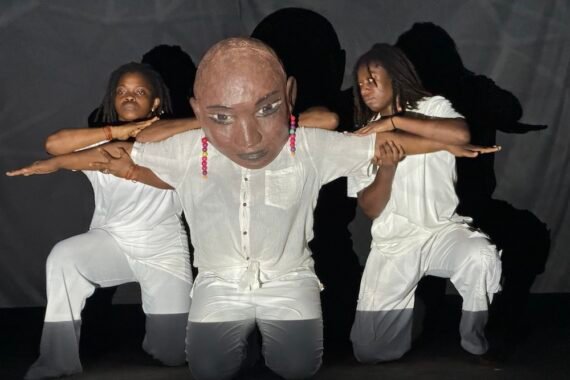
The air inside Lomé’s Maison des Arts et du Social didn’t just vibrate with sound; it hummed with the electricity of a shared nervous system.
As the final notes of Synaptic Resonances faded, the audience remained “glued to their seats,” a rare moment of collective paralysis in an era of digital distraction.
Choreographed by the visionary Tréma Michaël Rakotonjatovo, the performance served as more than a closing act for the Off Biennial 2026—it was a glimpse into a borderless, Pan-African future where the body serves as a living hard drive for ancestral data.
The most arresting image was a solitary dancer, her face obscured by a sculptural mask, moving through a digital rain of Zafimaniry motifs. These geometric patterns, traditionally carved into the wood of Madagascan homes, were projected onto the stage as flickering code.
It was a poignant metaphor for the modern African condition: carrying the rigid weight of heritage while navigating the fluid, often chaotic “architecture of flows” of the 21st century.
As performers Adjaratou Yerima, Kafui Dogbe, Farouze Gneni, and Keziah Bagna merged into a quartet, the stage became a responsive organism. Real-time video mapping tracked their limbs, turning muscle and bone into transmitters of light.
For the Ghanaian spectator, the resonance is clear. Much like our own contemporary artists who are reimagining kente weaving through digital pixels, Rakotonjatovo isn’t interested in a static past. He treats tradition as an “invisible current”—a source of energy that must be channeled into new, improvised forms to stay alive.
By the time the dancers collapsed the boundary between performer and observer, we weren’t just watching a show; we were the synapses, firing in unison.
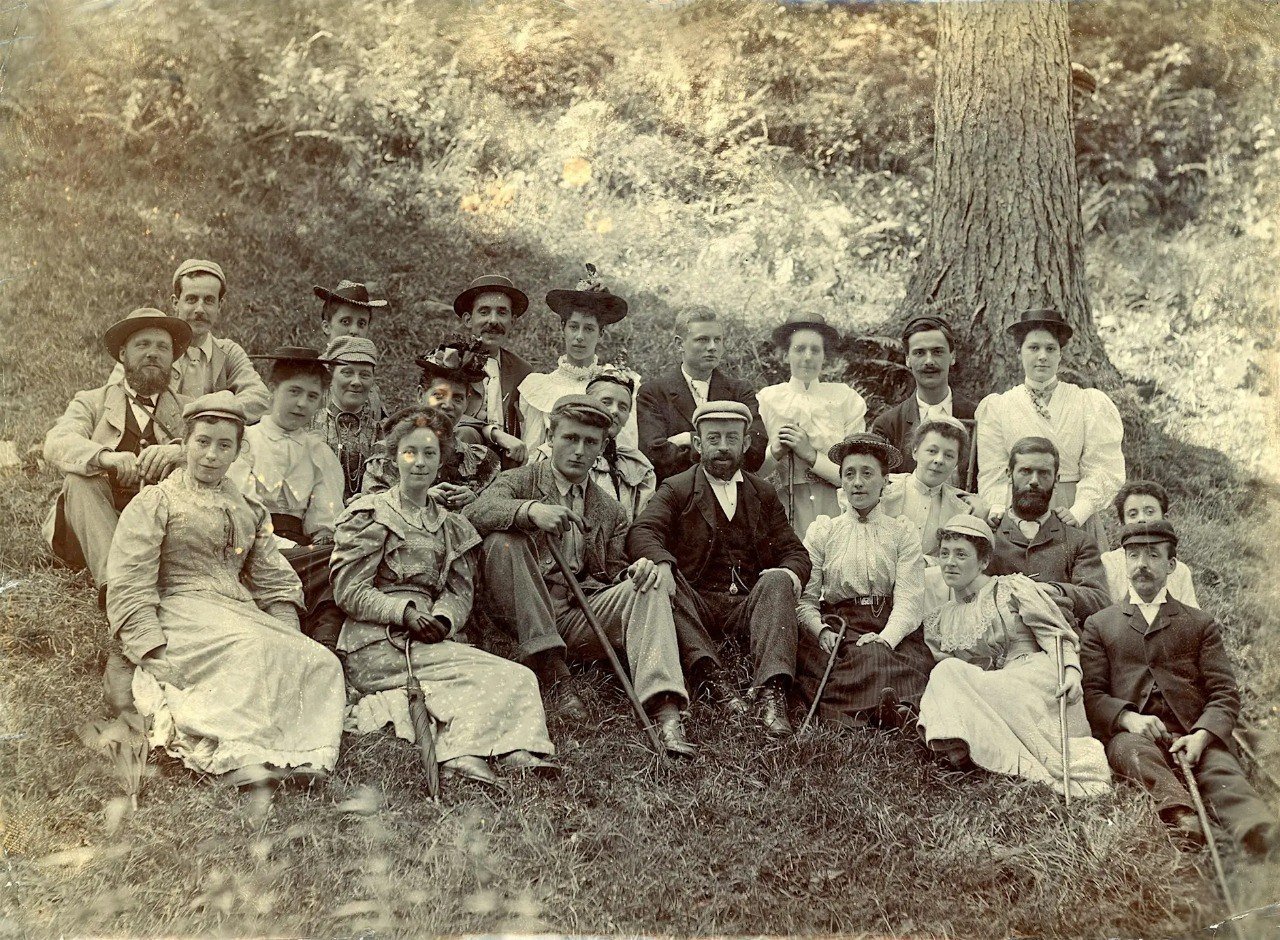
There’s something quietly powerful about hearing a name from the past and realising it belongs to you. Next week, an online event hosted by The National Archives invites participants to step into that moment—offering a guided journey into the lives of their 20th-century ancestors.
Titled Researching Your 20th Century Ancestors, the webinar forms part of a broader genealogy series designed to help people trace their family roots with clarity and confidence.
Led by family history specialist Jessamy Carlson, the session explores key historical records including the 1911 and 1921 censuses and the 1939 register—documents that capture everyday lives in remarkable detail.
Though rooted in British archives, the event resonates far beyond the UK, especially for audiences in places like Ghana, where questions of lineage, migration, and identity remain deeply meaningful.
For many Ghanaians—whether at home or in the diaspora—family history is not just about names on paper. It lives in oral traditions, clan systems, and the stories passed down at gatherings.
This webinar offers a complementary perspective: a structured, archival approach that can enrich those inherited narratives with dates, occupations, addresses, and personal histories that might otherwise be lost to time.
Participants can expect more than a lecture. The session begins with a pre-recorded presentation that breaks down how to navigate these historical sources effectively, followed by a live Q&A where attendees can pose their own questions. It’s an interactive experience, designed for beginners and seasoned researchers alike. The digital format—accessible via a simple browser—means that whether you’re in Accra, Kumasi, London, or New York, the journey into your past is only a click away.
What makes this event particularly compelling is its ability to bridge worlds. For international visitors curious about African heritage, it highlights the universal human desire to understand where we come from.
For locals, it offers tools to document and preserve family stories in ways that future generations can revisit and trust.
In a time when identities are constantly evolving, reconnecting with one’s roots can feel grounding, even transformative.
This webinar doesn’t just teach research techniques—it opens a door to rediscovery.
As the date approaches, those with even the faintest curiosity about their ancestry may find this an opportunity worth taking. After all, the past has a way of waiting patiently—until someone decides to look.

As the golden hour settles over the skyline on Sunday, April 19, a different kind of energy will begin to pulse through the air.
For those seeking more than just a typical weekend outing, the “Before His Throne” live recording offers a profound immersion into the heart of Ghana’s contemporary spiritual landscape.
This isn’t merely a concert; it is a high-voltage encounter where music, faith, and communal identity collide in a five-hour journey of transcendence.
In Ghana, the “Live Recording” has evolved into a significant cultural phenomenon. It is the modern-day intersection of ancient oral traditions and cutting-edge production.
Historically, Ghanaian worship has always been a communal affair—a “call and response” that dates back centuries. Today, events like “Before His Throne” carry that torch, professionalizing sacred music while maintaining the raw, improvisational heat that defines the local sound.
Culturally, these gatherings serve as a pulse check for the nation’s creative spirit, showcasing the world-class caliber of Ghanaian instrumentalists and vocalists.
Attendees can expect an atmosphere that is both intimate and electric. From 4 PM to 9 PM, the venue transforms into a sanctuary of sound. The “vibe” mentioned by organizers is a unique blend of polished Gospel artistry and spontaneous worship.
Visitors will witness the seamless fusion of traditional African rhythms with contemporary soulful arrangements, creating a wall of sound that is as technically impressive as it is emotionally stirring. There are no spectators here—only participants.
For the international traveler, this event provides an authentic window into the Ghanaian soul, far beyond the typical tourist trails.
It offers a chance to see how modern Ghanaians express their deepest convictions through art.
For locals, it is a moment to reconnect, to shed the weight of the work week, and to be part of a legacy of praise that feels both ancient and brand new.
Whether you are drawn by the music or the message, “Before His Throne” promises a memory that lingers.
It is an invitation to step out of the mundane and into a space where every note is a bridge to something higher.


Digital Ancestry: Why Synaptic Resonances is the Future of African Performance

Wasawasa: The Ghanaian Dish That Turns Yam Peels into Culinary Gold

From Records to Roots: Discover Your Family Story in This Global Webinar
-

 Business2 days ago
Netherlands Reclaims Position as World’s Top Exporter of Cocoa Products, Ghana Remains Key Supplier
-

 Business2 days ago
Ghana Nears Approval of Cannabis Licences as Country Prepares to Launch Regulated Industry
-

 Ghana News22 hours ago
Ghana Leads African Central Banks in Gold Reserve Accumulation as Global Buying Wave Hits $2 Billion
-

 Ghana News2 days ago
EU Approves $23 Million Grant to Upgrade Ghana’s Tema-Mpakadan Railway
-

 Festivals & Events15 hours ago
A Sunday to Remember: Immersing in the Soulful Power of ‘Before His Throne’
-

 Africa Watch2 days ago
U.S. Warns Citizens to Reconsider Travel to Nigeria Citing Terrorism
-

 Africa Watch2 days ago
Pope Leo XIV to Embark on Ambitious 10-Day Tour of Four African Nations
-
 Ghana News23 hours ago
Catholic Bishops Reject Trivialization of LGBTQ+ Debate by Mahama Government: ‘Nations Do Not Live by Bread Alone’