
Ghana News
LIVESTREAMED: Daddy Lumba’s Funeral Successfully Held as Thousands Pay Last Respects to a Legend at Baba Yara Stadium

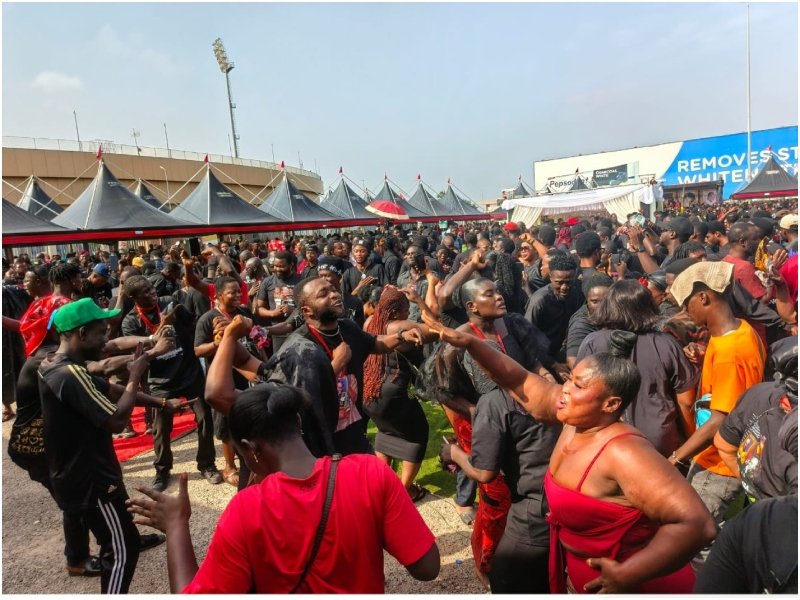
The long national farewell to Ghana’s highlife icon, Charles Kwadwo Fosu—known across Africa and the diaspora as Daddy Lumba—reached its emotional peak on Saturday, December 13, 2025, as thousands of mourners converged on the Baba Yara Sports Stadium in Kumasi for his final burial and funeral rites.
The massive turnout, which includes senior government officials, traditional rulers, musicians, and fans from across the world, marks the close of a months-long period of uncertainty and legal wrangling that at several points threatened to halt the funeral altogether.
Court Ruling Clears the Way
The funeral is proceeding only after a tense, last-minute legal resolution at the Accra High Court on Friday, December 12.
Maternal relatives of the late musician had sought an injunction to stop the burial, arguing that they were sidelined in planning arrangements led by the family head, Abusuapanin Kofi Owusu. While the court initially granted the injunction, it attached a decisive condition: the applicants were ordered to deposit GH¢2 million to cover costs already incurred should the funeral be cancelled.
When the applicants failed to meet the court’s deadline for payment, the injunction lapsed, effectively clearing the way for the funeral to go ahead as scheduled.
Reacting to the ruling, lead counsel for the defendants, Dominic Osei, described the decision as a necessary relief.
He noted that prolonged litigation over a deceased loved one only deepens pain and urged Ghanaians to set aside differences and attend the funeral to honour Daddy Lumba’s enduring legacy.
Custom, Law, and Family Tensions
Beyond the courtroom, the dispute reignited public debate about the intersection of Ghana’s statutory legal system and Akan customary law, which traditionally vests authority over funeral rites in the maternal family. The case underscored how cultural norms, modern law, and celebrity status can collide—sometimes painfully—when a national icon passes.
Inside the Stadium: A Nation in Mourning
By mid-morning, the Baba Yara Sports Stadium had been transformed into a solemn but majestic sea of black and red.
Tens of thousands of mourners filled the stands and pitch area, reflecting Daddy Lumba’s extraordinary reach across generations and social divides. The casket bearing the body of the “Highlife King” lay in state, allowing the public to pay their final respects.
Traditional dirges echoed through the stadium, interwoven with emotional renditions of Lumba’s timeless songs, including Yentie Obiaa, which many mourners sang softly, some in tears. Fellow musicians—many of whom credit him as a mentor—stood shoulder to shoulder with fans who grew up with his music as the soundtrack to their lives.
A Musical Legacy Spanning Three Decades
Born Charles Kwadwo Fosu, Daddy Lumba’s influence on Ghanaian music is both vast and enduring.
He began his career in the late 1980s as part of the Lumba Brothers before launching a solo journey that produced more than 30 albums and countless hits. His music was celebrated for its lyrical range—moving seamlessly from love and heartbreak to spirituality, social commentary, and political reflection.
Equally significant was his role in shaping Burger Highlife, fusing traditional Ghanaian rhythms with modern European studio techniques. That sound would go on to influence an entire generation of artistes and redefine contemporary highlife.
A National Farewell
Saturday’s funeral is more than a family ceremony. It is a national moment of reckoning with the loss of one of Ghana’s most gifted and influential cultural figures—an artiste whose songs narrated everyday life and whose voice became inseparable from the country’s modern musical identity.
After the public service at the stadium, Daddy Lumba’s body will be moved for private interment, bringing final rest to a man whose life—and even his death—commanded national attention.
For Ghana and its global community, the farewell at Baba Yara Stadium stands as a reminder that Daddy Lumba was not just a musician, but a cultural institution whose legacy will long outlive the final notes sung in his honour.













Ghana has introduced new regulations requiring certain gold exporters to refine gold dore locally before it can be shipped abroad, a move aimed at capturing more of the value generated by the country’s most valuable natural resource.
Effective September 1, the Ghana Gold Board (GoldBod) barred Self-Financing Aggregators (SFAs) from exporting gold dore purchased under arrangements with approved offtakers unless it is first refined in Ghana. Dore is semi-refined gold that requires further processing before it can be turned into bullion.
The directive, issued by GoldBod’s Compliance Directorate on August 24, implements the Ghana Gold Board Act, 2025 (Act 1140), which established GoldBod as the authority overseeing the buying, selling, assaying, refining, and export of gold in Ghana.
A Push for Local Value
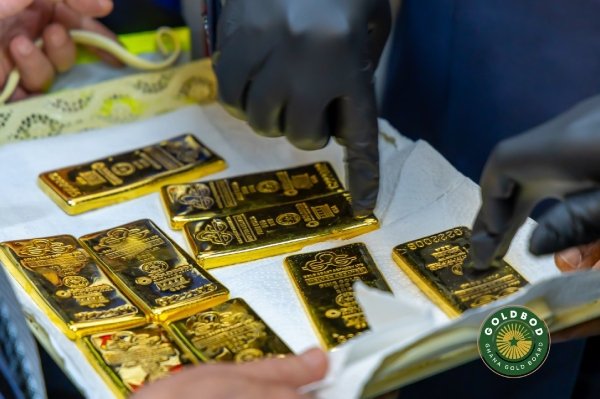
For Clement Edem Asare Morjah, chief executive of United Gold International Limited, a licensed SFA, the policy marks a significant change in how Ghana handles its most valuable natural resource.
“For the first time since independence, we have a government determined to make sure Ghana benefits from our biggest resource, gold,” he said.
Morjah said refining gold locally could allow Ghanaian companies to capture margins that have historically gone to overseas processors.
“In the entire value chain between refining and raw processed gold, the cost in between is a lot of margins. Historically, we have lost this to the outside world for decades. This is the first time deliberate government policy is trying to address this anomaly,” Morjah said.
But he added the short notice had created challenges for companies with existing contracts, which may now have to be amended. GoldBod had required SFAs to amend existing offtake agreements by August 31. Export applications would only be processed after GoldBod confirms that the gold has been refined locally, applicable charges have been settled, and other regulatory requirements have been met.
Building a Gold Industry
Prince Kwame Minkah, GoldBod’s media relations officer, said the policy was intended to ensure Ghana captured more of the economic benefits from its gold.
“Ghana is one of the top gold-producing countries in the world, so we need to truly maximise national benefits,” he said. “Value addition is key.”
He said the policy was consistent with President John Mahama’s vision that, by 2030, Ghana’s natural resources should be exported with a certain level of value addition.
“The value addition is what will culminate in the building of a gold industry in Ghana,” Minkah said.
Local refining, he added, could create jobs, reduce the amount of money paid overseas for processing, and provide refined gold for industries such as jewellery manufacturing. GoldBod also plans to develop a gold village modelled on Dubai’s Gold Souk, he said.
Ghana’s Refining Capacity
Ghana has four licensed gold refineries, including Gold Coast Refinery and Royal Ghana Gold Refinery. Gold Coast Refinery, which opened in 2016, has a stated capacity of up to two tonnes a week, while Royal Ghana Gold Refinery, commissioned in August 2024, has a daily capacity of 400 kilogrammes (882 pounds).
GoldBod has supply agreements with both refineries. Under its agreement with Gold Coast Refinery, GoldBod supplies at least one metric tonne of gold a week. Gold Coast Refinery is also in partnership with South Africa’s Rand Refinery.
Minkah said GoldBod was building what he described as “the largest refinery on the African continent” in Ghana.
A Booming Gold Sector
Ghana produced nearly six million ounces, or about 185 tonnes, of gold in 2025, with small-scale mining accounting for about 3.1 million ounces (96 tonnes), up from 1.9 million ounces (59 tonnes) the previous year.
Gold export earnings reached about $20 billion in 2025, nearly double the $10.3 billion recorded in 2024, while total merchandise exports stood at about $31.1 billion. The surge has increased the government’s focus on bringing more of the gold value chain under domestic control.
George Darkwa, a gold and mineral expert, said the refining requirement was a positive development for the industry.
“It is a positive move that will enhance value retention and formalisation,” he said, urging foreign investors to support Ghana’s efforts to develop its domestic gold industry.
Tougher Enforcement
GoldBod said exporting, or attempting to export, unrefined dore in breach of the new requirements would violate licence conditions. Possible sanctions include the refusal or suspension of export approvals, suspension or revocation of licences, administrative penalties, and other enforcement measures.
The board said the directive was intended to strengthen regulation while retaining more domestic value through refining and other forms of value addition.
For Morjah, the benefits could eventually extend beyond the companies directly affected by the new rule. Once refined, gold becomes bullion that can meet recognised standards, he said, making its quality and value more predictable.
“Give it time,” Morjah said. “Everybody will understand the benefit. When you’re doing business, you don’t only think about your individual benefit as a company. You must think about the body corporate as a nation.”

Ghanaian-American entrepreneur Kofi Asante has secured $50 million in seed funding for Bluecore Energy, a startup developing small, modular nuclear reactors mounted on floating barges to deliver zero-emission power directly to ports, data centers, and critical infrastructure.
The raise comes just two months after Bluecore Energy emerged from stealth with a $10 million oversubscribed pre-seed round, and represents a major milestone for a founder building in one of the world’s most challenging and heavily regulated industries.
Bluecore Energy, headquartered at the Port of Long Beach in California, is developing water-cooled nuclear power reactors designed to operate aboard floating energy barges. The company’s initial system is being built to power the equivalent of approximately 15,000 homes, or to scale up to meet the power needs of a major port.
“Traditionally, getting more electricity at scale can take many years; rather than waiting years for new power infrastructure to reach the point of demand, our floating nuclear power plant is designed to bring the power source directly to it in the matter of days,” Asante said.
The startup has assembled a team that reads like a who’s who of elite engineering talent: SpaceX engineers, Black nuclear engineers, former Toyota manufacturers, Black Ivy League PhDs from Blue Origin, and one of the first women to serve as a nuclear submarine officer.

Since January, Asante has devoted himself full-time to Bluecore Energy, and the company’s progress has been rapid. In the first nine months since its founding, Bluecore has secured a port terminal, taken delivery of barges, initiated engagement with the Nuclear Regulatory Commission (NRC), engaged the U.S. Coast Guard, signed a Memorandum of Understanding between the U.S. Department of Transportation’s Maritime Administration (MARAD) and the Port of Long Beach, and built a mission-driven team of nuclear scientists, Navy nuclear submarine and ship officers, and rocket and automotive leaders.
“Less than 2 months ago, we came out of stealth. In the first 9 months from founding the company we now have a port terminal secured, barges delivered, test reactor, Nuclear Regulatory Commission (NRC) engagement kicked off, US Coast Guard engaged, MOU between U.S. Department of Transportation’s Maritime Administration (MARAD) and the Port of Long Beach signed, and a mission driven team of nuclear scientists, navy nuclear submarine and ship officers, rocket and automotive leaders,” Asante wrote on LinkedIn.
“Our focus is simple. Create and deliver zero-emission energy as safely and quickly as possible. Over 3 billion people live within an hour of water. We want to power them all. Excited about our pace, but not satisfied until everyone has access to clean energy,” he added.
The seed round was led by Silverton Partners, with continued participation from existing investors including Slauson & Co., Harlem Capital, Precursor Ventures, LMNT, Visible Hands VC, Karman Ventures, and Hartbeat Ventures. New investors joining the round include MaC Ventures, Collab Capital, Vanderbilt, Black Angel Group, and NBAYoungboy, among others.
The Port of Long Beach, where Bluecore is headquartered, is one of the world’s largest ports and has been striving to become one of the greenest. By deploying floating nuclear power plants directly to ports and coastal infrastructure, Bluecore aims to provide a scalable, clean energy solution for the estimated 3 billion people worldwide who live within an hour of water.
The company’s technology represents a potential paradigm shift in how ports, coastal cities, and maritime operations access reliable power — moving away from fossil fuels without waiting for traditional grid infrastructure to catch up.
For Asante, a Ghanaian-American founder, the raise is also a testament to the growing presence of diaspora-led innovation in some of the most capital-intensive and technically demanding sectors of the global economy.

Here are the top front page stories from Ghanaian newspapers published on Thursday, September 10, 2026.
Daily Graphic
- Main: TUC cautions against 5-year presidency
- Also: 15,000 Health workers earn average GH¢600 monthly – HSWU; Don’t share unverified CSSPS slips • Education Ministry to public
B&FT (Business & Financial Times)
- Main: Q1 2026 growth holds steady at 6.2% …as industry rebounds on oil
- Also: CBG to disburse GH¢55m to women, youth-led businesses under GWYESCO; Heavy medicine imports expose industry to external shocks; ASM tax gap offers new route to higher mining revenue – Chamber of Mines
The Overseer
- Main: PLOT TO REMOVE AFENYO & DMB’s 3RD-TERM BID: BAWUMIA CAMP BACKS JOHN BOADU
- Also: Ghana Clears University Of Memphis Debt After $3.5m Payment; All 6,300 GES Staff With Salary Arrears Have Been Paid – Finance Ministry Rejects Claims; Mahamacares Helping Patients Overcome Catastrophic Medical Costs In First Year
The Archives
- Main: DON’T STOP ‘BP’ DRUGS OVER ERECTILE DYSFUNCTION! …Cardiologist Warns Men
- Also: Frustration, Anxiety At CSSPS Resolution Centres …Parents Spend Hours, Nights Seeking Help; KATH Hails MahamaCares Impact …As GH¢4m Medical Equipment Boost Lands; Failed NPP Youth Leader Withdraws From Race
The Hawk Newspaper
- Main: FOUR GHANAIANS KILLED IN SOUTH AFRICA’S ‘AFROPHOBIC’ ATTACKS
- Also: ‘I’LL TAKE YOUR SEAT IN 2028’ – Moses Abor takes on Sam George in Prampram battle; ‘WHERE IS OUR MONEY?’ – Akufo-Addo appointees press Ato Forson over unpaid funds; BIG PUSH, GALAMSEY BLAMED FOR GHANA’S 8,578 FIBRE CUTS
Day Break
- Main: You’ll Be Red-Listed! …Muntaka Warns Recruits With Forged WASSCE Results
- Also: SHS Brouhaha: Avoid Prospectus Ghana …NCPTA Warns Parents; Jobs Coming! …GEXIM-Backed Cashew Factory To Start In November; Pay Miners Well …Minerals Commission Tightens Grip On Contract Mining
The Insight
- Main: MARITIME DEP BOSS ACCUSED …Of Interference In Spintex Land Dispute Case
- Also: Jamaica Files Slavery Reparations Petition With King Charles; Education Ministry Warns Public Against Circulation Of Fake CSSPS Placement Slips; Anti-Corruption Agenda: GACC Puts Mahama’s Record Under Scrutiny Today; GoldBod And The Golden Enclave Economy: A Struggle For Economic Survival Or Resource Nationalism
Africa Today
- Main: World Bank Flags GoldBod Operations …As Insufficiently Monitored, Says Jerry Ahmed
- Also: Mahama Swears In Independent Fiscal Council To Guard Public Purse; Akyem Oda MP Endorses Boakye Agyarko’s NPP Chairmanship Bid; TCDA Strengthens Shea Sector …As CEO Leads Inputs Distribution In Tamale
The National Enquirer
- Main: MINERALS COMMISSION TARGETS CONTRACTORS … Over underpriced mining bids
- Also: Afriyie-Ankrah Hails Mercy Ships’ Life-Saving Mission; KATH Hails Ghana Medical Trust Fund …As GH¢4m Equipment Boost Arrives; Maritime Authority Deputy Director Accused Of Using Land Guards in Spintex Land Dispute
Daily Democrat
- Main: Adeiso Residents Warn Okyehene Mponuahene -Don’t Step On Our Lands
- Also: KATH Hails GMTF’s One-Year Impact As Historic; Education Ministry Exposes Fake CSSPS Placement Slips; Galamsey: Forestry Commission arrests 12 illegal miners in Atewa Forest; Akandoh Takes Free Healthcare To Ghanaian Communities
The Spyder
- Main: TUC to Gov’t: Don’t Rush the Constitution
- Also: Sleeping for a Seat: Parents, Children Spend Nights on GNAT Hall Car Park as Placement Crisis Drags On; Silent Killer: 70% of Ghanaians Unaware they have High Blood Pressure – Cardiologist Warns; Coding Dream, Slow Start: Just 102 Trained Under Ghana’s 1m-Coder Plan?
The Dispatch
- Main: IGP TETTEH YOHUNO GIVES DATA ON OPERATIONAL SUCCESSES & THANKS GOVT. FOR MASSIVE SUPPORT
- Also: NPP CHAIRMANSHIP RACE – PAUL AOFOCO PICKS No 3; IT IS DIFFICULT TO BE AN HONEST POLITICIAN IN GHANA – TOP POLITICIAN; BETWEEN 40% & 50% OF DEATHS IN GHANA LINKED TO HEART DISEASE & STROKE – CARDIO BOSS
The Daily Searchlight
- Main: PHASE OUT BOARDING SCHOOLS! …Ghana Should Rather Invest in Quality Day Secondary Schools – Prof Adei
- Also: NPP Chairmanship Balloting Over As John Boadu Secures No. 1 Slot; UTAG-UG Kicks Against GTEC Recruitment of University Lecturers; TUC Rejects Dual Citizenship Proposal for Parliamentary Candidates
Daily Guide
- Main: NPP Top Posts: John Boadu, Sly Tetteh Pick No.1 Slot
- Also: BECE/WASSCE Results: We Need Honest National Conversation – Afenyo-Markin; TUC Opposes Dual Citizens Becoming MPs; GPRTU Suspends 30% Proposed Fare Increment
The Ghanaian Times
- Main: Time to reinvent Ghana’s agriculture •Tech, specialised training hold the key – Professor Adom-Asamoah
- Also: A new Bono takes shape • Minister touts unprecedented infrastructure drive; Economy expands by 6% in Q2 – GSS; PSC to link public servants’ pay to performance – Prof. Agyeman; Type 2 diabetes becoming common among children – Expert


Jollof, Feuds, and Football: Inside Ghana’s Explosive Social Media Day

Ghana Tightens Gold Export Rules to Keep More Value at Home

Ghanaian-American Founder Kofi Asante Raises $50M to Build Floating Nuclear Power Plants
-
 Ghana News5 hours ago
Ghanaian-American Founder Kofi Asante Raises $50M to Build Floating Nuclear Power Plants
-

 Ghana News1 day ago
Top Headlines From Ghanaian Newspapers: Wednesday, Sept. 9, 2026
-
 Ghana News1 day ago
Ghana’s Persistence Pays Off: AU Formally Commits to Tabling Xenophobia Petition in January 2027
-
 Ghana News4 hours ago
Ghana Tightens Gold Export Rules to Keep More Value at Home
-

 Reels & Social Media Highlights2 days ago
Medikal in Church and ‘Cheater’ Memes
-

 Ghana News1 day ago
Game-Changing Move: Ghana Sets Up New Fiscal Council to Scrutinize Government Spending and Win Back Investors
-

 Homes & Real Estate21 hours ago
The Hidden Cost of Choosing the Wrong Slab for Your Ghana Home
-

 Commentary17 hours ago
The Guns Turned Inward: Niger’s Mutiny and Russia’s Fragile Bargain in the Sahel | By Joseph McCarthy