
Business
Telecom Giant MTN Launches ‘One TV’ Streaming Platform For Movies and Entertainment


MTN Group, Africa’s largest telecommunications company by subscriber base, has officially launched MTN One TV – a new streaming platform that combines movies, live television, and entertainment content.
The move signals a strategic shift for the telecom giant as it seeks a larger share of the continent’s rapidly growing digital entertainment economy.

Unlike conventional streaming services that require credit cards or bank accounts, MTN One TV will allow customers in select markets to pay using airtime, Mobile Money, or traditional subscription models. This flexible payment approach is designed to reduce common barriers to streaming access across African markets, where formal banking penetration remains uneven.
With more than 300 million subscribers across its network, MTN is betting on its vast scale and integrated fintech capabilities to compete in one of Africa’s fastest-growing digital industries.
The platform is being rolled out progressively under MTN’s Ambition 2030 strategy, with market-specific viewing options that may include free-to-view content, ad-funded experiences, and pay-as-you-watch models.
“Entertainment is increasingly becoming an important gateway to digital participation,” said Selorm Adadevoh, MTN Group Chief Commercial, Strategy and Transformation Officer. “Through MTN One TV, we are leveraging the scale of our connectivity, fintech, and digital capabilities to make relevant content more accessible while creating new opportunities for Africa’s creative and digital economies.”
Beyond serving consumers, MTN One TV aims to create new revenue channels for African creators, broadcasters, and advertisers by connecting local storytelling and international programming to wider audiences.
The initiative anchors on MTN’s core platforms of connectivity, fintech, and digital infrastructure, reinforcing the company’s evolution from a traditional mobile operator into a broader digital services provider.

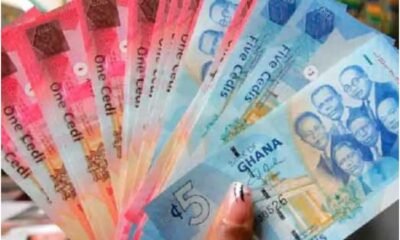






Ghana has lost more than US$16.5 billion in potential gross oil revenue over the past six years as crude oil production plummeted by nearly half from its 2019 peak, according to a devastating new report by the prominent Institute for Energy Security (IES).
The analysis, authored by energy experts Smith Prosper Boahene and Prince Lumor, paints a grim picture of a sector in freefall.
Crude oil output crashed from 71.44 million barrels in 2019 to just 37.30 million barrels in 2025, a staggering decline of almost 48 percent. The Energy Commission projects production will fall further to 34.83 million barrels in 2026, extending the downward trajectory into a seventh consecutive year.
The production collapse has delivered a hammer blow to government finances. Total petroleum receipts nosedived by 43.27 percent, from US$1.36 billion in 2024 to US$770.27 million in 2025. The decline was driven by both lower production volumes and a fall in the average realised crude oil price from US$86.12 to US$74.93 per barrel.
The first half of 2025 alone told a harrowing story: crude oil production declined by 26 percent year-on-year to 18.42 million barrels, while petroleum receipts collapsed from US$840 million to US$370 million.
IES described the prolonged downturn as “not a routine cyclical dip” but a structural crisis born of deep-rooted operational and policy failures.
“The decline is not attributable to one shock, but to several structural, operational, and policy failures compounding over an unusually long period,” the report stated.
Using an “illustrative counterfactual” model, IES projected a scenario in which Ghana maintained a modest annual production growth rate of three percent through sustained drilling, new petroleum agreements and improved reservoir management. Under that scenario, cumulative production would have exceeded actual output by approximately 221 million barrels—a missed opportunity that translates directly into the US$16.5 billion revenue hole.
Petroleum revenue contributes about 10 percent of total government income and supports critical public infrastructure and national development programmes. The sustained collapse therefore has far-reaching implications for Ghana’s fiscal stability, affecting everything from road construction to healthcare funding.
The report identified natural depletion of mature oil fields, insufficient replacement reserves and the failure to sign new petroleum agreements since 2018 as the principal causes. Ghana’s oil production remains dangerously concentrated in just three offshore fields—Jubilee, TEN and Sankofa Gye Nyame. Although Jubilee remained the country’s largest producing field in 2025 with 22.2 million barrels, it also recorded the sharpest year-on-year decline of more than 30 percent, partly due to a planned production shutdown between March 26 and April 8.
IES noted that the temporary production increase recorded in 2024 following drilling under the Jubilee South East project demonstrated that targeted investment can slow production decline. The report also clarified that while COVID-19 disruptions worsened the downturn in 2021, the decline had already begun before the pandemic.
“COVID-19 aggravated an already-declining trend rather than starting it,” the report noted.
Financial economist Professor Lord Mensah has attributed the sharp decline in petroleum revenues to inconsistent fiscal and investment policies, urging government to channel available oil revenues into infrastructure development, agriculture and export-led economic diversification.
IES concluded that Ghana’s prolonged decline in oil production requires urgent policy action.
“Ghana’s six consecutive years of crude oil production decline are far more than a cyclical fluctuation. The data show a structural crisis… Reversing it will require new licensing, accelerated investment, improved operational efficiency, strengthened institutional capacity, and diversified revenue management, implemented with the urgency the data clearly demonstrate is overdue,” the report said.
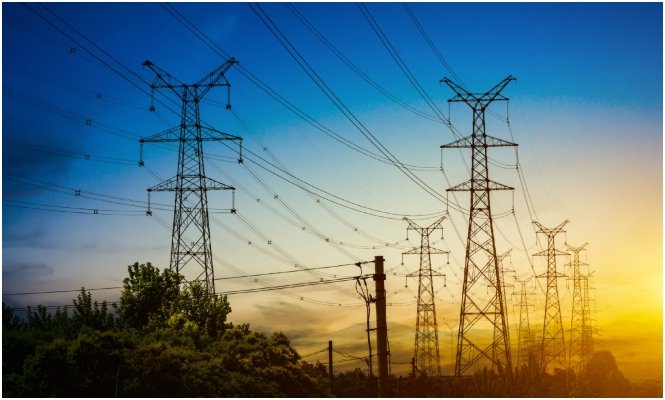
The World Bank has downgraded Ghana’s flagship Energy Sector Recovery Programme (ESRP) to “Unsatisfactory” status.
The World Bank has cited significant delays in implementation caused by financing constraints and new fiscal controls from the Ministry of Finance for the downgrade.
In its latest report dated June 30, 2026, the Bank highlighted how election-related disruptions and procurement restrictions have slowed key reforms aimed at improving the financial health of the country’s electricity sector.
Only one program indicator was fully achieved during the reporting period, with the Electricity Company of Ghana (ECG) publishing its 2025 audited financial statements. Progress on smart metering, customer service improvements, and the promotion of clean cooking solutions (LPG) remains behind target.
The combined financial losses of ECG and the Northern Electricity Distribution Company have continued to rise, reaching approximately $1.5 billion. The World Bank stressed the need for better coordination to accelerate structural reforms in the energy sector
Implications
The downgrade carries significant implications for the country.
Given that the energy sector has long been one of the largest drivers of Ghana’s national debt, this development signals mounting friction in the country’s economic recovery.
The key implications of this downgrade include:
1. Escalating National Debt and Fiscal Strain
- Accumulating Losses: With the combined financial losses of the Electricity Company of Ghana (ECG) and the Northern Electricity Distribution Company (NEDCo) rising to approximately $1.5 billion, the energy sector remains a massive financial black hole.
- Budgetary Pressure: Because these utilities cannot cover their operational costs, the Ministry of Finance is routinely forced to step in with emergency bailouts. This diverts scarce public funds away from critical sectors like healthcare, education, and infrastructure development.
2. Risk to Investor Confidence and Future Financing
- Negative Signaling: A World Bank downgrade acts as a warning flag to international financial institutions, bilateral donors, and private investors. It signals that structural reforms are stalling.
- Credit and Loan Conditions: This “Unsatisfactory” status could complicate or delay the disbursement of future tranches of financial support from the World Bank or make international credit more expensive for Ghana, as it raises the country’s perceived risk profile.
3. Increased Threat of Power Instability (Dumsor)
- Supply Chain Bottlenecks: The report highlights that implementation delays are caused by “financing constraints.” When ECG and independent power producers (IPPs) face severe liquidity crises, they struggle to maintain equipment, purchase fuel, or pay power generators on time.
- This directly increases the risk of operational disruptions, fuel shortages, and a return to erratic power outages (dumsor), which severely impacts businesses and households.
4. Stalled Modernization and Consumer Upgrades
The downgrade explicitly notes that crucial consumer-facing reforms have fallen behind target:
- Smart Metering & Customer Service: Delays in deploying smart meters mean that power theft, commercial losses, and inefficient billing will continue unchecked.
- Clean Cooking Clean Energy Transition: Delays in promoting clean cooking solutions (like LPG) slow down Ghana’s broader environmental and climate goals, keeping vulnerable populations reliant on biomass (wood and charcoal).
5. Exposure of Political and Structural Roadblocks
- Election-Year Friction: The World Bank explicitly pointed to “election-related disruptions and procurement restrictions” as primary bottlenecks. This implies that political cycles and the resulting strict fiscal controls from the Ministry of Finance are actively hampering long-term economic planning.
- Lack of Institutional Alignment: The call for “better coordination” highlights a friction point between utility management (ECG/NEDCo) and state oversight (Ministry of Finance), suggesting that bureaucratic silos are paralyzing necessary reforms.
The Silver Lining
The only silver lining noted was ECG finally publishing its 2025 audited financial statements.
While this satisfies a basic transparency indicator, it essentially only provides a clearer, official look at how deep the financial deficit actually is, rather than solving the underlying structural crisis.
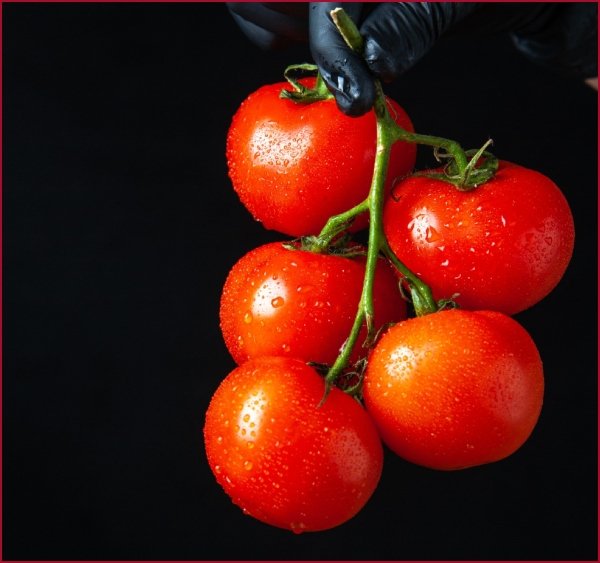
The Ghanaian government has announced ambitious plans to eliminate the country’s heavy dependence on imported tomatoes within the next four months.
Agriculture Minister Eric Opoku made the pledge while updating Parliament’s Select Committee on Assurances, outlining ongoing interventions to boost domestic tomato farming and reduce reliance on supplies from neighboring Burkina Faso.
Mr Opoku explained that the government is investing in irrigation infrastructure, including solar-powered boreholes, to enable year-round cultivation in major production areas.
He noted that President John Dramani Mahama has taken a personal interest in the initiative. While acknowledging that consumers are currently benefiting from lower food prices, the minister admitted many farmers are struggling with falling incomes.
Proposals to cushion farmers with free fertilizer and expand agro-processing are under consideration to ensure long-term sustainability.
Ghana’s Tomato Production Challenge
Tomato production in Ghana suffers from a complex mix of climate vulnerabilities, infrastructure gaps, and value-chain coordination failures.
Despite having fertile land and high consumption, the country remains structurally dependent on external sources, spending hundreds of millions of dollars annually importing fresh tomatoes from Burkina Faso and processed tomato paste from global suppliers.
The primary issues plaguing Ghana’s tomato production include:
- High Seasonality and Lack of Irrigation
The “Seasonal Trap”: The majority of Ghana’s tomato production relies on rain-fed agriculture. This creates a cycle of peak-season gluts followed by severe off-season shortages (typically from January to May).
Underutilized Infrastructure: While Ghana possesses several irrigation dams, a lack of widespread, functioning dry-season irrigation systems prevents farmers from cultivating tomatoes year-round. This allows neighboring Burkina Faso—which has more stable, small-scale irrigation systems—to dominate the market during Ghana’s lean months.
- High Post-Harvest Losses
Between 30% and 50% of the tomatoes harvested in Ghana never reach consumers.
This massive wastage is driven by a lack of cold-chain storage facilities, poor handling practices, and inadequate transport infrastructure to safely move delicate, perishable produce from rural farms to urban markets.
- Market Fragmentation and Trader Dominance
The tomato supply chain is tightly controlled by powerful trader cartels (often referred to as “Market Queens”).
These traders heavily dictate prices and often prefer to buy from Burkina Faso due to better product consistency, reliability, and established logistics networks, leaving local Ghanaian farmers struggling with falling incomes or unsold crops during harvests.
- Failed Processing and Industrialization
Past attempts to stabilize the sector through local processing factories (such as those in Pwalugu, Wenchi, and Nsawam) have repeatedly failed or struggled to stay operational.
These plants face inconsistent year-round raw material supply, high operating costs, and stiff competition from cheap, imported processed tomato paste from Europe and China.
- Agronomic and Climate Pressures
Tomatoes are highly sensitive to climate fluctuations. Ghanaian farmers frequently grapple with high night temperatures (which impair fruit setting), excessive daytime heat, and severe crop diseases like bacterial wilt.
Additionally, limited access to high-quality, climate-resilient seed varieties and the high cost of fertilizers often lead to low and inconsistent crop yields.
Recent Developments
The vulnerability of this system was highlighted in early 2026 when security disruptions and export restrictions in Burkina Faso caused sudden tomato shortages and price spikes in Ghana.
In response, the Ghanaian government and Agriculture Minister Eric Opoku announced an emergency push to eliminate tomato import dependency within four months.
This strategy focuses on heavily investing in solar-powered boreholes for year-round irrigation, distributing free fertilizer to lower production costs, and expanding local agro-processing to handle future gluts.


How One Father’s Decision Helped Ama Ata Aidoo Become a Global Literary Icon

Meet the Two Ghanaians Who Have Hauled South Africa to the ICC Over Xenophobic Violence

From London to Vancouver to Toronto: The Growing Trend of Asylum Claims at Global Sporting Events
-
 Ghana News20 hours ago
In Photos: Ghana’s Military-led Flood Mitigation Task Force Clears Waterways Building by Building
-
 Ghana News19 hours ago
Meet the Two Ghanaians Who Have Hauled South Africa to the ICC Over Xenophobic Violence
-
 Africa Watch2 days ago
Shame on Him! Ramaphosa Attempts a Guilt-Ridden Diplomatic Offensive as he Seeks to Mend Strained Ghana Ties After Xenophobic Attacks
-

 Ghana News2 days ago
Top 10 Headlines from Ghanaian Newspapers: Friday, July 24, 2026
-

 Ghana News2 days ago
Waiting in Long Queues: Mahama Recalls Pandemic Trauma as He Pushes for Vaccine Self-Sufficiency Across Africa
-

 Health & Wellness2 days ago
Why That Lower Belly Isn’t a Problem Most Women Need to Fix
-

 News2 days ago
British Woman Jailed Six Years After Hong Kong Court Rejects Rape Allegation
-

 Health & Wellness2 days ago
The Fitness Milestones That Matter More Than the Number on the Scale