
Opinion
Trained but Unemployed: Ghana’s Teacher Paradox Puts a Generation in Limbo

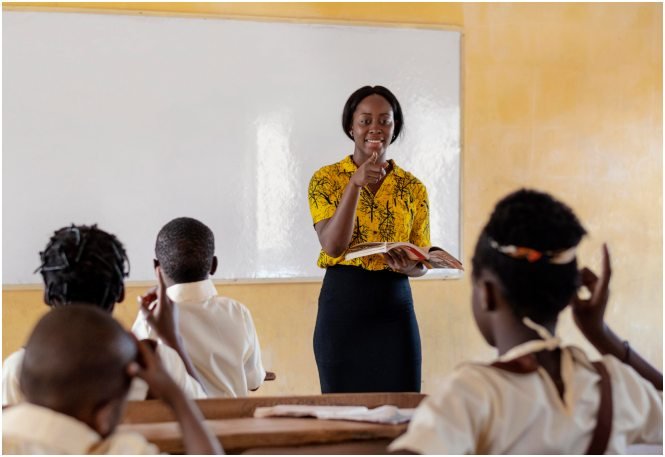
Ghana is facing a paradoxical crisis in its education sector: the government continues to train tens of thousands of new teachers each year at taxpayer expense, yet it cannot employ them.
According to this opinion article by journalist Felix Anim-Appau, while 40,000 trained and licensed teachers applied for postings in 2026, the Ministry of Finance approved only 7,000 positions. This leaves 33,000 qualified teachers unemployed. The shortage in classrooms is severe, with an estimated 30,000 schools lacking teachers, yet bureaucratic hurdles, delayed financial clearances, and poor remuneration prevent recruitment.
The author criticizes the continued payment of GH¢207 million annually in teacher trainee allowances—a policy originally introduced in the 1960s to incentivize enrollment when teaching was unpopular. Now that demand for teacher training has surged, the author argues these funds could instead employ roughly 5,000 new teachers each year. The piece concludes that political parties maintain popular but costly allowances to win votes, while Ghana’s basic education system suffers from overcrowded classrooms, overworked teachers, and declining quality. Read the full article below.
The teacher trainees posting conundrum: Why are we training more teachers when we can’t employ them?
I went for a wedding in Kumasi few weekends ago. I left on Thursday night and arrived at Friday dawn. In the morning of Friday, one of my sisters, a trained nurse, came to me and said she was leaving for work.
She was in a casual dress and I asked her why she was not in her uniform. Then she said she manages a business for a certain woman who lives outside the country. Then I asked her the obvious question and she was like, “I haven’t been posted yet.” She completed school in 2023 and we are in 2026.Education
In Ghana, we have nursing and teacher trainee colleges that train people to become nurses and teachers. Over two decades ago, when I was in secondary school, a teacher trainee friend doing her teaching practice advised me to study nursing after school.
Her reason was not because I had any passion for the profession, but because jobs were readily available in that field. According to her, pursuing nursing meant I wouldn’t be job hunting like other graduates after school. And, she was right. The same applied to teacher trainees. Nurses and teachers didn’t have to look for jobs. But I had no passion for healthcare, so I didn’t take her advice.
The question, however, is; will the same advice I was given some years ago still hold today? Are jobs readily available for trained teachers and nurses? Or they now do hunt for jobs after their training? Although the issue in question applies to both personnel undertaking training in teaching and nursing, for the purposes of this piece, I’ll limit it to teacher trainees.
Overview of Pupil-Teacher-Ratio (PTR) in Ghana
According to a review of progress by the Africa Education Watch for Teacher Deployment in Ghana’s Basic Schools, conducted between 2022 and 2025, Ghana fell short on its targets for the benchmarks it set for the sector.
The PTR, a critical indicator of teacher adequacy and teaching quality, generally has lower PTRs corresponding to smaller class sizes, personalised instruction, and improved learning outcomes.
According to the Eduwatch report, the Education Sector Medium-Term Development Plan (ESMTDP) (2022-2025) sets PTR targets of 31:1 at Kindergarten (KG), 31:1 at Primary, and 11:1 at Junior High School (JHS). These targets, the report noted, are “relevant for the deployment of effective learner-centered pedagogy under Ghana’s Standards-Based Curriculum.”
However, implementation under the medium-term has fallen short of these benchmarks, with national data for the 2023/2024 academic year (three years into the four-year medium term), reporting PTRs of approximately 45:1 at KG, 39:1 at Primary, and 20:1 at JHS, which are all significantly above target levels.
Key aspects of the teacher deficit
The report listed four key factors contributing to this teacher deficit in the classrooms.
Massive shortage: Executive Director of Eduwatch, Kofi Asare, has said in an interview on Channel One TV on Tuesday, January 13, 2026, while assessing the one-year performance of President John Dramani Mahama, that the education sector requires at least 15,000 new teachers each year to maintain balance in the system. However, he stated that no teachers were recruited in 2025, worsening an already strained situation.
“As a result, we now have not less than 30,000 classrooms without teachers, and the number could be higher,” he indicated.
Recruitment challenges: The country is also faced with the challenge of recruiting teachers despite having a large pool of trained teachers, due to bureaucratic hurdles. Usually, there are delays in financial clearance, coupled with administrative bottlenecks preventing the employment of qualified teachers, leaving many schools in the country understaffed.
Teacher attrition: Many trained teachers in the country are leaving the profession to seek better-paying jobs and more prestigious careers. This turnover is largely due to poor remuneration and low prestige associated with teaching, making it challenging for the sector to retain its trained and experienced talents.
Rural-urban imbalance: Due to obvious reasons such as the lack of adequate infrastructure and social amenities in many deprived areas in Ghana, many qualified teachers reject postings to these areas, and often prefer to work in the urban centres, leading to a shortage in these rural and remote locations.
The recruitment controversy in Ghana
On Wednesday, November 12, 2025, Ghanaians were made to attach a familiar adjective –-black-– to the day, due to the tragic story that unfolded in the early hours of that fateful day. During a Ghana Armed Forces recruitment exercise at the El-Wak Sports Stadium in Accra, six applicants lost their lives, and 28 others suffered varying degrees of injuries in a stampede that occurred at the venue.
Over 500,000 Ghanaian youth applied for the 2026 security service roles in the Police, Immigration, Prisons and Fire Services, but only 5,000 spots were available for the 105,000 people that qualified.
These statistics exclude the Ghana Armed Forces (GAF) because it is managed by the Ministry of Defence, while the other security agencies mentioned earlier operate a centralised exercise for agencies under the Ministry of the Interior.
These figures, experts have argued, are not inspired by the passion to serve but the lack of jobs in the country. After people losing their lives and many being rejected the opportunity to train to join the security services, we woke up to yet another recruitment brouhaha, this time around, not persons who are applying to be trained to become professionals, but rather, those the government has already spent taxpayers’ money to train.
The introduction of this piece makes it clear that completing teacher training does not guarantee one a readily market to fit in. You need to wait for some years before you get recruited. And according to these unemployed trained teachers, once it gets to the turn of a particular year-group to be employed, the system absorbs all available trained personnel in that particular year.
However, the situation is not the same this time around. When the Ghana Education Service (GES) opened the portal for people to apply for the 2026 postings, 40,000 trained and licensed teachers did, out of which the Ministry of Finance gave clearance for only 7,000 to be employed. Where should the remaining applicants go?
Impact on education
The government’s refusal to employ these trained teachers in the various schools adversely impacts education in the country, which consequently will affect the future of this nation. It brings increased workload on the existing teachers, declines the quality of education, particularly in rural areas where professional teachers refuse postings, and further breeds educational inequality, especially in the villages where pupils lack access to some basic resources.
The political dancing-chairs with Ghana’s training institutions
Ghana’s political landscape has been inundated with freebie promises from politicians who know such promises resonate with many of the electorates than giving them economic empowerment to cater for themselves. It is for this reason that the “I’ll provide free this, free that” dominate campaign promises during elections.
In 2013, John Dramani Mahama promised to cancel the teacher and nursing trainee allowances, which he did in 2014. Some of us commended him for that because, it was the boldest political decision any government could make since the introduction of the allowance for the trainees over some six decades ago.
This policy was first introduced by Osagyefo Dr. Kwame Nkrumah in the 1960s to increase enrollment in the teacher training institutions. This was because the field was not attractive to many youths, and for that reason, Nkrumah introduced it to serve as a crucial incentive to encourage young people to pursue teaching. It was also to support needy students at the training to cater for some expenses while in school.
However, after promising to cancel the allowance, President Mahama in 2016, at the dying minutes of the electioneering period, turned around to pay the allowance to these trainees. This was because his opponent had promised to restore it and for the fear of losing votes, he licked back his own spittle on the ground.
Lo and behold, President Akufo-Addo restored the allowance in 2017, a campaign promise that helped him to win votes, which he fulfilled but failed to execute its implementation to the core.
What’s the essence of the colleges if we can’t absorb their products afterwards?
The question is; why should we have Colleges of Education if we can’t employ their students after training them? What would really be the sense in spending taxpayers’ money to train people and make them sit at home in the end? President Nkrumah introduced the allowance because people were not attending teacher training colleges.
As a result, it was meant to incentivise them to be trained as teachers. Now people are clamouring for admission, so what’s the sense in still keeping the allowance, which could have been saved, invested and used to employ these same teachers by the time they complete the training?
Following reports that only 7,000 out of the 40,000 trained teachers that applied for this year’s postings could be absorbed by the government, the Teacher Trainees’ Association of Ghana (TTAG) called for the shutting down of these colleges if the situation is going to remain the same.
Nanija Devine, President of TTAG, had said at a press conference at the Association’s national secretariat on Wednesday, April 22, 2026, that: “Those currently in the Colleges of Education are over 65,000. If the 45,000 already in the system do not know when they will be posted, then what about those still in training? What is the essence of their education?” he quizzed, adding that “if indeed the government cannot recruit the 45,000 trained teachers in the system, then the Colleges of Education should consider closing down.”
A time to redirect the allowance to reduce the unemployed trained teachers
In the 2026 Budget statement presented by the Finance Minister, Dr. Cassiel Ato Baah Forson, in Parliament on Thursday, November 13, 2025, the Government made an allocation of GH¢207 million for teacher trainee allowances. It also included a GH¢474 million for nursing trainee allowances. Don’t forget trained nurses are also unemployed.
The GH¢207 million allocated for the teacher trainee allowance, could employ pproximately 5,000 new teachers for an entire year.
An analytical policy critique by the African Foundation for Educational Development (AFFED) says the Ghana Education Service’s (GES) Single Spine Salary Structure has an entry-level monthly salary for newly posted diploma-holding teachers starting with a gross of around GH¢2,732, while degree holders start around GH¢3,459.
On average, together with SSNIT, it costs the State around GH¢35,000 to GH¢41,500 annually for an entry-level teacher. Dividing GH¢207,000,000 by an average annual employment cost of GH¢41,500 yields exactly 5,000 teachers.Ghana travel guide
Why can’t we invest this money at the beginning of every academic year? By the time they finish their training in four years, how much could have been realized to absorb these teachers who are staying at home?
Conclusion
If there is one thing I’m certain of, it is the fact that the Ghanaian politician’s interest is where they can get their earliest reward and not what the future holds for the younger generation. It is for this reason that the New Patriotic Party (NPP) introduced the Free SHS policy and the National Democratic Congress (NDC) coming up with the No Fee Stress policy.
Clearly, the beneficiaries of these two policies are either in their voting age or would be eligible in the nearest election to come. So, the objective is for political parties to use these policies as bait to win their votes, leaving the basic level which requires the most important attention to suffer.Political analysis reports
To summarise the whole issue; Government established teacher training colleges to train instructors for our basic schools. People were not interested. So, incentives were introduced to motivate people to enroll. It got to a time that application for enrollment went up.
Government abolished the incentive and rather opted to give student loans. But due to politics, these allowances were reintroduced. Now, after spending money to train these teachers, government cannot employ them. They are staying at home. Meanwhile, our schools need teachers and the political twist has always been to look busy, sound caring and ignore the real issues.
Free SHS is undoubtedly a brilliant policy. No fee stress isn’t a bad programme as well, just as the teacher trainee allowance. But all these policies are geared towards beneficiaries whom the politician could benefit from when it is time for elections. To them, the basic level can go to hell with empty classrooms and overworked teachers.
Why can’t the government redirect trainee allowances to employ trained teachers and offer student loans to those needing support, so they can repay after their training just like other tertiary students?
I dare say the Government lacks the balls to do that because of the fear of losing votes in the next elections. For this reason, children at the basic level of education are the ones paying the price for these skewed policies.
Is it not yet time to prioritise our education before politics? Anyway, the MP for Shama in the Western region, Emelia Arthur, last week assured her constituents that they are going to build more teacher training colleges.
The writer, Felix Anim-Appau, works with the online unit at Media General. The views expressed in this piece are his personal opinions and do not reflect, in any form or shape, those of the Media General Group, where he works. His email address is kwadwoasiedu2012@gmail.com, and he can be found on X as @platofintegrity





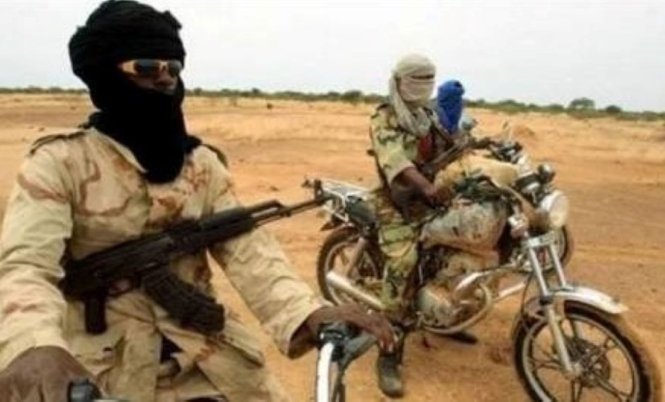
Recent reports of a slowdown in clashes between rival jihadist groups in the Sahel may offer a false sense of relief. As analyst Joseph McCarthy explains, the lull between JNIM and the Islamic State in the Mali-Burkina Faso-Niger tri-border region is less a sign of peace and more a signal of strategic repositioning. This analysis examines what the reduced infighting really means for state security, regional stability, and the growing spillover risk to coastal West African nations like Ghana. Read the full article below.
The Sahel’s Dangerous Calm: What Does the Lull in Jihadist Fighting Really Hide?
Fewer clashes between JNIM and the Islamic State may mean the violence is changing direction, not ending
By Joseph McCarthy · Analyst, Sahel governance & security
| 9 OctHEAVY JNIM-ISSP CLASHES NEAR GANADAOURI | 400+ISSP CLAIM OF JNIM DEAD, UNVERIFIED | +14%WEST AFRICA TERRORISM DEATHS, H1 2026 |
The reported easing of fighting between jihadist rivals in the Mali-Burkina Faso-Niger tri-border region may look like relief for governments struggling to contain an expanding insurgency. It should not be read that way. After months of fierce confrontations between Jama’at Nusrat al-Islam wal-Muslimin (JNIM) and Islamic State Sahel Province (ISSP), clashes between the two have reportedly slowed since late October. Yet attacks on state forces have continued, and neither group has shown any sign of abandoning its territorial ambitions. The violence may not be ending. It may be changing direction.
Mali shows why. JNIM’s assault on the Dioura garrison on 10 September caused heavy military casualties, and later attacks around Sévaré and Konna exposed how thinly government positions are held. JNIM also reportedly ambushed an Africa Corps column near Niono in late September and claimed further attacks on Malian patrols and convoys in the Ségou and Sikasso regions between 17 and 25 October. In Burkina Faso, soldiers and the government-backed Volunteers for the Defence of the Homeland remain under pressure. Individual claims need independent verification, but the pattern is clear: fewer clashes between the jihadists has not meant fewer attacks on the state.
Crisis Group’s October monitoring of Burkina Faso describes what that pressure looks like: a cluster of attacks around Ouahigouya, still unconfirmed, that reflects JNIM’s approach to major regional centres. It targets the surrounding outposts, towns and roads to raise the cost of resupply and reinforcement and to erode the state’s reach beyond the urban perimeter. The strategy is patient and cumulative, and it does not depend on defeating ISSP first. Africa Defense Forum notes that JNIM tends to concentrate on state security forces and Russian mercenaries while courting tribal leaders, which suggests that freed-up capacity has an obvious destination.
JNIM and the Islamic State’s Sahel affiliate have fought each other openly since 2019, competing over territory, recruits, defectors and ideological authority. ACLED analyst Héni Nsaibia has counted roughly 320 clashes between them since then, with more than 2,200 fighters killed.
The rivalry intensified again this autumn. On 9 October heavy fighting broke out around Ganadaouri, in Burkina Faso’s Oudalan province. ISSP claimed to have killed more than 400 JNIM fighters. Crisis Group’s CrisisWatch noted that the figure could not be independently verified, and that preliminary monitoring pointed to substantially lower casualties. Nsaibia observed that, if the claim were confirmed, it would be the deadliest single battle recorded between the two groups.
The claims on both sides deserve the same caution. Each group has an incentive to inflate its victories and hide its losses, and neither is a neutral source. What can be said is that fighting between them has escalated since early September, according to Al Jazeera, and that the Ganadaouri clashes were heavy enough for Crisis Group to log them as a major event in October. A reported slowdown after that peak is exactly the moment to ask whether the groups are exhausted or merely repositioning.
Whatever the true toll, sustained fighting is expensive. It ties up fighters, forces reinforcements and drains equipment. Pausing it frees all three. The danger is what each group does with the capacity it no longer spends on the other.
The danger is what each group does with the capacity it no longer spends on the other.
The first is exhaustion. Both organisations may need time to regroup, replace losses and consolidate ground. That is a pause to recover, not a retreat.
The second is a change of priorities. JNIM has pushed south towards Benin and Togo, and Crisis Group’s February report argues that, while its leaders regard the coastal states as secondary to the Sahel, ground-level fighters are eager to expand, which makes them a threat to those countries. Resources no longer spent on ISSP could feed that southward drift. ISSP, for its part, may use the quieter period to recover influence in areas where JNIM has pressed it.
The third is local accommodation. The military governments of the central Sahel publicly rule out talks with terrorist groups, yet reports of local understandings persist. In March, AFP and other outlets reported that more than 100 suspected jihadist detainees had been freed in Mali in return for a truce on attacks on fuel convoys, a deal expected to last until Eid al-Adha in late May. The Malian army denied it. Treat it as a reported arrangement, not an acknowledged agreement. Even so, it illustrates how violence can fall in one place by negotiated pause while an armed group keeps its networks, its local influence and its capacity to resume. A pause that suits one community can also push the threat towards another, and towards neighbours who were not at the table.
The distinction between a real decline and a tactical pause will show in the data. If attacks on state forces and convoys keep pace while inter-jihadist clashes stay low, the pause is a reallocation. If JNIM activity rises in Burkina Faso’s south and east, or in northern Benin and Togo, the freed capacity is moving towards the coast. If local truces appear around fuel routes and markets, as in Mali’s reported March arrangement, the question becomes who is bargaining on whose behalf. Reliable, independently verified incident data should be the test, not claims released by either group.
Ghana has so far avoided the sustained violence that neighbours have suffered, but the region’s trend is the wrong way. In July, the director of Ghana’s National Counter-Terrorism Fusion Centre told a Sahel Peace Initiative forum in Accra that West Africa had recorded more than 2,000 terrorist attacks and over 8,000 deaths in the first half of 2026, with fatalities up 14 per cent. In January, Accra hosted a high-level regional security conference under President Mahama, where Ghana’s foreign minister warned that the Sahel now accounts for more than half of global terrorism-related deaths and that the spillover risk to coastal states is serious.
The immediate concern is not a large-scale attack on Ghana. It is quieter: extremist networks using porous borders, local grievances and thin state presence to build logistics, recruit sympathisers and gain a foothold, as they have begun to do in northern Benin and Togo. A lull in the Sahel is precisely when such groups can reposition.
Ghana’s response should therefore be steady rather than alarmed. Intelligence-led border patrols, better surveillance and closer cooperation with neighbours must be matched by investment in northern communities, where poverty, unemployment and weak public services create grievances that extremists exploit. Any local arrangements with armed groups, wherever they are made, deserve scrutiny from the countries that will live with the consequences. And Ghana should use the Accra Initiative to turn January’s commitments into practical intelligence-sharing and joint operations.
The Sahel’s rival jihadists may be fighting each other less. That tells us about their priorities, not about the safety of the people they threaten. The calm should be treated not as reassurance, but as a window for coastal West Africa to strengthen its defences before the threat moves closer.
Joseph McCarthy is an analyst and researcher specialising in governance, security and political transitions in the Sahel. He writes on geopolitics, development and African diplomacy. joecarthy30@gmail.com

The following article by Ebrima Touray examines a governance crisis at the University of The Gambia (UTG) that pits the institution’s Governing Council against Vice-Chancellor Professor Herbert Robinson. At stake is not merely one administrator’s contract, but the legal integrity, institutional reputation, and regional standing of The Gambia’s premier public university. The article raises urgent questions about due process, conflicts of interest, and the unchecked exercise of authority within a body already recommended for dissolution by an independent panel. As ECOWAS member states commit to harmonizing higher education standards under Protocol A/P3/1/03, the UTG case serves as a cautionary test of whether national institutions can uphold the transparency and accountability that regional integration demands. Read full article below.
Governance Crisis Threatens Progress, Reputation of the University of The Gambia
By Ebrima Touray
Given the importance of quality education as part of the ECOWAS integration agenda, and the role which an institution such as the University of The Gambia (UTG) plays in this regard, the Centre for Community Law has been observing with keen interest developments at the UTG.
To this end, the Centre wishes to draw the attention of relevant Authorities to Protocol A/P3/1/03 on Education and Training, which recognises “education and training as an indispensable part of the mechanism for the realisation of the objectives of ECOWAS”.
The University of The Gambia (UTG) is at a critical crossroads following an escalating and bitter standoff between its Governing Council and the Vice-Chancellor, Professor Herbert Robinson. If unresolved transparently, the conflict could tarnish the institution’s reputation irreparably.
On 10 November 2026, the Standard newspaper carried a story titled “UTG’s Vice Chancellor’s Contract Not to Be Renewed”. Similarly, the following day, Foroyaa newspaper led with “UTG Governing Council Resolves Not to Renew Vice Chancellor Herbert Robinson’s Contract.” A second article by the same newspaper said “UTG Formally Notifies Herbert Robinson of Contract Non-Renewal, Demands Comprehensive Handover.”
The Foroyaa articles referenced a letter dated 2 November 2026 from the Chairperson of the Governing Council, Professor Momodou Mustapha Fanneh, addressed directly to Professor Robinson.
Under The Gambia’s Tertiary and Higher Education Act, 2016, only the President, as Chancellor of the university, has the power to appoint, renew or withhold renewal of an appointment. Legal experts therefore consider the Governing Council’s decision not to renew the appointment of the Vice Chancellor as ultra vires.
This article examines the facts and implications of the UTG Governing Council’s decision regarding renewal or non-renewal of Professor Robinson’s contract.
Professor Herbert Robinson was appointed as the 5th Vice-Chancellor of the University of The Gambia (UTG) on 30 November 2021 by the Chancellor of the University, President Adama Barrow. His appointment took effect in January 2022.
His appointment followed an open international call for applications, which attracted international and Gambian scholars. Robinson’s application emerged as the strongest among a highly competitive field of Gambian and international professors. He was subsequently offered a five-year contract, renewable subject to satisfactory performance.
At the time of his appointment, the Governing Council was chaired by Mr. Mathew Ndure, a respected educationist with extensive international experience. The Council also included several other distinguished members who have now left the service. During that period, the relationship between the Vice-Chancellor and the Governing Council was reportedly cordial, with both parties operating within their respective mandates and responsibilities.
However, the situation changed following the appointment of a new Chair and other members to the Governing Council, with reported tensions between the Council and the Vice-Chancellor.
In March 2026, the position of Vice-Chancellor was unexpectedly advertised, despite the fact that Professor Robinson still had more than nine months on his existing contract. He was neither informed of any decision not to renew his contract nor about an extension, as prescribed under the terms of his appointment.
According to an article published by The Standard newspaper on 2 March 2026, titled “President Sets Up Panel to Probe UTG Leadership,” the Ministry of Higher Education, Research, Science and Technology (MoHERST) instructed the Governing Council to proceed with the advertisement of the position of Vice Chancellor.
The advertisement was reportedly welcomed by the President of the UTG Faculty and Staff Association, a member of the Governing Council, who, under the Tertiary and Higher Education ACT, 2016, is ineligible to serve as a Council member.
Having previously made statements critical of the Vice-Chancellor in the media, his reaction to the advert reported in the Foroyaa article of March 2026 titled “UTGFSA President Welcomes Advertisement of Vice-Chancellor Position as UTG, Seeks New Direction,” was unsurprising, but still raises questions about his credibility and impartiality in the UTG Vice-Chancellor’s case.
The decision to advertise the position before the completion of the contractual appraisal process was perceived by many, including Professor Robinson, as a violation of standard procedures and the terms of Professor Robinson’s contract. The result is an escalation of tensions between the Vice-Chancellor and the Governing Council.
President Barrow reportedly instructed that an independent Investigation Panel be established. Chaired by former Permanent Secretary of MoHERST, Yaya Sirreh Jallow, the Panel was tasked with examining the root causes of the leadership dispute at the UTG.. In carrying out its mandate, the Panel investigated the University’s governance structures and the sources of operational friction.
The Panel completed its work and submitted its report after nearly four months of investigation. To date, the report has not been made public. However, according to reliable sources, the Panel’s conclusions were unequivocal. It recommended the immediate removal of the Chair and Vice-Chair of the Governing Council, as well as the dissolution of the Governing Council, citing systemic governance failures.
The Panel also called for an objective assessment of the Vice-Chancellor’s performance by an independent body, the sources said.
A Cabinet Mediation Subcommittee was subsequently established on the Panel’s findings. However, according to the sources, the recommendations of the independent Panel have yet to be officially implemented.
Professor Robinson’s contract contains a clause providing for an extension, subject to a satisfactory performance appraisal. A contract is a legally binding agreement, and its provisions take precedence over general institutional rules. Consequently, the justification for advertising the position of the Vice-Chancellor, as reported in the Foroyaa article of 18 March 2026, citing Section 4.3.5 of the University’s Conditions of Service, appears unsustainable.
Also, a body that has been formally recommended for dissolution due to governance failures arguably lacks both the moral credibility and legal authority to evaluate the performance of the Vice Chancellor.
According to informed sources, Professor Robinson objected to being appraised by a Governing Council whose impartiality he considered compromised. Instead, he agreed to take part in an appraisal by an independent Panel.
Despite his objections, the Council proceeded with the appraisal, reportedly marred by procedural irregularities. For instance, the President of the UTG Faculty and Staff Association (UTGFSA), who is not a statutory member of the Governing Council, actively participated in the appraisal. His participation not only raised questions about the legality of the process but also contravened the confidentiality standards that should govern the assessment of a university’s principal officer.
The appraisal report has reportedly not been shared with Professor Robinson, raising further concerns about transparency and due process.
According to reliable sources, the call for applications for the position of Vice-Chancellor was, at one stage, placed on hold. It was later resumed, purportedly under a presidential directive. However, the legal basis for this directive was reportedly never provided to Professor Robinson, raising further questions about due process, transparency, and the legal basis for the decision.
Meanwhile, an investigation has revealed that the Chairperson of the Governing Council currently serves as the Vice-Chancellor of Euclid University, a private institution operating in direct commercial and academic competition with the UTG. Prior to his appointment, he unsuccessfully sought the position of Deputy Vice-Chancellor at UTG under Professor Robinson. This raises serious questions about the nature of the relationship and power dynamics between the two individuals, amid suspicion of personal grievances or perceived bias.
More importantly, can the Chair of the Governing Council be expected to act exclusively in UTG’s best interests in a situation where competing institutional interests are at stake, particularly regarding access to funding, strategic opportunities, resources, and confidential information?
The UTG is one of The Gambia’s most important institutions, entrusted with educating and shaping future generations of leaders, professionals, and public servants. As the nation’s premier public university, it should serve as a model of integrity, accountability, and good governance. Its credibility, reputation, and institutional independence must therefore be safeguarded at all times.
In the interest of fairness, transparency, and due process, the Government Subcommittee should move expeditiously to implement the recommendations of the Independent Investigation Panel. Professor Robinson should be afforded a fair and impartial appraisal conducted by an independent Panel, as recommended by the Investigation Panel.
The appraisal should also critically examine the operating environment during his tenure, including the over one hundred and twenty million Dalasis reportedly owed to the UTG by the MoHERST in unpaid student scholarship fees. (74 Dalassis-1USD).
If Professor Robinson’s appraisal confirms satisfactory performance, he should be allowed to continue implementing his vision and strategic agenda for the University, with the full support of the government and a competent, independent, and impartial Governing Council free from conflicts of interest.
Conversely, if the appraisal identifies significant shortcomings, he should be treated with respect, fairness, and dignity, and given his dues in recognition of his service to the University.
Ultimately, the resolution of this matter should be guided not by personal interests or institutional rivalries, but by the principles of justice, good governance, and the long-term interests of the University of The Gambia and the nation.
Ebrima Touray wrote from Banjul, The Gambia
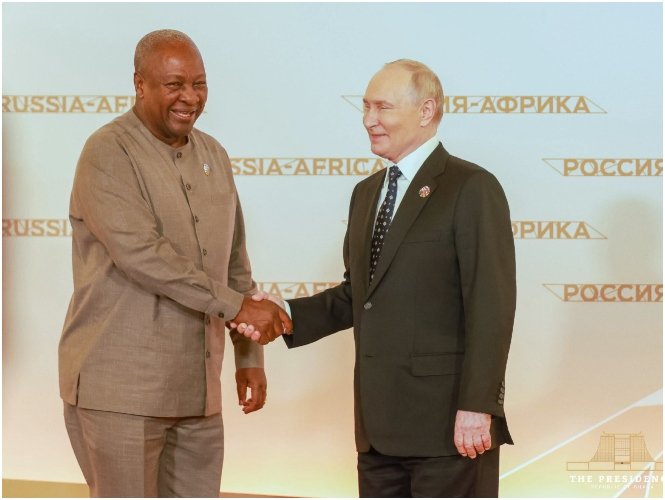
As Ghana deepens its media ties with Moscow, questions are mounting over where legitimate frustration with Western media dominance ends and where borrowed narratives begin. In this analysis, Sahel governance and security expert Joseph McCarthy examines the fine line between reclaiming Africa’s story and merely swapping one foreign script for another, and asks what Kwame Nkrumah’s non-alignment truly demands of Ghana today. Read the full article below.
Ghana’s Moscow Moment: Sovereign Voices or a Borrowed Script?
By Joseph McCarthy · Analyst, Sahel governance & security
| 28 OctRT PUBLISHES THE WODE MAYA INTERVIEW | 200+PARTICIPANTS, 46 AFRICAN COUNTRIES | 12AFRICAN COUNTRIES IN RT COOPERATION DEALS |
A warm welcome in Moscow is not proof that media reports have misrepresented Russia. Neither is justified frustration with Western media dominance a reason to adopt Russian state narratives. Yet the line between the two is blurring, and Ghana sits closer to that line than most.
The Russia-Africa Media Forum, held alongside the third Russia-Africa Summit in Moscow, drew more than 200 participants from 46 African countries. RT organised it with Sputnik and TASS, promoting media sovereignty, professional cooperation, and greater African control over the continent’s image. These are legitimate aspirations. The question is whether Africa is reclaiming its narrative or merely changing the foreign power that shapes it.
Ghana supplied the forum’s most visible test case. In an interview RT published on 28 October, the Ghanaian YouTuber Wode Maya said he had been apprehensive about travelling to Russia, only to find a country different from the one he had imagined. RT’s headline gave his remark a sharper edge: “You won’t believe that I fell for the propaganda.”
There is nothing wrong with a visitor finding that a country differs from its portrayal. Personal experience can puncture stereotypes. But hospitality is not investigation. A pleasant trip cannot tell us whether the invasion of Ukraine squares with Moscow’s professed respect for sovereignty, whether Russian military operations in Africa have made civilians safer, or whether Russian state media cover either question fairly.
Fairness also matters here. Nothing in the material I have seen shows that Maya was paid to promote Russia or misrepresented what he felt, and suggesting otherwise would be wrong. The concern is what happens to a sincere impression once a state-backed broadcaster selects, edits, headlines and distributes it. A travel experience becomes a testimonial, a testimonial becomes a geopolitical narrative, and an influencer’s credibility with African audiences becomes an instrument of international communication.
He was not the only Ghanaian voice. President John Mahama, in his own RT interview, said members of his delegation had expected a sanctions-hit economy in ruins and found instead “a cultural shock”. He also said he hoped the war would end quickly, and he pressed the case for Russian investment in agro-processing, fertiliser and pharmaceuticals, which is the substance Ghanaians should care about. Samia Nkrumah, daughter of Ghana’s first president, appeared on an RT panel about the founders of African independence. Each contribution was individually defensible. Together, curated by one broadcaster, they became a Ghanaian chorus.
That history deserves a Ghanaian reading. Kwame Nkrumah’s non-alignment was never an instruction to love one bloc. It was a refusal to be owned by any. A Ghana that honours his legacy engages Moscow, Washington, Beijing and Paris on its own terms and asks hard questions of all four.
“Nkrumah’s non-alignment was never an instruction to love one bloc. It was a refusal to be owned by any.”
Content creators have transformed African storytelling, reaching audiences that traditional newsrooms struggle to attract, and that deserves recognition. But influence is not journalism. Reporting involves verification, context, editorial accountability and a willingness to confront uncomfortable facts. The sensible response is not to discredit creators but to ask for transparency: who sponsored the visit, who paid for travel and accommodation, whether any content was commissioned, and whether the creator retained full editorial control. These are not accusations. They are basic safeguards whenever governments or corporations cultivate influential voices, and they apply to every capital.
The stakes rise when institutional agreements accompany personal testimonials. RT says it has signed cooperation agreements with media organisations in a dozen African countries, including Ghana, Tanzania and Zimbabwe, covering content exchange, training and broadcasting. Ghana Broadcasting Corporation’s agreement with Rossiya Segodnya provides for reciprocal access to English-language news, help for journalists and joint events. GBC’s Director-General, Professor Amin Alhassan, has said it would bring balance to the corporation’s coverage of Russia.
Balance is the right goal, and international news cooperation can widen access and build skills. But a public broadcaster owes viewers clear labelling of foreign state material, independent fact-checking, and the freedom to investigate Russian policy, including the war in Ukraine and Africa Corps operations in the Sahel. The agreement does not by itself establish Russian editorial control. It does demand visible safeguards.
Those safeguards matter more to Ghana than to most other countries. Russia’s media push accompanies its security role in Mali, Burkina Faso, and Niger, and Burkina Faso borders Ghana’s northern neighbour. Jihadist violence in the Sahel has already pressed towards coastal states. Ghanaian audiences need reporting on whether Russian-backed security operations are protecting civilians, and that reporting cannot be outsourced to the partners being assessed.
None of this excuses the other side. France’s colonial-era relationships deserve scrutiny, and so do Western interventions and the stereotypes in international coverage. Nor is Russia alone in courting African audiences: the BBC, France 24, Deutsche Welle and China’s CGTN all run training and content partnerships, and they deserve the same transparency. When allegations against Russian personnel are dismissed as Western propaganda by reflex, journalism gives way to loyalty. When criticism of Moscow is read as service to NATO, the same failure runs in reverse.
A May 2026 report by the Centre for a New American Security says Russia pays journalists and outlets for stories, and that networks of local influencers and journalists amplify Kremlin narratives. CNAS is a Washington think tank; its findings need independent corroboration, and it says nothing about Maya. They do explain why disclosure is not an insult.
The remedy is consistent standards. Broadcasters should disclose content-sharing deals and label supplied material. Journalists and creators should declare sponsored travel and commissioned work. Press associations should sharpen their ethical codes, and governments should protect independent reporting rather than invoking sovereignty to silence it. Above all, Ghana’s newsrooms need investment in investigative capacity and distribution so that no foreign partner becomes necessary.
A warm welcome is not evidence. A foreign partnership is not liberation. Changing the nationality of those who shape Africa’s narrative is not the same as reclaiming it. Media sovereignty is not about choosing whose script to believe. It is about keeping the freedom to question everyone.
Joseph McCarthy is an analyst and researcher specialising in governance, security and political transitions in the Sahel. He writes on geopolitics, development and African diplomacy. joecarthy30@gmail.com


From Mfantsipim at 9 to University at 12: Meet Diamond Lucas, Ghana’s Albert Einstein

Explainer: Why COP31 Ended Without a Deal, and What it Actually Means

Grieving Mother, Friends Demand Justice After Talented Young Woman Phillipa Acquah Killed by Reckless Motorcyclist
-
 Commentary6 hours ago
A Life Cut Short: A Cry for Justice for Phillipa Acquah and An Urgent End to Road Recklessness
-
 Uncategorized1 day ago
Fat Joe Makes Emotional Appeal to Bronx Youth After Ghanaian Teen Javits Frimpong’s Killing
-
 Ghana News5 hours ago
Grieving Mother, Friends Demand Justice After Talented Young Woman Phillipa Acquah Killed by Reckless Motorcyclist
-
 Ghana News1 day ago
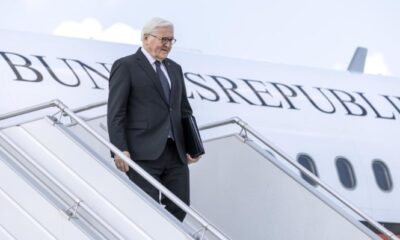
German President Steinmeier Arrives in Ghana to Boost Trade and Skills Partnerships
-

 Global Update7 hours ago
Americans Raise More Than $944,000 to Help Nolan Wells’ Mother Find Answers Despite Grand Jury Decision
-

 From the Diaspora1 day ago
Ghanaian-Born Entrepreneur Mawena Tafa Turns Viral Brooklyn Encounter with Strange Man Into Business Opportunity
-
 Ghana News5 hours ago
Explainer: Why COP31 Ended Without a Deal, and What it Actually Means
-
 Ghana News4 hours ago
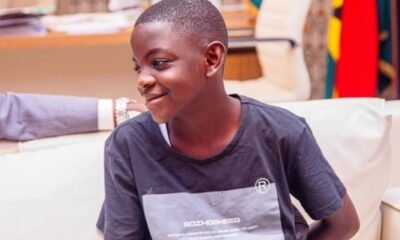
From Mfantsipim at 9 to University at 12: Meet Diamond Lucas, Ghana’s Albert Einstein