
Opinion
Governance Crisis Threatens Progress, Reputation of the University of The Gambia


The following article by Ebrima Touray examines a governance crisis at the University of The Gambia (UTG) that pits the institution’s Governing Council against Vice-Chancellor Professor Herbert Robinson. At stake is not merely one administrator’s contract, but the legal integrity, institutional reputation, and regional standing of The Gambia’s premier public university. The article raises urgent questions about due process, conflicts of interest, and the unchecked exercise of authority within a body already recommended for dissolution by an independent panel. As ECOWAS member states commit to harmonizing higher education standards under Protocol A/P3/1/03, the UTG case serves as a cautionary test of whether national institutions can uphold the transparency and accountability that regional integration demands. Read full article below.
Governance Crisis Threatens Progress, Reputation of the University of The Gambia
By Ebrima Touray
Given the importance of quality education as part of the ECOWAS integration agenda, and the role which an institution such as the University of The Gambia (UTG) plays in this regard, the Centre for Community Law has been observing with keen interest developments at the UTG.
To this end, the Centre wishes to draw the attention of relevant Authorities to Protocol A/P3/1/03 on Education and Training, which recognises “education and training as an indispensable part of the mechanism for the realisation of the objectives of ECOWAS”.
The University of The Gambia (UTG) is at a critical crossroads following an escalating and bitter standoff between its Governing Council and the Vice-Chancellor, Professor Herbert Robinson. If unresolved transparently, the conflict could tarnish the institution’s reputation irreparably.
On 10 November 2026, the Standard newspaper carried a story titled “UTG’s Vice Chancellor’s Contract Not to Be Renewed”. Similarly, the following day, Foroyaa newspaper led with “UTG Governing Council Resolves Not to Renew Vice Chancellor Herbert Robinson’s Contract.” A second article by the same newspaper said “UTG Formally Notifies Herbert Robinson of Contract Non-Renewal, Demands Comprehensive Handover.”
The Foroyaa articles referenced a letter dated 2 November 2026 from the Chairperson of the Governing Council, Professor Momodou Mustapha Fanneh, addressed directly to Professor Robinson.
Under The Gambia’s Tertiary and Higher Education Act, 2016, only the President, as Chancellor of the university, has the power to appoint, renew or withhold renewal of an appointment. Legal experts therefore consider the Governing Council’s decision not to renew the appointment of the Vice Chancellor as ultra vires.
This article examines the facts and implications of the UTG Governing Council’s decision regarding renewal or non-renewal of Professor Robinson’s contract.
Professor Herbert Robinson was appointed as the 5th Vice-Chancellor of the University of The Gambia (UTG) on 30 November 2021 by the Chancellor of the University, President Adama Barrow. His appointment took effect in January 2022.
His appointment followed an open international call for applications, which attracted international and Gambian scholars. Robinson’s application emerged as the strongest among a highly competitive field of Gambian and international professors. He was subsequently offered a five-year contract, renewable subject to satisfactory performance.
At the time of his appointment, the Governing Council was chaired by Mr. Mathew Ndure, a respected educationist with extensive international experience. The Council also included several other distinguished members who have now left the service. During that period, the relationship between the Vice-Chancellor and the Governing Council was reportedly cordial, with both parties operating within their respective mandates and responsibilities.
However, the situation changed following the appointment of a new Chair and other members to the Governing Council, with reported tensions between the Council and the Vice-Chancellor.
In March 2026, the position of Vice-Chancellor was unexpectedly advertised, despite the fact that Professor Robinson still had more than nine months on his existing contract. He was neither informed of any decision not to renew his contract nor about an extension, as prescribed under the terms of his appointment.
According to an article published by The Standard newspaper on 2 March 2026, titled “President Sets Up Panel to Probe UTG Leadership,” the Ministry of Higher Education, Research, Science and Technology (MoHERST) instructed the Governing Council to proceed with the advertisement of the position of Vice Chancellor.
The advertisement was reportedly welcomed by the President of the UTG Faculty and Staff Association, a member of the Governing Council, who, under the Tertiary and Higher Education ACT, 2016, is ineligible to serve as a Council member.
Having previously made statements critical of the Vice-Chancellor in the media, his reaction to the advert reported in the Foroyaa article of March 2026 titled “UTGFSA President Welcomes Advertisement of Vice-Chancellor Position as UTG, Seeks New Direction,” was unsurprising, but still raises questions about his credibility and impartiality in the UTG Vice-Chancellor’s case.
The decision to advertise the position before the completion of the contractual appraisal process was perceived by many, including Professor Robinson, as a violation of standard procedures and the terms of Professor Robinson’s contract. The result is an escalation of tensions between the Vice-Chancellor and the Governing Council.
President Barrow reportedly instructed that an independent Investigation Panel be established. Chaired by former Permanent Secretary of MoHERST, Yaya Sirreh Jallow, the Panel was tasked with examining the root causes of the leadership dispute at the UTG.. In carrying out its mandate, the Panel investigated the University’s governance structures and the sources of operational friction.
The Panel completed its work and submitted its report after nearly four months of investigation. To date, the report has not been made public. However, according to reliable sources, the Panel’s conclusions were unequivocal. It recommended the immediate removal of the Chair and Vice-Chair of the Governing Council, as well as the dissolution of the Governing Council, citing systemic governance failures.
The Panel also called for an objective assessment of the Vice-Chancellor’s performance by an independent body, the sources said.
A Cabinet Mediation Subcommittee was subsequently established on the Panel’s findings. However, according to the sources, the recommendations of the independent Panel have yet to be officially implemented.
Professor Robinson’s contract contains a clause providing for an extension, subject to a satisfactory performance appraisal. A contract is a legally binding agreement, and its provisions take precedence over general institutional rules. Consequently, the justification for advertising the position of the Vice-Chancellor, as reported in the Foroyaa article of 18 March 2026, citing Section 4.3.5 of the University’s Conditions of Service, appears unsustainable.
Also, a body that has been formally recommended for dissolution due to governance failures arguably lacks both the moral credibility and legal authority to evaluate the performance of the Vice Chancellor.
According to informed sources, Professor Robinson objected to being appraised by a Governing Council whose impartiality he considered compromised. Instead, he agreed to take part in an appraisal by an independent Panel.
Despite his objections, the Council proceeded with the appraisal, reportedly marred by procedural irregularities. For instance, the President of the UTG Faculty and Staff Association (UTGFSA), who is not a statutory member of the Governing Council, actively participated in the appraisal. His participation not only raised questions about the legality of the process but also contravened the confidentiality standards that should govern the assessment of a university’s principal officer.
The appraisal report has reportedly not been shared with Professor Robinson, raising further concerns about transparency and due process.
According to reliable sources, the call for applications for the position of Vice-Chancellor was, at one stage, placed on hold. It was later resumed, purportedly under a presidential directive. However, the legal basis for this directive was reportedly never provided to Professor Robinson, raising further questions about due process, transparency, and the legal basis for the decision.
Meanwhile, an investigation has revealed that the Chairperson of the Governing Council currently serves as the Vice-Chancellor of Euclid University, a private institution operating in direct commercial and academic competition with the UTG. Prior to his appointment, he unsuccessfully sought the position of Deputy Vice-Chancellor at UTG under Professor Robinson. This raises serious questions about the nature of the relationship and power dynamics between the two individuals, amid suspicion of personal grievances or perceived bias.
More importantly, can the Chair of the Governing Council be expected to act exclusively in UTG’s best interests in a situation where competing institutional interests are at stake, particularly regarding access to funding, strategic opportunities, resources, and confidential information?
The UTG is one of The Gambia’s most important institutions, entrusted with educating and shaping future generations of leaders, professionals, and public servants. As the nation’s premier public university, it should serve as a model of integrity, accountability, and good governance. Its credibility, reputation, and institutional independence must therefore be safeguarded at all times.
In the interest of fairness, transparency, and due process, the Government Subcommittee should move expeditiously to implement the recommendations of the Independent Investigation Panel. Professor Robinson should be afforded a fair and impartial appraisal conducted by an independent Panel, as recommended by the Investigation Panel.
The appraisal should also critically examine the operating environment during his tenure, including the over one hundred and twenty million Dalasis reportedly owed to the UTG by the MoHERST in unpaid student scholarship fees. (74 Dalassis-1USD).
If Professor Robinson’s appraisal confirms satisfactory performance, he should be allowed to continue implementing his vision and strategic agenda for the University, with the full support of the government and a competent, independent, and impartial Governing Council free from conflicts of interest.
Conversely, if the appraisal identifies significant shortcomings, he should be treated with respect, fairness, and dignity, and given his dues in recognition of his service to the University.
Ultimately, the resolution of this matter should be guided not by personal interests or institutional rivalries, but by the principles of justice, good governance, and the long-term interests of the University of The Gambia and the nation.
Ebrima Touray wrote from Banjul, The Gambia







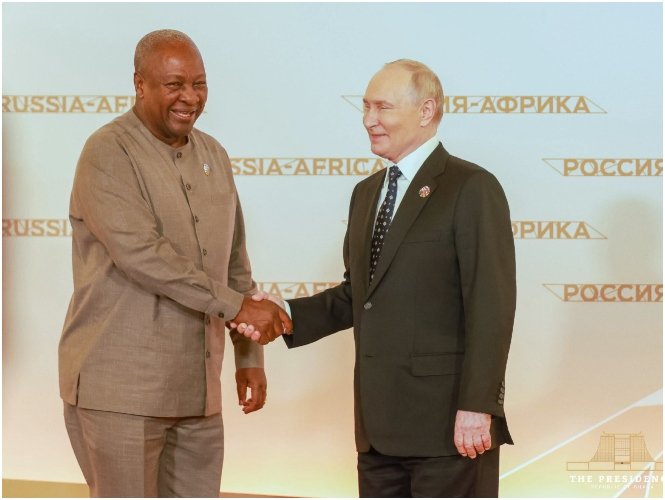
As Ghana deepens its media ties with Moscow, questions are mounting over where legitimate frustration with Western media dominance ends and where borrowed narratives begin. In this analysis, Sahel governance and security expert Joseph McCarthy examines the fine line between reclaiming Africa’s story and merely swapping one foreign script for another, and asks what Kwame Nkrumah’s non-alignment truly demands of Ghana today. Read the full article below.
Ghana’s Moscow Moment: Sovereign Voices or a Borrowed Script?
By Joseph McCarthy · Analyst, Sahel governance & security
| 28 OctRT PUBLISHES THE WODE MAYA INTERVIEW | 200+PARTICIPANTS, 46 AFRICAN COUNTRIES | 12AFRICAN COUNTRIES IN RT COOPERATION DEALS |
A warm welcome in Moscow is not proof that media reports have misrepresented Russia. Neither is justified frustration with Western media dominance a reason to adopt Russian state narratives. Yet the line between the two is blurring, and Ghana sits closer to that line than most.
The Russia-Africa Media Forum, held alongside the third Russia-Africa Summit in Moscow, drew more than 200 participants from 46 African countries. RT organised it with Sputnik and TASS, promoting media sovereignty, professional cooperation, and greater African control over the continent’s image. These are legitimate aspirations. The question is whether Africa is reclaiming its narrative or merely changing the foreign power that shapes it.
Ghana supplied the forum’s most visible test case. In an interview RT published on 28 October, the Ghanaian YouTuber Wode Maya said he had been apprehensive about travelling to Russia, only to find a country different from the one he had imagined. RT’s headline gave his remark a sharper edge: “You won’t believe that I fell for the propaganda.”
There is nothing wrong with a visitor finding that a country differs from its portrayal. Personal experience can puncture stereotypes. But hospitality is not investigation. A pleasant trip cannot tell us whether the invasion of Ukraine squares with Moscow’s professed respect for sovereignty, whether Russian military operations in Africa have made civilians safer, or whether Russian state media cover either question fairly.
Fairness also matters here. Nothing in the material I have seen shows that Maya was paid to promote Russia or misrepresented what he felt, and suggesting otherwise would be wrong. The concern is what happens to a sincere impression once a state-backed broadcaster selects, edits, headlines and distributes it. A travel experience becomes a testimonial, a testimonial becomes a geopolitical narrative, and an influencer’s credibility with African audiences becomes an instrument of international communication.
He was not the only Ghanaian voice. President John Mahama, in his own RT interview, said members of his delegation had expected a sanctions-hit economy in ruins and found instead “a cultural shock”. He also said he hoped the war would end quickly, and he pressed the case for Russian investment in agro-processing, fertiliser and pharmaceuticals, which is the substance Ghanaians should care about. Samia Nkrumah, daughter of Ghana’s first president, appeared on an RT panel about the founders of African independence. Each contribution was individually defensible. Together, curated by one broadcaster, they became a Ghanaian chorus.
That history deserves a Ghanaian reading. Kwame Nkrumah’s non-alignment was never an instruction to love one bloc. It was a refusal to be owned by any. A Ghana that honours his legacy engages Moscow, Washington, Beijing and Paris on its own terms and asks hard questions of all four.
“Nkrumah’s non-alignment was never an instruction to love one bloc. It was a refusal to be owned by any.”
Content creators have transformed African storytelling, reaching audiences that traditional newsrooms struggle to attract, and that deserves recognition. But influence is not journalism. Reporting involves verification, context, editorial accountability and a willingness to confront uncomfortable facts. The sensible response is not to discredit creators but to ask for transparency: who sponsored the visit, who paid for travel and accommodation, whether any content was commissioned, and whether the creator retained full editorial control. These are not accusations. They are basic safeguards whenever governments or corporations cultivate influential voices, and they apply to every capital.
The stakes rise when institutional agreements accompany personal testimonials. RT says it has signed cooperation agreements with media organisations in a dozen African countries, including Ghana, Tanzania and Zimbabwe, covering content exchange, training and broadcasting. Ghana Broadcasting Corporation’s agreement with Rossiya Segodnya provides for reciprocal access to English-language news, help for journalists and joint events. GBC’s Director-General, Professor Amin Alhassan, has said it would bring balance to the corporation’s coverage of Russia.
Balance is the right goal, and international news cooperation can widen access and build skills. But a public broadcaster owes viewers clear labelling of foreign state material, independent fact-checking, and the freedom to investigate Russian policy, including the war in Ukraine and Africa Corps operations in the Sahel. The agreement does not by itself establish Russian editorial control. It does demand visible safeguards.
Those safeguards matter more to Ghana than to most other countries. Russia’s media push accompanies its security role in Mali, Burkina Faso, and Niger, and Burkina Faso borders Ghana’s northern neighbour. Jihadist violence in the Sahel has already pressed towards coastal states. Ghanaian audiences need reporting on whether Russian-backed security operations are protecting civilians, and that reporting cannot be outsourced to the partners being assessed.
None of this excuses the other side. France’s colonial-era relationships deserve scrutiny, and so do Western interventions and the stereotypes in international coverage. Nor is Russia alone in courting African audiences: the BBC, France 24, Deutsche Welle and China’s CGTN all run training and content partnerships, and they deserve the same transparency. When allegations against Russian personnel are dismissed as Western propaganda by reflex, journalism gives way to loyalty. When criticism of Moscow is read as service to NATO, the same failure runs in reverse.
A May 2026 report by the Centre for a New American Security says Russia pays journalists and outlets for stories, and that networks of local influencers and journalists amplify Kremlin narratives. CNAS is a Washington think tank; its findings need independent corroboration, and it says nothing about Maya. They do explain why disclosure is not an insult.
The remedy is consistent standards. Broadcasters should disclose content-sharing deals and label supplied material. Journalists and creators should declare sponsored travel and commissioned work. Press associations should sharpen their ethical codes, and governments should protect independent reporting rather than invoking sovereignty to silence it. Above all, Ghana’s newsrooms need investment in investigative capacity and distribution so that no foreign partner becomes necessary.
A warm welcome is not evidence. A foreign partnership is not liberation. Changing the nationality of those who shape Africa’s narrative is not the same as reclaiming it. Media sovereignty is not about choosing whose script to believe. It is about keeping the freedom to question everyone.
Joseph McCarthy is an analyst and researcher specialising in governance, security and political transitions in the Sahel. He writes on geopolitics, development and African diplomacy. joecarthy30@gmail.com
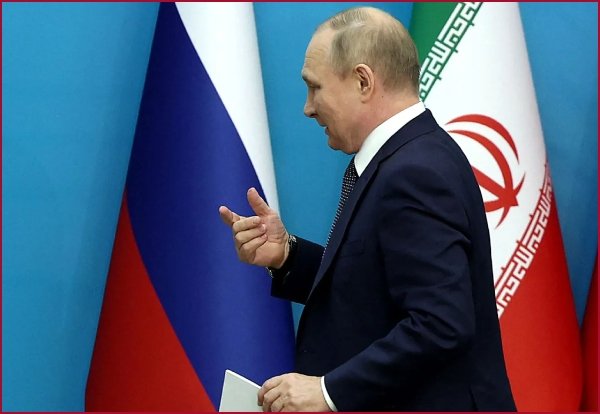
Can Moscow host Africa under drone threat? As Moscow prepares to welcome African leaders to the third Russia-Africa Summit on October 28 to 29, Ukrainian drone strikes have reportedly hit Yandex data centres and targeted the capital region, exposing a delicate contradiction at the heart of the gathering. Russia pitches itself as Africa’s security partner while its own infrastructure proves vulnerable. In this opinion piece, analyst Joseph McCarthy examines the security dilemma facing both Moscow and African governments, arguing that leaders weighing the trip must confront a deeper question: what does it mean to tie your nation’s safety to a partner that is itself under sustained attack? Read the full article below.
Yandex Strikes: Can Moscow Host Africa Under Drone Threat?
Moscow pitches itself as Africa’s security partner while its own infrastructure is exposed
By Joseph McCarthy · Analyst, Sahel governance & security
| 3YANDEX DATA CENTRES REPORTEDLY STRUCK, 8–11 OCT | 650DRONES STRUCK MOSCOW REGION, 6 OCT | 28–29 OctTHIRD RUSSIA-AFRICA SUMMIT, MOSCOW |
Every summit is a performance of strength. The third Russia-Africa Summit, due in Moscow on 28 and 29 October, is meant to show African leaders that Russia remains a confident, well-connected partner despite sanctions, isolation and a costly war. Between 8 and 11 October, Ukrainian drones complicated that script. Three data centres operated by Yandex, the technology giant behind much of Russia’s digital economy, were reportedly struck in the Ryazan, Kaluga and Vladimir regions. For Moscow and for its African guests, the episode poses a security dilemma that no communiqué will resolve.
The first attack, on the night of 7 to 8 October, reportedly set fire to a facility in Sasovo, in Ryazan region, and suspended operations. A second strike hit a site in Kaluga; a third, in Vladimir region, followed on 11 October. Yandex runs payments, email, navigation, ride-hailing, delivery and cloud computing, so the effects spread quickly. Meduza reported disruptions to Yandex Pay, Mail, Disk and Go, while businesses that depend on Yandex Cloud described outages of their own. One user told the outlet: “All my money is on Yandex, so I have no money for food.” The company says customers’ funds are safe, but the episode shows how one point of failure can become hardship for ordinary people within hours.
Recovery may be slow. Reports suggest that replacing specialised equipment could take months, and Russian officials have reportedly acknowledged the difficulty. That matters beyond one company. Moscow has spent years encouraging reliance on domestic platforms as Western technology withdrew. The Yandex strikes show that domestic ownership is not the same as security. Technological sovereignty also means being able to protect, maintain and restore systems under attack.
Moscow will call such strikes aggression against civilian targets. Yet they come after years of Russian missile and drone attacks on Ukrainian cities and energy infrastructure, so the exposure Russia now faces cannot be separated from the war it chose to launch. That context does not make the risk to visitors any smaller; it explains why it is unlikely to disappear before the summit.
Here lies the first half of the dilemma, and it is Moscow’s. Hosting African leaders in the capital is a statement of confidence, but it also puts that confidence on display. Russia must keep airspace open, transport moving and digital systems running while the war reaches ever deeper into its territory. On 20 September, roughly 450 drones were reportedly aimed at the capital; on 6 October, around 650 struck the Moscow region. Every intercept shows that defences work. Every strike that lands, and every airport closure, suggests the opposite. The summit cannot merely proceed; it must avoid becoming a showcase for exposure. Moscow will almost certainly respond with heavy security, restricted airspace and tightly managed movement. That may protect delegates, but it also turns the gathering into a fortress, held in spite of the war rather than in a country at ease with itself.
None of this proves that Russia cannot protect the summit. Vulnerability to long-range drones is not the same as losing the ability to defend territory, and the more widely a country’s civilian and commercial infrastructure is distributed, the harder it is to shield. Delegations may well land, meet and leave without incident. But that is a probability, not a guarantee, and guarantees are precisely what Russia is selling.
That brings us to the second half of the dilemma, which belongs to African governments. The immediate question is personal safety. In early September, Air Tanzania suspended its Dar es Salaam to Moscow route after a risk assessment, then resumed it days later. Further attacks could prompt airspace restrictions, diversions and tighter security that complicate movement between airports, hotels and venues. These are scenarios, not confirmed disruptions, yet every government weighing the trip must price them in, including the level at which it chooses to be represented.
The deeper question is strategic. Security cooperation is the core of Russia’s offer to Africa: Moscow says it has military agreements with more than 40 African states, and Russian security personnel are embedded in countries such as Mali and the Central African Republic. Governments that rely on that protection are tying their own security to a partner that is itself under sustained attack. A security provider at war is also a provider that is stretched, distracted and targeted. The more a government leans on Russia to guarantee its safety, the more it imports the risks of Russia’s war.
“The more a government leans on Russia to guarantee its safety, the more it imports the risks of Russia’s war.”
Call it a dilemma of dependence. The relationship meant to be a source of protection can become a channel for exposure, and the closer the embrace, the harder it is to step back.
What should African governments do? Engage, but with open eyes. They can ask for written security and contingency arrangements for their delegations, diversify their security partnerships so that no single patron’s vulnerability becomes their own, and insist that cooperation strengthens national institutions rather than simply protecting incumbent governments. Strategic autonomy means having choices. It does not mean choosing between Moscow and everyone else, or accepting one patron’s risks as the price of its protection.
The Kremlin wants the summit to show that sanctions have not isolated Russia. The Yandex strikes complicate that message without defeating it. They pose a simple test for any partner who offers security: can it secure itself? The answer will not come from speeches in Moscow. It will come from whether the summit runs smoothly, and from what follows. Until then, African leaders have every reason to listen politely, travel carefully and commit slowly.
■
Joseph McCarthy is an analyst and researcher specialising in governance, security and political transitions in the Sahel. He writes on geopolitics, development and African diplomacy. joecarthy30@gmail.com
In this thought-provoking opinion piece, Associate Professor Theodora Dame Adjin-Tettey examines the alarming deterioration of public discourse in Ghana and beyond, marked by an explosion of hate speech, vitriol, threats, and inciting comments. Drawing on a personal anecdote about a researcher who abandoned a study on media insults in 2010 due to a lack of data, contrasted with today’s overwhelming abundance of such content, she argues that this shift signals a deeply troubling ethical decline in society. Read the full article below.
Hate speech, vitriol, threats, and inciting comments: Can we stop it already?
By Theodora Dame Adjin-Tettey | Associate Professor
A friend of mine recently posted on social media that he had to abandon his 2010 research project on “insults in the media” because he couldn’t find enough data. Every researcher needs data to carry out their study, so when there is a data drought on a subject of empirical investigation, it becomes a huge stumbling block to the researcher, possibly causing them to abandon their study or chart a new parallel path to the original idea. It suffices to say, however, that the lack of data the researcher encountered sixteen years ago on a topic like insults in the media signaled something positive or healthy about the general environment for public discourse at the time. This is despite it posing a serious threat to the attainment of a university degree.
Contrarily, when there is an overabundance of data on a topic like that, 16 years after the initial fruitless attempt, it is indisputable evidence of where society, specifically, public discourse, has shifted to. Significantly, it is also indicative of a deteriorating and possibly ethically deficient society. So, here is my question: must we be concerned about the rather glaringly ethically deficient status quo of our public discourse, or should we write it off as a normal concomitant of a liberal society, aka democracy?
A matter of grave concern
I’m not the first to write about this, and I definitely will not be the last. But I feel I must also make my attempt at a drop in the ocean. Surely, change can be realised when all hands are on deck. Every little effort, every little attempt, every little … helps. It is no wonder the British supermarket chain, Tesco, popularized this phrase. Indeed, small efforts matter and are important in contributing to a bigger goal. The bigger goal, this time, is sanity within our information and media environment.
Over the past weeks, the public sphere has been awash with conversations about how our society’s social fabric is degenerating, and I dare say, at a faster rate than ever, particularly when it comes to decent conversations, be it on politics or on social issues. I say “faster rate” because now the platforms that accelerate public discourse, including who initiates/originates or sets the agenda, and who disseminates it, have been democratized, thanks to advances in digital technologies. With generative technologies being able to imitate human intelligence and our ill tendencies, humans no longer need other humans to perpetrate wrongs against their kind. The technologies have become our faithful and convenient allies, helping us to fabricate wild allegations, perpetrate lies, polish up insults, and execute wicked agendas against our own kind that we sometimes consider “the enemy” or the subject of our dislike and/or hatred. Sad.
When I see, watch, and hear the daily insults, hearsay, hate speech, threats, inciting comments and sharp vitriol accompanying social media posts and commentary, I cannot help but to attempt to contribute to turning the tide; that is, if only the tide has not already washed away our humanity, respect, reverence, and the strength of character and ethical backbone that distinguishes Ghanaians from others without the tiniest crevices to hold on to.
We must fight the temptation at all costs
People always have something to say about someone: their looks, how they talk, what they do, what they do not do, how they wish ill on them, on and on and on. Yes, as right-thinking humans, we may form opinions on issues, but it is not every opinion that must be uttered or shared with the world, even when you are convinced that it is the most persuasive or erudite. There is a reason for the adage that “all truths are not to be told” or “all truth is good, but not all truth is good to say.” Should we all utter what we think of, know of, or how we feel about people or every issue, society would be sent into chaos. Even worse is when made-up falsehoods permeate public discourse. That is why it is important that, in being wise, we must sometimes give our “thoughts no tongue.” as Polonius, the chief counselor to King Claudius, advised his son, Laertes, in William Shakespeare’s Hamlet.
Critical public discourse must be based on factual arguments and not insults and denigration of people’s persona, sometimes to the extent of stripping them of their dignity. As a people who pride ourselves on being civilized, civilization in itself must tame our human nature by redefining our manners, developing our intellect, and, when need be, restraining us. Civilization must advance society and must develop our culture and not erode it. That’s why it becomes a matter of grave concern when we witness some of the vilest insults come from people who are supposed to be an example in society, particularly to the younger generation.
Additionally, our tendency to politicize everything has worsened things. We have become enemies because of political biases. We perceive everything as black or white, forgetting the shades in the spectrum. That is why every other person becomes the enemy, and the only way we seem to know how to deal with the enemy is to “destroy” them so our side of the divide will stand as the better side. Because of politics, we have strangely redefined family, friendship, associate, colleague, etc. Of late, you are likely to see people showing respect only to the people that they share political affiliation with or whom they anticipate obtaining favour from. Once you are of “no use” to them, you are a good candidate for needless castigation and character assassination. It seems to me that the easiest thing to do these days is destroying people’s reputations. I also see that the extent of the harm increases when the act intended to create the destruction is generously bankrolled.
The attention economy as a facilitator of information disorder
The other aspect of the conversation is how social media incentivizes sensationalism and exploits the negativity bias of the human tendency to pay closer attention to content that contains threats, causes anger and outrage. And in the present attention economy built on clicks, shares, comments, and watch time, it is not surprising that those who want to attract the attention that translates into both online and offline monetary returns will do anything to push content that the algorithms are configured to track and promote.
So, next time you react to, comment on, and/or share that vitriol, remember that you are contributing to the ocean of information disorder within the media and information ecology. If you are the one behind that account spewing insults, disrespect, and unnecessary attacks, note that civilization requires that we disagree with one another without losing respect, empathy, and civility for one another. We must also have a sense of responsibility to lift others when they are in their darkest moments rather than verbally battering them to the point of ruin. And rightly so, I find the quote that I recently came across, “to strike an adversary who is down is a betrayal of humanity, not a victory of strength”, incredibly poignant.
The more this goes on, factual information gets buried. And democratic decisions will be taken based on poor judgment. And here is the reason: the algorithms will drown out factual and decent communication when there is a sea of the opposite.
This is not to argue that duty bearers shouldn’t be held accountable. Certainly, we must, but in a decorous manner, while keeping the facts at the centre. Hate speech, threats, and inciting comments do not build a civil society; they quickly tear society apart, leaving us in chaos and dysfunction. So, now my question: must we continue on this tangent, knowing the chaos on social media does not stay just on social media but fast trickles into homes, communities, institutions and society at large?
Until next time, when I meet you and take your responses, this is my drop in the ocean.
The writer is an associate professor of Media and Communication Studies at Durban University of Technology.


“Don’t Be Afraid”: Mahama Urges Ghanaians to Accept Clinical Trials at Commissioning of Ghana’s Groundbreaking Forensic mRNA Lab

Kingston to Accra Block Party Brings Jamaican Dancehall Culture to Accra

Ghana’s Timeline Had One Question Thursday: “What Has Changed?”
-
 Ghana News1 day ago
Ghana’s Sahel Problem: Why President Mahama Is Arming the BNI Now
-

 Fashion & Style16 hours ago
The Shirt Code: How Small Design Details Define the Difference Between Formal and Casual Style
-
 Sights and Sounds2 days ago
Ghana BlueFins Turns Swimming into a Lifelong Skill
-

 Homes & Real Estate1 day ago
Building Better Homes: Why Every Room Deserves a Different Design Approach
-
Taste GH2 days ago
Ghana Salad: The Creamy, Colourful Favourite That Makes Every Meal Special
-
 Festivals & Events1 day ago
Fetish Festival: Celebrating the Sacred Monkeys of Tafi Atome
-

 Ghana News6 hours ago
How a Helicopter Crash Sparked Ghana’s New Forensic DNA Lab
-

 Ghana News6 hours ago
Ghana Joins Elite Group of Five African Nations Using mRNA Tech After Commissioning of Groundbreaking Lab