
Ghana News
Pirates Attack Fishermen Off the Coast in the Central Region Weeks After Brutal Burkina Faso Terrorist Incident

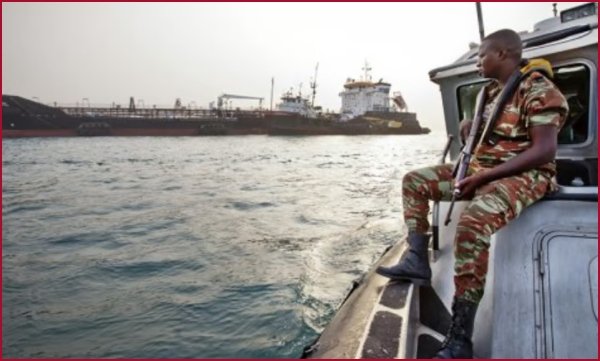
Senya Bereku, Central Region, Ghana – February 26, 2026 – A joint rescue operation by the Ghana Armed Forces, Marine Police Unit, and National Disaster Management Organisation (NADMO) has successfully brought 38 fishermen safely ashore after they were ambushed and robbed by armed assailants at sea.
The incident occurred in the early hours of Thursday, February 26, 2026, approximately 35 nautical miles off the coast near Senya Bereku in the Awutu Senya West District.
The fishermen, operating in two locally manufactured canoes (part of a larger fleet of seven canoes from Senya Bereku, Vorkor in Greater Accra, and other areas), were returning from a routine fishing expedition when they were attacked by unidentified gunmen in a black boat.
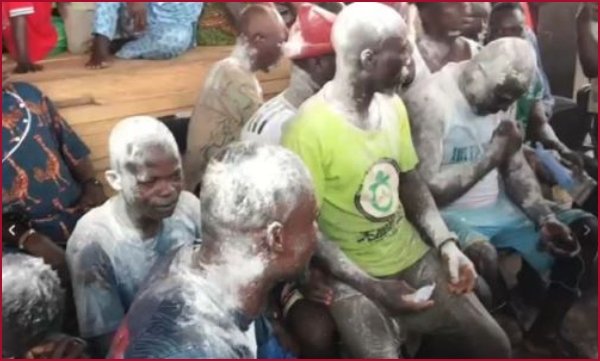
The assailants fired warning shots, held the victims at gunpoint, and stole seven outboard motors, five generators, mobile phones, cash, fuel, and other valuables—disabling the canoes and leaving the men stranded in deep waters. Preliminary reports indicate the attackers spoke pidgin English, but their nationality remains undisclosed.
Following distress reports, a coordinated search and rescue mission was launched at dawn. The Ghana Armed Forces conducted offshore operations, while Marine Police and NADMO teams towed the disabled vessels back to shore. The rescued fishermen, who endured hours adrift and traumatised by the ordeal, were safely landed in Senya Bereku, where they received initial support.
The Criminal Investigations Department (CID) has begun taking statements from the victims as investigations continue to identify and apprehend the perpetrators. In a statement, the Armed Forces appealed for public calm and assured ongoing efforts, with further updates to follow.
This latest attack heightens growing fears among Ghana’s coastal fishing communities over rising sea piracy and armed robbery incidents in the Gulf of Guinea region. Similar reports of over 50 fishermen stranded in related or overlapping events underscore the vulnerability of artisanal fishers to violent crime at sea, threatening livelihoods and food security in a sector critical to Ghana’s economy.
Authorities have urged fishermen to report suspicious activities and stressed the need for enhanced maritime security patrols to deter future incidents.
Burkina Faso Attack Still Fresh
The recent armed pirate attack underscores the growing insecurity facing ordinary Ghanaians in cross-border economic activities.
Just weeks earlier, on February 14, 2026, a terrorist ambush by the Al-Qaeda-linked JNIM group in the northern Burkinabe town of Titao claimed the lives of eight Ghanaian tomato traders who had crossed the border to purchase produce.
The militants separated men from women, opened fire, and set vehicles ablaze, leaving bodies burnt beyond recognition and prompting Ghana to temporarily suspend tomato imports from Burkina Faso—triggering sharp price surges in local markets and renewed fears among cross-border traders, particularly women.
Both incidents highlight the interconnected threats of violent extremism and maritime crime along Ghana’s northern and coastal frontiers.
The Burkina Faso attack disrupted vital agricultural supply chains and exposed the vulnerability of informal traders in the Sahel spillover zone, while the Senya Bereku piracy raid directly targets artisanal fishers who rely on sea routes for livelihoods.
Together, these events illustrate how regional instability—fueled by jihadist expansion in the Sahel and rising piracy in the Gulf of Guinea—is increasingly spilling over into Ghana, endangering civilian economic activities, food security, and cross-border trade.
The incidents have intensified calls for enhanced security cooperation, including recent Ghana-Burkina Faso agreements on joint patrols and trade facilitation, as authorities work to protect vulnerable communities and prevent further escalation.






Ghana News
Grieving Mother, Friends Demand Justice After Talented Young Woman Phillipa Acquah Killed by Reckless Motorcyclist

Accra, Ghana — The death of Phillipa Acquah, a young woman killed in a bizarre road accident, has sparked an emotional cry for justice and renewed concerns over road safety and poor street lighting in Ghanaian communities.
According to state-owned Daily Graphic, Philipa was standing by the roadside in the evening on Tuesday, November 17, 2026, when a motorcycle rider, said to be speeding, struck and dragged her on the road. She died form her injuries, the report said.
In a stirring article written as a tribute and a demand for accountability, Associate Professor Theodora Dame Adjin-Tettey describes Acquah as a young woman with “great academic potential” who had already shown “resilience and strong resolve” after losing her father while in school.
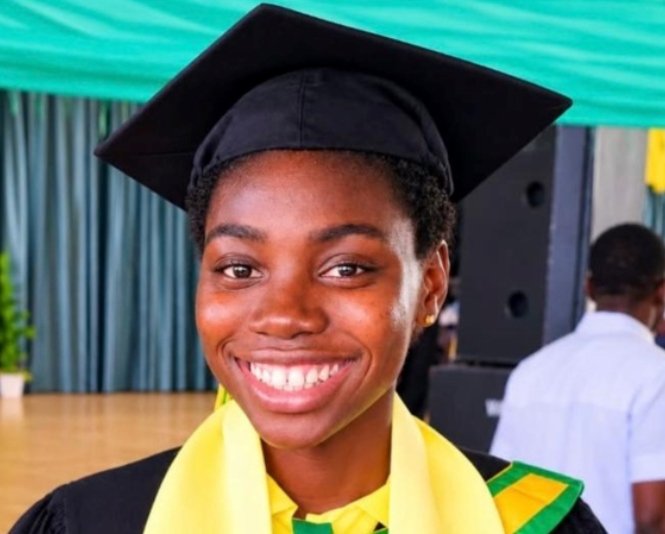
She leaves behind a grieving mother, heartbroken siblings, and devastated classmates.
“I never got the opportunity to meet Phillipa in person—I was hoping to meet her soon,” Adjin-Tettey wrote. “She was clearly someone who made a difference in the lives of those around her. A life like hers cannot simply be replaced.”
The professor is calling on the Ghana Police Service to thoroughly investigate the case, identify the perpetrators, and bring them to book. She also raised broader concerns about motorcycle indiscipline on Ghana’s roads, noting that riders frequently speed, jump traffic lights, and weave dangerously between vehicles, often without consequence.
She urged regulatory and law enforcement agencies to extend technological interventions like Traffictech beyond conventional motorists to include motorcycle and tricycle riders. Additionally, she highlighted the non-functioning streetlights in the community where the incident occurred, calling on Metropolitan, Municipal and District Assemblies (MMDAs) to take their maintenance responsibilities seriously.
“Streetlights are not simply public amenities; they are an essential part of road safety infrastructure,” she wrote. “Their proper maintenance can help prevent avoidable accidents and protect lives.”
The tragedy has gripped the nation, and reignited calls for stricter enforcement of traffic regulations and greater accountability from public institutions responsible for road safety.
As Adjin-Tettey put it:
“Phillipa deserved to live. She deserved the opportunity to grow, to dream, to achieve, and to experience all that life had to offer. Her story should not have ended this way. We cannot bring Phillipa back, but we can and must demand justice for her.”
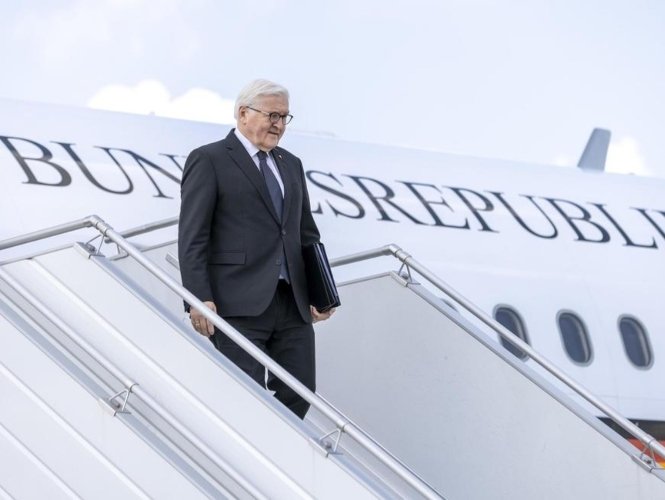
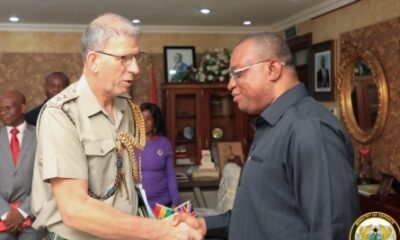
Accra, Ghana — German President Frank-Walter Steinmeier arrives in Accra on Tuesday, November 24, for a one-day visit aimed at deepening economic cooperation, investment, and skills training ties between Germany and Ghana.
The stop is part of a wider five-day African tour from November 22 to 26 that also takes in Côte d’Ivoire and Kenya. According to the German presidency, the trip is intended to “pay tribute to and further expand the close partnerships” with the three countries, with a focus on economic cooperation and the training of skilled workers.
Talks with Mahama at Jubilee House
The centerpiece of the Accra leg will be morning talks at Jubilee House with Ghana’s President, John Dramani Mahama. The two leaders are expected to discuss bilateral trade, German investment in Ghana, and joint efforts to develop the workforce skills needed by both economies. A press engagement is expected to follow.
Steinmeier will then deliver a speech opening the sixth German-African Business Summit, described by the German presidency as Germany’s most important business conference on the African continent. He will also hold talks with summit participants. The President is travelling with a German business delegation, signaling Berlin’s intent to translate diplomatic goodwill into commercial deals.
WFP Logistics Hub Visit
At midday, Steinmeier will visit the humanitarian logistics hub of the United Nations World Food Program in Accra. The stop highlights Ghana’s growing role as a regional logistics and humanitarian hub, and ties into broader German engagement on food security and crisis response in West Africa.
He departs for Nairobi later that day, where he will be welcomed by President William Ruto on November 25 and round off the tour with a visit to the Crescent Island nature reserve at Lake Naivasha on November 26, focusing on biodiversity conservation.
Context: A Broader African Push
The tour began in Abidjan, where Steinmeier met President Alassane Ouattara on November 23 and visited a vocational school and the International Counter-Terrorism Academy. The vocational training theme carries directly into Accra, where skills development is expected to dominate the business summit agenda.
For Ghana, the visit comes at a pivotal moment. The country has been working to attract foreign investment, create jobs for its young and fast-growing population, and position itself as a gateway to West African markets. Germany, for its part, has been seeking to diversify supply chains and secure partnerships in energy, infrastructure, and technical training.
What It Could Mean for Ghana
Analysts will be watching whether the summit produces concrete announcements on German investment in Ghanaian manufacturing, renewable energy, or vocational education. The presence of a business delegation suggests that deals, or at least memoranda of understanding, may be in the offing.
The visit also carries symbolic weight: it is the first time in recent memory a German head of state has made Ghana a focal point of an African tour, and the choice of Accra for the continent’s premier German business summit underscores Ghana’s standing as a preferred investment destination.
Whether the visit unlocks new opportunities for trade, jobs, and investment will depend on follow-through. But the combination of presidential talks, a major business summit, and a humanitarian logistics hub visit suggests Germany is betting on Ghana as a long-term partner in West Africa.
Ghana News
‘We Didn’t Come Here to Beg’: Ghana’s Zanetor Agyeman-Rawlings Demands Climate Justice and Funding for Africa at COP31
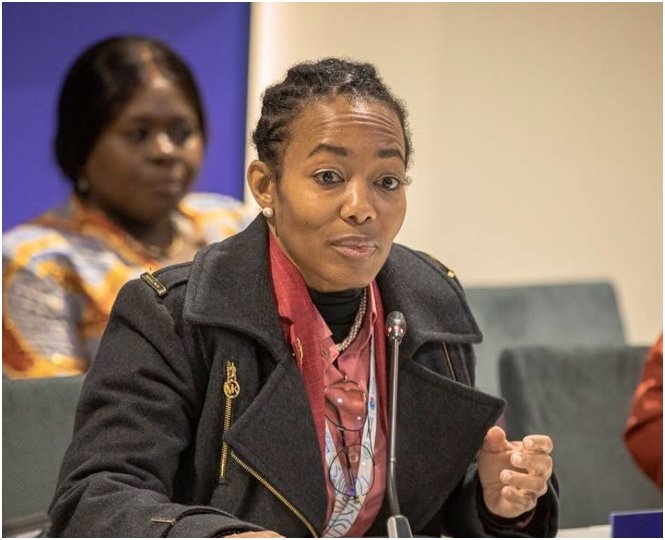
Ghana’s Minister for Environment, Science and Technology, Dr Zanetor Agyeman-Rawlings, has delivered a forceful message to world leaders at the United Nations Climate Change Conference (COP31), demanding climate justice, adequate financing and accountability from developed nations over the environmental damage disproportionately affecting African communities.
Addressing delegates at the climate summit in Antalya, Türkiye, Agyeman-Rawlings declared that African countries had not come to plead for financial assistance but to demand what she described as their rightful entitlement after suffering the consequences of industrialization and other human activities that have contributed to global warming.
“We didn’t come here to beg, we came here to claim what is rightfully ours for our people, who are suffering the brunt of anthropogenic activities of developed countries, that they are now being asked to pay for in ways that they never asked,” she told delegates.
Her remarks placed Africa’s longstanding demand for climate justice at the center of negotiations, challenging wealthy nations to recognize their historical contribution to climate change and fulfil their financial responsibilities towards countries facing increasingly severe environmental consequences.
The Ghanaian minister also questioned the fairness of climate transition arrangements being proposed for developing economies, arguing that African populations should not be expected to shoulder additional costs for a crisis they contributed comparatively little to creating.
“The people of Africa, those who have suffered the most as a result of what has been going on due to the activities mostly of developed countries, deserve better,” she said.
“And we’re here to be a voice for them.”
Her message ended with a warning against another international climate conference producing ambitious declarations without meaningful implementation.
“We’re here to declare that we will not allow this to be another talk shop,” she said.
Africa rejects climate commitments without adequate funding
Agyeman-Rawlings’ intervention reflects a broader African position that wealthy industrialized nations must provide meaningful financial and technical assistance to developing countries confronting climate change.
African countries face mounting pressure to adapt to rising temperatures, changing rainfall patterns, droughts, flooding, coastal erosion and other climate-related threats.
Yet many African economies have limited financial resources to build resilient infrastructure, protect vulnerable communities, modernize agriculture and transition towards cleaner energy systems.
The minister has maintained that African nations should not be expected to accept additional climate obligations without the financial and technical capacity required to implement them.
At an African Ministerial Conference on the Environment meeting on the margins of COP31, she outlined three important conditions African governments should defend during the negotiations: maintaining the commitment to triple adaptation finance, rejecting additional obligations without adequate implementation support, and preventing climate finance from being double-counted or delivered predominantly through loans that increase developing countries’ debt burdens.
She argued that African countries had already demonstrated their willingness to participate in global climate action through their Nationally Determined Contributions, carbon market initiatives and national climate strategies.
However, the resources promised to support these commitments have not been sufficiently delivered.
She therefore called for concrete financial commitments and clear delivery arrangements rather than announcements that leave developing countries without the means to act.
‘So-called just transitions’ are not necessarily just, minister warns
One of the most significant aspects of Agyeman-Rawlings’ statement was her criticism of the concept of a just transition.
A just transition generally refers to the process of moving towards a lower-carbon economy while protecting workers, communities and vulnerable populations from the economic and social consequences of changes in energy production and consumption.
However, the Ghanaian minister questioned whether the arrangements currently being discussed genuinely protect African interests.
“We’re being asked to engage in so-called just transitions, which are anything but just,” she said.
Her criticism reflects concerns that developing economies could face pressure to restructure their energy systems and meet new environmental requirements without receiving sufficient financial assistance, technology transfer or investment to support that transformation.
For African countries, the challenge involves balancing environmental protection with the need to expand electricity access, develop industries, create employment and improve living standards.
Agyeman-Rawlings’ position is that climate action must recognize these development priorities rather than impose responsibilities without providing the resources needed to meet them.
Africa’s transition must also take account of national economic circumstances, energy infrastructure and the different capacities of countries to finance environmental reforms.
Climate talks face growing divisions over funding and fossil fuels
The minister’s intervention came at a particularly contentious stage of COP31, which was held from November 9 to 20, 2026, in Antalya, Türkiye.
The summit was scheduled to conclude on Friday, November 20, but negotiations extended into Saturday as countries struggled to reach agreement on climate finance, fossil fuels, adaptation and the global energy transition.
One major source of disagreement was a revised draft agreement released during the final days of the conference.
An earlier version included stronger language calling for an accelerated transition away from coal, oil and gas. However, the subsequent draft removed references to fossil fuels, prompting objections from countries and climate advocacy organizations.
The revised text also dropped a proposed annual $120 billion climate adaptation funding target that had angered developing nations.
These developments intensified concerns among African representatives and other climate-vulnerable countries that wealthy nations were failing to provide the financial commitments necessary to protect populations facing the consequences of climate change.
The negotiations remained unresolved beyond the conference’s scheduled closing date, with countries continuing efforts to reach a consensus.
For African governments, the disagreement over climate finance is particularly consequential because adaptation requires substantial investment in infrastructure, agriculture, water management, coastal protection and disaster preparedness.
Without predictable financial support, countries may struggle to implement climate commitments even when they have established national plans.
Ghana takes a stronger voice in Africa’s climate negotiations
Agyeman-Rawlings’ remarks also reflect Ghana’s efforts to position itself within wider African climate negotiations.
Since assuming office as Minister for Environment, Science and Technology in August 2026, she has stressed the importance of a coordinated African position at international climate meetings.
Before COP31, she called on Ghana’s delegation to approach the negotiations with unity, professionalism, discipline and accountability, stressing that representatives were attending as a national team rather than pursuing separate institutional interests.
At the Antalya summit, Ghana’s position was closely connected to the wider African demand for climate finance, adaptation support and a fair distribution of responsibilities.
The minister has also pledged Ghana’s support for African cooperation in the negotiations, stressing the importance of speaking with one voice when engaging developed nations.
She has argued that Africa’s bargaining position is strengthened when countries work together rather than negotiate from fragmented national positions.
Climate justice is about more than financial assistance
At the heart of Agyeman-Rawlings’ message is the argument that climate finance should not be treated as charity.
African countries are demanding recognition that the economic activities responsible for much of the historical accumulation of greenhouse gas emissions have largely taken place in industrialized economies, while the consequences are increasingly being experienced by vulnerable populations elsewhere.
Climate justice therefore involves addressing historical responsibility, unequal vulnerability and the financial capacity to respond to environmental damage.
For countries across Africa, this means access to resources to protect agricultural production, strengthen infrastructure, safeguard coastal communities, develop renewable energy and respond to climate-related disasters.
It also means ensuring that climate financing is accessible, transparent and does not simply create new debt burdens for countries already facing economic challenges.
The distinction between financial promises and actual delivery remains central to the African position.
Agyeman-Rawlings wants international climate agreements to include commitments that can be measured, financed and implemented rather than statements that offer political reassurance without changing conditions on the ground.
For Ghana and the wider continent, the outcome of COP31 will therefore be measured not only by the language adopted in the final agreement but also by the resources and practical support made available to vulnerable populations.
‘We will not allow this to be another talk shop’
Agyeman-Rawlings’ closing message was directed at the credibility of the entire international climate negotiation process.
For African communities already experiencing the consequences of climate change, another conference ending with ambitious declarations but insufficient financial support would represent a failure to address their concerns.
Her remarks challenge developed nations to move beyond expressions of solidarity and demonstrate their commitment through actual funding, technology transfer and practical cooperation.
The minister’s position is that Africa has a right to participate in shaping the global climate response while demanding that its development priorities and environmental vulnerabilities are taken seriously.
Her declaration that Africa did not come to beg but to claim what is rightfully owed represents a wider demand for fairness in international climate relations.
As negotiations at COP31 extend beyond their scheduled deadline, Ghana’s message is that African countries should not be expected to accept more responsibilities without the means to fulfil them.
For Agyeman-Rawlings, climate justice must be reflected in tangible commitments that improve the lives of the people most affected by the crisis.
Africa, she insists, deserves better than another round of promises.


Grieving Mother, Friends Demand Justice After Talented Young Woman Phillipa Acquah Killed by Reckless Motorcyclist

A Life Cut Short: A Cry for Justice for Phillipa Acquah and An Urgent End to Road Recklessness

Americans Raise More Than $944,000 to Help Nolan Wells’ Mother Find Answers Despite Grand Jury Decision
-
 Commentary34 minutes ago
A Life Cut Short: A Cry for Justice for Phillipa Acquah and An Urgent End to Road Recklessness
-

 Uncategorized24 hours ago
Fat Joe Makes Emotional Appeal to Bronx Youth After Ghanaian Teen Javits Frimpong’s Killing
-
 Ghana News23 hours ago
German President Steinmeier Arrives in Ghana to Boost Trade and Skills Partnerships
-
 Global Update2 hours ago
Americans Raise More Than $944,000 to Help Nolan Wells’ Mother Find Answers Despite Grand Jury Decision
-
 Ghana News20 minutes ago
Grieving Mother, Friends Demand Justice After Talented Young Woman Phillipa Acquah Killed by Reckless Motorcyclist
-

 From the Diaspora21 hours ago
Ghanaian-Born Entrepreneur Mawena Tafa Turns Viral Brooklyn Encounter with Strange Man Into Business Opportunity