
Opinion
As war in Ukraine enters a 5th year, will the ‘Putin consensus’ among Russians hold?

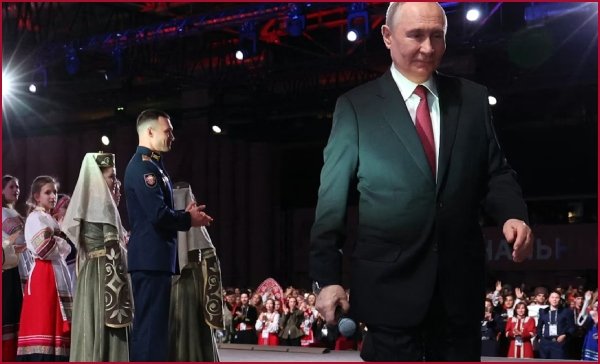
As Russia’s war in Ukraine enters its fifth year, Peter Rutland and Elizaveta Gaufman, surmise in this article that public support for President Vladimir Putin and the “special military operation” remains high in polls (over 80% approval for Putin, 60-70% for the war). However, the authors argue that this “Putin consensus” is fragile.
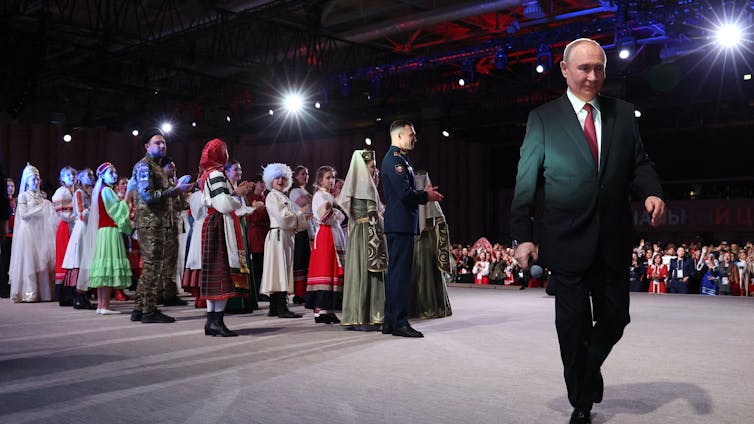
Peter Rutland, Wesleyan University and Elizaveta Gaufman, University of Groningen
Perceived wisdom has it that the longer a war goes on, the less enthusiastic a public becomes for continuing the conflict. After all, it is ordinary citizens who tend to bear the economic and human costs.
And yet, as the war following Russia’s full-scale invasion of Ukraine in February 2022 enters its fifth year, the attitude of the Russian public remains difficult to gauge: Just over half of Russians, according to one recent poll, expect the war to end in 2026; yet a majority say that should negotiations fail, Moscow needs to “escalate” with greater use of force.
As observers of Russian society, we believe this ambiguity in Russian public opinion gives President Vladimir Putin the cover to continue pushing hard for his goals in Ukraine. Yet at the same time, a deeper dive into the Russian public’s apparent support for the war suggests that it is more fragile than the Russian president would like to believe.
Putin’s social contract
From Day 1 of the conflict, Western strategy has been predicated on the belief that economic sanctions would eventually cause either the Russian elite or its society to persuade Putin to abandon the war.
This, in turn, is based on the assumption that the legitimacy of Putinism rests on a social contract of sorts: The Russian people will be loyal to the Kremlin if they enjoy a stable standard of living and are allowed to pursue their private lives without interference from the state.
The Russian economy has been struggling since 2014, so many analysts believed that this social contract was coming under strain even before the full-scale invasion of Ukraine. However, after four years of war, the combination of exclusion from European markets and a tripling of military spending has led to economic stagnation and mounting pressure on living standards.
One problem with the social contract approach is that it tends to downplay the role of ideology.
It is possible that Putin’s “Make Russia Great Again” propaganda resonates with a significant part of the Russian public. Polling has consistently placed Putin’s approval rating above 80% since the beginning of the Ukraine conflict.
Of course, the validity of the results of polls in an authoritarian society at war cannot be taken at face value. Yet, one shouldn’t rule out that some of that support is genuine and rests not just on a stable economy but also on popular endorsement of Putin’s pledge to restore Russia’s power and influence on the world stage.
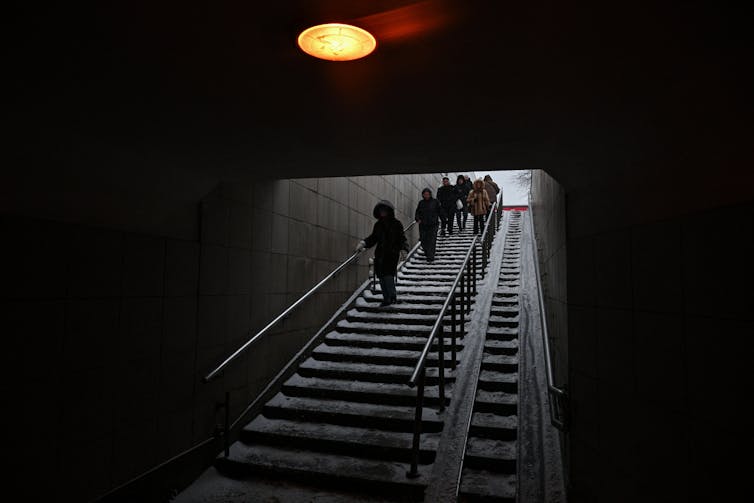
Rallying Russians
Some scholars point to a “rally around the flag” effect. There was an apparent surge in Putin’s approval rating after the use of military force against Ukraine in 2014 and 2022.
It is hard to tell whether the surge in support for Putin reflects a genuine shift in opinion or just a response to media coverage and what people perceive as the acceptable response.
The Kremlin has tried to hide the costs of the war from the public: concealing the true death toll and avoiding full-scale mobilization of conscripts by recruiting highly paid volunteers. It is also trying to keep the economy stable by drawing down the country’s reserve funds.
That leaves open the question of whether the “Putin consensus” will break down at some point in the future if the costs of the war start to hit home for a majority of Russians.
The problem with polls
The consensus view among observers is that a small minority of Russians oppose the war, a slightly larger minority enthusiastically support the war, and the majority passively go along with what the state is doing.
There are still some independent pollsters conducting surveys in Russia that report a high level of support among respondents for the “special military operation” against Ukraine, with figures ranging between 60% and 70%.
A number of researchers have pointed out the difficulty in getting an accurate snapshot of Russian public opinion, given that the polling questions might make the respondent fearful of being accused of breaking laws that penalize “spreading fake news” and “discrediting the army” with a lengthy prison sentence.
The Levada Center, which is still regarded as an independent and relatively reliable pollster, conducts its interviews face to face in people’s homes but has a very low response rate. Polls conducted online, in return for monetary rewards, can try to find demographically balanced respondents, but the problem of wariness about giving answers that are critical of the regime remains. In Russia’s current political environment, refusing to answer or giving a socially acceptable response is a rational strategy.
Some scholars, such as those associated with the Public Sociology Laboratory, which looks at public sentiment in post-Soviet states, still conduct fieldwork inside Russia, sending researchers to live incognito in provincial towns and observe social practices involving support for the war.
Their ethnographic research finds little evidence for a “rally around the flag” effect in provincial Russian society. Other analysts have turned to digital ethnography of social media as an alternative source of insight. But analysts unfamiliar with the local and digital context risk mistaking performative loyalty for genuine belief.
‘Internal emigration’
Most Russian citizens try to avoid political discussion altogether and retreat into what is often described as “internal emigration” – living their own lives while keeping interactions with the authorities to a minimum.
This practice dates back to the Soviet period but resurfaced as political repression increased after Putin’s return to the presidency in 2012.
There is no doubt that there are many fervent war supporters in Russia. They are quite vocal and visible because the state allows them to be – such as the military bloggers reporting from the front lines.
Apart from looking at opinion polls and social media, one can also probe the level of genuine support for the war by looking at everyday practices. If popular support for the war were enthusiastic, recruitment offices would be overwhelmed. They are not.
Instead, Russia has relied heavily on financial incentives, aggressive advertising, prison recruitment and coercive mobilization. At the same time, hundreds of thousands of men have sought to avoid conscription by leaving the country, hiding from authorities or exploiting legal exemptions.
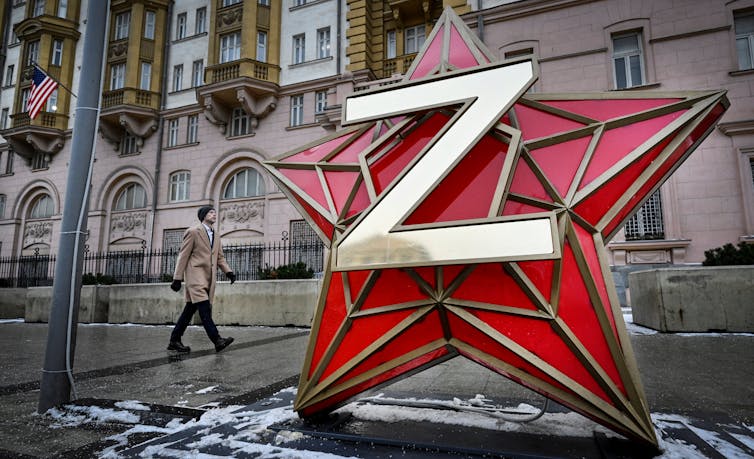
Symbolic participation follows a similar pattern. State-sponsored Z symbols continue to dominate public space – the letter Z is used as a symbol of support for the war, in slogans such as “Za pobedu,” which translates to “for victory.” But privately displayed signs of support have largely disappeared.
Humanitarian aid to be sent to soldiers on the front lines or occupied Ukraine is often collected through schools and churches, where participation is shaped by social or administrative pressure. But many participants frame their involvement as helping individuals rather than supporting the war itself.
Reality vs. lived experience
High-profile propaganda products frequently fail to resonate. Music charts and streaming platforms in Russia are dominated not by patriotic anthems but by an eclectic mix of songs about personal relationships, such as Jakone’s moody ballad “Eyes As Wet As Asphalt,” songs in praise of “Hoodies” and even a catchy Bashkir folk song.
Book sales show strong demand for works such as George Orwell’s “1984” and Viktor Frankl’s Holocaust memoir “Man’s Search for Meaning,” suggesting that readers are searching for ways to understand authoritarianism, trauma and moral responsibility rather than celebrating militarism.
And instead of watching the state-backed film “Tolerance,” a dystopian tale of moral decay in the West, Russians are streaming the “Heated Rivalry” gay hockey romance.
Putin’s campaign to promote what he sees as traditional values appears not to be cutting through. Divorce rates are among the highest in the world – and birth rates continue to fall.
Heading into the Ukraine war’s fifth year, the gulf between the Kremlin version of reality and the lived experience of ordinary Russians remains. It echoes a pattern we have seen before: In the final decade of the Soviet Union the Kremlin became increasingly out of touch with the views of its people.
History will not necessarily repeat itself – but the masters of the Kremlin should be conscious of the parallels.
Peter Rutland, Professor of Government, Wesleyan University and Elizaveta Gaufman, Assistant Professor of Russian Discourse and Politics, University of Groningen
This article is republished from The Conversation under a Creative Commons license. Read the original article.




Can Moscow host Africa under drone threat? As Moscow prepares to welcome African leaders to the third Russia-Africa Summit on October 28 to 29, Ukrainian drone strikes have reportedly hit Yandex data centres and targeted the capital region, exposing a delicate contradiction at the heart of the gathering. Russia pitches itself as Africa’s security partner while its own infrastructure proves vulnerable. In this opinion piece, analyst Joseph McCarthy examines the security dilemma facing both Moscow and African governments, arguing that leaders weighing the trip must confront a deeper question: what does it mean to tie your nation’s safety to a partner that is itself under sustained attack? Read the full article below.
Yandex Strikes: Can Moscow Host Africa Under Drone Threat?
Moscow pitches itself as Africa’s security partner while its own infrastructure is exposed
By Joseph McCarthy · Analyst, Sahel governance & security
| 3YANDEX DATA CENTRES REPORTEDLY STRUCK, 8–11 OCT | 650DRONES STRUCK MOSCOW REGION, 6 OCT | 28–29 OctTHIRD RUSSIA-AFRICA SUMMIT, MOSCOW |
Every summit is a performance of strength. The third Russia-Africa Summit, due in Moscow on 28 and 29 October, is meant to show African leaders that Russia remains a confident, well-connected partner despite sanctions, isolation and a costly war. Between 8 and 11 October, Ukrainian drones complicated that script. Three data centres operated by Yandex, the technology giant behind much of Russia’s digital economy, were reportedly struck in the Ryazan, Kaluga and Vladimir regions. For Moscow and for its African guests, the episode poses a security dilemma that no communiqué will resolve.
The first attack, on the night of 7 to 8 October, reportedly set fire to a facility in Sasovo, in Ryazan region, and suspended operations. A second strike hit a site in Kaluga; a third, in Vladimir region, followed on 11 October. Yandex runs payments, email, navigation, ride-hailing, delivery and cloud computing, so the effects spread quickly. Meduza reported disruptions to Yandex Pay, Mail, Disk and Go, while businesses that depend on Yandex Cloud described outages of their own. One user told the outlet: “All my money is on Yandex, so I have no money for food.” The company says customers’ funds are safe, but the episode shows how one point of failure can become hardship for ordinary people within hours.
Recovery may be slow. Reports suggest that replacing specialised equipment could take months, and Russian officials have reportedly acknowledged the difficulty. That matters beyond one company. Moscow has spent years encouraging reliance on domestic platforms as Western technology withdrew. The Yandex strikes show that domestic ownership is not the same as security. Technological sovereignty also means being able to protect, maintain and restore systems under attack.
Moscow will call such strikes aggression against civilian targets. Yet they come after years of Russian missile and drone attacks on Ukrainian cities and energy infrastructure, so the exposure Russia now faces cannot be separated from the war it chose to launch. That context does not make the risk to visitors any smaller; it explains why it is unlikely to disappear before the summit.
Here lies the first half of the dilemma, and it is Moscow’s. Hosting African leaders in the capital is a statement of confidence, but it also puts that confidence on display. Russia must keep airspace open, transport moving and digital systems running while the war reaches ever deeper into its territory. On 20 September, roughly 450 drones were reportedly aimed at the capital; on 6 October, around 650 struck the Moscow region. Every intercept shows that defences work. Every strike that lands, and every airport closure, suggests the opposite. The summit cannot merely proceed; it must avoid becoming a showcase for exposure. Moscow will almost certainly respond with heavy security, restricted airspace and tightly managed movement. That may protect delegates, but it also turns the gathering into a fortress, held in spite of the war rather than in a country at ease with itself.
None of this proves that Russia cannot protect the summit. Vulnerability to long-range drones is not the same as losing the ability to defend territory, and the more widely a country’s civilian and commercial infrastructure is distributed, the harder it is to shield. Delegations may well land, meet and leave without incident. But that is a probability, not a guarantee, and guarantees are precisely what Russia is selling.
That brings us to the second half of the dilemma, which belongs to African governments. The immediate question is personal safety. In early September, Air Tanzania suspended its Dar es Salaam to Moscow route after a risk assessment, then resumed it days later. Further attacks could prompt airspace restrictions, diversions and tighter security that complicate movement between airports, hotels and venues. These are scenarios, not confirmed disruptions, yet every government weighing the trip must price them in, including the level at which it chooses to be represented.
The deeper question is strategic. Security cooperation is the core of Russia’s offer to Africa: Moscow says it has military agreements with more than 40 African states, and Russian security personnel are embedded in countries such as Mali and the Central African Republic. Governments that rely on that protection are tying their own security to a partner that is itself under sustained attack. A security provider at war is also a provider that is stretched, distracted and targeted. The more a government leans on Russia to guarantee its safety, the more it imports the risks of Russia’s war.
“The more a government leans on Russia to guarantee its safety, the more it imports the risks of Russia’s war.”
Call it a dilemma of dependence. The relationship meant to be a source of protection can become a channel for exposure, and the closer the embrace, the harder it is to step back.
What should African governments do? Engage, but with open eyes. They can ask for written security and contingency arrangements for their delegations, diversify their security partnerships so that no single patron’s vulnerability becomes their own, and insist that cooperation strengthens national institutions rather than simply protecting incumbent governments. Strategic autonomy means having choices. It does not mean choosing between Moscow and everyone else, or accepting one patron’s risks as the price of its protection.
The Kremlin wants the summit to show that sanctions have not isolated Russia. The Yandex strikes complicate that message without defeating it. They pose a simple test for any partner who offers security: can it secure itself? The answer will not come from speeches in Moscow. It will come from whether the summit runs smoothly, and from what follows. Until then, African leaders have every reason to listen politely, travel carefully and commit slowly.
■
Joseph McCarthy is an analyst and researcher specialising in governance, security and political transitions in the Sahel. He writes on geopolitics, development and African diplomacy. joecarthy30@gmail.com

In this thought-provoking opinion piece, Associate Professor Theodora Dame Adjin-Tettey examines the alarming deterioration of public discourse in Ghana and beyond, marked by an explosion of hate speech, vitriol, threats, and inciting comments. Drawing on a personal anecdote about a researcher who abandoned a study on media insults in 2010 due to a lack of data, contrasted with today’s overwhelming abundance of such content, she argues that this shift signals a deeply troubling ethical decline in society. Read the full article below.
Hate speech, vitriol, threats, and inciting comments: Can we stop it already?
By Theodora Dame Adjin-Tettey | Associate Professor
A friend of mine recently posted on social media that he had to abandon his 2010 research project on “insults in the media” because he couldn’t find enough data. Every researcher needs data to carry out their study, so when there is a data drought on a subject of empirical investigation, it becomes a huge stumbling block to the researcher, possibly causing them to abandon their study or chart a new parallel path to the original idea. It suffices to say, however, that the lack of data the researcher encountered sixteen years ago on a topic like insults in the media signaled something positive or healthy about the general environment for public discourse at the time. This is despite it posing a serious threat to the attainment of a university degree.
Contrarily, when there is an overabundance of data on a topic like that, 16 years after the initial fruitless attempt, it is indisputable evidence of where society, specifically, public discourse, has shifted to. Significantly, it is also indicative of a deteriorating and possibly ethically deficient society. So, here is my question: must we be concerned about the rather glaringly ethically deficient status quo of our public discourse, or should we write it off as a normal concomitant of a liberal society, aka democracy?
A matter of grave concern
I’m not the first to write about this, and I definitely will not be the last. But I feel I must also make my attempt at a drop in the ocean. Surely, change can be realised when all hands are on deck. Every little effort, every little attempt, every little … helps. It is no wonder the British supermarket chain, Tesco, popularized this phrase. Indeed, small efforts matter and are important in contributing to a bigger goal. The bigger goal, this time, is sanity within our information and media environment.
Over the past weeks, the public sphere has been awash with conversations about how our society’s social fabric is degenerating, and I dare say, at a faster rate than ever, particularly when it comes to decent conversations, be it on politics or on social issues. I say “faster rate” because now the platforms that accelerate public discourse, including who initiates/originates or sets the agenda, and who disseminates it, have been democratized, thanks to advances in digital technologies. With generative technologies being able to imitate human intelligence and our ill tendencies, humans no longer need other humans to perpetrate wrongs against their kind. The technologies have become our faithful and convenient allies, helping us to fabricate wild allegations, perpetrate lies, polish up insults, and execute wicked agendas against our own kind that we sometimes consider “the enemy” or the subject of our dislike and/or hatred. Sad.
When I see, watch, and hear the daily insults, hearsay, hate speech, threats, inciting comments and sharp vitriol accompanying social media posts and commentary, I cannot help but to attempt to contribute to turning the tide; that is, if only the tide has not already washed away our humanity, respect, reverence, and the strength of character and ethical backbone that distinguishes Ghanaians from others without the tiniest crevices to hold on to.
We must fight the temptation at all costs
People always have something to say about someone: their looks, how they talk, what they do, what they do not do, how they wish ill on them, on and on and on. Yes, as right-thinking humans, we may form opinions on issues, but it is not every opinion that must be uttered or shared with the world, even when you are convinced that it is the most persuasive or erudite. There is a reason for the adage that “all truths are not to be told” or “all truth is good, but not all truth is good to say.” Should we all utter what we think of, know of, or how we feel about people or every issue, society would be sent into chaos. Even worse is when made-up falsehoods permeate public discourse. That is why it is important that, in being wise, we must sometimes give our “thoughts no tongue.” as Polonius, the chief counselor to King Claudius, advised his son, Laertes, in William Shakespeare’s Hamlet.
Critical public discourse must be based on factual arguments and not insults and denigration of people’s persona, sometimes to the extent of stripping them of their dignity. As a people who pride ourselves on being civilized, civilization in itself must tame our human nature by redefining our manners, developing our intellect, and, when need be, restraining us. Civilization must advance society and must develop our culture and not erode it. That’s why it becomes a matter of grave concern when we witness some of the vilest insults come from people who are supposed to be an example in society, particularly to the younger generation.
Additionally, our tendency to politicize everything has worsened things. We have become enemies because of political biases. We perceive everything as black or white, forgetting the shades in the spectrum. That is why every other person becomes the enemy, and the only way we seem to know how to deal with the enemy is to “destroy” them so our side of the divide will stand as the better side. Because of politics, we have strangely redefined family, friendship, associate, colleague, etc. Of late, you are likely to see people showing respect only to the people that they share political affiliation with or whom they anticipate obtaining favour from. Once you are of “no use” to them, you are a good candidate for needless castigation and character assassination. It seems to me that the easiest thing to do these days is destroying people’s reputations. I also see that the extent of the harm increases when the act intended to create the destruction is generously bankrolled.
The attention economy as a facilitator of information disorder
The other aspect of the conversation is how social media incentivizes sensationalism and exploits the negativity bias of the human tendency to pay closer attention to content that contains threats, causes anger and outrage. And in the present attention economy built on clicks, shares, comments, and watch time, it is not surprising that those who want to attract the attention that translates into both online and offline monetary returns will do anything to push content that the algorithms are configured to track and promote.
So, next time you react to, comment on, and/or share that vitriol, remember that you are contributing to the ocean of information disorder within the media and information ecology. If you are the one behind that account spewing insults, disrespect, and unnecessary attacks, note that civilization requires that we disagree with one another without losing respect, empathy, and civility for one another. We must also have a sense of responsibility to lift others when they are in their darkest moments rather than verbally battering them to the point of ruin. And rightly so, I find the quote that I recently came across, “to strike an adversary who is down is a betrayal of humanity, not a victory of strength”, incredibly poignant.
The more this goes on, factual information gets buried. And democratic decisions will be taken based on poor judgment. And here is the reason: the algorithms will drown out factual and decent communication when there is a sea of the opposite.
This is not to argue that duty bearers shouldn’t be held accountable. Certainly, we must, but in a decorous manner, while keeping the facts at the centre. Hate speech, threats, and inciting comments do not build a civil society; they quickly tear society apart, leaving us in chaos and dysfunction. So, now my question: must we continue on this tangent, knowing the chaos on social media does not stay just on social media but fast trickles into homes, communities, institutions and society at large?
Until next time, when I meet you and take your responses, this is my drop in the ocean.
The writer is an associate professor of Media and Communication Studies at Durban University of Technology.
Joseph McCarthy, an analyst specializing in Sahel governance and security, examines how a deceptive recruitment pipeline has drawn thousands of African men into Russia’s war in Ukraine. Drawing on investigations by Amnesty International and the INPACT/All Eyes on Wagner collective, which identified 1,417 recruits from 35 countries and 316 confirmed combat deaths, McCarthy argues that unemployment and misleading job offers have turned Africa’s economic vulnerability into a source of foreign military manpower. A war that is not Africa’s, he writes, should not be allowed to consume Africa’s blood.
African Blood for Other People’s War?
By Joseph McCarthy · Analyst, Sahel governance & security
A recruitment pipeline built on unemployment and misleading job offers has quietly drawn thousands of Africans into the front lines of Europe’s bloodiest war since 1945.
| 1,417AFRICAN RECRUITS IDENTIFIED | 35COUNTRIES OF ORIGIN | 316CONFIRMED COMBAT DEATHS |
A job advertisement can look like an escape route. A promised salary, a ticket to Russia and the prospect of a better life can seem like an opportunity to someone struggling with unemployment or economic hardship. For some Africans who travelled to Russia in search of work, the journey reportedly ended not at a construction site, a logistics company or behind a computer, but on the battlefield in Ukraine.
On 10 September, Amnesty International published an investigation documenting how foreign nationals have been recruited into Russia’s armed forces through deceptive, coercive and exploitative practices. The organisation found that people from countries including Sierra Leone, Somalia, South Africa and Egypt were drawn into the Russian military after being promised civilian employment, high salaries or other incentives. In many of the cases it examined, Amnesty concluded that the practices amounted to human trafficking.
The scale of the phenomenon goes far beyond isolated cases. The INPACT/All Eyes on Wagner collective says it has identified 1,417 African nationals from 35 countries who signed contracts with the Russian army between 2023 and 2025, including 316 whose deaths in combat were recorded. The database contains names, nationalities, dates of birth, military registration numbers and contract dates, along with dates of death and military units for those killed. INPACT says the list is not exhaustive, and that further research has identified additional African combat deaths not included in the original database.
Behind these numbers are young men who, in many cases, did not leave Africa intending to become soldiers. Some were promised civilian employment or help obtaining Russian visas and legal status; only once in Russia did they discover that the opportunity was tied to military service. Others were presented with Russian-language contracts they did not understand before being sent into combat.
“The tragedy is not only that Africans are dying in this war. It is that some families do not even know where their relatives went, how they were recruited, or where they died.”
The human cost is stark. Of the recruits in the database, 316 were recorded as killed in action, with an average period of service, for those whose deaths were recorded, of only about six months. Investigations have documented cases in which families spent months searching for missing relatives before discovering their names on lists of foreign soldiers killed in Ukraine. In one case reported by RFI from the INPACT investigation, a young African man who had travelled to Russia after being promised well-paid work was later identified on a list of those killed.
IDENTIFIED RECRUITS AND RECORDED DEATHS BY COUNTRY, INPACT DATABASE, 2023–2025
| COUNTRY | RECRUITS | DEATHS |
| Egypt | 361 | — |
| Cameroon | 335 | 94 |
| Ghana | 234 | 55 |
| The Gambia | 56 | 23 |
| Mali | 51 | — |
These figures turn the story from a handful of recruitment scams into a broader question about how Africa’s economic vulnerabilities are being converted into manpower for a foreign war. A young African searching for employment, education or a route out of hardship can become a target for a recruiter offering an apparently ordinary opportunity abroad. What begins with the promise of a salary or a better future can end with a military contract, a journey to the Ukrainian front and, in the worst cases, a death notice delivered months later to a family thousands of kilometres away.
The figures reveal two interconnected realities: Russia needs soldiers, and many Africans need economic opportunities. The recruitment system appears to operate at the intersection of those two vulnerabilities. INPACT describes this as a deliberate, organised recruitment strategy; Amnesty’s investigation separately documented the deceptive and coercive practices used to draw foreign nationals into Russia’s war effort.
GOVERNMENTS BEGIN TO RESPOND
Some African governments have begun to treat the recruitment of their citizens as more than a series of isolated cases. Kenya has taken the issue directly to Moscow. Following diplomatic discussions in March 2026, Russia agreed to place Kenya on a military recruitment stop list and to facilitate the disengagement of Kenyans already serving who no longer wished to continue. Nairobi has also tightened oversight of private recruitment agencies and pursued the repatriation of affected citizens. By May, Kenya said 291 of its nationals had been recruited, with 53 already repatriated.
Ghana has moved from concern to investigation. In July, its Foreign Affairs Minister said the government was investigating alleged criminal recruitment networks after reports that 272 Ghanaian nationals had been drawn into the war through fraudulent employment schemes. Fifty-five of those cases reportedly involved deaths, and two Ghanaians were being held as prisoners of war. Ghana has also engaged foreign authorities over the welfare of affected citizens and stepped up public education on deceptive overseas job offers.
These responses matter because they shift the issue from individual misfortune to a question of state responsibility. When citizens are recruited through employment advertisements, intermediaries and recruitment agencies, the problem is not simply that individuals made risky decisions. It raises questions about whether governments have adequate systems to regulate overseas recruiters, verify job offers and warn citizens before they leave the country. Kenya’s experience shows that repatriation is only part of the answer; disrupting the recruitment pipeline itself is the harder task.
The responses across the continent remain uneven, however. Recruits have been identified from numerous African countries, but governments differ sharply in their willingness or ability to investigate recruitment networks, negotiate with Moscow and support affected families. The protection an African citizen receives can depend heavily on whether their government is willing and able to intervene, and recruitment networks do not respect borders. The same mix of unemployment, migration pressure and online advertising that has already ensnared thousands could just as easily target young people in countries that have not yet identified a single case.
WHOSE INTERESTS ARE SERVED
There is also a deeper geopolitical dimension. For years, African countries have sought greater agency in their relations with external powers, insisting that partnerships serve African interests rather than reproduce dependency. The recruitment of African nationals into a distant war raises an uncomfortable question about whose interests are truly being served when economic vulnerability becomes a source of foreign military manpower.
The Russia-Ukraine war is fought thousands of kilometres from Africa, but its consequences are not confined to Europe. Behind every statistic is a son, a brother, a husband or a father who left home believing he was pursuing work and a better future. Some have returned alive; others have returned in body bags; and families are still searching for answers about how their loved ones ended up fighting a war they never intended to join. This cannot remain a distant European problem or a collection of unfortunate individual cases. When poverty can be turned into a recruitment weapon and African citizens into expendable soldiers, silence carries a cost. A war that is not Africa’s should not be allowed to consume Africa’s blood.
Joseph McCarthy is an analyst and researcher specialising in governance, security and political transitions in the Sahel. He writes on geopolitics, development and African diplomacy. joecarthy30@gmail.com


Funding Fears Loom For Ghana’s Life-Saving Malaria Vaccine Five Years After Roll Out

‘There was a Coordinated Disclosure Plan’: AI-Discovered Flaw in PHP Triggers Global Internet Chaos as Cybercriminals Race to Exploit It

Yandex Strikes: Can Moscow Host Africa Under Drone Threat?
-

 Ghana News1 day ago
Major Sexual Abuse Scandal Rocks Ghana High School: Obuasi School Headmaster Sues Journalist for GH¢2 Million as Investigation Into Alleged Misconduct Widens
-

 Reels & Social Media Highlights2 days ago
Ghana’s Digital Heartbeat: Outrage, Satire, and the Fight for Accountability
-

 Festivals & Events1 day ago
Compozers Fest Ghana Edition: Welcoming 2027 with Music in Accra
-

 Taste GH1 day ago
Airport Residential Area: Where Accra’s Dining Scene Meets Global Flavours
-

 Health & Wellness2 days ago
Four Everyday Lifestyle Habits That Can Make Weight Loss Easier
-

 Health & Wellness1 day ago
Why Keeping Weight Off Can Be Harder Than Losing It
-
 Arts and GH Heritage2 days ago
When Second-Hand Clothes Become a Playground for Community
-
 Opinion1 day ago
Yandex Strikes: Can Moscow Host Africa Under Drone Threat?