Arts and GH Heritage
How Music, Art, and History Are Rewriting Ghana’s Story
For decades, travelers viewed Africa through a narrow lens. But today, Ghana is flipping the script.

There is a rhythm to Ghana that you feel before you hear it. It’s in the air—thick and humid, carrying the scent of ocean salt and sizzling kelewele from a roadside bowl. It’s in the explosion of color from a trotro painted with a proverb, and in the echo of drumming that drifts from a ceremonial ground into the concrete corridors of the city.
For decades, travelers viewed Africa through a narrow lens. But today, Ghana is flipping the script. This tiny West African nation, the first in sub-Saharan Africa to shake off colonial rule, isn’t just asking you to visit; it’s inviting you to reconnect. Whether you are a Black American tracing ancestry, a European art collector hunting for the next big name, or a digital nomad seeking vibrant energy, Ghana offers a cultural immersion that hits differently. Here is why the world is paying attention right now.
Read Also: Bigger Than Manhyia: Discover the Grandeur of the Assin Kushea Palace, West Africa’s Largest
The Pilgrimage of Return
You cannot tell Ghana’s story without acknowledging the echoes of the Atlantic. Standing on the ramparts of Cape Coast Castle, the waves crash against the rocks below with a ferocity that mirrors the history held within those white-washed walls . This is not a museum you merely walk through; it is a place where you feel the weight of millions of footsteps heading toward the “Door of No Return.” It is haunting, yes, but for many in the diaspora, it has also become a gateway to healing .
This emotional pull culminated in 2019 with the “Year of Return,” a movement that brought icons like Stevie Wonder to receive citizenship and sent a clear message: the door is now open . Today, that movement has evolved into “The Black Star Experience,” a year-round initiative by the government to position Ghana as the creative and cultural heartbeat of the continent . It’s not just about looking back; it’s about walking forward together.
Where the Art World Tunes In
While the history draws you in, the contemporary art scene makes you stay. Accra is currently having a moment, and the world is taking notice. At the forefront is Gallery 1957.
Founded in 2016, the gallery’s name is a deliberate nod to Ghana’s independence, acknowledging the role that art and culture played in forging a new national identity . Today, with spaces in both Accra and London, it serves as a bridge, introducing the global market to the brilliance of West African artists .
Just a short drive away, the Nubuke Foundation in East Legon offers a serene space to explore everything from contemporary paintings to stunning exhibitions on Ga funerary culture . And if you wander through the colonial-era streets of Jamestown, the city itself becomes the gallery. Murals splash across weathered walls, telling stories of community and resistance, culminating every August in the explosion of creativity that is the Chale Wote Street Art Festival .
The Soundtrack of a Continent
But Ghana doesn’t just show you art—it makes you move to it. The pulse of the nation quickens in December, when the diaspora “returns” for the most vibrant time of the year. The headliner is AfroFuture (formerly Afrochella), a two-day spectacle at the El Wak Stadium that blends music, fashion, and food into a celebration of the continent’s creative excellence .
With the 2025 edition themed “African Nostalgia,” the festival promises to bridge past and present, featuring heavyweights like Nigeria’s Asake and Ghana’s own lyrical powerhouse, King Paluta. It’s a homecoming for the soul, set to a soundtrack of Afrobeats and Hiplife.
And when the main stage goes dark, the city keeps buzzing. You’ll find the party migrating to iconic spots like The Republic Bar on Oxford Street, where DJs spin until dawn and cocktails flow with locally distilled spirits. Here, surrounded by laughing strangers who become friends by morning, you realize that in Ghana, community isn’t just a concept—it’s the national pastime.
So, pack light. Come for the history, stay for the art, and lose yourself in the rhythm. The Black Star is shining brighter than ever, and it is calling your name.








Arts and GH Heritage
When Second-Hand Clothes Become a Playground for Community
Using Broni Wawu garments purchased at a local market, Bamfo creates enclosed and open environments designed for participation rather than distant observation.
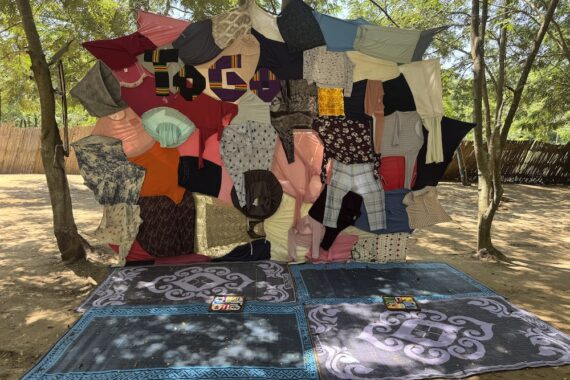
In Atakpamé, Ghanaian artist Dr. Frederick Bamfo transforms discarded garments into interactive spaces where children, cultural memory and collective play meet.
A discarded shirt can carry more than the memory of a former owner. In the hands of Ghanaian artist and academic Dr. Frederick Bamfo, it can become part of a place where children gather, games begin and strangers find reasons to connect.
His installation, The Games Feast, developed during the Karp Artists’ and Researchers’ Residency in Atakpamé, Togo, gives second-hand clothing a new social life.
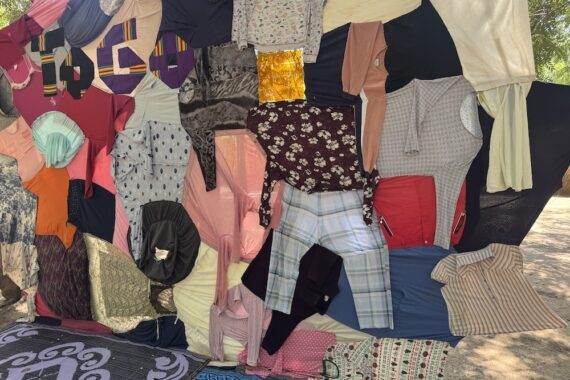
Using Broni Wawu garments purchased at a local market, Bamfo creates enclosed and open environments designed for participation rather than distant observation.
The choice of material speaks to a familiar West African reality. Second-hand clothing circulates through markets, connecting consumers to international trade networks while raising questions about consumption, waste and the afterlife of textiles.
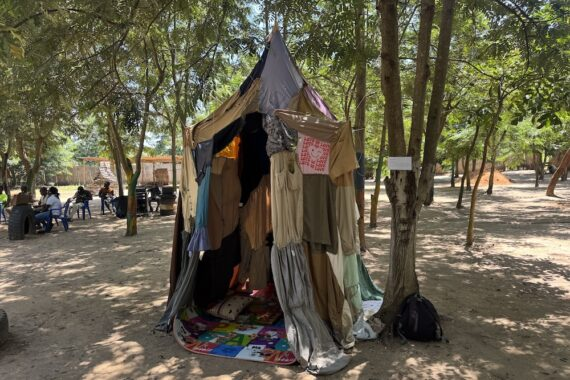
Often valued primarily for their usefulness or affordability, these garments become something different in Bamfo’s work: vessels of memory and possibilities for human connection.
The installation’s defining feature, however, is not simply its reuse of clothing. It is what happens inside these improvised spaces.
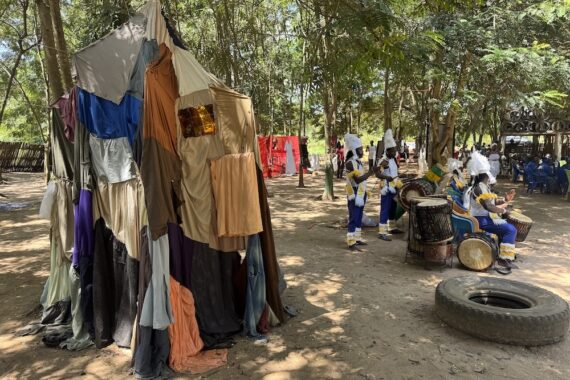
Children help shape the project’s collaborative spirit, while games such as ludo and oware, alongside dancing and skipping, turn the artwork into a setting for shared experience.
These activities draw on familiar forms of play that have long helped communities build relationships and pass cultural knowledge between generations.
Here, they also challenge conventional ideas of an art installation as something to admire without touching or entering.
For Bamfo, the transformation is both material and social. Clothing once associated with individual bodies becomes a collective environment, while everyday games become tools for participation.
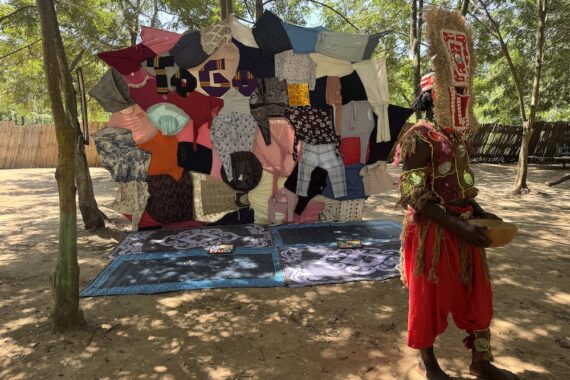
In Atakpamé, The Games Feast suggests that the most meaningful second life of a discarded garment may not be another wardrobe, but a space where people come together.
Arts and GH Heritage
Who Owns the Right to Be Called an Artist? A Debate in Togo Challenges the Rules of Art
From Ghana’s traditional craftsmen to self-taught street artists, creative excellence rarely follows a single road.
An artist may spend years in a university studio learning perspective, composition and art history.
Another may acquire the same confidence with materials through years of observation, experimentation and work passed down through generations. Which deserves greater recognition?
At Hotel Hong Kong in Atakpamé, Togo, this question became a starting point for a wider conversation about who gets to define artistic excellence.
Beyond the walls of the academy
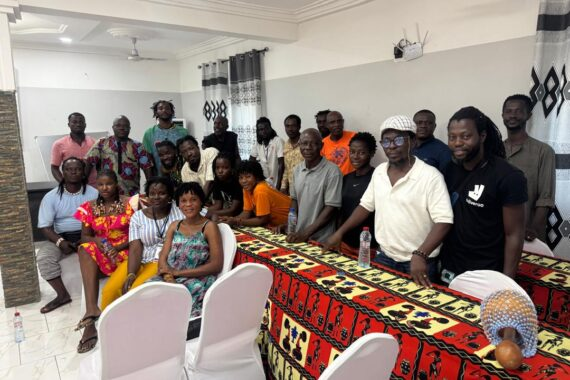
The panel discussion, organised as part of the ongoing Karp Kamina Artists and Researchers Residency, brought together Ghanaian artists Frederick Bamfo, Livingstone Amoako and Ray Agbo.
Moderated by Kojo Biney, with Samuel Olou, the residency’s director, translating into French, the conversation examined the opportunities and limitations of formal and self-directed artistic education.
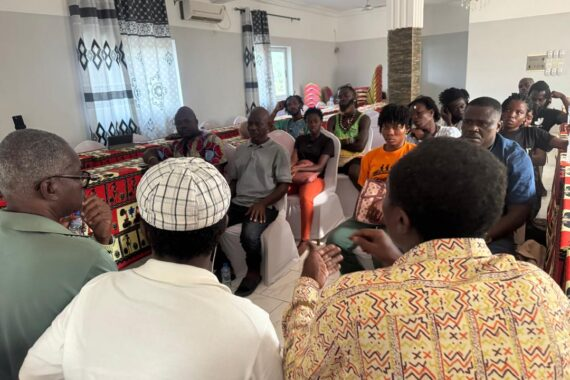
Art academies offer structured training, experienced mentors, studio facilities and access to professional networks.
Yet these advantages do not automatically produce originality. Outside institutional settings, artists often develop distinctive approaches through everyday encounters, community knowledge, apprenticeships and experimentation.
Ghana’s traditions offer another lesson
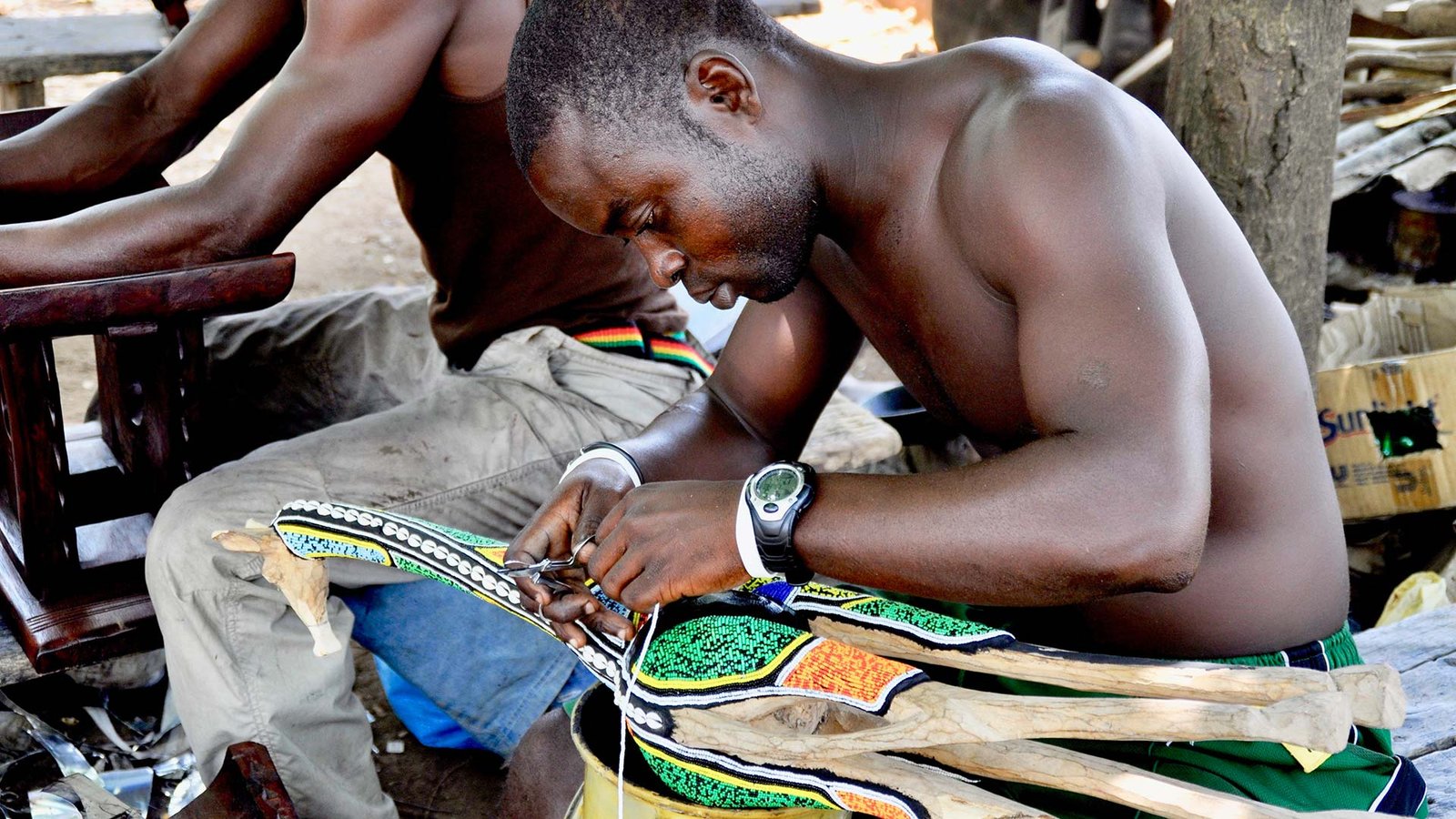
Ghana’s fantasy coffin makers illustrate why artistic knowledge cannot be measured by academic qualifications alone.
These craftspeople transform wood into elaborate forms representing professions, personal identities and family histories.
Their expertise is built through practical experience, inherited techniques and close relationships between makers and their communities.
Such traditions challenge institutions to reconsider what counts as legitimate artistic training and whose work deserves exhibition space, critical attention and commercial support.
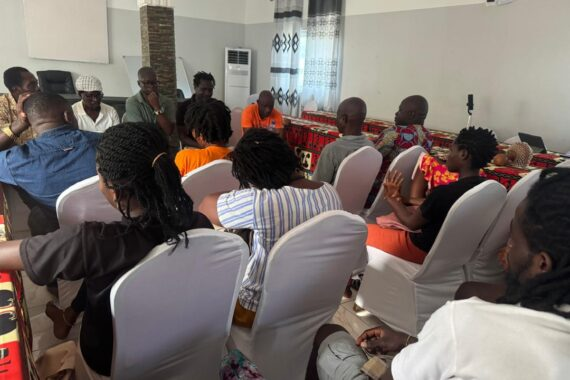
Making room for different creative journeys
The discussion at Hotel Hong Kong did not present formal education and independent practice as opposing forces.
Instead, it highlighted the need for an art world that values technical knowledge without dismissing unconventional paths.
For African artists navigating galleries, museums and international exhibitions, that distinction matters.
Creativity may begin in a classroom, a workshop or on the street. The greater challenge is ensuring that opportunity does not depend solely on where an artist learned to create.
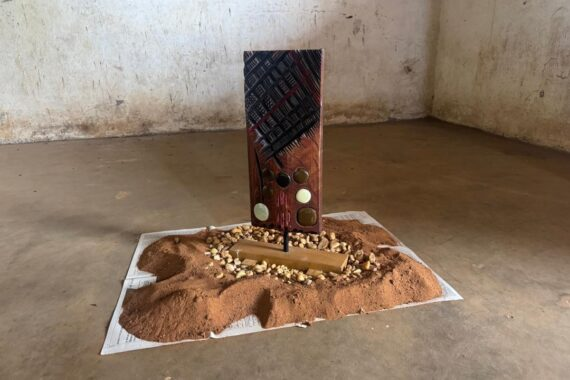
An old building can hold more than dust and silence. In Atakpamé, Togo, an abandoned German colonial structure is finding a new purpose as a space where African cultural expression challenges the weight of history.
Through Conversations: Symbolism and Lifestyle, Ghanaian artists Kojo Biney and Ray Agbo invite audiences to look afresh at the ordinary encounters that bind communities together.
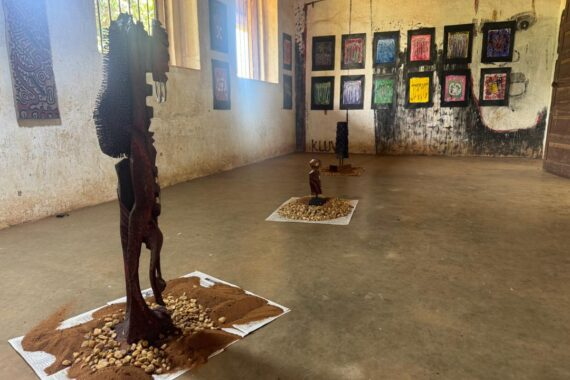
Their paintings and sculptures explore a language that often needs no words: the exchange of kola nuts, bargaining between market traders and customers, and the sharing of palm wine.
These gestures may appear familiar, yet each carries social meaning. They can express welcome, negotiate relationships, establish trust and pass knowledge between generations.
By bringing such moments into the gallery, the artists suggest that culture is not preserved only in museums or ceremonial performances. It lives in everyday interactions.
A building becomes part of the conversation
Presented during the Karp Kamina Artists and Researchers Residency 2026, the exhibition draws on Atakpamé’s cultural landscape, where Ana and Ewe-speaking communities meet. Known as the “city of seven hills”, the town provides a fitting setting for an exploration of identity and shared heritage.
The installation also places paintings alongside newspaper pages, linking artistic interpretation with the ways public events and personal memories become part of the historical record.
Yet the building itself may be the exhibition’s most powerful statement. Once associated with German colonial rule, the structure now houses contemporary African perspectives. Its past is not erased; instead, it becomes part of the encounter.
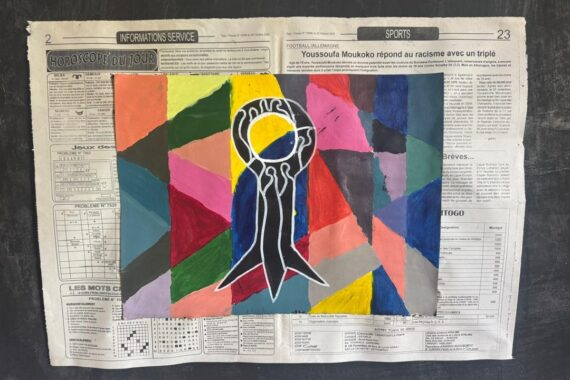
For older visitors, the space may recall another era. For younger audiences, it offers an opportunity to question how history shapes the present.
As the exhibition closes on Friday, October 16, 2026, its lasting invitation is to recognise that heritage is not frozen in time. Like conversation itself, it remains alive through the meanings people continue to create and share.


Funding Fears Loom For Ghana’s Life-Saving Malaria Vaccine Five Years After Roll Out

‘There was a Coordinated Disclosure Plan’: AI-Discovered Flaw in PHP Triggers Global Internet Chaos as Cybercriminals Race to Exploit It