Ghana News
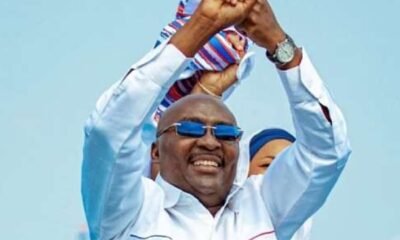
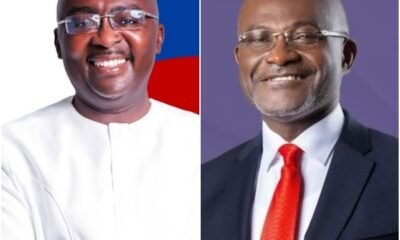
Dr Mahamudu Bawumia Wins NPP Presidential Primary with 56.48%

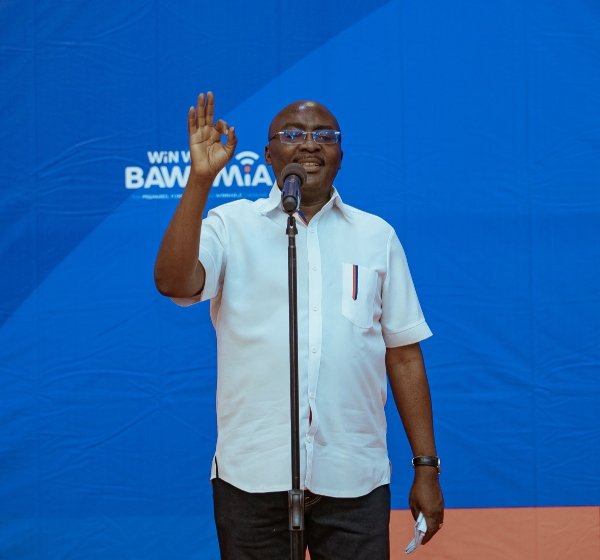
The Electoral Commission (EC) has officially declared Dr Mahamudu Bawumia the winner of the New Patriotic Party (NPP) presidential primary held on Saturday, January 31, 2026.
He secured 56.48% of the valid votes cast by delegates nationwide.
In a live announcement following the collation of results from 276 constituencies and 333 polling stations, the EC confirmed Bawumia’s victory in a highly competitive race against four other aspirants.
The former Vice President and 2024 presidential candidate emerged as the clear choice of the party’s over 211,000 delegates, positioning him as the NPP flagbearer for the 2028 general elections.
The primary, widely regarded as one of the most intense internal contests in recent Ghanaian political history, saw strong participation and peaceful conduct under tight security. Bawumia’s win reflects broad support across regions, bolstered by his track record in digital innovation, macroeconomic management, and party loyalty during his tenure as Vice President.
Party officials and observers have praised the transparent process and the maturity displayed by all candidates and delegates. The outcome sets the stage for the NPP to rally behind Bawumia as it prepares to challenge for power in the next general election cycle.
Background on Dr Mahamudu Bawumia
Dr Mahamudu Bawumia, born October 7, 1969, is an economist and former Second Deputy Governor of the Bank of Ghana.
He served as Vice President of Ghana from January 2017 to January 2025 under President Nana Akufo-Addo.
Known for championing digital transformation initiatives—including the Ghana Card, mobile money interoperability, and digitized public services—Bawumia holds a PhD in Economics from Simon Fraser University in Canada.
He has been a key figure in NPP economic policy and was the party’s 2024 presidential candidate before today’s primary victory cemented his role as the party’s 2028 flagbearer.




Ghana’s digital political conversation is becoming more substantive, but personality, identity and political symbolism continue to generate engagement levels comparable to or higher than policy developments, according to a new analysis of the country’s online political discourse.
The IMANI PULSE report, which monitored Ghana’s digital political conversation from August 8 to September 7, 2026, found that the most visible conversation is not necessarily the most substantive.
The Perseus Mining dividend announcement, a significant economic story, generated 1,307 engagements, while content surrounding Dr. Mahamudu Bawumia, Samira Bawumia and the National Cathedral generated approximately 1,330 engagements. A TikTok post associated with Bawumia’s 2028 positioning generated 961 engagements, while the nurses and midwives payroll story, a major health policy development, generated 935 engagements.
The comparison is instructive. Personality, identity and political symbolism can generate engagement levels comparable to, or higher than, substantive policy developments. This means that volume and engagement should not be interpreted as direct measures of policy significance. Some of the highest-performing content is driven by loyalty, identity, political competition or controversy, while some policy-heavy conversations receive comparatively modest engagement.
The elections and party theme recorded 475 mentions, but unlike infrastructure, health and jobs, it was substantially more personality-driven. Of 367 classified mentions, 239 were personality-oriented and 128 policy-oriented, producing a ratio of approximately 1.9 to 1 in favour of personality content. The central figure was Dr. Mahamudu Bawumia, who won the NPP presidential primary with 110,645 votes (56.48 per cent), becoming the party’s flagbearer for the 2028 general election.
Bawumia has publicly acknowledged the role of social media in his political rise, thanking supporters who led campaigns on Facebook, TikTok, Twitter and Instagram.
“To my youth campaign team and the teeming young people across the country, who championed this campaign from day one from various communities such as Facebook, TikTok, Twitter and Instagram, I say thank you,” he said. “You remain my allies on this journey, together we will get this done”.
The #Bawumia2028 and #ItIsPossible2028 ecosystems generated extensive content around his leadership qualities, grassroots mobilisation and electoral positioning. Ahafo NPP executives were reported as pledging support and mobilisation, while other content presented Bawumia as the party’s incoming presidential candidate. The running-mate question also surfaced, including calls for Dr. Matthew Opoku Prempeh to be retained on the ticket.
Despite the thematic keywords relating to primaries, delegates and internal party contests, the leading mentions contained little substantive discussion of internal NPP democracy or specific primary contests. The election conversation was therefore primarily a conversation about Bawumia as a political brand, rather than about competing policy platforms.
Yet the report also identified an emerging policy dimension. Bawumia’s consultation with the Ghana Registered Nurses and Midwives Association represented an attempt to connect his 2028 positioning with concrete policy development in healthcare. The discussions covered nursing and midwifery education, health infrastructure and the welfare and working conditions of frontline health workers.
The report found that across thematic categories, one of the clearest patterns is the emergence of two different political temporalities. The government-side conversation is predominantly forward-looking, centring on financing infrastructure, creating jobs, expanding healthcare employment, developing domestic industries, and restructuring state institutions. The opposition conversation is more divided: Bawumia’s 2028 campaign is forward-looking when it discusses consultations with professional groups, but a significant part of the NPP-aligned critique of the current government remains backward-looking, drawing on past economic performance, health outcomes and governance failures.
In the elections and party conversation, the forward-looking orientation was measured at 72 per cent, compared with 28 per cent backward-looking. In the jobs conversation, the gap was even wider at 92 per cent forward-looking and 8 per cent backward-looking.
The August 2026 digital political conversation suggests that Ghana’s political discourse is entering a more consequential phase.
Policy has become increasingly visible: infrastructure, jobs, healthcare, economic transformation and institutional governance are generating substantial amounts of substantive discussion.
Yet personality politics has not receded. It has instead become embedded within the policy conversation.
The result is not a simple transition from personality politics to policy politics. It is a more complex fusion of the two.
The most important political question emerging from the August conversation is whether policy outcomes can ultimately acquire enough political credibility to reshape the reputations of the individuals associated with them.
Ghana News
Africa Digital Democracy: What Ghana’s Online Conversation Reveals About Elections in 2028
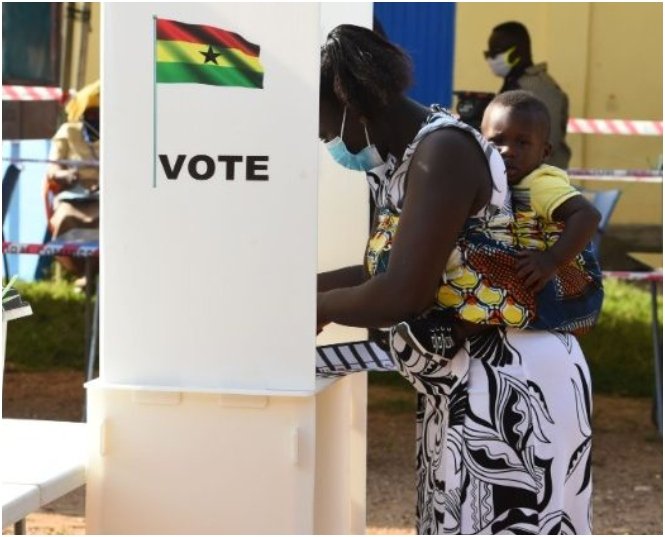
Ghana’s digital political conversation is emerging as a bellwether for how democracy is evolving across Africa, with new data revealing a complex fusion of policy substance and personality-driven engagement that could shape the continent’s electoral future.
The IMANI PULSE report, which monitored Ghana’s digital political conversation across Facebook, X (formerly Twitter), YouTube, TikTok, podcasts, web-based sources and news feeds from August 8 to September 7, 2026, provides a detailed snapshot of a political environment increasingly shaped by concrete questions of delivery, institutional accountability and economic performance.
Across the monitored thematic areas, policy-oriented conversations were particularly prominent around infrastructure, jobs, health, the economy and aspects of governance. The strongest policy signals came from major government announcements, including financing for the Accra–Kumasi Expressway, the proposed $10 billion New Economy program, the absorption of 13,500 nurses and midwives onto the government payroll, and plans to expand domestic crude processing and electricity generation.
The governance and law theme recorded the largest thematic volume in the dataset, with 1,603 mentions. Its substance index stood at 0.60, while sentiment remained marginally negative at -0.05. The Accra–Kumasi Expressway featured prominently, but the governance conversation also captured a series of executive and institutional interventions.
President Mahama’s 14-day ultimatum to two ministers to resolve the impasse between the Tema Metropolitan Assembly and TDC Ghana Limited represented a particularly clear governance intervention, as did his warning that ministers, chief executives and board members would not be permitted to exhibit indiscipline or poor performance.
The GoldBod dispute, involving a reported $1.7 billion loss under the Bank of Ghana’s Domestic Gold Purchase Program, demonstrated how the same accountability issue can cut across several thematic categories. The controversy was simultaneously a financial-governance question and a personalised political confrontation involving President Mahama, GoldBod CEO Sammy Gyamfi and Minority Leader Alexander Afenyo-Markin.
The return of GH¢70,000 by Deputy Minority Leader Patricia Appiagyei, which she said had been given to members of Parliament’s Appointments Committee as a gift, represented another concrete parliamentary-integrity story. The governance conversation therefore combined institutional action with intense political contestation, reinforcing the wider finding that Ghana’s digital political discourse increasingly interprets institutional performance through individual political actors.
The health theme produced only 143 mentions but had one of the strongest substance scores in the dataset, at approximately 0.85. Of 126 classified mentions, 107 were policy-oriented and 19 personality-oriented. The dominant story was President Mahama’s enrolment of 13,500 nurses and midwives onto the government payroll, alongside the reported clearance of outstanding arrears. The issue generated appreciative responses from the Coalition of Unpaid Nurses and Midwives and was framed largely as a government action resolving a longstanding employment and welfare problem.
The report also identified a critical limitation within the dataset: a high substance score does not necessarily mean that the underlying conversation is deeply focused on the sector itself. In the education theme, which recorded 440 mentions with a substance index of 0.65, the apparent policy depth was partly influenced by content that was education-adjacent rather than directly concerned with Ghana’s education system. Several mentions involving Education Minister Haruna Iddrisu were triggered by his attendance at a religious ceremony rather than by education policy, while references to a Supreme Court justice’s secondary-school history entered the dataset because of keyword matching.
The report’s findings have implications beyond Ghana. Across Africa, digital platforms are increasingly becoming the primary arena for political contestation, with implications for how policy is debated, how accountability is demanded, and how political brands are constructed. The Ghanaian case suggests that the transition from personality politics to policy politics is neither linear nor complete. Instead, policy outcomes are becoming embedded within personality-driven narratives, with infrastructure announcements becoming tests of ministerial credibility, economic outcomes attributed directly to political leaders, and health-sector outcomes used to defend or attack previous administrations.
The August conversation sits at the intersection of delivery, credibility and political memory. Policy is gaining ground, but personalities remain the principal vehicles through which Ghanaians encounter, interpret and contest that policy. For the governing NDC, infrastructure delivery, economic transformation, jobs and health interventions are increasingly becoming measures against which the Mahama administration can be judged. For the NPP and Bawumia, past economic and governance outcomes remain part of the political record, while new policy consultations are being used to construct a forward-looking alternative.
As Ghana moves toward the 2028 general election, the country’s digital political conversation offers a preview of how African democracies may evolve in an era of platform politics, a complex fusion of substance and spectacle, where the most important question is not simply whether discourse is becoming more substantive, but whether policy outcomes can ultimately acquire enough political credibility to reshape the reputations of the individuals associated with them.
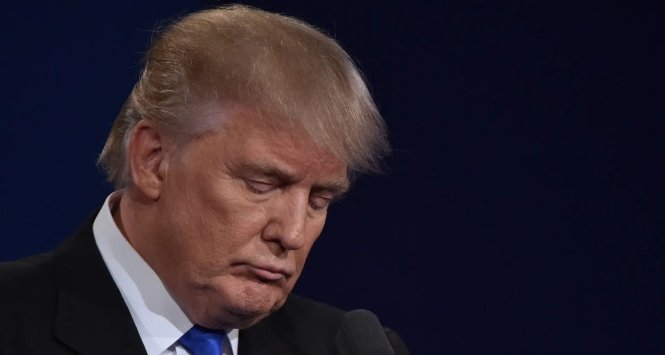
President Donald Trump announced Friday that he is banning CNN, MS Now, and Politico from the White House “effective immediately.”
The move escalates his long-running battle with the mainstream media and drawing swift condemnation from free speech advocates who called the move an unconstitutional assault on the First Amendment.
In a post on his Truth Social platform, Trump said he was expelling the three outlets over what he called their “constant ‘reporting’ FAKE NEWS!” and threatened that bans for other outlets could follow.
“Media Outlets shouldn’t be able to constantly write or report FICTION and LIES when they’re covering the President of the United States, the Trump Administration, or the United States of America,” Trump wrote. “Other Fake News Media Outlets to follow.”
Trump Defends Ban in Oval Office
Trump defended the ban during an Oval Office event to promote his administration’s healthcare policies, telling reporters he does not receive fair coverage.
“I don’t get fair press. I get it from Breitbart. I get it from a little bit from Fox,” Trump said, referring to friendly media outlets. “But what I do ask is just a semblance of truth.”
When reminded by a reporter that every president takes an oath to uphold the Constitution, including the First Amendment right to free speech, Trump responded:
“You get so tired of reading and seeing fake news.”
He added:
“I don’t think that a court should allow fake news to be written day after day after day. I think that somebody has a right to keep them away if they’re going to write false stories all the time.”
Confusion Over Details
Towards the end of a chaotic news conference, when a reporter asked Trump to explain how his ban on the three outlets would work, the president expressed confusion.
“When you say ‘the ban’, which ban? Do you know how many bans I’m involved in?” Trump asked, seeming confused.
After another correspondent rephrased the question,:
“What do you envision the bans would look like on the media outlets?”
Trump said:
“Oh, the ban on the free press, right?”
Timing Raises Questions
The ban came on the same day that the three outlets published significant investigative stories. The Washington Post reported that more American service members have died in the war on Iran than the Pentagon has publicly disclosed. CNN revealed that an “entirely false” intelligence report about a Chinese ship in the Middle East, generated with the help of artificial intelligence, had “almost started a war.”
Politico uncovered a Hill investigation after sensitive F-35 fighter jet technology unexpectedly made its way to Hong Kong, possibly giving China access to it.
Trump said his decision was unrelated to those stories.
“It’s really just cumulative stories over the last few years,” he said, before threatening more media prohibitions could follow. “There may be others to join them.”
Outlets Vow to Fight Back
CNN swiftly pushed back, saying in a statement that the network “stands fully behind our White House team and their fair and accurate reporting.”
“We have a right under the US Constitution to do that reporting without hindrance or interference from the government. Should the ban which President Trump threatened go ahead, it would be an illegal assault on that fundamental and constitutionally protected right,” the spokesperson said.
Politico said its reporters would “continue to fairly report on this White House and future ones.”
“We will vigorously defend our First Amendment rights against any attempt to restrict them,” it added.
A spokesperson for MS Now declined to comment, according to The Guardian.
WHCA: ‘This Is About More Than the Rights of Journalists’
Jacqui Heinrich, president of the White House Correspondents’ Association (WHCA), said the organization “stands in defense” of the banned reporters “who are being singled out for doing their jobs.”
“This is about more than the rights of journalists,” Heinrich wrote in a statement. “It is about the right of the American people to receive a full and independent account of the activities, policies and decisions of whoever occupies the nation’s highest office.”
Democrats and Free Speech Groups Condemn
Trump’s move drew swift condemnation from Democrats and free speech groups.
Chris Coons, a Democratic senator, wrote on social media:
“Trump is once again trying to use the power of the presidency to punish a free press, now banning CNN, MS NOW, and Politico from the White House. That is the behavior of an authoritarian, and we must defend the press’ right to hold those in power accountable.”
Jameel Jaffer, executive director at the Knight First Amendment Institute at Columbia University, said the White House press pool is a “public forum” under the First Amendment, so the president cannot expel journalists from it on the basis of their viewpoints. To do so would be “doubly unconstitutional.”
“The First Amendment prohibits the president from punishing journalists because he doesn’t like their coverage, just as it prohibits him from punishing universities because he doesn’t like the courses they offer, or from punishing law firms because he doesn’t like the clients they represent,” Jaffer said. “With so many courts having ruled against him on exactly this point, you’d think President Trump would have learned this lesson by now.”
Seth Stern, chief of advocacy at Freedom of the Press Foundation, said: “It’s difficult to imagine a more blatant violation of the First Amendment than Trump banning news outlets from the ‘People’s House’ for criticizing the government. It’s also hard to imagine a dumber move.
“The historically unpopular president has been retaliating against the press for years, but it hasn’t helped him. The press keeps exposing his corruption and his failures. These outrageous attacks only demonstrate how scared he is of an informed public.”
A Pattern of Press Restrictions
Since returning to office, Trump has overseen an unprecedented restriction of access for major traditional news media at the White House. The Associated Press was banned from press pool events in the Oval Office and on Air Force One after it continued to use “Gulf of Mexico” instead of “Gulf of America” in its coverage. The AP sued, and that case remains in litigation.
Trump’s White House also seized control over the organization of the presidential press pool, a rotation that determines which news organizations and reporters are allowed to follow — and question — the president in places such as the Oval Office and aboard Air Force One. The WHCA, an independent association made up of members of the media, traditionally coordinated rotating pool coverage of more than a dozen journalists allowed access to the president in smaller settings.
The Pentagon also attempted to introduce a new press policy to restrict the ability of journalists to gather and report on sensitive information, which culminated in a mass walkout of news media outlets who refused to sign the pledge. A federal judge later ruled the policy was unconstitutional.
The president has also launched high-profile legal battles with major outlets including the New York Times, the Wall Street Journal, CNN, ABC News, and the BBC.
Legal Battle Looms
The ban is expected to face immediate legal challenge. Constitutional law experts say the First Amendment’s protection of press freedom is among the most robust in American law, and courts have repeatedly rejected attempts by government officials to punish journalists for their coverage.
The question now is whether Trump’s ban will follow the pattern of his previous press restrictions — struck down in court — or whether it represents a new escalation in his efforts to reshape the media landscape.
For now, the three banned outlets remain barred from the White House, and the president has signaled more bans could follow. The WHCA and the affected networks have vowed to fight back, setting the stage for another high-stakes constitutional showdown between the White House and the press.