
Commentary
NPP Decides: Comparing Dr Bawumia and Kennedy Agyapong Policies


Voting is underway today (January 31, 2026) in the New Patriotic Party (NPP) presidential primary to elect the party’s flagbearer for the 2028 general elections. Over 200,000 delegates are participating across 276 constituencies and 333 polling stations nationwide.
Five candidates are contesting the race:
- Dr. Mahamudu Bawumia – Former Vice President of Ghana (widely seen as the establishment/technocratic candidate with a focus on digital economy, economic ideas, and continuity after leading the NPP in 2024).
- Kennedy Ohene Agyapong – Businessman and former MP for Assin Central (often positioned as the “street-smart,” anti-establishment voice touting practical solutions, creativity, and economic transformation; many polls and delegate sentiment have him as a strong frontrunner).
- Dr. Bryan Acheampong – MP for Abetifi and former Minister of Food and Agriculture (entrepreneur-politician with eight years as MP, focusing on agriculture and business-oriented policies).
- Dr. Yaw Osei Adutwum – Former Minister of Education and MP for Bosomtwe (known for education reforms and technocratic background).
- Kwabena Agyei Agyepong (also referred to as Ing. Kwabena Agyei Agyepong) – Former General Secretary of the NPP (experienced party insider with administrative and organizational strengths).
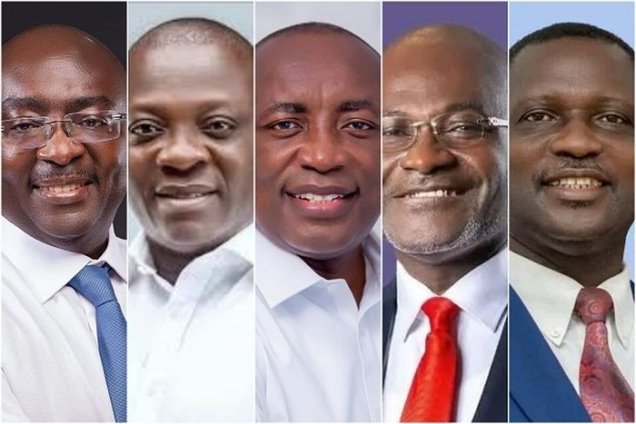
The primary is considered highly competitive, with a two-horse race dynamic often highlighted between Bawumia (data-driven, polished) and Agyapong (raw, experiential, street-fighter style). All candidates have publicly committed to accepting the results, and police have warned against any violence or intimidation at polling centers.
The winner will lead the NPP into the 2028 presidential election after the party’s loss in 2024.
Dr. Mahamudu Bawumia and Kennedy Ohene Agyapong are two leading candidates in the New Patriotic Party (NPP) presidential primary ongoing today, January 31, 2026.
While both seem to champion economic transformation and party unity, their approaches differ significantly. Bawumia’s policies are technocratic, data-driven, while Agyapong’s are driven by practical, business-oriented perspectives.
Below is a comparison across key policy areas based on their campaign messages, visions, and proposed initiatives.
Economic Policy and Management
- Bawumia: As an economist and a former Vice President, Bawumia focuses on macroeconomic stability, fiscal discipline, and monetary policy to drive growth. He opposes “anti-poor” measures like the E-Levy and positions himself as a corrector of past government errors. His vision includes leveraging his experience in macro-economic management to address governance challenges and improve livelihoods through sound, evidence-based policies.
- Agyapong: A businessman, Agyapong prioritizes practical economic solutions, criticizing theoretical approaches (“PhDs don’t feed people”). He advocates for industrialization and job creation as core pillars, aiming to build a resilient economy through business-friendly reforms that generate employment and reduce reliance on imports.
Digitalization vs. Industrialization
- Bawumia: Digital transformation is central to Bawumia’s agenda. He highlights achievements like the Ghana Card integration, mobile money interoperability, digitized public services (e.g., ports and passports), and online systems to enhance efficiency, reduce corruption, and promote transparency. He sees digitization as the foundation for modernizing Ghana’s economy and public sector.
- Agyapong: While not opposing technology, Agyapong’s focus is on tangible industrialization to create jobs and drive manufacturing. He views this as essential for economic self-sufficiency, contrasting with what he sees as overly theoretical digital initiatives, emphasizing real-world impact on employment and production.
Party Unity and Internal Democracy
- Bawumia: Bawumia promotes national unity by bridging north-south divides (increasing NPP support in northern regions), fostering Christian-Muslim relations, and appealing across age groups. He stresses maturity, humility, and policy-focused leadership to reduce political tensions and unite the party.
- Agyapong: Unity and internal democracy are key to Agyapong’s leadership vision. He pledges to bring the NPP together if elected, anchoring his approach on inclusive party structures and grassroots engagement to strengthen democracy within the NPP and prepare for the 2028 elections.
Anti-Corruption and Governance
- Bawumia: Leveraging his “untarnished integrity” from eight years in office, Bawumia proposes using technology (e.g., digitization) to fight corruption, enhance transparency, and build human capital. He aims to redefine governance through efficiency and accountability.
- Agyapong: While specific anti-corruption policies are less detailed in campaigns, Agyapong’s business background implies a no-nonsense approach to governance, focusing on practical reforms to eliminate waste and promote efficiency in public service.
Overall Vision for Ghana
- Bawumia: Bawumia’s vision is for a digitized, stable Ghana with enhanced education, grassroots politics, and national development. He positions himself as the experienced leader for continuity and correction, redefining roles like the vice presidency through innovation.
- Agyapong: Agyapong envisions a united, industrialized Ghana with massive job creation. His “street-smart” style promises fresh energy, creativity, and change, defending the need for new leadership to revitalize the NPP and address economic challenges directly.
Both candidates commit to accepting results and maintaining party unity post-primary, but the election highlights a choice between Bawumia’s polished, tech-focused continuity and Agyapong’s gritty, job-oriented transformation.



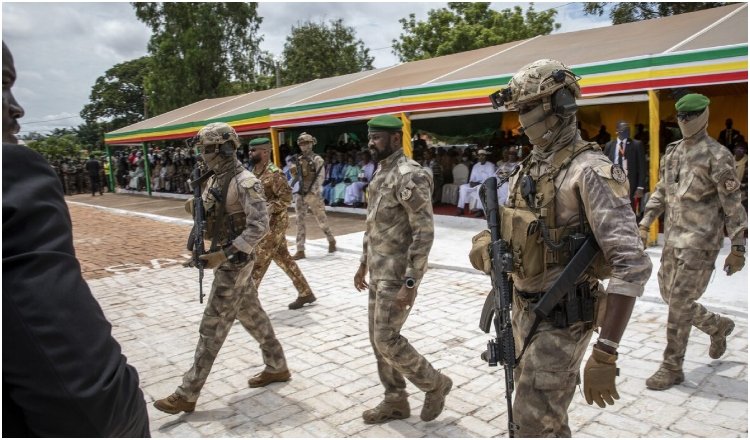
Between 2020 and 2023, military juntas seized power across Mali, Burkina Faso and Niger, promising to defeat jihadist insurgencies that civilian governments had failed to contain. Years later, the security situation has deteriorated rather than improved, with insurgents breaching heavily fortified installations and expanding territorial control. Meanwhile, elections have been indefinitely postponed under the pretext of insecurity, and military rulers have deepened their alignment with Russia to escape external pressure for democratic transitions. This analysis examines the legitimacy crisis facing the Sahel’s juntas, arguing that governments which justify their rule solely through security outcomes cannot survive when those outcomes fail to materialize. This article explores the fragility of military authority in the absence of electoral mandate, the geopolitical calculations driving alignment with Moscow, and the consequences for millions of citizens living with displacement, closed schools and expanding insurgent control.
The Sahel Juntas and the Crisis of Legitimacy
By Joseph McCarthy
When soldiers seized power across the Sahel between 2020 and 2023, they offered strikingly similar justifications. Civilian governments, they argued, had failed to protect their citizens from the advancing threat of Jama’at Nusrat al-Islam wal-Muslimin (JNIM) and the Islamic State Sahel Province (ISSP), despite years of support from France, the United Nations, the European Union and the United States. Military rule, the argument went, would succeed where democratic politics had not: it would restore state authority, defeat the insurgents and, only then, return power to civilians. Years later, the region’s security landscape raises an uncomfortable question. Has military rule delivered on that promise, and what happens to a government’s legitimacy when it has not?
The pattern of coups was remarkably consistent. In Mali, Assimi Goïta removed President Ibrahim Boubacar Keïta in August 2020, citing the army’s inability to control large parts of the north and centre. In Burkina Faso, Paul-Henri Sandaogo Damiba overthrew President Roch Marc Christian Kaboré in January 2022 on similar grounds, only to be removed himself eight months later by Ibrahim Traoré, who argued that Damiba’s own counterterrorism record was too slow. In Niger, Abdourahamane Tiani deposed President Mohamed Bazoum in July 2023, insisting that a new approach to security was needed despite Bazoum having achieved relative gains against jihadist groups. In each case, the message was the same: only military leadership could act with the speed and decisiveness that civilian rule could not.
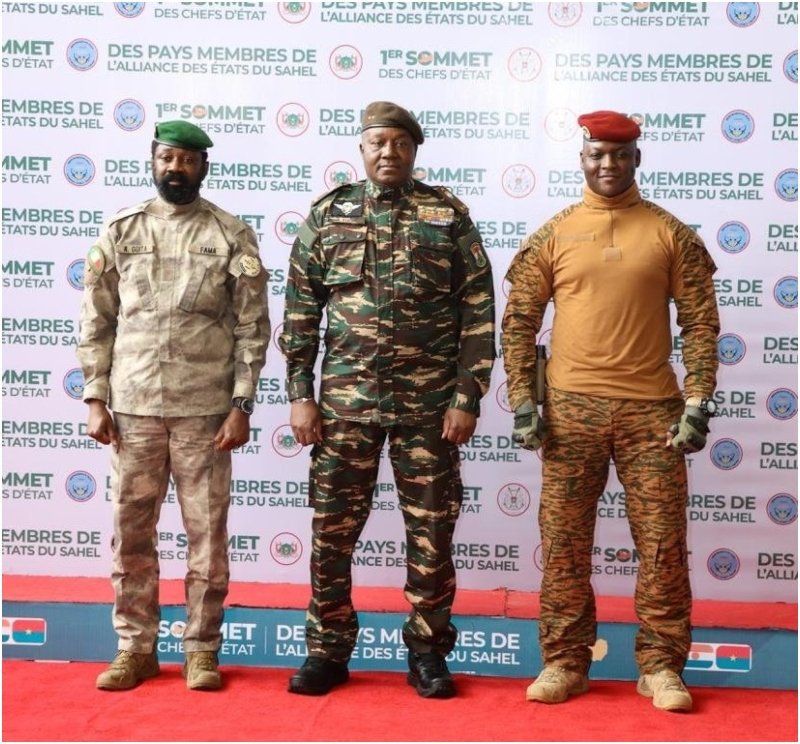
The record since then complicates that claim. In June 2026, JNIM fighters breached Diori Hamani International Airport in Niamey. This is one of Niger’s most heavily fortified installations, housing the air force, military drones, the headquarters of the Alliance of Sahel States’ joint force, and Russian personnel. In April, coordinated attacks across Mali, including in Kati, revealed an insurgency that has grown more sophisticated rather than less, even as military governments have intensified their campaigns. Large swathes of northern and central Mali, eastern Burkina Faso and western Niger remain outside effective state control. Millions of people are displaced, schools and clinics have shut down across rural areas, and food insecurity continues to rise. Perhaps most tellingly, JNIM has moved beyond pure military operations in parts of the territory it contests, reportedly collecting taxes, mediating local disputes and enforcing its own rules, functions that amount to governance. For juntas that justified their rule by promising to restore the state’s authority, this is a difficult reality to reconcile.
None of this has produced elections. Goïta has repeatedly extended Mali’s transition, arguing that voting while the country remains insecure would undermine its credibility. Traoré has pushed Burkina Faso’s elections back to 2029. Tiani has likewise announced a prolonged transition in Niger, citing the need for stability before any return to civilian rule. In each case, insecurity, the very problem the juntas promised to solve, has become the justification for indefinitely postponing the democratic process that was meant to follow.
This is where the deepening alignment with Moscow matters. Russian foreign policy in the region, delivered first through the Wagner Group and now the Africa Corps, has emphasised sovereignty, executive authority and non-interference rather than electoral timetables. Unlike France and other Western partners, who after the 2020 and 2021 coups pushed for sanctions and rapid transitions back to constitutional rule through ECOWAS, Russia has attached no such conditions to its military assistance. That gives the juntas diplomatic cover and security backing without the external pressure that once accompanied Western partnerships, making prolonged military rule more sustainable in the short term.
But sustainability is not the same as legitimacy. Governments that seize power through force cannot draw on the ballot box or constitutional continuity to justify their authority. Instead, they rely on a narrower and more fragile bargain: deliver security, and the question of legitimacy can wait. That bargain depends entirely on results. It is not clear that the juntas are delivering them.
This is the vulnerability now facing Goïta, Traoré and Tiani. The argument that brought each of them to power, that civilian rule had failed to stop the violence and military leadership would not, is the same argument that can be turned against them if the violence continues to escalate under their watch. A partnership with Russia may insulate these governments from external pressure to hold elections. Still, it cannot insulate them from the judgement of their own citizens, who continue to live with displacement, closed schools and expanding insurgent control. If security remains the sole justification for indefinitely concentrating political power, then the failure to secure it becomes the sole justification for questioning that power. The Sahel’s juntas are not simply fighting insurgents. They are running out of time to prove that their original argument for seizing power still holds.
Joseph McCarthy is an analyst and researcher specialising in governance, security and political transitions in the Sahel. He writes on geopolitics, development and African diplomacy. joecarthy30@gmail.com
Ayodeji Ogunnaike, McGill University
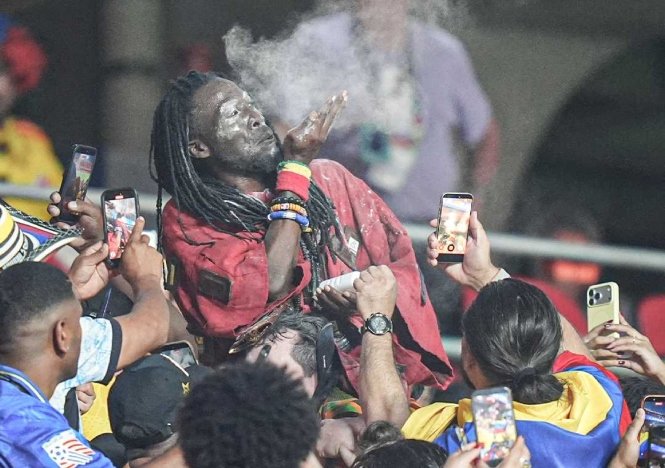
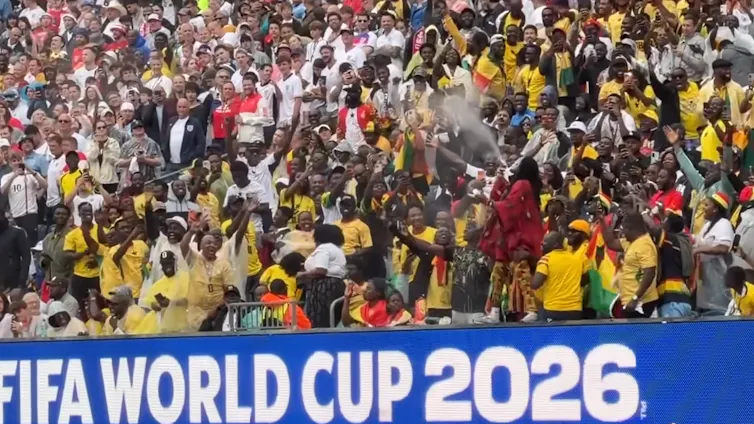
One of the most notable figures of the 2026 FIFA World Cup emerged during Ghana’s first match of the tournament: the “juju man,” Kailani Ibrahim Kpa, who was famously seen blowing white powder into the air during the game.
Another Ghanaian, Nana Kwaku Bonsam, went viral just before the match for claiming to have placed a curse on England’s captain, Harry Kane. Bonsam is a particularly media-savvy Twi traditional priest and one of the most recognizable faces of what is commonly called “witchcraft” or “juju” in African soccer.
Juju quickly became a topic of conversation and fascination for millions of soccer fans around the world, particularly after Kane failed to score and the match ended in a draw.
Although it may seem strange to westerners, soccer and esoteric rituals go hand in hand in Africa. One infamous video from Rwanda that regularly circulates on African group chats shows a striker failing to score, snatching a “charm” from inside the goal and subsequently scoring.
Ghanaians in particular have a long history of leveraging the spiritual side of sports. Former captain André Ayew scattered a ritual powder on the pitch in 2012, and Bonsam himself announced he cursed Portugal’s Cristiano Ronaldo ahead of the 2014 World Cup.
This blending of spirituality and sport can be easy for westerners to misinterpret or dismiss as simple superstition. This is particularly true when spiritual fraudsters try to make money by promising to help teams win and their predictions do not come true.
However, Africans are not backwards or simple-minded. Foreign academics and even colonial officials with first-hand experience with African spiritual arts have been surprised by how effective they are at achieving their intended results.
Fortunately, we also now have excellent written accounts from Africans about the power and logic behind Indigenous knowledge and ritual systems.
African knowledge systems
Western society has developed in a context that often seeks to define and establish separate religious and secular aspects of life. However, African knowledge systems generally treat what we might call science, religion, medicine and art as parts of a unified whole.
What westerners may call “religion” is often integrated into every aspect of African life, and it is more helpful to reconceptualize its relationship to sport as the reasonable engagement with the physical and metaphysical world toward a desired end.
When I studied with a priest and diviner in Nigeria, I helped him prepare many òògùn (a Yoruba term meaning simultaneously medicine, charm and technology) to heal and prevent injuries and harm.
Because all facets of their lives have a spiritual dimension, many Black and African players and teams regularly pray together before and after matches. Germany’s Jonathan Tah and Felix Nmecha made news by joining Curaçao’s team in prayer after their match.
From this perspective, a priest offering services to a team is just as legitimate as a sports psychologist, nutritionist or physiotherapist. Each draws on a long-standing tradition of experimentation, training and the application of different technologies to support favourable results.
For example, the Senegalese wrestling sport Laamb integrates marabouts (Muslim clerics) and amulets into competitions. The marabouts function much like boxing coaches, just also with power over immaterial forces.
Unlike in Laamb, spiritual intervention in soccer was not initially conceptualized as integral to the game, but it has, sometimes covertly, been integrated into the sport in Africa. https://www.youtube.com/embed/XvNIR0AIrPs?wmode=transparent&start=0 A clip about marabouts and Senegalese Laamb wrestling (Vice Media)
Accessing a nonphysical reality
A fundamental principle of Indigenous African spiritual systems is that all materials also have a nonphysical reality, and they can be used to effect change on that nonphysical level.
Powders, like those scattered by Ayew or Kpa seemed to blow, frequently contain dried, ground or burned natural substances with some characteristic related to the desired outcome.
These substances can be placed on or in a body, or important places such as a door frame or goal, to prevent things from entering. This is why the striker in the Rwandan example I mentioned removed the charm from his opponents’ goal while his opponents desperately tried to get it back.
Other common approaches include reciting incantations or soaking the body in ritual baths. Some also involve using flames to burn away or scatter dark and malevolent forces, like those I saw in a pot on the head of a Ghana fan at the 2010 World Cup.
Mischaracterization and prejudice
Europeans have often mischaracterized African ritual and knowledge systems as “black magic,” “witchcraft,” or “superstition” to justify a sense of religious, cultural and racial superiority over Black people. African religious practices and experts are also still frequently and pejoratively called “fetishism” and “witch doctors.”
The prejudice toward and dismissal of these practices and practitioners has driven many underground, but they are still ubiquitous in African society. Such pejorative attitudes were evident during Bonsam’s recent interviews in western media.
While I worked with the Nigerian diviner, people who might be considered “modern” and operating in secular spheres from a western perspective — such as university students, prominent business people and even politicians — regularly came for spiritual and professional help, which they understood as one and the same.
Athletes are particularly aware that talent and hard work are not always enough to ensure victory. Africans and non-Africans alike generally recognize that there are forces beyond their control at play, even if some might generically conceptualize those forces as “luck.” And even spiritual services are no guarantee of victory if the other side has access to them too.
It is unclear if Kpa’s powder was actually ritual material or simply a demonstration of cultural heritage, like Norway’s Viking row. However, after the goalless Ghana match, Kane did go on to score against Panama once Bonsam said he had “released” the Englishman.
Kpa and Bonsam unsurprisingly captivated African and non-African soccer fans, even if their actions may have been less legible to some. Beyond the World Cup, what may be more interesting is how both men represent an ancestral knowledge tradition that is thousands of years old, and they are merely a visible part of the invisible spiritual dimension of sport in Africa.
Ayodeji Ogunnaike, Assistant Professor of African Religions; Canada Research Chair (Tier 2) in the Globalization of African Religions and Yoruba Mythology, McGill University
This article is republished from The Conversation under a Creative Commons license. Read the original article.
Commentary
Reflections on Ghana And the Future it Deserves | By Simone Giger, Swiss Ambassador to Ghana

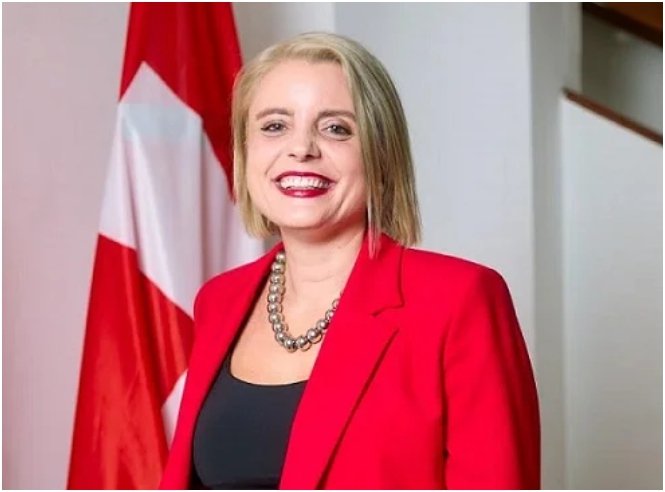
As her diplomatic tenure in West Africa draws to a close, Swiss Ambassador Simone Giger pens a reflective and heartfelt tribute to Ghana’s enduring national character. Having traveled extensively across the country—from Paga to Keta and Wa to Goaso—she offers an intimate, human-centered assessment of a nation defined by its resilient democratic culture, youthful ambition, and an infectious “vibe” that fosters cohesion. In this candid farewell, Ambassador Giger explores the complex challenges threatening Ghana’s ecological treasures and argues that sustained institutional reform, rather than outside invention, is the key to unlocking the prosperous future the country so clearly deserves.
Travelling through northern Ghana, this author once stopped in a small community after a long journey. Despite the day’s heat and the demands of daily life, residents welcomed visitors with warm smiles, easy laughter and an eagerness to share stories about their hopes for the future.
It was a simple encounter, yet it captured something profoundly Ghanaian: an enduring optimism that persists even in difficult circumstances.
In diplomacy, countries are often assessed through official meetings, economic indicators and policy documents. Yet to truly understand a nation, one must travel through it, listen to its people, appreciate its strengths, observe its contradictions and understand the aspirations that shape everyday life.
As the end of a diplomatic assignment in Ghana approaches, this author finds reason to reflect deeply on a country that has left a lasting impression, not only professionally but personally.
Over the past four years, extensive travels across Ghana—from Paga to Keta, Damongo to Donkokrom, and Wa to Goaso—have revealed a country of extraordinary diversity, complexity, creativity and resilience.
Every journey has unveiled a different dimension of Ghana. Yet one common thread consistently emerges: a nation brimming with potential.
There is something profoundly remarkable about Ghana and its national character, what many Ghanaians simply describe as the country’s “vibe”.
It is evident in the warmth extended to strangers, the humour with which difficulties are confronted and the optimism that endures even during periods of uncertainty.
Even in challenging moments, there is often a joke, a proverb or a story that helps place events in perspective.
In this author’s view, that national character has become one of the essential ingredients behind Ghana’s democratic success.
At a time when democratic systems around the world are facing increasing pressure, polarisation and distrust, Ghana continues to distinguish itself through its commitment to dialogue, constitutional order and peaceful coexistence.
Democracy here is not perfect. No democracy truly is, including Switzerland’s.
What matters is that it remains alive, active and deeply valued by citizens.
Over the years, Ghana has established itself as an important democratic reference point in West Africa.
The country has repeatedly demonstrated that political competition can coexist with stability, that transfers of power can occur peacefully and that national debates can take place within institutional frameworks rather than outside them.
Such achievements should never be taken for granted.
Democracy is not sustained by elections alone.
It requires strong institutions, active citizens, credible public discourse and a continuous willingness to negotiate consensus across political, ethnic, religious and generational lines.
One can observe that Ghana’s diversity presents both opportunities and challenges. Yet this author has often admired the manner in which the country continues to navigate these varied interests while preserving national cohesion.
In many respects, this is where Ghana’s democratic future becomes particularly important.
The country possesses extraordinary human capital.
Wherever this author travelled, young people displayed ambition, intelligence, creativity and determination.
Ghana’s greatest resource is not found beneath the ground.
It resides in its people, their ideas and their aspirations.
Ideas and aspirations, however, require systems that function effectively if they are to translate into meaningful and productive outcomes.
When institutions are transparent, responsive, accountable and trusted, they unlock innovation, investment and opportunity.
When they are weak or inconsistent, they risk frustrating the very energy capable of propelling a nation forward.
This is why governance reforms remain so important to Ghana’s long-term trajectory.
One development that particularly impressed this author during the diplomatic assignment has been Ghana’s constitutional review process.
What stands out is not only the process itself, but also the spirit behind it – a willingness to reflect critically on how democratic governance can evolve to meet contemporary realities and future expectations.
This demonstrates political maturity.
Constitutions should never be viewed as static documents frozen in time.
Strong democracies periodically examine whether their systems remain responsive, inclusive and effective.
Ghana’s consultative approach reflects a country seeking not merely to preserve democracy, but to improve it.
Switzerland is proud to support these home-grown efforts and remains committed to supporting the constitutional reform process until its hoped-for successful conclusion.
History demonstrates that democratic stability does not emerge automatically.
It requires deliberate investment in participation, inclusion and dialogue.
Swiss democracy itself evolved gradually through compromise, negotiation and the understanding that national cohesion is strengthened when citizens feel ownership over public decisions.
One can observe important similarities between Ghana and Switzerland.
Both countries are diverse societies that have chosen coexistence over division.
Both understand that stability is strongest when different voices are heard and accommodated.
Both appreciate the importance of consensus-building in national life.
This shared philosophy has shaped bilateral cooperation over many decades.
Today, the partnership continues to evolve in both breadth and depth.
Switzerland currently supports initiatives focused on democratic governance, parliamentary cooperation, decentralisation, peace and security, cultural exchange, environmental integrity, climate adaptation and economic development.
Switzerland and Ghana may differ in geography, history and scale, yet both countries share a belief in dialogue and cooperation as foundations for national progress.
Despite Ghana’s bright prospects, one cannot ignore the challenges confronting the country.
No nation can fully realise its potential without confronting difficult issues directly.
During the years spent in Ghana, citizens from various walks of life spoke openly about concerns surrounding institutional effectiveness, economic opportunity, environmental degradation and governance accountability.
Such conversations reflected not pessimism, but a desire to see the country fulfil its promise.
Particularly concerning is the destruction caused by illegal mining activities.
Ghana’s rivers, forests and landscapes are among its greatest treasures.
Environmental degradation is not merely an ecological issue.
It is fundamentally a matter of intergenerational responsibility.
Future prosperity depends on preserving the natural foundation upon which communities, livelihoods and national identity are built.
Yet despite these challenges, this author remains deeply optimistic about Ghana’s future.
That optimism stems not from idealism but from observation.
The future of democracy globally will not be shaped only by geopolitical actors or large states.
Medium-sized countries such as Switzerland and Ghana also have important roles to play.
They can demonstrate that democratic resilience, peaceful coexistence and institutional reform remain both possible and necessary.
As this diplomatic assignment draws to a close, there is profound gratitude for the opportunity to have lived and worked in Ghana.
Over the years, this author has come to admire the country not only for its democratic achievements, but also for its humanity – its warmth, creativity, humour and enduring sense of possibility.
The task ahead is not to invent Ghana’s future.
Rather, it is to create the institutional conditions necessary for that future to emerge fully.
From all that has been observed across the country, there is every reason to believe that Ghana can achieve precisely that.
The author, Simone Giger, is the Swiss Ambassador to Ghana, Togo and Benin


The Architecture of Grief: Gabriel Selassie Tsagli Paints a Portrait of Home and Loss

Nine Hours That Changed the Gold Coast: The Legacy of the Battle of Katamanso

Ahoba Kuma Festival: How the Abura People Keep Their Warrior Legacy Alive
-

 Ghana News20 hours ago
Top Headlines from Ghanaian Newspapers: Monday, August 24, 2026
-
 Ghana News19 hours ago
American Expats in Ghana Get a Helping Hand to Vote in 2026 U.S. Midterm Elections
-
 Africa Watch19 hours ago
The West Africa Corridor’s Dirty Secret: Liberia’s Record Cocaine Bust Exposes State-Sanctioned Trafficking
-

 Reels & Social Media Highlights1 day ago
A Preacher, A GoFundMe, and A Viral Legend: Decoding Ghana’s Sunday Social Media Storm
-
 Festivals & Events22 hours ago
Drums, Chiefs and Blessings: Inside Kwahu Tafo’s Gyenpren Festival
-
 Festivals & Events11 hours ago
Ahoba Kuma Festival: How the Abura People Keep Their Warrior Legacy Alive
-
 Health & Wellness1 day ago
The Surprising Bone and Circulation Benefits of 100 Daily Jumps
-
 Homes & Real Estate21 hours ago
How to Capitalise on the $7.8 Billion Diaspora Cash Fueling Ghana’s Real Estate Boom