
News
Former Nigerian Deputy Central Bank Official Makes Cryptic Post Amid Ofori-Atta’s Ordeal: Vanity of Vanities’

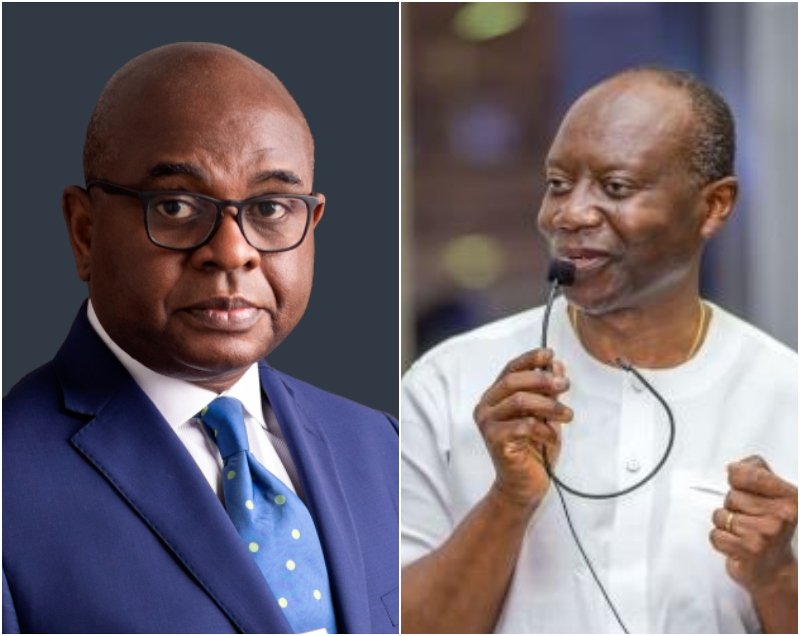
A thought-provoking LinkedIn post by Prof. Kingsley Moghalu, former Deputy Governor of the Central Bank of Nigeria, is drawing attention amid the ongoing political and legal drama surrounding Ghana’s former Finance Minister Ken Ofori-Atta.
Prof. Moghalu’s January 10 reflection did not mention Mr. Ofori-Atta by name but recounted a personal anecdote about the corrupting influence of power — describing how an unnamed African friend, once approachable and humane, became unreachable and indifferent after assuming ministerial office.
His narrative concluded with a broader philosophical point about power’s vanity, a remark resonating with many observers given the current controversy involving Ofori-Atta. Read the full post below:
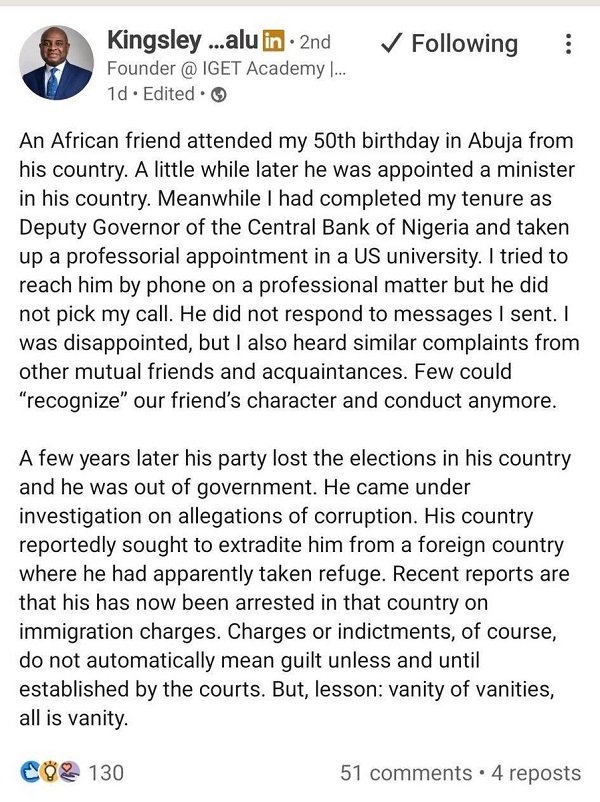
“An African friend attended my 50th birthday in Abuja from his country. A little while later he was appointed a minister in his country. Meanwhile I had completed my tenure as Deputy Governor of the Central Bank of Nigeria and taken up a professorial appointment in a US university. I tried to reach him by phone on a professional matter but he did not pick my call. He did not respond to messages I sent. I was disappointed, but I also heard similar complaints from other mutual friends and acquaintances. Few could “recognize” our friend’s character and conduct anymore.
“A few years later his party lost the elections in his country and he was out of government. He came under investigation on allegations of corruption. His country reportedly sought to extradite him from a foreign country where he had apparently taken refuge. Recent reports are that his has now been arrested in that country on immigration charges. Charges or indictments, of course, do not automatically mean guilt unless and until established by the courts. But, lesson: vanity of vanities, all is vanity.”
The timing of the post coincides with mounting public interest in Ofori-Atta’s situation. The former Ghanaian Finance Minister is in United States custody on immigration-related charges and is the subject of an active consular and legal process involving the Ghanaian Embassy in Washington, DC.
Ofori-Atta has reportedly declined to engage with Ghanaian consular officials without his lawyers present, even as his extradition to Ghana is being sought to face corruption-related charges connected to the Strategic Mobilisation Limited (SML) scandal.
Prof. Moghalu’s cryptic post touched on leadership accountability and personal integrity, issues that have dominated public discourse as Ghanaians and international observers watch how Ofori-Atta’s case evolves.
Former president Nana Akufo-Addo, who is related to Ofori-Atta, has publicly stated his belief in the rule of law and discouraged any attempts to secure special treatment.
The former finance minister, who served from 2017 to early 2024, has faced multiple investigations by Ghana’s Office of the Special Prosecutor (OSP), which previously declared him wanted for questioning in several corruption inquiries.
Legal actions, including requests for extradition and discussions around Interpol notices, are part of a broader push by Ghanaian authorities to hold public officials accountable for alleged misuse of office.
While Moghalu’s message is reflective rather than accusatory, its resonance underscores how leadership ethics and governance accountability remain at the forefront of public concern — both in Africa and among global audiences observing high-profile legal confrontations involving political elites.










Under the shade of a giant tree in Adaklu, in Ghana’s Volta Region, mothers balance their children on their hips as they wait their turn to be vaccinated.
Among them is 27-year-old Adeline Ahitroga, a mother of four, carrying her seven-month-old twins, a boy strapped to her back and a girl held close to her chest, for their second dose of the malaria vaccine.
“I’m really glad I can protect my twins,” she said. “When my older children had malaria as babies, they would develop a fever and become weak. I was always afraid they could die. As a mother, you just wish you could take the sickness away from them.”
Five years after Ghana became one of the first countries to pilot the malaria vaccine, the program is saving children’s lives, but experts warn that sustaining those gains will depend on reliable financing and continued support for complementary malaria control measures.
A Decades-Long Search for a Vaccine
Malaria, spread through infected mosquitoes, can cause high fever, weakness, and life-threatening complications, particularly in young children. In 2024, malaria killed about 610,000 people worldwide, with Africa accounting for 95% of those deaths—children under five among the hardest hit.
For decades, a vaccine remained elusive, in part because the parasite that causes the disease is complex. That changed in 2021, when the World Health Organization (WHO) recommended wider use of the RTS,S vaccine—the result of more than three decades of scientific research, developed by GlaxoSmithKline and its partners. It targets Plasmodium falciparum, the parasite responsible for the deadliest form of malaria.
At the time, WHO Director-General Tedros Adhanom Ghebreyesus celebrated the milestone: “This long-awaited malaria vaccine is a breakthrough for science, child health, and malaria control.”
Ghana’s Pilot Program Shows Results
Ghana, Kenya, and Malawi were the first countries to pilot the vaccine. In Ghana, it is scheduled at 6, 7, 9, and 18 months of age—meaning health workers must persuade caregivers to return again and again.
In Adaklu, the district health directorate reports that nearly 70% of eligible children have completed all four doses. It also reports that annual malaria cases among children under five have fallen from about 6,000 to 2,000, with no deaths since the vaccine was introduced alongside existing malaria control measures.
Dopea Kulafa, 32, has completed all four doses for her two youngest children, aged four years and 23 months.
“My two children have been doing well since they took the vaccine,” she said. “At first, I was worried about the side effects. But after about three days, they were fine. I gave them paracetamol syrup and they recovered. From my experience, the vaccine is helping my children. And I’d encourage other mothers to get their babies vaccinated.”
Overcoming Hesitancy
Yet health workers face challenges. Emilia Tanyeva, a health worker involved in community outreach in Adaklu, says the task of persuading caregivers to return for multiple doses is becoming more difficult due to suspicions in some areas.
“Some caregivers believe that it’s a way of reducing their population,” she said. “They want to kill their children or wipe out the children that they are giving birth to.”
Others worry the malaria vaccine adds too many injections to their children’s routine immunizations.
The Importance of Completing the Schedule
Inside the Vaccine Research Laboratory at the Noguchi Memorial Institute for Medical Research in Accra, immunology professor Kwejo Asamuakusi explained why completing all four doses is critical.
“If you just do one or two, it will protect you for a few weeks to a few months, and then it’s gone,” he said. “And if at that point you feel like you are vaccinated against malaria, your child in a year’s time could easily succumb to malaria. But doing all the four extends how long that protection lasts for them. So it’s very important that we finish all of it.”
Landmark Study Finds 13% Reduction in Deaths
Since WHO recommended wider use in 2021, researchers have continued to assess the vaccine’s impact. A 2026 study published in The Lancet found that vaccinated children across Ghana, Kenya, and Malawi had a 13% lower risk of death from all causes.
“Basically, in these communities, the malaria vaccine prevented approximately one in eight deaths of children that were non-accidental, non-injury related,” said Dr. William Moss, a professor of epidemiology and deputy director of the Johns Hopkins Malaria Research Institute.
Moss said the findings are significant because the reduction in deaths was observed even though many children had not completed the full vaccine schedule. But he warned that sustaining those gains will require the vaccine to complement—not replace—existing malaria control measures.
“If funding for bed nets and surveillance, testing and treatment all decline, we’re going to see more people, unfortunately and tragically, infected with the parasite, developing disease, and even in the face of the vaccines, we’re going to see a larger disease burden,” he said.
Funding Concerns
That warning comes as global health financing faces growing pressure. Disruptions to U.S. foreign assistance, including the dismantling of USAID, have created a $78.2 million health financing gap for Ghana, affecting several interventions, including malaria programs.
Ghana is co-financing its immunization program with Gavi, the Global Vaccine Alliance. Ghana’s obligation is expected to reach $54 million next year and $60 million by 2030. Health Minister Kwabna Minta Akando says the government will find the money to fully finance the program when Gavi leaves in 2030.
But Gladys Damalin, Programmes Manager at Hope for Future Generations, a civil society organization advocating better health policies, says the government must be clearer about where the money will come from.
“What used to be like a death sentence for our children under five, now most of them, because of the malaria vaccines, they are surviving, which is great news for us,” she said. “The question is sustaining and ensuring that every district is covered. That is it.”
She wants a dedicated immunization budget so allocations and disbursements can be tracked more easily.
What’s Next
Back in Adaklu, mothers continue to bring their children for malaria vaccination, holding on to the promise of greater protection.
But experts say whether that promise translates into lasting progress will depend on Ghana’s ability to finance the program and sustain the wider measures that keep malaria in check.
Editor’s Note: Information for this story was culled from reporting by Ridwan Karim Dini-Osman for The World
Global Update
‘There was a Coordinated Disclosure Plan’: AI-Discovered Flaw in PHP Triggers Global Internet Chaos as Cybercriminals Race to Exploit It

A critical vulnerability in PHP, a programming language that powers much of the internet, was discovered by artificial intelligence, setting off a global scramble that took down websites worldwide and sparked a race between cybercriminals and IT teams to exploit and patch the flaw.
The discovery, made by cybersecurity researchers at Calif and Wiz through OpenAI’s “Patch the Planet” program, was described by Wiz as the “most severe vulnerabilities ever discovered” by AI. The flaws had gone undetected for more than a decade before advanced AI tools found them in a matter of weeks.
What Happened
The vulnerability was found in PHP, the programming language behind roughly 70% of the internet, according to Wiz’s estimate. PHP quietly powers WordPress, Drupal, Joomla, Magento, shared hosting platforms, control panels, and countless software products that don’t even advertise their use of it.
The PHP Foundation intended to release the discovery later this month alongside a complete patch. But details of the flaw were leaked on social media on Tuesday—forcing the Foundation to rush out its announcement and triggering a cascade of emergency responses.
Global Fallout
Governments and organizations worldwide took drastic action:
- Finland temporarily shut down the government’s public web services.
- The Netherlands’ cybersecurity agency took its own website offline, and the Dutch parliament’s lower house website became inaccessible.
- The BBC took several programme pages offline, including those for Doctor Who and The Traitors.
- Edinburgh Council’s website became inaccessible.
- The Wikimedia Foundation took down a number of systems as a precaution, temporarily affecting access to parts of Wikipedia.
- DeviantArt went “temporarily down for maintenance.”
The US National Security Agency issued advice on X for organizations unable to update in time to take their systems offline, warning that “these vulnerabilities often provide a direct path to the server’s file system or database.” The UK’s National Cyber Security Centre, along with counterparts in the EU and Australia, issued similar warnings. Japan’s Prime Minister Sanae Takaichi urged people to check if their publicly available websites ran on PHP.
The White House said federal agencies were working with leading AI labs to speed up a fix.
The AI Factor
Speaking to The World, Matthew Green, a professor of computer science at Johns Hopkins University, explained why AI has fundamentally changed the cybersecurity landscape.
“Human beings are just kind of bad at writing code. The result of that is that we have all of these systems like websites that are full of bugs,” he said. “And the good news is that human beings are bad at finding bugs, or at least that used to be the good news. And unfortunately, AI is very good at finding bugs.”
Green likened traditional vulnerability hunting to finding a weak padlock among a thousand. “That’s incredibly time-consuming. And that’s the kind of thing that AI is great at. It can do millions of padlocks in a day.”
The discovery process itself was ironic: researchers essentially asked an AI model to “find me some great bugs in PHP and try really hard.”
The Leak and the Race
Traditionally, vulnerabilities are disclosed through a coordinated process—notifying organizations quietly so they can patch their systems before details become public. But that process broke down.
“What seems to have happened is there was a coordinated disclosure plan… and one party said, ‘You know what? This is not going fast enough. We’re just going to tell the whole world what the patches are and publish everything,'” Green said. “Once they did that, that kind of opened the floodgates wide for attackers too.”
By the end of Wednesday, even before patching was close to complete, there were thousands of attempts to break into websites, Green said. Cloudflare CTO Dane Knecht said he was “seeing early attacks emerging and are updating mitigations as new vectors show up.”
The Asymmetry Problem
Green highlighted a troubling imbalance: attacking is now AI-automated, while patching remains stubbornly human.
“Fixing things can break parts of the website you don’t expect to be broken. So unfortunately, this patching process is still very human oriented, whereas the attacking process is now AI automated and it’s bad asymmetry,” he said.
He cautioned against simply deploying AI to fix systems autonomously. “Imagine somebody finds a bug in an important piece of software or hardware that’s running inside a water treatment plant. Yes, you could go in there with a good AI model… But I don’t know that you want to do that. Because what if the AI model screws something up?”
China’s Open-Weight Models
Green also pointed to the role of Chinese AI models in the chaos. China has been leading the way in developing open-weight models—models that can be downloaded to local hardware and modified, including removing safety guardrails.
“Those models have just very recently gotten very good at hacking things,” Green said. “So now all of the safety guardrails that we’re kind of keeping the big hackers away are going away. And we’re just starting to see, I think, the first generation of attacks that are powered by those.”
Asked whether the situation scared him, Green was candid: “It’s not great. And I’m not sleeping perfectly well right now.”
He noted that Anthropic published a report identifying a particular Chinese model with safety rails removed that is “really good at hacking”—which he described as “a warning shot” to the Chinese government. “There have been a few hints from China that they’re considering this… But I wouldn’t say we’ve seen a definite shift in strategy yet.”
What’s Next
The PHP Foundation has issued updates only for the latest versions, urging users of PHP 8.1 or older to upgrade. CERT-EU warned the vulnerability could affect all versions dating back to PHP 5, launched in 2004.
Green described the situation as an accelerating game of whack-a-mole.
“It’s always been people finding bugs, people fixing bugs. What’s changing is the velocity of the bugs,” he said. “We saw three or four major bugs just pop up yesterday alone.”
“I think eventually we’ll hit a steady state where we fix everything or most of everything and it’ll be OK,” he added. “I just don’t know what’s going to happen in the time between now and then.”
Ghana News
Major Sexual Abuse Scandal Rocks Ghana High School: Obuasi School Headmaster Sues Journalist for GH¢2 Million as Investigation Into Alleged Misconduct Widens
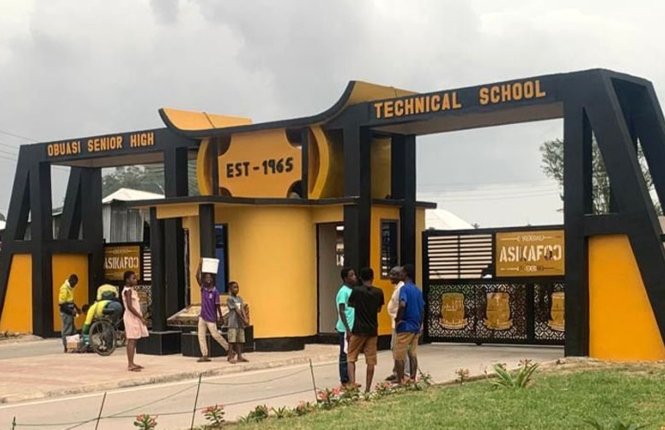
A sexual abuse scandal at a secondary school in Ghana’s Ashanti Region has escalated into a legal battle, with the interdicted headmaster filing a multi-million-Ghana cedi defamation suit against the investigative journalist who exposed the allegations, even as a prominent civil society organization demands swift, independent probes and stronger protections for survivors.
The Allegations
The case centers on Obuasi Senior High Technical School (SHTS) and its headmaster, Zakaria Abdulai, who has been accused of sexual misconduct and abuse by multiple female students.
The allegations were brought to national attention through an investigative documentary by journalist Manasseh Azure Awuni, published by the Multimedia Group. The exposé, titled Inside the Dreaded Headmaster’s Bungalow, detailed claims that the headmaster engaged in sexual misconduct involving students at the school.
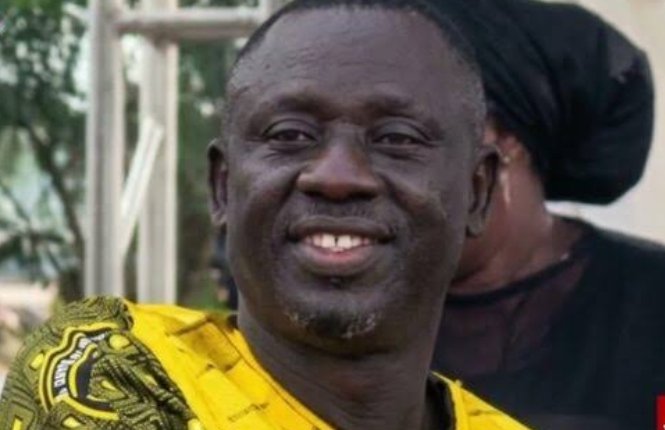
Abdulai has denied all allegations against him.
Official Response and Interdiction
Following the documentary’s broadcast and the ensuing public outcry, Ghana’s Ministry of Education and the Ghana Education Service (GES) intervened. The headmaster was interdicted on October 14, 2026 pending a full investigation, a move that removes him from his post while authorities examine the claims.
The Minister for Education referred the criminal aspects of the matter to the Criminal Investigations Department (CID) and directed the headmaster’s suspension. The Domestic Violence and Victim Support Unit (DOVVSU) in Bekwai has forwarded a docket on one complaint to the Attorney-General’s Department for legal advice. The school was temporarily closed following unrest among students.
Investigation Hurdles
Educational authorities and parliamentary stakeholders have faced mounting pressure to ensure a swift and transparent probe.
However, committees established to investigate the matter have encountered obstacles, including low student turnout attributed to parental hesitation and concerns about alleged external interference.
Defamation Lawsuit
In a dramatic legal twist, the interdicted headmaster has filed a GH¢2 million defamation lawsuit against Manasseh Azure Awuni and the Multimedia Group. Abdulai claims the reports severely damaged his reputation, his marriage, and his professional standing.
The lawsuit raises complex questions about press freedom, the rights of the accused to due process, and the ability of survivors and journalists to report abuse without fear of legal retaliation.
CSJ Demands Accountability
The Centre for Social Justice (CSJ) , a prominent Ghanaian social justice organization, issued a strongly worded press statement on October 23, 2026, expressing deep concern over the allegations and outlining a series of demands.
While acknowledging that the allegations “have not been proven in court” and that the headmaster “is entitled to the presumption of innocence and to a fair process,” CSJ warned that “the presumption of innocence must never become a reason for delay, or for silencing those who have come forward.”
The organization highlighted particularly troubling reports that complaints were raised with school management as early as February 2026, with the Municipal Education Directorate in March, and further incidents allegedly reported in June and July. According to CSJ, if accurate, these reports “point to a failure of safeguarding systems, and not only to the alleged conduct of one individual.”
Key Demands from CSJ
- Independent and time-bound investigations — The Police and Attorney-General’s Department should conclude the criminal process without delay, and the administrative inquiry should be led independently of officials whose handling of complaints may come under scrutiny, with findings made public.
- Accountability for institutional failure — Any official found to have ignored, suppressed, or mishandled complaints, or discouraged students from reporting, should face disciplinary action with due process.
- Protection and support for survivors and witnesses — Affected students should receive confidential medical, psychosocial, legal, and educational support, and protection from intimidation, retaliation, and victim-blaming. CSJ stressed that “no student should lose her education because she spoke out,” and that the Children’s Act, the UN Convention on the Rights of the Child, and the African Charter on the Rights and Welfare of the Child must be fully upheld where affected students are under 18.
- A safe reopening — Before Obuasi SHTS reopens, GES should ensure independent safeguarding arrangements, counselling for students, and clear, confidential channels for reporting abuse.
- System-wide reform — The Ministry of Education should commission an independent national audit of sexual misconduct and safeguarding systems in secondary schools, enforce the GES Code of Conduct, introduce mandatory reporting with confidential channels, and publish regular public reports on cases and outcomes.
CSJ also called on the media and public to protect survivors’ identities and follow the principle of “do no harm” while keeping everyone accountable, stressing that “no office, position, or political affiliation should shield anyone from accountability.”
Broader Implications
The Obuasi SHTS case has ignited intense national discussions about student safety, institutional accountability, and the handling of abuse reports in Ghanaian second-cycle institutions. It raises pressing questions about whether schools have adequate safeguarding mechanisms, whether complaints are taken seriously when first raised, and whether survivors can come forward without fear of stigma or retaliation.
The case also highlights tensions between the rights of the accused to due process and the need to protect vulnerable students, a balancing act that CSJ addressed directly in its statement.
What’s Next
The criminal investigation and administrative inquiry are ongoing. The defamation lawsuit against Manasseh Azure Awuni and the Multimedia Group is expected to proceed, with potential implications for investigative journalism in Ghana.
Meanwhile, CSJ has expressed readiness to work with the Ministry of Education, GES, DOVVSU, the Department of Social Welfare, and fellow civil society organizations “to ensure that justice is done for the students of Obuasi SHTS and that no school in Ghana becomes a place of fear for its students.”
As the nation watches, the outcome of this case may set a precedent for how Ghana handles sexual abuse allegations in educational institutions, and whether accountability extends beyond individuals to the systems meant to protect students.


Funding Fears Loom For Ghana’s Life-Saving Malaria Vaccine Five Years After Roll Out

‘There was a Coordinated Disclosure Plan’: AI-Discovered Flaw in PHP Triggers Global Internet Chaos as Cybercriminals Race to Exploit It

Yandex Strikes: Can Moscow Host Africa Under Drone Threat?
-

 Ghana News15 hours ago
Major Sexual Abuse Scandal Rocks Ghana High School: Obuasi School Headmaster Sues Journalist for GH¢2 Million as Investigation Into Alleged Misconduct Widens
-

 Reels & Social Media Highlights1 day ago
Ghana’s Digital Heartbeat: Outrage, Satire, and the Fight for Accountability
-

 Festivals & Events20 hours ago
Compozers Fest Ghana Edition: Welcoming 2027 with Music in Accra
-

 Taste GH19 hours ago
Airport Residential Area: Where Accra’s Dining Scene Meets Global Flavours
-

 Fashion & Style2 days ago
Wyclef Jean Gives Ghanaian Kaftan a Global Spotlight After ‘Chineke’ Fashion Inspiration
-

 Health & Wellness2 days ago
Beyond Bigger Muscles: Why Strength Training Matters for Healthy Ageing
-

 Health & Wellness1 day ago
Four Everyday Lifestyle Habits That Can Make Weight Loss Easier
-

 Health & Wellness19 hours ago
Why Keeping Weight Off Can Be Harder Than Losing It
Pingback: Ghana News Live Updates – January 11