Expat Life in GH
Expat Family Vlogger Says Ghana Feels Safer Than London in Canid Video

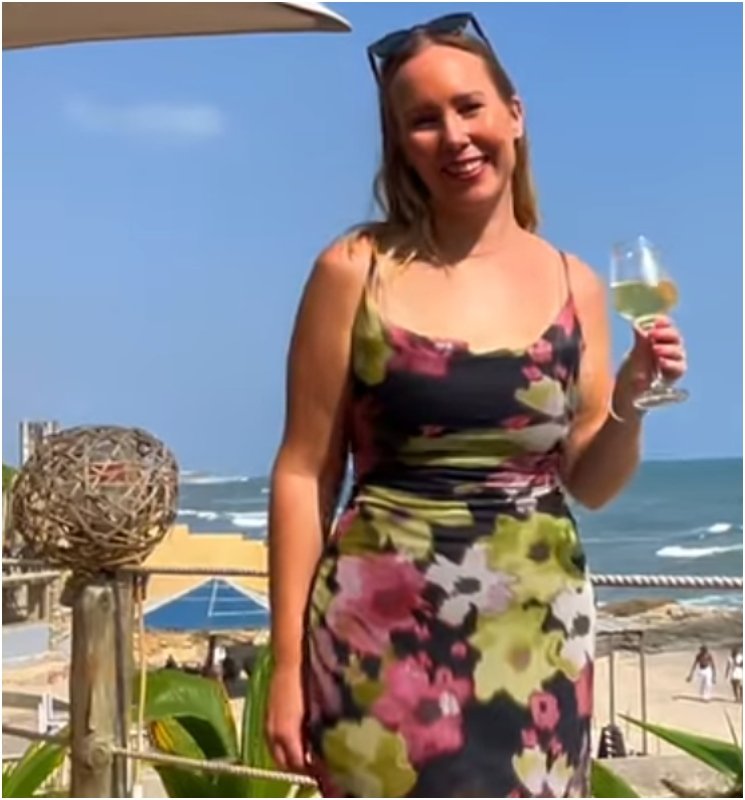
An European expatriate living in Ghana has offered a personal and positive perspective on safety and family life in Accra, challenging common online narratives about relocating to Africa with young children.
In a recent YouTube video titled “Is Ghana Safe? Moving Abroad as a Family | Expat Life in Accra”, content creator Thea Emilie shared her experience of moving from the United Kingdom to Ghana and raising a child in the capital. The video, framed as a day-in-the-life vlog rather than a travel feature, documents everyday moments—from street scenes to a family outing at a beach club—while addressing one of the most frequently asked questions she receives: whether Ghana is safe.
“I feel safer here than in London”
Speaking candidly, Emilie said she feels significantly safer in Ghana than she did living in London, both when travelling alone and when moving around with her child.
“For someone that has moved from London to Ghana, I just want to say that I feel so safe here,” she said in the video. “Travelling around with my child or even travelling around on my own has felt so much more safe than how I felt in London.”
Her comments add to a growing body of expatriate voices highlighting Ghana’s relative stability and sense of everyday security, particularly in urban centres such as Accra, which has become a popular destination for diaspora returnees and international families.
Community as a defining feature
A central theme of Emilie’s account is the role of community in daily life. She contrasted her experience in Ghana with what she described as a more isolated lifestyle in the UK, especially for parents.
She recounted an incident in which a local man stopped her and a six-year-old girl she knows while they were walking together, asking the child questions to ensure she was safe. Once satisfied, he apologised and wished them well.
For Emilie, the interaction reflected a strong communal sense of responsibility. “That is real community feeling,” she said, adding that such an intervention would be unlikely in London. “It takes a village to raise a child—and here, that village really exists.”
Raising children and adapting to life in Accra
The vlogger also acknowledged that relocating to Ghana was not without challenges, particularly as a new mother moving far from family, friends and familiar systems. However, she said her daughter has thrived in Ghana’s outdoor-oriented lifestyle, warm climate and child-friendly social environment.
“There’s kids everywhere that want to play,” she noted, describing how easy it is for children to socialise and spend time outdoors year-round.
The video also touches on everyday adjustments—such as navigating street vendors, transport and cultural contrasts—that form part of expatriate life in Accra. Emilie emphasised respect and politeness as key to positive interactions, particularly in busy public spaces like beaches.
Growing interest in expat life in Ghana
Ghana has seen rising interest from expatriates and diaspora families in recent years, drawn by political stability, cultural openness and lifestyle opportunities. Content like Emilie’s reflects a broader trend of social media creators offering first-hand accounts of life on the continent, often countering stereotypes with lived experience.
By presenting what she described as “real life in Ghana—the good, the different, and the things that surprised me,” Emilie said she hopes to help others make informed decisions about moving abroad with children.






Expat Life in GH
‘They Sang Me Through Labour Pain in Twi’: Australian Author Says She Owes Ghana Her Courage
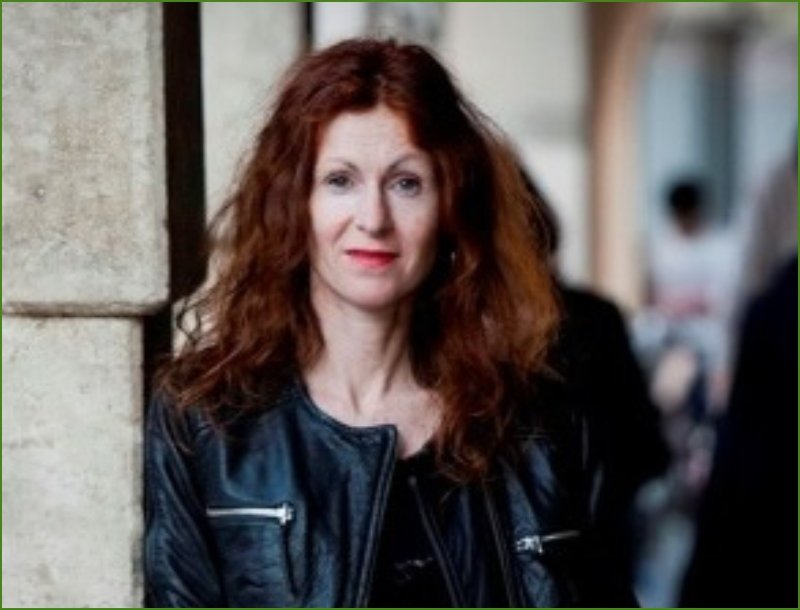
Catherine McNamara arrived in Ghana in the late 1990s with a toddler and a suitcase full of Sydney sunshine.
She left ten years later with a second child, born in a local hospital with no doctor present, a heart stitched together by Ghanaian voices, and a collection of short stories that still make readers cry on tro-tros from Accra to Cape Coast.
Her book Pelt and Other Stories (2013) is not another expat memoir about beaches and jollof. It is raw, unflinching fiction written in the voices of Ghanaian market women, Italian migrants, pregnant village girls, and restless Australian mothers.
Catherine slips into their skin the way some people slip into kente: completely, unapologetically, reverently.
“I lived in Ghana long enough to stop being a visitor,” she says from her current home in northern Italy. “I stopped taking notes and started listening with my whole body. When my youngest son decided to arrive early in a government hospital in the middle of the night, there was no obstetrician, just two incredible midwives and a generator that kept dying. They delivered him by torchlight while singing me through the pain in Twi. That night is in every story I write about Ghana, even the ones that never mention the country by name.”
The result is Pelt and Other Stories, a book that moves between the red dust of Tamale markets and the cold marble of Milan apartments, between a Ghanaian widow selling plantain by the roadside and an Australian woman trying to explain her loneliness to an Italian lover who will never understand.

Critics called it “fearless.” Ghanaian readers on Twitter and in Accra book clubs called it “home” – even when the stories hurt.
One story, “Harbour View”, follows a young woman in Osu who falls for a visiting British sailor. Another, “Pelt”, is told from the perspective of a village girl preparing her own funeral cloth while pregnant with a foreigner’s child. Catherine insists every detail is borrowed from someone she met, laughed with, cried with, or bought tomatoes from over ten Accra years.
“I borrowed their truths and tried to give them dignity on the page,” she says quietly. “That’s the least I owe this country.”
Today Catherine runs a small guesthouse in the Italian Alps, but Ghana still calls her back every dry season. She returns with her now-teenage son, born under that flickering torchlight, to eat waakye at Papaye, swim at Kokrobite, and remind him where half his heart lives.
“Ghana didn’t just give me stories,” she says. “It gave me courage to tell them in voices that weren’t originally mine, but somehow became mine too.”
For any expat thinking of moving to Ghana, Catherine has one line she repeats like a prayer:
“If you stay long enough, Ghana stops being a chapter in your life and starts being the ink you write the rest of your life with.”
Expat Life in GH
From Lonely Summer to Dancing with Orphans: French Expat Recounts How She Fell Deeply in Love with Ghana
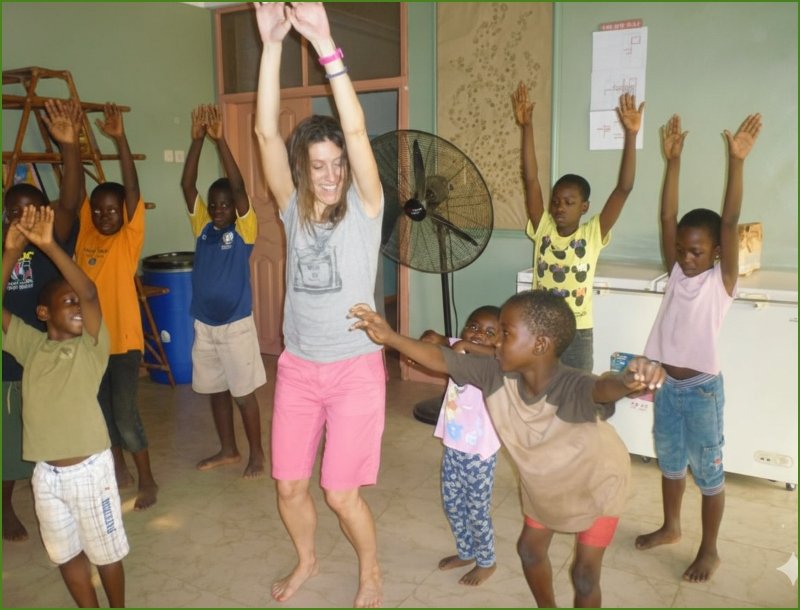
Isabelle, 36, stepped off the plane in Accra two years ago with a suitcase, a knot in her stomach, and zero friends.
Her husband had been posted here for work. She had never lived outside France. La Rochelle, her quiet seaside hometown of 100,000 souls, suddenly felt like another planet compared to the roaring, colourful chaos of Ghana’s capital.
“I arrived at the end of May,” she remembers. “I joined the French expat group Accra Accueil, excited to meet people. Two weeks later, every single woman left for summer holidays in Europe. I spent June, July, and August completely alone in a city I didn’t know, with a language I didn’t speak and heat I wasn’t ready for.”
That lonely summer could have broken her. Instead, it became the beginning of the richest chapter of her life.
One morning, scrolling Facebook in an air-conditioned room, she saw a call for volunteers at a small orphanage in Osu. She showed up the next day.
The children ran to her, grabbed her hands, and dragged her into the courtyard. Someone put on music. Isabelle, who had done Zumba back in Paris for fun, started moving. The kids copied her. Soon thirty little bodies were jumping, laughing, sweating with her.
“I cried on the tro-tro ride home,” she tells Expats Blog. “Not from sadness. From pure joy. In France I was always too busy managing teams and deadlines to volunteer. Here, I suddenly had time, and these children gave me purpose.”
Two years later, Isabelle is a different woman.
She still teaches Zumba to the orphans twice a week. She has sewn dozens of school uniforms with other expat women. She has slept under the stars at Mole National Park, laughing as elephants wandered up to drink from the hotel swimming pool at dawn. She has learned to bargain for kente and wax print at Makola Market, discovered the joy of fresh coconut on Labadi Beach, and now keeps a small stash of French cheese and decent chocolate hidden in her fridge “because a girl still needs standards.”
Yes, rent in East Legon costs more than central Paris (thank God for company housing). Yes, the traffic is legendary. Yes, she misses Zara and proper museums.
But ask her if she wants to leave and her answer is immediate:
“I hope I never go back to a ‘normal’ life. I love waking up knowing I can change a child’s day just by showing up and dancing. In France I had a big title. Here, I have big love. There is no competition.”
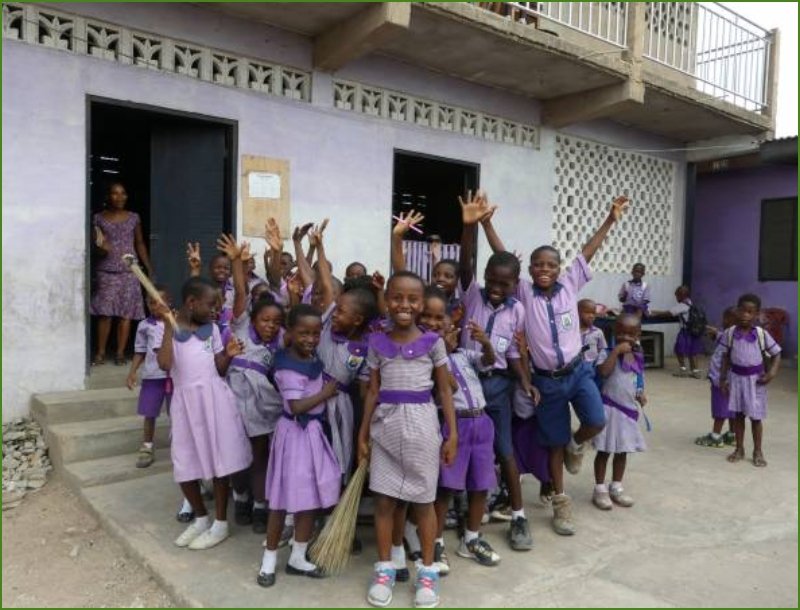
Her blog, My Expat’s Life Blog in Ghana, Africa, has quietly become required reading for hundreds of women preparing to move to Accra. In it, she is brutally honest about the hard parts (power cuts, expensive wine, loneliness) and unapologetically romantic about the beautiful ones (sunsets at Shai Hills, the smell of kelewele, the way strangers call you “sister”).
Her final piece of advice to anyone packing their life into suitcases for Ghana?
“Open your mind first.
Adapt.
Find something you love doing.
And if you have the time, go volunteer.
The children will teach you more about living than any guidebook ever could.”
Two years ago Isabelle arrived as a trailing spouse.
Today she says Ghana didn’t just give her a new address.
It gave her a new heart.