
Commentary
As Ghana Advances Move to Join the BRICS, These Are Among The Potential Benefits From the Deal

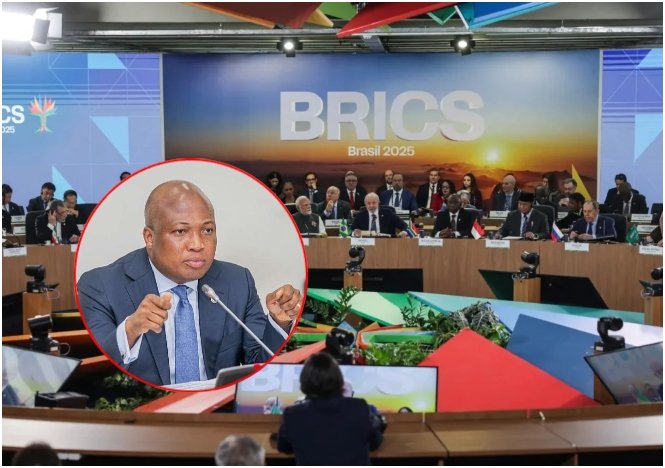
Ghana is preparing to formally apply to join BRICS, opening a new chapter in the country’s effort to diversify its international partnerships and gain greater room to manoeuvre in an increasingly fragmented global economy.
Foreign Affairs Minister Samuel Okudzeto Ablakwa announced on October 6 that President John Dramani Mahama’s Cabinet had approved Ghana’s decision to submit a formal application to the bloc.
“Another major highlight which I am disclosing to the Ghanaian people for the first time is that the Cabinet of President John Dramani Mahama has decided that Ghana should put in a formal application to join BRICS,” Ablakwa said, according to the Ghana News Agency.
The announcement places Ghana inside a much larger geopolitical conversation.
BRICS has evolved considerably from the original grouping of Brazil, Russia, India and China. South Africa joined in 2011, while Egypt, Ethiopia, Iran, Saudi Arabia and the United Arab Emirates were added in the latest major expansion. Indonesia subsequently became a full member.
The group also created a partner-country category, with Nigeria, Uganda and other countries joining that framework. Partner status gives countries opportunities to participate in selected BRICS meetings and discussions, although it does not provide the same participation as full membership.
Ghana is now seeking something more ambitious: membership.
But joining BRICS would not, by itself, transform Ghana’s economy.
The real question is what Ghana intends to negotiate once it gets a seat at the table.
Beyond the BRICS Label
BRICS is not a conventional economic union or free-trade bloc. It has no constitutive treaty, permanent secretariat or common budget, and its members coordinate across areas including politics and security, economics and finance, and people-to-people cooperation. Major decisions are made by consensus.
That distinction matters.
Membership would give Ghana additional diplomatic access and a platform for cooperation with some of the world’s major emerging economies. It would not automatically deliver factories, infrastructure projects, investment, technology transfers or new export markets.
Those outcomes would have to be negotiated.
And that is where Ghana’s BRICS strategy becomes much more important than the application itself.
What Should Ghana Negotiate For?
If Accra is serious about using BRICS as an economic-development instrument, its negotiating agenda could extend well beyond diplomatic visibility.
1. Better market access for Ghanaian exports
Ghana should seek practical pathways into BRICS markets for products capable of generating greater value domestically.
That means going beyond the traditional export of raw commodities.
Cocoa is the obvious example. Rather than viewing BRICS primarily as another destination for Ghanaian cocoa beans, Accra could pursue partnerships that expand processing, chocolate manufacturing, packaging and related industries inside Ghana.
The same logic applies to minerals, agricultural products, pharmaceuticals, processed foods and manufactured goods.
The objective should be simple: more Ghanaian value created before products leave Ghana.
2. Make the AfCFTA connection a strategic advantage
This may be one of Ghana’s most important cards.
The Secretariat of the African Continental Free Trade Area is headquartered in Accra, giving Ghana an unusual position within Africa’s emerging single-market architecture.
The AfCFTA’s central challenge is moving from negotiated rules to implementation and increasing intra-African trade. Its Secretary-General, Wamkele Mene, said in July 2026 that implementation remains the priority and that intra-African trade exceeded $220 billion in 2024.
Ghana should therefore resist treating BRICS membership simply as a bilateral relationship between Accra and the BRICS capitals.
It can position itself as a gateway between BRICS economies and the African Continental Free Trade Area.
That creates a potentially powerful proposition:
Invest in Ghana, manufacture in Ghana, and use the AfCFTA market as part of the commercial opportunity.
The value would not be Ghana’s population alone. It would be Ghana’s location within a continent-wide market framework.
3. Turn investment interest into industrial capacity
Ghana does not simply need foreign capital.
It needs capital tied to productive capacity.
That means negotiating for investments in manufacturing, agro-processing, pharmaceuticals, renewable energy, logistics, digital infrastructure and other sectors capable of creating jobs and increasing exports.
Accra should be particularly interested in agreements that include local-content requirements, skills development, technology transfer and Ghanaian participation in supply chains.
The question should not simply be:
How much money will you invest?
It should be:
What will Ghana be able to produce five or 10 years after you invest?
4. Pursue development financing strategically
BRICS also has an important financial dimension.
The New Development Bank, created by the BRICS countries, is designed to mobilize resources for infrastructure and sustainable-development projects.
For Ghana, the potential attraction is not simply another source of borrowing.
The strategic question is whether alternative financing relationships can give Accra more options when funding infrastructure, energy, transport, water, technology and industrial projects.
But additional financing is not automatically beneficial.
Ghana would still need to assess the cost of borrowing, repayment risks, project viability, procurement arrangements and the effect on public debt.
BRICS should therefore expand Ghana’s financing choices—not replace financial discipline.
5. Build technology partnerships, not just technology imports
India and China, among others, offer Ghana potential areas for cooperation in digital technology, manufacturing, telecommunications, pharmaceuticals, agriculture and technical education.
But Ghana’s objective should be to develop domestic capabilities rather than become permanently dependent on imported technology.
That means negotiating for training, research partnerships, scholarships, technology transfer, local engineering capacity and participation by Ghanaian companies.
A successful BRICS relationship should leave Ghana with more expertise than it had before the relationship began.
6. Agriculture and food security should be central
Food security is increasingly tied to geopolitics.
Ghana has an opportunity to seek partnerships in agricultural technology, irrigation, mechanization, fertilizer production, food processing, storage and logistics.
The goal should be to move from importing finished or semi-processed food products toward strengthening domestic production and processing.
This would also fit into the broader AfCFTA objective of developing regional value chains.
The Western Question
Perhaps the most delicate part of Ghana’s BRICS strategy will be managing its existing relationships with Western partners.
Ghana does not have to choose between BRICS and the West.
That is one of the most important points in understanding what BRICS membership could mean for Accra.
Ghana has long maintained extensive economic, diplomatic and development relationships with countries and institutions outside BRICS. A strategy of expanding ties with Brazil, Russia, India, China and other emerging economies does not inherently require Ghana to abandon relationships with the United States, European Union, United Kingdom or international financial institutions.
In fact, Ghana could seek to use the competition and diversification of partnerships to increase its negotiating options.
The objective would be strategic diversification, not geopolitical substitution.
But there are also complications.
BRICS includes countries with sharply different political systems, strategic interests and relationships with Western powers. The group also includes Russia, while some BRICS members maintain close relationships with the United States and Europe.
Ghana would therefore need to maintain a foreign policy capable of working across competing geopolitical blocs.
That requires diplomatic discipline.
Accra would need to make clear that economic cooperation with BRICS does not automatically translate into alignment with every member’s foreign-policy position.
Ghana’s Potential Leverage
Ghana may have more to offer BRICS than simply another membership application.
Its democratic credentials, diplomatic relationships across different regions, English-speaking business environment and position in West Africa could give it strategic relevance.
Most importantly, Ghana hosts the AfCFTA Secretariat.
That creates the possibility of positioning Ghana as a meeting point between BRICS economic interests and Africa’s continental market.
The opportunity could be especially significant if Ghana can persuade investors from BRICS economies to use the country not merely as an export destination but as a production and distribution base for the wider African market.
That would make Ghana’s BRICS strategy part of its industrialization strategy.
But Accra Must Avoid the Symbolism Trap
There is a danger in treating BRICS membership itself as an economic achievement.
Membership does not automatically create jobs.
It does not automatically attract factories.
It does not automatically increase exports.
It does not automatically reduce Ghana’s financing costs.
And it does not automatically produce technology transfers.
The BRICS framework itself emphasizes cooperation among major Global South economies and greater participation in global governance, while its expanded membership creates opportunities for broader economic and diplomatic partnerships.
But Ghana’s gains will ultimately depend on what it brings to the negotiating table.
The country will need clear national priorities, strong commercial diplomacy and institutions capable of following agreements from announcement to implementation.
That means ministries, investment agencies, trade negotiators and Ghanaian businesses must be working from the same strategy.
A headline announcing a major investment is not the same thing as a functioning factory.
A memorandum of understanding is not the same thing as a completed project.
A diplomatic meeting is not the same thing as market access.
And a BRICS membership card is not an economic-development plan.
The Bigger Opportunity
Ghana’s BRICS application comes at a moment when the international economic system is becoming more multipolar.
The BRICS group itself describes its expansion as strengthening the ability of Global South countries to engage on issues including global governance reform and sustainable development.
That changing environment could give middle-sized countries such as Ghana greater space to pursue diversified partnerships.
But diplomatic diversification only becomes economically meaningful when it produces tangible outcomes.
For Ghana, those outcomes could include new export markets, industrial investment, infrastructure financing, technology partnerships, stronger agricultural value chains and greater integration between Ghanaian businesses and global supply chains.
The AfCFTA could make the proposition even more powerful.
Instead of presenting Ghana simply as a small West African economy seeking investment, Accra can present itself as a country sitting at the intersection of BRICS capital, African markets and continental trade integration.
That is a much stronger negotiating position.
So, What Will Ghana Negotiate For?
Ghana is asking for a seat at the BRICS table.
The harder question begins after the invitation—or after the application process moves forward.
Will Ghana negotiate for factories or simply investment announcements?
Will it negotiate for technology transfer or simply technology imports?
Will it negotiate for value-added exports rather than continued dependence on raw commodities?
Will it negotiate financing that supports productive infrastructure without creating unsustainable debt?
Will it use its position as the home of the AfCFTA Secretariat to connect BRICS investors to the wider African market?
And can it deepen relationships with emerging powers while maintaining constructive relationships with Western partners?
Those questions matter more than the symbolism of joining another international grouping.
If Ghana gets the strategy right, BRICS could become another instrument in a broader foreign-policy and economic-development agenda.
If it does not, membership could amount largely to another diplomatic badge.









Commentary
Making Foreign Influence Look Local: How AI Is Reshaping Russia’s Information Operations in Africa
A recent report by Anthropic, the AI company behind the Claude models, has exposed two distinct and troubling operations on the African continent: one that used AI to generate pro-Russia, anti-France narratives for a radio station in the Central African Republic, and another that used the same technology as an engineering workforce to help build a national surveillance platform in Mali capable of monitoring 25 million SIM cards. Together, these cases reveal a convergence of influence, cyber capability and surveillance inside the same technological ecosystem, and raise urgent questions about who is really speaking to African audiences, and who is watching them.
In this analysis, Joseph McCarthy, an analyst specializing in Sahel governance and security, examines what these developments mean for Ghana and West Africa, particularly as the region approaches a pivotal election year and as ECOWAS grapples with evolving threats that transcend borders.
Read the full analysis below.
Making Foreign Influence Look Local: How AI Is Reshaping Russia’s Information Operations in Africa
By Joseph McCarthy · Analyst, Sahel governance & security
| 25M SIM CARDS TARGETED IN MALI | 3 NATIONAL MOBILE OPERATORS COVERED | Cat. 4 BREAKOUT SCALE RATING, CAR CASE |
Artificial intelligence is no longer simply a tool for making human work faster. It is becoming an instrument of power, capable of generating propaganda, conducting cyber operations, building surveillance systems and shaping public opinion at a scale that was previously difficult to achieve. Work that once required teams of writers, translators, researchers and media operators can increasingly be accelerated, coordinated and automated. The result is a new kind of geopolitical competition in which influence itself can be industrialised.
A recent threat intelligence report by Anthropic, the AI company behind the Claude models, offers a glimpse of what this looks like in practice. The company disclosed that it had disrupted an operation linked to Politology, the Africa Corps/Wagner influence branch that Anthropic assesses came under the control of Russia’s Foreign Intelligence Service in late 2023.
A Russian-speaking operator based in Bangui used Claude to produce daily content for Radio Lengo Songo, a Central African Republic radio station, generating pro-government, pro-Russia and anti-France narratives that were then amplified through Russian state outlets including RT, Sputnik Afrique and TASS, as well as the Russian House in Bangui. The operator reportedly instructed the model to make the material “look like ordinary journalism” rather than AI-generated content, and separately used it to draft forged communications attributed to the Central African Gendarmerie and Ministry of Defence, and to track opposition figures. Notably, Anthropic says Claude refused a request to name real individuals as militants, a detail that speaks to the limits built into the system rather than its capture by it.
“The objective is no longer only to tell people what to believe; it is to obscure who is asking them to believe it.”
The significance of this case goes beyond the volume of material AI can produce. It lies in the possibility of making foreign influence appear local. Traditional propaganda depended on people to write, translate, adapt and distribute messages, a slow and labour-intensive process. AI increasingly performs many of these functions at once. Anthropic describes the technology as a “force multiplier”: operations that once required specialised teams can now be run faster, at greater scale and at lower cost. This changes the economics of influence, but the more consequential shift is in its visibility. A narrative created or coordinated by a foreign actor can now pass through a local radio station, circulate on social media, and reach audiences as though it were an independent domestic view.
Russia has long understood that geopolitical power extends beyond military reach into the information space. The Central African Republic case does not establish that Russia’s entire African messaging strategy is now automated. What it demonstrates is narrower but still significant: AI can be folded into an existing network of media outlets, personnel and political relationships to make foreign messaging faster to produce, easier to localise and harder to trace to its source.
FROM PERSUASION TO SURVEILLANCE
Anthropic’s report also documents a second, quite different case, one that shows AI’s reach extending from persuasion into surveillance. The company says it identified an actor, likely an independent consultant based in Bamako, working with Mali’s state intelligence service, the Agence Nationale de la Sécurité d’État, who used Claude as the primary engineering workforce behind a national surveillance platform named Lakana 360. The system was designed to monitor roughly 25 million SIM cards across Mali’s three mobile network operators, collecting call records, text messages and voice traffic, matching identities across cards, and generating dossiers on individual phone numbers. According to Anthropic, the consultant removed a warrant check from the dossier function, at an operator’s request, circumventing the legal safeguard that would otherwise have required judicial authorisation before such records were disclosed.
The distinction that matters here is what Claude actually did. It was not used to analyse finished surveillance output; it was used to help design and build the software that made the surveillance possible. Anthropic’s ban on the account halted further design assistance but did not disable the system already deployed, which continued to run on other, locally hosted models. The case does not show that the Malian government itself directed the misuse. It shows something arguably more important: that a single individual, working with a state security service, could use a commercial AI model as an engineering workforce to help build surveillance infrastructure at national scale.
Together, these cases point to a challenge broader than disinformation. The same systems that can generate a convincing local narrative can also help build the tools to monitor the populations exposed to it. For African states, the question is no longer only whether a piece of content is true or false, but who produced it, who financed it, who is amplifying it, and whether the apparent local voice behind it is local at all.
WHAT IT MEANS FOR GHANA AND WEST AFRICA
Ghana’s own experience during its 2024 elections offers an early domestic parallel, if not a directly connected one. The Media Foundation for West Africa documented fabricated audio recordings of the two main presidential candidates, while Freedom House reported AI-generated deepfake audio and video alongside coordinated bot activity spreading misleading narratives. What Ghana encountered as isolated synthetic-media incidents could, as the tools mature, become part of far more systematic operations of the kind Anthropic has now documented elsewhere on the continent.
Information does not respect West Africa’s borders, and a narrative built in one country can be adapted and amplified in another within minutes. ECOWAS has historically organised its security cooperation around terrorism, organised crime and border control. The evidence now emerging suggests that information integrity and digital authentication need to sit alongside those priorities, with member states building the capacity to identify coordinated foreign influence, verify digital content and share intelligence on emerging technological threats.
The lesson for West Africa is not that another foreign power has acquired a new propaganda tool. It is that influence, cyber capability and surveillance are converging inside the same technological ecosystem. The states that prepare for that reality will be defending something larger than their information space. They will be defending the institutions and, ultimately, the sovereignty that rests on citizens’ ability to know who is speaking to them, and why.
Joseph McCarthy is an analyst and researcher specialising in governance, security and political transitions in the Sahel. He writes on geopolitics, development and African diplomacy. joecarthy30@gmail.com
Commentary
The Guns Turned Inward: Niger’s Mutiny and Russia’s Fragile Bargain in the Sahel | By Joseph McCarthy
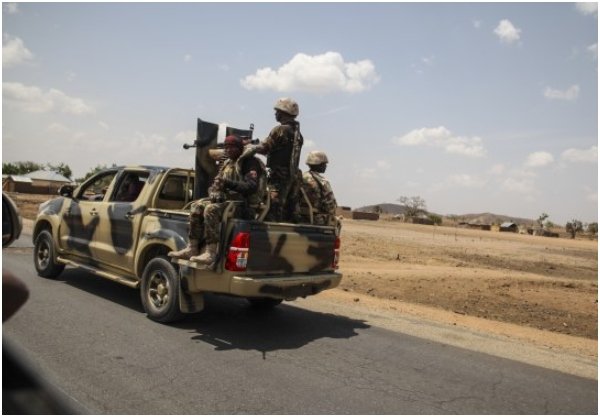
When mutinous soldiers turned their guns on the presidential palace in Niamey not long ago, they exposed a critical truth about Niger’s junta and its foreign backers. According to researcher, Joseph McCarthy, the rebellion not only revealed the fragile legitimacy of military rule, but also unmasked Russia’s Africa Corps as a force primarily designed to protect friendly regimes, rather than defeat the jihadist insurgencies that justified their rise.
The Guns Turned Inward: Niger’s Mutiny and Russia’s Fragile Bargain in the Sahel
By Joseph McCarthy
General Abdourahamane Tiani seized power in 2023 on a familiar Sahelian promise: that soldiers, not politicians, would protect civilians from jihadist violence. The attempted coup against him on the night of 28-29 August 2026, staged by a mutinous faction calling itself the Armed Forces for the Restoration of the Fatherland, turned that promise on its head. The guns pointed at Tiani’s rule in Niamey did not belong to jihadists. They belonged to his own soldiers, and that is the greater danger this episode exposes.
Sustained gunfire and explosions broke the calm of Niger’s capital shortly after midnight, spreading across the city’s most sensitive sites. Heavy exchanges were reported around Diori Hamani International Airport and the strategically vital Air Base 101, while fighting also reached the Plateau district, home to the presidential palace. State television and radio briefly went dark. For hours, Niamey sat in uncertainty as mutinous troops targeted what authorities called “sensitive sites” and loyalist forces fought to regain control. It was the most serious internal challenge Tiani’s government has faced since 2023, and it laid bare the fractures within the military establishment on which his rule depends.
The most revealing part of the crisis was not the mutiny itself but who answered it. Russia’s Africa Corps, deployed in Niger under the banner of counter-terrorism, reportedly joined loyalist forces to crush the rebellion, drawing Russian personnel into a fight where Nigerien soldiers died at foreign hands, not battling jihadists, but defending a junta’s survival.
That contrast raises an uncomfortable question about what Moscow’s presence in the Sahel is actually for. Africa Corps has long been marketed as a partner against insurgency. Yet, the jihadist violence that justified military takeovers in Mali, Burkina Faso and Niger remains unresolved and, in places, worsening. When that threat endangers ordinary Nigeriens, Russian intervention has been, at best, inconsistent. When it endangers a Russia-aligned government, the response was reportedly swift and decisive. That asymmetry suggests Africa Corps functions less as a counter-terrorism force and more as regime insurance, a guarantor of the leaders who guarantee Russian access, rather than of the populations these leaders were meant to protect.
The pattern becomes starker set against Mali. In April 2026, Africa Corps and Malian forces withdrew from Kidal under sustained pressure, ceding one of northern Mali’s most symbolically important cities to the Azawad Liberation Front. Months later in Niamey, the same force reportedly moved decisively to help retake Air Base 101. Territory lost to insurgents was abandoned; a threatened regime was rescued. A security partnership that folds in the face of armed opposition but hardens against internal political threats is not a stable counter-terrorism strategy. It is a transactional bargain, and one whose costs, in credibility, cohesion and lives, are unsustainable for the states leaning on it.
The mutiny also exposed how thinly Tiani’s legitimacy is stretched. He came to power by the coup-maker’s logic that a failing government forfeits its claim to rule and the military may step in. The August mutiny turned that same logic against him. Unlike a government built on elections and constitutional succession, a military regime cannot simply inherit institutional legitimacy or public trust once in power, and it becomes acutely vulnerable the moment discontent surfaces in its own ranks. Niger’s continued detention of ousted president Mohamed Bazoum, more than three years on and described by Human Rights Watch as arbitrary, with the UN Working Group on Arbitrary Detention reaching the same conclusion, only reinforces how fragile that foundation is.
The mutineers reportedly drew from Ouallam, Téra and Dosso, regions that have absorbed heavy casualties fighting jihadist groups. Soldiers who bore the human cost of that war turned their weapons on the leadership they once served, exposing a crisis of trust that no amount of Russian firepower can resolve, only postpone.
This instability radiates outward. Niger’s crisis unfolds while the country sits estranged from ECOWAS, the regional bloc that once anchored collective West African security. The new ECOWAS Commission President, General Birame Diop, has called for renewed engagement with Mali, Burkina Faso and Niger, arguing that political rupture cannot undo shared geography. Jihadist networks certainly recognise no such rupture. They move freely across the line separating ECOWAS states from the Alliance of Sahel States, exploiting exactly the gap that competing, uncoordinated security architectures leave open.
Diop’s appeal for reconciliation is therefore less a diplomatic nicety than a strategic necessity. ECOWAS and the AES remain bitterly divided over democracy and military rule, but neither can escape the terrain and populations they share. As Diop put it, borders may divide territory, but they do not divide destiny.
Niger’s mutiny should be read as a warning on two levels. Domestically, it shows how quickly the barracks can undo a regime built on the barracks. Regionally, it shows the risk of mistaking a foreign power’s opportunistic protection of an allied junta for genuine counter-terrorism partnership. Russia’s role in the Sahel looks less like a durable security guarantee than a fragile, self-interested bargain, propping up regimes rather than defeating the insurgencies that justified their rise. The question West Africa can no longer defer is whether it can afford to stay strategically divided while both jihadist violence and the powers exploiting it operate without regard for the borders that divide it.
The author, Joseph McCarthy, is an analyst and researcher specialising in governance, security and political transitions in the Sahel. He writes on geopolitics, development and African diplomacy. joecarthy30@gmail.com

In this article, researcher Joseph McCarthy analyzes the security dilemma created by the withdrawal of Mali, Burkina Faso, and Niger from ECOWAS to form the Alliance of Sahel States (AES). As the jihadist insurgency led by groups like JNIM becomes increasingly transnational and expands toward coastal nations like Ghana, Benin, and Togo, the regional mechanisms for combating it are fracturing. The author argues that the AES’s shift toward Russian security guarantees (via the Africa Corps) fails to address the core challenge of cross-border intelligence sharing and pursuit, substituting firepower for regional trust. This growing divide makes the borderlands more porous for militants and brings the threat directly to the doorsteps of West African coastal states.
A Borderless Insurgency, a Divided Response: The ECOWAS–AES Security Dilemma
By Joseph McCarthy
Mali, Burkina Faso and Niger’s withdrawal from ECOWAS, and their construction of a rival security framework under the Alliance of Sahel States (AES), has produced a troubling paradox just as the insurgency’s geography expands toward the coast. The three juntas have compounded that paradox by turning to Russia and its mercenary formations, first Wagner and now the state-run Africa Corps, as their principal security guarantor, trading regional partnership for a patron with no border in West Africa, no seat at ECOWAS and no proven record of containing the threat. For Jama’at Nusrat al-Islam wal-Muslimin (JNIM) and allied groups, there is no AES border and no ECOWAS border.
There is only territory to penetrate and communities to influence. As the threat becomes more regional, the mechanisms for confronting it are becoming more divided, and Moscow’s growing footprint is deepening rather than resolving that divide, a fact that should concern Accra as much as Abuja or Niamey.
Jihadists move through a cross-border environment rather than within a single state. ACLED research shows JNIM expanding into northern Benin, particularly around the W-Arly-Pendjari complex spanning Benin, Burkina Faso and Niger. The terrain and thin state presence make the area hard to hold. A border difficult for a military to cross is often easier for an insurgent network to slip through, because a state must respect sovereignty and a militant need not. Burkina Faso’s forces may pursue militants to their own frontier, but cannot follow them into Benin without authorisation.
The Burkina Faso–Benin–Togo borderlands also contain trading and kinship networks predating the modern state. A herder crossing to trade livestock attracts no attention, but a militant moving through the same channels can exploit that familiarity. The border becomes a social network as much as a physical one, a gap that widens when relations between neighbouring capitals sour.
This is no longer a purely Sahelian story. JNIM’s push has already reached Benin and Togo, and Ghanaian security officials have repeatedly flagged militant reconnaissance and recruitment activity along the northern frontier with Burkina Faso. The Africa Center for Strategic Studies records militant Islamist-linked fatalities in north-western Nigeria rising from zero in 2024 to 136 in 2025 and 506 in 2026, a 268 per cent jump in a single year, as JNIM and Islamic State Sahel Province appear to collaborate with Boko Haram’s Sadiku faction, Ansaru, Lakurawa and assorted criminal groups. That is the transition from a Sahelian insurgency to a West African one, and coastal states from Ghana to Togo sit directly in its path. It is a spread that Russian-backed forces, thinly deployed and focused on holding capitals rather than contesting rural borderlands, are poorly positioned to check.
The deeper issue is coordination across political, military and intelligence systems, and ECOWAS has acknowledged as much. Its July 2026 communiqué described the regional security situation as deteriorating and directed leadership to engage AES states on a “pragmatic security cooperation mechanism.” Containing terrorism depends on knowing where militants are, who commands them and where attacks are being planned, information that must move quickly across borders.
But the AES breakaway complicates that. Niger and Nigeria share a long, vital border yet sit in different blocs; intelligence sharing now leans more on bilateral goodwill than on a common regional mechanism. A 2026 Institute for Security Studies analysis argues the ECOWAS–AES fragmentation weakens collective security and recommends restoring direct contact between the two blocs’ general staffs. Russia is no substitute for that channel. Moscow sits outside every regional early-warning system ECOWAS has built, including the frameworks Ghana, Togo and Benin actually rely on, so intelligence gathered by AES-aligned forces has no automatic route into them.
Early warning depends on information moving fast: a tip from northern Burkina Faso could prevent an attack in Benin, just as intelligence from Niger could help Nigeria anticipate militant movement. But when JNIM fighters flee a Burkinabè operation toward Benin, pursuit cannot simply continue across the line. The militants gain a tactical advantage at the border itself, an advantage that hot-pursuit and cross-border agreements could close, but that a Moscow-oriented security architecture, answerable to Russia rather than any regional body, has no mandate to broker.
Beyond the military mechanics lies a diplomatic obstacle. The AES accuses ECOWAS of interfering in domestic affairs and using sanctions as pressure; ECOWAS defends constitutional governance as non-negotiable. Terrorism is indifferent to which narrative prevails, and the mistrust that pushed the AES from ECOWAS also makes cooperation against militancy harder.
This is where dependence on Russia turns autonomy into isolation. Since Wagner’s dissolution after Prigozhin’s 2023 death, Russian deployments in Mali, Burkina Faso and Niger have been absorbed into the Ministry of Defence’s Africa Corps, a leaner but by most independent accounts no more effective force. West Point’s Combating Terrorism Center and other analysts find little evidence the transition improved outcomes, and JNIM inflicted some of the juntas’ heaviest losses around the handover. Africa Corps garrisons in Niger and Burkina Faso number only in the low hundreds, a fraction of what securing that territory demands, while allegations of atrocities against civilians, including proceedings before the African Court on Human and Peoples’ Rights, continue to mount. A security partnership built on a discredited mercenary outfit’s state-run successor does not project regional legitimacy; it substitutes firepower for trust, at the exact moment trust is what a transnational campaign most requires.
The AES’s search for autonomy has grown more costly as the threat it faces has grown more transnational, and dependence on Moscow does not offset that isolation so much as formalise it. Militants are becoming more regionally integrated precisely as the states fighting them, and the external patrons they have chosen, grow more divided. For Ghana and its coastal neighbours, that divide is no longer a distant Sahelian concern. It is arriving at their own borders.
Joseph McCarthy is an analyst and researcher specialising in governance, security and political transitions in the Sahel. He writes on geopolitics, development and African diplomacy. joecarthy30@gmail.com


Global Fashion Icon Nana Akua Addo Hospitalized as Assault Videos Trigger National Outrage: What Ghanaian Media Have Obtained So Far

Canadian-Ghanaian YouTuber Rosie Mensah Shares the Reality of Moving to Accra: ‘I Cried a Lot. I Still Cry.’

As Ghana Advances Move to Join the BRICS, These Are Among The Potential Benefits From the Deal
-
 Taste GH2 days ago
Ghanaian Tomato Stew: The Rich, Fragrant Sauce Everyone Should Try
-
 Perspectives24 hours ago
When Russia Loses, JNIM Gains: Mali’s Security Paradox
-
 Arts and GH Heritage1 day ago
Zogbéadji opens Karp Kamina Residency 2026
-
 Global Update1 day ago
Tragedy As Three Children Found Dead in Vehicle Boot in Ghana
-
 Ghana News1 day ago
Ghana Moves to Establish National Space Agency
-
Fashion & Style1 day ago
Forget Buying Every Wig You See: These Four Styles Could Build a Complete Hair Wardrobe
-

 Global Update1 day ago
Death of Lab Worker From Suspected Pneumonic Plague in Siberia Prompts Quarantine of Nearly 200 People
-
 Festivals & Events2 days ago
Ghana Property & Lifestyle Expo Returns to Accra for a Decade of Opportunities