
Arts and GH Heritage
13 Leaders, One History: The Ghanaian Political Journey Captured in Clay

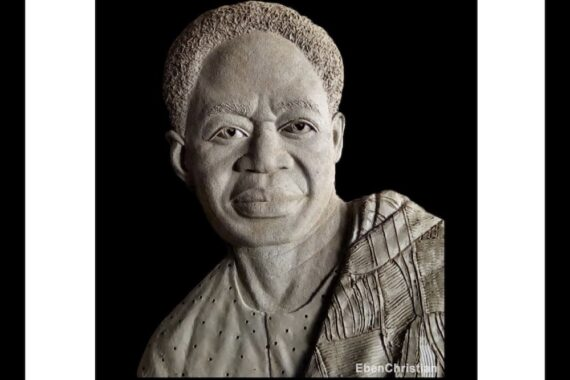
When Ghana’s Leaders Become Impressions in Clay
The Tribute Series: Flagstaff Edition turns political history into a tactile portrait of the republic, placing 13 heads of state on equal artistic ground.
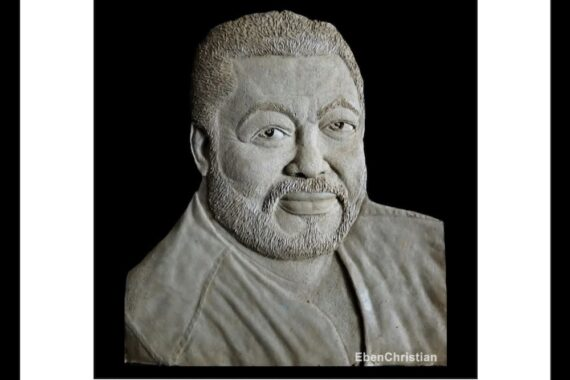
A nation can preserve its political memory in many ways: through archives, photographs, monuments and the stories passed from one generation to another. Ghanaian artist Ebenezer Christian has chosen a more tactile archive — clay.
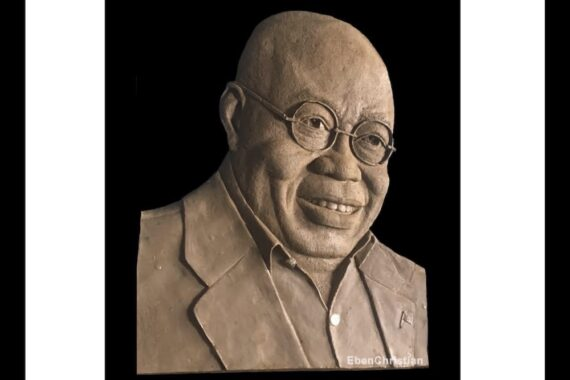
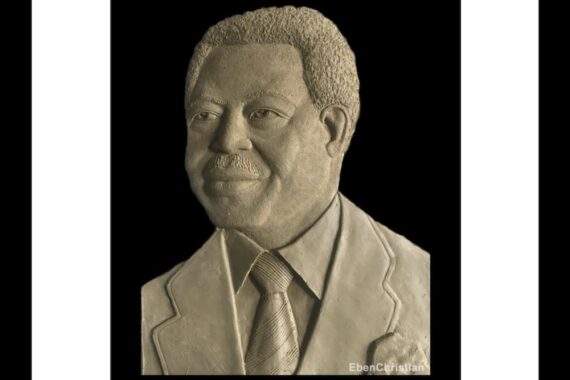
His Tribute Series: Flagstaff Edition brings 13 Ghanaian heads of state and presidents into a single visual timeline, from Osagyefo Dr. Kwame Nkrumah to Nana Addo Dankwa Akufo-Addo.
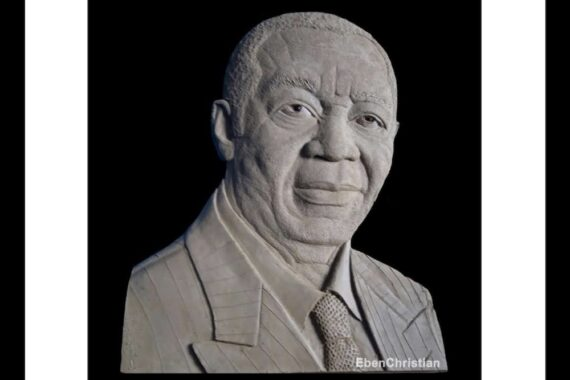
But the power of the collection lies not simply in who is represented. It is in the decision to give every face the same space.
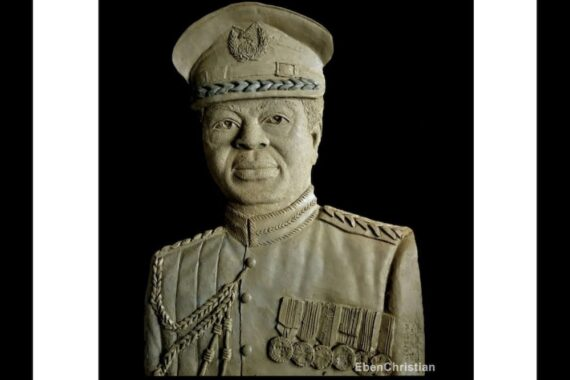
Created over 13 months, with roughly one month devoted to each leader, the relief busts transform political history into something viewers can almost feel.
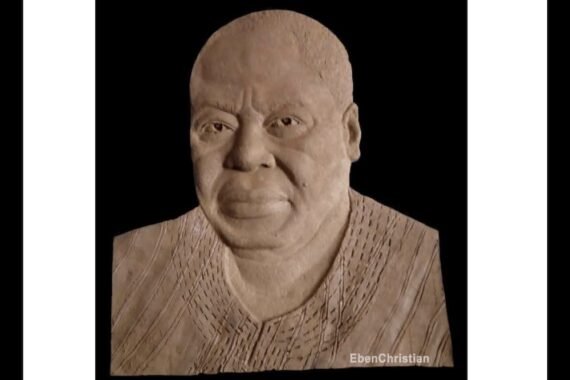
Measuring about 12 by 15 by 2 inches, the works sit between portraiture and sculpture, their shallow forms recalling the visual language of coins and other objects through which societies have traditionally commemorated important figures.
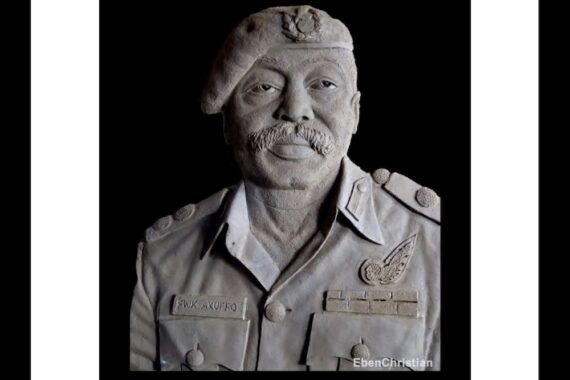
Christian’s use of relief also changes how these leaders are encountered. Rather than towering above the viewer as monumental figures, their faces seem pressed into the surface of history — close, human and strangely intimate.
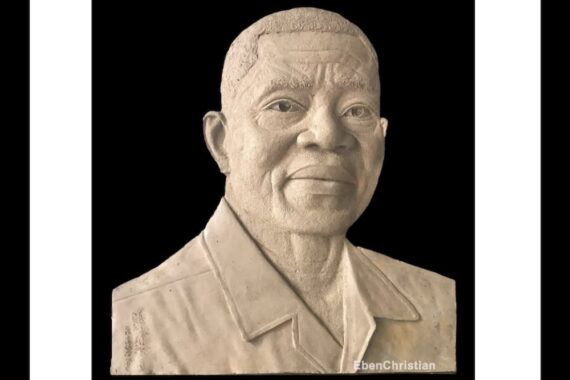
That equality is central to the series. Ghana’s leaders have left behind vastly different political legacies and public memories, yet Christian does not allow one face to dominate another.
Instead, the collection offers something quieter: a visual chronology of Ghana’s republican journey. In clay, power loses its distance, and history becomes something held, examined and remembered.

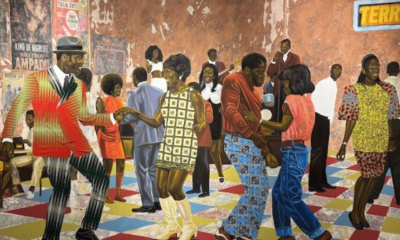






War photography often arrives from afar, bringing images of destruction, displacement, and death to audiences who may never encounter the conflict firsthand. Congo, Close to Home, however, offers a different kind of testimony.
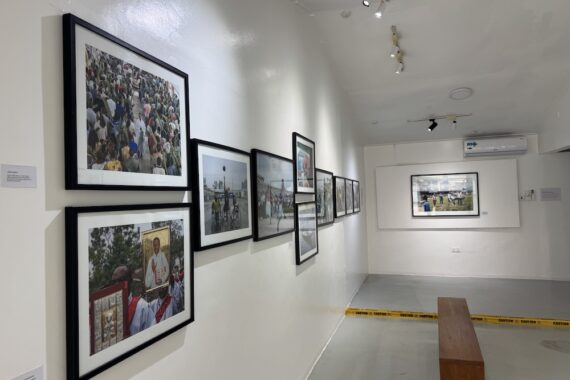
Presented at Dikan Gallery in Accra, the exhibition brings together the work of seven young Congolese photographers whose cameras remain embedded in the communities they document.
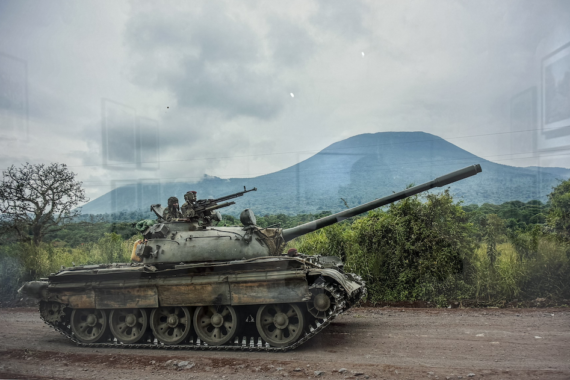
Aubin Mukoni, Arlette Bashizi, Gloire Chasinga, Guerchom Ndebo, Jospin Mwisha, Marie-Jeanne Munyerenkana, and Moses Sawasgwa photograph life in and around Goma, a city of more than a million people on the shores of Lake Kivu.
Living under the shadow of conflict and occupation since January 2025, they document a society confronting violence while refusing to surrender its ordinary rhythms.
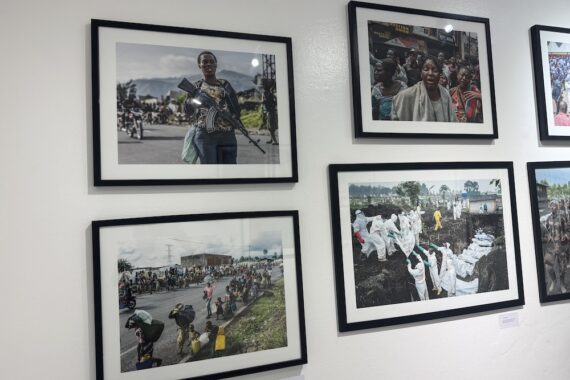
That tension gives the exhibition its emotional force. The photographs do not merely catalog war; they look at what unfolds alongside it. Markets continue.
People dance. Couples marry. Children play. Families mourn. Graves are dug. Daily life, in all its fragility and resilience, endures.
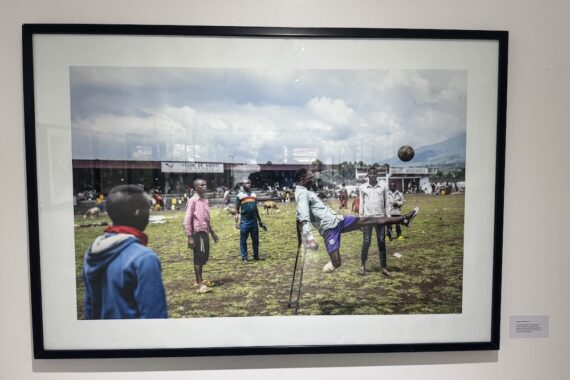
One particularly striking image shows a boy playing football on crutches at a camp for displaced people outside Goma.
It could easily be read solely through the language of tragedy, yet the football introduces another dimension: childhood endures even in circumstances that try to take it away.
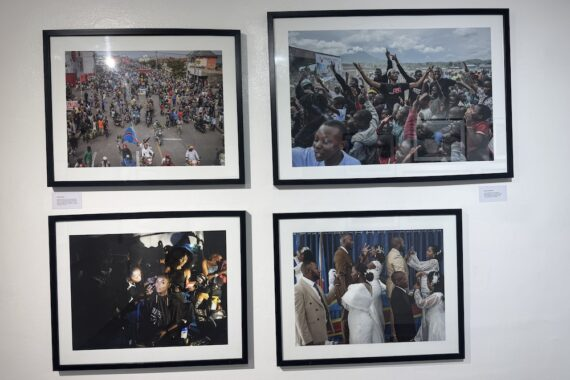
This is where the exhibition moves beyond conventional conflict photography. Its photographers are not visiting journalists passing through a crisis.
They are witnesses who live with the consequences of what they photograph. Their proximity creates an intimate visual record in which the line between photographer and subject blurs.
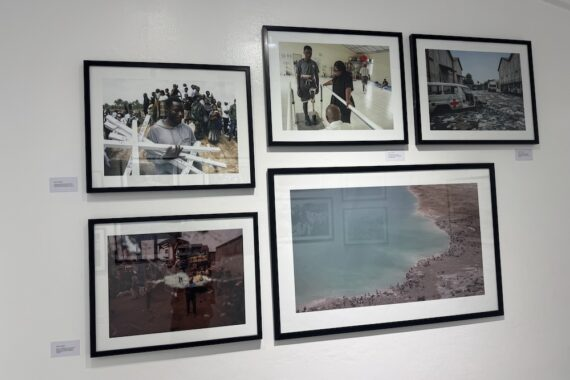
Curated by Paul Ninson, chief curator of Dikan Gallery, the exhibition also advances a deliberate geographic argument. Displaying these photographs in Accra reminds us that Congo is not some distant African crisis beyond the concerns of other Africans.
From Accra to Goma, the exhibition proposes a shared continental proximity—geographical, historical, and human.
There is also an important question of authorship. In an age when images of African conflict are frequently produced for international audiences, Congo, Close to Home places the camera in the hands of Congolese photographers.
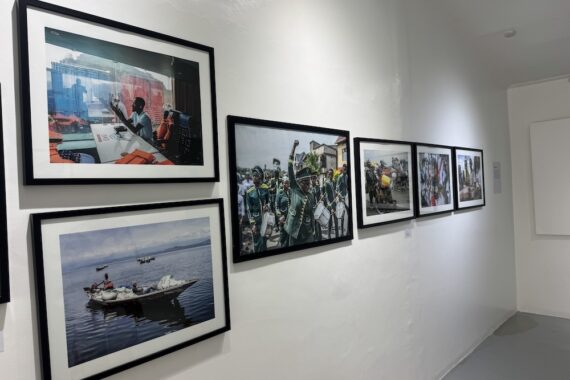
Their photographs therefore become personal documents as much as news images, preserving details that might otherwise disappear once international media attention shifts elsewhere.
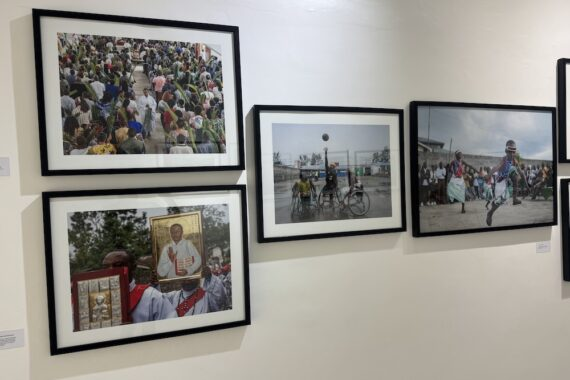
Ultimately, Congo, Close to Home is an exhibition about a city that is broken but not emptied of life. Its photographs insist that beyond the headlines and statistics are people who continue to love, work, celebrate, grieve, and dream.
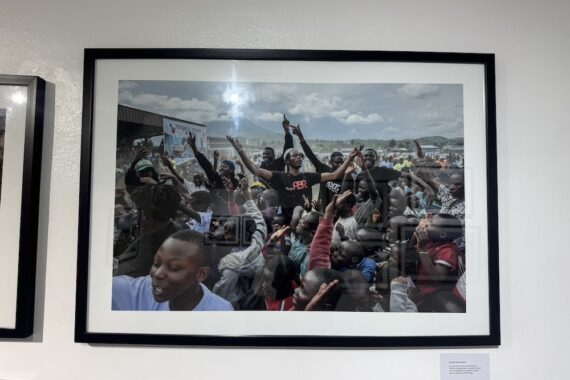
In that sense, the exhibition does more than document Congo’s war; it documents the stubborn persistence of life within it.
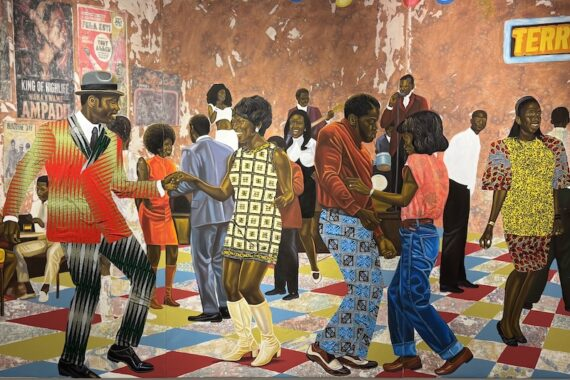
A wardrobe can hold more than clothes. A chair can remember a person. Even a photograph can carry traces of a life long after the moment it captured has disappeared.
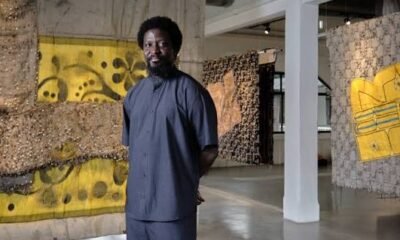
That quiet idea sits at the heart of Ghanaian artist Cornelius Annor’s What Stains, What Stays, currently showing at Gallery 1957 in Accra.
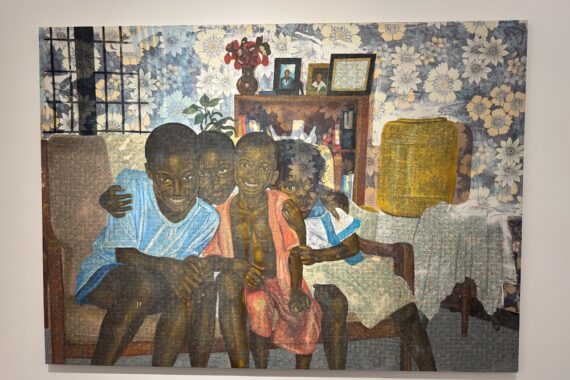
Curated by Ato Jackson, the exhibition explores memory through family photographs, domestic scenes and objects that often escape attention.
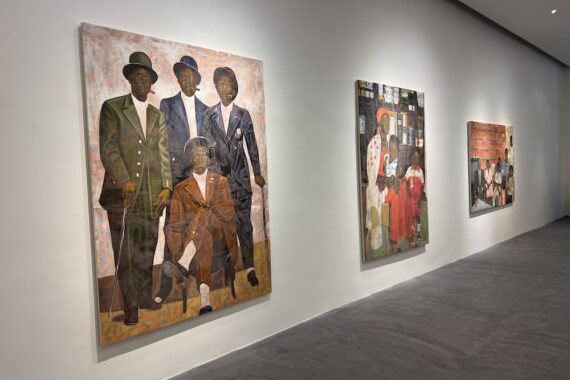
Annor transforms these fragments into paintings that feel less like records of the past than places where the past continues to live.
One of the exhibition’s most striking elements is his use of pigments drawn from African textiles. As the colours migrate onto canvas, they leave translucent marks and irregular stains. The technique becomes a metaphor for memory itself: never perfectly preserved, always shifting, overlapping and carrying traces of what came before.
Annor extends this thinking into furniture. Wardrobes, mirrors, drawers and chairs become witnesses to domestic life, holding associations that cannot always be photographed or documented. In Ghanaian homes, where objects are often closely tied to family histories and inheritance, this approach gives ordinary possessions a deeper cultural resonance.
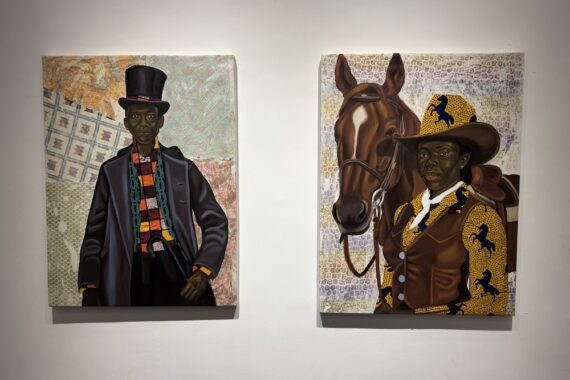
The exhibition becomes especially poignant through sculptures by Annor’s late father, introducing another layer of inheritance—one passed not only through artworks, but through proximity, observation and care.
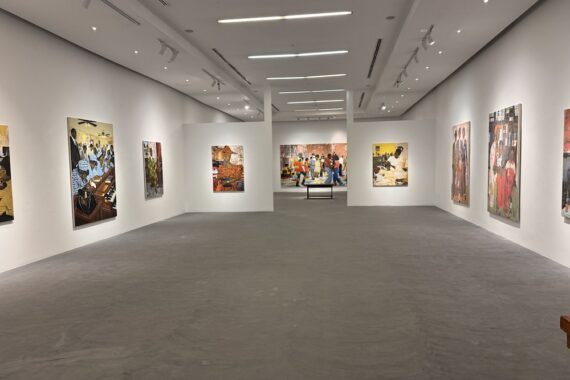
Annor once described his domestic objects as “frames or containers of a certain moment.” At Gallery 1957, those containers open again, asking what remains when memories begin to fade.
What Stains, What Stays runs until Saturday, November 7, 2026.
Arts and GH Heritage
From Ghana’s Coast to Naples: Ibrahim Mahama Turns Boats into Monuments of Memory
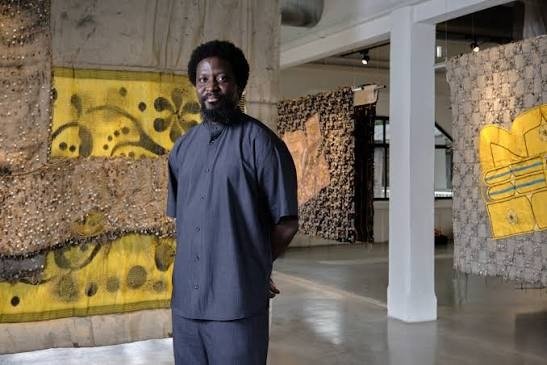
Three Ghanaian boats have arrived in Naples, but they are not going anywhere.
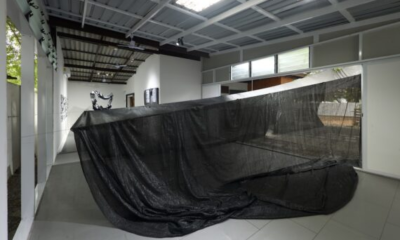
Standing upright at Piazza Municipio, near one of Italy’s busiest ports, the three wooden vessels rise five, seven and eight metres into the air.
Partly buried in the ground, they look as though a journey has been interrupted mid-voyage.
This is Voyageur, the latest work by Ghanaian contemporary artist Ibrahim Mahama, unveiled in Naples on September 21.
Built using traditional Ghanaian boat-making models and techniques, the installation brings a distinctly West African visual language into a Mediterranean landscape shaped for centuries by maritime trade, migration and encounters between peoples.
Mahama’s choice of the boat is significant. In Ghana, wooden fishing boats are an everyday sight along the coast, carrying fishermen into waters that sustain families and communities.
In Voyageur, however, the boat leaves its practical life behind. It becomes a record of movement — and of the human stories carried by movement.
Placed close to Naples’ port, the work creates an uneasy but compelling conversation between two coastlines. One looks towards the Atlantic; the other towards the Mediterranean. Between them are histories of commerce, displacement, opportunity and survival.
For Mahama, the boats evoke people crossing the sea in search of safety and better lives. But by placing them firmly in the earth, he also asks what remains when a journey ends: memory, loss, hope and the traces people leave behind.
Voyageur will remain in Naples until November 18, 2026 — three Ghanaian boats standing still, while inviting viewers to imagine all the journeys they represent.


Ghana Property & Lifestyle Expo Returns to Accra for a Decade of Opportunities

Ghanaian Tomato Stew: The Rich, Fragrant Sauce Everyone Should Try

Building in Stages? Why Your Concrete Slab Needs Protection Before the Next Floor
-
 Arts and GH Heritage2 days ago
Congo: Capturing Life Beyond War
-

 Sights and Sounds8 hours ago
Looking for a Different Day Out in Accra? Bambo’s Has You Covered
-

 Health & Wellness1 day ago
Your Body Is Still Working While You Sleep — And Your Sleep May Matter More Than You Think
-
 Homes & Real Estate8 hours ago
Building in Stages? Why Your Concrete Slab Needs Protection Before the Next Floor
-
 Taste GH2 hours ago
Ghanaian Tomato Stew: The Rich, Fragrant Sauce Everyone Should Try
-
 Festivals & Events2 hours ago
Ghana Property & Lifestyle Expo Returns to Accra for a Decade of Opportunities