
Arts and GH Heritage
The Blueprint of the Everyday: Why Accra’s True Architecture Lives Between the Gaps

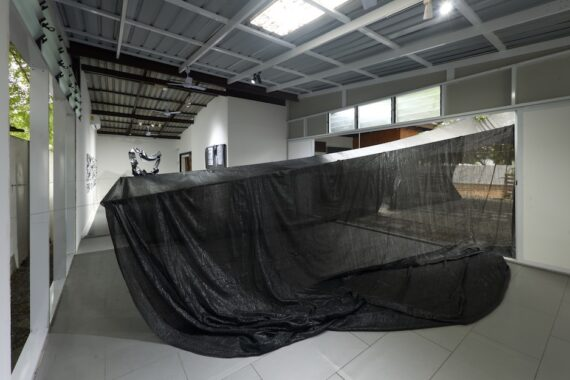
Walk through Makola Market at noon or step into a family compound in Kumasi, and you will see architecture that breathes.
It is not defined by steel beams set in stone, but by shade nets tilted against the afternoon sun, wooden stalls expanded on demand, and steel poles tied with tension cables.
Modernity often demands permanence, but West Africa’s built environment thrives on dynamic transformation.
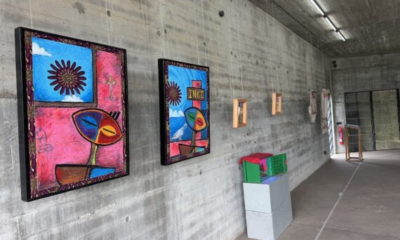
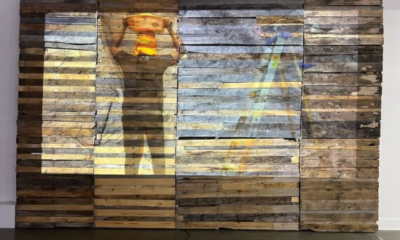
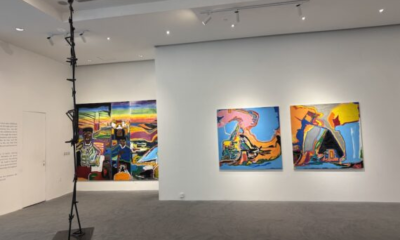
This living spatial wisdom took center stage at Accra’s Foundation for Contemporary Art (FCA-Ghana) during At the Interstice.
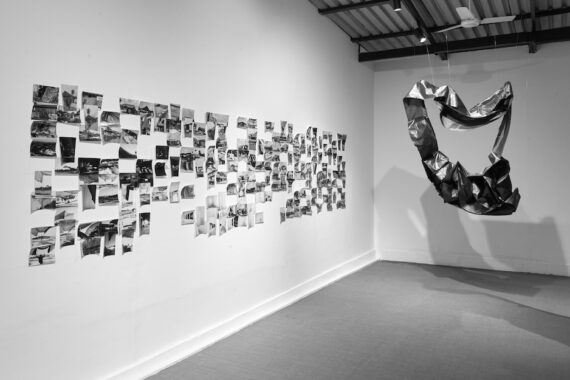
Positioned alongside the historic W.E.B. Du Bois Center for Pan-African Culture, the exhibition framed the “interstice”—the ambiguous gap between indoors and outdoors, institutional authority and informal survival—as the most fertile ground for contemporary design.
Rather than celebrating monuments crafted by celebrated architects, the intervention elevated the genius of ordinary citizens.
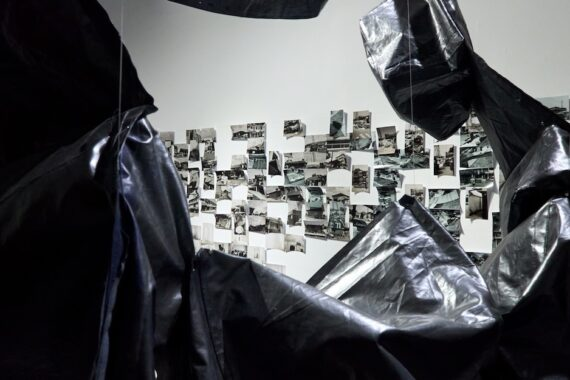
Sculptural fragments of found materials and photographic research demonstrated that resourcefulness is not merely a reaction to scarcity; it is a sophisticated civic practice.
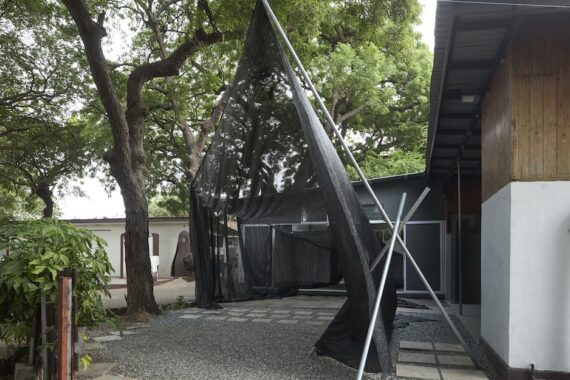
Across Ghana’s urban landscape, communities negotiate space collectively, retooling materials to mirror the shifting rhythms of daily life.
By treating impermanence as a strength rather than a flaw, the project challenges us to rethink who holds the authority to shape our cities.
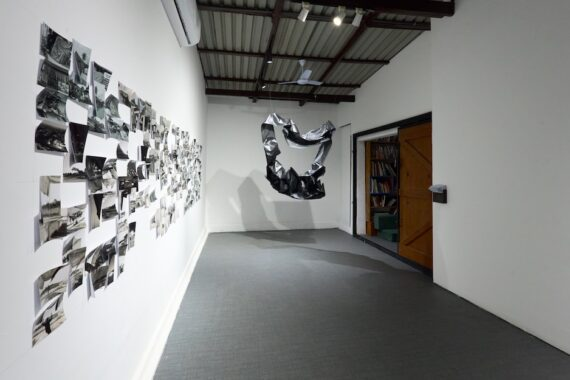
True architecture is never truly finished; it is an open-ended dialogue written daily by the people who inhabit it.







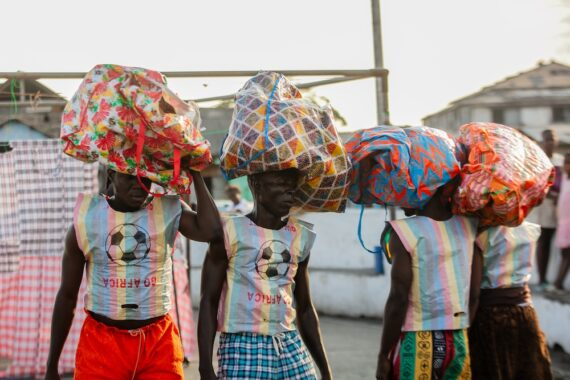
Lucky Lartey’s In Transit turns a familiar object into a powerful meditation on migration and belonging
Some houses are built with bricks. Lucky Lartey builds one from memory.
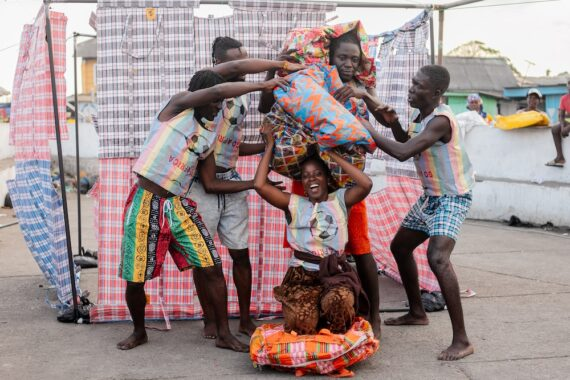
In In Transit, the Australian-based Ghanaian choreographer transforms the familiar Ghana Must Go bag into a miniature home, asking a question that echoes across generations of migrants: what happens when the thing that carries your belongings begins to carry your identity too?
Presented at Jamestown Roundabout Square on September 3 before four days of movement research, the evolving work places one of West Africa’s most recognisable objects at the centre of a conversation about displacement.
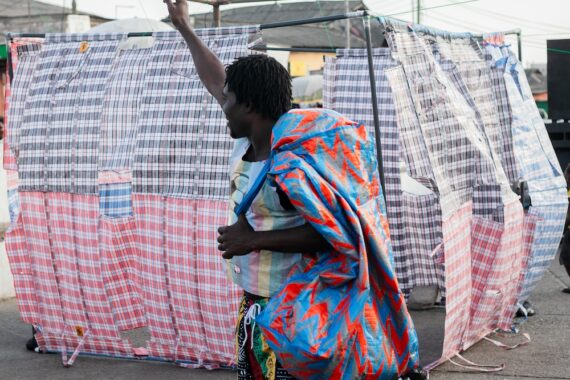
The striped woven bag, once associated with hurried departures during the 1983 expulsion of more than one million Ghanaians from Nigeria, becomes more than a prop. It becomes architecture.
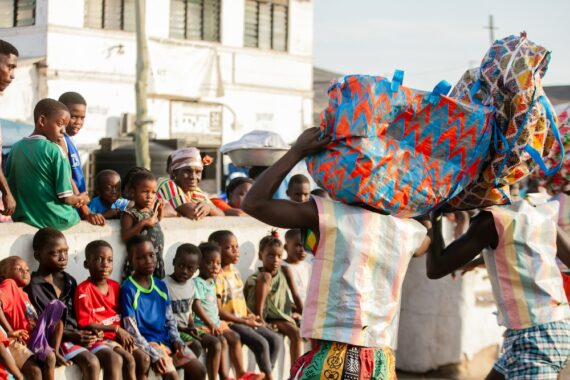
That reversal gives the performance its emotional force. A bag is meant for transit, while a house promises permanence.
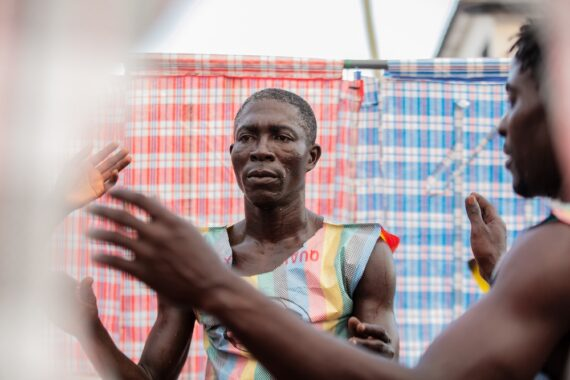
Lartey deliberately collapses those meanings, inviting dancers to move through gestures of carrying, searching, rebuilding and remembering until the body itself begins to resemble a temporary dwelling.
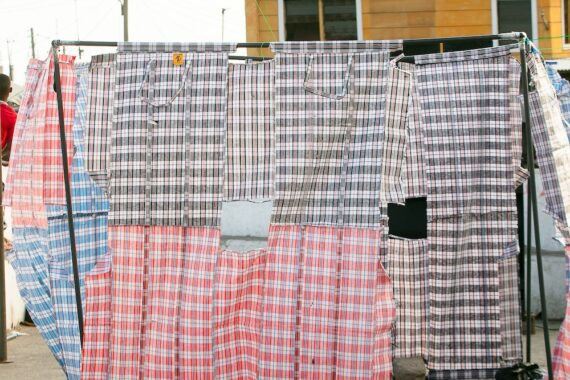
Jamestown is more than a backdrop. As one of Accra’s oldest coastal communities, shaped by centuries of trade, migration and cultural exchange, it grounds the work in a place where movement has long defined everyday life. The performance feels less like a reconstruction of history than a conversation with it.
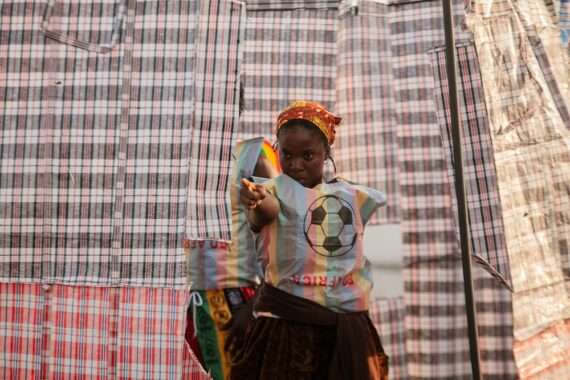
In Transit offers no neat resolution. Instead, it proposes that home may survive not as an address but as something stitched into muscle, memory and movement—a structure we continue building long after the journey begins.
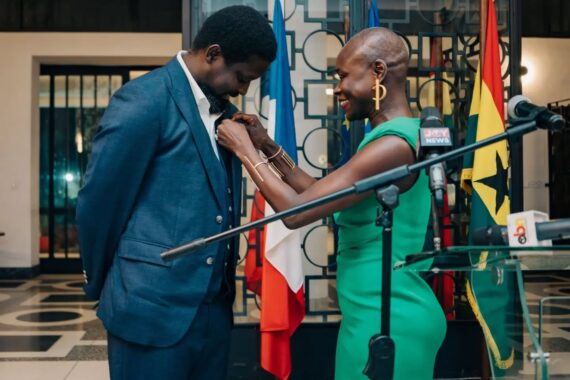
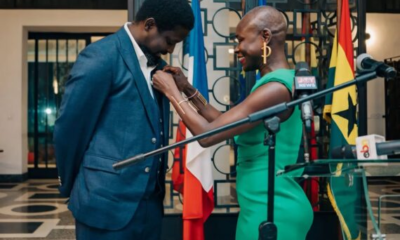
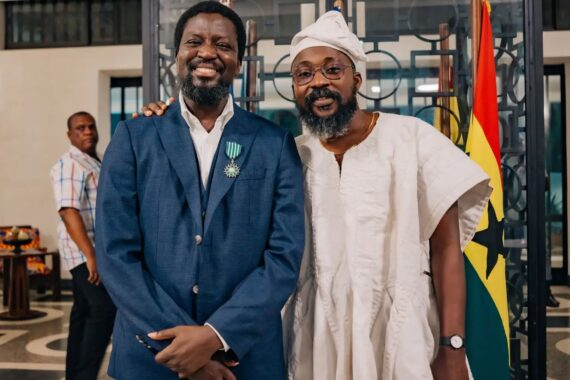
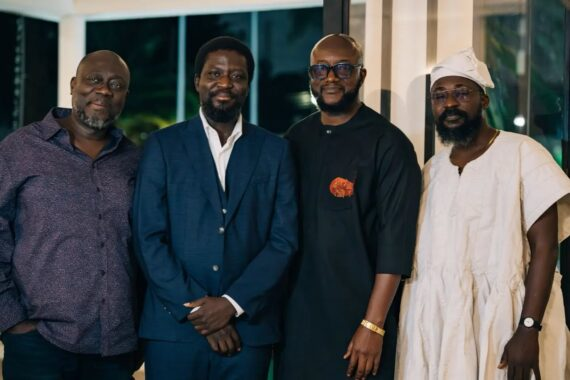
Internationally acclaimed Ghanaian artist Ibrahim Mahama was awarded the insignia of Chevalier de l’Ordre des Arts et des Lettres, one of France’s highest cultural distinctions, last week in recognition of his significant contribution to contemporary art and culture.
The decoration was presented last week by H.E. Mrs. Diarra Dimé Labille, France’s Ambassador to Ghana, ahead of Mahama’s first major exhibition in Paris, The Harvest Season, which opens at the Fondation Cartier pour l’art contemporain on October 22, 2026, and runs through February 28, 2027.
It represents official French recognition of an artist whose practice has increasingly shaped conversations about labor, trade, migration, colonial histories, and the global circulation of goods and people.
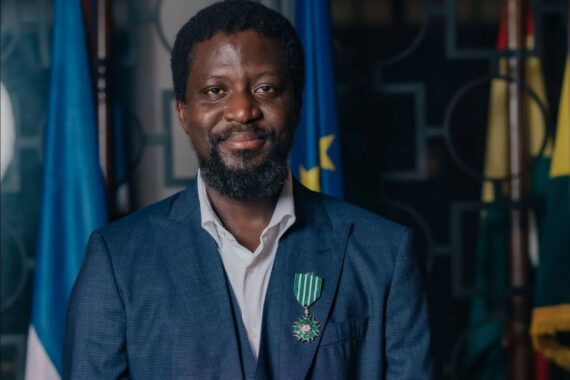
Mahama is widely regarded as one of the most influential voices in contemporary African art. He also became the first African artist to top ArtReview’s Power 100 and win the city of Kassel’s 2026 Arnold Bode Prize, further underscoring his growing influence in the international art world.
Indeed, earlier this year, he was honored as a Laureate by the Asantehene Otumfuo Osei Tutu II Art Awards, in recognition of his outstanding contributions to contemporary visual arts in Ghana and internationally.
His monumental, site-specific installations frequently transform materials associated with labor and commerce—including jute sacks, timber, discarded textiles, and industrial remnants—into expansive sculptural environments.
Through these materials, Mahama interrogates the economic systems and historical forces that have shaped societies, particularly the legacies of colonialism, extraction, and exploitation.
Over the past decade, he has become particularly known for his use of jute sacks and remnant textiles. In some of his most striking works, teams of workers stitch together materials connected to Ghana’s trading and agricultural economies, including leftover cloth from the cocoa industry, into enormous quilts that envelop buildings and other architectural structures.
Yet Mahama’s engagement with labor extends beyond the subject matter of his art. He has used his position in the global art world to create platforms for education, artistic production, and community development, establishing institutions and collaborative initiatives that seek to expand opportunities for artists and audiences in Ghana.
His exhibition history is extensive. Recent institutional presentations include Kunsthalle Bern (2025), Fruitmarket, Edinburgh, and Barbican Center, London (2024), Kunsthalle Osnabrück (2023), Frac des Pays de la Loire, Nantes (2022), and the University of Michigan Museum of Art (2020).
Earlier exhibitions include shows at The Whitworth, University of Manchester, and Norval Foundation, Cape Town (2019), Tel Aviv Museum of Art (2016), and the K.N.U.S.T. Museum, Kumasi (2013).
Mahama served as Artistic Director of the 35th Ljubljana Biennale of Graphic Arts in 2023 and received the inaugural Sam Gilliam Award from the Dia Art Foundation.
His work has also been featured prominently in major international exhibitions, including Sharjah Biennial 15, the 18th Biennale Architettura in Venice, and the 35th Bienal de São Paulo (all 2023); the Museum of Fine Arts, Houston (2021); the Centre Pompidou, Paris, and the 22nd Biennale of Sydney (2020); the 58th and 56th Biennale Arte in Venice (2019 and 2015); and Documenta 14 in Athens and Kassel (2017).
Based in Accra, Kumasi, and Tamale, Mahama has also invested significantly in building cultural infrastructure in northern Ghana. His artist-led initiatives include the Savannah Center for Contemporary Art (SCCA), established in 2019; Red Clay, founded in 2020; and, most recently, Nkrumah Volini, all in Tamale. Together, these spaces have helped broaden the geography of contemporary art in Ghana and created new platforms for exhibitions, research, education, and public engagement.
Established in 1957, France’s Ordre des Arts et des Lettres holds a distinguished place in the country’s cultural policy. The order recognizes individuals who have made exceptional contributions to enriching and promoting the arts and culture in France and internationally.
For Mahama, the French honor arrives at a significant moment in an already remarkable career.
As The Harvest Season prepares to bring his expansive artistic vision to Paris, the distinction underscores an artist whose work continues to connect Ghana’s histories of labor, trade, and extraction with the wider structures of the contemporary world.
Arts and GH Heritage
The KNUST Dean Who Rewrote the Rules of Art Education Wins 2026 Prince Claus Impact Award
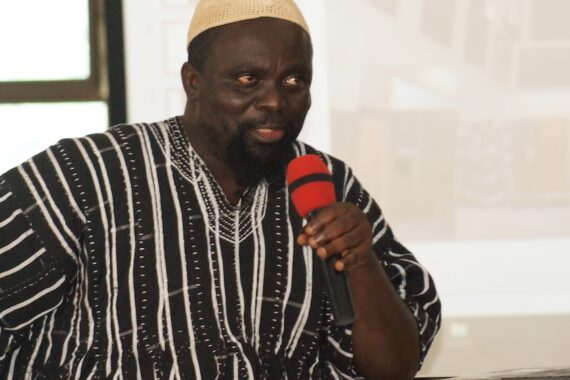
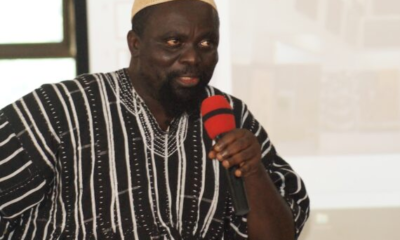
One of Prof. karî’kachä seid’ou’s most revealing observations is that he considers himself “exiled from the North Atlantic.”
It is a witty phrase, but it also captures a career built on an unusual conviction: that world-changing ideas do not need to leave Africa to matter.
That philosophy has now earned the Dean of KNUST’s Faculty of Art the 2026 Prince Claus Impact Award, recognising more than two decades of reshaping how art is taught, created and understood.
Rewriting who gets to define art
Rather than placing painting or sculpture at the top of an artistic hierarchy, seid’ou’s Emancipatory Art Teaching Project encouraged students to experiment across disciplines and collaborate across generations.
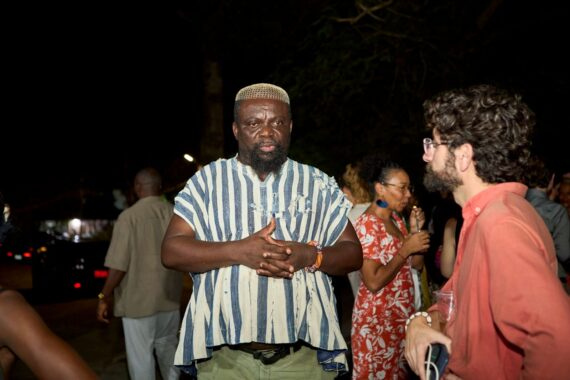
The initiative grew beyond the classroom into exhibitions, research projects and creative communities that challenged inherited ideas about who has the authority to define art.
Its influence transformed KNUST’s fine-art curriculum, producing artists, curators, scholars and educators who now shape Ghana’s contemporary art scene and contribute to wider conversations about decolonial practice across Africa.
A Ghanaian vision with global reach
His impact has drawn attention from publications including African Arts, ArtReview, The New York Times, The Guardian and the Financial Times.
The community-driven collective blaxTARLINES, which he co-founded, has appeared on ArtReview’s Power 100 list for four consecutive years.
As the Prince Claus Fund marks 30 years of celebrating changemakers, seid’ou’s recognition highlights something larger than an individual achievement.
It affirms that some of the world’s most influential cultural ideas are being imagined, debated and refined from Kumasi—and that Ghana’s classrooms can be as transformative as any global museum.


The Art of the Everyday Print: Why Modern African Style Is Ditching the Ceremony

The Blueprint of the Everyday: Why Accra’s True Architecture Lives Between the Gaps

Weaving Royalty: How Agotime’s Kente Festival Celebrates Living History
-
 Ghana News2 days ago
“It Slipped Through”: Ghana Customs Boss Admits Airport Security Failure After 3.9-Ton Drug Bust
-
 Opinion2 days ago
African Blood for Other People’s War?
-

 Global Update2 days ago
White House Launches ‘Trump TV’ on YouTube After Banning Three News Outlets: Here’s What It’s Showing
-

 Ghana News23 hours ago
From Cocoa to Batteries: Ghana’s Industrial Dream and Its Risks
-

 Ghana News23 hours ago
How Ghanaian-Born Professor Kofi Akamani Was Fatally Shot During Custody Exchange
-
 Ghana News23 hours ago
Ghana Parliament Faces Emergency Recall Over Heightening Narcotics Crisis
-

 Health & Wellness2 days ago
Muscle Modernity: Why Lifting Heavy Is the Missing Key to Midlife Longevity
-

 Festivals & Events1 day ago
Bridging Dreams and Degrees: Inside Accra’s Premier International Study Abroad Fair