
Perspectives
Flu shots: how scientists around the world cooperate to choose the strains to vaccinate against each year


Twice a year, 40 scientists gather together for five days to decide what strains of influenza to vaccinate against for the next flu season.
It takes around six months to prepare the vaccine – which usually includes protection against three different strains of flu. So in February, the group’s decision affects the northern hemisphere’s flu season, and in September, it’s about the southern hemisphere.
Europe and the US are heading into a flu season that some are warning could be particularly severe this winter. While even as summer approaches in Australia, the country is still registering high numbers of cases after a record-breaking flu season earlier in the year.
So how does the process of deciding on a flu vaccine each year actually work? And does what happens in the southern hemisphere influence the way the virus circulates in the northern hemisphere?
In this episode ofThe Conversation Weekly podcast, we speak to Ian Barr, deputy director for the WHO Collaborating Centre for Reference and Research on Influenza, based at the Peter Doherty Institute for Infection and Immunity, part of the University of Melbourne. Barr is one of those 40 scientists who attend the meetings to decide what strains to focus vaccination efforts on.
After a tour around his lab, Barr explains how the different parts of the global flu monitoring system cooperate – and why it can be misleading to think that what happens in the southern hemisphere influences the northern hemisphere, and vice versa. Barr says that might be the case in some years – including in 2025 – but in “other years, I think it’s less clear that the viruses are coming from south to north … they may come from other places that have had unseasonable outbreaks during the summer or autumn.”
Listen to the interview with Ian Barr on The Conversation Weekly podcast.
This episode of The Conversation Weekly was written and produced by Gemma Ware and Mend Mariwany with assistance from Katie Flood. Mixing by Michelle Macklem and theme music by Neeta Sarl.
Newsclip in this episode from 7News Australia.
Listen to The Conversation Weekly via any of the apps listed above, download it directly via our RSS feed or find out how else to listen here. A transcript of this episode is available via the Apple Podcasts or Spotify apps.
Gemma Ware, Host, The Conversation Weekly Podcast, The Conversation
This article is republished from The Conversation under a Creative Commons license. Read the original article.








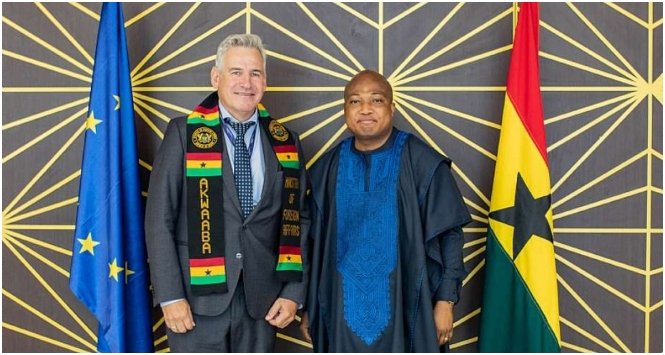
In this open letter to the European Union Ambassador to Ghana, policy analyst Seth Kwame Awuku condemns the EU’s abstention from UNGA Resolution A/80/L.48—a Ghana-led resolution naming the transatlantic slave trade a crime against humanity. Awuku argues that Europe’s silence, masked by legal technicalities, constitutes a moral evasion that wounds the possibility of true partnership.
To the EU Ambassador: The Triple Wound of Silence
By Seth Kwame Awuku
Ghana speaks from the depths of ancestral memory – will Europe answer with the poetry of conscience, or the cold prose of abstention?
To: His Excellency, Ambassador of the European Union to Ghana
Subject: Ghana’s Leadership on Reparative Justice and the EU’s Abstention on UNGA Resolution A/80/L.48
Your Excellency,
History does not forget. It merely waits – patient as the Atlantic, restless as the spirits of the Middle Passage – for the silenced to reclaim their voice.
On 25 March 2026, even as Ghana and the European Union formalized a new pact of cooperation, the United Nations became a theatre of reckoning. Ghana, carrying the scars and the soul of a continent, led Resolution A/80/L.48. It passed with 123 votes in favor, only three against, and 52 abstentions – the entire European Union among them.
The resolution does not invent new truths. It simply names what was long softened by euphemism: the transatlantic trafficking in human beings and the racialized chattel enslavement of millions as among the gravest crimes against humanity – a profound violation of jus cogens, those peremptory norms that no civilization may forever evade.
And yet Europe abstained.
How does one reconcile this? A Europe that adorns itself in the robes of enlightenment, human rights, and moral universality suddenly finds its voice faltering when confronted with the chains it once forged, the ships it once commanded, and the fortunes it once harvested from African blood and bone.
President John Dramani Mahama cut through the veils with piercing clarity:
“Truth begins with language. There was no such thing as a slave , there were human beings who were trafficked and enslaved.”
Foreign Minister Samuel Okudzeto Ablakwa reminded the world that this was no solitary lament, but the collective heartbeat of Africa.
The response was telling. The African Union and CARICOM stood united. Arab and Muslim-majority nations lent their voices. Even Russia added its weight. Most strikingly, the two most populous nations on earth – China and India – stood firmly in favor, joining the global majority that now numbers well over half of humanity.
Europe, meanwhile, retreated behind the familiar shield of legal technicalities – non-retroactivity, hierarchies of suffering, the comforting arithmetic of intertemporal law.
Yet some wounds run too deep for procedural salve. When millions were reduced to cargo across the bitter sea, when entire societies were bled to fuel another continent’s ascent, morality does not dissolve merely because the laws of that era looked the other way. Silence, in the face of such a triple wound – capture, crossing, and commodification – is not neutrality. It is an echo of the old evasion.
Ghana seeks no vengeance cloaked in justice. We extend an open hand: for honest dialogue on apology, for the restitution of stolen cultural souls, for guarantees that yesterday’s dehumanization finds no new masks in our time.
This is the triple heritage we bear: Africa’s ancient resilience, the open wound of yesterday, and the shared moral burden for tomorrow.
Your Excellency, true partnership between Europe and Africa cannot take root in the barren soil of selective amnesia. It must be nourished by truth, watered by memory, and protected by the courage to face history without flinching.
Will Europe persist in the comfort of abstention, or will it rise to the higher poetry of genuine engagement?
The eyes of Africa, the restless spirits of the ancestors, the billions represented by China and India, and generations yet unborn are watching.
The choice, as ever, rests with Europe.
Yours in the restless pursuit of a more honest humanity,
Seth K. Awuku.
About Seth K. Awuku
Policy analyst, writer, poet, and former immigration and refugee law practitioner in Canada; He writes on law, governance, diplomacy and international relations. He is Principal, Sovereign Advisory Ltd, Takoradi.
Email: sethawuku.sa@gmail.com
Tel: 0243022027
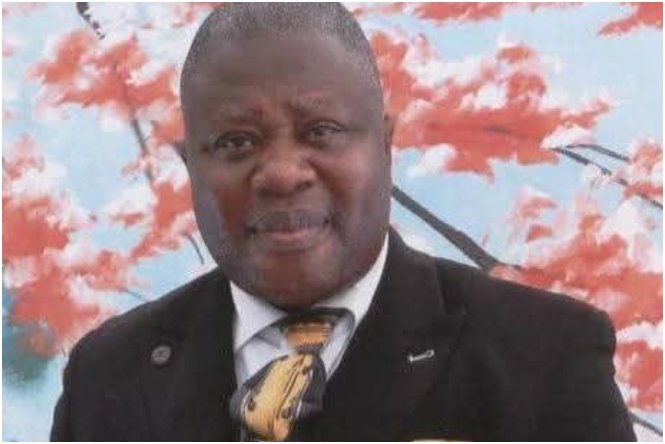
In this thoughtful opinion piece, Seth Kwame Awuku reflects on Ghana’s leadership in the recent UN resolution declaring the transatlantic slave trade the gravest crime against humanity. He responds to Minority Leader Alexander Afenyo-Markin’s remarks highlighting African complicity in the trade, arguing that while internal agency must be acknowledged, it should not overshadow the industrial scale, systematic brutality, and long-term dehumanisation driven primarily by European powers.
Between Memory and Partnership: Ghana’s Moral Test on Reparatory Justice
By Seth Kwame Awuku
There are moments in a nation’s life that call less for outrage than for honest reflection.
The recent remarks by Minority Leader Alexander Afenyo-Markin on reparatory justice offer precisely such a moment. Measured in tone yet unflinching in substance, his intervention deserves careful consideration as Ghana weighs its relationship with history, memory, and international diplomacy.
In Parliament, Afenyo-Markin posed a pointed question: “Somebody parks a vessel at Cape Coast, and you go to the North, to Brong, Ashanti, Assin… [and apprehend the strongest among your own people]. Then, after 100 years, you say you should be compensated – who should compensate whom?” He added that “we maltreated our own and told the white man that he must also maltreat our own.”
The latter claim somewhat overstates the case – Ghanaians did not “tell” Europeans to maltreat their kin – but his broader point highlights an uncomfortable complexity: African agency and complicity in the capture and sale of fellow Africans. Acknowledging this reality does not negate the case for reparations, nor does it justify Western reluctance to confront their role.
However, overemphasizing internal complicity risks obscuring the scale and character of the transatlantic slave trade.
To his credit, Afenyo-Markin explicitly condemned “the inhumane treatment – the humiliation, injustice, marginalisation, and abuse of our ancestors who became victims of the slave trade.”
This tension, moral recognition without a corresponding commitment to meaningful redress, lies at the heart of the current debate, particularly in the wake of Ghana’s leadership at the United Nations.
Recognizing the transatlantic slave trade as a crime against humanity is, at its core, about establishing historical and moral truth. Yes, some African actors participated in the trade.
But the enterprise was externally driven, massively scaled, and ruthlessly industrialized by European powers. What began as localized capture and sale evolved into a vast system of chattel slavery, sustained by the horrors of the Middle Passage and generations of hereditary bondage. The vivid brutality portrayed in Roots, through the story of Kunta Kinte, stripped of name, culture, and dignity, captures not merely forced labor, but a deliberate and enduring project of dehumanization.
Ghana, as custodian of these painful memories, carries a unique symbolic weight. Its coastal slave forts- Cape Coast Castle, Elmina, and others- stand as solemn reminders of both unimaginable suffering and the uneasy partnerships that enabled it. Reparatory justice therefore demands moral consistency: does acknowledgment alone suffice, or must it extend to material and structural redress for the enduring legacies of slavery and colonialism?
The Minority Leader’s emphasis on practical national interests is understandable. Ghana must sustain strong diplomatic and economic partnerships with Western nations. Yet an overemphasis on African complicity can inadvertently weaken the moral claim, allowing historical accountability to give way to diplomatic convenience.
Serious advocates of reparatory justice do not deny African agency; rather, they situate it within its proper historical context. While some local actors profited from the sale of captives, it was Europe that industrialized the trade, accumulated immense wealth from it, and later entrenched colonial systems whose effects persist.
Ghana’s challenge, then, is to strike a careful balance: pragmatic diplomacy on one hand, and Pan-African ethical conviction on the other. This balance is most credible when grounded in historical clarity and moral courage, the kind embodied by thinkers such as Kwame Nkrumah and Ali Mazrui.
Ghana must now choose with clarity and conviction. Pragmatic partnerships need not come at the expense of historical justice. True leadership demands confronting the full truth of the slave trade, both the painful African role and the overwhelming European responsibility, without allowing discomfort to dilute moral purpose.
At this quiet crossroads, Ghana should lead not by equivocation, but by insisting that reparatory justice is not an act of charity, but a rightful claim grounded in truth, dignity, and the unfinished business of history. Only by upholding principle alongside partnership can we honour our ancestors and secure a future rooted in genuine equity.
About the Author
Seth Kwame Awuku is a Ghanaian writer and policy commentator with a background in law, political science, and international relations. He writes on governance, diplomacy, and questions of historical justice in Africa.
Principal, Sovereign Advisory Ltd
Takoradi, Ghana
Email: sethawuku.sa@gmail.com
Tel: +233 24 302 2027
Opinion
Why Ghanaian Officials Must Know About and Prepare for the Hidden Risks of a Mass Black American Return to Ghana


Ghana has, in recent years, positioned itself as a spiritual and cultural home for the global African diaspora. From the Year of Return to sustained “Beyond the Return” campaigns, the country has actively invited Black Americans and others in the diaspora to reconnect, invest, and, in some cases, resettle.
The vision is powerful: a historic reconnection, economic collaboration, and a reimagining of Pan-African unity. But if that return becomes mass and sustained, it will not unfold in a vacuum. It will bring with it a complex set of cultural, political, and economic tensions that—if unaddressed—could strain the very unity it seeks to build.
The question is not whether return is desirable. It is whether Ghana is prepared for the social consequences of return at scale.
Belonging vs Reality: Who Gets to Be “Home”?
At the heart of the return movement lies a deeply emotional idea: that Ghana is “home” for descendants of the transatlantic slave trade. Scholars in Diaspora Studies, including Paul Gilroy, have long described this as a form of symbolic belonging—rooted in history, identity, and shared ancestry.
But symbolic belonging does not always translate into lived belonging.
For many Ghanaians, “home” is not an abstract idea—it is a lived reality shaped by language, social norms, and everyday struggles. A large influx of returnees may therefore create friction around identity: Who is considered Ghanaian? Who has the right to shape its culture?
These tensions have surfaced in other return contexts across West Africa, where diaspora communities were at times viewed as culturally distant or economically privileged outsiders. In Liberia, a long-standing and rigid class structure between diasporans returning home and locals contributed in no small way to a debilitating civil war that the country is still reeling from. While the “return home” situations in Liberia were somewhat different from Ghana’s current situation, the same socioeconomic disparities that broke the country could happen here in Ghana.
If unmanaged, the emotional promise of “return” could give way to questions of legitimacy and belonging.
When Value Systems Collide
Perhaps the most sensitive fault line lies in values.
Many Black American returnees come from societies where liberal individual rights—particularly around gender, sexuality, and self-expression—are more publicly accepted. In contrast, Ghana’s social fabric is deeply influenced by religion and tradition
This disparity in values creates a potential clash not just of opinions, but of moral frameworks.
Debates around LGBTQ rights, for example, are not merely political in Ghana—they are often framed as spiritual and communal concerns. Public advocacy or visibility by returnees could therefore be interpreted not as personal expression, but as cultural imposition.
Philosopher Kwame Anthony Appiah has argued for a cosmopolitan approach that allows for moral dialogue across cultures. But dialogue requires mutual recognition. Without it, value differences can quickly harden into cultural conflict. Beyond simply informing diasporan returnees about the legal and social realities surrounding LGBTQ+ issues in Ghana, there must also be a deliberate effort to foster understanding of prevailing Ghanaian cultural norms—even as space remains for respectful dialogue and coexistence.
The Economics of Return: Opportunity or Displacement?
Return is not just cultural—it is economic.
Diaspora communities often arrive with stronger currencies, access to capital, and global networks. In cities like Accra, this can accelerate investment in real estate, hospitality, and the creative economy.
But economic inflows can also produce unintended consequences.
Urban scholars studying Gentrification warn that capital-driven development often raises property values, pricing out local residents. Already, parts of Accra have seen rising rents and the emergence of lifestyle enclaves catering to affluent newcomers.
At the same time, returnees may enter sectors—media, tech, tourism—where young Ghanaians are also seeking opportunity, creating perceptions of competition rather than collaboration.
If the benefits of return are not broadly distributed, economic optimism could quickly give way to resentment. This is the moment for the Parliament of Ghana to draft—or strengthen—legislation governing diaspora return, land access, and economic participation. Beyond lawmaking, sustained public engagement will be essential: structured forums, community workshops, and targeted media campaigns aimed at educating both returnees and local communities.
Politics and the Question of Influence
As return deepens, so too will questions of political voice.
Should returnees have voting rights? Should they influence public policy? How much say should non-resident or newly resident citizens have in shaping national debates?
These are not abstract questions. They sit at the intersection of sovereignty and identity, long examined within Political Sociology and Transnationalism. Man is a political animal!
A politically active diaspora can bring fresh ideas, advocacy, and global attention. But it can also trigger suspicion—particularly if local populations perceive external influence as overriding domestic priorities.
In a polarized global environment, even well-intentioned activism can be recast as interference. Ghana needs to tap into extant best practices and either adopt them or adapt them to the Ghanaian situation.
Class, Perception, and the Risk of Social Distance
Not all tensions are ideological. Some are simply about perception. Different forms of capital—economic, cultural, social—shape power and status.
Returnees may possess global cultural capital (education, accent, networks) that elevates their social standing, even when their actual wealth varies.
This can create social distance.
Exclusive neighborhoods, curated social spaces, and “diaspora bubbles” risk reinforcing a divide between locals and returnees. Over time, stereotypes can take hold on both sides—of entitlement, of exclusion, of misunderstanding.
And once social distance sets in, even minor disagreements can escalate into broader tensions.
Building Harmony Is Not Automatic
None of these tensions are inevitable. But neither are they imaginary.
If Ghana is to sustain a large-scale return movement, it must move beyond celebration to preparation.
That means:
– Structured cultural orientation for returnees
– Policies that encourage joint economic participation, not displacement
– Clear legal frameworks around rights and responsibilities
– Public dialogue platforms involving religious leaders, scholars, and civil society
– Media narratives that humanize both locals and returnees
Above all, it requires a shift in mindset: from assuming unity to actively building it.
A Shared Future, If Carefully Built
The return of the diaspora is one of the most compelling stories of the 21st century—a chance to reconnect history with possibility.
But unity cannot be based on sentiment alone.
It must be negotiated across differences in culture, values, and power. It must recognize that “home” is not just a place of origin, but a living society with its own rhythms and realities.
If Ghana can navigate these complexities, it has the opportunity to model a new kind of global belonging—one that is honest about its tensions, and deliberate about its harmony.
If not, the promise of return could become a source of division rather than renewal.


Renowned Global Bodies Warn Middle East War Will Scuttle Africa’s 2026 Growth

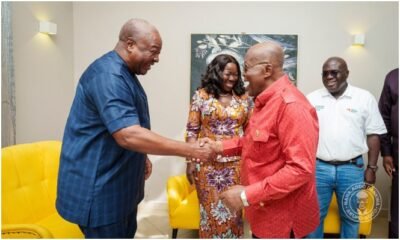
Ex-President Akufo-Addo and President Mahama Exchange Pleasantries on Easter

Mahama Calls Christ’s Birthplace an ‘Epicentre of War’, New Airport Concourse Planned and Other Big Stories in Ghana Today
-
 Ghana News1 day ago
Ghana President Convenes Emergency Cabinet Meeting to Cushion Ghanaians from Soaring Fuel Prices
-
 Ghana News1 day ago
Mahama Calls Christ’s Birthplace an ‘Epicentre of War’, New Airport Concourse Planned and Other Big Stories in Ghana Today
-
 Ghana News1 day ago
Ex-President Akufo-Addo and President Mahama Exchange Pleasantries on Easter
-
 Business1 day ago
Renowned Global Bodies Warn Middle East War Will Scuttle Africa’s 2026 Growth