
Culture
“You’re Supposed to Be Creating Jobs”: Ghana’s Ministry of Creative Arts Under Fire for Using AI Instead of Real Creatives For New Ad

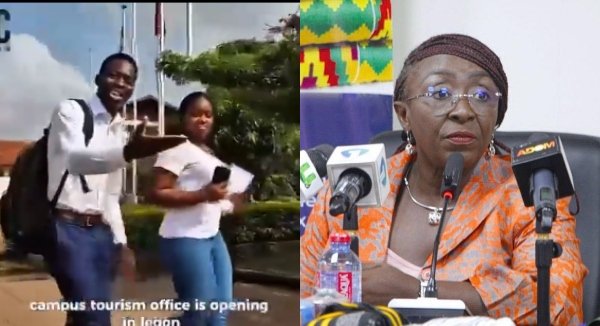
The Ministry of Tourism, Culture and Creative Arts is facing intense backlash after releasing an AI-generated promotional video for a campus tourism office launch—the third time in less than a month the ministry has been dragged on social media for using artificial intelligence instead of engaging real human creatives.
The controversy erupted on March 3, 2026, when the Ghana Tourism Marketplace Twitter account posted a video promoting the launch of the Ghana Tourism Development Company’s new campus tourism office at the University of Ghana, Legon.
The video featured two AI-generated characters discussing the new office with stilted dialogue and uncanny valley visuals that immediately drew public criticism.
But for many Ghanaians, the video wasn’t just aesthetically off-putting—it represented a fundamental betrayal of the ministry’s core mandate.
‘Creative Arts’ in Name Only?
“If you are the Ministry of Creative Arts, you need to be very creative. You need to set the standard,” one social media user posted in response to the video. “And if your standard is not there, then it’s some way.”
The criticism strikes at the heart of an uncomfortable contradiction: a ministry with “creative arts” in its official title appears to be bypassing living, breathing Ghanaian creatives in favor of algorithm-generated content.
“Someone said there are tens of thousands of real students on campus and you still chose AI generated people for a tourism campaign that should be highlighting authenticity,” a blogger noted, quoting online reactions. “What are we doing here?”
The University of Ghana, where the campus tourism office was launched, houses departments in Theater Arts, Creative Arts, and related fields—students who could have been paid for their work.
“It’s disappointing that the Ghana Tourism account is using AI for adverts when we have talented students studying theater arts who could handle this work,” another user wrote. “How much would it really cost to engage young creatives and tech students?”
A Pattern of Controversy
This is not the ministry’s first AI-related misstep. Just weeks earlier, on February 10, the Ministry of Tourism, Culture and Creative Arts faced similar backlash over an AI-generated poster for a special recognition ceremony honoring Hamamat, following her “shea butter ambassador” event with social media personality IShowSpeed.
“Everybody look at the flyer and say that ‘ah, is this a joke or what?'” the Ghanaian blogger recounted. “This one wasn’t going well at all.”
The flyer, shared by Ghana Tourism Authority Deputy CEO Abeiku Aggrey Santana among others, appeared official but bore the hallmarks of AI-generated imagery—a shortcut that critics say undermines the very industries the ministry exists to support.
A February 20 flyer for the campus tourism office launch escaped similar criticism—but the March 3 video brought renewed scrutiny.
The Job Creation Question
Beyond the aesthetic concerns, critics point to the economic implications. A traditional video production would employ multiple Ghanaians: actors, a sound technician, videographer, video editor, makeup artist, and costume designers.
“Imagine the number of people who could have gotten something to eat from this,” the entertainment blogger observed. “AI has cleared all these people. It’s just one person sitting behind the computer entering prompts.”
For a ministry tasked with nurturing Ghana’s creative economy, the choice to use AI-generated content sends a troubling message about its commitment to the very industries it oversees.
“What’s the essence of paying the tourism tax and levy if you are going to use prompts for arts?” one user demanded. “So much for government trying to invest in the creative arts sector.”
Students Show the Way
Adding to the sting of the controversy, social media users were quick to highlight examples of student work that far surpassed the ministry’s AI-generated effort.
“Look at what students from the same school did for their project work and compare it to the rubbish you people have done,” one comment read, sharing a video created by University of Ghana students as part of their academic work.
The comparison underscored what many see as a missed opportunity: the ministry could have commissioned students, providing both quality content and valuable experience—and payment—to young Ghanaians entering the creative field.
A Dissenting View
Not everyone agrees the criticism is fair. One social media user defended the use of AI, suggesting detractors haven’t accepted technological reality.
“The fact that people are complaining about the use of AI and not real human beings suggests that people have still not fully understood the times we live in,” the user posted. “This is it, man. This is it. People will lose jobs, opportunities, etc. to AI and its advanced versions. Live with it.”
When They Get It Right
To be fair, the ministry has demonstrated it can produce quality work. Past campaigns—including Fugu Wednesday artwork, Heritage Month launch visuals, and Love and Coco Month promotions—have received positive feedback.
“It’s not like they always doing bad things,” the blogger acknowledged. “If you go to their Facebook page, you will see a lot of good stuff over there.”
But the repeated controversies—approximately one per month, critics note—suggest a systemic issue rather than isolated missteps.
Official Silence
As of this writing, the Ghana Tourism Authority has not deleted the controversial video nor issued a statement addressing the backlash. The video remains live on the Ghana Tourism Marketplace Twitter account, posted on the day of the campus office launch.
“Some people are insulting them. Some people are expressing their disappointment in a very demure way,” the blogger observed. “What about you? What do you think about it?”
For an industry watching technology transform creative work at unprecedented speed, the question is more than rhetorical. In a ministry charged with both promoting tourism and nurturing Ghana’s creative sector, every choice sends a signal about whose work—and which workers—truly matter.
The answer, for now, remains as unclear as the line between AI-generated characters and the real Ghanaians they’ve replaced.













If you blinked, you missed it. Between Monday’s rush and Wednesday’s lunch, Ghana’s social media forgot about cocoa prices, forgot about politics, and spent two full days arguing about a Russian man none of us had heard of before.
The Yaytseslav Situation
His name is Vyacheslav Trahov. Online, he goes by Yaytseslav. And for 48 hours, he owned Ghanaian Twitter.
The man walked around Accra Mall with Meta glasses, approached women, struck up conversations, and filmed everything. Some ended up at his apartment. Some ended up on his Telegram channel, where subscribers pay $5 a month for content too explicit for YouTube.
By Tuesday, the timeline had split into factions. One side called the women “cheap.” Another side pointed out the obvious: a foreigner secretly filming intimate encounters and monetising them without consent isn’t exposing anything except his own criminality.
By Wednesday evening, the Russian was reportedly deleting Ghana content from his channels. The consensus? Ghanaians don’t play that game.
Meanwhile, the 5G News Dropped
Buried under the Russian drama, Next Gen Infraco quietly launched commercial 5G operations. Available in parts of Accra, Kumasi, and Tamale now. Nationwide coverage promised by March 2027, just in time for Ghana @70.
The Duabo King Lesson
The same week, TikToker Duabo King learned that views have consequences. He posted a video accusing Kumasi police officers of misconduct with commercial workers. Under interrogation, he admitted fabricating the whole thing. Just wanted to trend.
He’s now in police custody—the charge: publication of false news with intent to cause fear and panic.
And Heritage Month Started
March 3 kicked off Heritage Month 2026 with a simple call from the Tourism Minister: See Ghana, Eat Ghana, Wear Ghana, Feel Ghana. Culinary showcases, regattas, and festivals running through March. Probably worth more attention than a Russian with a hidden camera.
But the algorithm decides, doesn’t it?
There is a building in Kumasi where the gate does not just open. It speaks.
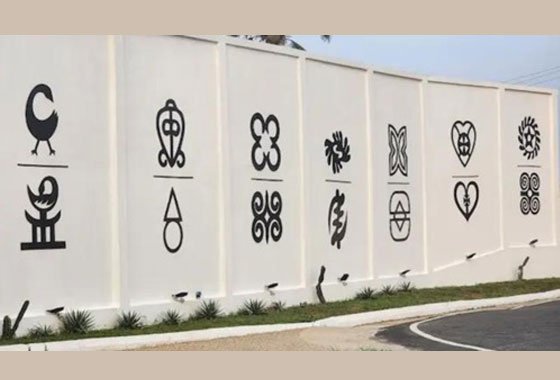
Wrought into the iron, before you even step inside, is the symbol Bi Nka Bi. It means “no one should bite the other.” You do not read it in a book. You feel it as you walk through. The building itself is telling you how to behave while you are in its presence.
This is the quiet work of Adinkra symbols in Ghana today. They are no longer just stamped on cloth for funerals and festivals. They have moved into the walls. Into the floors. Into the places where we live, work, and gather. And they are speaking to us whether we notice or not.
From Funeral Cloth to Foundation
Adinkra started somewhere else entirely. The word itself comes from di nkra, meaning to say goodbye. The stamped patterns on cloth were once messages for the departed, a way of sending loved ones off with wisdom tucked into the fabric.
But symbols that carry meaning do not stay in one place for long. Slowly, they slipped off the cloth and into the world.
Walk through almost any public building in Accra or Kumasi today and you will see them. Gye Nyame on the wall of a church, reminding everyone inside who is in charge. Sankofa carved into the entrance of a school, telling students before they even sit down that the past is not finished with them yet. Funtumfunafu Denkyemfunafu, the conjoined crocodiles, on the floor of a community hall, whispering that even in competition, we share the same stomach.
The Architects Who Listened
There was a moment, somewhere in the last twenty years, when Ghanaian architects stopped copying glass boxes from Dubai and started looking at their own feet.
They realized that a building in Ghana should not look like any other building. It should carry the weight of where it sits. So they began asking questions. What if the railings carried Nyansapo (the knot of wisdom)? What if the courtyard was laid out in the shape of Ese Ne Tekrema (the teeth and the tongue), reminding people that even when they disagree, they must live together?
The work of people like Joe Osae-Addo and others in the Ghanaian architecture scene has pushed this forward. Not by forcing tradition onto modern buildings, but by letting the symbols find their natural place. A Sankofa on a school gate is not a decoration. It is a lesson that does not need a teacher.
What the Walls Are Saying
If you pay attention, the symbols start to read like a map of Ghanaian values.
Gye Nyame appears where people need reassurance—churches, mosques, even the front of some trotro stations. Dwennimmen, the ram’s horns, show up at courts and council buildings, reminding officials to be strong but humble. Mate Masie, meaning “what I hear, I keep,” sits quietly in libraries and archives.
The buildings are not just shelters. They are philosophy made visible.
Why It Matters Now
There is a reason this is happening during Adinkra Month, and there is a reason it matters beyond our borders.
The world is hungry for meaning. Everywhere, people are tired of buildings that look like airports, that feel like nothing. When a tourist walks into a hotel in Accra and sees Akoma (the heart) woven into the terrazzo floor, they are not just seeing a pattern. They are standing in a culture that decided not to forget itself.
For Ghanaians, it is something else. It is a reminder that we do not need to import identity. It is already in the ground. In the iron. In the wall.
Next time you walk into a building, look down. Look at the gate. Look at the pillars. There is a symbol there, and it has been waiting for you to notice.
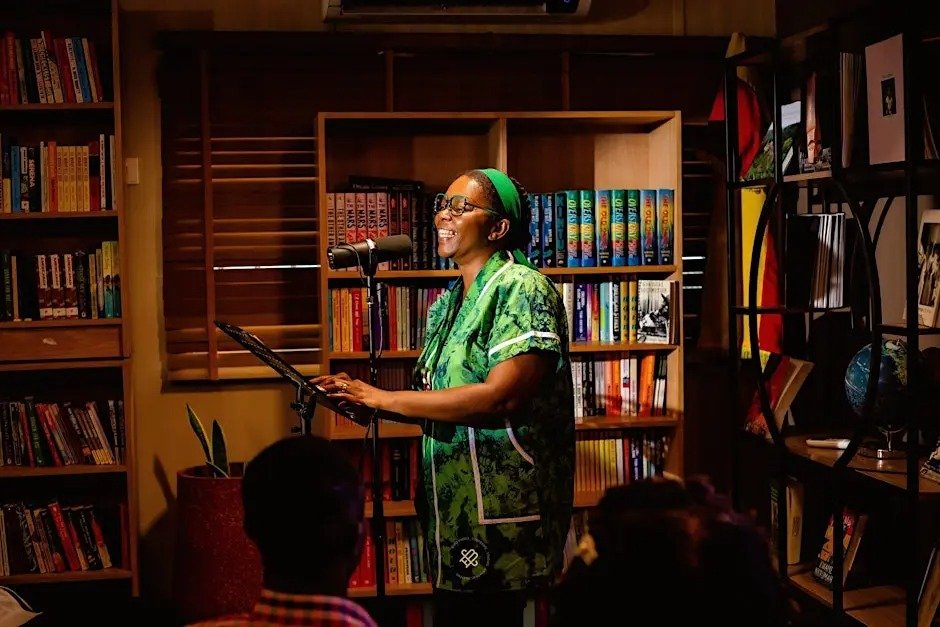
On 6 March, the official programme will proceed as usual. Speeches. A parade. Schoolchildren standing in the sun. It is important, yes. But if you want to feel independent, not just watch it, there is another place you should be.
The day after the flags go up, on Saturday, 7 March, a different kind of celebration is taking over East Legon. It is called Our Heritage through Music and Literature. And it is built on a simple idea: that Ghana’s freedom did not just happen in a conference room in 1957. It happens every time we tell our own stories.
Where the Stories Live
The event runs from midday until evening at the e-Ananse Library. If you do not know the name, you should. Ananse is the spider. The storyteller. The trickster who taught us that words have power. Holding an independence celebration in a place named after him tells you everything about what this day will feel like.
It opens with something quiet but necessary. A reading from Poetra Asantewa’s book, Someone Birthed Them Broken, put together with the Bibliophiles and Vibes Book Club. Before the music starts, before the crowd grows, there will be people sitting with a book, asking themselves what it means to be Ghanaian right now. That is the foundation.
Games That Remember
Between the literature and the music, the organisers have made space for something we do not do enough anymore. Play.
There will be outdoor and indoor Ghanaian games. The kind our parents played before screens arrived. It sounds simple. But watch a child learn ampe from an elder, or watch a tourist try to figure out our local board games, and you will see something shift. Culture passes from hand to hand in those moments. No lecture required.
Poetry That Listens
As the sun softens, the poets take over. Ancestors Answer Me is the name of the session, curated by Creatives Project Ghana. Four poets will stand up and try to connect the people who came before to the questions we are asking now. It could get heavy. It could get beautiful. Probably both.
The Evening Belongs to the Musicians
Then, the music.
TSIE, whose voice carries the weight of highlife and the lightness of now. Elsie Raad, who moves between genres like someone who refuses to be pinned down. Koo Kumi and Mr. Poetivist, both carrying the torch for spoken word and sound.
They will play acoustic. No heavy bass to drown out the thinking. Just voices and instruments, asking you to listen.
Why You Should Come
If you are visiting Ghana, you could spend your Independence Day weekend at a hotel pool. You would miss nothing but heat. Or you could come here, to East Legon, and sit in a room with people who are still figuring out what freedom means.
If you are Ghanaian, you could stay home. Or you could bring yourself and your questions to a place where we use music and words to do what Ananse always did—remind ourselves that the story is not over yet.
Date: Saturday, 7 March
Time: 12 pm – 8 pm
Location: e-Ananse Library, East Legon, Accra


“You’re Supposed to Be Creating Jobs”: Ghana’s Ministry of Creative Arts Under Fire for Using AI Instead of Real Creatives For New Ad

Ghana’s Upcoming 5G Rollout to Open Door for Better Enterprise Solutions

US Tells Stranded Americans in Middle East: Don’t Rely on Government for Evacuation
-
 Fashion & Style2 days ago
The New Wave of “Afro-Minimalism”: Redefining Luxury Beyond the Print
-

 Ghana News2 days ago
Ghana’s Top Muslim Leader Condemns Khamenei Assassination, Calls for New World Order Based on ‘Right Over Might’
-
 Sights and Sounds1 day ago
Beyond the Summit: What They Don‘t Tell You About Climbing Ghana’s Mountain Afadjato
-
 Ghana News1 day ago
Ghana Intensifies Middle East Evacuation Efforts as Gulf States Reel from Iranian Retaliatory Strikes
-
 Business1 day ago
Ghana Records 14th Straight Drop in Inflation, Hits 3.3% in February 2026
-

 Ghana News1 day ago
U.S. Embassy in Accra Opens More Than 2,000 Visa Appointment Slots and Other Trending Stories in Ghana (March 4, 2026)
-

 Ghana News1 day ago
Newspaper Headlines Today: Wednesday, March 4, 2026
-

 Ghana News2 days ago
Ibrahim Mahama Acquires New $70 Million Private Jet