
Opinion
Why Ghanaian Officials Must Know About and Prepare for the Hidden Risks of a Mass Black American Return to Ghana


Ghana has, in recent years, positioned itself as a spiritual and cultural home for the global African diaspora. From the Year of Return to sustained “Beyond the Return” campaigns, the country has actively invited Black Americans and others in the diaspora to reconnect, invest, and, in some cases, resettle.
The vision is powerful: a historic reconnection, economic collaboration, and a reimagining of Pan-African unity. But if that return becomes mass and sustained, it will not unfold in a vacuum. It will bring with it a complex set of cultural, political, and economic tensions that—if unaddressed—could strain the very unity it seeks to build.
The question is not whether return is desirable. It is whether Ghana is prepared for the social consequences of return at scale.
Belonging vs Reality: Who Gets to Be “Home”?
At the heart of the return movement lies a deeply emotional idea: that Ghana is “home” for descendants of the transatlantic slave trade. Scholars in Diaspora Studies, including Paul Gilroy, have long described this as a form of symbolic belonging—rooted in history, identity, and shared ancestry.
But symbolic belonging does not always translate into lived belonging.
For many Ghanaians, “home” is not an abstract idea—it is a lived reality shaped by language, social norms, and everyday struggles. A large influx of returnees may therefore create friction around identity: Who is considered Ghanaian? Who has the right to shape its culture?
These tensions have surfaced in other return contexts across West Africa, where diaspora communities were at times viewed as culturally distant or economically privileged outsiders. In Liberia, a long-standing and rigid class structure between diasporans returning home and locals contributed in no small way to a debilitating civil war that the country is still reeling from. While the “return home” situations in Liberia were somewhat different from Ghana’s current situation, the same socioeconomic disparities that broke the country could happen here in Ghana.
If unmanaged, the emotional promise of “return” could give way to questions of legitimacy and belonging.
When Value Systems Collide
Perhaps the most sensitive fault line lies in values.
Many Black American returnees come from societies where liberal individual rights—particularly around gender, sexuality, and self-expression—are more publicly accepted. In contrast, Ghana’s social fabric is deeply influenced by religion and tradition
This disparity in values creates a potential clash not just of opinions, but of moral frameworks.
Debates around LGBTQ rights, for example, are not merely political in Ghana—they are often framed as spiritual and communal concerns. Public advocacy or visibility by returnees could therefore be interpreted not as personal expression, but as cultural imposition.
Philosopher Kwame Anthony Appiah has argued for a cosmopolitan approach that allows for moral dialogue across cultures. But dialogue requires mutual recognition. Without it, value differences can quickly harden into cultural conflict. Beyond simply informing diasporan returnees about the legal and social realities surrounding LGBTQ+ issues in Ghana, there must also be a deliberate effort to foster understanding of prevailing Ghanaian cultural norms—even as space remains for respectful dialogue and coexistence.
The Economics of Return: Opportunity or Displacement?
Return is not just cultural—it is economic.
Diaspora communities often arrive with stronger currencies, access to capital, and global networks. In cities like Accra, this can accelerate investment in real estate, hospitality, and the creative economy.
But economic inflows can also produce unintended consequences.
Urban scholars studying Gentrification warn that capital-driven development often raises property values, pricing out local residents. Already, parts of Accra have seen rising rents and the emergence of lifestyle enclaves catering to affluent newcomers.
At the same time, returnees may enter sectors—media, tech, tourism—where young Ghanaians are also seeking opportunity, creating perceptions of competition rather than collaboration.
If the benefits of return are not broadly distributed, economic optimism could quickly give way to resentment. This is the moment for the Parliament of Ghana to draft—or strengthen—legislation governing diaspora return, land access, and economic participation. Beyond lawmaking, sustained public engagement will be essential: structured forums, community workshops, and targeted media campaigns aimed at educating both returnees and local communities.
Politics and the Question of Influence
As return deepens, so too will questions of political voice.
Should returnees have voting rights? Should they influence public policy? How much say should non-resident or newly resident citizens have in shaping national debates?
These are not abstract questions. They sit at the intersection of sovereignty and identity, long examined within Political Sociology and Transnationalism. Man is a political animal!
A politically active diaspora can bring fresh ideas, advocacy, and global attention. But it can also trigger suspicion—particularly if local populations perceive external influence as overriding domestic priorities.
In a polarized global environment, even well-intentioned activism can be recast as interference. Ghana needs to tap into extant best practices and either adopt them or adapt them to the Ghanaian situation.
Class, Perception, and the Risk of Social Distance
Not all tensions are ideological. Some are simply about perception. Different forms of capital—economic, cultural, social—shape power and status.
Returnees may possess global cultural capital (education, accent, networks) that elevates their social standing, even when their actual wealth varies.
This can create social distance.
Exclusive neighborhoods, curated social spaces, and “diaspora bubbles” risk reinforcing a divide between locals and returnees. Over time, stereotypes can take hold on both sides—of entitlement, of exclusion, of misunderstanding.
And once social distance sets in, even minor disagreements can escalate into broader tensions.
Building Harmony Is Not Automatic
None of these tensions are inevitable. But neither are they imaginary.
If Ghana is to sustain a large-scale return movement, it must move beyond celebration to preparation.
That means:
– Structured cultural orientation for returnees
– Policies that encourage joint economic participation, not displacement
– Clear legal frameworks around rights and responsibilities
– Public dialogue platforms involving religious leaders, scholars, and civil society
– Media narratives that humanize both locals and returnees
Above all, it requires a shift in mindset: from assuming unity to actively building it.
A Shared Future, If Carefully Built
The return of the diaspora is one of the most compelling stories of the 21st century—a chance to reconnect history with possibility.
But unity cannot be based on sentiment alone.
It must be negotiated across differences in culture, values, and power. It must recognize that “home” is not just a place of origin, but a living society with its own rhythms and realities.
If Ghana can navigate these complexities, it has the opportunity to model a new kind of global belonging—one that is honest about its tensions, and deliberate about its harmony.
If not, the promise of return could become a source of division rather than renewal.











In a sharply critical analysis published in early 2026, Bright Simons argues that a powerful consortium of politically connected “Big Men” has quietly positioned itself to assume the role of primary financier for the Ghana Gold Board (GoldBod), effectively sidelining the Bank of Ghana (BoG) from a function it has performed since the Board’s creation.
Bright Simons is a renowned Ghanaian technologist, social innovator, entrepreneur, writer, social and political commentator. He is the vice-president, in charge of research at IMANI Centre for Policy and Education. He is also the founder and president of mPedigree.
In the didactic article, Simons contends that the arrangement — which he describes as a de facto privatization of GoldBod’s funding mechanism — involves private entities advancing large sums to purchase gold from small-scale miners and artisanal producers, then receiving repayment (with interest or fees) from future GoldBod sales or government allocations.
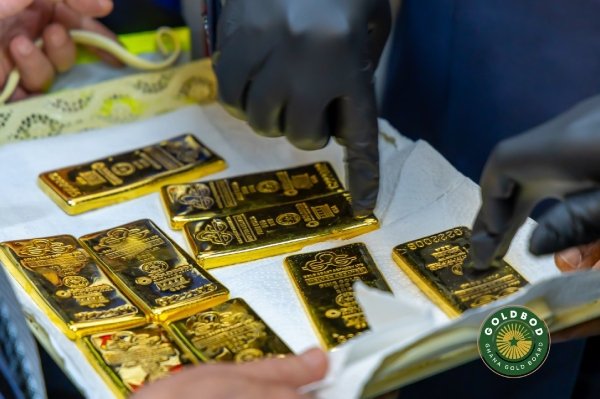
This, he warns, creates a high-risk dependency on politically exposed persons and their networks, exposing the state to potential rent-seeking, opaque debt accumulation, and conflicts of interest.
Simons concludes that if left unchecked, the arrangement could erode public confidence in GoldBod and expose the national treasury to contingent liabilities that benefit a narrow circle of powerful actors rather than the broader Ghanaian economy.
The full article, titled, “Big Men Have Brought a Deal to Take Over from BoG in Financing GoldBod” is published here.
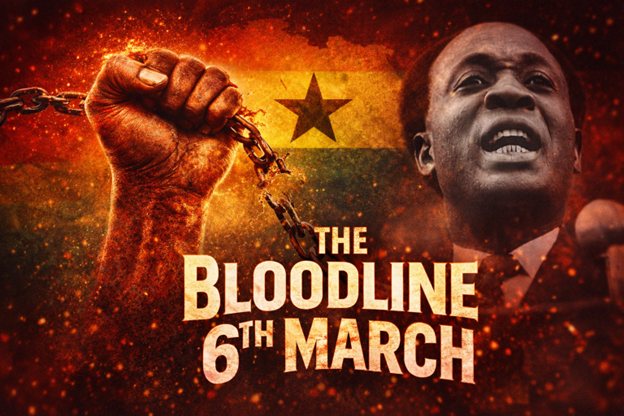
In a powerful opinion piece titled “The Bloodline of March 6th,” Ghanaian writer and cultural commentator Emmanuel Creppy traces a profound historical thread connecting the 1844 Bond of 1844 to Ghana’s independence in 1957, arguing that the date was no coincidence but a deliberate act of historical continuity and unfinished resistance.
The bloodline of March 6th
By Emmanuel Creppy
As a young man, I sat at the feet of my grandparents, listening to the rhythmic cadence of their voices as they spoke of heroes. In those moments, I didn’t just hear names; I felt the presence of giants. I grew up believing these men were “superheroes,” men who stood up when the world expected them to kneel.
But as I grew older, I noticed a painful void. When I turned on the television or browsed global streaming platforms, the stories of my ancestors were either missing or told through distorted lenses—glorifying the wrong moments or softening the edges of our resistance. That silence is no longer acceptable.
1844 — Before 1957
Under immense military, political, and economic pressure, several coastal chiefs signed what became known as the Bond of 1844. Some signed under duress, uncertainty, or the hope of survival within a tightening colonial grip. Others believed compromise was the only available shield.
But among them, King Kaku Ackah I of Nzema refused.
He understood something simple but dangerous: freedom cannot be borrowed. Once sovereignty is diluted on paper, generations inherit the cost. For that refusal, he was isolated and removed—not because he was weak, but because defiance exposes systems.
He did not end colonial rule. But he refused to legitimize it. And sometimes, refusal itself is history’s first reply.
The 113-Year Reply
History does not forget—it waits.
In 1957, when Kwame Nkrumah of Nkroful, a son of Nzema soil, declared Ghana independent, he was not only ending colonial rule. He was responding to unfinished resistance.
Whether by strategy or symbolism, choosing March 6 closed a historical loop that began in 1844. This was not a coincidence. It was continuity. A grandson finishing work began before his birth.
Where sovereignty was wounded in 1844, it was restored in 1957. Where one Nzema king stood alone, another son of the same soil stood with a nation.
But Nkrumah did not stand alone. The independence movement was a coalition of forces—educated elites, traditional rulers, market women, ex-servicemen, and youth across the Gold Coast. Figures like Eduardo Mondlane, though Mozambican, found solidarity in Accra’s rising Pan-African energy; George Padmore from Trinidad helped shape Nkrumah’s vision; J.B. Danquah and the Big Six, despite later political divergences, provided the intellectual and organizational architecture that made mass mobilization possible.
The United Gold Coast Convention (UGCC) and later the Convention People’s Party (CPP) were vessels carrying the hopes of millions—not one man, not one lineage, but a people awakening to their collective power.
And yet, there is something that still moves me about that Nzema thread—that a king from that soil refused in 1844, and a son of that same soil declared freedom in 1957. It tells me that resistance, even when it seems to fail, plants seeds. The bloodline of March 6th is not just about who gave birth to whom. It is about who remembered. Who refused to let the story die.
This is the African spirit—suppressed, delayed, but never defeated.
A Call to the Creative Tribe: Let Us Ring the Bell
This is not a loud call. It is a listening one — a responsibility.
To writers, filmmakers, musicians, historians, archivists, and cultural workers: we cannot keep these stories locked in memory alone. We must return—to the towns, the elders, the soil—and record what is still alive before silence claims it.
And here is the good news: some of us have already started. I think of Akosua Adoma Owusu, whose films bend time and place until you feel our grandparents in the room again. I think of Makeba Boateng who speaks fashion, remembering the trailblazers who clothed the revolution.
I think of Manifest, whose lyrics carry the wisdom of elders into rhythms our young people actually dance to. I think of Nana-Ama Danquah and Kobena Brako (Ben Brako), who have spent years making sure our voices appear on pages that last. There are others—too many to name—, but their work tells me the lions are learning to write. The field is still wide, though. So many stories still sit at the edge of dying, waiting for someone to come sit with them.
Short films, archives, documentaries, books of memory, and living records must replace erasure. Oral history carried us far—but now, we must document.
As the old saying goes: “Until the lion learns how to write, every story will glorify the hunter.”
It is time for the lions to write—carefully, honestly, and together.
And writing, here, means more than ink on paper. It means building institutions—archives, film funds, cultural policy—that ensure the next generation inherits not silence, but song. It means placing King Kaku Ackah’s refusal beside Nkrumah’s declaration beside the filmmaker’s lens beside the griot’s memory not as artifacts, but as living tools for the liberation still ahead.
But one question remains, and it may define the next chapter:
Was March 6 the end of the battle—or only the moment Africa learned it could win?
Or, as Nkrumah himself warned, is the battle only truly won when Africa is totally liberated?
Perhaps the answer lies not in the past, but in what we—the creative tribe—choose to build with what the past has given us.
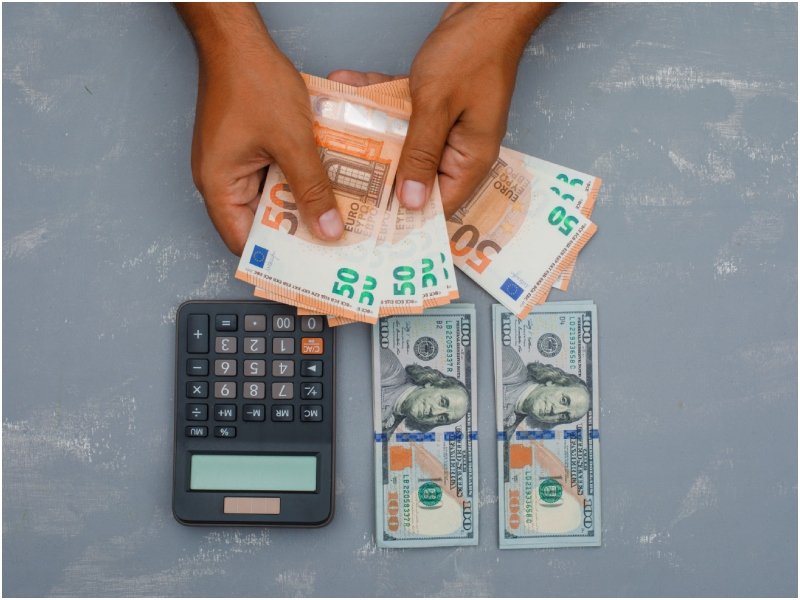
While Ghana’s headline macroeconomic indicators—falling inflation, a sharply appreciating cedi, and IMF programme progress—have earned international praise, a deeper, quieter crisis continues to erode the daily lives of ordinary citizens, writes Dominic Senayah. In this powerful opinion piece, the policy analyst and international relations professional argues that the country’s recent exchange-rate stability masks a structural cost-of-living emergency that no salary can reasonably sustain.
What the Exchange Rate Conceals: Ghana’s hidden cost of living crisis
By Dominic Senayah
There is a quiet arithmetic to suffering. It does not make front pages. It does not generate dramatic headlines that bring in international cameras or set Parliament alight. It happens instead at the market stall, at the landlord’s door, at the end of the month when the salary notification arrives, and the mental calculation begins and fails. It is the arithmetic of a country where the cost of simply existing has outpaced the means by which ordinary people are expected to exist. This is Ghana’s hidden cost of living crisis, and those of us who love the country, who hold its passport, who carry it with us wherever we go in the world, can no longer afford to normalise it.
I write this as a Ghanaian living and working in England. The distance has not made me detached. If anything, the contrast has sharpened my concern. I know what a functioning relationship between wages, housing, and food looks like in practice. And I know that what Ghana has at present falls far short of what it is capable of delivering to its people.
The Rent That No Salary Can Justify
Let us begin where every life begins, with a roof. As of early 2026, a one-bedroom apartment in Accra commands around GH₵2,200 per month, with Cantonments, Airport Residential, and Labone pushing considerably higher. But the monthly rate is only part of the punishment. It is normal in Ghana to pay one or two years of rent upfront, placing an enormous financial demand on a tenant before they have even moved in. The average monthly salary sits at approximately GH₵2,579 — roughly $210 at current exchange rates — with entry-level civil servants earning between GH₵2,200 and GH₵3,200. A mid-level public servant asked to pay two years upfront on a modest Accra flat faces a demand exceeding a full year of gross salary, payable before a single sock has been unpacked.
The comparison with Nigeria is instructive. Lagos — Africa’s most commercially intense city, far larger and more complex than Accra, regularly offers comparable housing at lower dollar-equivalent rates. That a smaller city prices its residents more aggressively is a structural anomaly deserving frank scrutiny. Ghana’s landlord class, hedging against cedi depreciation through dollar-denominated rents, has turned housing into a mechanism of extraction that the wage economy cannot support. The result is a generation of professionals commuting three to five hours daily because they cannot afford to live near where they work.
A Country That Grows Food and Cannot Afford to Feed Itself
Ghana spans multiple agro-ecological zones supporting cocoa, yams, plantains, cassava, tomatoes, pepper, groundnuts, maize, and rice. The ecological potential is profound. And yet the price of tomatoes in an Accra market routinely exceeds what the same produce costs in countries that must import it from thousands of miles away. This is a policy failure, not a natural one. According to the World Food Programme, Ghana loses US$1.9 billion annually to post-harvest waste due to poor road networks, inadequate storage, and the near-total absence of cold chain infrastructure, with losses estimated between 20 and 50 per cent across various crop types. The farmer in Brong-Ahafo who watches tomatoes rot on the roadside because the truck did not come is not a lazy farmer. He is a farmer abandoned by systems never built with sufficient urgency.
At the consumer end, supply is erratic, middlemen extract margins at every link, and what arrives in the city comes bruised and expensive. Ghana, once a significant tomato producer in West Africa, now imports over 7,000 metric tons of tomatoes annually from neighbouring countries. The same logic applies to rice, poultry, and a growing range of processed foods. Ghana has fertile land and an empty value chain, and until the infrastructure connecting the two is treated as a national emergency, this contradiction will persist.
Salaries, Corruption, and the Structural Explanation Nobody Wants to Give
Petty corruption in Ghana is routinely framed as a moral failure. The condemnation is not unwarranted, but it rarely arrives at the structural diagnosis necessary for real solutions. When a port official takes an unofficial payment or a nurse charges informally for a service that should be free, the issue is often not characterised. It is mathematics. If the average salary is GH₵2,579 and a basic one-bedroom flat in Accra costs between GH₵1,500 and GH₵2,800 per month, the gap between income and shelter is insurmountable before a single meal or school fee is considered. People in structurally impossible positions find structural workarounds. Ghana cannot build trustworthy institutions on the foundation of a workforce that cannot survive on its formal income. The enforcement agencies expected to police corruption while living within these same constraints are being asked to do something human societies have always found very difficult to sustain.
The Import Economy’s Double Standard
Walk through any Ghanaian market, and the shelves are full of Chinese electronics with dubious longevity, imported cooking oil, and imported clothing. The quality differential between goods manufactured for African markets and those produced by the same factories for Western consumers is not accidental. It is a calibrated response to weak regulatory environments. Where consumer protection law lacks enforcement, the incentive to produce durably disappears. Ghanaian consumers are being sold shorter lifespans in their goods and longer suffering in their wallets. Capital that could fund agro-processing in the forest belt or cold chain infrastructure in the north instead cycles through import speculation with a six-month horizon, extracting from the population rather than building it up.
Towards Price Regulation: What Is Actually Feasible
This is where most commentary on Ghana’s cost of living crisis falls short, diagnosing the problem without engaging seriously with solutions. Full command-style price fixing is not the answer. Ghana tried broad price controls under the Rawlings era, and the outcome was predictable: market distortions, shortages, and a thriving black market that harmed the very people it was meant to protect. But there is a meaningful space between laissez-faire chaos and discredited command economies, and Ghana has both the institutional architecture and the precedent from comparable economies to occupy it.
The first viable intervention is a national reference pricing system for staple goods. The government already publishes some commodity price data, but inconsistently and with almost no reach into the market itself. A properly resourced weekly publication of government-verified benchmark prices for staple foods displayed at market entrances, bus terminals, and broadcast via radio and SMS to rural communities arms the consumer with information, which is the most powerful and least distorting check on seller greed. Rwanda has implemented this model for agricultural produce with a measurable effect on price gouging at the retail level. It preserves market freedom while eliminating the information asymmetry that predatory pricing depends upon.
The second is a functioning rent tribunal. Ghana’s Rent Act of 1963 technically prohibits excessive advance payment demands, but it is widely ignored because the mechanism for enforcing it is inaccessible to ordinary tenants. A simplified housing tribunal modelled on those that operate effectively in South Africa and the United Kingdom, that allows tenants to challenge dollar-denominated rents and multi-year upfront demands, would be a targeted, enforceable intervention requiring legislative update rather than significant fiscal outlay. The legal framework exists. What is missing is the political will to resource and publicise it.
The third is deeper utilisation of the Ghana Commodity Exchange, launched in 2018 but still dramatically underused. A functioning commodity exchange creates transparent, publicly visible price discovery for agricultural goods, which structurally reduces the power of middlemen to arbitrarily inflate margins between farm gate and urban market. Integrating smallholder farmers and market women through mobile phone access is both technically feasible and commercially attractive given Ghana’s mobile penetration rates. This is not a distant aspiration. It is an operational gap in an existing institution.
The fourth is consumer protection enforcement with genuine deterrent value. Current fines under the Consumer Protection Agency Act are derisory relative to the profits available from price exploitation. Raising penalty thresholds meaningfully and giving the agency a publicised rapid-response function, a hotline that triggers market inspection within 48 hours of a complaint,t would shift the risk calculus for sellers without requiring price fixing of any kind. None of these measures alone resolves the crisis. Together, they constitute a coherent, Ghana-feasible regulatory architecture that addresses greed at its structural root rather than its moral surface.
Where the Government Has Done Well — And What Must Follow
Macroeconomic honesty requires acknowledging what has been achieved. Inflation fell for thirteen consecutive months, from 23.5 per cent in January 2025 to 3.8 per cent in January 2026, single digits for the first time since 2021. The cedi appreciated 40.7 per cent against the dollar in 2025, reversing the prior year’s 19.2 per cent depreciation, earning World Bank recognition as the best-performing currency in Sub-Saharan Africa. The IMF completed its fifth Extended Credit Facility review in December 2025 with positive assessments across growth, reserves, and debt trajectory. Currency stability anchors import prices, reduces the landlord’s dollar-denomination incentive, and creates the predictability businesses need. But stability is the floor of a better economy, not its ceiling. The ceiling requires structural transformation in agriculture, manufacturing, institutional quality, and the wage-to-cost relationship,p which stabilisation enables but cannot itself deliver.
The Reorientation Ghana Needs
Ghana will not become Denmark overnight, and no reasonable person expects that. But the distance between where Ghana is and where it is capable of being is not as vast as learned helplessness suggests. Wealthy Ghanaians must be persistently encouraged, through deliberate policy incentives andcultural expectationsn, to invest in domestic productive capacity rather than import speculation or offshore accumulation. Patient capital that builds agro-processing, cold chain networks, or quality housing is less glamorous than a Shenzhen container but far more durable as national wealth.
Young Ghanaians expressing frustration are not being ungrateful. They are giving accurate feedback to a system that has not yet decided to work for them. Their constrained futures are not the inevitable consequence of poverty but the outcome of choices about investment, infrastructure, and the relationship between wages and the cost of living that can be made differently.
The exchange rate is the number the world watches closely. What it conceals is the daily life Ghanaians actually live. The stability of 2025 has been earned. Now comes the harder, more human work of making it mean something to the nurse in Tamale, the graduate in Kumasi, and the family in Nima who still cannot make the numbers add up.
About the Author

Dominic Senayah is an International Relations professional and policy analyst based in England, specialising in African political economy, humanitarian governance, and migration diplomacy. He holds an MA in International Relations from the UK and writes on trade policy, institutional reform, and Ghana–UK relations for audiences across Africa, the United Kingdom, and the wider Global South.


Why Ghanaian Officials Must Know About and Prepare for the Hidden Risks of a Mass Black American Return to Ghana

How 81 Controversial Road Contracts Are Threatening to Dim Mahama’s Second-Term Goodwill

Church Building Collapse Claims 3 Lives, Sole-Sourced Contracts Dims Mahama’s 2nd Term Goodwill, and Other Big Stories in Ghana Today
-
 Ghana News17 hours ago
Ghana Prepares for Nationwide Biometric SIM Re-Registration: What You Need to Know
-
 Ghana News23 hours ago
Catholic Bishops Back President Mahama on LGBTQ+, Call for Swift Passage of Anti-Gay Bill
-
 Ghana News2 days ago
EU Clarifies Abstention on Ghana’s Slavery Resolution: “It Does’nt Mean Don’t Support the Moral Underpinnings”
-
 Ghana News2 days ago
Content Creator Priscilla Ansong Arrested, Otumfuo Urges Timely Completion of KNUST Hospital and Other Big Stories in Ghana Today
-
 Ghana News22 hours ago
Power Cuts to Hit Several Accra Communities from April 8 to 17
-

 Ghana News17 hours ago
Meet Zaina Adamu: Political Communications Strategist Ranked Among 40 Most influential People of African Descent
-
 Ghana News23 hours ago
Heavy Rains Trigger Flood Alerts Across Ghana and Other Big Stories in Ghana Today
-
 Tourism2 days ago
How HBCUs Are Bringing African American Students Home to Ghana