
Africa Watch
Western Powers Urge Tanzania to Release Bodies of Post-Election Victims as International Pressure Mounts

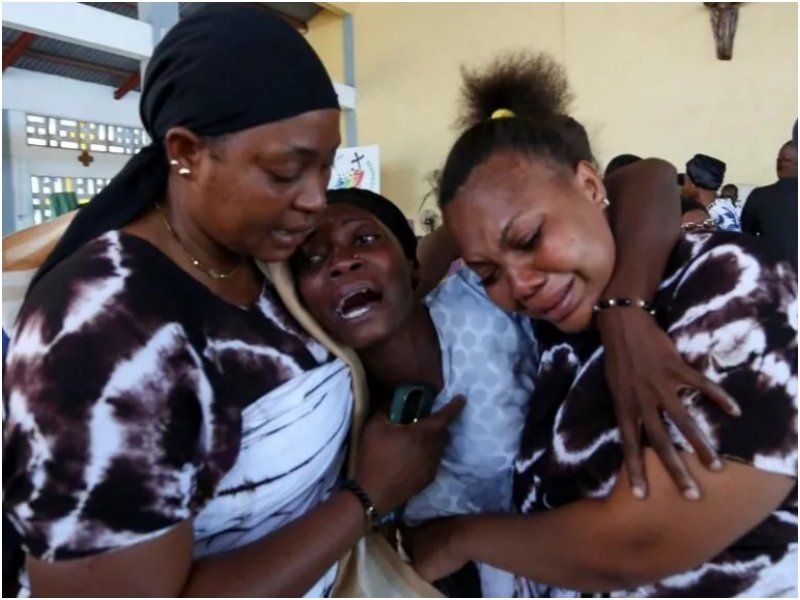
Western governments are intensifying calls on Tanzania to release the bodies of citizens killed during October’s post-election violence.
The move rapidly escalates diplomatic row that has placed President Samia Suluhu Hassan’s administration under the sharpest global scrutiny of her tenure.
In a joint statement issued Friday, 17 Western embassies—including the UK, France, Canada, Norway, Switzerland, and the EU delegation—condemned what they described as credible evidence of extrajudicial killings, enforced disappearances, arbitrary arrests, and what they called the concealment of bodies following the disputed 29 October vote.
The bloc urged Tanzanian authorities to immediately release all bodies to families, free political detainees, and guarantee legal and medical access for those still in custody. The statement marked the strongest coordinated criticism yet from Tanzania’s Western partners.
A Vote That Triggered a Deadly Crackdown
President Samia was declared the winner of the election with nearly 98% of the vote, a figure the opposition dismissed as a “mockery of democracy.” Most major rivals had been barred from running, sparking widespread protests across the country.
Security forces responded with force. Human rights groups estimate hundreds were killed and over 2,000 arrested, though the government has not provided an official death toll. At least 240 people were later charged with treason.
Authorities also shut down the internet, threatened citizens sharing images of the protests, and deployed armed personnel—some reportedly unidentified—to arrest critics, including academics and civil society members.
The UN human rights office said Friday that Tanzania had “intensified a crackdown” since the vote.
Government Pushes Back, Sets Up Inquiry
Tanzania’s foreign ministry said it had taken note of international concerns but urged foreign governments to await the findings of a newly established commission of inquiry before drawing conclusions. The government insists the commission will “bring understanding” to the events.
President Samia has taken a combative stance, accusing Western countries of meddling in Tanzania’s internal affairs. In a fiery speech on Tuesday, she defended the heavy-handed response, claiming security forces acted against protesters attempting to “overthrow the government.”
She repeated allegations—without evidence—that foreign actors were working with opposition groups to effect “regime change.”
Mounting Diplomatic Costs
The United States signaled Thursday it is reconsidering its relations with Tanzania, warning it cannot overlook actions that endanger the safety of its citizens or regional stability.
For a leader once praised for opening political space after succeeding John Magufuli in 2021, Samia now faces criticism that the country is sliding back toward repression. Opposition leader Tundu Lissu, charged with treason in April, remains behind bars.
Western diplomats say the test for Tanzania now is whether its promised inquiry will be independent, transparent, and inclusive—engaging faith leaders, civil society, political groups, and victims’ families.
For grieving Tanzanian families, however, the priority is more immediate: the right to bury their dead—something they say the state has denied them for weeks.



Africa Watch
Pan Africanist Otchere-Darko Rebukes UK Conservative Leader Kemi Badenoch Over Recent Comment on Slavery Reparations

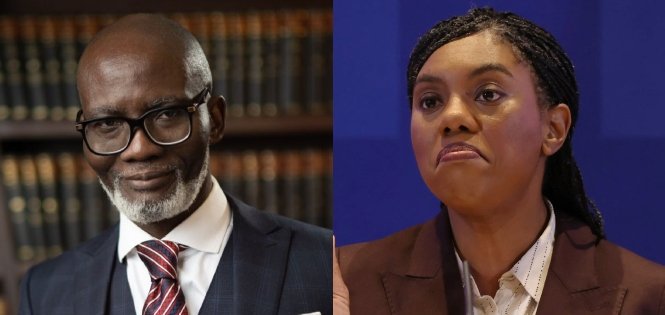
Accra, Ghana / London, UK – Executive Chairman of the African Prosperity Network, Gabby Asare Otchere-Darko, has publicly rebuked UK Conservative Party leader Kemi Badenoch for her “disappointing” remarks opposing reparations for the transatlantic slave trade.
The borderless Africa champion has urged Badenoch, who has strong Nigerian roots, to use her position and heritage to foster constructive dialogue rather than defensiveness.
Otchere-Darko’s strong comments follow Badenoch’s criticism of the UK’s decision to abstain from a United Nations General Assembly vote on Ghana’s resolution declaring the transatlantic slave trade and racialised chattel enslavement of Africans as “the gravest crime against humanity.”
The resolution passed on March 25, 2026, with 123 nations voting in favour, three against (the United States, Argentina, and Israel), and 52 abstaining — including the United Kingdom.
In a post on X (formerly Twitter) on March 26, Badenoch expressed displeasure at the UK’s abstention under the Labour government, writing:
“Russia, China and Iran vote with others to demand trillions in reparations from UK taxpayers…and the Labour government abstain! Britain led the fight to end slavery. Why didn’t Starmer’s representative vote against this? Ignorance…or cowardice? We shouldn’t be paying for a crime we helped eradicate and still fight today.”
Otchere-Darko responded the following day, expressing disappointment and providing historical context.
He acknowledged Britain’s role in the eventual abolition of slavery — driven in part by Tory evangelical William Wilberforce — but noted that the Slavery Abolition Act of 1833 was passed by a Whig government under Charles Grey, which compensated slave owners rather than the enslaved.
“Britain, which played a central role in the transatlantic slave trade, also saw the early campaign against it driven by Tory evangelicals like William Wilberforce in the early 1800s,” Otchere-Darko wrote. “But it took a Whig government… to pass the Slavery Abolition Act of 1833, ending slavery across most of the Empire while compensating slave owners, NOT THE ENSLAVED.”
He argued that Badenoch’s stance fails to acknowledge the enduring legal and moral arguments for reparatory justice and urged her to leverage her background as a woman of 100% Black West African parentage to help shape a more progressive and honest response.
“Kemi has an opportunity, given her heritage and position, to move this conversation forward: not by merely amplifying defensiveness, but by helping shape a modern response rooted in honesty and partnership,” he said. “It is in the interest of Britain to invest in Africa’s economic transformation efforts and even if in ways that support British economic interest.”
Otchere-Darko concluded by warning that such positions could make the Conservative Party less attractive to Britain’s growing Black middle class.
The UN resolution, championed by Ghana and supported by the African Union and CARICOM, calls for global acknowledgment of the slave trade’s scale and lasting impact, as well as concrete steps toward reparatory justice, including education, memorials, and dialogue on compensation and restitution.
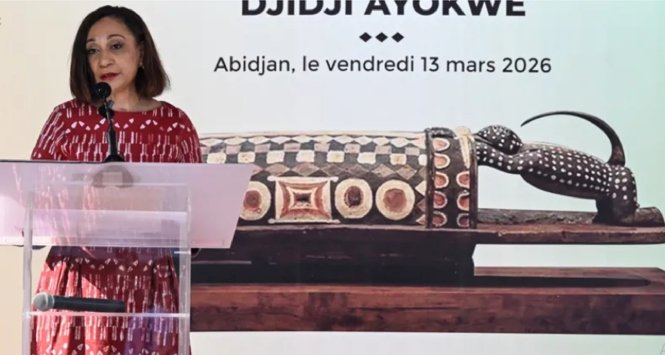
Abidjan, Ivory Coast – More than a century after it was seized by French colonial forces, the sacred Djidji Ayôkwé (Panther Lion) talking drum — a monumental cultural artefact of the Ebrié people — has been formally repatriated to Ivory Coast, marking a significant step in France’s ongoing restitution efforts for colonial-era objects.
The drum, over three metres long, weighing approximately 430 kg and carved from iroko wood, arrived at Abidjan International Airport on a specially chartered flight on March 15, 2026. It was received with traditional music, dance and a ceremonial welcome from Ebrié community leaders, local chiefs, and government officials. The artefact remained in its large wooden crate marked “fragile” during the airport ceremony.
Ivory Coast’s Minister of Culture, Françoise Remarck, described the moment as “historic” and one of “justice and remembrance.” She told the BBC: “We are living through a moment that finally marks the return of the Djidji Ayôkwé to its land of origin.”
Francis Tagro, Director of the Museum of Civilizations in Abidjan, said the drum would be placed “in a place of honour in the heart of the national museum,” where it is expected to inspire pride and cultural education among younger generations.
The Djidji Ayôkwé, traditionally used by the Ebrié (based in and around Abidjan) to warn of danger, mobilise communities for war, and summon people to ceremonies, was looted in 1916, taken to France in 1929, and displayed first at the Trocadéro Museum and later at the Quai Branly Museum in Paris.
Its return was authorised by a special law passed by the French parliament on 20 February 2026. The drum is the first item on a list of 148 cultural objects Ivory Coast is seeking to repatriate from France and other countries.
France has accelerated restitution since President Emmanuel Macron’s 2017 pledge to return colonial-era artefacts. Previous returns include Abomey royal treasures to Benin and a historic sabre to Senegal.
On 29 January 2026, the French Senate adopted a framework law to streamline the removal of such objects from national collections; the bill is now before the National Assembly.
The handover is widely viewed as a milestone in addressing the legacy of colonial plunder and restoring cultural heritage to its rightful communities.
Africa Watch
Madagascar Strongman Dissolves Government After Just Five Months, Flings Transition into Turmoil
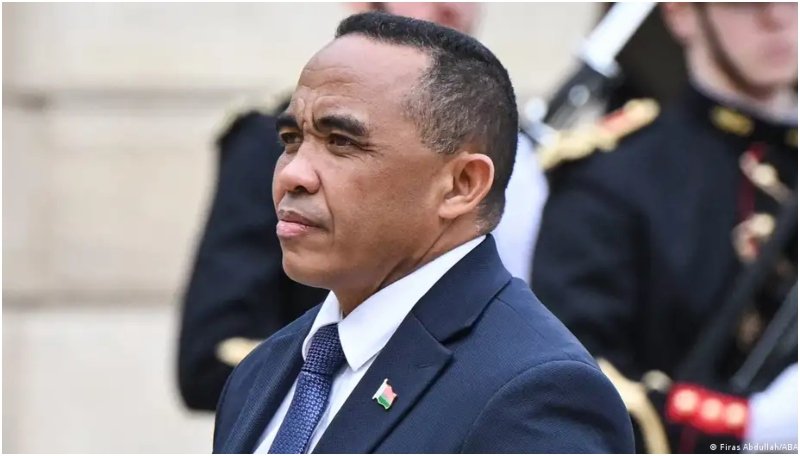
In a move that has plunged the island nation’s fragile political transition into fresh uncertainty, Madagascar’s military leader, Colonel Michael Randrianirina, has dismissed his prime minister and dissolved the entire Cabinet.
The decision comes barely five months after the government was sworn in following his seizure of power during last year’s youth-led uprising.
A statement from the presidency released late on Monday announced that, “in accordance with the provisions of the constitution, the government is suspended from its duties.” The statement confirmed that a new prime minister would be appointed “shortly,” but offered no timeline for the decision, nor any explanation for the abrupt dismissals.
The now-dissolved government, a hybrid cabinet of civilian ministers, military officials, and critics of the ousted former president, Andry Rajoelina, was only sworn in on October 28. It was led by Prime Minister Herintsalama Rajaonarivelo, a private sector businessman appointed by Randrianirina after Rajoelina fled the country last October.
A Leader Who Rejects the ‘Coup’ Label
Colonel Randrianirina first rose to power on a wave of public fury. In September of last year, protests triggered by chronic water and power shortages snowballed into a mass movement against the Rajoelina administration, which was violently suppressed. As the government lost control, Randrianirina emerged as the leader of the new military junta.
He vehemently rejects the term “coup,” preferring the title “President of the Refoundation of the Republic.” He maintains that the Constitutional Court legitimately “transferred power” to him, and he has promised a two-year transition period.
“The main objectives of my term, which will last a maximum of two years, are to find concrete solutions for the people,” Randrianirina had declared upon announcing the initial government.
Despite this pledge, his timeline has been ambiguous. In February, he announced a programme for constitutional reform consultations through 2026, with a presidential election scheduled for the last quarter of 2027—a timeline that stretches his self-declared two-year mandate.
Balancing on the International Stage and at Home
The domestic political earthquake came just hours before the African Union Peace and Security Council (PSC) was scheduled to hold its fourth meeting on Madagascar since the political crisis began in October. The dissolution is likely to complicate the AU’s efforts to mediate a stable transition and could draw sharp criticism from the continental body.
The move also casts a shadow over Randrianirina’s recent high-profile diplomatic forays. In February, he sought to legitimize his leadership on the world stage, meeting with Vladimir Putin in Russia and visiting Madagascar’s former colonial power, France, for talks with Emmanuel Macron. He hailed a “new era of cooperation” in Moscow and a “renewed” but “balanced” partnership with Paris—a significant gesture given that anti-French sentiment was a powerful current in the protests that toppled the previous government.
A History of Instability
Monday’s dissolution of the government injects a new dose of volatility into a nation with a long and troubled history of military interventions. Since gaining independence from France in 1960, Madagascar has experienced three prior coups d’état—in 1972, 1975, and 2009.
With the cabinet now dissolved and no clear reason given, questions abound. Was this a power struggle within the junta? A move against perceived incompetence? Or a consolidation of power before the next phase of the transition? For now, Madagascar waits, its political future as opaque as the reasons for its latest governmental collapse.


Renowned Global Bodies Warn Middle East War Will Scuttle Africa’s 2026 Growth

Ex-President Akufo-Addo and President Mahama Exchange Pleasantries on Easter

Mahama Calls Christ’s Birthplace an ‘Epicentre of War’, New Airport Concourse Planned and Other Big Stories in Ghana Today
-

 Business1 day ago
Ghana Turns to Russian Fuel to Cushion Impact of Global Energy Crisis
-
 Tourism1 day ago
5 Things You Need to Know About Ghana’s Visa-Free Entry for All Africans
-
 Ghana News3 hours ago
Ghana President Convenes Emergency Cabinet Meeting to Cushion Ghanaians from Soaring Fuel Prices
-
 Ghana News3 hours ago
Mahama Calls Christ’s Birthplace an ‘Epicentre of War’, New Airport Concourse Planned and Other Big Stories in Ghana Today
-
 Ghana News3 hours ago
Ex-President Akufo-Addo and President Mahama Exchange Pleasantries on Easter
-
 Ghana News1 day ago
Ghanaian Stowaways Bound for Europe End Up in Nigeria After Five Days at Sea
-
 Ghana News1 day ago
Here Are the 10 Key Agreements Signed Between Ghana and Zimbabwe During Mnangagwa’s State Visit
-

 Health & Wellness1 day ago
3 Surprising Signs Your Body Is Building Muscle