
Global Update
Two New Jersey Sisters Die Saving Disabled Father in Thanksgiving House Fire


Radio host Pojanee “PJ” Fleury, a beloved voice in the Caribbean-American community, and her sister Frantzia Fleury died on Thanksgiving Day while trying to rescue their disabled father from a fast-moving house fire in Orange, New Jersey.
According to the Essex County Prosecutor’s Office, the blaze erupted around 5 p.m. on Mosswood Avenue. Seven people, including the sisters’ father, managed to escape unharmed. But PJ, 42, and Frantzia, 49, did not make it out. They were pronounced dead just after 6:45 p.m.
Authorities say the women rushed back inside to pull their father — who lived with dementia — to safety. Their final moments, relatives say, reflected exactly who they were: compassionate, protective, and unshakably devoted to family.
“These two women had big hearts,” said a cousin, Sidney. “They were deeply devoted to their families, and it’s just a tragedy.”
The fire spread so rapidly that neighbors could do little except pray.
“We were afraid our neighbors might be in there and not able to get out, said Claire Stevens, who watched flames swallow the home.
The property has since been declared uninhabitable, and the cause of the fire remains under investigation
PJ Fleury was widely known for her work at WHCR 90.3 FM, where she championed Caribbean culture, diaspora issues, and community storytelling. Friends describe her as a creative force — an inventor, author, and cultural advocate who used her platform to amplify voices often overlooked in mainstream media.
Frantzia Fleury, relatives said, worked in the medical field and brought the same compassion to her professional life that she showed at home.
For many in the Caribbean-American community, the loss is personal. PJ was more than a radio host; she was a connector — someone who made space for others, celebrated immigrant stories, and gave identity a home on the airwaves.
Their deaths have sparked an outpouring of grief from New Jersey to the wider diaspora, where PJ’s work resonated deeply.
The prosecutor’s office is urging anyone with information about the fire to contact its tip line.

Global Update
Canada Strikes Back: Ontario Cancels Musk’s Starlink Contract, Bans U.S. Firms from Provincial Deals in Retaliation for Trump Tariffs

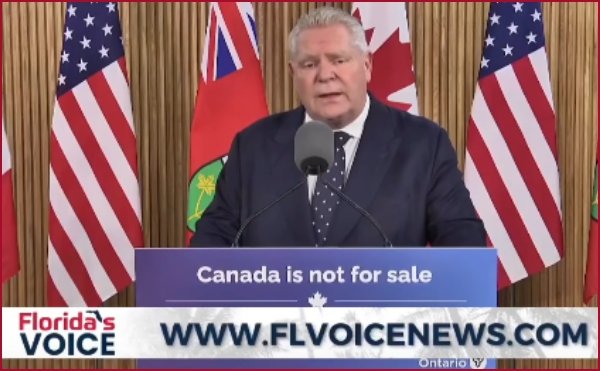
Ontario Premier Doug Ford has escalated Canada’s response to the United States’ new economic tariffs, announcing a sweeping ban on American companies bidding for provincial contracts and canceling a C$100 million deal with Elon Musk’s Starlink.
The move marks one of the most aggressive retaliatory actions taken by a Canadian province since President Donald Trump’s 25% import tax on Canadian goods took effect.
Speaking at a news conference on Monday, Ford did not mince words, directly blaming President Trump for the escalating trade war.
“Ontario won’t do business with people hell-bent on destroying our economy,” Ford stated, emphasizing that the province is “ripping up” its contract with the satellite internet company.
The premier outlined the province’s hardline stance: “Canada didn’t start this fight with the US, but you better believe we’re ready to win it.” Ford argued that Trump’s tariffs are not just political talking points but have severe, tangible consequences for businesses, workers, families, and the entire North American economy. He warned that American businesses stand to lose billions due to the economic fallout initiated by Washington.
The agreement with Starlink was signed last November to provide high-speed internet to 15,000 underserved homes and businesses. Musk, CEO of SpaceX and a close ally of Trump, reacted to the news with a brief, dismissive post on X: “Oh well.”
Ford acknowledged the possibility of legal challenges from Starlink but stated the province is willing to pay a penalty if necessary, citing the principle of the matter.
“It’s the principle,” he said.
This provincial retaliation comes on the heels of Prime Minister Justin Trudeau’s federal counter-tariff plans. Trudeau announced C$30 billion in immediate tariffs on American goods, with an additional C$125 billion scheduled to follow in 21 days if the U.S. proceeds with the levies, totaling C$155 billion ($107 billion).
Ontario is not alone in its response. Officials in Quebec, British Columbia, and New Brunswick have announced plans to pull American liquor from provincial shelves and revisit contracts with U.S. firms. Meanwhile, Canadian premiers are set to travel to Washington D.C. to lobby against the tariffs and attend a meeting of U.S. state governors.
While President Trump and Mexican President Claudia Sheinbaum agreed to a one-month delay on tariffs for Mexico after she promised to send additional National Guard troops to the border, Canadian officials told the New York Times they are not optimistic about receiving a similar reprieve.
The tariff dispute has had immediate market impacts, with all three major U.S. stock exchanges tumbling on Monday following the trade orders. Ford’s message to Washington was clear: you cannot threaten your closest neighbors with economic punishment and expect no pushback.
Global Update
Xenophobic South Africa Seeks to Deport Beauty Queen at Center of Long-Running Immigration Dispute

Beauty queen Chidimma Adetshina has reiterated that she was born in South Africa and accused authorities of unfairly targeting her as she continues to challenge efforts to deport her from the country.
Adetshina, 25, made the comments after a court hearing in Cape Town, where the South African government’s bid to have her detained was postponed until February 2027.
“I remind everyone that I was born in South Africa,” Adetshina said. “I have applied through the proper legal channels to have my status and citizenship determined.”
The former Miss South Africa finalist said she believes authorities have attempted to make an example of her through the case.
“There has been an attempt by the South African authorities to make an example of me with this case,” she said.
She also warned against allowing xenophobia and misinformation to influence how people are treated, comments that appeared to address protesters gathered outside the court demanding her deportation.
Chidimma Adetshina’s citizenship dispute
Adetshina was born in Soweto and grew up in Cape Town, according to previous interviews. Her mother, Anabela Rungo, has Mozambican roots, while her father is Nigerian.
Questions about Adetshina’s citizenship emerged after she became a finalist in the 2024 Miss South Africa competition. Critics questioned whether she was eligible to participate because of her parents’ backgrounds.
The controversy ultimately led Adetshina to withdraw from the competition. South African authorities later stripped her of her South African identity and travel documents following allegations that her mother had committed identity fraud to obtain South African nationality.
Rungo’s South African citizenship was revoked in 2025.
South African law does not automatically grant citizenship to every person born in the country. In general, citizenship by birth depends on factors including whether at least one parent is a South African citizen or permanent resident.
Adetshina has maintained that South Africa is her home and that she was born there.
From Miss South Africa controversy to Miss Universe Nigeria
After leaving South Africa in 2024, Adetshina was invited to compete in the Miss Universe Nigeria pageant. She went on to win the title, giving her a new platform after the controversy surrounding her participation in Miss South Africa.
Her legal problems in South Africa continued, however.
She was arrested in June 2026 and subsequently released on warning after being accused of unlawfully re-entering the country.
During the latest proceedings, South Africa’s Home Affairs Department reportedly argued that Adetshina had applied for a South African visa while she was in Nigeria and obtained Nigerian passports for herself and her son, which officials said raised questions about her South African citizenship.
Officials also alleged that she subsequently entered South Africa illegally through a border post in Mozambique.
Adetshina is challenging the Home Affairs Department’s decision to deport her. Her case was postponed to February 2027 to allow the review proceedings concerning her immigration status to be finalised.
She remains free while those proceedings continue.
Protesters call for deportation
The case has also become a flashpoint in South Africa’s broader debate over immigration.
Members of anti-migrant group March and March gathered outside the Cape Town courthouse and called for Adetshina to be deported. Protesters reportedly followed her vehicle as she left the court.
Adetshina’s warning about xenophobia and misinformation comes as her case continues to attract significant public attention.
“I have applied through the proper legal channels to have my status and citizenship determined,” she said, emphasizing that the legal process should determine her status rather than public pressure.
The next major development in the case is expected in February 2027, when proceedings are scheduled to resume.
Global Update
AI Firms Are Buying, Scanning Millions of Books to Train Large Language Models and then Destroying the Books
There is an ongoing, secretive practice by artificial intelligence companies in which they acquire millions of physical books, only to destroy them after scanning their contents to train large language models (LLMs).
The practice, revealed through investigative reporting and unsealed legal documents, has raised urgent questions about copyright, cultural preservation, and the ethics of AI development.
Project Panama: The Secretive Operation
Internal documents unsealed in legal filings revealed that Anthropic, the company behind the Claude AI assistant, launched a clandestine operation codenamed “Project Panama” —described in an internal planning document as “our effort to destructively scan all the books in the world.”
“We don’t want it to be known that we’re working on this,” the document stated, according to reports from The Washington Post.
The operation involved using hydraulic-powered cutting machines to remove book spines and slice individual pages, which were then scanned with industrial-grade imaging equipment before being discarded.
The Legal Loophole
Anthropic and other AI companies have been able to evade copyright challenges by relying on the first-sale doctrine—a legal principle that allows a buyer to do what they want with a physical item after purchasing it.
This doctrine, which enables the second-hand book trade to exist, has now created a new market explicitly catering to AI companies seeking vast quantities of old books.
In a 2025 ruling, a judge found that converting lawfully purchased print books into non-distributed digital library copies was “fair use” because the digital copies replaced the purchased books without increasing the library’s copy count.
However, critics argue that destruction of the original physical copies goes far beyond what fair use was intended to protect.
A $1.5 Billion Settlement
Earlier this month, a judge approved a $1.5 billion payment in a class action lawsuit brought against Anthropic by a group of authors whose pirated work had been used to train Claude.
Despite this settlement, the physical destruction of books continues, with companies arguing that once a book is lawfully purchased, they are free to do with it as they please.
Mixed Feelings Among Booksellers
The practice has created an ethical dilemma within the antiquarian book trade.
“Personally have mixed feelings about all of this,” one bookseller told 404 Media. “It benefits me financially as well as by clearing out old inventory that is otherwise unlikely to sell.”
“I’ve been well-suited for these sales with inventory from overseas and foreign language books. On the other hand, I don’t like the end-use, and I don’t like that uncommon books are being pulped.”
A Broader Industry Practice
Anthropic is not alone in this practice. According to Novara Media, “The world’s biggest AI companies are buying antiquarian books en masse so they can be scanned to train their large language models before being destroyed.”
The revelation has sparked outrage among historians, authors, and cultural preservation advocates.
Historian Margarita Lila Rosa, who has been documenting the practice, shared videos showing the destruction process on social media.
“How did we miss this?” she wrote. “First the spine is removed and then the book is disposed of.”
What This Means for Knowledge Preservation
The destruction of physical books—particularly rare and antiquarian volumes—raises profound concerns about cultural heritage and the preservation of human knowledge.
While digital copies may preserve the text itself, critics argue that the physical destruction of unique or uncommon books represents an irreversible loss to humanity’s cultural record.
The Bigger Picture
The controversy highlights a broader tension in the AI industry: the insatiable demand for training data versus the rights of creators and the preservation of cultural artefacts.
As AI companies continue to scale their models, the pressure to acquire vast amounts of human-authored text will only intensify—raising difficult questions about what we are willing to sacrifice in the name of technological progress.
Sources: The Washington Post, Novara Media, 404 Media, unsealed court documents


Game-Changing Move: Ghana Sets Up New Fiscal Council to Scrutinize Government Spending and Win Back Investors

Ghana’s Persistence Pays Off: AU Formally Commits to Tabling Xenophobia Petition in January 2027

Top Headlines From Ghanaian Newspapers: Wednesday, Sept. 9, 2026
-

 Ghana News1 day ago
Top Headlines From Ghanaian Newspapers: Tuesday, Sept. 8, 2026
-

 Ghana News1 day ago
How Ghana’s Government Pressured MTN, Telecel, and AirtelTigo to Cut Data Prices
-

 Taste GH2 days ago
Tubaani Beans: Northern Ghana’s Hearty Answer to Rice and Beans
-

 Festivals & Events2 days ago
Lagos Meets Accra: Zephans & Co Brings Summer Style to the City
-
 Arts and GH Heritage1 day ago
The Stories We Live With: Inside Nubuke Foundation’s Weight of the Ordinary
-

 Ghana News1 day ago
Buckingham Palace Responds to Jamaica’s $10 Billion Reparations Demand, But the UK Government’s Wallet Remains Shut
-
 Ghana News5 hours ago
Ghana’s Persistence Pays Off: AU Formally Commits to Tabling Xenophobia Petition in January 2027
-

 Africa Watch1 day ago
British-Nigerian Influencer Dies After Penis Enlargement Procedure in Thailand