
Editorial
Trump Shrugs as the Dollar Slides — The World Shouldn’t

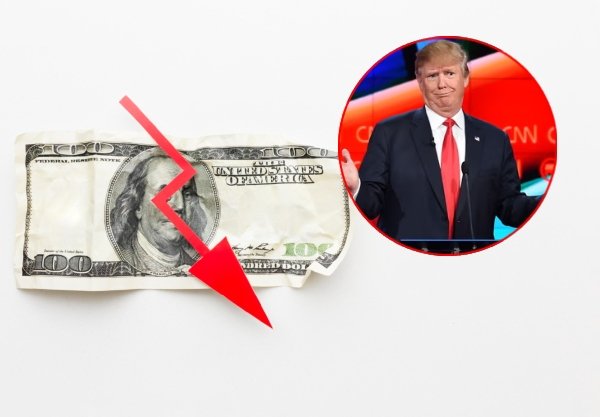
President Donald Trump’s casual dismissal of a sharp drop in the US dollar may play well to a domestic political gallery, but it should worry the rest of the world.
When the leader of the world’s largest economy signals comfort—even approval—with a weakening currency, markets listen. And they react.
On Tuesday, January 27, 2026, the US dollar recorded its steepest single-day fall since last year’s tariff-driven market turmoil, dropping as much as 1.2 percent. Asked whether he was concerned, Trump waved it off.
“The dollar’s doing great,” he said, pointing instead to business activity and trade. Investors, however, heard something else entirely: a green light to keep selling.
This matters because the dollar is not just another national currency. It is the backbone of the global financial system, involved in nearly 90 percent of all foreign exchange transactions worldwide. Its dominance underpins global trade, commodity pricing, sovereign debt markets, and central bank reserves. When confidence in the dollar weakens, the shockwaves travel far beyond US borders.
Trump’s remarks did not occur in a vacuum. The dollar has been under pressure for months, weighed down by policy uncertainty, renewed tariff threats, and persistent political pressure on the US Federal Reserve. Add to that the administration’s unpredictable foreign policy signals—from aggressive trade posturing to controversial geopolitical ambitions—and investors are increasingly questioning the long-term stability of US economic stewardship.
For emerging and developing economies, including Ghana, the implications are complex. On one hand, a weaker dollar can ease the burden of dollar-denominated debt and reduce the cost of imports priced in US currency. On the other, sharp or disorderly dollar declines can trigger global market volatility, disrupt capital flows, and unsettle export competitiveness. Financial instability rarely respects borders.

There is also a deeper concern: credibility. Reserve currencies rely as much on trust as on economic size. When political leaders appear indifferent to currency stability—or worse, view depreciation as a strategic tool—they risk undermining that trust. History shows that once confidence erodes, it is difficult to restore.
Trump’s relaxed tone may reflect a belief that a cheaper dollar boosts US exports and domestic manufacturing. But global finance is not a zero-sum game played on soundbites. Sudden or sustained dollar weakness can ripple through stocks, bonds, credit markets, and commodities, amplifying risks at a time when the global economy is already navigating fragile recoveries, geopolitical tension, and high debt levels.
For policymakers outside the United States, the lesson is clear: diversify risk, strengthen regional trade, and reduce overdependence on any single currency system. For investors, vigilance is essential. And for Washington, a reminder is overdue—the privilege of issuing the world’s dominant currency comes with responsibilities, not just political convenience.
The dollar’s slide may not yet signal the end of its dominance. But complacency from the White House is hardly reassuring. When the anchor of global finance starts to drift, the world cannot afford a captain who shrugs.








Editorial
12 Million Souls. Over 400 Years. Ghana Has Finally Pushed the World to Say it: “Slavery Trade is The Gravest Crime Against Humanity”
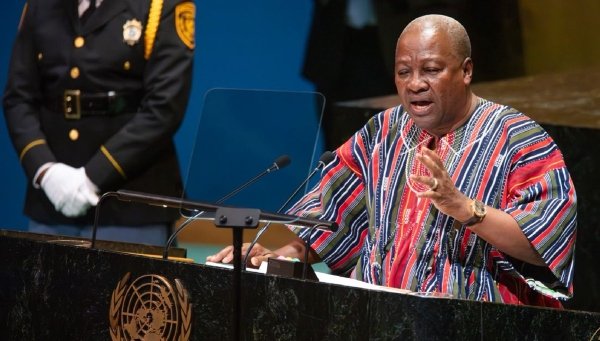
Ghana’s successful campaign to have the United Nations declare the transatlantic slave trade and the racialised chattel enslavement of Africans as “the gravest crime against humanity” is rooted in a profound moral, historical, and reparative imperative, President John Dramani Mahama has declared.
In a powerful address at a high-level UN event on reparatory justice, President Mahama explained that the resolution is far more than a symbolic gesture. It is a deliberate act to reclaim truth through language, to restore the humanity denied to millions of Africans, and to create a global safeguard against historical forgetting and erasure.
“There is no such thing as a slave,” Mahama stated emphatically. “There were human beings who were trafficked and then enslaved by people who believed they could own those human beings as chattel, as their personal property.”
He argued that the entire architecture of the transatlantic slave trade was designed to deny African people their humanity, based on a false racial hierarchy that deemed whiteness superior and blackness inferior. “The atrocities that were committed against enslaved Africans… took place specifically because they were considered objects,” he said.
The President stressed that any honest discussion of slavery must begin by reclaiming “racial equality, the dignity of Africans, the humanity of our ancestors who were enslaved and, as a matter of course, our own humanity.”
Mahama explained the core importance of the resolution: it allows the global community to collectively bear witness to the plight of the millions of men, women, and children whose homes, communities, names, families, hopes, dreams, futures, and lives were stolen over four centuries.
“This resolution is a pathway to healing and reparative justice. This resolution is a safeguard against forgetting,” he said.
He painted a harrowing picture of the Middle Passage and plantation life, citing historical records of brutality, including the Barbados Slave Code of 1661 and the Virginia doctrine of partus sequitur ventrum, which ensured that children born to enslaved women inherited the status of slavery. He rejected attempts to soften the reality with euphemisms or claims that “everyone was doing it at the time,” insisting that “slavery is wrong now, and it was wrong then.”
The President also warned against modern forms of erasure, criticising efforts in some countries to remove Black history from school curricula, ban books on slavery and racism, and suppress discussions of historical injustice. He quoted Walter Rodney, Portuguese sailor accounts of Great Zimbabwe, and Nelson Mandela to remind the world that Africa’s greatness long predates the slave trade and that African resilience continues to outweigh the injustices inflicted.
On March 25, 2026, the resolution was adopted by over 100 UN member states, with only three nations — the United States, Argentina, and Israel — voting against it, and 52 abstaining. The vote represents a significant diplomatic victory for Ghana and a major step toward global acknowledgment of the scale and lasting impact of the forced displacement of more than 12 million Africans, with approximately 2 million perishing during the Middle Passage.
President Mahama’s leadership on this issue underscores Ghana’s commitment to truth-telling, historical accountability, and the pursuit of meaningful reparatory justice for Africa and the African diaspora.
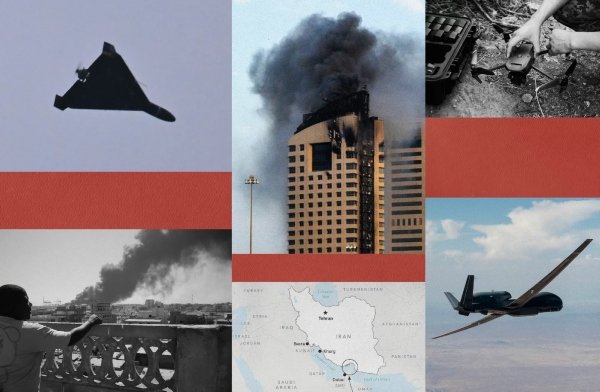
The ongoing escalation in the Middle East has thrust the world into what military analysts are calling the definitive era of “precise mass” warfare, where low-cost, commercially adaptable drones launched in large numbers are challenging — and in many cases outpacing — traditional high-end precision-strike platforms.
A detailed analysis published by CNN on March 17, 2026, drawing on open-source intelligence and expert commentary, shows that in the first week of Iran’s retaliatory campaign against Gulf states, drones accounted for approximately 71% of detected strikes. The United Arab Emirates alone reported 1,422 detected drones and 246 missiles over just eight days. Similar patterns first emerged in Ukraine, but the current conflict has crystallized the future trajectory of war.
Michael Horowitz, a senior fellow at the Council on Foreign Relations, describes the shift as moving from “a handful of Tomahawk missiles, stealth bombers or fighter jets” to swarms of one-way drones assembled from commercial components. The economics are stark: a Shahid-type drone typically costs around $35,000, while a single Patriot interceptor missile costs about $4 million — enough to purchase over 100 drones.
The result is a profound asymmetry: attackers can spend thousands while defenders are forced to spend millions to protect the same target. This “new arithmetic of conflict” is forcing militaries worldwide to rethink deterrence, air defense investment, and the balance between exquisite (expensive, high-performance) and attritable (cheap, mass-produced) systems.
The transformation extends beyond hardware to a full-spectrum military architecture: cheap autonomous systems, AI-assisted targeting, commercial satellite imagery, resilient communications, integrated sensors, and cyber tools operating in unison. The objective is no longer just to strike, but to compress the “kill chain” — find, fix, track, target, engage, and assess — faster than the adversary can react.
Ukraine has become the primary real-world laboratory for this model. Out of necessity, Kyiv has developed rapid wartime adaptation, producing low-cost steam-interceptor drones (around $2,000 each) capable of 280 km/h speeds. According to the manufacturer, these have downed more than 3,000 Shahed-type drones since mid-2025 and are now being produced at rates exceeding 10,000 per month. Training a pilot takes only three to four days for those already familiar with drones.
On the software front, Ukraine has opened its vast battlefield data archive — millions of annotated images from tens of thousands of combat flights — to allied developers for AI training, giving it what Defense Minister Mykhailo Fedorov calls “a unique array of battlefield data unmatched anywhere else in the world.”
Russia, meanwhile, is reportedly producing 404 Shahed-type drones per day and aims for 1,000 daily. By contrast, Lockheed Martin manufactured about 600 Patriot interceptors in all of 2025 and projects scaling to 2,000 per year by 2027 — highlighting the growing mismatch between production scale and defensive requirements.
The implications reach far beyond Ukraine and the Gulf. The side that prevails in future conflicts may not be the one with the single most advanced platform, but the one that can field enough capable platforms, cheaply enough, quickly enough, and network them intelligently enough. “Lots of good stuff will beat small numbers of great stuff,” the analysis concludes.
As drone swarms, AI targeting, and mass production reshape the battlefield, militaries and defense planners worldwide are racing to adapt — or risk being left behind in an era where industrial scale, software integration, and battlefield-data advantage increasingly determine victory.
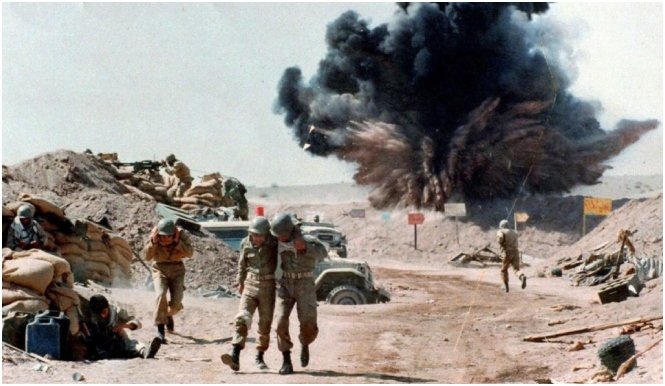
Accra, Ghana – The escalating war involving Iran and Western-led strikes has already sent shockwaves through global energy markets, disrupted maritime trade, and redirected geopolitical attention.
While the human cost in the Middle East continues to mount, a growing body of strategic commentary suggests the conflict—however tragic—could produce unintended but potentially transformative consequences for the African continent.
Rising oil prices represent the most immediate economic ripple. With the Strait of Hormuz under severe threat and Saudi Arabia reportedly planning to reroute exports via the Red Sea, crude prices have surged. For major African producers Angola and Nigeria, higher revenues could provide fiscal breathing room. Yet the broader impact on the continent is largely negative: elevated oil costs drive up fertilizer prices, inflating food costs in import-dependent nations. Historical precedent is stark—similar dynamics in 2007–2008 triggered food-price riots across Africa, from Morocco to Cameroon. Analysts warn that the current spike risks reigniting social unrest unless governments act swiftly with subsidies or alternative supply chains.
Maritime rerouting offers a second, more localized opportunity. If Houthi forces in Yemen escalate Red Sea attacks—as they have done during previous Israel-related conflicts—the traditional Suez Canal route could become untenable. Cargo vessels carrying food and goods from the Atlantic to the Middle East and Asia would then be forced to circumnavigate the Cape of Good Hope. South African ports (Durban, Cape Town, Port Elizabeth) and neighbouring coastal facilities in Namibia and Mozambique stand to gain significantly from increased transshipment traffic, vessel repairs, bunkering, and logistics services. While short-term, this revival of the historic “Cape route” could inject millions into local economies and accelerate port infrastructure upgrades.
Perhaps the most intriguing long-term shift involves the realignment of foreign influence. The United Arab Emirates, Africa’s fourth-largest foreign investor in recent years, has poured billions into ports, airports, and military footholds—most controversially backing the Rapid Support Forces (RSF) in Sudan’s devastating civil war. With Iranian missiles and drones now targeting Emirati territory, analysts argue the UAE will be compelled to redirect resources homeward, potentially withdrawing or scaling back its African footprint. While this may cause short-term investment gaps, it could open space for African governments to negotiate with more transparent or development-focused partners.
Simultaneously, the West’s intense focus on the Middle East—evidenced by France and other NATO members deploying naval assets to the Gulf—may reduce external meddling in African affairs. Countries in the Alliance of Sahel States (Mali, Burkina Faso, Niger) and other regions that have faced repeated Western military or diplomatic pressure could gain breathing room to consolidate sovereignty, pursue regional integration, and build domestic institutions without constant external scrutiny or intervention threats.
None of this diminishes the war’s catastrophic human toll or the global economic pain it inflicts. Food insecurity, inflationary spirals, and redirected investment flows could deepen poverty and instability in vulnerable states. Yet the conflict’s unintended side effects—higher port revenues in the south, diminished Gulf-state interference, and a temporary lull in Western strategic preoccupation—could create narrow windows for African agency and self-determination.
Whether these opportunities are seized depends on African leadership: proactive food-price mitigation, strategic port investment, transparent renegotiation of foreign partnerships, and accelerated regional cooperation. History shows that global crises often accelerate change—sometimes painfully, sometimes productively. The Iran war may prove no exception.


Renowned Global Bodies Warn Middle East War Will Scuttle Africa’s 2026 Growth

Ex-President Akufo-Addo and President Mahama Exchange Pleasantries on Easter

Mahama Calls Christ’s Birthplace an ‘Epicentre of War’, New Airport Concourse Planned and Other Big Stories in Ghana Today
-
 Ghana News21 hours ago
Ghana President Convenes Emergency Cabinet Meeting to Cushion Ghanaians from Soaring Fuel Prices
-
 Ghana News21 hours ago
Mahama Calls Christ’s Birthplace an ‘Epicentre of War’, New Airport Concourse Planned and Other Big Stories in Ghana Today
-
 Ghana News20 hours ago
Ex-President Akufo-Addo and President Mahama Exchange Pleasantries on Easter
-
 Business20 hours ago
Renowned Global Bodies Warn Middle East War Will Scuttle Africa’s 2026 Growth