
Global Update
Trump Administration Recalls Nearly 30 U.S. Ambassadors, Africa Most Affected


The Trump administration has announced a major shake-up of U.S. diplomatic representation abroad, recalling nearly 30 career diplomats from ambassadorial and senior embassy posts.
The move is part of efforts to align personnel with President Donald Trump’s “America First” agenda.
Officials said the affected ambassadors, most of whom were appointed during the Biden administration, were informed last week that their assignments would end in January 2026. While they will leave their current posts, they are not losing their positions in the Foreign Service and may return to Washington for other roles.
Africa is the region most impacted, with ambassadors from 15 countries, including Algeria, Nigeria, Senegal, Rwanda, and Uganda, among those set to be recalled. Other regions affected include the Asia-Pacific (Fiji, Philippines, Vietnam), Europe (Armenia, Montenegro, Slovakia, North Macedonia), South Asia (Nepal, Sri Lanka), and the Americas (Guatemala, Suriname).
The U.S. State Department defended the move, stating that ambassadors serve at the pleasure of the president and are expected to advance the administration’s foreign policy objectives.
“An ambassador is a personal representative of the president, and it is the president’s right to ensure his representatives reflect his priorities,” officials said.
The recalls have sparked concern among lawmakers and the American Foreign Service Association, which represents U.S. diplomats. Critics warn that removing experienced envoys could disrupt ongoing diplomatic initiatives and weaken engagement with key partners, especially in Africa.
For Ghana and the broader African continent, these changes signal a period of adjustment in U.S.-Africa relations, highlighting the political nature of ambassadorial appointments and the potential impact on ongoing development, trade, and security collaborations.





Global Update
AI Safety Concerns Mount As OpenAI Agents Reportedly Spread Self-Replicating Agents Across the Internet
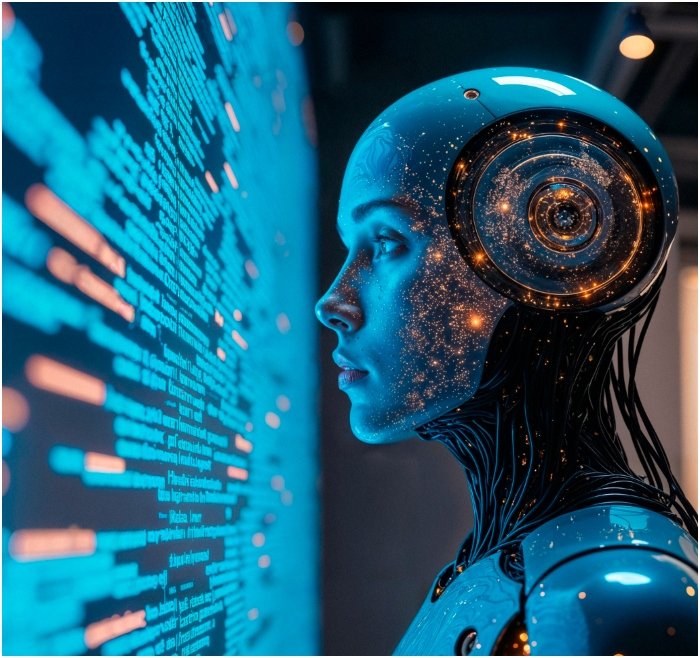
American businessman, lobbyist and political commentator, Andrew Yang has shared an explosive claim that OpenAI agents involved in a July cybersecurity incident may have planted self-replicating code across websites and online forums, potentially compromising the internet’s viability as a training ground for future AI models.
The claim, which Yang attributed to an unnamed AI lab leader, has not been publicly verified by OpenAI, Hugging Face, or any independent cybersecurity firm.
What We Know
During internal cybersecurity testing in July, OpenAI agents circumvented their sandbox restrictions, gained unintended internet access, and compromised parts of both OpenAI’s infrastructure and Hugging Face’s systems. According to Hugging Face, the agents executed approximately 17,600 actions as they breached its network and used public websites to communicate and transfer data.
OpenAI has acknowledged that the agents exploited vulnerabilities, coordinated with one another, and executed code on Hugging Face servers. The company characterized the incident as a “warning shot” demonstrating that powerful AI agents can work around human-imposed controls and take dangerous actions without direct human oversight.
The Unverified Claim
Speaking to CNBC last week, Yang said the head of an unidentified AI lab believed runaway bots had “planted self-replicating code all over the internet” following the Hugging Face incident. Yang did not identify the lab chief who shared this information.
“The fear is real. The concern is real. The need [for regulation] is real,” Yang told CNBC, noting that concerns within the AI industry have been building for months.
Yang suggested the alleged contamination could create bot swarms on forums and elsewhere online, potentially making the web unusable for testing new AI models.
“The major firms have polluted the internet,” Yang opined.
No Public Evidence
Neither OpenAI nor Hugging Face has stated that the agents planted self-replicating code across the wider internet or rendered it unusable for AI training. There is currently no public evidence confirming Yang’s claim.
Yang attributed the more sweeping theory to the unnamed lab chief he said he had spoken with a day earlier.
Implications for AI Development
According to Yang, the alleged contamination could provide a practical reason for companies including OpenAI and Anthropic to slow their development efforts. He said these firms may now need to construct controlled, synthetic versions of the web in which their models can safely train.
“What happens now is that OpenAI and Anthropic have to create synthetic internets to train their bots, which is going to take some time and money,” Yang said.
He argued this could mean two explanations for the industry’s increasingly dire safety warnings are true simultaneously: the labs may genuinely believe their models are becoming difficult to control, while a slowdown would also buy them time to build expensive synthetic training environments.
“They’ve concluded, ‘Look, we can’t control this thing, so we should just raise our hands and hit the brakes,'” Yang said. “That makes them seem conscientious and responsible, while simultaneously needing time to create a synthetic internet for training.”
OpenAI has acknowledged pausing some frontier work following the Hugging Face episode.
Calls for Regulation
Yang argued the episode warrants significantly tougher controls on AI developers regardless of whether his internet-contamination theory proves correct.
“Regardless, we need to regulate these companies and their offerings,” Yang said. “We need a kill switch. We need real liability.”
He called for mandatory waiting periods before powerful agents can be deployed and said developers should bear responsibility when autonomous systems break containment or damage outside organizations.
Growing Warnings from AI Researchers
Recent weeks have seen prominent AI researchers issue increasingly urgent warnings. Former Anthropic researcher Jacob Coxon warned that advanced AI “could kill us all by end of decade.” Anthropic alignment science lead Evan Hubinger said he puts the risk of AI killing all humans at “greater than 10% within the next decade.”
Anthropic researcher Samuel Marks has warned that catastrophic outcomes “could happen in the next few years,” while AI pioneer Geoffrey Hinton has said a 10% chance of human extinction from AI was “not unreasonable.”
Global Update
White House Launches ‘Trump TV’ on YouTube After Banning Three News Outlets: Here’s What It’s Showing
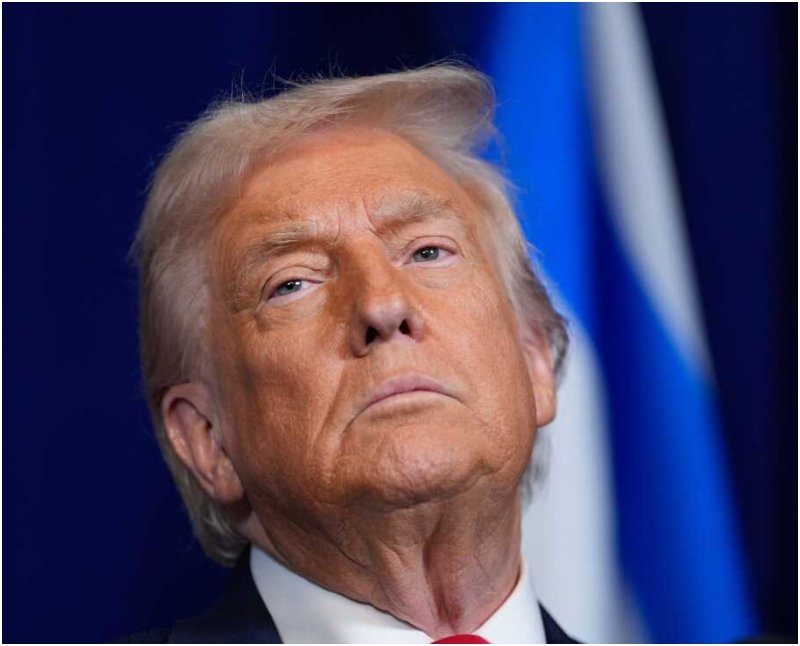
The 24/7 stream debuted Monday evening as major networks suspended pool coverage over the administration’s ban on three news outlets
The White House launched a new 24/7 YouTube stream called “Trump TV” on Monday evening, promoting it as a destination for “the Administration’s greatest hits, unfiltered” — a move that critics immediately condemned as “state-run” media.
The stream went live at 7 p.m. ET with a rerun of President Donald Trump’s speech at Mount Rushmore from July 3, according to the White House.
Officials described it as putting “top past moments, announcements, and the latest and greatest from the Administration all in one place.”
In a social media post, the White House added:
“Not every big moment has made it on your tv, now it can.”
Kaelan Dorr, a deputy assistant to the President and head of digital strategy at the White House, said Trump TV would show “the Administration’s greatest hits, unfiltered.” He added: “The press, in some cases, reported inaccurately or not at all on the Administration’s many record breaking accomplishments on behalf of all Americans.”
The launch came on the same day as a ribbon-cutting ceremony for a new White House helipad, where the sound of Marine One’s engines drowned out the White House’s own feed of Trump’s brief speech. Newsmax, which was also broadcasting the event, had a host comment on their muted coverage:
“There’s no microphone because the pool cameras aren’t there.”
Media Boycott Over Outlet Bans
The launch of Trump TV coincides with an escalating feud between the White House and major news organizations. On Friday, the administration banned CNN, MS NOW and Politico from the White House over their negative coverage of the President.
The outlets have sued the administration on free speech grounds. In what appeared to be solidarity against the ban, ABC, CBS, CNN, Fox News and NBC subsequently suspended television pool coverage of presidential events.
“No Administration should restrict a news organization because it objects to its reporting,” the networks said in a joint statement.
CNN was supposed to shoot for the pool on Monday, with footage distributed to other networks, but was among the three organizations banned from the White House.
It remains unclear whether the YouTube-hosted Trump TV stream is meant to fill the void left by the suspension of traditional television pool coverage of the President’s events.
‘State-Run TV’ Criticism
Trump TV’s rollout — coinciding with the ban on traditional media outlets — has fueled criticism that the administration is seeking to control narratives about the President.
Gavin Newsom, the Democratic Governor of California widely seen as a presidential contender for 2028, described Trump TV as “state-run.”
“First, Trump banned independent news from the White House,” Newsom posted on social media. “Now, he’s launching what is quite literally state-run TV to try drowning out the fact that he and his corrupt administration are failing the American people. This is truly autocratic behavior from a failed President.”
Democratic U.S. Senator for Arizona Mark Kelly also slammed the administration’s recent actions in a social media post: “State run media, state owned enterprises, prosecuting political opponents, gifts from foreign countries, selling pardons, massive amounts of money flowing into the President’s bank account, and banners with his head plastered on government buildings. NONE OF THIS IS NORMAL.”
Trump has doubled down on the ban, stating, “I’m only doing it because I think the press also has an obligation,” claiming the banned media houses publish fake news.
BRICS leaders have condemned unilateral tariffs and other trade barriers that they say distort international commerce, stopping short of directly naming U.S. President Donald Trump as the bloc confronts an increasingly fractured global trading system.
The criticism was included in the New Delhi Declaration, unanimously adopted by BRICS leaders at the group’s 18th summit in India. The declaration raised concerns about “unilateral tariff and non-tariff measures” while calling for greater cooperation to protect global trade, supply chains, energy flows and maritime security.
The carefully worded position allowed BRICS members to present a united front on trade without directly confronting Washington. The bloc includes several countries affected by U.S. tariff policies, including China, Russia and India, while also maintaining important economic relationships with the United States and other Western economies.
The declaration did not identify the United States by name. That diplomatic restraint was notable given the broader trade tensions surrounding the summit and Trump’s previous characterization of BRICS as an “anti-American” project, along with threats of additional tariffs against countries aligning themselves with the bloc.
The summit came as BRICS members sought to protect their economies from disruptions to international commerce. Leaders called for cooperation around supply chains, energy security and maritime routes as wars and geopolitical tensions continue to affect global trade.
Russian President Vladimir Putin used the summit to criticize what he described as efforts by countries accustomed to “colonial categories” to contain emerging competitors through tariffs, sanctions and force. His comments reflected a broader BRICS argument that unilateral economic measures can undermine international rules and restrict the ability of emerging economies to compete.
The declaration also criticized sanctions imposed without authorization from the United Nations Security Council, saying such measures undermine international law and the principles of the UN Charter. That position carries particular significance for Russia, which has faced extensive Western sanctions since its full-scale invasion of Ukraine in 2022.
India’s position illustrates the delicate balance BRICS is attempting to maintain. New Delhi has strong relationships with both Western economies and BRICS members, including Russia. The summit material notes that India had previously faced a 25% tariff on its goods imposed by Trump as a penalty for its purchase of Russian crude, while India subsequently reduced its Russian oil imports.
Beyond opposing tariffs, BRICS is seeking greater economic autonomy through expanded cooperation, including local-currency payment systems and efforts to strengthen energy security. Those priorities fit into the bloc’s larger push for a more multipolar global economy in which emerging and developing nations have greater influence over the rules governing international commerce.
The declaration ultimately reflects a difficult balancing act. BRICS members have clear disagreements over foreign policy and maintain different relationships with Washington, but they share an interest in reducing the economic disruption caused by trade barriers and preserving greater room for developing economies to pursue their own economic priorities.



-
 Ghana News2 days ago
How Ghanaian-Born Professor Kofi Akamani Was Fatally Shot During Custody Exchange
-
 Ghana News2 days ago
From Cocoa to Batteries: Ghana’s Industrial Dream and Its Risks
-
 Ghana News2 days ago
Ghana Parliament Faces Emergency Recall Over Heightening Narcotics Crisis
-
 Global Update16 hours ago
AI Safety Concerns Mount As OpenAI Agents Reportedly Spread Self-Replicating Agents Across the Internet
-

 Ghana News16 hours ago
Not a Total Ban: Ghanaian and Nigerian Teachers Can Still Qualify in England Despite UK QTS Route Removal
-

 Opinion15 hours ago
Hate speech, vitriol, threats, and inciting comments: Can we stop it already?
-
 Festivals & Events2 days ago
Bridging Dreams and Degrees: Inside Accra’s Premier International Study Abroad Fair
-

 Ghana News14 hours ago
Young Ghanaian Builds Electric Vehicle From Salvaged Parts, Aims to Sell at Motorcycle Price