
Global Update
NVIDIA Says Trump Administration Weighed In on Huang’s Reinstatement

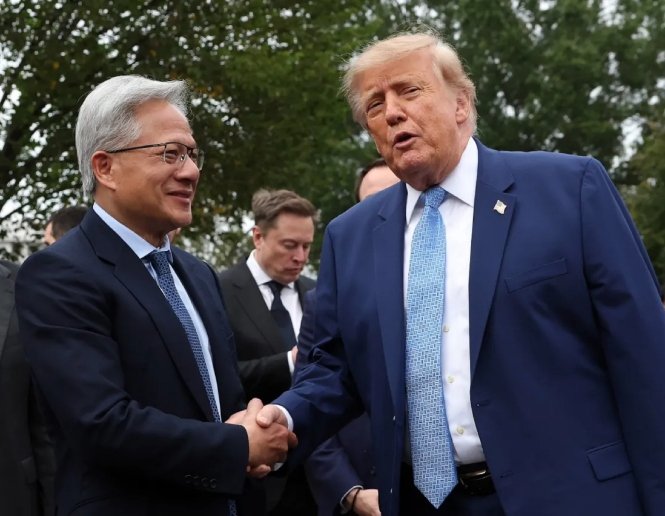
SANTA CLARA, Calif. — NVIDIA disclosed Monday, November 23, 2026, that its Board of Directors received input from “senior levels of the United States government” before unanimously voting to reinstate Jensen Huang as President, CEO, and Board Director, an extraordinary revelation that many say demonstrates how closely Washington is watching the company at the center of the global artificial intelligence boom.
In a press release announcing Huang’s return, the Board said it was “confident that Mr. Huang’s reinstatement poses no national security risk,” based on that government input. The disclosure marks a rare instance of a major public company acknowledging direct consultation with senior federal officials over a CEO appointment.
“The Board believes Jensen is the right person to lead NVIDIA, and that his reinstatement is in the best interests of our stockholders, employees, partners and customers,” said Harvey C. Jones, Chair of the Board.
The news release did not specify which government officials were consulted, what concerns were raised, or what the input consisted of. NVIDIA did not immediately respond to questions about the nature and extent of the government’s involvement.
The consultation comes as NVIDIA faces intensifying scrutiny over export controls, trade compliance, and the security of its technology.
The company said the Board also recently formed a National Security and Export Control Committee, comprised solely of independent directors, to oversee trade compliance and national security risks. The committee is engaging counsel with national security experience, who will in turn retain advisors with expertise in the field.
NVIDIA is also commencing a search for a new Chief Compliance Officer to oversee compliance across the company, reporting to the Nominating and Corporate Governance Committee. The company said it will continue to cooperate with ongoing government investigations and inquiries.
The government’s involvement in the reinstatement decision raises fresh questions about the relationship between Washington and the semiconductor giant, whose chips power much of the world’s AI infrastructure. Analysts said the disclosure signals that national security considerations now extend to the highest levels of corporate governance at America’s most strategically important technology firms.
Huang, who was reinstated effective immediately, said he was “honored to return to NVIDIA and lead one of the most consequential technology companies in the world at the beginning of a new industrial revolution.”
“I take this responsibility with the greatest humility and renewed commitment,” he said.
Colette Kress, who served as interim CEO while continuing as Chief Financial Officer, was thanked by the Board for her “outstanding service.” Jones will remain as Board chair.
The Board’s consultation with the U.S. government adds a new dimension to a story that has already drawn intense interest: the return of the man who built NVIDIA into a trillion-dollar company, now with Washington’s apparent blessing.









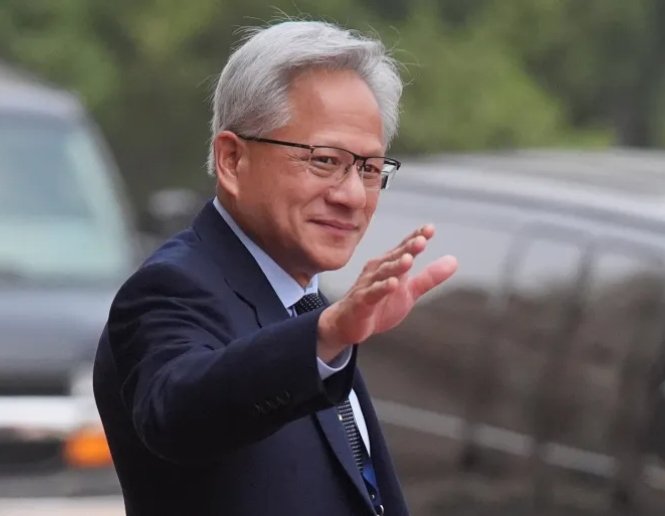
SANTA CLARA, Calif. — Jensen Huang is back as NVIDIA’s President, CEO, and Board Director, but the investigation that shadowed his tenure is far from over.
The company confirmed Monday, November 23, 2026, that a committee of independent directors, assisted by independent counsel, will “proceed to conclusion” its investigation into recent reporting that Huang was the target of a foreign intelligence effort.
The Board said Huang “fully supports the investigation and is committed to cooperating with it.”
The disclosure means NVIDIA’s leader is returning to the helm while questions about a foreign intelligence operation targeting him remain unresolved. The Board did not say what the investigation has found, when it is expected to conclude, or whether the probe could affect Huang’s role.
“The Board believes Jensen is the right person to lead NVIDIA, and that his reinstatement is in the best interests of our stockholders, employees, partners and customers,” said Harvey C. Jones, Chair of the Board. The Board voted unanimously to reinstate Huang after “a series of discussions and meetings” in which it was satisfied with his “candor and ability to lead.”
The investigation was launched after “recent reporting that Mr. Huang has been the target of a foreign intelligence effort.” The Board formed the committee solely of independent directors and retained independent counsel to assist. It reiterated Monday that the committee’s work will continue.
The reinstatement, effective immediately, returns Huang to a company he built into one of the world’s most valuable technology firms. Colette Kress, who served as interim CEO while retaining her CFO role, was thanked for her “outstanding service.”
“I am honored to return to NVIDIA and lead one of the most consequential technology companies in the world at the beginning of a new industrial revolution,” Huang said. “I take this responsibility with the greatest humility and renewed commitment.”
Alongside the ongoing investigation, NVIDIA said it has formed a National Security and Export Control Committee of independent directors to oversee trade compliance and national security risks. The company is also creating a Chief Compliance Officer position and said it will continue cooperating with government investigations.
For NVIDIA’s investors and partners, the dual reality — a celebrated CEO’s return paired with an unresolved intelligence probe — presents a governance question that the Board has not fully answered: what happens if the investigation produces findings that complicate Huang’s leadership?
For now, the Board is projecting confidence. But the probe continues, and so do the questions
Global Update
Americans Raise More Than $944,000 to Help Nolan Wells’ Mother Find Answers Despite Grand Jury Decision
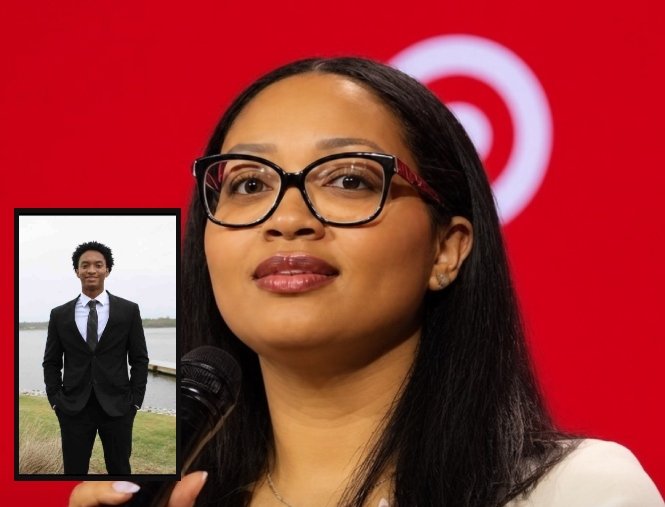
Christine Wonsley is closing in on a $1 million fundraising goal to pursue answers about her 18-year-old son’s mysterious boating death, even after a Mississippi grand jury found no credible evidence of criminal wrongdoing. A separate arrest linked to threats surrounding the high-profile investigation has brought renewed attention to the case.
The mother of Nolan Xavier Wells is approaching a $1 million fundraising milestone as she continues her fight to establish what happened to her 18-year-old son, whose body was recovered from waters off Mississippi’s Gulf Coast following a July 4 boating outing with friends.
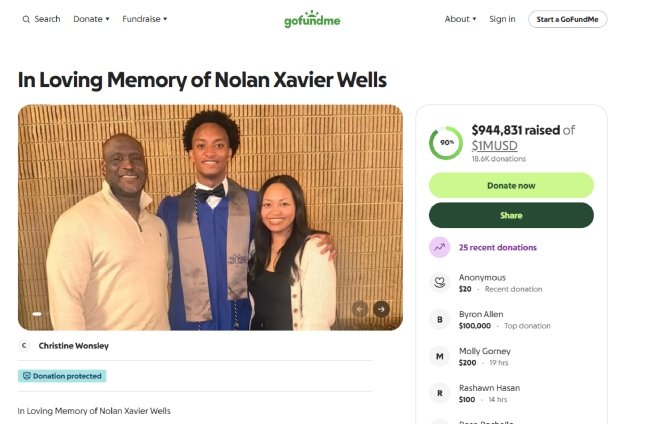
Christine Wonsley has received more than $944,000 in donations through an online fundraising campaign established to help cover funeral and memorial expenses, legal costs and the family’s efforts to investigate Nolan’s death.
The campaign, titled In Loving Memory of Nolan Xavier Wells, had attracted approximately 18,600 donations, with the latest available fundraising total standing at $944,450 against a $1 million target.
The fundraising effort has gained considerable attention through social media, with thousands of supporters sharing Nolan’s story and contributing towards the family’s pursuit of answers.
But while the campaign moves closer to its financial goal, the central question surrounding the teenager’s death remains unresolved: How did Nolan Wells die?
Grand jury declines to bring criminal charges
The latest major development in the death investigation came in September 2026, when a Jackson County grand jury concluded that there was no credible evidence of criminal conduct by individuals who travelled to or from Horn Island with Nolan on July 4.
The decision followed an extensive investigation involving 132 subpoenas and testimony from 43 witnesses.
The grand jury reviewed cellphone records, GPS information, videos, photographs, forensic reports, witness statements and other physical and digital evidence before deciding that there was insufficient evidence to support criminal charges.
Nolan disappeared during the Independence Day outing at Horn Island, a barrier island off the Mississippi coast. His body was recovered from the surrounding waters on July 6, two days after he went missing.
According to the grand jury’s report, a witness saw Nolan slip awkwardly off the side of a boat on July 4. However, the witness could not establish whether he struck his head during the incident.
Investigators also reported finding no evidence of a physical altercation or argument involving Nolan that day.
The grand jury considered the circumstances consistent with accidental drowning, describing it as a diagnosis by exclusion. However, the medical findings did not establish a definitive cause of death.
Medical findings leave questions about Nolan’s death
One of the most significant aspects of the case is that both the Mississippi State Medical Examiner and a forensic pathologist commissioned by the family classified Nolan’s cause and manner of death as undetermined.
The examinations documented bruising, including injuries to the back of his head. However, the available findings did not establish how the injuries occurred or whether they contributed to his death.
The condition of Nolan’s body after recovery also affected the reliability of certain toxicology assessments.
The independent autopsy was commissioned by the family’s legal team, with support from former NFL quarterback Colin Kaepernick’s Know Your Rights Camp, which has supported independent autopsies in cases involving deaths in custody.
Although the grand jury concluded that the evidence did not establish criminal conduct, Nolan’s parents, Christine Wonsley and Elmore Wonsley, have rejected the conclusion as insufficient to answer their questions.
Their attorney, civil rights lawyer Ben Crump, has also challenged the outcome, calling for continued investigation and greater transparency.
Civil rights leader the Rev. Al Sharpton has joined calls for further scrutiny, while members of the Congressional Black Caucus have previously sought federal attention to the case.
The family has maintained that the absence of criminal charges does not explain precisely what happened to Nolan during his final hours.
Mississippi law allows homicide investigation to be reconsidered
Despite the grand jury’s decision, the possibility of further criminal proceedings has not been permanently eliminated.
The grand jury report noted that Mississippi has no statute of limitations for homicide. This means that if credible new evidence emerges suggesting Nolan’s death was not accidental, prosecutors could bring the matter before another grand jury.
The distinction is important because the decision not to indict does not amount to a definitive medical determination of how Nolan died.
For the Wells family, the possibility of further investigation remains significant as they continue seeking answers.
New York man extradited in separate case involving alleged threats
Meanwhile, the controversy surrounding Nolan’s death has continued to generate separate criminal proceedings involving alleged threats against people connected to the investigation.
In the latest development, 25-year-old Christian Anthony Claudio was extradited from New York to Mississippi in November 2026 and booked into the Jackson County jail on a felony charge of making terroristic threats.
According to an affidavit filed in Jackson County Court, Claudio allegedly threatened to travel to Mississippi and kill employees at the Jackson County Chancery Clerk’s Office following a September 25 telephone call concerning the high-profile Wells investigation.
Claudio has denied threatening anyone, saying he was simply trying to obtain information about Nolan’s case.
Before his extradition, he explained in a video recorded from the Otsego County jail that he had called because he wanted to understand what had happened.
“I never had no intent, I simply had questions about Nolan Wells,” he said.
Following his extradition, Claudio made his first appearance in Jackson County, where his bond was set at $50,000. One of the conditions imposed by the court was that he stop posting about the Wells case on social media.
The allegation against Claudio is separate from the investigation into Nolan’s death. He has not been convicted of making the alleged threats.
His arrest also comes amid other prosecutions involving threats directed at witnesses and public officials connected to the investigation.
Fundraising campaign keeps Nolan’s story in the spotlight
For Christine Wonsley, the fundraising campaign represents an important source of financial support as the family navigates the legal, investigative and emotional consequences of losing their son.
The GoFundMe appeal explains that donations will help pay for funeral and memorial expenses, additional investigative efforts, legal proceedings and other costs associated with the family’s loss.
The campaign also highlights the financial and emotional difficulties of taking time away from work to grieve while pursuing answers about the circumstances surrounding Nolan’s death.
With more than $944,000 raised from thousands of contributors, the campaign has demonstrated the extent of public interest in the case.
The growing donations have also helped keep Nolan’s story in public discussion months after his disappearance and death.
Yet, despite the grand jury’s extensive investigation, the family’s independent examination and the continuing legal developments surrounding the case, the question at the heart of Wonsley’s campaign remains unanswered.
Global Update
Content Creation Is Now a College Degree: Universities Turn Influencing Into a Professional Career Path
Content creation is moving beyond social media hobbyism and self-taught influencing, as universities in the United States increasingly recognize the creator economy as a professional industry worthy of formal academic training and dedicated degree programs.
Several colleges are now offering bachelor’s degrees, undergraduate minors and postgraduate qualifications in content creation, digital storytelling, social media strategy and creator entrepreneurship, reflecting the growing commercial importance of online platforms and the businesses built around digital audiences.
The programs are designed to equip students with skills that extend beyond producing videos, posting photographs or attracting followers. They explore the creative, technical and commercial dimensions of digital media, including brand partnerships, audience development, multimedia production, content monetization and digital marketing.
Among the institutions embracing this emerging academic discipline are Emerson College, Arizona State University, St. Bonaventure University, Syracuse University and Quinnipiac University.
Emerson College: Bachelor’s degree in Content Creation

Emerson College in Boston, Massachusetts, is introducing a Bachelor of Arts in Content Creation, with its first class scheduled to begin in Fall 2027.
The program is designed to prepare students for careers across content creation, media production, marketing and the commercial side of the creator economy.
Its introduction reflects the increasing demand for professionals who understand not only how to produce compelling digital content but also how to develop sustainable careers and businesses around it.
Arizona State University: Bachelor’s degree in Content Creation

Arizona State University in Arizona is also offering a Bachelor of Arts in Content Creation.
The program focuses on teaching students how to create, grow and monetize content across digital platforms.
The emphasis on monetization is particularly relevant as creators increasingly operate as entrepreneurs, building personal brands, developing audiences and generating income through advertising, sponsorships and other digital business models.
St. Bonaventure University: Content Creation with practical experience

St. Bonaventure University in New York has introduced a dedicated Bachelor of Arts in Content Creation.
Its curriculum combines social media, digital storytelling, multimedia production and community management.
An important feature is the inclusion of real-world internship experience, giving students opportunities to apply their skills in professional environments rather than relying exclusively on classroom instruction.
The approach recognizes that successful content creation requires practical knowledge of audiences, production processes and the demands of the digital media industry.
Syracuse University: Creator Economy minor
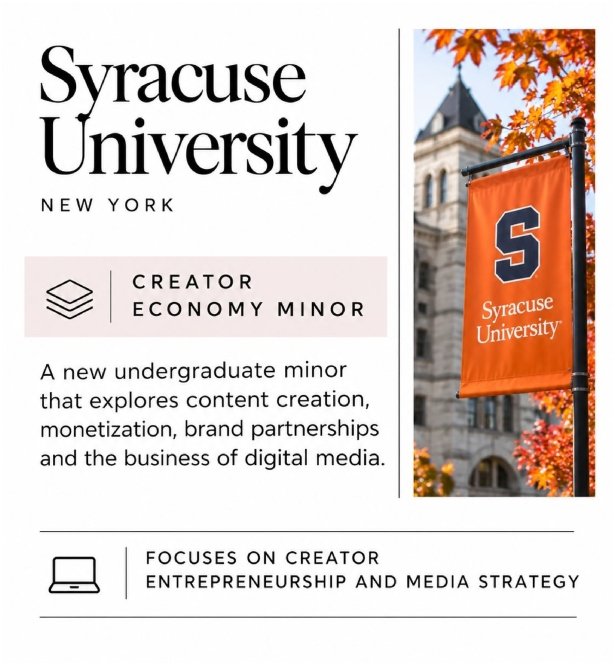
Syracuse University in New York is approaching the emerging industry through an undergraduate Creator Economy minor.
The program explores content creation, monetization, brand partnerships and the business of digital media.
It places particular emphasis on creator entrepreneurship and media strategy, helping students understand how digital creators build commercial relationships, develop business opportunities and turn online influence into sustainable enterprises.
Quinnipiac University: Content Creation and Influencing

Quinnipiac University in Connecticut offers a Content Creation and Influencing minor that combines content production, audience growth, platform strategy and ethical digital influence.
The university also offers a Content Creation Certificate and a master’s degree in Digital Content Creation and Strategy.
Its postgraduate offering signals that the discipline is developing beyond entry-level social media skills into a broader field involving strategic communication, digital business and professional media management.
The creator economy is becoming a serious profession
The emergence of these programs reflects a significant change in how universities and employers view the creator economy.
Content creators are increasingly functioning as independent media businesses, managing production teams, negotiating brand partnerships, analyzing audience behavior and developing multiple revenue streams.
What once appeared to be an informal activity built around posting online has developed into a commercial ecosystem involving advertising, entertainment, public relations, marketing, journalism and entrepreneurship.
For students, formal academic qualifications could provide a structured route into an industry where creativity must increasingly be supported by business knowledge, technical expertise and an understanding of digital audiences.
The development also raises opportunities for universities outside the United States, including institutions in Africa, where a growing population of young digital entrepreneurs is exploring careers in social media, video production, online entertainment and digital marketing.
As the creator economy expands globally, the question is no longer simply whether people can make a living creating content. Increasingly, it is whether universities can prepare the next generation to build sustainable careers and businesses in an industry that continues to reshape media and communication.


-
 Commentary13 hours ago
A Life Cut Short: A Cry for Justice for Phillipa Acquah and An Urgent End to Road Recklessness
-
 Uncategorized1 day ago
Fat Joe Makes Emotional Appeal to Bronx Youth After Ghanaian Teen Javits Frimpong’s Killing
-
 Ghana News13 hours ago
Grieving Mother, Friends Demand Justice After Talented Young Woman Phillipa Acquah Killed by Reckless Motorcyclist
-

 Ghana News1 day ago
German President Steinmeier Arrives in Ghana to Boost Trade and Skills Partnerships
-

 Global Update14 hours ago
Americans Raise More Than $944,000 to Help Nolan Wells’ Mother Find Answers Despite Grand Jury Decision
-
 From the Diaspora1 day ago
Ghanaian-Born Entrepreneur Mawena Tafa Turns Viral Brooklyn Encounter with Strange Man Into Business Opportunity
-
 Ghana News12 hours ago
Explainer: Why COP31 Ended Without a Deal, and What it Actually Means
-

 Ghana News11 hours ago
From Mfantsipim at 9 to University at 12: Meet Diamond Lucas, Ghana’s Albert Einstein