
Arts and GH Heritage
Jeffrey Nortey Turns National Theatre Into a Storytelling Universe at Sold-Out ‘3 Faces’ Show

For one remarkable evening in Accra, Jeffrey Nortey proved that a single performer, armed with imagination, discipline, and a catalogue of unforgettable characters, could command one of Ghana’s most prestigious stages without relying on a lineup of supporting acts.
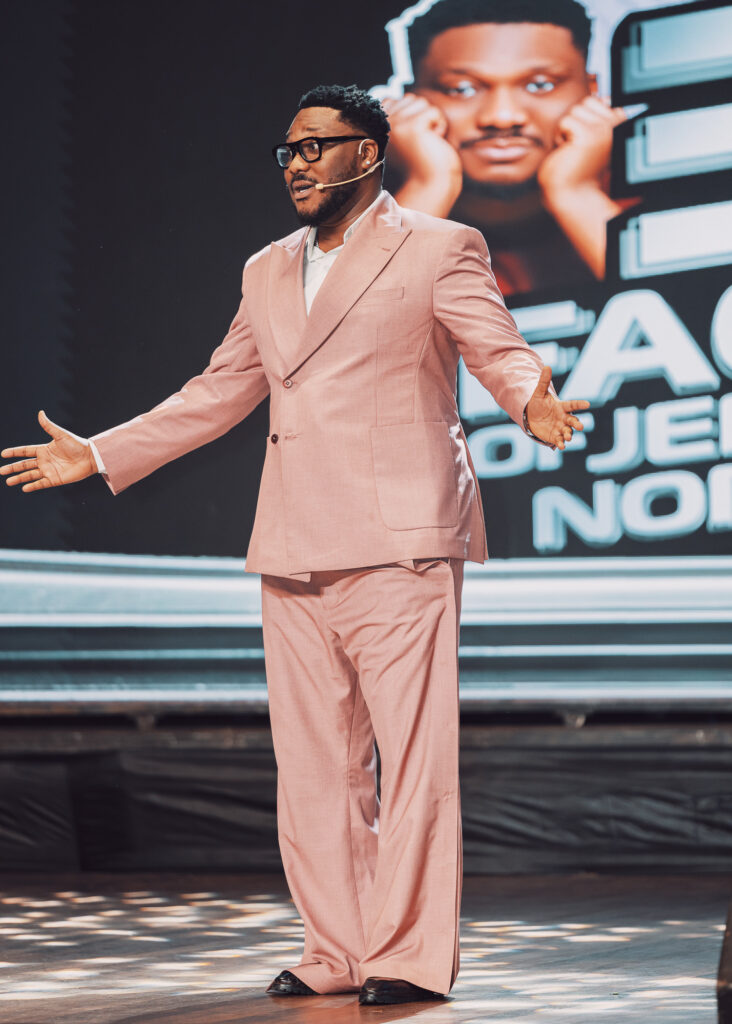
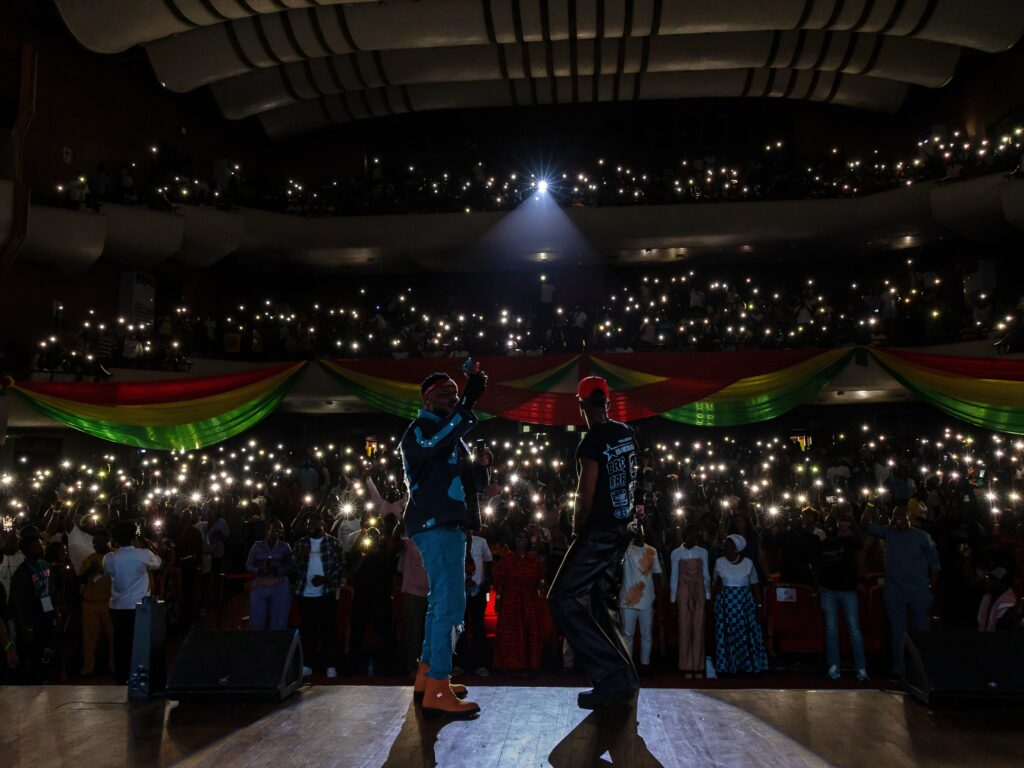
The third edition of 3 Faces of Jeffrey Nortey, held at the National Theatre on June 12, drew a capacity audience and delivered a multi-layered production that blended film, theatre, comedy and live performance into one immersive experience.
A Show That Started on Time and Set the Tone

Long before the scheduled start, patrons had begun filling the National Theatre despite heavy Friday traffic across the capital. Guests mingled, took photographs and settled into an atmosphere charged with anticipation.
Then came the first surprise. At exactly 7:15 p.m., the production began.
In an entertainment landscape where delayed starts are often expected, Nortey’s punctuality immediately signaled a commitment to professionalism and audience respect.
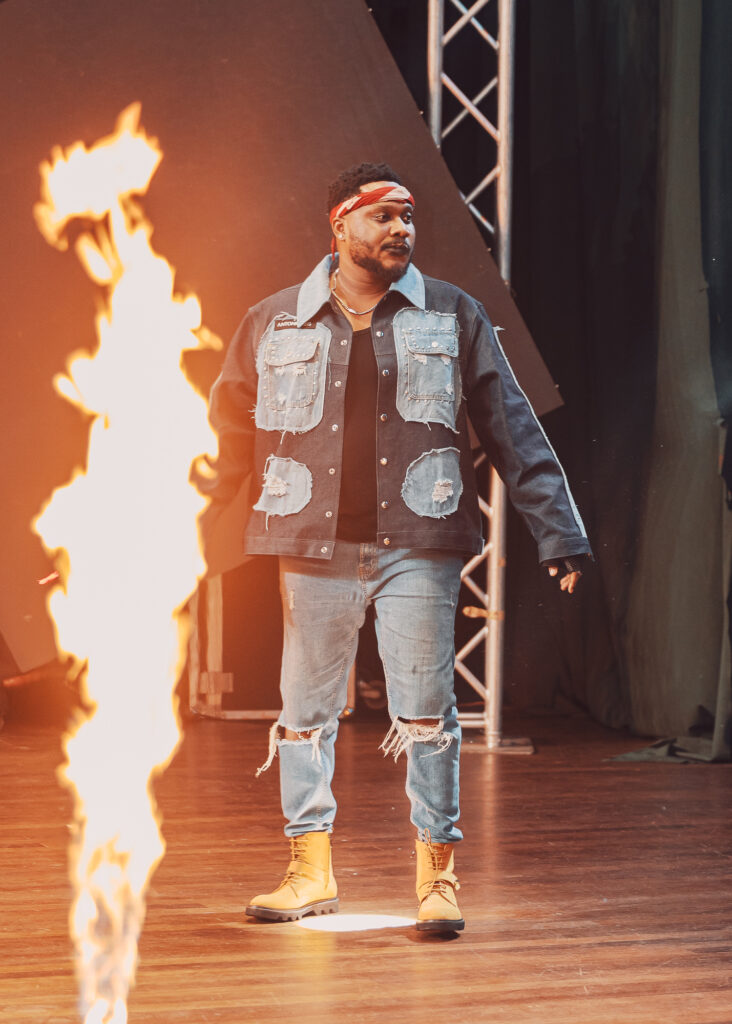
The evening opened with a cinematic experience rather than a traditional stage introduction. Massive screens transformed the auditorium into a futuristic digital world before premiering Here Comes The Bride, a film produced by Nortey and directed by Abyna Koblyn.
Starring Ben Affat, Serwaa Dosoo, Aaron Adatsi and Jeffrey Nortey, the film follows two friends attempting to help a heartbroken mechanic stop the woman he loves from getting married, only to find themselves in increasingly dangerous circumstances.
Audience members remained engaged throughout the screening, responding with laughter, suspense and applause.
Theatre Meets Reflection
Following the film, the production shifted seamlessly into live theatre.
Making his first stage appearance in a striking pink-tinted suit, Nortey welcomed the audience and acknowledged members of the film’s cast and crew before guiding the evening into a more reflective space.
One of the most emotional moments came when he paid tribute to the late Beverly Afaglo. Accompanied by a montage and a minute of silence, the tribute briefly transformed the mood inside the auditorium, reminding audiences of life’s fragility.
The theatrical segment that followed featured actress Monica in a performance exploring faith, disappointment, preparation and timing. Set within an office environment, the production challenged audiences to reflect on the difference between expectation and reality.
Many patrons later described the performance as both entertaining and deeply thought-provoking.
Dragon Steals the Night
The evening’s most anticipated segment belonged to Dragon, Nortey’s beloved comic character.

After a dramatic video sequence showing Dragon navigating heartbreak and personal transformation, audiences watched him ride through the streets of Accra on a motorcycle accompanied by fellow bikers before arriving at the National Theatre.
Moments later, LED screens opened to reveal Dragon on a motorcycle inside the auditorium itself.
The reaction was immediate and thunderous.
As music, fireworks and cheers filled the venue, Dragon launched into a high-energy set packed with humour, social commentary and audience interaction.
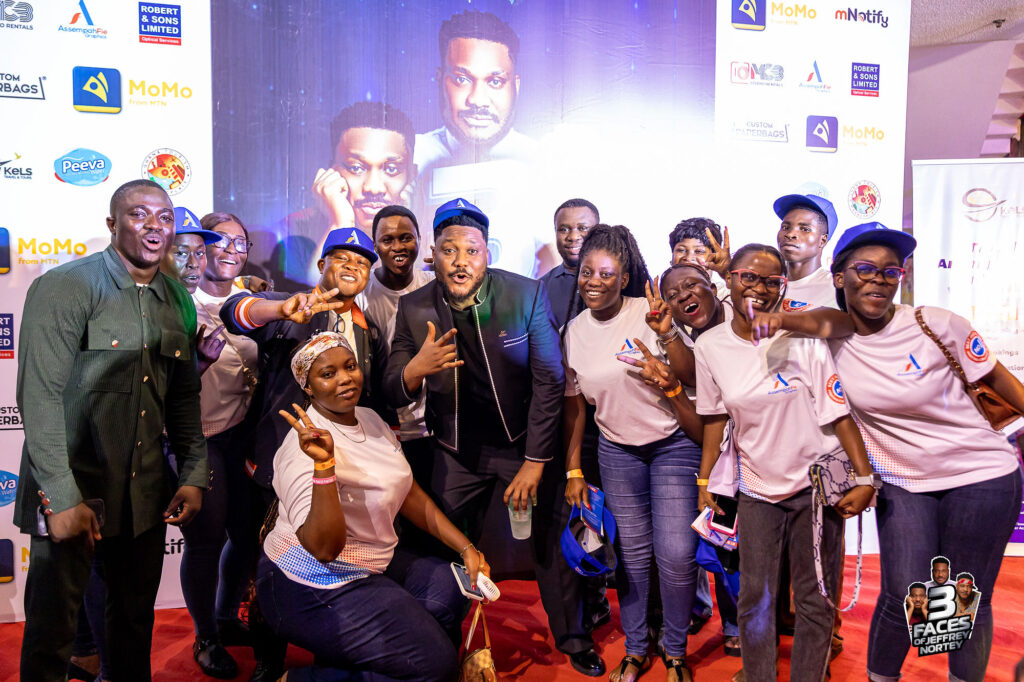
Special appearances by Nana Ama McBrown, Jeneral Ntatia, Parrot Mouth and musician EL elevated the segment further, creating some of the evening’s most memorable moments.
A Growing Creative Force
By 10 p.m., Nortey brought the production to a close with a heartfelt acknowledgement of sponsors, partners and supporters before recording his trademark audience selfie video.
Yet many attendees lingered long after the final bow.
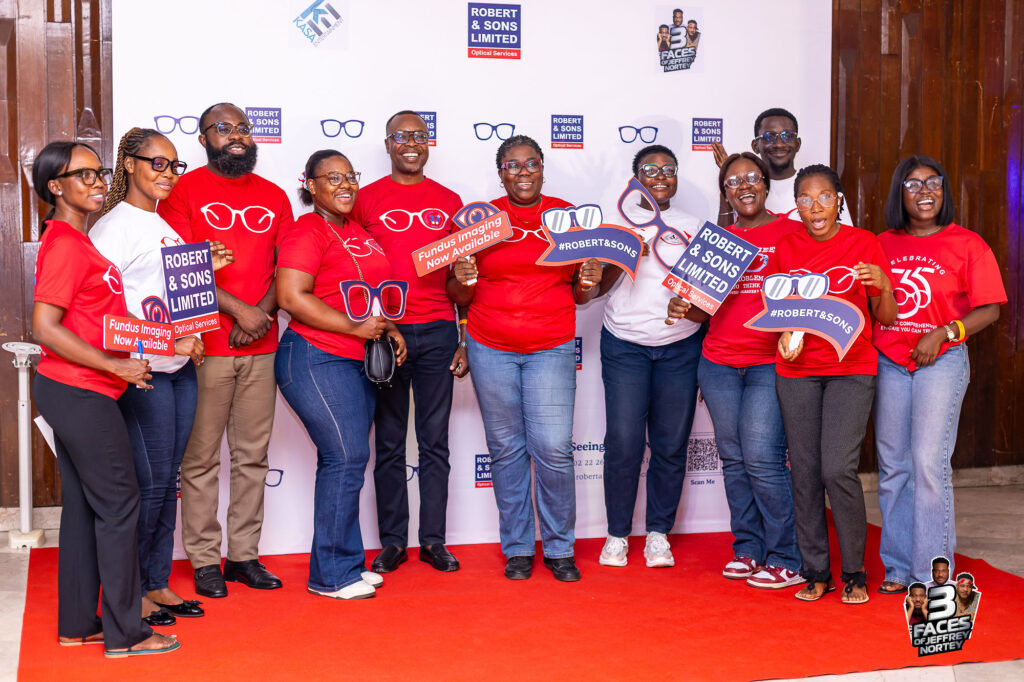
The conversations continued in the aisles, foyers and outside the venue, suggesting that 3 Faces of Jeffrey Nortey had achieved something beyond entertainment.
With three successful editions behind him and another sold-out National Theatre performance completed, Jeffrey Nortey continues to strengthen his reputation as one of Ghana’s most inventive storytellers, blending film, theatre and character performance into a format that is increasingly becoming a cultural phenomenon.









Arts and GH Heritage
Inside Togo’s Abandoned Colonial Building, African Artists Reclaim Cultural Memory
A shared bowl of palm wine, a handful of kola nuts or a lively exchange between market traders can tell a story that words alone cannot capture.
In Atakpamé, Togo, artists Kojo Biney and Ray Agbo are exploring these everyday encounters as powerful expressions of African identity, using art to reconnect cultural memory with a complicated colonial past.
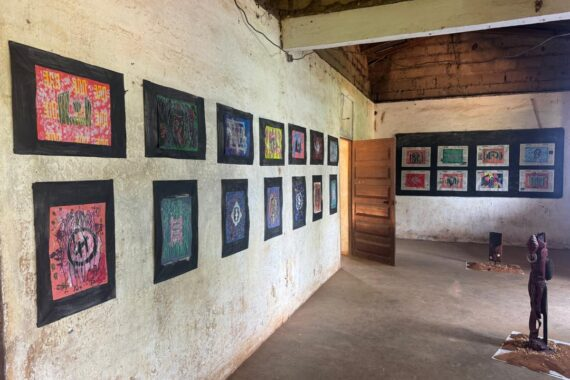
Their exhibition, Conversations: Symbolism and Lifestyle, forms part of the Karp Kamina Artists and Researchers Residency 2026.
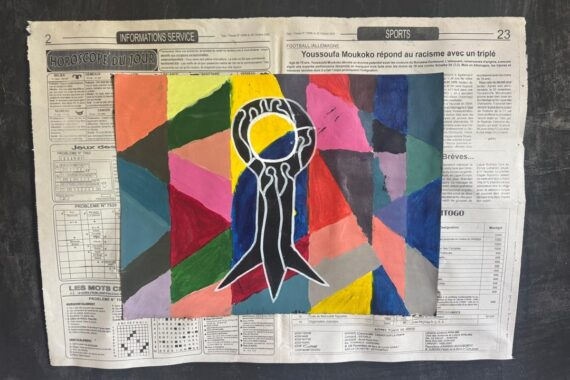
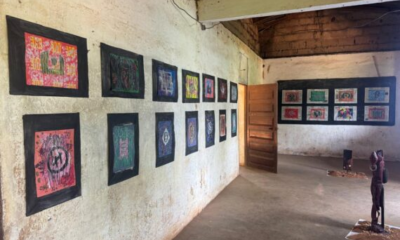
Presented inside an abandoned German colonial building, the exhibition brings paintings and sculptures into dialogue with newspaper pages, creating an unusual encounter between personal memory, public history and contemporary African expression.
Reading the Symbols of Everyday Life
Atakpamé, known as the “city of seven hills”, sits within a cultural landscape shaped by Ana and Ewe-speaking communities. Here, social relationships are often expressed through gestures, shared rituals and objects whose significance extends beyond their practical use.
Biney and Agbo draw attention to these familiar practices, inviting audiences to recognise the cultural knowledge embedded in ordinary interactions.
Their work suggests that traditions survive not only through formal ceremonies or written records, but also through repeated acts of hospitality, negotiation and togetherness.
A Colonial Space, Reclaimed Through Art
The exhibition’s setting adds another dimension. A building associated with German colonial rule becomes a place where contemporary African artists examine the identities and relationships that history cannot fully contain.
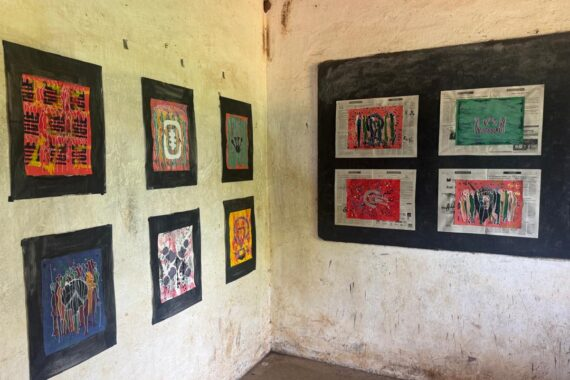
The newspapers displayed alongside the artworks further complicate the encounter, prompting questions about whose stories are recorded and how collective memory is preserved.
Closing on October 16, 2026, the exhibition offers a timely reminder that heritage is not simply inherited; it is continually interpreted.
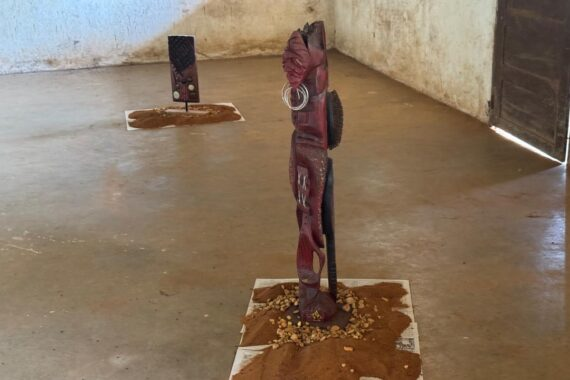
By transforming an abandoned building into a space for artistic exchange, Biney and Agbo invite visitors to see cultural memory as something communities can actively question, share and renew.
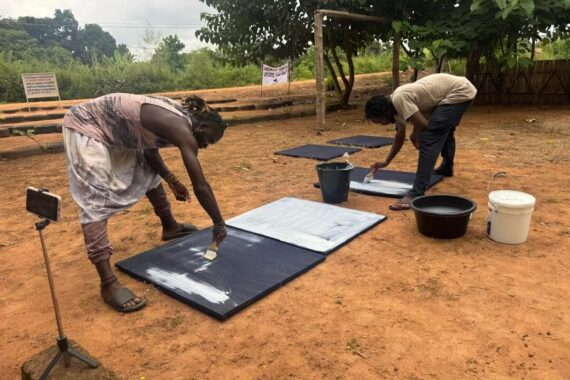
An international residency in Togo is bringing history into conversation with contemporary art, inviting a new generation to rethink how cultural heritage is preserved and experienced.
The ruins of an old radio station might appear to belong to another time. At Karp Kamina in Togo, however, the past is finding new expression through music, dance, research and artistic experimentation.
On October 5, 2026, the Karp Artists and Researchers Residency opened with traditional music and dance, welcoming participants from Togo, Ghana, Benin, Norway and beyond for two weeks of creative exchange.
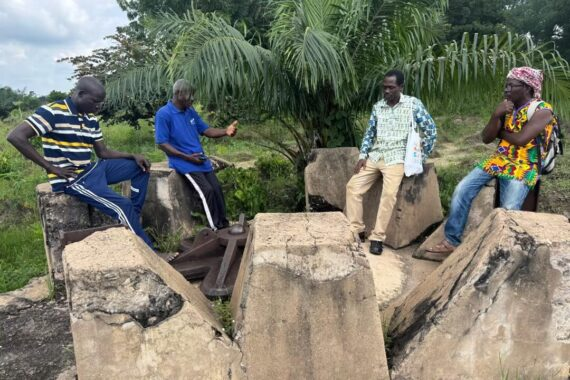
Their mission reaches beyond documenting history: it is about finding new ways to make that history matter today.
When History Becomes Creative Material
At the centre of the residency is Radio Kamina, whose history has shaped the site’s significance. Between 2016 and 2022, the programme concentrated on exploring more than a century of the station’s past.
The current initiative expands that work, inviting artists, academics, dancers, musicians and culinary practitioners to interpret the site through different creative disciplines.
The 2026 edition, themed Cultural Revitalization II: Reclaim • Reimagine • Revive, treats heritage as something that can evolve rather than remain confined to archives and physical remains.
Visits to historical and tourist sites around Karp Kamina provide further inspiration, connecting participants’ work to the surrounding cultural landscape and community.
A Shared Responsibility for Heritage
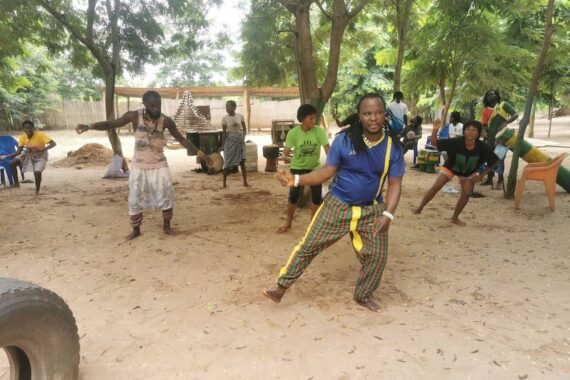
The residency also raises a question relevant across West Africa: who should shape the future of historic places?
Preservation requires more than artistic vision. Local residents, traditional leaders, public institutions and investors all have roles to play in ensuring that heritage initiatives benefit the communities connected to them.
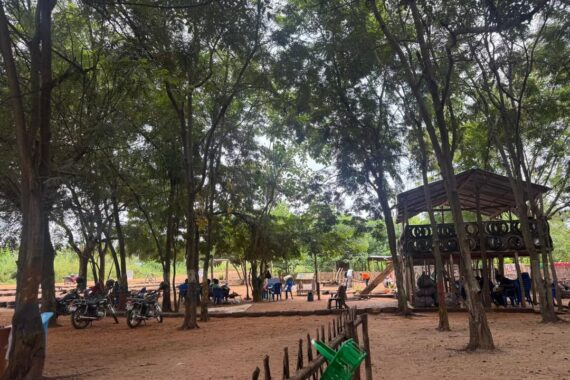
With support from local authorities and other sponsors, the project hopes to strengthen Kamina’s artistic life and attract wider cultural and research interest.
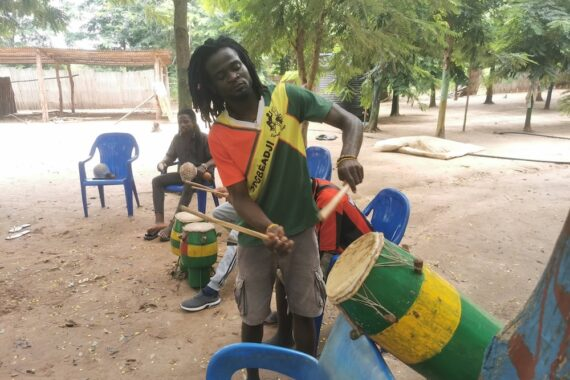
For Ghanaian audiences familiar with ongoing efforts to preserve historic forts, palaces and traditional arts, the initiative offers a related lesson: history becomes more meaningful when communities can engage with it creatively.
At Karp Kamina, the past is not simply being remembered. It is being given room to speak again.
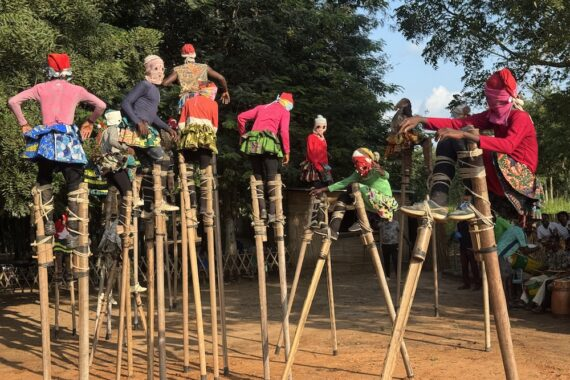
The 2026 edition of the Karp Kamina Artists and Researchers Residency began on a high note as the Zogbéadji Band, officially known as the Association Culturelle et Artistique Zogbéadji d’Atakpamé (ACAZOT), delivered a magnetic opening performance that transformed the gathering into a vibrant celebration of traditional music, dance, and cultural memory.
From the moment the drums began to speak, the atmosphere shifted. Drawing on years of discipline and experience, the performers unleashed a powerful blend of energetic dance and frenzied percussion that immediately captivated residents and participants.
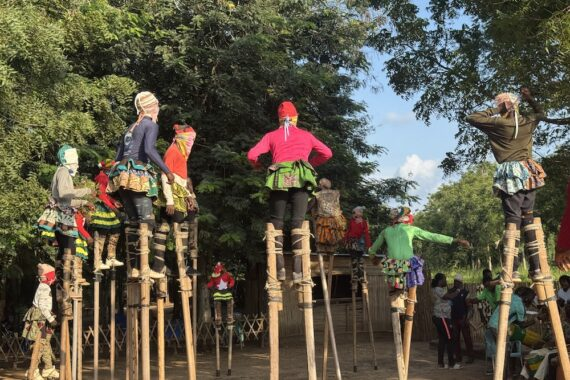
Their performance was not merely entertainment; it felt like an encounter with a living cultural tradition, expressed through rhythm, movement, costume, and ritual.
At the heart of the presentation was the spectacular Tchébé dance, one of the most visually stunning traditional dance forms in the repertoire.
Perched on towering wooden stilts that can reach as high as six meters, the dancers performed daring acrobatics with extraordinary confidence and balance.
Their movements were at once graceful and ferocious, creating moments of genuine suspense as they seemed to defy both gravity and physical limits.
The soundscape was equally commanding. Led by Tsèviska Le Baobab, the ensemble generated an intense, ground-shaking pulse that seemed to travel through the audience’s bodies.
Among the instruments was the sacred Aran-Lakou, or grand talking tom-tom, whose deep, resonant voice holds significance in the local Ifè language and tradition. In the hands of experienced percussionists, the drum became more than an instrument; it became a vehicle for communication, ceremony, and collective memory.
Visually, the performers reinforced the music’s power with vibrant traditional costumes and fierce body paint, creating a striking spectacle that complemented the relentless rhythm of the drums.
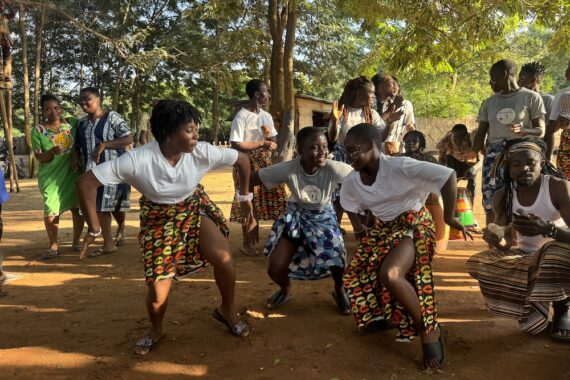
A gentler counterpoint came from young kora player Marie Jo Atikpolater, whose soft, flowing melodies brought a moment of calm amid the intensity. Her playing showcased the evening’s remarkable range, moving seamlessly from explosive percussion to the kora’s delicate resonance.
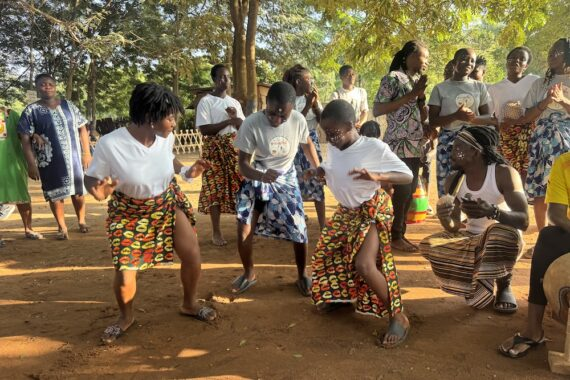
As an opening statement for the Karp Kamina residency, the Zogbeadji Band offered more than a performance. It presented tradition as dynamic, physical, and enduring—capable of thrilling contemporary audiences while carrying a people’s memory and identity into the future.



-
 Ghana News23 hours ago
OBITUARY: Gamal Gorkeh Nkrumah, Son of Ghana’s Founding President, Dies in Cairo
-

 Health & Wellness1 day ago
Walking Is More Than Exercise: Small Steps That Can Transform Your Health
-

 Festivals & Events21 hours ago
MaddFest 2027: Welcome the New Year with a Night of Celebration in Accra
-

 Sights and Sounds2 days ago
EPP BookShop at Legon: A Destination for Students, Families and Book Lovers
-
 Homes & Real Estate2 days ago
Building Smarter in Ghana: Could Plastic Rebar Clips Improve Construction Efficiency?
-
 Arts and GH Heritage1 day ago
Inside Togo’s Abandoned Colonial Building, African Artists Reclaim Cultural Memory
-
 Global Update22 hours ago
Wave of Student Killings at Mexico Universities Raises Safety Concerns
-
 Ghana News22 hours ago
Mahama to Churches: The Real Sermon Is Written After the Closing Prayer