
Commentary
Ghana’s Suspension of Diaspora Citizenship Applications: A Clash Between Welcome and Regulation


In a move that has reignited discussions on identity, restitution, and national sovereignty, the Ghanaian government has temporarily halted new citizenship applications for historical diasporans—descendants of Africans forcibly displaced during the transatlantic slave trade.
Announced on February 1, 2026, the suspension affects applications submitted after January 31, 2026, but spares those already in process or approved. While officials explain the pause as a necessary administrative reset to enhance transparency and efficiency, critics see it as a symptom of deeper tensions between Ghana’s emotive calls for diaspora “return” and the practicalities of modern immigration law.
This explainer delves into the background, controversies, and implications, drawing on an earlier release by the Ghana government and reporting from the Africa Reporters Network.
The Roots of the Program: From “Year of Return” to “Beyond the Return”
Ghana’s outreach to the African diaspora began in earnest with the 2019 “Year of Return” initiative, marking 400 years since the first enslaved Africans arrived in what is now the United States. This campaign invited people of African descent to visit, reconnect with their heritage, and consider Ghana as a spiritual and literal home. Building on its success, the “Beyond the Return” program was launched to sustain momentum, encouraging not just tourism but long-term investment, residency, and citizenship.
Under the Citizenship Act 2000 (Act 591) and its amendments, historical diasporans—defined as those whose ancestors were displaced centuries ago, distinct from recent African immigrants—could apply for the “Right of Abode” (permanent residency) or full citizenship. The program has drawn thousands of applicants, including high-profile figures, and spurred investments in sectors like real estate, tourism, agriculture, and technology. According to the government’s release, it has fostered cultural reconnection events and economic contributions, positioning Ghana as a leader in pan-African re-engagement.
A pivotal moment came in 2024 under the Akufo-Addo administration, when approximately 575 Black Americans were granted citizenship in a ceremonial event symbolizing restorative justice for the legacies of slavery. However, as detailed by the Africa Reporters Network, this gesture exposed underlying flaws: the process lacked robust structure, clear timelines, and the capacity to handle surging demand. What was hailed as a beacon of inclusion revealed an administratively underdeveloped system, setting the stage for future friction.
The Suspension: A “Necessary Pause” or Policy Reversal?
With a new administration in power, the government issued a joint statement from the Ministry of the Interior and the Diaspora Affairs secretariat at the Office of the President, suspending new applications to allow for a comprehensive review. Officials emphasized that the halt is temporary and administrative, aimed at “strengthening systems, reviewing processing timelines, updating eligibility guidelines where needed, and ensuring the program continues to serve both diaspora applicants and the national interest in a sustainable manner.” A ministry spokesperson reiterated Ghana’s commitment to welcoming people of African descent, clarifying that the pause addresses bottlenecks such as verification challenges, documentation authenticity, and concerns over resource allocation and security.
The review is projected to span several months, after which revised guidelines will be published, and applicants in the pipeline will receive individual updates. Importantly, the suspension does not revoke existing approvals or disrupt ongoing processes, underscoring the government’s intent to refine rather than abandon the initiative.
This decision followed weeks of escalating protests, boycott calls, and emergency meetings, as reported by the Africa Reporters Network. It has deepened an existing rift, highlighting the clash between Ghana’s symbolic invitations and the legal imperatives of citizenship in a sovereign state.
Flashpoints: DNA Tests, Fees, and the Backlash
The suspension amplified controversies surrounding proposed changes to the application process, particularly the introduction of mandatory DNA evidence and a parliamentary-approved fee of 25,000 Ghana cedis (approximately $1,600 USD at current rates). According to the Africa Reporters Network, these requirements became central flashpoints, transforming what was envisioned as a restorative pathway into what critics called a bureaucratized immigration hurdle.
Diaspora leaders argued that DNA tests overlook the historical erasure of records during slavery, which severed family lineages and identities. They contended that such mandates undermine the program’s spirit of recognition and healing. Similarly, the fee—endorsed by Parliament and thus embedded in national law—was decried as commodifying citizenship, shifting it from an act of justice to a transactional process.
In response, a coalition of Black and African Historic Diaspora organizations advocated for a temporary boycott of the citizenship process, framing it as a push for dialogue, consultation, and clarity rather than outright rejection of Ghana. When the suspension was announced late at night on February 1, many in the diaspora hailed it as a tactical victory, evidence that their advocacy had resonated, though the core disputes linger unresolved.
Diverse Perspectives: Caution, Defense, and Realism
Reactions within the diaspora are not monolithic. Some voices, as noted by the Africa Reporters Network, urge caution against unchecked expansion of citizenship, citing Ghana’s domestic challenges like housing shortages, land pressures, and job scarcity. They warn that granting citizenship amid these strains could exacerbate inequalities for native Ghanaians.
Prominent among defenders of the reforms is Dawn Dickson, a naturalized Ghanaian citizen and businesswoman. In insights shared via the Africa Reporters Network, Dickson supports the structured approach, viewing citizenship as a protected legal status rather than an emotional entitlement. She advocates for flexibility, such as waiving certain requirements for those demonstrating strong financial ties to Ghana, but insists that cultural and historical connections, while vital, should not supersede verifiable DNA ancestry. Dickson also challenges the notion that citizenship guarantees business success in Ghana’s intricate, relationship- and tribe-driven economy. Instead, she advises aspiring returnees to prioritize residency, investment, and building local networks, allowing naturalization to follow organically.
At the same time, the Africa Reporters Network points out that Ghana’s own rhetoric—years of “homecoming” campaigns—has fueled unrealistic expectations, blurring the lines between symbolic embrace and legal inclusion, and allowing aspirations to outpace institutional readiness.
Broader Implications: Belonging, Sovereignty, and the Future of Return
This episode exposes a fundamental debate: Should citizenship for historical diasporans be a form of restorative justice, redressing centuries of displacement, or must it adhere to standard legal frameworks prioritizing national interests? Ghana asserts its sovereignty in managing borders and resources, while diaspora groups demand recognition of shared history and equity.
Globally, the suspension could influence similar programs in other African nations, like Senegal or Benin, which also court diaspora investment. For Ghana, it risks dampening the momentum of “Beyond the Return,” which has boosted tourism and remittances but now faces scrutiny over sustainability. Diaspora advocacy groups have called for greater transparency during the review, with some expressing disappointment that the pause might erode trust.
As revised guidelines are awaited, the promise of “return” hangs in balance—caught between heartfelt emotion and the rigors of law. Both sides agree that the conversation on belonging is far from over, with the potential for a more inclusive framework emerging from this contested pause.
For now, historical diasporans eyeing Ghana as home are advised to monitor official channels for updates, while the nation grapples with defining who truly “returns” and on what terms.

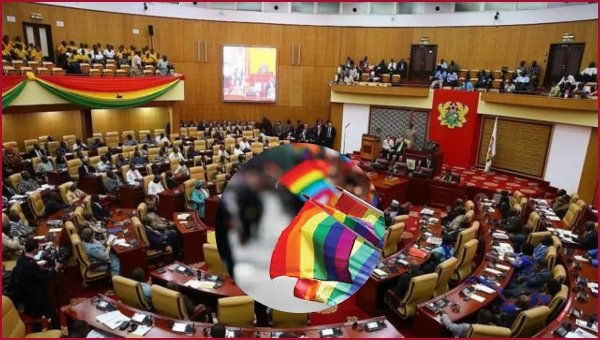
In this opinion piece, Isaac Ofori argues that Ghana’s prolonged indecision on the proposed anti-LGBTQ legislation is damaging the nation’s credibility. He critiques the politicization of the issue—from campaign promises by President Mahama to the current administration’s claim that it is not a priority—and warns that this policy vacuum fuels social tension and misinformation. Ofori calls for leadership that provides constitutional clarity rather than ambiguity, balancing majority values with human rights obligations to preserve Ghana’s reputation as a stable democracy.
Ghana’s credibility at stake in LGBTQ policy debate
By Isaac Ofori (Tutor at Winneba Senior High School)
The ongoing national debate over the proposed anti-LGBTQ legislation has uncovered a deeper challenge within Ghana’s governance system: the difficulty of balancing constitutional principles, political convenience, and societal values during times of intense public pressure.
What should have been a structured legislative process has turned into a prolonged cycle of political battles, judicial actions, and shifting signals from the executive branch.
This pattern raises an important question for public policy: can Ghana sustain credibility both at home and abroad without a clear, principled, and consistent stance on such a critical issue?
At the heart of the controversy is the procedural deadlock that arose before the bill could be signed into law by former President Nana Addo Dankwa Akufo-Addo. The referral of the issue to the Supreme Court of Ghana added a constitutional layer that, although necessary, effectively delayed executive action.
In a constitutional democracy, such caution is neither a sign of weakness nor avoidance; it reflects fidelity to the rule of law. However, Ghana’s Parliament’s failure to navigate this situation decisively has created a policy vacuum, which continues to fuel public frustration.
What followed was the politicization of the issue, arguably undermining both policy integrity and public discourse. The opposition at the time, led by the National Democratic Congress (NDC), made the matter a central campaign theme.
Statements and rhetoric from key figures, including then-candidate and now-President John Dramani Mahama, heightened public expectations that a clear legal position would be established. Religious institutions, reflecting prevailing societal values, reinforced this momentum, turning a legislative proposal into a moral referendum.
However, governance, unlike campaigning, requires coherence, consistency, and accountability. The apparent shift in urgency by the current administration, particularly the claim that the LGBTQ issue is not a national priority, indicates a disconnect between campaign promises and actual leadership.
Such ambiguity risks damaging public trust. More importantly, it leaves all stakeholders, religious organizations, civil society, and the LGBTQ community in a state of uncertainty.
From a policy perspective, ambiguity is costly. For supporters of the bill, the lack of clear action indicates hesitation or political caution. For critics, including international human rights groups, it reinforces perceptions of inconsistency and a selective commitment to rights-based governance.
Ghana’s long-standing reputation as a stable democracy rooted in the rule of law is best preserved not through silence but through clarity grounded in constitutional principles.
Recognizing how the framing of this debate has sometimes contributed to increased social tensions is also crucial. Political messaging during elections arguably heightened fears and solidified public opinion, making responsible policymaking more difficult. When political leaders use sensitive social issues for electoral advantage, they have a duty to handle the consequences with equal seriousness once in office.
The path forward needs leadership that rises above partisan interests. If the current administration takes a firm stance, it should communicate it openly and act within the constraints of the Constitution.
However, if the issue remains contested within the executive branch, a broader national conversation grounded in law, human rights commitments, and Ghanaian cultural values becomes crucial. What cannot continue is a policy void that allows speculation, misinformation, and social hostility to flourish.
Ultimately, leadership’s role is not just to mirror public opinion but to guide it responsibly. Issues related to rights, identity, and law require a careful balance between majority values and constitutional safeguards.
Ghana cannot afford prolonged indecision on a matter that lies at the intersection of domestic unity and international oversight. This moment demands clarity, not as a political tactic but as a constitutional duty.
This article was first published on GhanaWeb on April 1, 2026

Conventional wisdom dictates that rising prices should lead to falling demand. However, this article challenges that notion by delving into the complex and often counterintuitive relationship between global oil prices and petrol consumption in Ghana. Drawing on recent research analyzing market data from 2016 to 2024, Rafael Adjpong Amankwah reveals that higher crude oil prices do not automatically suppress demand. Instead, factors like consumer hoarding behavior in anticipation of future hikes and the essential nature of petrol for transport and logistics can keep consumption stable or even cause it to spike temporarily.
Rising oil prices could trigger unexpected petrol demand in Ghana
Fuel prices may rise again soon, but what if higher prices don’t actually reduce petrol consumption in Ghana?
Discussions about rising global crude oil prices are once again dominating energy market conversations, raising concerns about higher petrol prices and increased transport costs across Ghana.
Yet the relationship between oil prices and petrol consumption may not be as straightforward as many assume. Conventional economic theory suggests that when fuel prices rise, consumers should reduce consumption. However, recent research analyzing Ghana’s petrol market reveals a more complex pattern of behavior.
The study finds that crude oil prices exhibit a positive relationship with petrol consumption, indicating that higher prices do not necessarily suppress demand as standard models predict.
This pattern reflects several structural characteristics of Ghana’s economy.
First, alleged BDC’s stockpiling increases the potential for increased purchases(demand) vis a vis consumption as consumers often engage in anticipatory or hoarding behavior when price increases are expected.
Second, global crude oil price increases do not necessarily reduce petrol consumption in Ghana in the short run. Petrol is an essential input for transport, logistics, and small business operations, meaning substitution possibilities are limited. As a result, consumption may remain stable or even increase due to inventory adjustments and expectations of further price hikes
These findings also carry an important methodological implication that Traditional symmetric demand models, which assume that price increases and decreases produce equal but opposite responses in consumption, appear to misrepresent the dynamics of Ghana’s petrol market.
When asymmetric price behavior such as the Rock-and-Feathers effect interacts with structural demand constraints, consumption responses become more complex than standard theory predicts.
Using monthly national data from 2016 to 2024 and applying a nonlinear econometric approach, the study examined how crude oil prices, exchange rates, inflation, and domestic fuel taxes affect petrol consumption.
The findings show that petrol consumption in Ghana responds asymmetrically to price changes. In practical terms, this means that price increases and price decreases do not affect consumption in the same way.
The research also highlights the importance of exchange rate movements. Because Ghana imports most of its refined petroleum products, a depreciation of the cedi significantly increases the local cost of fuel and tends to reduce consumption.
Perhaps the most influential factor identified in the study is domestic fuel taxation. Changes in taxes, levies and margins have a stronger effect on petrol consumption than movements in global crude oil prices. In particular, reductions in fuel taxes tend to stimulate consumption much more strongly than tax increases suppress it.
These findings suggest that policymakers seeking to manage fuel demand, inflation, and fiscal stability should pay close attention to domestic fuel pricing structures rather than focusing solely on international oil price movements.
As global oil markets face renewed volatility, understanding how Ghanaian consumers and businesses respond to fuel price changes will become increasingly important for economic planning and energy policy
Understanding the behavioral responses behind fuel consumption is critical for managing energy affordability, fiscal stability, and economic resilience.
The next time fuel prices rise in Ghana, the assumption that “higher prices reduce consumption” may need to be reconsidered.
In reality, the dynamics of petrol demand are shaped by behavioral responses, policy decisions, and exchange rate pressures, not just global crude oil prices. Understanding these asymmetries could be the difference between reacting to fuel price shocks and actually managing them.
Rafael Amankwah is a professional in Ghana’s downstream energy sector with a background in energy economics and investment strategy. He is passionate about advancing sustainable energy solutions and applies research, behavioral insights, and innovation to support smarter energy policies and business models.
Commentary
Ghana Must Choose Diplomacy Over Alignment in the Israel–Iran Crisis: Lessons from Ghana’s Peacekeeping and Non-Aligned Legacy

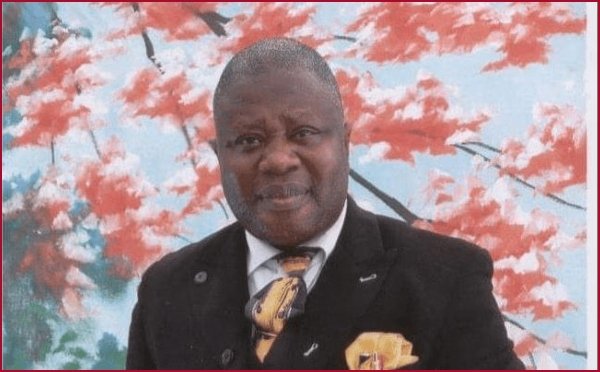
In an open letter to Israel’s ambassador, author Seth K. Awuku argues that Ghana must resist pressure to take sides in the escalating Israel-Iran conflict. Drawing on the recent wounding of Ghanaian peacekeepers in Lebanon and the nation’s non-aligned legacy, he calls for a return to diplomacy, restraint, and the protection of national interest over strategic alignment. Read the full commentary below.
Ghana Must Choose Diplomacy Over Alignment in the Israel–Iran Crisis: Lessons from Ghana’s Peacekeeping and Non-Aligned Legacy
By: Seth K. Awuku
Your Excellency Ambassador Roey Gilad,
I extend sincere diplomatic courtesy and appreciation for your prompt humanitarian response following the missile strike that wounded Ghanaian peacekeepers in southern Lebanon.
In times of shared sorrow, words carry profound weight. Your description of the attack as “tragic” and “catastrophic,” along with your wishes for the swift recovery of the injured soldiers, reflects genuine compassion. Ghana receives such gestures with gratitude, for they affirm our shared humanity amid the smoke of conflict.
Yet only two days earlier, on March 5, during a public briefing in Accra, you urged Ghana to “join its voice” in confronting Iran and to support a strategic change in its leadership to end threats and instability.
That appeal, understandable from Israel’s perspective, now stands in painful contrast to the fresh wounds suffered by Ghanaian soldiers serving under the United Nations. Tragedy, once named, requires more than sympathy—it demands reflection.
The attack of March 6 tore through the Ghanaian battalion headquarters in southern Lebanon, leaving two soldiers critically injured and another traumatized. Ghanaian peacekeepers have served in Lebanon for decades, often under dangerous and unpredictable conditions.
These events revive older concerns about the security of our personnel abroad and the broader risks that accompany escalating regional conflict.
They also follow a troubling incident in December 2025 at Ben Gurion International Airport, where several Ghanaians including members of an official delegation were detained for hours and subjected to questioning and searches that Ghana later described as humiliating and degrading. Such incidents, when repeated, inevitably strain trust.
Reciprocity, transparent investigation, accountability, and credible assurances against recurrence are essential to rebuilding confidence.
Your Excellency, during the Israel–Hamas War in November 2023, I addressed an open letter to your predecessor, Shlomit Sufa, cautioning that if the conflict escalated unchecked, it “may not be like other wars; it may be apocalyptic in scope and possibly destructive of our globe.” That warning was offered not in division, but in concern for the safety and future of all peoples caught in the widening arc of war.
Recent missile exchanges between Israel and Iran demonstrate the growing lethality of modern warfare and the alarming vulnerability of civilian populations – even in countries equipped with advanced defense systems. Ghana, however, does not possess such protections.
Our security priorities focus primarily on internal stability and peacekeeping obligations. We do not have missile interception systems, sophisticated air defenses, or the strategic infrastructure necessary to withstand retaliatory strikes in a wider regional confrontation. Alignment in conflicts of this magnitude, without equivalent protection, exposes vulnerabilities that Ghana cannot afford. Our ports, markets, infrastructure, and communities would all be at risk should tensions expand beyond the Middle East.
Precisely because great powers often allow strategic rivalries to overshadow the urgency of peace, middle powers like Ghana carry a different kind of responsibility. Our diplomatic tradition, shaped by the non-aligned vision of Kwame Nkrumah, strengthened through decades of peacekeeping, and inspired by the global statesmanship of Kofi Annan, places upon us a quiet but meaningful moral authority.
We can call for restraint without appearing weak, advocate dialogue without conceding defeat, and remind the world that wisdom in diplomacy is often measured not by the volume of power, but by the courage to prevent catastrophe.
The Hebrew Scriptures offer a powerful reminder of the difference between victory and legacy. In 1 Chronicles, King David is told he cannot build the temple because he has shed too much blood. Instead, that task falls to his son Solomon, whose name signifies peace and rest. True greatness, the text suggests, lies not only in the victories of war but in the achievements of peace.
History also remembers another figure: Samson, the blinded warrior who in despair pulled down the pillars of the temple, destroying himself and his enemies alike. If modern conflicts are pushed toward such desperation; if nuclear doctrines or catastrophic retaliation ever become reality, the consequences would extend far beyond the borders of any single nation. Ghana therefore pleads for wisdom over pride and restraint over escalation.
In moments such as this, the measure of leadership is not found in the power to escalate conflict, but in the wisdom to pause, reflect, and choose the harder path of peace.
May the calm voice of diplomacy silence the roar of war.
May the wounded recover before new wounds are inflicted.
May the pain of mistrust fade like morning mist across the savanna.
And may history remember not the clash of weapons, but the courage of those who chose dialogue over destruction.
With respect for your office, hope for the recovery of the injured, and a shared aversion to catastrophe,
I remain,
By Seth K. Awuku
Principal, Sovereign Advisory
Former Immigration and Refugee Lawyer (Ottawa, Canada)
Writer on international law, diplomacy, and refugee governance


Digital Ancestry: Why Synaptic Resonances is the Future of African Performance

Wasawasa: The Ghanaian Dish That Turns Yam Peels into Culinary Gold

From Records to Roots: Discover Your Family Story in This Global Webinar
-
 Business2 days ago
Netherlands Reclaims Position as World’s Top Exporter of Cocoa Products, Ghana Remains Key Supplier
-

 Business2 days ago
Ghana Nears Approval of Cannabis Licences as Country Prepares to Launch Regulated Industry
-

 Ghana News22 hours ago
Ghana Leads African Central Banks in Gold Reserve Accumulation as Global Buying Wave Hits $2 Billion
-

 Ghana News2 days ago
EU Approves $23 Million Grant to Upgrade Ghana’s Tema-Mpakadan Railway
-

 Festivals & Events15 hours ago
A Sunday to Remember: Immersing in the Soulful Power of ‘Before His Throne’
-
 Africa Watch2 days ago
U.S. Warns Citizens to Reconsider Travel to Nigeria Citing Terrorism
-

 Africa Watch2 days ago
Pope Leo XIV to Embark on Ambitious 10-Day Tour of Four African Nations
-
 Ghana News23 hours ago
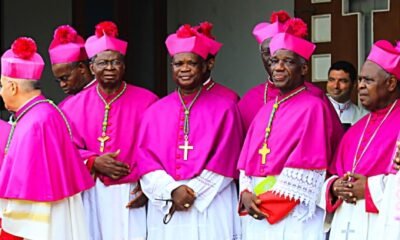
Catholic Bishops Reject Trivialization of LGBTQ+ Debate by Mahama Government: ‘Nations Do Not Live by Bread Alone’