
Commentary
Ghana’s Anti-Corruption Prosecutor Faces Legal Challenge Over Power to Prosecute

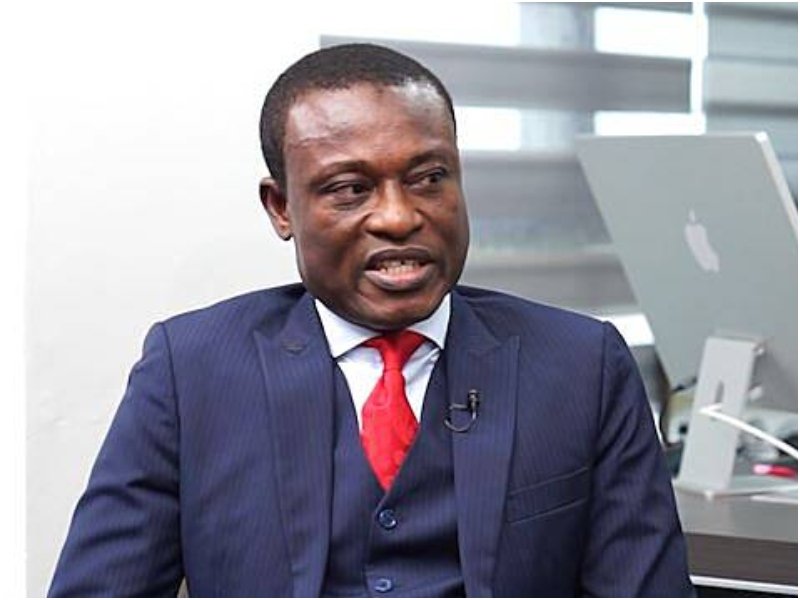
ACCRA, Ghana — A major legal battle is unfolding in Ghana that could reshape how the country fights corruption. At the center is the Office of the Special Prosecutor (OSP), an independent body created to investigate and prosecute corruption cases.
A recent High Court ruling has cast doubt on the OSP’s ability to independently prosecute cases—prompting the agency to mount a swift legal challenge. For observers unfamiliar with Ghana’s legal system, the dispute raises fundamental questions about who has the authority to prosecute crimes and how anti-corruption institutions should operate.
What Triggered the Dispute?
The controversy stems from a ruling by the General Jurisdiction Division of the High Court in Accra. The court held that while the OSP can investigate corruption, it does not have constitutional authority to prosecute cases on its own.
Instead, the court said prosecutorial power lies exclusively with the Attorney-General’s Department, based on Article 88 of the 1992 Constitution of Ghana.
The case originated from a quo warranto application, a legal action questioning whether a public office is lawfully exercising its powers, filed by private citizen Peter Achibold Hyde.
What Is the OSP and Why Does It Matter?
The OSP was established under the Office of the Special Prosecutor Act, 2017, as part of Ghana’s efforts to strengthen its anti-corruption framework.
Its mandate includes:
- Investigating corruption and corruption-related offenses
- Prosecuting such cases
- Recovering proceeds of corruption
The agency was designed to operate independently of political influence, addressing long-standing concerns that corruption prosecutions could be hindered by executive control.
The Core Legal Question
At the heart of the dispute is a constitutional tension:
- The Constitution (Article 88) gives prosecutorial authority to the Attorney-General.
- The OSP Act (2017) appears to grant the OSP its own prosecutorial powers.
The High Court ruling effectively says: Parliament cannot override the Constitution through ordinary legislation.
This interpretation would mean the OSP can only prosecute cases if authorized by the Attorney-General.
How Did the OSP Respond?
The OSP has strongly rejected the ruling and announced plans to overturn it.
In its official response, the agency argued:
- The High Court lacks jurisdiction to declare parts of an Act of Parliament unconstitutional
- Only the Supreme Court of Ghana has the authority to make such determinations
- Its enabling law clearly provides for both investigative and prosecutorial powers
The OSP warned that allowing the ruling to stand could undermine ongoing corruption cases and weaken Ghana’s accountability systems.
The Attorney-General’s Position
Complicating matters, the Attorney-General’s office has taken a position that aligns—at least partly—with the High Court’s reasoning.
Government lawyers argue:
- Prosecutorial power belongs solely to the Attorney-General
- Parliament cannot transfer or dilute that power through legislation
- The OSP may require explicit authorization before prosecuting cases
They also contend that prosecutorial authority cannot be delegated to a “juridical person” (an institution like the OSP), only to individuals.
Why This Case Is Bigger Than One Agency
This dispute has far-reaching implications for Ghana’s governance and rule of law.
1. Anti-Corruption Efforts at Risk
If the OSP loses prosecutorial authority:
- Ongoing cases could be delayed or reassigned
- Investigations may lose momentum
- Public confidence in anti-corruption efforts could weaken
2. Constitutional Interpretation
The case raises a key legal question:
Can Parliament create independent prosecutorial bodies, or is that power constitutionally restricted?
3. Separation of Powers
The outcome will clarify the balance between:
- The executive branch (through the Attorney-General)
- Independent statutory bodies like the OSP
What Happens Next?
The legal battle is far from over.
There are now two parallel tracks:
- OSP’s challenge to the High Court ruling
- A separate case already before the Supreme Court, filed by Noah Ephraem Tetteh Adamtey, seeking a definitive constitutional interpretation
Legal analysts expect the Supreme Court to ultimately deliver the final word.
Why Global Audiences Should Pay Attention
Ghana is often seen as one of West Africa’s more stable democracies, and its anti-corruption framework has been closely watched by international partners.
The outcome of this case could:
- Influence how other countries design independent anti-corruption bodies
- Shape international perceptions of Ghana’s governance
- Affect investor confidence tied to transparency and rule of law
The Bottom Line
The clash between the OSP and the Attorney-General is more than a legal technicality—it’s a defining moment for Ghana’s anti-corruption system.
At stake is a fundamental question:
Should an independent anti-corruption body have the power to prosecute on its own, or must that authority remain centralized under the state’s chief legal officer?
The answer, likely to come from the Supreme Court, will determine not just the future of the OSP—but the direction of Ghana’s fight against corruption.








Commentary
The Guns Turned Inward: Niger’s Mutiny and Russia’s Fragile Bargain in the Sahel | By Joseph McCarthy
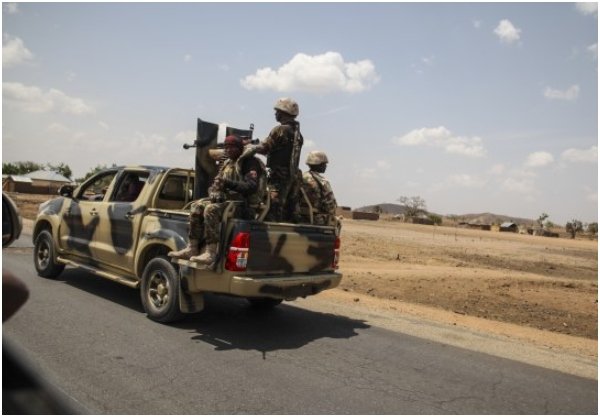
When mutinous soldiers turned their guns on the presidential palace in Niamey not long ago, they exposed a critical truth about Niger’s junta and its foreign backers. According to researcher, Joseph McCarthy, the rebellion not only revealed the fragile legitimacy of military rule, but also unmasked Russia’s Africa Corps as a force primarily designed to protect friendly regimes, rather than defeat the jihadist insurgencies that justified their rise.
The Guns Turned Inward: Niger’s Mutiny and Russia’s Fragile Bargain in the Sahel
By Joseph McCarthy
General Abdourahamane Tiani seized power in 2023 on a familiar Sahelian promise: that soldiers, not politicians, would protect civilians from jihadist violence. The attempted coup against him on the night of 28-29 August 2026, staged by a mutinous faction calling itself the Armed Forces for the Restoration of the Fatherland, turned that promise on its head. The guns pointed at Tiani’s rule in Niamey did not belong to jihadists. They belonged to his own soldiers, and that is the greater danger this episode exposes.
Sustained gunfire and explosions broke the calm of Niger’s capital shortly after midnight, spreading across the city’s most sensitive sites. Heavy exchanges were reported around Diori Hamani International Airport and the strategically vital Air Base 101, while fighting also reached the Plateau district, home to the presidential palace. State television and radio briefly went dark. For hours, Niamey sat in uncertainty as mutinous troops targeted what authorities called “sensitive sites” and loyalist forces fought to regain control. It was the most serious internal challenge Tiani’s government has faced since 2023, and it laid bare the fractures within the military establishment on which his rule depends.
The most revealing part of the crisis was not the mutiny itself but who answered it. Russia’s Africa Corps, deployed in Niger under the banner of counter-terrorism, reportedly joined loyalist forces to crush the rebellion, drawing Russian personnel into a fight where Nigerien soldiers died at foreign hands, not battling jihadists, but defending a junta’s survival.
That contrast raises an uncomfortable question about what Moscow’s presence in the Sahel is actually for. Africa Corps has long been marketed as a partner against insurgency. Yet, the jihadist violence that justified military takeovers in Mali, Burkina Faso and Niger remains unresolved and, in places, worsening. When that threat endangers ordinary Nigeriens, Russian intervention has been, at best, inconsistent. When it endangers a Russia-aligned government, the response was reportedly swift and decisive. That asymmetry suggests Africa Corps functions less as a counter-terrorism force and more as regime insurance, a guarantor of the leaders who guarantee Russian access, rather than of the populations these leaders were meant to protect.
The pattern becomes starker set against Mali. In April 2026, Africa Corps and Malian forces withdrew from Kidal under sustained pressure, ceding one of northern Mali’s most symbolically important cities to the Azawad Liberation Front. Months later in Niamey, the same force reportedly moved decisively to help retake Air Base 101. Territory lost to insurgents was abandoned; a threatened regime was rescued. A security partnership that folds in the face of armed opposition but hardens against internal political threats is not a stable counter-terrorism strategy. It is a transactional bargain, and one whose costs, in credibility, cohesion and lives, are unsustainable for the states leaning on it.
The mutiny also exposed how thinly Tiani’s legitimacy is stretched. He came to power by the coup-maker’s logic that a failing government forfeits its claim to rule and the military may step in. The August mutiny turned that same logic against him. Unlike a government built on elections and constitutional succession, a military regime cannot simply inherit institutional legitimacy or public trust once in power, and it becomes acutely vulnerable the moment discontent surfaces in its own ranks. Niger’s continued detention of ousted president Mohamed Bazoum, more than three years on and described by Human Rights Watch as arbitrary, with the UN Working Group on Arbitrary Detention reaching the same conclusion, only reinforces how fragile that foundation is.
The mutineers reportedly drew from Ouallam, Téra and Dosso, regions that have absorbed heavy casualties fighting jihadist groups. Soldiers who bore the human cost of that war turned their weapons on the leadership they once served, exposing a crisis of trust that no amount of Russian firepower can resolve, only postpone.
This instability radiates outward. Niger’s crisis unfolds while the country sits estranged from ECOWAS, the regional bloc that once anchored collective West African security. The new ECOWAS Commission President, General Birame Diop, has called for renewed engagement with Mali, Burkina Faso and Niger, arguing that political rupture cannot undo shared geography. Jihadist networks certainly recognise no such rupture. They move freely across the line separating ECOWAS states from the Alliance of Sahel States, exploiting exactly the gap that competing, uncoordinated security architectures leave open.
Diop’s appeal for reconciliation is therefore less a diplomatic nicety than a strategic necessity. ECOWAS and the AES remain bitterly divided over democracy and military rule, but neither can escape the terrain and populations they share. As Diop put it, borders may divide territory, but they do not divide destiny.
Niger’s mutiny should be read as a warning on two levels. Domestically, it shows how quickly the barracks can undo a regime built on the barracks. Regionally, it shows the risk of mistaking a foreign power’s opportunistic protection of an allied junta for genuine counter-terrorism partnership. Russia’s role in the Sahel looks less like a durable security guarantee than a fragile, self-interested bargain, propping up regimes rather than defeating the insurgencies that justified their rise. The question West Africa can no longer defer is whether it can afford to stay strategically divided while both jihadist violence and the powers exploiting it operate without regard for the borders that divide it.
The author, Joseph McCarthy, is an analyst and researcher specialising in governance, security and political transitions in the Sahel. He writes on geopolitics, development and African diplomacy. joecarthy30@gmail.com

In this article, researcher Joseph McCarthy analyzes the security dilemma created by the withdrawal of Mali, Burkina Faso, and Niger from ECOWAS to form the Alliance of Sahel States (AES). As the jihadist insurgency led by groups like JNIM becomes increasingly transnational and expands toward coastal nations like Ghana, Benin, and Togo, the regional mechanisms for combating it are fracturing. The author argues that the AES’s shift toward Russian security guarantees (via the Africa Corps) fails to address the core challenge of cross-border intelligence sharing and pursuit, substituting firepower for regional trust. This growing divide makes the borderlands more porous for militants and brings the threat directly to the doorsteps of West African coastal states.
A Borderless Insurgency, a Divided Response: The ECOWAS–AES Security Dilemma
By Joseph McCarthy
Mali, Burkina Faso and Niger’s withdrawal from ECOWAS, and their construction of a rival security framework under the Alliance of Sahel States (AES), has produced a troubling paradox just as the insurgency’s geography expands toward the coast. The three juntas have compounded that paradox by turning to Russia and its mercenary formations, first Wagner and now the state-run Africa Corps, as their principal security guarantor, trading regional partnership for a patron with no border in West Africa, no seat at ECOWAS and no proven record of containing the threat. For Jama’at Nusrat al-Islam wal-Muslimin (JNIM) and allied groups, there is no AES border and no ECOWAS border.
There is only territory to penetrate and communities to influence. As the threat becomes more regional, the mechanisms for confronting it are becoming more divided, and Moscow’s growing footprint is deepening rather than resolving that divide, a fact that should concern Accra as much as Abuja or Niamey.
Jihadists move through a cross-border environment rather than within a single state. ACLED research shows JNIM expanding into northern Benin, particularly around the W-Arly-Pendjari complex spanning Benin, Burkina Faso and Niger. The terrain and thin state presence make the area hard to hold. A border difficult for a military to cross is often easier for an insurgent network to slip through, because a state must respect sovereignty and a militant need not. Burkina Faso’s forces may pursue militants to their own frontier, but cannot follow them into Benin without authorisation.
The Burkina Faso–Benin–Togo borderlands also contain trading and kinship networks predating the modern state. A herder crossing to trade livestock attracts no attention, but a militant moving through the same channels can exploit that familiarity. The border becomes a social network as much as a physical one, a gap that widens when relations between neighbouring capitals sour.
This is no longer a purely Sahelian story. JNIM’s push has already reached Benin and Togo, and Ghanaian security officials have repeatedly flagged militant reconnaissance and recruitment activity along the northern frontier with Burkina Faso. The Africa Center for Strategic Studies records militant Islamist-linked fatalities in north-western Nigeria rising from zero in 2024 to 136 in 2025 and 506 in 2026, a 268 per cent jump in a single year, as JNIM and Islamic State Sahel Province appear to collaborate with Boko Haram’s Sadiku faction, Ansaru, Lakurawa and assorted criminal groups. That is the transition from a Sahelian insurgency to a West African one, and coastal states from Ghana to Togo sit directly in its path. It is a spread that Russian-backed forces, thinly deployed and focused on holding capitals rather than contesting rural borderlands, are poorly positioned to check.
The deeper issue is coordination across political, military and intelligence systems, and ECOWAS has acknowledged as much. Its July 2026 communiqué described the regional security situation as deteriorating and directed leadership to engage AES states on a “pragmatic security cooperation mechanism.” Containing terrorism depends on knowing where militants are, who commands them and where attacks are being planned, information that must move quickly across borders.
But the AES breakaway complicates that. Niger and Nigeria share a long, vital border yet sit in different blocs; intelligence sharing now leans more on bilateral goodwill than on a common regional mechanism. A 2026 Institute for Security Studies analysis argues the ECOWAS–AES fragmentation weakens collective security and recommends restoring direct contact between the two blocs’ general staffs. Russia is no substitute for that channel. Moscow sits outside every regional early-warning system ECOWAS has built, including the frameworks Ghana, Togo and Benin actually rely on, so intelligence gathered by AES-aligned forces has no automatic route into them.
Early warning depends on information moving fast: a tip from northern Burkina Faso could prevent an attack in Benin, just as intelligence from Niger could help Nigeria anticipate militant movement. But when JNIM fighters flee a Burkinabè operation toward Benin, pursuit cannot simply continue across the line. The militants gain a tactical advantage at the border itself, an advantage that hot-pursuit and cross-border agreements could close, but that a Moscow-oriented security architecture, answerable to Russia rather than any regional body, has no mandate to broker.
Beyond the military mechanics lies a diplomatic obstacle. The AES accuses ECOWAS of interfering in domestic affairs and using sanctions as pressure; ECOWAS defends constitutional governance as non-negotiable. Terrorism is indifferent to which narrative prevails, and the mistrust that pushed the AES from ECOWAS also makes cooperation against militancy harder.
This is where dependence on Russia turns autonomy into isolation. Since Wagner’s dissolution after Prigozhin’s 2023 death, Russian deployments in Mali, Burkina Faso and Niger have been absorbed into the Ministry of Defence’s Africa Corps, a leaner but by most independent accounts no more effective force. West Point’s Combating Terrorism Center and other analysts find little evidence the transition improved outcomes, and JNIM inflicted some of the juntas’ heaviest losses around the handover. Africa Corps garrisons in Niger and Burkina Faso number only in the low hundreds, a fraction of what securing that territory demands, while allegations of atrocities against civilians, including proceedings before the African Court on Human and Peoples’ Rights, continue to mount. A security partnership built on a discredited mercenary outfit’s state-run successor does not project regional legitimacy; it substitutes firepower for trust, at the exact moment trust is what a transnational campaign most requires.
The AES’s search for autonomy has grown more costly as the threat it faces has grown more transnational, and dependence on Moscow does not offset that isolation so much as formalise it. Militants are becoming more regionally integrated precisely as the states fighting them, and the external patrons they have chosen, grow more divided. For Ghana and its coastal neighbours, that divide is no longer a distant Sahelian concern. It is arriving at their own borders.
Joseph McCarthy is an analyst and researcher specialising in governance, security and political transitions in the Sahel. He writes on geopolitics, development and African diplomacy. joecarthy30@gmail.com
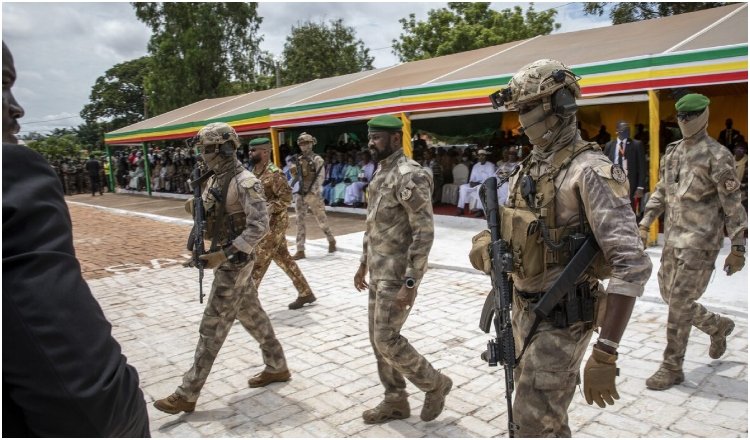
Between 2020 and 2023, military juntas seized power across Mali, Burkina Faso and Niger, promising to defeat jihadist insurgencies that civilian governments had failed to contain. Years later, the security situation has deteriorated rather than improved, with insurgents breaching heavily fortified installations and expanding territorial control. Meanwhile, elections have been indefinitely postponed under the pretext of insecurity, and military rulers have deepened their alignment with Russia to escape external pressure for democratic transitions. This analysis examines the legitimacy crisis facing the Sahel’s juntas, arguing that governments which justify their rule solely through security outcomes cannot survive when those outcomes fail to materialize. This article explores the fragility of military authority in the absence of electoral mandate, the geopolitical calculations driving alignment with Moscow, and the consequences for millions of citizens living with displacement, closed schools and expanding insurgent control.
The Sahel Juntas and the Crisis of Legitimacy
By Joseph McCarthy
When soldiers seized power across the Sahel between 2020 and 2023, they offered strikingly similar justifications. Civilian governments, they argued, had failed to protect their citizens from the advancing threat of Jama’at Nusrat al-Islam wal-Muslimin (JNIM) and the Islamic State Sahel Province (ISSP), despite years of support from France, the United Nations, the European Union and the United States. Military rule, the argument went, would succeed where democratic politics had not: it would restore state authority, defeat the insurgents and, only then, return power to civilians. Years later, the region’s security landscape raises an uncomfortable question. Has military rule delivered on that promise, and what happens to a government’s legitimacy when it has not?
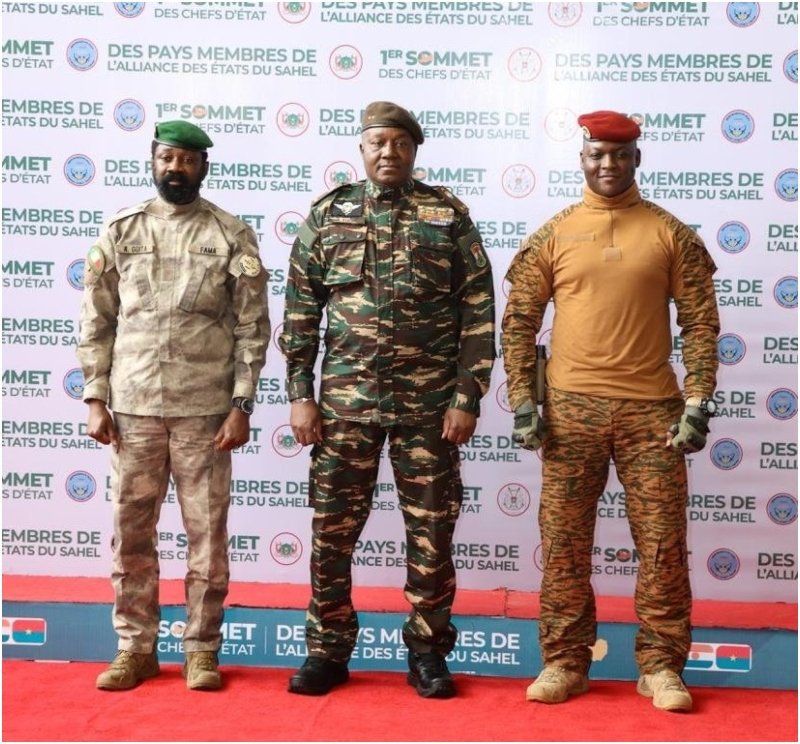
The pattern of coups was remarkably consistent. In Mali, Assimi Goïta removed President Ibrahim Boubacar Keïta in August 2020, citing the army’s inability to control large parts of the north and centre. In Burkina Faso, Paul-Henri Sandaogo Damiba overthrew President Roch Marc Christian Kaboré in January 2022 on similar grounds, only to be removed himself eight months later by Ibrahim Traoré, who argued that Damiba’s own counterterrorism record was too slow. In Niger, Abdourahamane Tiani deposed President Mohamed Bazoum in July 2023, insisting that a new approach to security was needed despite Bazoum having achieved relative gains against jihadist groups. In each case, the message was the same: only military leadership could act with the speed and decisiveness that civilian rule could not.
The record since then complicates that claim. In June 2026, JNIM fighters breached Diori Hamani International Airport in Niamey. This is one of Niger’s most heavily fortified installations, housing the air force, military drones, the headquarters of the Alliance of Sahel States’ joint force, and Russian personnel. In April, coordinated attacks across Mali, including in Kati, revealed an insurgency that has grown more sophisticated rather than less, even as military governments have intensified their campaigns. Large swathes of northern and central Mali, eastern Burkina Faso and western Niger remain outside effective state control. Millions of people are displaced, schools and clinics have shut down across rural areas, and food insecurity continues to rise. Perhaps most tellingly, JNIM has moved beyond pure military operations in parts of the territory it contests, reportedly collecting taxes, mediating local disputes and enforcing its own rules, functions that amount to governance. For juntas that justified their rule by promising to restore the state’s authority, this is a difficult reality to reconcile.
None of this has produced elections. Goïta has repeatedly extended Mali’s transition, arguing that voting while the country remains insecure would undermine its credibility. Traoré has pushed Burkina Faso’s elections back to 2029. Tiani has likewise announced a prolonged transition in Niger, citing the need for stability before any return to civilian rule. In each case, insecurity, the very problem the juntas promised to solve, has become the justification for indefinitely postponing the democratic process that was meant to follow.
This is where the deepening alignment with Moscow matters. Russian foreign policy in the region, delivered first through the Wagner Group and now the Africa Corps, has emphasised sovereignty, executive authority and non-interference rather than electoral timetables. Unlike France and other Western partners, who after the 2020 and 2021 coups pushed for sanctions and rapid transitions back to constitutional rule through ECOWAS, Russia has attached no such conditions to its military assistance. That gives the juntas diplomatic cover and security backing without the external pressure that once accompanied Western partnerships, making prolonged military rule more sustainable in the short term.
But sustainability is not the same as legitimacy. Governments that seize power through force cannot draw on the ballot box or constitutional continuity to justify their authority. Instead, they rely on a narrower and more fragile bargain: deliver security, and the question of legitimacy can wait. That bargain depends entirely on results. It is not clear that the juntas are delivering them.
This is the vulnerability now facing Goïta, Traoré and Tiani. The argument that brought each of them to power, that civilian rule had failed to stop the violence and military leadership would not, is the same argument that can be turned against them if the violence continues to escalate under their watch. A partnership with Russia may insulate these governments from external pressure to hold elections. Still, it cannot insulate them from the judgement of their own citizens, who continue to live with displacement, closed schools and expanding insurgent control. If security remains the sole justification for indefinitely concentrating political power, then the failure to secure it becomes the sole justification for questioning that power. The Sahel’s juntas are not simply fighting insurgents. They are running out of time to prove that their original argument for seizing power still holds.
Joseph McCarthy is an analyst and researcher specialising in governance, security and political transitions in the Sahel. He writes on geopolitics, development and African diplomacy. joecarthy30@gmail.com



-

 Ghana News2 hours ago
Ghanaian-American Founder Kofi Asante Raises $50M to Build Floating Nuclear Power Plants
-

 Ghana News1 day ago
Top Headlines From Ghanaian Newspapers: Wednesday, Sept. 9, 2026
-
 Ghana News1 day ago
Ghana’s Persistence Pays Off: AU Formally Commits to Tabling Xenophobia Petition in January 2027
-
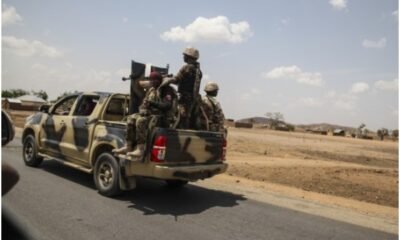
 Commentary14 hours ago
The Guns Turned Inward: Niger’s Mutiny and Russia’s Fragile Bargain in the Sahel | By Joseph McCarthy
-

 Reels & Social Media Highlights2 days ago
Medikal in Church and ‘Cheater’ Memes
-

 Health & Wellness2 days ago
Health Isn’t Slow—Our Expectations Are Too Fast
-

 Sights and Sounds1 day ago
Inside Splash Social Center: Accra’s Laid-Back Pool Escape Off Spintex Road
-

 Health & Wellness1 day ago
Stop Chasing Quick Fixes: Build a Fitness Routine That Lasts