
Business
Ghana’s 5G Future Hinges on Speed and Scale – Telecom Expert Warns as NCA Targets Exclusivity Clause

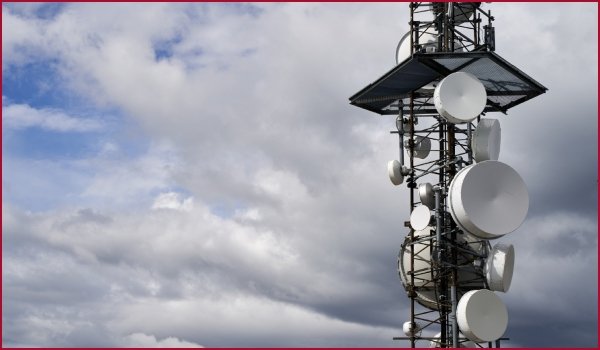
Accra, Ghana – March 5, 2026 – Ghana risks falling behind the global 5G elite unless the country dramatically accelerates infrastructure rollout and connects mobile operators to active networks soon, according to respected telecom policy commentator Samuel Nii Narku Dowuona.
Speaking to Ghana News Global in response to the National Communications Authority’s (NCA) move to remove the 10-year exclusivity clause from Next-Gen Infraco’s (NGIC) 5G licence, Dowuona praised the regulatory shift but stressed urgency.
“5G infrastructure places any country among the elite in the world,” he said. “What we need to do in Ghana is to find a way to roll out the infrastructure wider and faster.”
NGIC, awarded exclusive rights in 2024 to build and operate a shared 5G network until 2034, has so far deployed only 49 sites nationwide—43 in Greater Accra, 2 in Ashanti, and one each in Western, Northern, Bono, and Central regions. No telecom operator (MTN, Vodafone, AirtelTigo, or others) is yet connected to deliver direct 5G services to customers.
Dowuona highlighted that while 5G won’t automatically attract big tech giants, it will draw multinationals in mining, oil & gas, manufacturing, healthcare, and agriculture by enabling efficient, real-time enterprise solutions.
He gave the example of a 5G-equipped ambulance streaming live data to a hospital doctor for remote care—technology that could save lives in emergencies.
The NCA’s proposed amendment, issued under Section 14 of the Electronic Communications Act, 2008 (Act 775), aims to promote competition, innovation, consumer choice, faster digital transformation, and efficient spectrum use. The change would take effect in 90 days unless NGIC successfully objects. The Authority also noted NGIC’s default on licence fee instalments, which it is addressing separately.
The regulatory pivot signals a potential shift toward a competitive 5G market, allowing operators to deploy independently or negotiate better terms with NGIC. Analysts say this could unlock enterprise-grade applications—remote surgery, precision agriculture, smart mining, and industrial IoT—while supporting President Mahama’s 24-Hour Economy vision.
With only 49 sites active and no commercial 5G services live, Ghana lags far behind regional peers like Nigeria, South Africa, and Kenya. Dowuona’s call for speed underscores a critical window: accelerate deployment and connectivity now, or risk missing the 5G economic dividend.



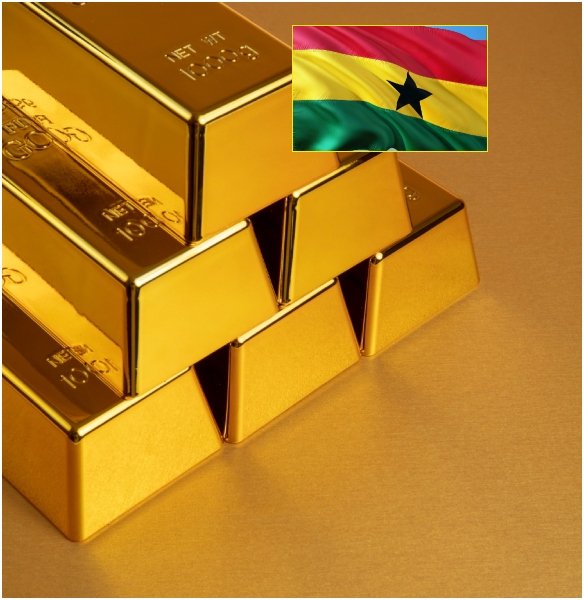
Foreign governments are reportedly pressing Ghana to reconsider a proposed overhaul of its gold royalty system, raising concerns that the move could significantly increase the tax burden on major mining companies operating in the country.
According to a report by Reuters, governments from Canada, Australia, China, South Africa, and the United States have raised diplomatic concerns about a new sliding-scale royalty regime currently before Ghana’s Parliament.
The proposed measure, introduced on December 19, 2025, would replace Ghana’s long-standing de facto 5% gold royalty with a price-linked system ranging from 5% to 12%. Under the new structure, royalty rates would increase automatically when global gold prices rise.
Potential Immediate Impact
With global gold prices currently trading above $5,000 per ounce, analysts say the practical effect could be immediate. Many large-scale mining operations in Ghana would likely fall directly into the 12% royalty bracket once the Legislative Instrument matures on March 6.
If implemented, the change would mark one of the most significant revisions to Ghana’s mining fiscal regime in years.
For more than a decade, mining companies have effectively paid a 5% royalty on revenue, alongside a 35% corporate income tax, a 3% Growth and Sustainability Levy, and other statutory charges such as withholding taxes, mineral rights fees, and surface rents.
When combined, the government’s share of mining revenue currently sits at roughly 48% to 50%.
Industry models suggest the new sliding-scale system could increase the effective government take to between 60% and 68%, potentially making Ghana one of the highest-taxed mining jurisdictions in the world.
Why Foreign Governments Are Concerned
Many of the world’s largest gold mining companies operating in Ghana are headquartered or financed through the countries now raising concerns.
Governments often advocate for stable fiscal regimes for companies investing abroad, particularly in capital-intensive sectors such as mining, where projects can require billions of dollars in upfront investment and operate for decades.
Sudden or steep changes in royalties can alter project economics, potentially affecting future investment decisions.
Transparency Questions
Analysts say the main issue is not the concept of a sliding-scale royalty itself. Many resource-rich nations adopt similar systems to capture larger shares of windfall profits during commodity booms.
Instead, the concern centers on how Ghana determined the 5%–12% range.
So far, the country’s Lands Ministry has not publicly released the economic modelling or fiscal analysis behind the proposal. Without that data, investors and industry groups have been forced to independently estimate the potential impact on profitability and long-term government revenue.
Publishing the government’s assumptions, analysts say, could help clarify whether the policy would strengthen Ghana’s fiscal position or risk discouraging future mining investment.
A Delicate Policy Balance
Ghana is Africa’s largest gold producer, and the mining sector remains one of its most critical economic pillars. The industry generates billions in export earnings and provides a significant share of government tax revenue and foreign exchange.
The proposed royalty reform highlights a familiar dilemma for resource-rich economies.
Rising commodity prices create opportunities for governments to capture a larger share of profits from natural resources. At the same time, tax regimes viewed as overly burdensome may discourage investment or shorten the lifespan of mining projects.
Until the government releases detailed fiscal modelling behind the proposal, uncertainty surrounding the policy is likely to persist — both among mining companies and Ghana’s international partners.


Accra, Ghana – March 4, 2026 – The National Communications Authority (NCA) has formally proposed to cancel the exclusivity clause in Next-Gen Infraco’s (NGIC) 5G licence, a decision that—if approved—would end NGIC’s ten-year sole right to deploy and operate 5G networks in Ghana and allow other operators to roll out 5G services independently.
In a Notice of Proposed Licence Amendment issued under Section 14 of the Electronic Communications Act, 2008 (Act 775), the NCA stated that removing the exclusivity provision is “in the public interest” and will achieve four key objectives:
– Promote competition and innovation in 5G services
– Enhance consumer choice and service quality
– Accelerate nationwide digital transformation
– Ensure optimal and efficient use of spectrum as a national resource
The proposed change would take effect 90 days from the date of the notice unless NGIC successfully objects during the statutory consultation period. The NCA emphasized that the amendment follows due process and aligns with its mandate to regulate the sector transparently and in the national interest.
NGIC was awarded the 5G licence in 2024 with the exclusive right to build and operate a shared 5G network until 2034. All mobile network operators (MNOs) wishing to offer 5G services were required to partner with NGIC. As of early 2026, NGIC has deployed only 49 sites nationwide: 43 in Greater Accra, 2 in Ashanti, and one each in Western, Northern, Bono, and Central regions.
The NCA also disclosed that NGIC is currently in default of its licence fee instalment payments and said the Authority is addressing the matter under the relevant licence conditions and statutory provisions.
Implications for Ghana’s Telecoms Sector
The proposed removal of exclusivity is widely seen as a potential game-changer for Ghana’s digital economy. Industry analysts and telecom executives have long argued that a single-provider model risks delaying nationwide coverage, limiting innovation, and keeping 5G prices high.
Samuel Nii Narku Dowuona, a telecom policy commentator, told Ghana News Global that true 5G competition would accelerate enterprise solutions in mining, oil & gas, manufacturing, healthcare (e.g., real-time telemedicine from ambulances), and agriculture (e.g., precision farming via IoT sensors).
“5G is great for enterprise solutions,” Dowuona said. “Businesses can provide services more efficiently to clients. Think of an ambulance fitted with 5G gadgets communicating in real time with a doctor at a hospital—such a solution could have saved lives in recent emergencies.”
The NCA’s move signals a shift toward a more competitive 5G landscape, potentially allowing MTN, Vodafone, AirtelTigo, and other operators to deploy their own networks or negotiate better terms with NGIC.
Faster rollout could also help Ghana close the digital divide, improve e-government services, attract foreign tech investment, and support President Mahama’s 24-Hour Economy agenda.
NGIC has not yet publicly responded to the proposed amendment. The NCA reiterated its commitment to fair, predictable regulation that balances investment incentives with consumer benefits and efficient spectrum use.
Accra, Ghana – March 4, 2026 – Ghana’s inflation rate continued its remarkable downward trajectory, falling to 3.3% in February 2026—the 14th consecutive monthly decline and the lowest level since the 2021 rebasing of the Consumer Price Index (CPI).
According to fresh data released by the Ghana Statistical Service, the CPI rose from 255.9 in February 2025 to 264.4 in February 2026, translating into a year-on-year inflation rate of 3.3%. This marks a dramatic improvement from the 23.1% recorded in February 2025—a 19.8 percentage point reduction within 12 months.
On a month-on-month basis, prices increased modestly by 0.8% between January and February 2026, reflecting controlled short-term pressures.
Key highlights from the report include:
Food & non-alcoholic beverages inflation slowed sharply to 2.4% (from 3.9% in January), offering welcome relief to households.
Non-food inflation rose slightly to 4.0% (from 3.8%).
Imported inflation dropped significantly to 0.6% (from 2.0%), signaling reduced external price pressure.
Locally produced goods inflation eased to 4.5% (from 4.6%).
Goods inflation fell to 3.2% while services inflation declined to 3.7%.
Regional variation remained: the Savannah Region recorded the lowest rate at -5.6%, while the North East Region posted the highest at 8.9%.
The sustained easing underscores the effectiveness of recent monetary and fiscal measures under the current administration, including tighter policy coordination, improved supply chains, and reduced import costs following cedi stability.
With inflation now firmly anchored in low single digits for the first time in years, policymakers and economists are shifting focus to maintaining this momentum amid external risks—particularly volatile global energy prices and geopolitical tensions in the Middle East that could reverse gains.
The Ghana Statistical Service will release the March 2026 CPI figures next month.


Ethiopia Launches First Unmanned “Smart Police Station” in Addis Ababa

What 1,000 Skips a Day Does to a Man Who Thought He Was Fit

Russia Vows to Thwart US-Israel Military Operation Against Iran as Middle East Crisis Deepens
-

 Ghana News1 day ago
69 Years of Independence: Quick Timeline of Ghana’s Biggest Milestones Since 1957
-

 Ghana News12 hours ago
Mahama’s Grand Entry to Independence Day Event, UCC Student Dead in Tragic Accident and Other Trending Issues in Ghana Today (March 6, 2026)
-

 Ghana News12 hours ago
Video: How Kwame Nkrumah, Ghana’s Founding Father, Became Its ‘Prisoner’
-

 Reels & Social Media Highlights13 hours ago
The ‘Ghanaian’ Saturday Morning Rhyme That Crossed the Ocean
-

 Taste GH14 hours ago
Why Ghanaians Keep Coming Back to Rice Balls and Groundnut Soup
-

 Business11 hours ago
5 Foreign Governments Pressure Ghana to Abandon Proposed Gold Royalty Overhaul
-

 Ghana News9 hours ago
Mahama on Independence Day: Ghana Must Lead in AfCFTA to Unlock Africa’s Economic Destiny
-

 Ghana News1 day ago
Vendor Defends Frying With Plastic in Oil, Missing Young Woman, and Other Trending Topics in Ghana Today (March 5, 2026)