
Culture
Explainer: Why Jake Paul Was Suspended Indefinitely After His Knockout Loss to Anthony Joshua


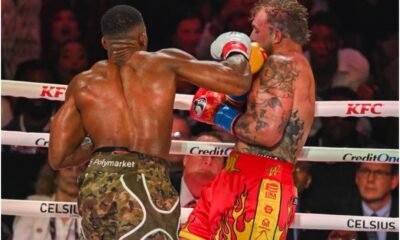
The indefinite suspension of Jake Paul by the Florida Athletic Commission following his knockout defeat to former heavyweight champion Anthony Joshua has created a buzz across the boxing world.
Here’s what the decision means, why it happened, and what comes next.
What happened in Miami?
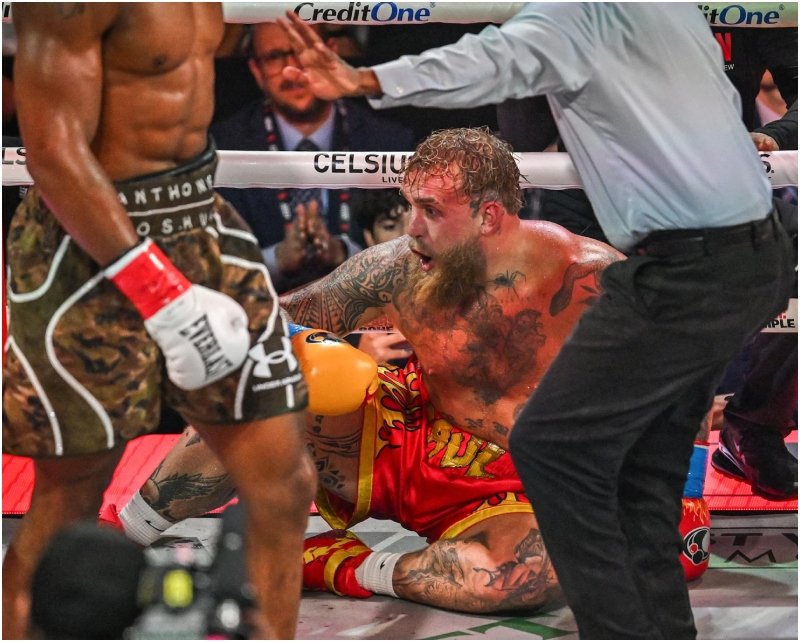
Last month in Miami, YouTuber-turned-cruiserweight boxer Jake Paul suffered a knockout loss to Anthony Joshua during the high-profile “Judgment Day” fight card, which streamed on Netflix.
The bout marked Paul’s most significant test to date against an elite, battle-tested former world champion.
The loss was decisive — and costly.
Why was Jake Paul suspended indefinitely?
According to MMA Fighting, the Florida Athletic Commission imposed an indefinite medical suspension on Paul due to the severity of his injuries, particularly a fractured jaw that reportedly required four metal plates.
In combat sports, commissions are legally mandated to protect fighter safety. An *indefinite suspension* means:
* Paul cannot compete again until
* He receives full medical clearance from licensed doctors, and
* The commission is satisfied there is no long-term risk to his health
Unlike time-based bans, indefinite suspensions are injury-driven, not punitive.
Jake Paul speaks on his injury
Paul addressed the situation on his *Impaulsive* podcast, describing the physical toll of the bout:
“I got four plates in my jaw but that’s part of the sport. The healing process has been a little bit tough… it’s hard to sleep… but I learned a lot, gained a lot of experience and we’re moving onto more fights this year.”
While optimistic, his comments underline the seriousness of the injury — one that regulators could not ignore.
Who else was suspended from the event?
The Florida Athletic Commission also issued medical suspensions to several fighters on the Judgment Day card:
* Jake Paul — Indefinite
* Diarra Davis Jr. — Indefinite
* Tyron Woodley — 30 days (after losing to Anderson Silva)
* Camilla Panatta — 30 days
* Yokasta Valle — 30 days
* Justin Cardona — 60 days
Fighters serving indefinite suspensions must undergo further medical evaluations before returning to competition.
What does this mean for Jake Paul’s boxing career?
For Paul, the suspension represents a forced pause at a critical moment in his boxing journey. While he has built global attention through celebrity matchups, the loss to Joshua highlighted the gap between elite championship-level boxing and crossover stars.
Key implications include:
- * Delayed return to the ring
- * Increased scrutiny over future opponents
- * Renewed debate over safety in celebrity boxing
Why this matters beyond the U.S.
The suspension of Jake Paul underscores a global truth:
Combat sports regulators prioritize fighter safety — regardless of fame or commercial appeal.
It also reflects the growing influence of boxing commissions as legal and medical gatekeepers, especially as crossover bouts attract new audiences and massive streaming deals.
So…
Jake Paul’s suspension is not about punishment — it is about medical risk and legal responsibility. Until doctors confirm he is fully healed, his return to the ring remains uncertain.
Whether the setback slows his momentum or reshapes his career will depend on recovery, matchmaking, and how seriously he recalibrates after facing boxing’s highest level.





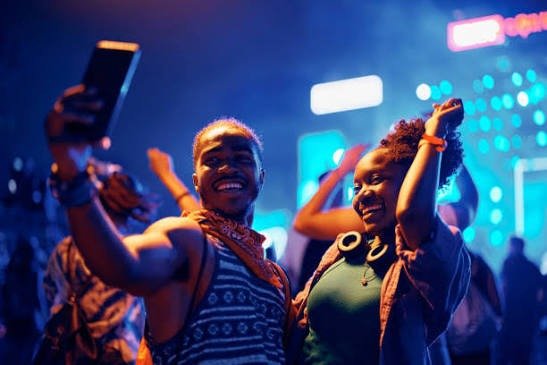
Pitch Accra sets the scene for a New Year’s Eve gathering that brings music lovers together as Ghana welcomes the first moments of 2027.
As the final hours of 2026 slip away, Accra will offer music lovers another reason to gather, celebrate and welcome a new year together. Compozers Fest Ghana Edition is scheduled for December 31, 2026, bringing the festive energy of New Year’s Eve to Pitch Accra.
Organised by December in Ghana, an events organiser with a growing following, the celebration offers an opportunity to experience Accra’s nightlife during one of the busiest periods on Ghana’s social calendar.
Music, Community and Celebration
Music has long been central to Ghanaian social life, accompanying celebrations, festivals and gatherings across generations. From highlife and hiplife to Afrobeats and contemporary African sounds, the country’s musical landscape reflects a continuing conversation between tradition and modern influences.
A festival held on New Year’s Eve provides a natural meeting point for these musical cultures and the people who enjoy them.
For Ghanaians returning home for the festive season, it offers another opportunity to reconnect with the city’s entertainment scene. International visitors can experience Accra’s year-end atmosphere alongside residents and members of the diaspora.
Although detailed information about the festival’s performers and programme has not been announced in the supplied listing, the event is scheduled to begin at 10 pm and continue into January 1, 2027.
Making New Year’s Eve Memorable
The venue, Pitch Accra, will host the gathering on Accra Road, Accra. Tickets also come with a Visa card promotion: eligible purchases receive 15 per cent back, with the refund processed within three to five working days after the event. The organiser states that tickets are non-refundable.
For visitors planning a festive-season trip, Compozers Fest Ghana Edition offers another event to consider when exploring Accra after dark.
As 2026 draws to a close, the celebration promises a chance to gather with friends, enjoy the city’s nightlife and begin 2027 in the company of fellow music lovers.
Arts and GH Heritage
When Second-Hand Clothes Become a Playground for Community
Using Broni Wawu garments purchased at a local market, Bamfo creates enclosed and open environments designed for participation rather than distant observation.

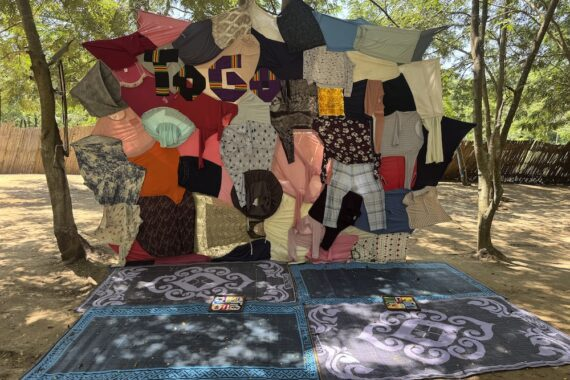
In Atakpamé, Ghanaian artist Dr. Frederick Bamfo transforms discarded garments into interactive spaces where children, cultural memory and collective play meet.
A discarded shirt can carry more than the memory of a former owner. In the hands of Ghanaian artist and academic Dr. Frederick Bamfo, it can become part of a place where children gather, games begin and strangers find reasons to connect.
His installation, The Games Feast, developed during the Karp Artists’ and Researchers’ Residency in Atakpamé, Togo, gives second-hand clothing a new social life.
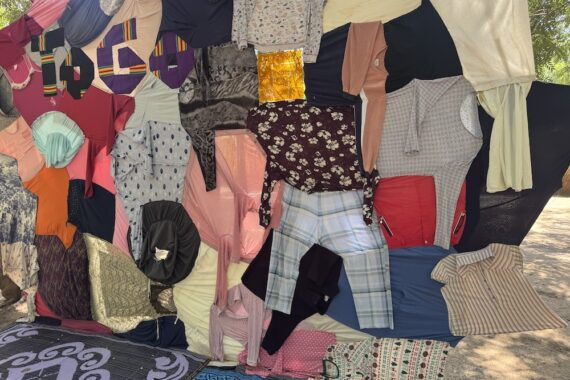
Using Broni Wawu garments purchased at a local market, Bamfo creates enclosed and open environments designed for participation rather than distant observation.
The choice of material speaks to a familiar West African reality. Second-hand clothing circulates through markets, connecting consumers to international trade networks while raising questions about consumption, waste and the afterlife of textiles.
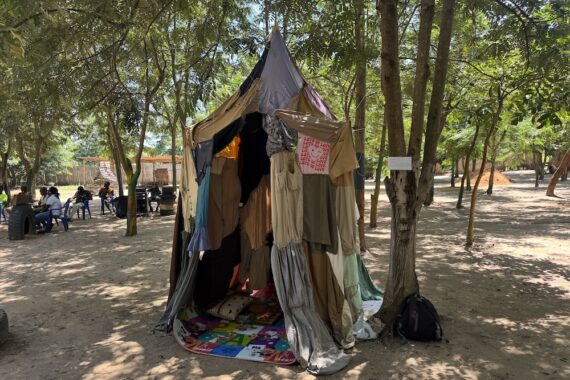
Often valued primarily for their usefulness or affordability, these garments become something different in Bamfo’s work: vessels of memory and possibilities for human connection.
The installation’s defining feature, however, is not simply its reuse of clothing. It is what happens inside these improvised spaces.
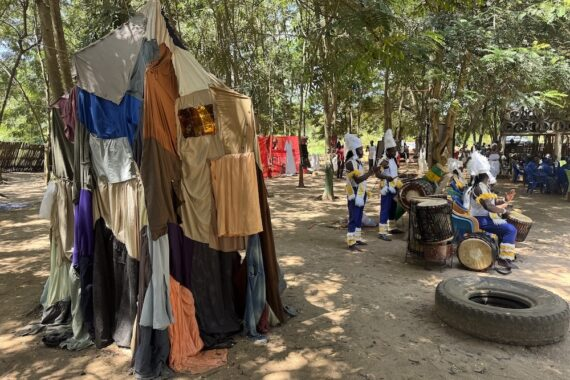
Children help shape the project’s collaborative spirit, while games such as ludo and oware, alongside dancing and skipping, turn the artwork into a setting for shared experience.
These activities draw on familiar forms of play that have long helped communities build relationships and pass cultural knowledge between generations.
Here, they also challenge conventional ideas of an art installation as something to admire without touching or entering.
For Bamfo, the transformation is both material and social. Clothing once associated with individual bodies becomes a collective environment, while everyday games become tools for participation.
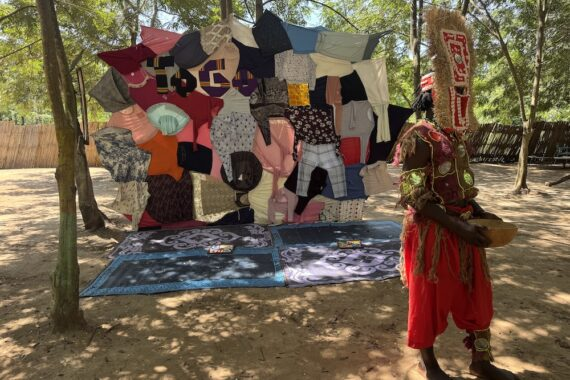
In Atakpamé, The Games Feast suggests that the most meaningful second life of a discarded garment may not be another wardrobe, but a space where people come together.
Reels & Social Media Highlights
Ghana’s Digital Heartbeat: Outrage, Satire, and the Fight for Accountability
Ghana’s social media space on Wednesday, October 21, 2026, felt less like a scrolling feed and more like a pressure cooker.
Between the crimson solidarity of #RedWednesday, the dust of a collapsing high-rise, and the astonishing unravelling of a political spokesperson, Ghanaians were simultaneously furious, entertained, and deeply skeptical.
The day’s emotional center was the Obuasi SHTS sexual abuse scandal. Activists declared “Red Wednesday,” urging citizens to wear red in solidarity with the alleged victims.
The mood turned from grief to rage when a leaked clip showed NDC communicator Daniel Nortey dismissing the allegations with the callous remark, “He’s a rapist, so what?”
The backlash was immediate and fierce, with figures like Nana Aba Anamoah condemning the comment, forcing Nortey into a swift, televised apology . Meanwhile, a very different kind of accountability played out in satire.
A viral video, amplified by Ashanti Regional Minister Frank Amoakohene, juxtaposed Dr. Mahamudu Bawumia’s past claims of completing the Pwalugu Dam against his recent promise to build it, using the “A few moments later” meme to devastating effect .
Amidst the politics, raw reality intruded. A video of concrete blocks raining down from the Villagio construction site in Accra sparked safety fears, but it was the cameraman’s subsequent claim that the company threatened him with “police and lawyers” that truly ignited the timeline.
Even the beach wasn’t safe from scrutiny: creator Ivy Prosper’s on-the-ground photos of a still-littered Labadi Beach exposed the polished, viral images of a “Miami-style” shoreline as misleading, triggering a wave of cynical “smoke and mirrors” commentary.
What united these disparate moments was a collective demand for transparency. Whether mocking a politician’s memory, calling out a spokesperson’s inhumanity, or fact-checking a pretty picture, Ghanaian netizens were not merely consuming content—they were actively auditing the world around them, one screenshot at a time.


Funding Fears Loom For Ghana’s Life-Saving Malaria Vaccine Five Years After Roll Out

‘There was a Coordinated Disclosure Plan’: AI-Discovered Flaw in PHP Triggers Global Internet Chaos as Cybercriminals Race to Exploit It

Yandex Strikes: Can Moscow Host Africa Under Drone Threat?
-
 Ghana News13 hours ago
Major Sexual Abuse Scandal Rocks Ghana High School: Obuasi School Headmaster Sues Journalist for GH¢2 Million as Investigation Into Alleged Misconduct Widens
-
 Reels & Social Media Highlights1 day ago
Ghana’s Digital Heartbeat: Outrage, Satire, and the Fight for Accountability
-
 Festivals & Events18 hours ago
Compozers Fest Ghana Edition: Welcoming 2027 with Music in Accra
-
 Taste GH17 hours ago
Airport Residential Area: Where Accra’s Dining Scene Meets Global Flavours
-
 Fashion & Style2 days ago
Wyclef Jean Gives Ghanaian Kaftan a Global Spotlight After ‘Chineke’ Fashion Inspiration
-

 Health & Wellness2 days ago
Beyond Bigger Muscles: Why Strength Training Matters for Healthy Ageing
-

 Health & Wellness1 day ago
Four Everyday Lifestyle Habits That Can Make Weight Loss Easier
-
 Health & Wellness17 hours ago
Why Keeping Weight Off Can Be Harder Than Losing It