
Perspectives
An Important Wetland in Ghana is Under Siege. Researchers Investigate The Real Issues


Wetlands are vital ecological resources that provide several benefits in urban and peri-urban areas.
They slow down flood waters, and act as a source of fishing and farming livelihoods. They also provide socio-cultural benefits for local communities. But some of these valuable ecosystems, due to their presence in prime locations, are at the centre of competing cultural, ecological and economic interests. Property development, especially, is a threat to wetlands.
A large wetland along the Tema Beach Road in Ghana serving as habitat for several marine, brackish water and terrestrial ecosystems. It is made up of separate island lagoons and its biggest lagoon, called sakumono lagoon, joining the South Atlantic Ocean.
Image by: MatKumahor
Source: Wikimedia Commons.
The 2025 Global Wetland Outlook emphasises that the protection of wetlands is key to sustainable development. However, since 1970, about 411 million hectares of wetlands have been lost. In Africa, degradation is widespread and many are in poor condition.
We are a multidisciplinary team of researchers working in the area of resilience, sustainability and justice in urban transitions.
Our research highlights some of the local-level issues and conflicting interests that are shaping the rapid destruction of the Sakumono Ramsar Site in Tema, Ghana. Under the Ramsar Convention, a Ramsar site is a designated wetland with special natural significance.
We found institutional complicity and the lack of engagement with communities to be key drivers shaping current wetland conditions. Our study proposes a model for enforcing regulations and asserting the community’s right to nature for socio-cultural purposes.
Tema: wetlands in an industrial city
Tema was developed from a small fishing community into an industrialised port city by independent Ghana’s first president, Kwame Nkrumah. Its purpose was to facilitate international trade and vibrant economic development. It is one of Ghana’s most important cities and has been experiencing urban expansion and land use changes. This has led to encroachment in environmentally sensitive areas, including the Ramsar site.
The Sakumono wetland was officially designated a Ramsar site in 1992 to protect its rich biodiversity. It covers about 1,400 hectares and is protected by several regulations, including the Wetland Management Regulations Act, 1999.
But the site has, over the years, witnessed rapid depletion and intense encroachment from property development. Approximately 80% of the Sakumono Ramsar Site has been encroached on, leaving only about 20% of the wetland intact.
Population in the wetland’s catchment area had grown from about 114,600 in 1984 to over 500,000 by 2000, indicating that large numbers of people live around and rely on the wetland. Although the exact number of people currently affected by the wetlands encroachment is unknown, the dense surrounding population suggests that many households, especially those engaged in farming and fishing, have likely experienced reduced access and livelihood displacement. Like other wetlands in Ghana, the Sakumomo Ramsar site risks eventual destruction if nothing is done to reverse current trends.
The president of Ghana has called for heavy punishment for individuals who encroach on Ramsar sites. Both community and institutional respondents in our research claimed, however, that it was the political elites who were behind unbridled property development in the first place.
Multiple and conflicting interests in wetlands management
The main objective of our study was to analyse stakeholders’ perspectives on the use, value and management of wetlands. We evaluated the impact of these views on the sustainable management of ecologically sensitive areas. We conducted in-depth interviews with community residents, community leaders and opinion leaders. We also interviewed officials from metropolitan and municipal assemblies. The research was conducted in the Sakumono community, where the Sakumono Ramsar site is located.
Conflicting views on wetlands value: while the value of the site lies in its economic and ecological benefits, community residents were more interested in its economic value. That is, how it provides livelihood opportunities through farming and fishing activities.
Residents wondered why developers were allowed to exploit portions of the wetlands for building purposes, while they were prevented from fishing and farming. One of the residents said:
See rich and influential people buying land in the wetland area and using it for building properties. But we are not permitted to fish there.
For state institutions, protecting the wetland meant restricting access for community members. They encouraged activities such as tree planting and periodic desilting.
Conflicting views on wetlands use: the views of stakeholders also showed the changing understanding of the use of wetlands. An official from the forestry commission revealed that the wetland was acquired by the state during the 1980s for conservation. But other institutional officials, such as those of the lands commission, revealed that it had become a prime area for property development. Powerful developers bypass the land registration process and build without a permit.
The size of the Ramsar site has reduced because people are acquiring the wetland, including the buffer area, for residential development. Even though the wetland area is demarcated as a protected area, many of the politically connected developers go behind us and build without a permit.
Conflicting views on wetlands management: our research revealed contradictions between state institutions and community stakeholders. For instance, traditional authorities were of the view that:
Since the management of the wetland is not under our control, we are not responsible for the current developments taking place in and around the demarcated area.
The traditional authorities said they were not consulted and did not benefit from the wetland. This perhaps explains why they watched on as destruction continued. A member of the traditional council said:
As leaders of the community, we are not consulted about how the wetland is managed. You always hear the forestry commission accusing community leaders that we are selling the land. We can’t sell land that does not belong to us.
Towards a community-based stewardship model
Communities should be at the centre of wetlands management. We propose a stewardship-based co-management model that enforces environmental and conservation regulations. It emphasises working with a range of stakeholders. This includes government agencies, traditional authorities and environmentally conscious community members. We call for an updated wetlands management plan that reflects recent changes, but that is also fair, responsible and protective for present and future generations. This is essential for building sustainable communities in Ghana and beyond.
Article by: Stephen Leonard Mensah, University of Memphis; Louis Kusi Frimpong, University of Environment and Sustainable Development , and Seth Asare Okyere, University of Pittsburgh
—
Stephen Leonard Mensah, PhD Candidate, University of Memphis; Louis Kusi Frimpong, Senior Lecturer, University of Environment and Sustainable Development , and Seth Asare Okyere, Teaching Assistant Professor, University of Pittsburg and Visiting Associate Professor, The University of Osaka, University of Pittsburgh
This article is republished from The Conversation under a Creative Commons license. Read the original article.

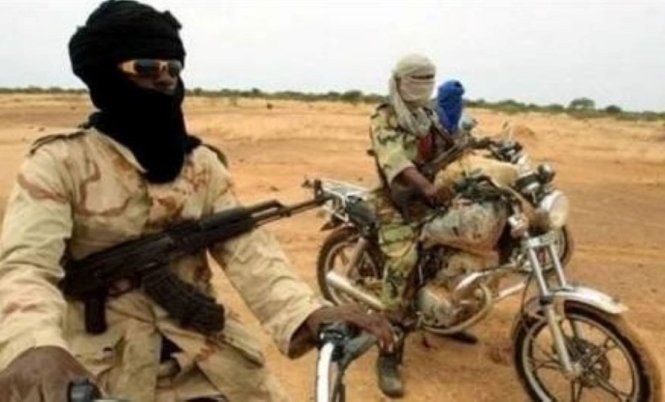
JNIM now strikes at capitals and governs territory, and the bet that Mali, Burkina Faso, and Niger placed on Russia as their sole security guarantor has failed. Analyst and researcher Joseph McCarthy writes that the fire will not stop at the Sahel’s borders, and Ghana stands directly in its path.
The Sahel is Burning, and West Africa Cannot Look Away
By Joseph McCarthy
At dawn on 18 June 2026, fighters stormed Diori Hamani International Airport in Niamey, the most heavily guarded site in Niger’s capital. It is not merely an airport. The complex houses the air force, most of the country’s drones, the headquarters of the Alliance of Sahel States’ joint force, the Russian personnel meant to help crush the insurgency, and even uranium stocks the state hopes to sell. JNIM claimed the assault, which killed eleven soldiers and two civilians. It was the second strike on that complex this year; the Islamic State’s Sahel Province claimed a January raid. Both of the region’s jihadist franchises have now breached the defences of a capital. This was not just another attack. It was a strategic signal.
It was also no act of opportunism. Hitting a fortified installation in a capital demands months of surveillance, intelligence on shift changes, the logistics to move fighters and weapons over long distances, and the ability to slip past layered security. It implies networks operating close to, or inside, the capital itself. As the Armed Conflict Location and Event Data project noted, the Sahel’s insurgents have moved from localised rural fighting to coordinated strikes on vital national infrastructure. The pattern is everywhere. In Mali, JNIM has throttled Bamako with a fuel blockade since September 2025, destroying hundreds of tankers; in April, it overran the garrison town of Kati and killed the defence minister in his own home; it has since placed a bounty of two million euros on the head of Mali’s junta leader, Assimi Goïta.
More troubling than the firepower is the governance. A Reuters investigation found that JNIM now arbitrates land disputes, collects taxes, enforces rules and imposes a rough order in territories the state has vacated. Forged from the merger of four groups, it increasingly presents itself not as a militia but as an alternative authority, building legitimacy among populations long neglected by distant governments. History is unkind here: from Afghanistan to Somalia, insurgencies that learn to govern outlast those that only fight. The contest is no longer simply about defeating armed men. It is about whether the state, rather than an armed movement, remains the most credible source of authority, justice and security.
Against all this, the juntas made a bet. Mali, Burkina Faso and Niger expelled Western forces, walked out of ECOWAS, and rebuilt their security around a single guarantor: Russia, first through the Wagner Group, then the Africa Corps. On 26 June, Burkina Faso severed diplomatic relations with France entirely, accusing Paris of backing the very terrorists it claims to fight, an allegation offered without evidence and flatly rejected. Niger’s government, for its part, blamed the Niamey attack on mercenaries funded by President Macron, again without proof. The promise was straightforward: sovereignty restored, foreign influence reduced, terrorism defeated. Judged by the junta’s own promise, the bet has failed. The violence has not receded. It has spread.
This should not be read as a uniquely Russian failure. It exposes the limits of any strategy built around a single external guarantor. No partner, whether Russia, France or the United States, can resolve a conflict rooted in governance failure, economic exclusion, local grievance and hollow institutions. Force can kill fighters. It cannot rebuild public trust, settle a quarrel between communities, open a clinic or create a job for an idle young man, and those are the very conditions the insurgents harvest for recruits. Russia carries constraints of its own: bogged down in Ukraine, its resources finite, it was outfought alongside Malian troops at Kidal even after reportedly receiving a warning of the assault. A security architecture resting on a single distracted partner does not reduce risk; it concentrates it, and when that partner underdelivers, there is no second line. The 2026 Global Terrorism Index now names the Sahel the global epicentre of terrorism, the source of more than half the world’s terrorism deaths and one in five of its attacks.
None of this stays in the Sahel. Ghana shares roughly 550 kilometres of frontier with Burkina Faso, much of it porous and threaded with informal crossings used daily by traders and herders. Southward expansion rarely begins with a spectacular attack. It begins quietly: a recruiter, a supply route, a financing cell, fighters embedding in border communities long before a shot is fired. That is precisely how the contagion crossed from Mali into Burkina Faso and Niger, and how it has already reached Benin and Togo, with Côte d’Ivoire and northern Ghana plainly exposed. Alongside the fighters’ travels, something almost as corrosive: a flood of assault rifles, explosives and military hardware that does not stop at extremist hands but arms robbers, traffickers and illegal mining syndicates, hollowing out a country’s security long before any jihadist banner appears.
The wider world has its own reasons to watch. Niger holds some of the planet’s richest uranium. A jihadist proto-state straddling West Africa would command migration routes toward the coast and the Mediterranean, strain fragile coastal economies, disrupt trade corridors and rattle investor confidence. At the same time, every successful strike on a capital broadcasts a template to armed groups from Nigeria to Mozambique. What looks today like a regional security crisis could become an international one. A region generating one in five of the world’s militant attacks is not a distant problem. It is a lit fuse.
Africa has paid before for believing that outside powers can guarantee its security. They cannot. Partners can offer intelligence, training and equipment; they cannot substitute for legitimate governance and functioning institutions. This crisis will be settled not only on the battlefield but in courtrooms, classrooms, local councils and marketplaces, where citizens decide whether the state or an armed movement better delivers justice and opportunity. For Ghana, the task is preventive, not reactive: intelligence cooperation, stronger borders, regional collaboration, community resilience and investment in local governance, all of it far cheaper than containment once the violence has taken root. And for the Sahel’s rulers, there is a harder truth.
Sovereignty that trades several partners for total dependence on one distant and overstretched power is not sovereignty; it is a fresh vulnerability dressed in the language of liberation. The question is no longer whether the crisis will spread beyond Mali, Burkina Faso and Niger. It already has. The only question left is whether West Africa acts before the Sahel becomes the world’s next strategic emergency.
Joseph McCarthy is an analyst and researcher specialising in governance, security, and political transitions in the Sahel. He writes on geopolitics, development, and African diplomacy. Email: joecarthy30@gmail.com
Perspectives
From Crossroads to Counter‑Offensive | Colonel Festus Aboagye (Retired) Discusses Ghana’s Anti-Narcotics Posture

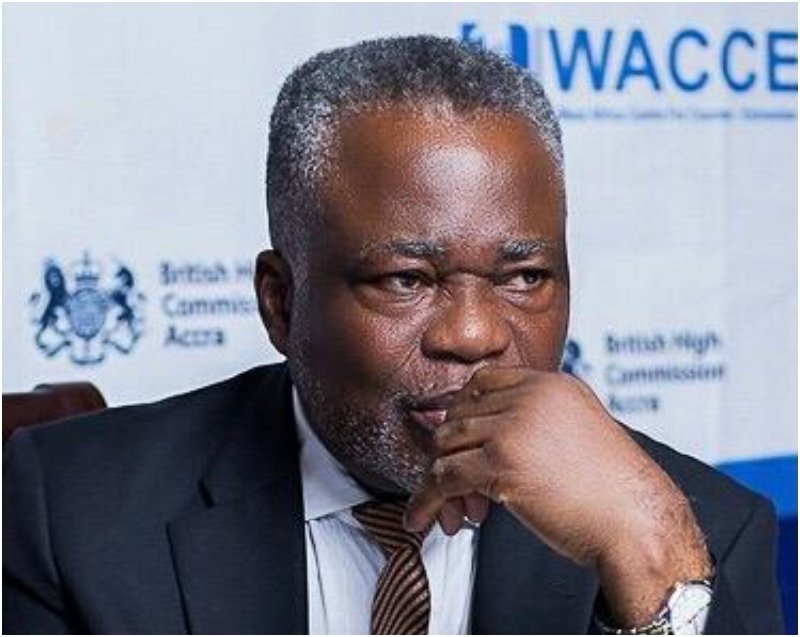
Ghana’s 2026 World Drug Day commemoration marks a decisive turning point in the nation’s long struggle against narcotics trafficking, signaling a shift from reactive interdiction to an assertive, intelligence‑led posture that is already yielding tangible results. Yet, as a new policy brief by Colonel Festus Aboagye (Retired) makes clear, the strategic contest over governance integrity remains unresolved.
Twelve months after the Crossroads Republic paper rated Ghana’s narco‑state risk at 2.7 out of 5 — moderate but escalating — the country has made measurable progress. The Narcotics Control Commission (NACOC) has expanded from fewer than 10 district commands to 77 across all 16 regions; arrests, prosecutions and seizures are up sharply; and a special narcotics court and enhanced prosecutorial powers — both recommendations from 2025 — are now in place. But the threat has evolved in parallel: methamphetamine concealed in charcoal shipments, synthetic and new psychoactive substances, cyber‑enabled trafficking, a 7% drug‑test failure rate among security‑service applicants, and localised consumption hotspots (73.5% lifetime use in Madina) all point to a challenge that is far from contained.
The reform most central to averting state capture — political‑party‑campaign‑finance transparency — has gone unaddressed. Though Ghana may be winning tactical battles, the strategic contest over the integrity of governance remains open.
Read the full 20‑page policy brief, “From Crossroads to Counter‑Offensive”, by Colonel Festus Aboagye (Retired):
Share, discuss, and join the conversation on sustaining Ghana’s resilience against the evolving narcotics threat.
#WorldDrugDay #PolicyBrief #Governance #Resilience #Ghana #NarcoTrafficking #StateCapture
Commentary
Reflections on Ghana And the Future it Deserves | By Simone Giger, Swiss Ambassador to Ghana
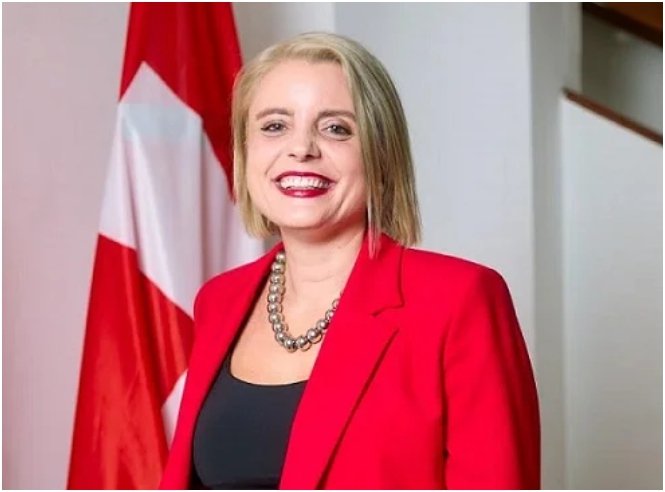
As her diplomatic tenure in West Africa draws to a close, Swiss Ambassador Simone Giger pens a reflective and heartfelt tribute to Ghana’s enduring national character. Having traveled extensively across the country—from Paga to Keta and Wa to Goaso—she offers an intimate, human-centered assessment of a nation defined by its resilient democratic culture, youthful ambition, and an infectious “vibe” that fosters cohesion. In this candid farewell, Ambassador Giger explores the complex challenges threatening Ghana’s ecological treasures and argues that sustained institutional reform, rather than outside invention, is the key to unlocking the prosperous future the country so clearly deserves.
Travelling through northern Ghana, this author once stopped in a small community after a long journey. Despite the day’s heat and the demands of daily life, residents welcomed visitors with warm smiles, easy laughter and an eagerness to share stories about their hopes for the future.
It was a simple encounter, yet it captured something profoundly Ghanaian: an enduring optimism that persists even in difficult circumstances.
In diplomacy, countries are often assessed through official meetings, economic indicators and policy documents. Yet to truly understand a nation, one must travel through it, listen to its people, appreciate its strengths, observe its contradictions and understand the aspirations that shape everyday life.
As the end of a diplomatic assignment in Ghana approaches, this author finds reason to reflect deeply on a country that has left a lasting impression, not only professionally but personally.
Over the past four years, extensive travels across Ghana—from Paga to Keta, Damongo to Donkokrom, and Wa to Goaso—have revealed a country of extraordinary diversity, complexity, creativity and resilience.
Every journey has unveiled a different dimension of Ghana. Yet one common thread consistently emerges: a nation brimming with potential.
There is something profoundly remarkable about Ghana and its national character, what many Ghanaians simply describe as the country’s “vibe”.
It is evident in the warmth extended to strangers, the humour with which difficulties are confronted and the optimism that endures even during periods of uncertainty.
Even in challenging moments, there is often a joke, a proverb or a story that helps place events in perspective.
In this author’s view, that national character has become one of the essential ingredients behind Ghana’s democratic success.
At a time when democratic systems around the world are facing increasing pressure, polarisation and distrust, Ghana continues to distinguish itself through its commitment to dialogue, constitutional order and peaceful coexistence.
Democracy here is not perfect. No democracy truly is, including Switzerland’s.
What matters is that it remains alive, active and deeply valued by citizens.
Over the years, Ghana has established itself as an important democratic reference point in West Africa.
The country has repeatedly demonstrated that political competition can coexist with stability, that transfers of power can occur peacefully and that national debates can take place within institutional frameworks rather than outside them.
Such achievements should never be taken for granted.
Democracy is not sustained by elections alone.
It requires strong institutions, active citizens, credible public discourse and a continuous willingness to negotiate consensus across political, ethnic, religious and generational lines.
One can observe that Ghana’s diversity presents both opportunities and challenges. Yet this author has often admired the manner in which the country continues to navigate these varied interests while preserving national cohesion.
In many respects, this is where Ghana’s democratic future becomes particularly important.
The country possesses extraordinary human capital.
Wherever this author travelled, young people displayed ambition, intelligence, creativity and determination.
Ghana’s greatest resource is not found beneath the ground.
It resides in its people, their ideas and their aspirations.
Ideas and aspirations, however, require systems that function effectively if they are to translate into meaningful and productive outcomes.
When institutions are transparent, responsive, accountable and trusted, they unlock innovation, investment and opportunity.
When they are weak or inconsistent, they risk frustrating the very energy capable of propelling a nation forward.
This is why governance reforms remain so important to Ghana’s long-term trajectory.
One development that particularly impressed this author during the diplomatic assignment has been Ghana’s constitutional review process.
What stands out is not only the process itself, but also the spirit behind it – a willingness to reflect critically on how democratic governance can evolve to meet contemporary realities and future expectations.
This demonstrates political maturity.
Constitutions should never be viewed as static documents frozen in time.
Strong democracies periodically examine whether their systems remain responsive, inclusive and effective.
Ghana’s consultative approach reflects a country seeking not merely to preserve democracy, but to improve it.
Switzerland is proud to support these home-grown efforts and remains committed to supporting the constitutional reform process until its hoped-for successful conclusion.
History demonstrates that democratic stability does not emerge automatically.
It requires deliberate investment in participation, inclusion and dialogue.
Swiss democracy itself evolved gradually through compromise, negotiation and the understanding that national cohesion is strengthened when citizens feel ownership over public decisions.
One can observe important similarities between Ghana and Switzerland.
Both countries are diverse societies that have chosen coexistence over division.
Both understand that stability is strongest when different voices are heard and accommodated.
Both appreciate the importance of consensus-building in national life.
This shared philosophy has shaped bilateral cooperation over many decades.
Today, the partnership continues to evolve in both breadth and depth.
Switzerland currently supports initiatives focused on democratic governance, parliamentary cooperation, decentralisation, peace and security, cultural exchange, environmental integrity, climate adaptation and economic development.
Switzerland and Ghana may differ in geography, history and scale, yet both countries share a belief in dialogue and cooperation as foundations for national progress.
Despite Ghana’s bright prospects, one cannot ignore the challenges confronting the country.
No nation can fully realise its potential without confronting difficult issues directly.
During the years spent in Ghana, citizens from various walks of life spoke openly about concerns surrounding institutional effectiveness, economic opportunity, environmental degradation and governance accountability.
Such conversations reflected not pessimism, but a desire to see the country fulfil its promise.
Particularly concerning is the destruction caused by illegal mining activities.
Ghana’s rivers, forests and landscapes are among its greatest treasures.
Environmental degradation is not merely an ecological issue.
It is fundamentally a matter of intergenerational responsibility.
Future prosperity depends on preserving the natural foundation upon which communities, livelihoods and national identity are built.
Yet despite these challenges, this author remains deeply optimistic about Ghana’s future.
That optimism stems not from idealism but from observation.
The future of democracy globally will not be shaped only by geopolitical actors or large states.
Medium-sized countries such as Switzerland and Ghana also have important roles to play.
They can demonstrate that democratic resilience, peaceful coexistence and institutional reform remain both possible and necessary.
As this diplomatic assignment draws to a close, there is profound gratitude for the opportunity to have lived and worked in Ghana.
Over the years, this author has come to admire the country not only for its democratic achievements, but also for its humanity – its warmth, creativity, humour and enduring sense of possibility.
The task ahead is not to invent Ghana’s future.
Rather, it is to create the institutional conditions necessary for that future to emerge fully.
From all that has been observed across the country, there is every reason to believe that Ghana can achieve precisely that.
The author, Simone Giger, is the Swiss Ambassador to Ghana, Togo and Benin


How One Father’s Decision Helped Ama Ata Aidoo Become a Global Literary Icon

Meet the Two Ghanaians Who Have Hauled South Africa to the ICC Over Xenophobic Violence

From London to Vancouver to Toronto: The Growing Trend of Asylum Claims at Global Sporting Events
-
 Ghana News18 hours ago
In Photos: Ghana’s Military-led Flood Mitigation Task Force Clears Waterways Building by Building
-
 Ghana News17 hours ago
Meet the Two Ghanaians Who Have Hauled South Africa to the ICC Over Xenophobic Violence
-
 Africa Watch2 days ago
Shame on Him! Ramaphosa Attempts a Guilt-Ridden Diplomatic Offensive as he Seeks to Mend Strained Ghana Ties After Xenophobic Attacks
-

 Ghana News2 days ago
Top 10 Headlines from Ghanaian Newspapers: Friday, July 24, 2026
-
 Ghana News2 days ago
Waiting in Long Queues: Mahama Recalls Pandemic Trauma as He Pushes for Vaccine Self-Sufficiency Across Africa
-

 Health & Wellness2 days ago
Why That Lower Belly Isn’t a Problem Most Women Need to Fix
-

 News1 day ago
British Woman Jailed Six Years After Hong Kong Court Rejects Rape Allegation
-

 Festivals & Events1 day ago
Where History Walks Again: Inside Saltpond’s Colourful Odambea Festival