
Arts and GH Heritage
Ama Ata Aidoo: Celebrating the Life, Legacy, and Lionhearted Spirit of a Literary Titan


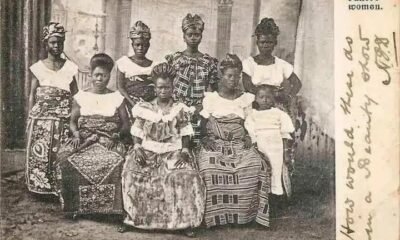
Ama Ata Aidoo (1942–2023) did not simply write stories. She shifted the continent’s literary center of gravity. A novelist, playwright, poet, educator, feminist, and cultural theorist, Aidoo spent six decades carving out a space where African women could speak in their own voices, on their own terms, with clarity, courage, and thunder.
Her passing in 2023 marked the end of a physical journey, but her intellectual and artistic imprint remains immovable.
A Fierce Feminist and Anti-Colonial Thinker
Aidoo’s work—and her life—was grounded in a sharp, unapologetic critique of colonialism and patriarchy. Long before global feminism embraced African voices, she insisted that African women were not silent, oppressed figures waiting to be rescued. They were thinkers, leaders, rebels, lovers, mothers, and dreamers—complicated, fully human beings worthy of nuanced representation.
Her characters were bold because she was bold.
Her ideas challenged the world because she refused to shrink herself to fit it.
A Literary Trailblazer
From her early days as a University of Ghana student, where she wrote and staged The Dilemma of a Ghost, Aidoo was destined to break barriers. When the play was published in 1965, she became the first African woman dramatist to be published, opening doors for generations of African women storytellers.
Her works—Anowa (1970), Our Sister Killjoy (1977), Changes (1991)—remain cornerstones of African literature classrooms worldwide. She dissected migration, love, identity, colonial tensions, and the lives of African women with unmatched precision and wit.
Awards and recognition followed naturally: Mbari Club Prize (1962), Nelson Mandela Prize for Poetry (1987) & Commonwealth Writers’ Prize (Africa Region, 1992).
But even these accolades fall short of capturing her cultural magnitude.
A Scholar and Public Servant
Aidoo was not content to remain an observer of national life—she stepped directly into it. As Ghana’s first woman Secretary for Education, she pushed passionately for free education, believing literacy was a cornerstone of liberation. Though her tenure was brief, it signalled her lifelong belief that knowledge must be accessible to all.
Her academic influence stretched across Ghana, the United States, Kenya, and Zimbabwe. Whether lecturing at the University of Ghana or conducting research on Fanti drama, she taught with the same fire she wrote with.
A Champion of African Women Writers
Aidoo believed deeply in the power of the written word—and in the responsibility to nurture new voices. In 2000, she founded the Mbaasem Foundation to support African women writers, long before literary empowerment became a global buzzword.
In 2013, she helped establish what is now the 9mobile Prize for Literature, Africa’s first major award for debut fiction writers. Her name continues to live on through the Aidoo-Snyder Book Prize, awarded for scholarship that centers African women’s experiences.
A Legacy Etched Across Continents
Ama Ata Aidoo was born in Abeadzi Kyiakor in the Gold Coast, and from that small town emerged a global literary icon. She navigated worlds—African and diaspora, academic and artistic, political and personal—without losing her moral clarity.
In a moving tribute, her longtime friend Dr. Rashidah Ismaili described her as a “dynamic spirit of blazing eyes and searing brilliance,” a sister-in-arms in the fight for African autonomy and dignity. Their decades-long friendship—rooted in activism, art, and Pan-African dreams—speaks to the emotional depth Aidoo carried into every relationship and every room.
The Eternal Voice
Aidoo has joined the ancestors, but hers is not a silent departure. Her plays are still performed. Her books are still taught. Her essays continue to provoke. The writers she mentored still carry her lessons. Her laughter, her audacity, her intellectual clarity—these remain.
For readers, writers, feminists, scholars, and dreamers across the world, Ama Ata Aidoo is not just a memory. She is an invitation:
Write boldly. Live consciously. Speak truthfully. Love Africa fiercely.
She rests in peace, but her words remain gloriously alive.


Arts and GH Heritage
Rhythm of Dagbon: How Bamaya and Takai Preserve Northern Ghana’s Cultural Memory
In the courts and ceremonial grounds of the Dagomba people, two dances often rise above the others for their history and symbolism: Bamaya and Takai.

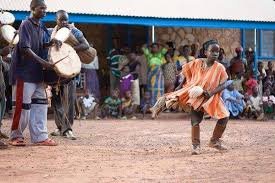
Drums roll across the savannah of northern Ghana, their rhythm sharp and commanding. Dancers step forward in bright traditional attire, shoulders squared and feet striking the earth with deliberate confidence.
In the courts and ceremonial grounds of the Dagomba people, two dances often rise above the others for their history and symbolism: Bamaya and Takai. Each carries a story—one born from hardship and humility, the other from discipline and warrior pride.
A Dance Born from Drought
The origins of Bamaya trace back generations in the northern kingdom of Dagbon. Oral history tells of a devastating drought that once gripped the land. Crops failed, rivers thinned, and the community searched desperately for answers.
According to tradition, the elders consulted spiritual leaders who revealed an unusual cause: the men of the community had angered the gods through their treatment of women. To restore balance and bring rain, the men were instructed to humble themselves by dressing in women’s clothing and performing a dance that honored femininity.
Reluctantly at first, the men obeyed. They tied cloth around their waists, covered their heads, and danced in exaggerated movements meant to mimic the grace of women. Soon after, rain is said to have returned to the land.
From that moment, Bamaya—often translated as “the river has overflowed”—became part of Dagomba tradition. Even today, the dance preserves that symbolic gesture: male performers wear skirts and scarves while moving energetically to the beat of drums and flutes. What began as a ritual act of humility evolved into one of northern Ghana’s most recognizable cultural performances.
The Discipline of Takai
While Bamaya carries a playful and dramatic origin story, Takai reflects a different side of Dagomba heritage. This dance emerged from the traditions of warriors and royal court performers who entertained kings and chiefs.
Takai movements are controlled and deliberate. Dancers wear traditional smocks and trousers, often decorated with talismans believed to offer protection. Their steps are measured, shoulders steady, arms firm. The rhythm of the drums drives the performance, while dancers maintain a dignified composure that reflects strength and discipline.
Historically, Takai was performed at royal gatherings and important ceremonies within the Dagbon kingdom. It honored bravery, unity, and the cultural authority of traditional leadership.
Tradition Alive in Northern Ghana
Today, both dances remain central to celebrations across northern Ghana, especially in communities around Tamale. Festivals, cultural events, and state ceremonies often feature Bamaya’s lively flair and Takai’s regal precision.
For the Dagomba people, these dances are more than entertainment. Bamaya serves as a reminder of humility, respect, and the delicate balance between people, nature, and spirituality. Takai, in contrast, celebrates discipline, heritage, and the enduring structure of traditional authority.
Together, they tell a broader story about Dagomba identity—one shaped by resilience, spirituality, and a deep respect for history. To watch the dances today is to witness living history in motion, where every drumbeat echoes generations of memory.
Arts and GH Heritage
Lost Grooves of the 1970s: New Compilation Celebrates Ghana’s Highlife Revolution
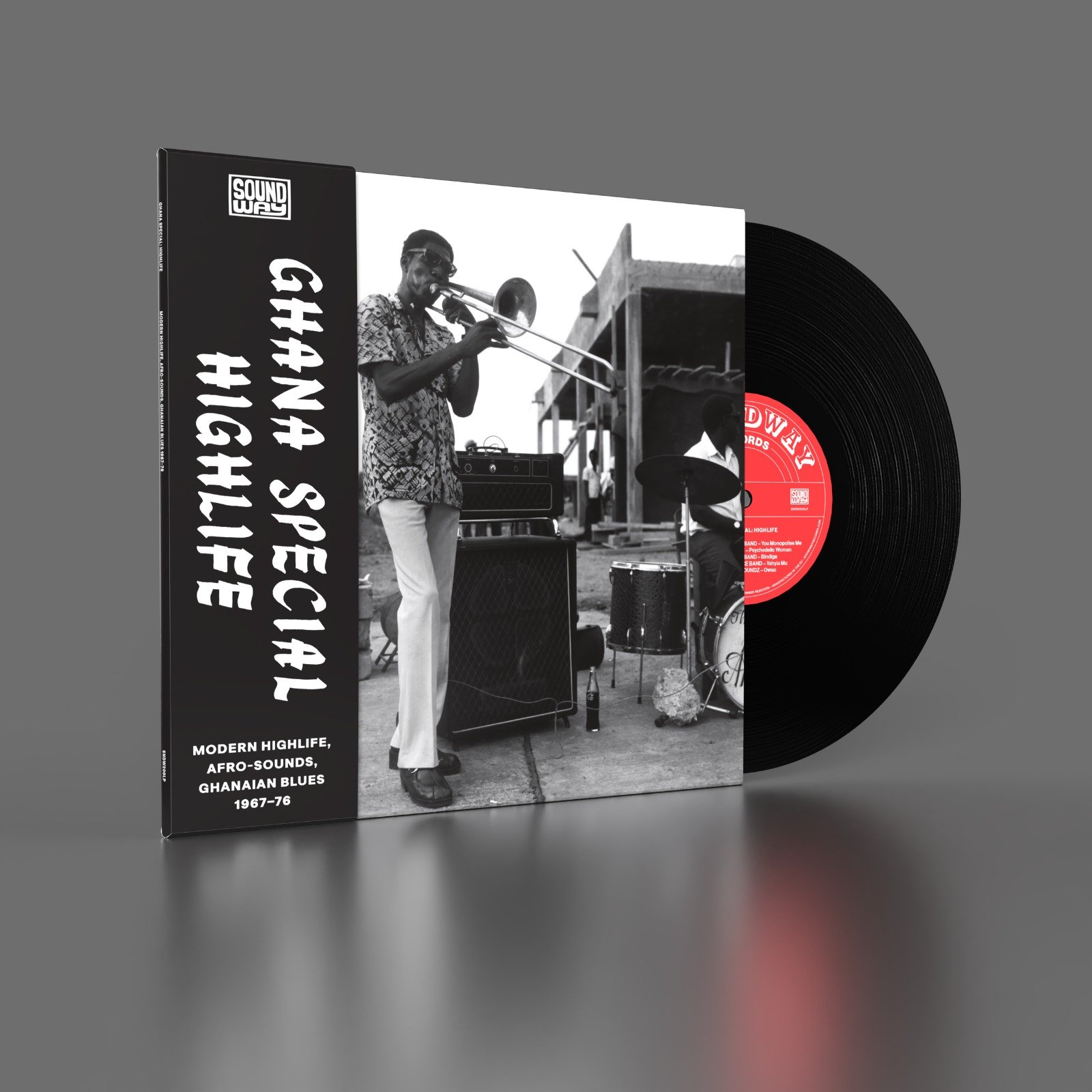
A new compilation album is bringing one of the most dynamic periods of Ghanaian music back into the spotlight, offering global audiences another chance to experience the experimental sound that defined the country’s highlife scene in the late 1960s and 1970s.
The UK-based label Soundway Records has released Ghana Special: Highlife, a curated single-LP selection highlighting Ghanaian recordings from 1967 to 1976. The release distills music originally featured in Soundway’s acclaimed 2009 five-LP box set Ghana Special, now long out of print and highly sought after by collectors.
The new edition focuses on a decade widely regarded as a creative peak for Ghanaian music, when highlife absorbed elements of rock, soul, and funk while remaining rooted in traditional rhythms and storytelling. The compilation brings together seminal recordings from groups such as The Ogyatanaa Show Band, Hedzoleh Soundz, and the celebrated guitarist and composer Ebo Taylor with his group Honny & the Bees Band.
Among the standout tracks is “You Monopolise Me” by The Ogyatanaa Show Band, produced by Ghanaian studio innovator Kwadwo Donkor. The song captures the playful songwriting and soulful arrangements that defined much of the era’s highlife output.
Another highlight is “Edinya Benya” by Hedzoleh Soundz, a group known for blending traditional Ghanaian rhythms with electric instrumentation and spiritual themes. Their music gained traction in the 1970s under the guidance of promoter and cultural impresario Faisal Helwani, who helped reshape Ghana’s live music scene with showcase events that mixed concerts with fashion shows, competitions and cultural performances.
Helwani was also instrumental in promoting young artists across West Africa and played a role in bringing Nigerian legend Fela Kuti and his early band Koola Lobitos to perform in Ghana.
The compilation also revisits the influential track “Psychedelic Woman” by Honny & the Bees Band, which gained renewed international attention when British producer Bonobo remixed it in 2005, introducing the sound of 1970s Ghanaian highlife to new audiences within the electronic music community.
A standout element of the release is its cover artwork: an unpublished 1976 photograph by renowned Ghanaian photographer James Barnor. The image, taken during a Rothmans factory Christmas party in Accra, captures a musician mid-performance and offers a rare visual glimpse into the country’s social and musical life of the era.
One of the compilation’s most historically rich recordings is “Ohiani Sua Efrir” by Asaase Ase, a project led by Ebo Taylor that returned to traditional folk roots. Inspired by groups such as Hedzoleh Soundz and Wulomei, the project featured musicians from the streets of Cape Coast performing stripped-down folk songs with guitar, percussion and vocals. Taylor described the track as “a real African blues,” telling the story of a hunter whose traps yield only snakes while wealthier hunters return with bush meat.
By condensing a landmark anthology into a more accessible format, Ghana Special: Highlife reintroduces listeners to a period when Ghanaian musicians fused local traditions with global influences, producing a sound that continues to inspire artists around the world.
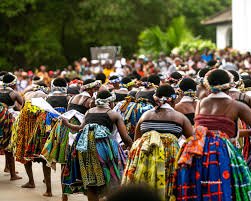
On a warm evening in southeastern Ghana, the first drumbeat cuts through the air like a signal. A circle forms almost instantly. Women adjust their cloth around the waist, men step forward with a confident sway, and the rhythm begins to gather pace. Feet shuffle, shoulders roll, hips tilt to the pulse of drums and rattles. This is Borborbor, one of the most beloved social dances of the Ewe people, and in communities across the Volta Region, its rhythm still brings people together the way it did generations ago.
Borborbor did not begin as a grand cultural performance. Its roots lie in community life during the mid-20th century, when Ewe youth began creating new dance styles that reflected changing times. Oral histories often trace their emergence to the 1950s in the town of Kpando.
At the time, young people were fascinated by the brass band music played at military parades and public events during the late colonial period. The marching rhythms, steady drum patterns, and lively call-and-response singing inspired them to create something of their own.
What emerged was Borborbor—a dance that blended traditional Ewe drumming with the cadence of parade music. The name itself echoes the rolling sound of the drums. Soon, the style spread rapidly across towns and villages. It became especially popular at community gatherings, funerals, festivals, and celebrations where large groups could participate.
Unlike some ceremonial dances reserved for specific occasions, Borborbor is open and social. The drummers sit at the center, surrounded by dancers who move in loose formations. The steps are energetic but playful: knees bending low, feet stamping lightly into the ground, arms swinging in rhythm. Women often lead with graceful hip movements while men respond with confident footwork. Colorful cloth wraps, beads, and headscarves add visual flair as the dancers move.
Music is the lifeblood of the performance. A lead singer calls out verses—sometimes humorous, sometimes reflective—and the crowd answers in chorus. The songs can comment on daily life, celebrate community figures, or simply encourage dancers to move with more spirit. Laughter often breaks out mid-performance as dancers improvise gestures or tease one another through movement.
For the Ewe people today, Borborbor represents far more than entertainment. It carries a sense of belonging. At funerals, the dance becomes a way to honor the life of someone who has passed, celebrating their journey rather than dwelling only on grief. During festivals or family gatherings, it reinforces bonds between generations. Elders clap along proudly while younger dancers bring fresh energy to the circle.
Even beyond the Volta Region, Borborbor has traveled widely. Cultural troupes perform it on international stages, introducing global audiences to the pulse of Ewe music and dance. Yet its heart remains in the community spaces where it began—village squares, open courtyards, and festival grounds where drums echo long into the night.
When the rhythm starts, people rarely stay seated for long. Borborbor invites participation. It asks the body to listen, respond, and celebrate the simple joy of moving together.


Renowned Global Bodies Warn Middle East War Will Scuttle Africa’s 2026 Growth

Ex-President Akufo-Addo and President Mahama Exchange Pleasantries on Easter

Mahama Calls Christ’s Birthplace an ‘Epicentre of War’, New Airport Concourse Planned and Other Big Stories in Ghana Today
-

 Business1 day ago
Ghana Turns to Russian Fuel to Cushion Impact of Global Energy Crisis
-

 Tourism1 day ago
5 Things You Need to Know About Ghana’s Visa-Free Entry for All Africans
-

 Ghana News7 hours ago
Ghana President Convenes Emergency Cabinet Meeting to Cushion Ghanaians from Soaring Fuel Prices
-
 Ghana News7 hours ago
Mahama Calls Christ’s Birthplace an ‘Epicentre of War’, New Airport Concourse Planned and Other Big Stories in Ghana Today
-
 Ghana News7 hours ago
Ex-President Akufo-Addo and President Mahama Exchange Pleasantries on Easter
-

 Ghana News1 day ago
Ghanaian Stowaways Bound for Europe End Up in Nigeria After Five Days at Sea
-

 Ghana News1 day ago
Here Are the 10 Key Agreements Signed Between Ghana and Zimbabwe During Mnangagwa’s State Visit
-

 Health & Wellness2 days ago
3 Surprising Signs Your Body Is Building Muscle