Ghana News
A Century of Enterprise: How Ghana’s Kalmoni Family Built a Business Dynasty and Why It Matters for Global Investors


When Salem Kalmouni, Managing Director of Japan Motors, was crowned Marketing Man of the Year at the recently-held 37th Chartered Institute of Marketing, Ghana (CIMG) Annual National Marketing Performance Awards 2025 in Accra, it was more than a personal honor. It was the latest chapter in a remarkable century-long story of immigrant entrepreneurship that has helped shape Ghana’s automotive, industrial, and real estate sectors.
Kalmouni shared the spotlight with Abena Amoah, Managing Director of the Ghana Stock Exchange (GSE), who was named Marketing Woman of the Year. The two were honored alongside winners in 55 other categories at the awards, held on Saturday, October 17, 2026 under the theme: “Brand Ghana Reimagined: Trust, Innovation and Growth in the AI Economy.”
The event brought together businesses and marketing professionals to recognize performance across sectors and highlight the role of marketing in strengthening brands and organizational growth.
A Legacy Rooted in Ghana
The Kalmoni family (often spelled Kalmouni) is one of Ghana’s most prominent and long-standing Lebanese-Ghanaian business dynasties. Their journey began in 1912, when the family patriarch arrived from Lebanon to engage in trading activities prior to World War I.
In the 1920s, the family established Kalmoni & Sons as a transport and trading venture. A defining milestone came in 1958, when the company became the first to import Japanese-made vehicles, initially Datsun, which evolved into Nissan, into the Ghanaian market. In 1965, the enterprise was formally incorporated and renamed Japan Motors Trading Company (JMTC).
Today, under the umbrella of the Kalmoni Group, the family operates several major entities:
- Japan Motors Trading Company (JMTC): One of Ghana’s leading automotive powerhouses. Under the leadership of Group Chairman Jalal Kalmoni and Managing Director Salem Kalmoni, JMTC represents global brands including Nissan, Yamaha (motorcycles, marine engines, generators), Foton, Geely, and the INEOS Grenadier. The company has expanded operations to Senegal, Mali, Togo, Benin, and Nigeria.
- Silver Star Auto Limited (SSAL): A primary dealer and general distributor for Mercedes-Benz vehicles and spare parts in Ghana, alongside other brands.
- Lakeside Estate: A major real estate development company credited with building thriving residential community hubs on the outskirts of Accra.
Ghana as a Safe, Progressive Business Destination
The Kalmoni story is also a story about Ghana itself: a nation that has proven to be a stable, welcoming, and progressive environment for long-term investment.
With over a century of continuous operation in the country, the family represents a classic example of multi-generational immigrant entrepreneurship successfully scaling into a diversified corporate group. They are widely recognized as key industrial players who helped shape Ghana’s private transport, logistics, and real estate development sectors.
The lesson is clear: Ghana offers a safe, democratic, and forward-looking market for those who understand how to navigate it. The Kalmoni family’s success demonstrates that with patience, local partnerships, and a long-term vision, international investors can build lasting enterprises in West Africa’s most stable economies.
As Ghana positions itself as a hub for innovation and growth in the AI economy, the recognition of leaders like Salem Kalmouni signals a business environment that rewards excellence, brand-building, and strategic vision, whether you are a fifth-generation family firm or a first-time entrant to the market.
The Kalmoni legacy, spanning more than a hundred years, stands as both an inspiration and a testament: Ghana is open for business, and those who invest wisely can grow alongside it.











Ghana News
Former Nigerian Spy Chief Claims Dictator Sani Abacha Died During Intimate Encounter With a Woman
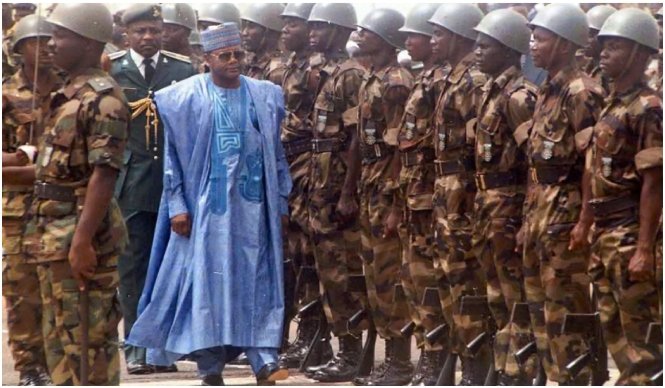
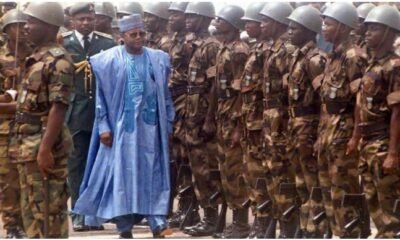
A former senior official of Nigeria’s Department of State Services (DSS) has offered a new account of the death of former military ruler General Sani Abacha, claiming the late head of state died during an intimate encounter with a woman at the presidential villa in Abuja.
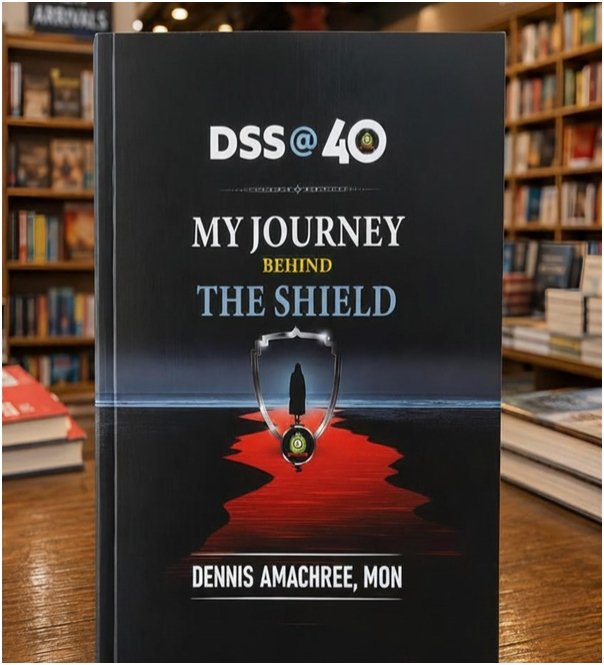
Dennis Amachree, a former assistant director of the DSS, recounts the events surrounding Abacha’s death in his book, DSS at 40: My Journey Behind the Shield, challenging previously circulated accounts of how the military leader died.
According to the account discussed on Nigeria’s Arise News, Abacha died of cardiac arrest at about 4:05 am on June 8, 1998, at a guest house within the Aso Rock Presidential Villa.
Spy Chief Personally Interrogated the Woman
Amachree said he personally interrogated the woman, described as a pharmacist, after she fled the presidential complex following the incident.
He recalled that when questioned about the circumstances surrounding Abacha’s death, the woman insisted she was not responsible.
“I did not kill him. He died on top of me. He died on top of me,” she reportedly told him.
The account has reignited discussions about the circumstances surrounding the death of Abacha, who ruled Nigeria from November 1993 until his death in June 1998.
How the Pharmacist Escaped Aso Rock
According to Amachree’s account, the pharmacist panicked after discovering that Abacha was unresponsive and had no pulse.
She quickly dressed and left the guest house, telling the soldier on guard duty that the Head of State had asked for a car to take her back to her hotel. The soldier, unaware of what had happened inside, reportedly arranged transportation for her.
The woman returned to the Nicon Noga Hilton Hotel, where her elder sister, who was reportedly Abacha’s girlfriend, was staying. She informed her sister about the incident, after which they arranged for her to be driven to the Abuja airport.
She subsequently boarded a 7 am Okada Airline flight to Lagos, leaving before security officials established who had last been with the military ruler.
Traced to Lagos
Amachree said the security services initially went to the hotel to arrest the girlfriend but discovered that the pharmacist they wanted to question had already left for Lagos. He said he later received instructions from the DSS national headquarters to locate the woman.
At about 8 am on June 9, 1998, Amachree said his team traced the pharmacist to an address in Ogudu, Lagos, and brought her to his office for questioning. He recalled that her first words were:
“I did not kill him; he died on top of me.”
After obtaining her account, Amachree said he contacted his superiors in Abuja, following which the woman was flown back to the capital for further questioning.
A Controversial Legacy
Abacha’s death has long been the subject of speculation and conspiracy theories in Nigeria, with official accounts citing cardiac arrest while other theories have pointed to poisoning or foul play. The new book adds a fresh dimension to a debate that has persisted for nearly three decades.
The disclosure has been widely discussed on Nigerian television and social media, with clips of the Arise News report circulating online.
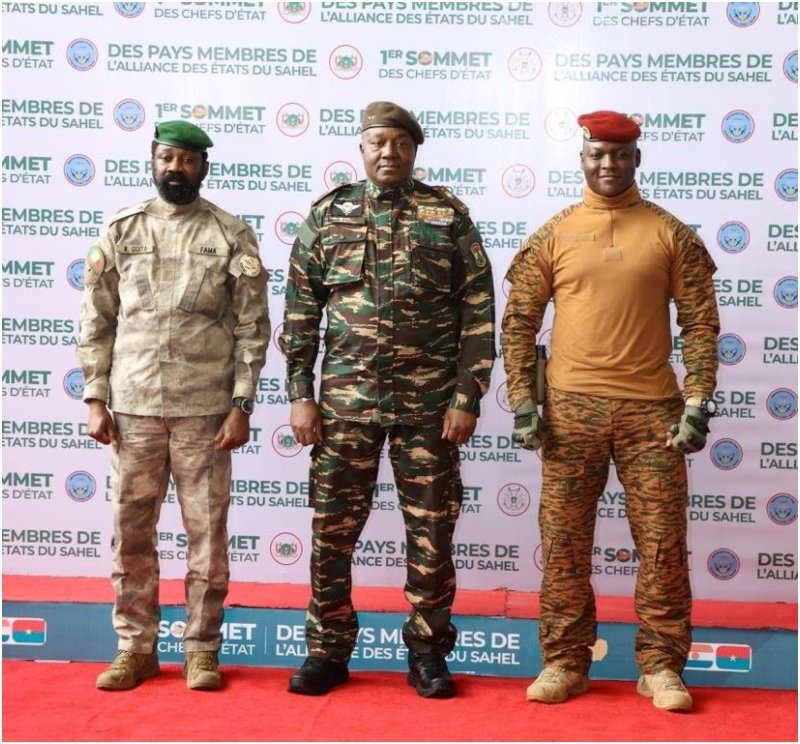
The Economic Community of West African States (ECOWAS) and the Confederation of Sahel States (AES) have agreed to establish joint working groups to develop a proposed cooperation agreement, marking a formal resumption of dialogue between the two blocs after more than a year of rupture.
The decision was announced in a communiqué issued following talks in Dakar, Senegal, co-chaired by Senegal’s Minister of African Integration, Foreign Affairs and Senegalese Abroad, Cheikh Niang, who chairs the ECOWAS Council of Ministers, and Burkina Faso’s Foreign Minister, Karamoko Jean-Marie Traoré, who chairs the AES ministerial steering committee.
Technical Discussions Toward a Cooperation Agreement
According to the communiqué, the working groups will conduct technical discussions aimed at producing a cooperation agreement between ECOWAS and the AES, which comprises Burkina Faso, Mali and Niger.
The working groups are expected to submit their findings to ministers for consideration before the next ministerial session. The date and venue of that meeting will be determined through diplomatic consultations.
The Dakar meeting follows earlier consultations held in Bamako, Mali, on May 22, 2025, where the two sides exchanged views on areas of common interest that could form the basis for further discussions.
Spirit of Fraternity and Mutual Respect
The communiqué said both sides welcomed the spirit of fraternity, mutual respect and openness that characterized the discussions.
They acknowledged the historical, socio-cultural and economic ties between their peoples and agreed that future relations should be guided by good neighborliness and respect for sovereignty, dignity and the well-being of West African populations.
Both blocs expressed the desire to develop a cooperation arrangement that would be “balanced, realistic” and protect the interests of their peoples.
Background: The January 2024 Split
Burkina Faso, Mali and Niger announced their withdrawal from ECOWAS in January 2024 following tensions with the regional bloc after military takeovers in the three countries.
Their departure raised concerns about the future of regional trade, the free movement of people and security cooperation across West Africa, issues the new working groups are expected to address.
The communiqué thanked Senegalese President Bassirou Diomaye Diakhar Faye, who chairs the ECOWAS Authority of Heads of State and Government, as well as the Senegalese government and people, for their hospitality and support for West African integration.
What Comes Next
The establishment of joint working groups represents the most concrete step toward reconciliation since the three Sahel states formally exited ECOWAS. However, the communiqué stops short of signaling a return to full membership, framing the process instead as the development of a cooperation arrangement between two distinct blocs.
Observers will be watching closely for the composition of the working groups, the timeline for their findings, and whether the original grievances that prompted the 2024 withdrawal, including sanctions and disputes over election timelines, are addressed in the eventual agreement.
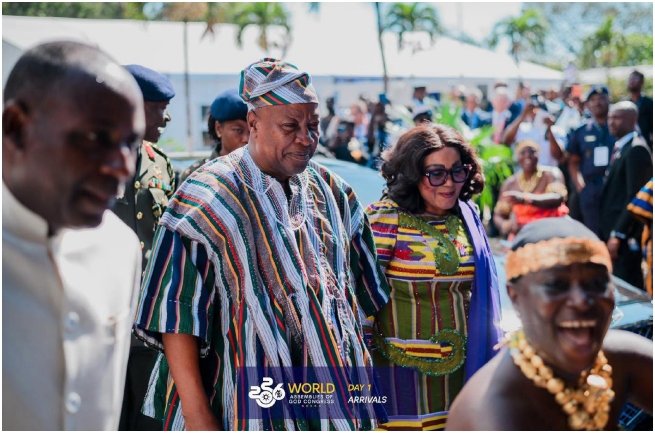
President John Dramani Mahama has challenged thousands of church delegates gathered in Ghana’s capital to measure the success of their global congress not by the eloquence of its sermons, but by the lives they transform after the final prayer is said.
“The lasting story of this conference, this congress, will be written in the lives that we touch after the closing prayer,” Mahama told more than 10,000 participants at the opening ceremony of the 10th Triennial Congress of the World Assemblies of God Fellowship on Wednesday, October 14, 2026.
The president urged delegates to return to their home countries with concrete plans to serve their communities — mentoring young people, supporting schools, strengthening health ministries and standing beside congregations serving under difficult conditions.
Faith Must Be Tangible
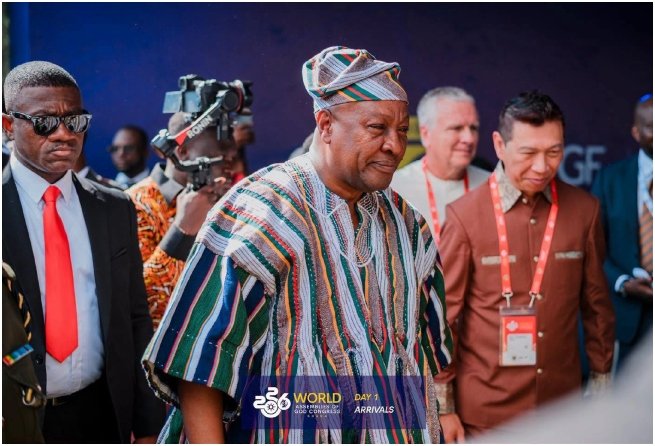
Mahama argued that faith becomes real only when it meets human need. He offered a vivid portrait of what practical Christianity looks like: a hungry child receiving a meal, a patient treated with compassion, a young person acquiring a skill, a widow finding companionship, and a struggling family receiving support from its community.
He called on the church to give greater attention to the relationship between preaching the gospel and serving people in practical ways, saying the two must not be separated.
“Spiritual authority entails a duty of care,” the president said, stressing that churches must provide safe environments for children and vulnerable people. He warned that spiritual leadership carries a responsibility to protect the trust placed in it through responsible conduct.
A Warning on Youth and Technology
Turning to youth development, Mahama acknowledged that young people today are growing up in a world of extraordinary opportunity, but also considerable pressure. Technology, he said, connects young people across continents while simultaneously exposing them to constant comparisons, misinformation and competing expectations about who they should become.
He urged churches and families to create environments where young people can ask questions freely, receive guidance, develop their abilities and take on meaningful responsibilities. Delegates, he said, should mentor young people by listening to them, offering opportunities for service and modelling integrity.
The president also called on the church to recognise the contributions of women of faith, saying their wisdom, talents and leadership deserve full recognition.
A Call for Global Solidarity
Addressing the global nature of the fellowship, Mahama expressed hope that members with greater resources would find ways to support those with fewer. The fellowship, he said, would grow stronger when its members shared their gifts and stood with one another through difficult times.
He also spoke directly to the responsibility of public office, saying those entrusted with power had a particular duty to serve with humility, honesty and integrity. Faith, he added, should deepen respect for citizens and concern for those whose voices are least likely to reach the centres of power.
Historic Honour for a Pentecostal President
At the ceremony, the World Assemblies of God Fellowship presented Mahama with its maiden Global Leadership Excellence and Trailblazer Award. The citation described him as the first member of the Assemblies of God worldwide to become president of a country — a milestone for the denomination.
Organisers also presented him with a Bible and urged him to allow the Word of God to guide his leadership.
The fellowship honoured First Lady Mrs. Lordina Mahama for her work supporting vulnerable people through her compassion ministry.
Former Malawian President Dr. Lazarus Chakwera also received the Global Leadership Excellence Award. His citation described him as the second member of the denomination — and the first minister of the gospel within the fellowship — to become president of a country.
Prayers for Wisdom and Redistribution
Following the awards, general superintendents and Ghanaian church leaders gathered around Mahama to pray for him. The prayer leader, Reverend Dominic Yeo, the fellowship’s Global Chairman, asked God to grant the president “divine wisdom” and prayed for the continuation of what he described as a reformation agenda.
He also prayed for “a redistribution of wealth throughout this nation so that all Ghanaians will be blessed,” a prayer that resonated beyond the sanctuary walls in a country where economic inequality remains a pressing concern.
A Global Gathering in Accra
The 10th Triennial Congress has drawn more than 10,000 participants to Accra, making it one of the largest Pentecostal gatherings on the continent this year. The event brings together delegates from across the global fellowship, reflecting the denomination’s growing presence in Africa and beyond.
For Mahama, however, the congress’s true significance will not be found in its attendance figures or its ceremonies — but in what delegates do once they return home.
“Faith becomes tangible,” he said, “when a hungry child receives a meal, a patient is treated with compassion, a young person acquires a skill, a widow finds companionship and a struggling family receives support from its community.”
The closing prayer, it seems, is only the beginning.


Former Nigerian Spy Chief Claims Dictator Sani Abacha Died During Intimate Encounter With a Woman

ECOWAS and Sahel States Agree to Form Joint Working Groups After Talks Resume