
Opinion
Resetting Sovereignty: Mahama’s Foreign Policy and the Constitutional Revival of NKRUMAHISM 60 years after the 1966 Coup

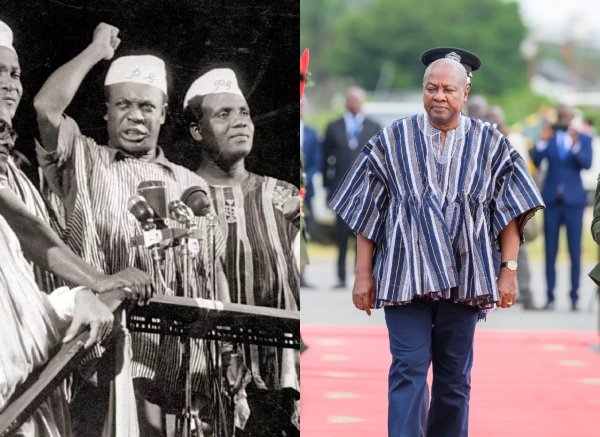
This opinion piece by Victoria Hamah (PhD) argues that President John Dramani Mahama’s foreign-policy direction reflects a renewed commitment to Kwame Nkrumah’s ideas of sovereignty, non-alignment, and economic independence. It points to symbolic actions—such as renaming Kotoka International Airport back to Accra International Airport—as part of a broader effort to correct historical narratives, strengthen national autonomy, and revive a modern, constitutional form of Nkrumahism 60 years after the 1966 coup.
Resetting Sovereignty: Mahama’s Foreign Policy and the Constitutional Revival of NKRUMAHISM 60 years after the 1966 Coup
After 60 years, the most shameful blot on the page of national dignity has finally been erased. The Kotoka International Airport has been reverted to its rightful name, Accra International Airport.
This decision by President John Mahama represents more than just an administrative rebranding. It signals an effort to interrogate the historical foundations upon which the postcolonial Ghanaian state was constructed.
The airport was named after Lieutenant General Emmanuel Kwasi Kotoka, a central figure in the 1966 coup which overthrew Kwame Nkrumah. That coup marked a decisive interruption of Ghana’s early post-independence developmental trajectory and inaugurated a period of political instability, throwing Ghana, then the lodestar of Africa, into the decadence of neocolonial subjugation.
Recently declassified records from the Central Intelligence Agency have confirmed that the United States, Britain and France were actively involved in the planning of the coup. While debates persist regarding the precise degree of foreign involvement, the broader historical consensus recognises that the overthrow of Nkrumah occurred within a broader context of Western imperialist efforts to derail the independent developmental model in particular and the pan-African vision in general.
Within this frame, the renaming of the airport functions as an act of narrative correction. It does not merely revisit the legacy of one military officer who was nothing more than a soldier of fortune; it symbolically re-centres Ghana’s identity around civilian constitutional sovereignty rather than military intervention.
In doing so, it aligns with the broader philosophical thrust of President Mahama: that political and economic independence must be reclaimed not only through fiscal and industrial policy, but through the stories nations tell about their own past.
This symbolic gesture addresses an earlier rupture in Ghana’s sovereign development. Together, they articulate a consistent thesis: that independence is neither a completed event nor a ceremonial inheritance, but an ongoing political project requiring institutional, economic, and historical recalibration.
The symbolic timing is equally significant. Sixty years after the infamous 24th February 1966 coup d’état, the renaming signals more than historical reconsideration; it suggests an ideological repositioning.
It indicates an aspiration by the National Democratic Congress (NDC) government toward a consciously pro-Nkrumahist orientation, one grounded in non-alignment, strategic autonomy, and policy independence amid an increasingly turbulent global order.
For John Dramani Mahama’s administration, this does not imply a retreat into isolationism nor a rejection of global engagement. Rather, it reflects a recalibration of Ghana’s external posture: cooperation without subordination, partnership without policy capture.
In a period marked by intensifying geopolitical rivalry and assertive economic diplomacy from powerful states in the Global North, particularly Western nations. The gesture evokes the earlier doctrine of Kwame Nkrumah, who situated Ghana within the Non-Aligned Movement as a sovereign actor rather than a peripheral client.
Read in this light, the act is not revisionist symbolism for its own sake. It articulates a continuity between the Accra Reset and Ghana’s unfinished post-independence project. The 1966 coup interrupted an ambitious experiment in autonomous development and continental leadership.
To revisit that rupture six decades later is to suggest that the questions posed in the 1960s -abhorrent alignment, dependency, and the boundaries of sovereignty – should define the character of political debate.
Economic Sovereignty as a Foreign Policy: The Reset in Practice:
President John Dramani Mahama’s unprecedented post-Rawlings era electoral victory carries significance beyond partisan transition. It represents, symbolically, a renaissance of Nkrumahism within Ghana’s contemporary democratic framework.
For the first time since the revolutionary and post-revolutionary dominance of Jerry Rawlings, a renewed mandate has been secured on a platform explicitly invoking structural transformation, strategic autonomy, and continental alignment rather than mere macroeconomic stabilisation.
This moment also clarifies an older historical debate. Prior to the 24 February 1966 coup that overthrew Kwame Nkrumah, there were persistent allegations, advanced by Nkrumah himself, that Western powers, uneasy with Ghana’s non-aligned posture and pan-African activism, exerted economic pressure by manipulating global cocoa markets.
As cocoa was Ghana’s principal export and foreign exchange earner, its price volatility had profound fiscal implications. Some historical interpretations further suggest tacit alignment by neighbouring Côte d’Ivoire, which is also a major cocoa producer within broader Western-aligned commodity structures, thereby compounding Ghana’s vulnerability and creating the mood for violent regime change.
Whether interpreted as deliberate sabotage or structural dependency within a commodity-based global economy, the episode reinforced a central Nkrumahist lesson: political sovereignty without economic autonomy is fragile.
Mahama’s present mandate appears framed as an effort to transcend that vulnerability without repudiating constitutional democracy or global engagement.
A key example is the decision to move away from syndicated external financing arrangements in the cocoa sector and to prioritise domestic value addition by processing up to half of Ghana’s cocoa output locally. This signals a deliberate shift from dependence on raw commodities toward industrial upgrading.
If implemented effectively, this approach aligns closely with classical Nkrumahist economic thought: retaining greater value within the domestic economy, reducing exposure to external price shocks, and building industrial capacity anchored in existing comparative advantage. It is not autarky but strategic repositioning within global markets.
Describing this moment as a renaissance of Nkrumahism, therefore, does not imply a return to one-party statism or Cold War binaries. Rather, it signals the re-emergence of core principles of economic self-determination, continental integration, and calibrated non-alignment within a competitive multiparty order.
Taken together, the symbolic reconsideration of colonial-era commemorations, the Nkrumahist articulation of foreign policy by Samuel Okudzeto Ablakwa, reforms within the cocoa financing architecture, and Mahama’s renewed electoral mandate, the moment can be read as deliberate ideological consolidation. It suggests that the questions suspended in 1966 have re-entered Ghana’s political centre, not as nostalgia, but as a strategy: a constitutionalised revival of the unfinished project of autonomous development.
Thus, the Reset Agenda operates on three registers simultaneously: economic restructuring, institutional reform, and historical re-anchoring. Together, they imply that sovereignty is not merely territorial integrity nor formal democratic procedure, but the sustained capacity to determine national priorities without external veto.
If the coup marked the suspension of that ambition, the present moment is framed as its cautious revival.








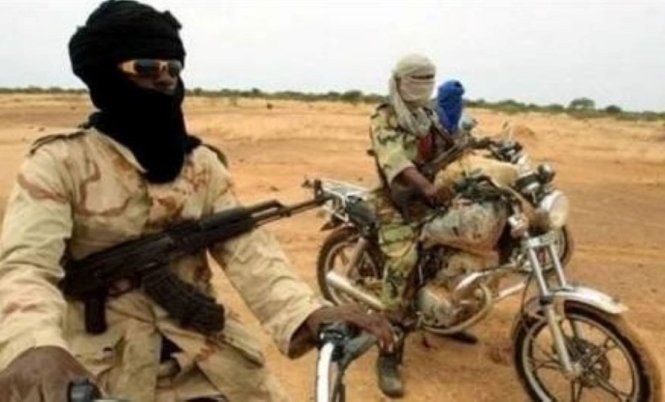
JNIM now strikes at capitals and governs territory, and the bet that Mali, Burkina Faso, and Niger placed on Russia as their sole security guarantor has failed. Analyst and researcher Joseph McCarthy writes that the fire will not stop at the Sahel’s borders, and Ghana stands directly in its path.
The Sahel is Burning, and West Africa Cannot Look Away
By Joseph McCarthy
At dawn on 18 June 2026, fighters stormed Diori Hamani International Airport in Niamey, the most heavily guarded site in Niger’s capital. It is not merely an airport. The complex houses the air force, most of the country’s drones, the headquarters of the Alliance of Sahel States’ joint force, the Russian personnel meant to help crush the insurgency, and even uranium stocks the state hopes to sell. JNIM claimed the assault, which killed eleven soldiers and two civilians. It was the second strike on that complex this year; the Islamic State’s Sahel Province claimed a January raid. Both of the region’s jihadist franchises have now breached the defences of a capital. This was not just another attack. It was a strategic signal.
It was also no act of opportunism. Hitting a fortified installation in a capital demands months of surveillance, intelligence on shift changes, the logistics to move fighters and weapons over long distances, and the ability to slip past layered security. It implies networks operating close to, or inside, the capital itself. As the Armed Conflict Location and Event Data project noted, the Sahel’s insurgents have moved from localised rural fighting to coordinated strikes on vital national infrastructure. The pattern is everywhere. In Mali, JNIM has throttled Bamako with a fuel blockade since September 2025, destroying hundreds of tankers; in April, it overran the garrison town of Kati and killed the defence minister in his own home; it has since placed a bounty of two million euros on the head of Mali’s junta leader, Assimi Goïta.
More troubling than the firepower is the governance. A Reuters investigation found that JNIM now arbitrates land disputes, collects taxes, enforces rules and imposes a rough order in territories the state has vacated. Forged from the merger of four groups, it increasingly presents itself not as a militia but as an alternative authority, building legitimacy among populations long neglected by distant governments. History is unkind here: from Afghanistan to Somalia, insurgencies that learn to govern outlast those that only fight. The contest is no longer simply about defeating armed men. It is about whether the state, rather than an armed movement, remains the most credible source of authority, justice and security.
Against all this, the juntas made a bet. Mali, Burkina Faso and Niger expelled Western forces, walked out of ECOWAS, and rebuilt their security around a single guarantor: Russia, first through the Wagner Group, then the Africa Corps. On 26 June, Burkina Faso severed diplomatic relations with France entirely, accusing Paris of backing the very terrorists it claims to fight, an allegation offered without evidence and flatly rejected. Niger’s government, for its part, blamed the Niamey attack on mercenaries funded by President Macron, again without proof. The promise was straightforward: sovereignty restored, foreign influence reduced, terrorism defeated. Judged by the junta’s own promise, the bet has failed. The violence has not receded. It has spread.
This should not be read as a uniquely Russian failure. It exposes the limits of any strategy built around a single external guarantor. No partner, whether Russia, France or the United States, can resolve a conflict rooted in governance failure, economic exclusion, local grievance and hollow institutions. Force can kill fighters. It cannot rebuild public trust, settle a quarrel between communities, open a clinic or create a job for an idle young man, and those are the very conditions the insurgents harvest for recruits. Russia carries constraints of its own: bogged down in Ukraine, its resources finite, it was outfought alongside Malian troops at Kidal even after reportedly receiving a warning of the assault. A security architecture resting on a single distracted partner does not reduce risk; it concentrates it, and when that partner underdelivers, there is no second line. The 2026 Global Terrorism Index now names the Sahel the global epicentre of terrorism, the source of more than half the world’s terrorism deaths and one in five of its attacks.
None of this stays in the Sahel. Ghana shares roughly 550 kilometres of frontier with Burkina Faso, much of it porous and threaded with informal crossings used daily by traders and herders. Southward expansion rarely begins with a spectacular attack. It begins quietly: a recruiter, a supply route, a financing cell, fighters embedding in border communities long before a shot is fired. That is precisely how the contagion crossed from Mali into Burkina Faso and Niger, and how it has already reached Benin and Togo, with Côte d’Ivoire and northern Ghana plainly exposed. Alongside the fighters’ travels, something almost as corrosive: a flood of assault rifles, explosives and military hardware that does not stop at extremist hands but arms robbers, traffickers and illegal mining syndicates, hollowing out a country’s security long before any jihadist banner appears.
The wider world has its own reasons to watch. Niger holds some of the planet’s richest uranium. A jihadist proto-state straddling West Africa would command migration routes toward the coast and the Mediterranean, strain fragile coastal economies, disrupt trade corridors and rattle investor confidence. At the same time, every successful strike on a capital broadcasts a template to armed groups from Nigeria to Mozambique. What looks today like a regional security crisis could become an international one. A region generating one in five of the world’s militant attacks is not a distant problem. It is a lit fuse.
Africa has paid before for believing that outside powers can guarantee its security. They cannot. Partners can offer intelligence, training and equipment; they cannot substitute for legitimate governance and functioning institutions. This crisis will be settled not only on the battlefield but in courtrooms, classrooms, local councils and marketplaces, where citizens decide whether the state or an armed movement better delivers justice and opportunity. For Ghana, the task is preventive, not reactive: intelligence cooperation, stronger borders, regional collaboration, community resilience and investment in local governance, all of it far cheaper than containment once the violence has taken root. And for the Sahel’s rulers, there is a harder truth.
Sovereignty that trades several partners for total dependence on one distant and overstretched power is not sovereignty; it is a fresh vulnerability dressed in the language of liberation. The question is no longer whether the crisis will spread beyond Mali, Burkina Faso and Niger. It already has. The only question left is whether West Africa acts before the Sahel becomes the world’s next strategic emergency.
Joseph McCarthy is an analyst and researcher specialising in governance, security, and political transitions in the Sahel. He writes on geopolitics, development, and African diplomacy. Email: joecarthy30@gmail.com
Opinion
Under One African Sky: Xenophobia, Historical Memory, and the Erosion of Pan-African Brotherhood | Colonel Augustine Ansu Rtd
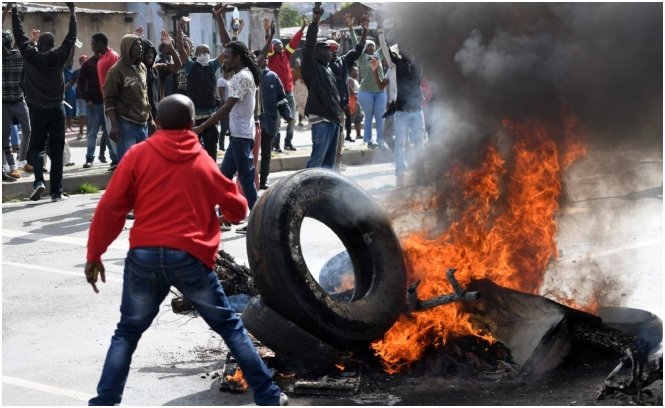
The recurring outbreak of xenophobic violence in South Africa has once again forced a painful question upon the continent: Has Africa forgotten its own history of solidarity?
In this opinion piece, Colonel Augustine Ansu (Rtd) examines the troubling narratives used to justify attacks on fellow Africans — from complaints about jobs and businesses to the claim that anti-apartheid exiles were not granted unrestricted integration. He argues that such arguments rest on a historically flawed understanding of continental sacrifice. Drawing on the legacy of nations like Ghana, Zambia, Tanzania, and Angola that provided sanctuary and support to South Africa’s liberation struggle, Ansu asks whether the spirit of Pan-African brotherhood can survive economic anxiety, political rhetoric, and the erosion of historical memory.
This is a call not merely to condemn xenophobia, but to recover the solidarity that once made strangers into comrades.
Read the full opinion piece below.
Under One African Sky: Xenophobia, Historical Memory, and the Erosion of Pan-African Brotherhood
By Colonel Augustine Ansu Rtd
The recurring outbreaks of xenophobic violence in South Africa continue to trouble the conscience of Africa.
Each episode raises difficult questions about citizenship, economic competition, national identity, and the future of Pan-African solidarity.
Recent events, including the evacuation of foreign nationals and the debates that have followed, have once again brought these issues into sharp focus.
What is perhaps most disturbing is not merely the violence itself, but the narratives increasingly used to justify it.
In a recent media interview, a South African citizen reportedly questioned why foreigners should be allowed to settle so freely in South Africa.
He argued that during the anti-apartheid struggle, South African exiles lived in camps in neighbouring countries and were not permitted unrestricted integration into host societies.
He further complained that foreigners were taking jobs, businesses, and even girlfriends from South Africans.
Such arguments deserve careful examination.
The comparison between anti-apartheid exiles and present-day African migrants is historically flawed.
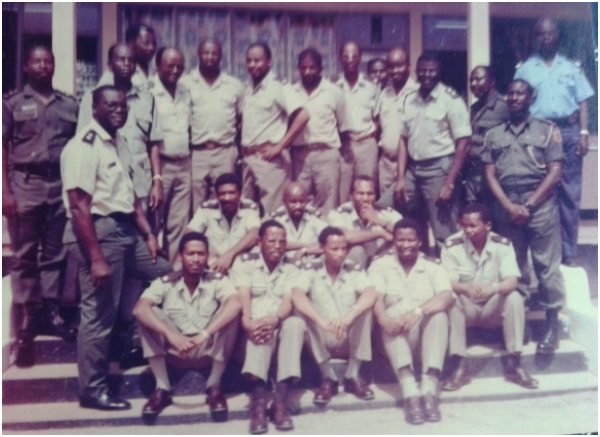
South Africans who fled apartheid were not merely housed in refugee camps. Across the continent, they benefited from the generosity and sacrifice of fellow Africans.
Nations such as Ghana, Zambia, Tanzania, Angola, and many others provided sanctuary, education, military training, diplomatic support, and political platforms from which the struggle against apartheid could be waged.
African governments and peoples embraced the South African cause as a continental cause. Their support was not based upon narrow calculations of national advantage but upon a profound belief that the freedom of one African people was inseparable from the freedom of all.
That history makes contemporary hostility towards fellow Africans especially painful.
Equally revealing is the complaint that foreigners are taking local girlfriends. Such rhetoric has little to do with immigration policy and much to do with insecurity, resentment, and the search for convenient scapegoats.
Throughout history, xenophobic movements have often been fuelled by claims that outsiders are taking what rightfully belongs to citizens—jobs, opportunities, homes, culture, and relationships.
These narratives are powerful because they simplify complex social problems into emotionally satisfying explanations. Yet they rarely lead to solutions.
The roots of social unrest are usually found elsewhere: unemployment, poverty, inequality, corruption, inadequate education, weak governance, and the failure of economic growth to improve the lives of ordinary citizens. When these problems persist, public frustration seeks an outlet. Foreigners become convenient targets because they are visible, vulnerable, and politically expendable.
Yet many immigrants contribute significantly to the South African economy. They establish businesses, create employment, provide essential services, and participate in commercial activities that sustain local communities. Like migrants throughout history, they seek opportunity, security, and a better future for their families.
Against this backdrop, the decision by some African governments to evacuate their citizens deserves thoughtful consideration.
Every government has a sacred duty to protect its nationals. When there is credible concern for their safety, prudence demands action.
Governments cannot wait for tragedy to occur before responding. Their first responsibility is not the preservation of diplomatic appearances but the protection of human life.
This explains why many Africans have viewed suggestions that governments should have delayed evacuation efforts with understandable scepticism.
While such opinions may stem from concerns about national image or fears of creating panic, they must be weighed against the immediate responsibility to safeguard citizens facing uncertainty and possible danger.
Equally troubling are reports that xenophobic attacks sometimes occur in the presence of law enforcement officers who appear unable or unwilling to intervene decisively.
Whether such perceptions are entirely accurate or not, they contribute significantly to fear among foreign communities.
When perpetrators believe that consequences are unlikely, violence becomes easier to organise and repeat.
Some observers have suggested that these developments reflect a broader political agenda. Others see them as spontaneous eruptions of public frustration. Whatever the explanation, history demonstrates that xenophobia seldom emerges in isolation. It thrives where economic anxiety, political rhetoric, weak institutions, and social frustration converge.
The tragedy extends beyond immigration policy.
It concerns the future of Pan-Africanism itself.
The generation that fought apartheid inspired the world with its vision of justice, reconciliation, human dignity, and non-racialism.
South Africa became a symbol of hope, proving that even the deepest divisions could be overcome through courage, sacrifice, and leadership.
Today, many Africans struggle to reconcile that inspiring legacy with recurring images of fellow Africans being harassed, assaulted, or forced to flee.
They remember a time when the continent stood united against apartheid and wonder how the descendants of those who benefited from continental solidarity can now regard fellow Africans as unwelcome intruders.
These are uncomfortable questions, but they cannot be ignored.
Can Africans continue to speak of continental unity while fellow Africans are treated as outsiders?
Can the sacrifices made during the liberation struggles be honoured while the spirit of brotherhood that sustained those struggles is gradually eroded?
Can Pan-Africanism survive if economic hardship repeatedly transforms neighbours into enemies?
History offers a sobering lesson. Nations rarely prosper by directing their anger towards convenient scapegoats. Sustainable progress is achieved through economic reform, effective governance, educational opportunity, social cohesion, and unwavering commitment to the rule of law.
The future of Africa will not be secured through exclusion and suspicion. It will be secured through cooperation, mutual respect, and a renewed recognition of our shared destiny.
For the struggle against colonialism and apartheid was never simply a political struggle. It was also a moral declaration that the dignity of one African is bound to the dignity of all Africans.
That declaration remains as relevant today as it was yesterday.
Epilogue: Under One African Sky
The African sky knows no borders.
The winds that cross the Limpopo do not carry passports; the rivers that flow to the sea recognize no tribe. The rains that nourish the veld, the savannah, and the forest make no distinction between native and stranger.
Yet man, who inherited one continent and one destiny, has learned to build walls where history built bridges and to sow suspicion where our forebears planted solidarity.
The challenge before Africa is therefore not merely to defeat xenophobia. It is to recover the brotherhood that once made strangers into comrades and neighbours into family.
For when one African is hunted because he is foreign, all Africa is diminished. When one African is denied dignity because of his origin, the dream of Pan-Africanism suffers a wound. And when fear triumphs over fraternity, the sacrifices of those who fought for Africa’s liberation fade a little further into the shadows.
Let us remember that before colonial frontiers were drawn, before passports were stamped, before flags were raised, the peoples of Africa shared the same sun, the same rivers, the same hopes, and often the same blood.
May wisdom prevail over anger, justice over prejudice, and fraternity over fear.
Then perhaps future generations will inherit an Africa in which no man is hated for the place of his birth, no woman is threatened because of her nationality, and no child grows up believing that another African is an enemy.
For above us all stretches the same vast African sky — silent, enduring, and waiting for its children to remember that they are one.
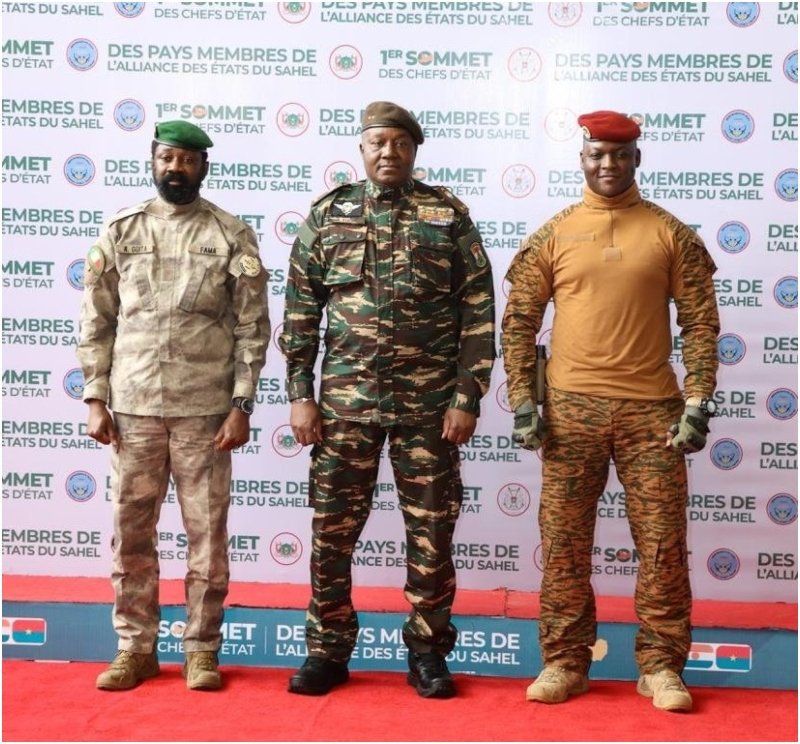
When military juntas seized power in Mali, Burkina Faso, and Niger between 2020 and 2023, they promised sovereignty, security, and national dignity. Several years on, the evidence tells a brutal story. Large portions of the Sahel remain outside state control, with jihadist groups like JNIM and Islamic State affiliates growing more sophisticated and operationally bolder. In this urgent analysis, security researcher Joseph McCarthy argues that West Africa’s future stability depends on rebuilding states that citizens trust, economies that create opportunity, and regionally coordinated security architecture, because the Sahel’s collapse cannot be treated as someone else’s problem.
Read the full analysis below:
Sahel on fire: Why Ghana and ECOWAS cannot ignore the collapse of the AES
When soldiers seized power in Bamako in 2020, Ouagadougou in 2022, and Niamey in 2023, they offered a familiar promise: civilian governments had failed, foreign partnerships had grown corrupt, and only military rule could restore sovereignty, security, and national dignity.
Across the Sahel, millions exhausted by years of insecurity and perceived foreign condescension believed them.
Several years on, the evidence tells a brutal and irrefutable story.
The security situation across Mali, Burkina Faso, and Niger, the three countries that form the self-styled Alliance of Sahel States (AES), now reveals something the juntas can no longer paper over with slogans.
Large portions of northern and eastern Burkina Faso are either under jihadist influence or violently contested.
In Mali, the regions of Taoudéni, Timbuktu, Ménaka, Gao, and much of Mopti remain outside effective state authority.
Niger retains a stronger foothold around Niamey and Maradi, but insecurity is steadily creeping into Diffa, Tahoua, and Agadez.
The trajectory across all three countries is identical: state presence is shrinking; militant mobility corridors are expanding southward.
The April 2026 coordinated attacks across Mali, striking Mopti, Gao, Kidal, Sévaré, and approach routes to Bamako simultaneously, confirmed what conflict monitors at ACLED and the Critical Threats Project had been documenting for months. Jama’at Nusrat al-Islam wal-Muslimin (JNIM) and Islamic State affiliates are not retreating.
They are growing more sophisticated, more coordinated, and operationally bolder.
When insurgents can strike urban and semi-urban centres, spaces that house military headquarters, administrative institutions, and strategic infrastructure, with precision and impunity, military presence alone has clearly ceased to guarantee territorial control.
The core problem is structural.
Terrorism in the Sahel has never been purely a military challenge.
Extremist organisations thrive where governance collapses, public trust erodes, and economic opportunities evaporate.
Governments may announce the destruction of militant camps or the recapture of towns.
But if corruption, unemployment, food insecurity, and local grievances go unresolved, recruitment resumes elsewhere.
The cycle continues.
Military-led governments are structurally ill-equipped to break that cycle.
Officers trained for battlefield command are now expected to manage fragile economies, attract investment, regulate inflation, and deliver social services.
Predictably, all three juntas have addressed profoundly complex national crises almost entirely through a security lens.
The consequences are visible: authority in Burkina Faso barely extends beyond Ouagadougou and a few southern towns; Bamako’s security perimeter has reportedly contracted; central Mali remains an unresolved warzone.
Meanwhile, judicial independence weakens, civil society operates under pressure, media freedoms narrow, and decision-making grows opaque and personalised. Investor confidence has collapsed. Trade routes have frayed.
The result is a self-reinforcing cycle: insecurity discourages investment, weak development fuels grievance, grievance powers recruitment, and governments respond with yet more militarisation.
The junta compounded this failure with a catastrophic strategic miscalculation: they dismantled every cooperative framework that had previously helped contain extremist expansion. MINUSMA was expelled.
French military operations ended. American intelligence and surveillance assets withdrew.
EU training missions deteriorated or closed. ECOWAS security cooperation collapsed.
In their place came Russian-linked security actors, first the Wagner Group, then the Africa Corps. This shift has not produced decisive results.
Western and multilateral partners had provided drone surveillance, aerial logistics, rapid evacuation support, command training, and multinational operational coordination.
Russia’s deployment has remained narrower, more militarised, and heavily oriented around regime protection rather than population security.
The fall of Kidal said everything.
Once showcased as proof that expelling Western forces and embracing Moscow represented strategic genius, Kidal instead exposed the new model’s core vulnerability.
When Russian-linked personnel reportedly withdrew as Malian forces came under attack, it shattered years of carefully cultivated political messaging.
Facts eventually overpower slogans, and those facts are now arriving at a pace.
The consequences no longer stop at the AES border.
The Sahel has become a sanctuary where extremist organisations regroup, recruit, train, and launch operations southward into coastal West Africa. Benin has already suffered deadly attacks near Pendjari National Park.
Côte d’Ivoire endured the Grand-Bassam massacre and continues fortifying its northern frontier.
Togo has seen infiltration pressure mount. Ghana, which has not yet experienced large-scale jihadist violence, is not insulated from what is coming.
The expansion of JNIM and IS-affiliated operations into southern Burkina Faso has intensified arms trafficking, infiltration networks, and radicalisation risks along Ghana’s northern border.
The Bawku conflict, rooted in ethnic and chieftaincy tensions, presents precisely the kind of local instability that extremist organisations have exploited elsewhere to gain a foothold.
Ghanaian security agencies have responded with Operation Conquered Fist, expanded border surveillance, joint intelligence operations, and counter-extremism programmes, all reflecting a growing, sober recognition that this crisis is no longer distant. It is at the door.
The lesson the Sahel has taught, at enormous human cost, is clear: no country defeats a transnational insurgency through isolationist nationalism or militarised governance alone. Security and development are inseparable.
Roads, schools, healthcare, agriculture, jobs, and functioning local governance are as essential to counterterrorism as soldiers and weapons. Where states are absent, extremists fill the space.
West Africa’s future security architecture must be African-led, regionally coordinated, and built on genuine interoperability: shared intelligence, joint border operations, and integrated economic resilience.
External partnerships have a role, but one that strengthens African institutional capacity rather than substituting for it.
Sustainable security cannot be outsourced to mercenaries or purchased through battlefield operations alone.
Ghana and the wider ECOWAS community cannot afford to treat the Sahel as someone else’s problem.
The region’s long-term stability will depend on building states that citizens trust, economies that create opportunity, and institutions capable of collective action.
The AES experience has shown, at devastating cost, what happens when those foundations are abandoned.
West Africa cannot afford to learn that lesson twice.
About the author:
Joseph McCarthy is an analyst and researcher specialising in governance, security, and political transitions in the Sahel. He writes on geopolitics, development, and African diplomacy. Email: joecarthy30@gmail.com


The Guns Turned Inward: Niger’s Mutiny and Russia’s Fragile Bargain in the Sahel | By Joseph McCarthy

Game-Changing Move: Ghana Sets Up New Fiscal Council to Scrutinize Government Spending and Win Back Investors

Ghana’s Persistence Pays Off: AU Formally Commits to Tabling Xenophobia Petition in January 2027
-

 Ghana News2 days ago
Top Headlines From Ghanaian Newspapers: Tuesday, Sept. 8, 2026
-

 Ghana News2 days ago
How Ghana’s Government Pressured MTN, Telecel, and AirtelTigo to Cut Data Prices
-
 Arts and GH Heritage2 days ago
The Stories We Live With: Inside Nubuke Foundation’s Weight of the Ordinary
-
 Ghana News17 hours ago
Ghana’s Persistence Pays Off: AU Formally Commits to Tabling Xenophobia Petition in January 2027
-
 Ghana News2 days ago
Buckingham Palace Responds to Jamaica’s $10 Billion Reparations Demand, But the UK Government’s Wallet Remains Shut
-

 Ghana News18 hours ago
Top Headlines From Ghanaian Newspapers: Wednesday, Sept. 9, 2026
-

 Africa Watch2 days ago
British-Nigerian Influencer Dies After Penis Enlargement Procedure in Thailand
-

 Health & Wellness1 day ago
Health Isn’t Slow—Our Expectations Are Too Fast