
Ghana News
Crazy! Woman Caught Setting Fire to Popular ‘Alpha Hour’ Church Auditorium in Accra


A woman is in police custody after allegedly setting fire to the Grace Mountain Chapel auditorium in Accra.
The facility is the main Alpha Hour worship centre led by Pastor Elvis Agyemang, founder of the popular prayer movement. The incident occurred on the night of Monday, February 9, 2026, during a quiet period at the facility.
According to church officials and initial police reports, CCTV footage captured the suspect entering the auditorium pretending to pray before pouring petrol on chairs near the altar and igniting them. The church’s security team responded swiftly, containing the blaze before it could spread further. No injuries were reported, and damage to the auditorium was limited.

Pastor Elvis Agyemang confirmed the arrest in a statement and announced the temporary suspension of all in-person prayer sessions at the venue.
“If you come here today, it will not be open, but it will not stop us. We will fix the place, and prayers will still go on,” he said.
He also revealed that this was not the first security incident at the church, recalling a previous episode in 2025 when a woman allegedly spread powder on the altar, prompting temporary restrictions on access to certain areas.
The pastor described Alpha Hour as a target for spiritual opposition, stating:
“How many times have we not heard people say they heard something and rushed here to pray in the auditorium? That is what the devil does not like.”

Alpha Hour is a daily one-hour prayer meeting that starts at 12:00 a.m. GMT and is broadcast live on Facebook, Instagram, YouTube, TikTok, Zoom, television and radio platforms across Ghana and worldwide.
Launched in February 2022 following a vision for spiritual revival and victory, the movement has grown rapidly, drawing tens of thousands of participants—commonly called “Alpharians”—and becoming one of Ghana’s most prominent online prayer initiatives.
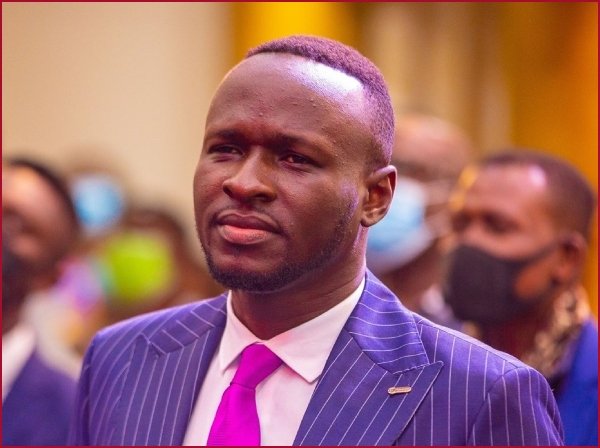
The suspect remains in police custody as investigations continue to establish her motive, whether she acted alone or with accomplices, and any possible links to prior incidents. Police have classified the case as a serious criminal matter involving arson and are appealing for anyone with information to come forward.
The Grace Mountain Chapel auditorium in Accra regularly hosts thousands of worshippers for Alpha Hour sessions and other services.



What happened at COP31 in Antalya, and why does it matter?
Nearly 200 countries gathered in Antalya, Türkiye, for the UN COP31 climate summit and left without adopting the final overarching political deal, known as the Antalya Pact.
Talks ran nearly two days past their scheduled finish, making COP31 the longest UN climate summit on record, but consensus proved impossible.
Here is a plain-language guide to what happened, why it happened, and what it does, and does not mean.
First, what actually happened?
The summit ended on Sunday without an adopted joint declaration. Despite marathon negotiations, countries could not agree on the final text of the Antalya Pact, the summit’s central political agreement.
The deadlock came down to two main fault lines:
1. Fossil fuels. The European Union, Pacific island nations, and other countries rejected the proposed text because it did not explicitly mention phasing out fossil fuels. Oil-producing nations, meanwhile, pushed back against stronger language. The result was a text that satisfied neither side.
2. Climate finance. Developing nations objected to the lack of clear financial commitments from wealthier countries to help them adapt to worsening climate impacts. Without credible funding pledges, many delegations felt the pact did not go far enough.
Why couldn’t they just vote on it?
Because UN climate decisions require consensus: agreement without formal objection from any participating nation. This means even strong opposition from a single group of countries can block the main pact from passing. There is no majority-vote mechanism to force a deal through.
That structural rule is a key reason why COP summits so often run into overtime, and why a bloc of dissatisfied countries can hold up the entire process.
What it does not mean
It is easy to read “no deal” as “the process collapsed.” That would be misleading. Here is what the failure of the Antalya Pact does not mean:
- The UN climate process is not over. Existing agreements, including the Paris Agreement, remain in place. The framework continues to operate.
- Not everything stalled. According to UN officials and participating governments, countries still made progress on narrower tracks, including a decision on a “just transition,” electrification pledges, methane initiatives, and voluntary commitments.
- No new binding rules — for now. Without consensus on the Antalya Pact, no new overarching summit-wide mandate was formally adopted. That shifts pressure onto future negotiations, particularly COP32.
So what comes next?
The failure to adopt the Antalya Pact means the hardest questions — fossil fuel phase-out language and climate finance — remain unresolved and will likely dominate the road to COP32. The pressure now falls on future negotiations to bridge the gap between ambition on one side and economic concerns on the other.
For now, the summit’s outcome is a reminder of how difficult consensus-based climate diplomacy remains: nearly 200 countries, competing interests, and a rule that requires everyone to agree.
Ghana News
Grieving Mother, Friends Demand Justice After Talented Young Woman Phillipa Acquah Killed by Reckless Motorcyclist
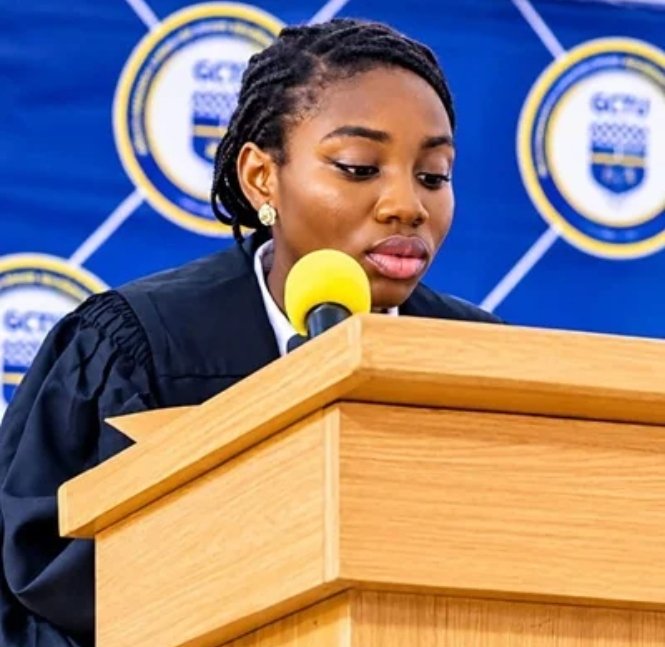
Accra, Ghana — The death of Phillipa Acquah, a young woman killed in a bizarre road accident, has sparked an emotional cry for justice and renewed concerns over road safety and poor street lighting in Ghanaian communities.
According to state-owned Daily Graphic, Philipa was standing by the roadside in the evening on Tuesday, November 17, 2026, when a motorcycle rider, said to be speeding, struck and dragged her on the road. She died form her injuries, the report said.
In a stirring article written as a tribute and a demand for accountability, Associate Professor Theodora Dame Adjin-Tettey describes Acquah as a young woman with “great academic potential” who had already shown “resilience and strong resolve” after losing her father while in school.
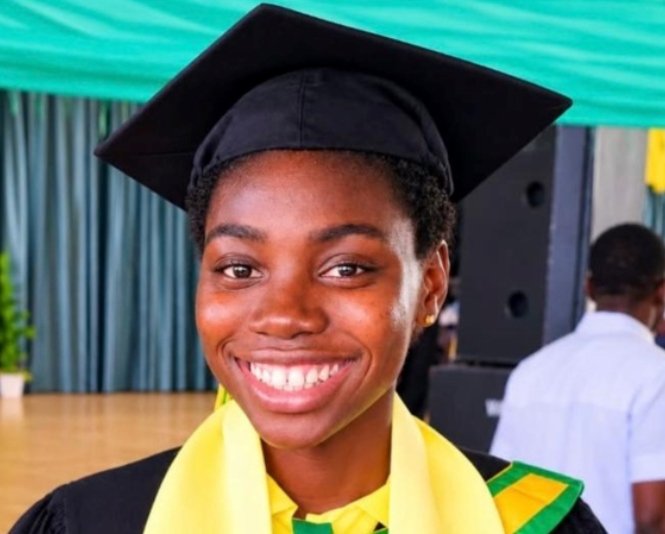
She leaves behind a grieving mother, heartbroken siblings, and devastated classmates.
“I never got the opportunity to meet Phillipa in person—I was hoping to meet her soon,” Adjin-Tettey wrote. “She was clearly someone who made a difference in the lives of those around her. A life like hers cannot simply be replaced.”
The professor is calling on the Ghana Police Service to thoroughly investigate the case, identify the perpetrators, and bring them to book. She also raised broader concerns about motorcycle indiscipline on Ghana’s roads, noting that riders frequently speed, jump traffic lights, and weave dangerously between vehicles, often without consequence.
She urged regulatory and law enforcement agencies to extend technological interventions like Traffictech beyond conventional motorists to include motorcycle and tricycle riders. Additionally, she highlighted the non-functioning streetlights in the community where the incident occurred, calling on Metropolitan, Municipal and District Assemblies (MMDAs) to take their maintenance responsibilities seriously.
“Streetlights are not simply public amenities; they are an essential part of road safety infrastructure,” she wrote. “Their proper maintenance can help prevent avoidable accidents and protect lives.”
The tragedy has gripped the nation, and reignited calls for stricter enforcement of traffic regulations and greater accountability from public institutions responsible for road safety.
As Adjin-Tettey put it:
“Phillipa deserved to live. She deserved the opportunity to grow, to dream, to achieve, and to experience all that life had to offer. Her story should not have ended this way. We cannot bring Phillipa back, but we can and must demand justice for her.”
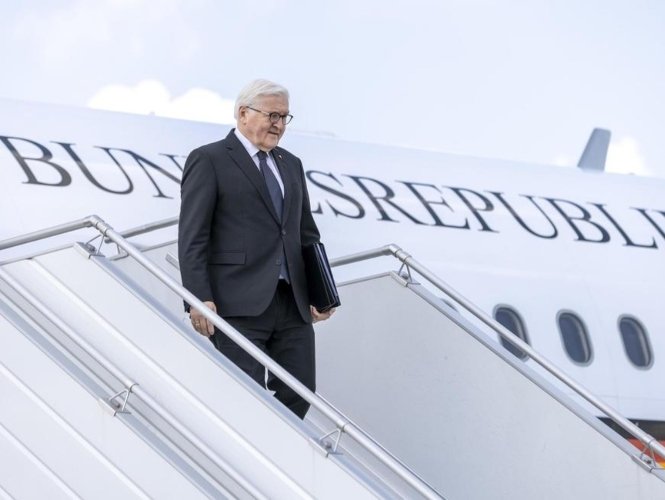
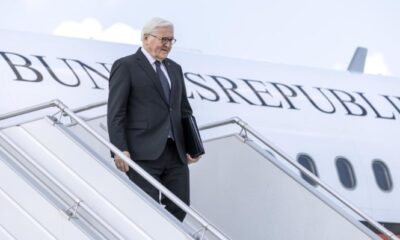
Accra, Ghana — German President Frank-Walter Steinmeier arrives in Accra on Tuesday, November 24, for a one-day visit aimed at deepening economic cooperation, investment, and skills training ties between Germany and Ghana.
The stop is part of a wider five-day African tour from November 22 to 26 that also takes in Côte d’Ivoire and Kenya. According to the German presidency, the trip is intended to “pay tribute to and further expand the close partnerships” with the three countries, with a focus on economic cooperation and the training of skilled workers.
Talks with Mahama at Jubilee House
The centerpiece of the Accra leg will be morning talks at Jubilee House with Ghana’s President, John Dramani Mahama. The two leaders are expected to discuss bilateral trade, German investment in Ghana, and joint efforts to develop the workforce skills needed by both economies. A press engagement is expected to follow.
Steinmeier will then deliver a speech opening the sixth German-African Business Summit, described by the German presidency as Germany’s most important business conference on the African continent. He will also hold talks with summit participants. The President is travelling with a German business delegation, signaling Berlin’s intent to translate diplomatic goodwill into commercial deals.
WFP Logistics Hub Visit
At midday, Steinmeier will visit the humanitarian logistics hub of the United Nations World Food Program in Accra. The stop highlights Ghana’s growing role as a regional logistics and humanitarian hub, and ties into broader German engagement on food security and crisis response in West Africa.
He departs for Nairobi later that day, where he will be welcomed by President William Ruto on November 25 and round off the tour with a visit to the Crescent Island nature reserve at Lake Naivasha on November 26, focusing on biodiversity conservation.
Context: A Broader African Push
The tour began in Abidjan, where Steinmeier met President Alassane Ouattara on November 23 and visited a vocational school and the International Counter-Terrorism Academy. The vocational training theme carries directly into Accra, where skills development is expected to dominate the business summit agenda.
For Ghana, the visit comes at a pivotal moment. The country has been working to attract foreign investment, create jobs for its young and fast-growing population, and position itself as a gateway to West African markets. Germany, for its part, has been seeking to diversify supply chains and secure partnerships in energy, infrastructure, and technical training.
What It Could Mean for Ghana
Analysts will be watching whether the summit produces concrete announcements on German investment in Ghanaian manufacturing, renewable energy, or vocational education. The presence of a business delegation suggests that deals, or at least memoranda of understanding, may be in the offing.
The visit also carries symbolic weight: it is the first time in recent memory a German head of state has made Ghana a focal point of an African tour, and the choice of Accra for the continent’s premier German business summit underscores Ghana’s standing as a preferred investment destination.
Whether the visit unlocks new opportunities for trade, jobs, and investment will depend on follow-through. But the combination of presidential talks, a major business summit, and a humanitarian logistics hub visit suggests Germany is betting on Ghana as a long-term partner in West Africa.


Explainer: Why COP31 Ended Without a Deal, and What it Actually Means

Grieving Mother, Friends Demand Justice After Talented Young Woman Phillipa Acquah Killed by Reckless Motorcyclist

A Life Cut Short: A Cry for Justice for Phillipa Acquah and An Urgent End to Road Recklessness
-
 Commentary42 minutes ago
A Life Cut Short: A Cry for Justice for Phillipa Acquah and An Urgent End to Road Recklessness
-
 Uncategorized24 hours ago
Fat Joe Makes Emotional Appeal to Bronx Youth After Ghanaian Teen Javits Frimpong’s Killing
-
 Ghana News28 minutes ago
Grieving Mother, Friends Demand Justice After Talented Young Woman Phillipa Acquah Killed by Reckless Motorcyclist
-
 Ghana News23 hours ago
German President Steinmeier Arrives in Ghana to Boost Trade and Skills Partnerships
-

 Global Update2 hours ago
Americans Raise More Than $944,000 to Help Nolan Wells’ Mother Find Answers Despite Grand Jury Decision
-

 From the Diaspora22 hours ago
Ghanaian-Born Entrepreneur Mawena Tafa Turns Viral Brooklyn Encounter with Strange Man Into Business Opportunity