
Ghana News
Ghana News Live Updates – January 11: Catch up on Today’s Major News


Welcome to today’s concise rolling updates of major news in Ghana. Below are the latest verified developments on political, social, and economic issues shaping Ghana and beyond.
Bookmark this page and check back regularly as these stories evolve with new information and official responses.
Fire Tender Overturns Responding to Blaze at Buipe; Crew Injured as Fire Continues
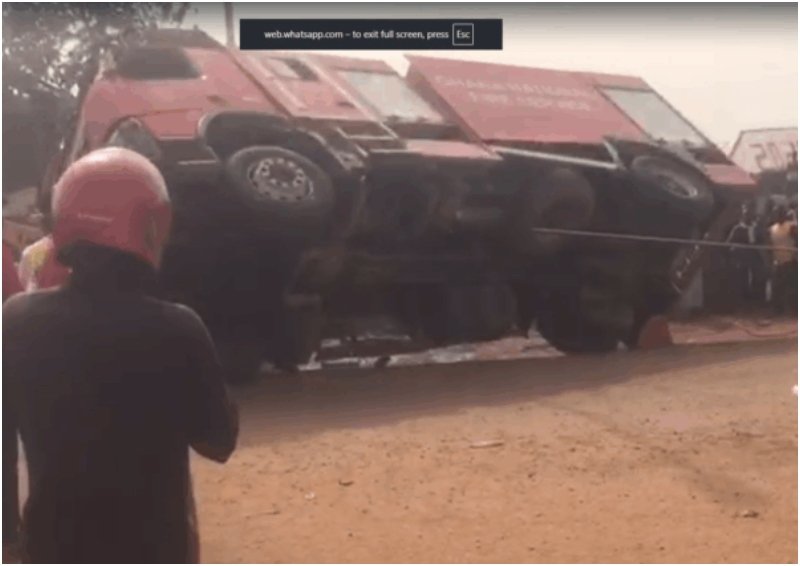
A fire tender from the Ghana National Fire Service (GNFS) was involved in an accident on Sunday while responding to a blaze at a fire outbreak in Buipe, Savannah Region. The vehicle overturned near the scene as residents and emergency responders looked on. Eyewitnesses and video footage show community members helping to right the tender amid the ongoing fire. The crew on board was rushed to the Buipe Government Hospital for medical attention following the crash, though details of their injuries have not been fully disclosed. With the fire tender out of action, local residents and officials from the National Disaster Management Organisation (NADMO) worked together to contain the blaze, highlighting challenges faced by first responders in emergency situations. Investigations into the cause of the accident are ongoing.
Former Nigerian Deputy Governor Makes Cryptic Post Amid Ofori‑Atta Drama
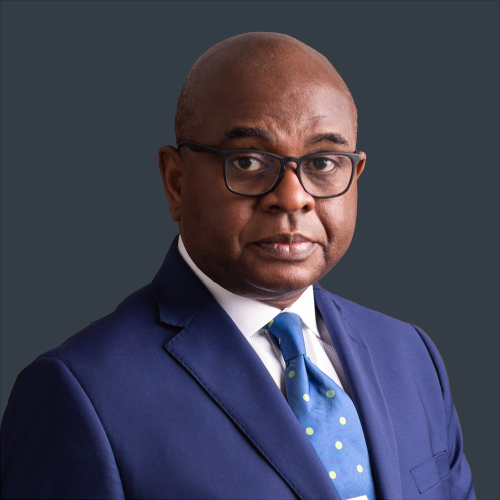
Former Nigerian Deputy Central Bank official Kingsley Moghalu has posted a cryptic reflection on the corrupting influence of power, sparking discussion amid Ghana’s ongoing legal and political controversy involving former Finance Minister Ken Ofori‑Atta, who remains in U.S. custody and has declined consular engagement without his lawyers present. Moghalu’s post, though not naming Ofori‑Atta, resonates with themes of leadership accountability and governance ethics as Ghanaian authorities pursue investigations and potential extradition.
Diplomatic Affairs: Ofori-Atta Declines Consular Assistance Without Lawyer Present
Former Finance Minister Ken Ofori-Atta, currently in United States Immigration and Customs Enforcement (ICE) custody, has refused to meet officials from the Ghana Embassy in Washington, DC, unless his lawyers are present. The embassy confirmed it acted swiftly upon learning of his detention, seeking to provide consular support consistent with diplomatic norms. The facility informed Ghanaian diplomats that Ofori-Atta decided to delay engagement until legal counsel is present, a choice the mission said did not reflect US authorities denying access. The embassy remains in contact with US officials to ensure his rights are protected.
Deputy AG Signals Possible Sooner Return for Ofori-Atta
Ghana’s Deputy Attorney-General and Minister of Justice, Justice Srem-Sai, indicated that Ken Ofori-Atta could return to Ghana sooner than expected as the government collaborates actively with US authorities. Officials clarified that Ofori-Atta’s US visa was revoked in mid-2025 — a step that prompted his detention — and Ghanaian legal teams are engaged to manage his status. The Ministry of Justice stressed that the government is not merely observing but participating in unfolding proceedings.
Pensioners Reject SSNIT’s 10% Adjustment, Demand Living Pension
The Concerned SSNIT Pensioners Forum (CSPF) has rejected a recently announced 10% pension increase by the Social Security and National Insurance Trust (SSNIT) for 2026, calling it inadequate to address high living costs. Pensioners argued that the adjustment does not align with rising inflation and fails to shield retirees from economic hardship. They are calling for a minimum living pension, proposing a significantly higher baseline to ensure dignity and financial security for Ghana’s elderly citizens.
Call to Arm Blue Water Guards in Galamsey Fight
In the ongoing battle against illegal mining (galamsey), the Municipal Chief Executive (MCE) for Birim Central, Solomon Brako Kusi, has urged that the Blue Water Guards be armed to effectively confront sophisticated and often aggressive illegal miners. The call follows joint operations that have led to arrests and the destruction of illegal mining equipment, highlighting concerns over the guards’ safety without adequate protection and logistical support.
Family of Chimamanda Ngozi Adichie Alleges Hospital Negligence in Son’s Death
The family of acclaimed Nigerian author Chimamanda Ngozi Adichie has accused Euracare Hospital in Lagos of negligence following the death of her 21-month-old son, Nkanu Nnamdi, after a short illness and medical procedures. Allegations include denial of oxygen and excessive sedation leading to cardiac arrest, claims the hospital has denied while confirming an investigation is underway. The tragic incident has drawn widespread attention and prompted calls for accountability in medical care.
Check back regularly as we bring you verified reports as they happen.











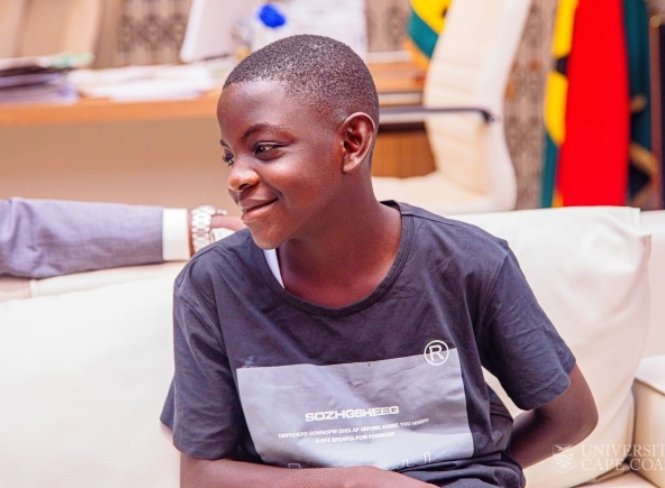
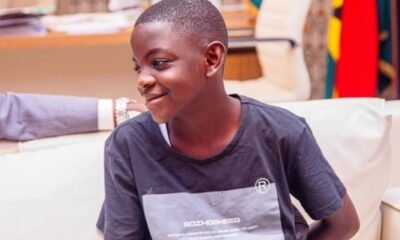
From entering the prestigious Mfantsipim School at just nine years old to gaining admission to the University of Cape Coast (UCC) at 12, Diamond Lucas is emerging as one of Ghana’s most extraordinary young academic talents.
Already pursuing a Bachelor of Science degree in Environmental Science, the young prodigy has captured national attention with an educational journey that draws comparisons to the remarkable intellectual achievements of Albert Einstein. But beyond his exceptional academic milestones, Lucas has ambitions of becoming a medical doctor, demonstrating that his remarkable journey may only be beginning.
At an age when many children are still navigating primary and junior high school, 12-year-old Ghanaian student Diamond Lucas is already attending university, pursuing a Bachelor of Science degree in Environmental Science at the University of Cape Coast (UCC).
His extraordinary academic journey, which has taken him from completing basic education at an unusually young age to gaining admission to one of Ghana’s established universities, is attracting national attention and interest beyond the country’s borders.
But behind the headlines about his age and academic achievements is a young student with a clear determination to learn, an admiration for accomplished professionals who took similar educational paths and an ambition that remains bigger than his current university programme: becoming a medical doctor.
Lucas’s story is not simply about how quickly a child can progress through the education system. It also offers an opportunity to examine the importance of parental encouragement, intellectual curiosity, mentorship, discipline and the challenges that can accompany exceptional academic advancement.
From an unusually early start to Mfantsipim School
Lucas first attracted widespread attention in April 2025, when TV3 News featured his remarkable educational progress.
He had gained admission to the prestigious Mfantsipim School in Cape Coast at just nine years old, an achievement that placed him considerably ahead of the usual age range for students entering senior high school.
Reports about his early education indicate that he sat the Basic Education Certificate Examination (BECE) at approximately eight years old before progressing to senior high school.
By the age of 10, he was already in Senior High School 2, studying General Science at Mfantsipim.
His progress was particularly striking because Mfantsipim is not simply another school in Ghana’s education system. Established in 1876, it has a long history of educating prominent Ghanaian professionals, public figures and leaders.
For Lucas, however, gaining admission to the institution carried an additional personal significance: he had long admired renowned Ghanaian lawyer Tsatsu Tsikata, who also entered Mfantsipim at the age of nine.
The lawyer who inspired his educational journey

One of the most interesting aspects of Lucas’s story is his admiration for Tsatsu Tsikata, a distinguished Ghanaian lawyer and former Chief Executive of the Ghana National Petroleum Corporation.
Tsikata’s own early admission to Mfantsipim made him an important inspiration for the young student, who reportedly hoped to meet him after learning about their shared educational experience.
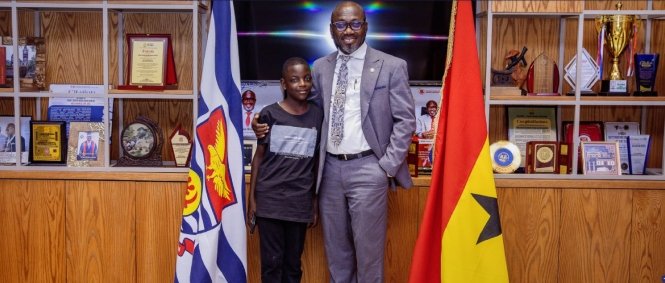
That wish eventually became reality in July 2025, when Tsikata welcomed Lucas and his family to his home.
The meeting was more than an encounter between a young admirer and a prominent professional. It represented an opportunity for Lucas to connect with someone whose educational journey had demonstrated that exceptional academic advancement was possible.
According to reporting by Citi Newsroom and TV3, the two later met again during Mfantsipim School’s 150th anniversary celebrations, by which time Lucas had completed senior high school and progressed to university.
The connection offers an important dimension to his story: the influence that role models and mentorship can have on young people who are navigating an educational journey that differs considerably from that of their peers.
From Mfantsipim to the University of Cape Coast at 12
Having completed his senior high school education at an exceptionally young age, Lucas has now taken another major step by securing admission to the University of Cape Coast to study Environmental Science.
His admission makes him one of the youngest undergraduates at the institution and represents another significant milestone in an educational journey that has repeatedly attracted public attention.
However, his university admission also came with an adjustment to his original academic plans.
Lucas had initially hoped to study Medicine, with the ambition of becoming a doctor. But his performance in the West African Senior School Certificate Examination (WASSCE), in which he obtained an aggregate of 14, did not meet the admission requirements for his preferred medical program.
He was subsequently offered admission to pursue a Bachelor of Science degree in Environmental Science.
Rather than abandon his ambition, Lucas has indicated that he hopes to pursue Medicine after completing his first degree.
His decision to proceed with Environmental Science demonstrates his willingness to continue developing academically while keeping his longer-term professional aspirations in view.
What university life looks like for a 12-year-old
Moving from senior high school to university is a significant transition for any student. For Lucas, the experience is even more unusual because he is navigating a university environment alongside students who are considerably older.
In an interview with TV3, he recalled his first experience entering a university lecture hall.
A lecturer, apparently surprised to see someone so young, asked whether he was attending the lecture or had come to visit an older sibling.
Lucas responded confidently that he belonged there.
He also indicated that he appreciated the fact that the university had not treated him differently simply because of his age.
That attitude appears to reflect his desire to be recognised as a student who has earned his place through academic progression rather than as a child who should receive special consideration.
His approach to university life involves preparing for lectures ahead of time, studying independently and seeking assistance when necessary.
He has also spoken about the importance of balancing academic work with social activities, recognising that concentration is essential to making progress.
Chemistry is among his favorite subjects, with both its theoretical and practical components appealing to him.
These details provide a glimpse into the habits behind his achievements. Academic ability may open doors, but preparation, curiosity and the willingness to seek help are important in sustaining progress.
UCC Vice-Chancellor offers advice as public attention grows
Lucas’s admission has generated considerable interest, but the attention has not been entirely positive.
Recognising the potential pressure that public commentary can place on a young student, University of Cape Coast Vice-Chancellor Professor Denis Worlanyo Aheto received him at his office on November 19, 2026.
The meeting provided an opportunity for the university’s leadership to congratulate Lucas, discuss his welfare and encourage him as he begins his undergraduate education.
Professor Aheto advised the 12-year-old to use his time wisely, explaining that effective time management would help him recognise opportunities and achieve his academic goals.
He also emphasised that excellence requires consistency, discipline and commitment, while reminding him that personal values and character are important in shaping an individual’s future.
One particularly significant part of the Vice-Chancellor’s message concerned the negative comments Lucas had reportedly encountered on social media.
“We are proud of you. Don’t mind what people are saying on social media,” Professor Aheto told him.
The advice reflects an important challenge facing young people who become the subject of widespread public attention, particularly when their achievements attract both admiration and criticism.
Lucas thanked the Vice-Chancellor for taking an interest in his welfare and acknowledged the support he had received from UCC’s Department of Environmental Science.
He said the meeting had boosted his morale and encouraged him to work harder to meet the expectations of the university’s leadership.
He was accompanied by the Dean of the School of Biological Sciences, Professor Ernest Kofi Amankwa Afrifa, and the Head of the Department of Environmental Science, Professor Michael Miyittah-Kporgbe.
The family support and curiosity behind his achievements
While Lucas’s academic progress has attracted attention, his parents have also offered insight into how his abilities became apparent.
In a report by 3News, his parents, David Tusah Lucas and Pascaline Cassandra Sackey Lucas, recalled recognising his unusual curiosity and interest in learning during his childhood.
His father explained that during the COVID-19 period, he organised lessons for children in their Kwashieman community. Lucas would join the sessions, sitting in as his father taught children who were considerably older than him.
Although the lessons were intended for junior high school pupils, Lucas showed an interest in the exercises and attempted some of the work.
His father began recognising his potential when he noticed that the young boy could correctly answer some of the questions assigned to the older children.
His mother also recalled his curiosity about technology and the internet, describing how he would sometimes take her phone to browse and explore information.
These early experiences suggest that his academic development was not simply a matter of progressing quickly through formal education. His curiosity, willingness to engage with learning activities and the encouragement available at home all played important roles in his development.
His message to other students: Knowledge is power
Despite his unusual academic achievements, Lucas has also shared advice for other young people seeking to make progress in their education.
In his interview with TV3, he emphasised the importance of taking school seriously, concentrating in class and maintaining a balance between academic responsibilities and recreation.
“Knowledge Is Power,” he said, encouraging students to focus on why they attend school and make sure they accomplish their learning objectives.
He also cautioned against excessive social distractions, observing that having too many friends could affect concentration.
His advice was straightforward: work hard, remain focused and make time for recreation without allowing it to interfere with education.
For a student who has already experienced several major educational milestones years ahead of the usual timeline, the message reflects the habits he believes are important for academic success.
A young Ghanaian with ambitions beyond the classroom
Diamond Lucas’s admission to the University of Cape Coast is a remarkable educational milestone, but his story is still unfolding.
At 12, he is pursuing a university degree in a demanding scientific discipline while maintaining his ambition of becoming a medical doctor.
His journey also highlights the importance of recognising that exceptional academic ability does not eliminate the need for guidance, emotional support, social development and an environment in which young people can learn at an appropriate pace.
For universities and educational institutions, his experience raises broader questions about how exceptionally young students can be supported academically and socially without compromising their childhood development.
His story also offers an encouraging example to parents, educators and young people across Africa and beyond: intellectual curiosity, access to learning opportunities, encouragement and determination can open doors much earlier than expected.
From sitting in on lessons intended for older children in his community to entering Mfantsipim School at nine, meeting his inspiration Tsatsu Tsikata and gaining admission to university at 12, Lucas has already experienced an extraordinary educational journey.
But perhaps the most important part of his story is what comes next.
His immediate challenge is to succeed in Environmental Science, develop the discipline required for university education and continue working towards his ambition of studying Medicine.
For now, the young Ghanaian is taking his place in university lecture halls, determined to learn, grow and pursue the future he envisions.
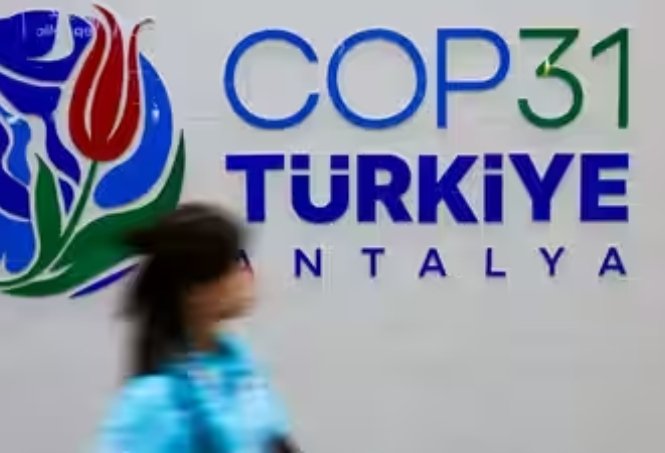
What happened at COP31 in Antalya, and why does it matter?
Nearly 200 countries gathered in Antalya, Türkiye, for the UN COP31 climate summit and left without adopting the final overarching political deal, known as the Antalya Pact.
Talks ran nearly two days past their scheduled finish, making COP31 the longest UN climate summit on record, but consensus proved impossible.
Here is a plain-language guide to what happened, why it happened, and what it does, and does not mean.
First, what actually happened?
The summit ended on Sunday without an adopted joint declaration. Despite marathon negotiations, countries could not agree on the final text of the Antalya Pact, the summit’s central political agreement.
The deadlock came down to two main fault lines:
1. Fossil fuels. The European Union, Pacific island nations, and other countries rejected the proposed text because it did not explicitly mention phasing out fossil fuels. Oil-producing nations, meanwhile, pushed back against stronger language. The result was a text that satisfied neither side.
2. Climate finance. Developing nations objected to the lack of clear financial commitments from wealthier countries to help them adapt to worsening climate impacts. Without credible funding pledges, many delegations felt the pact did not go far enough.
Why couldn’t they just vote on it?
Because UN climate decisions require consensus: agreement without formal objection from any participating nation. This means even strong opposition from a single group of countries can block the main pact from passing. There is no majority-vote mechanism to force a deal through.
That structural rule is a key reason why COP summits so often run into overtime, and why a bloc of dissatisfied countries can hold up the entire process.
What it does not mean
It is easy to read “no deal” as “the process collapsed.” That would be misleading. Here is what the failure of the Antalya Pact does not mean:
- The UN climate process is not over. Existing agreements, including the Paris Agreement, remain in place. The framework continues to operate.
- Not everything stalled. According to UN officials and participating governments, countries still made progress on narrower tracks, including a decision on a “just transition,” electrification pledges, methane initiatives, and voluntary commitments.
- No new binding rules — for now. Without consensus on the Antalya Pact, no new overarching summit-wide mandate was formally adopted. That shifts pressure onto future negotiations, particularly COP32.
So what comes next?
The failure to adopt the Antalya Pact means the hardest questions — fossil fuel phase-out language and climate finance — remain unresolved and will likely dominate the road to COP32. The pressure now falls on future negotiations to bridge the gap between ambition on one side and economic concerns on the other.
For now, the summit’s outcome is a reminder of how difficult consensus-based climate diplomacy remains: nearly 200 countries, competing interests, and a rule that requires everyone to agree.
Ghana News
Grieving Mother, Friends Demand Justice After Talented Young Woman Phillipa Acquah Killed by Reckless Motorcyclist
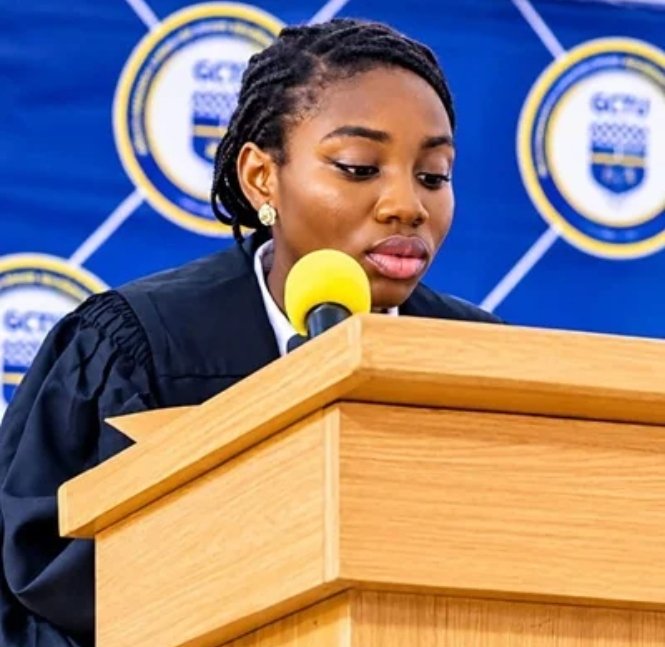
Accra, Ghana — The death of Phillipa Acquah, a young woman killed in a bizarre road accident, has sparked an emotional cry for justice and renewed concerns over road safety and poor street lighting in Ghanaian communities.
According to state-owned Daily Graphic, Philipa was standing by the roadside in the evening on Tuesday, November 17, 2026, when a motorcycle rider, said to be speeding, struck and dragged her on the road. She died form her injuries, the report said.
In a stirring article written as a tribute and a demand for accountability, Associate Professor Theodora Dame Adjin-Tettey describes Acquah as a young woman with “great academic potential” who had already shown “resilience and strong resolve” after losing her father while in school.
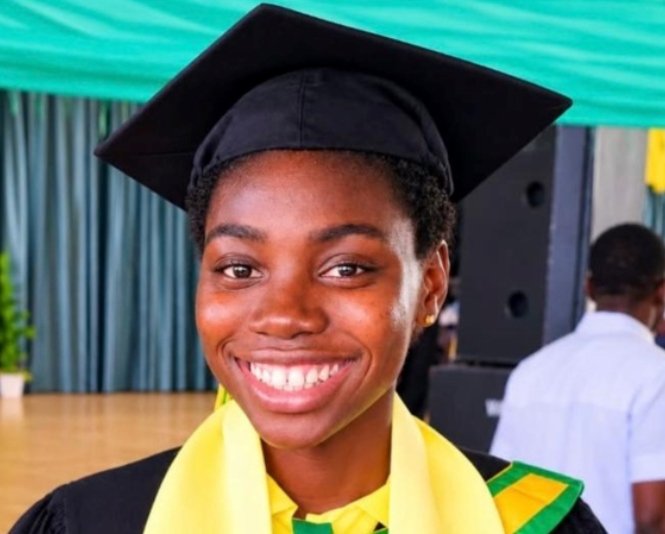
She leaves behind a grieving mother, heartbroken siblings, and devastated classmates.
“I never got the opportunity to meet Phillipa in person—I was hoping to meet her soon,” Adjin-Tettey wrote. “She was clearly someone who made a difference in the lives of those around her. A life like hers cannot simply be replaced.”
The professor is calling on the Ghana Police Service to thoroughly investigate the case, identify the perpetrators, and bring them to book. She also raised broader concerns about motorcycle indiscipline on Ghana’s roads, noting that riders frequently speed, jump traffic lights, and weave dangerously between vehicles, often without consequence.
She urged regulatory and law enforcement agencies to extend technological interventions like Traffictech beyond conventional motorists to include motorcycle and tricycle riders. Additionally, she highlighted the non-functioning streetlights in the community where the incident occurred, calling on Metropolitan, Municipal and District Assemblies (MMDAs) to take their maintenance responsibilities seriously.
“Streetlights are not simply public amenities; they are an essential part of road safety infrastructure,” she wrote. “Their proper maintenance can help prevent avoidable accidents and protect lives.”
The tragedy has gripped the nation, and reignited calls for stricter enforcement of traffic regulations and greater accountability from public institutions responsible for road safety.
As Adjin-Tettey put it:
“Phillipa deserved to live. She deserved the opportunity to grow, to dream, to achieve, and to experience all that life had to offer. Her story should not have ended this way. We cannot bring Phillipa back, but we can and must demand justice for her.”


From Mfantsipim at 9 to University at 12: Meet Diamond Lucas, Ghana’s Albert Einstein

Explainer: Why COP31 Ended Without a Deal, and What it Actually Means

Grieving Mother, Friends Demand Justice After Talented Young Woman Phillipa Acquah Killed by Reckless Motorcyclist
-
 Commentary3 hours ago
A Life Cut Short: A Cry for Justice for Phillipa Acquah and An Urgent End to Road Recklessness
-
 Uncategorized1 day ago
Fat Joe Makes Emotional Appeal to Bronx Youth After Ghanaian Teen Javits Frimpong’s Killing
-
 Ghana News3 hours ago
Grieving Mother, Friends Demand Justice After Talented Young Woman Phillipa Acquah Killed by Reckless Motorcyclist
-
 Ghana News1 day ago
German President Steinmeier Arrives in Ghana to Boost Trade and Skills Partnerships
-
 Global Update4 hours ago
Americans Raise More Than $944,000 to Help Nolan Wells’ Mother Find Answers Despite Grand Jury Decision
-
 Ghana News2 hours ago
Explainer: Why COP31 Ended Without a Deal, and What it Actually Means
-

 From the Diaspora24 hours ago
Ghanaian-Born Entrepreneur Mawena Tafa Turns Viral Brooklyn Encounter with Strange Man Into Business Opportunity
-
 Ghana News1 hour ago
From Mfantsipim at 9 to University at 12: Meet Diamond Lucas, Ghana’s Albert Einstein