
Global Update
‘I Didn’t Sell My Likeness to AI. I Licensed It’: Woman Behind Viral AI Avatar ‘Emma’ Speaks Out


Artist Courtney Goffney has addressed growing questions surrounding AI avatar Emma, revealing that the digital personality’s face and voice are modelled on her own, but insisting that the arrangement is a limited likeness license rather than an outright sale of her identity.
In a video posted on Facebook, Goffney, who describes herself as the real-life face behind Emma, said she is compensated for her involvement with Nuance Labs, the company behind the AI avatar. She explained that her likeness was licensed for specific uses, with restrictions governing what the digital character can do and discuss.
“Did I essentially sell my likeness to AI? No. I licensed my likeness to Nuance for specific uses. It’s a limited license with guardrails around what the avatar can do and discuss,” she said.
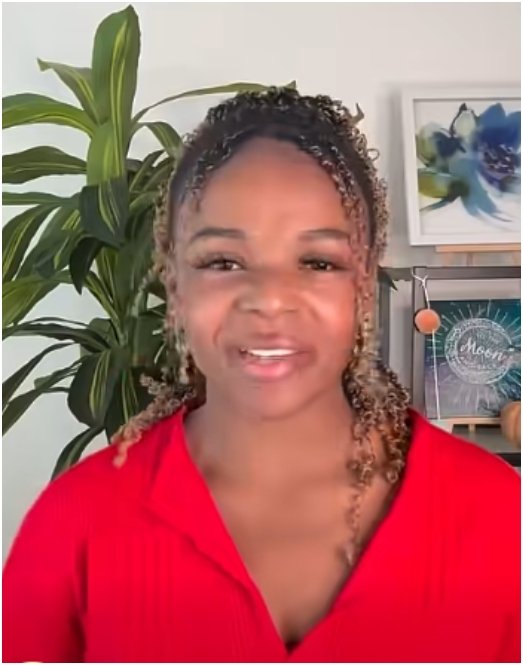
Her clarification comes amid growing online interest in Emma, whose lifelike appearance, voice and real-time conversational abilities have attracted attention across social media and prompted questions about the relationship between artificial intelligence, human identity and digital representation.
Goffney confirmed that Emma is based on her face and voice, but stressed that the avatar’s personality should not be confused with her own.
According to the artist, while Emma’s responses can appear impressive, the technology remains limited in its ability to adjust tone and expressions according to the person she is interacting with. She said this can sometimes lead to misunderstandings about the avatar’s manner or personality.
“Sometimes her tone can be misinterpreted and that’s just because she’s still developing,” Goffney explained.
She also defended Emma’s assertive responses to users, suggesting that the avatar needs to maintain firm boundaries when interacting with people who may not always be respectful.
“And honestly, if I was revoked, I’d probably respond like her too. I just appreciate the fact that Nuance gave her a backbone,” she said.
Why AI Emma does not discuss race and religion
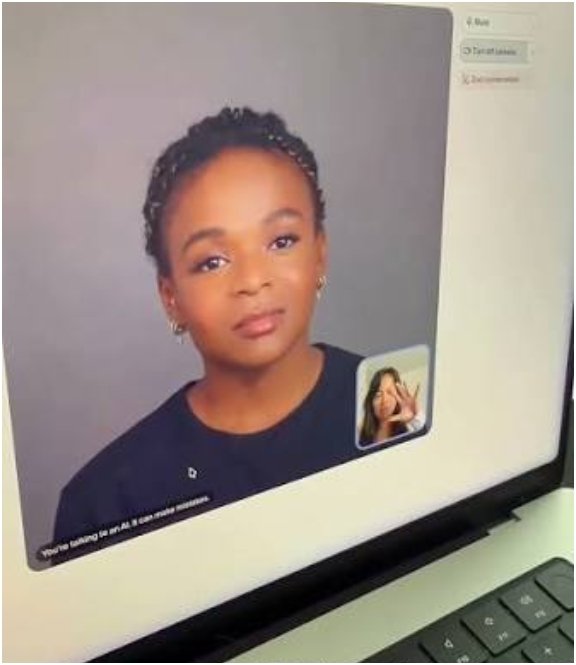
One of the more contentious questions surrounding Emma has been why an avatar that visibly resembles a Black woman does not openly identify or engage in conversations about race and religion.
Goffney said this was a deliberate decision she made during the development process, explaining that she wanted Emma to have a separate identity rather than inherit all her personal characteristics.
She said she specifically requested that the avatar avoid discussions about race, politics, religion and other sensitive subjects to protect the distinction between her digital representation and her personal identity.
“Initially, I wanted Emma to have a separate identity from mine without having any of my identifying qualities. But one would be my name and also all of my personal characteristics, including my race,” she said.
Although Emma is visibly Black, Goffney explained that the avatar is not intended to discuss race as part of its conversational identity.
She also clarified that Emma can say the name Jesus, but that this does not mean the avatar is designed to participate in religious discussions.
Goffney described religion as a deeply personal and sensitive subject, saying she considered it best to keep such conversations separate from Emma.
Going viral with a digital version of herself
The artist also admitted that seeing a digital version of her face interacting with strangers online has been an unexpected experience.
“Completely wild. Like this was not part of my bingo card for 2026,” she said.
She described the unusual feeling of opening her phone and seeing her own face speaking to people she has never met.
The experience, she said, is something she is still getting used to.
Goffney also addressed criticism of Emma’s hairstyle, acknowledging that the avatar’s appearance does not accurately reflect her personal styling preferences.
She explained that she wears twists rather than braids and was unhappy with how the hairstyle had been rendered, particularly the way it was pulled back into a bun. Although she acknowledged the hairstylist’s efforts to maintain consistency in the avatar’s appearance, she said she might have chosen a different hairstyle had she known how the final result would look.
A wider debate about ownership and representation in AI
Goffney’s explanation adds a personal dimension to broader discussions about the use of real people’s likenesses in artificial intelligence.
As companies develop increasingly realistic digital humans, questions about consent, compensation, control and the limits of licensed identity are becoming more significant.
Emma’s case also raises questions about representation: what does it mean when an AI character looks like a Black woman but is deliberately separated from the racial identity and lived experiences of the person whose likeness it uses?
Goffney’s comments make clear that, in this instance, the separation was intentional. She wanted the avatar to function as a distinct digital identity, with boundaries around subjects that could connect its responses to her personal beliefs or identity.
However, her explanation does not resolve every question raised by the technology. The extent of the license, the practical enforcement of its restrictions and the degree of control she retains over the avatar’s future use remain important considerations in the wider debate about digital likeness rights.
Goffney says she is learning to live with the unusual reality of having a digital version of herself recognized by people she has never met. Her central point to the world is clear: Emma may carry her face and voice, but the AI personality is not a substitute for the person behind it.









Global Update
Ghana Moves to Establish Permanent Direct Flights and Shipping Links With the Caribbean
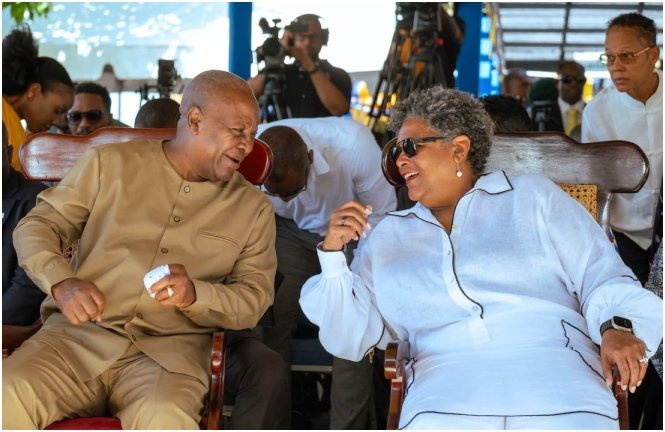
Ghana is pursuing permanent direct air connections and port-to-port maritime routes with the Caribbean as part of a broader effort to strengthen trade, tourism, investment and historical ties between Africa and the region.
President John Dramani Mahama announced the initiative during an address to a joint sitting of the Parliament of Barbados on November 27, 2026, as part of his five-day state visit to the Caribbean nation.
Mahama said Ghana was finalizing bilateral air services agreements with Caribbean partners while working to revive its national air carrier to establish permanent direct air links and maritime corridors across the Atlantic.
The proposed connections are intended to make travel and commercial exchanges between Africa and the Caribbean easier, reducing the logistical barriers that have historically limited closer economic cooperation between the two regions.
“Our two governments recognize that effective twenty-first-century trade and tourism require direct air and maritime connectivity,” the President told Parliament.
He recalled that historic charter flights between Accra and Bridgetown had reduced travel time from approximately 23 hours to just seven hours, demonstrating the potential of more direct connections between the two countries.
The experience, he suggested, provides a foundation for developing permanent air services capable of supporting increased passenger movement, tourism and business exchanges.
Ghana Targets Stronger Trade and Tourism Connections
The proposed aviation and maritime arrangements form part of Mahama’s broader ambition to transform the relationship between Ghana and Caribbean countries from one based primarily on shared history and cultural identity into a practical economic partnership.
Ghana and Barbados have longstanding historical connections rooted in the transatlantic slave trade, shared African ancestry and Pan-African solidarity. However, geographical separation and limited direct transport connections have remained significant obstacles to deeper commercial and people-to-people engagement.
Mahama argued that improved connectivity would help turn these historical bonds into opportunities for shared prosperity.
The proposed maritime corridors could also support more efficient movement of goods between African and Caribbean markets, creating opportunities for businesses, exporters and investors on both sides of the Atlantic.
The President did not provide a timetable for the commencement of permanent flights or shipping services, nor did he identify the airlines, shipping operators or specific routes expected to participate.
Nevertheless, his announcement signals an intention by Ghana to make transport connectivity a central component of its expanding engagement with the Caribbean.
Ghanaian Nurses Already Strengthening Ties With Barbados
Mahama pointed to existing cooperation in the healthcare sector as an example of the practical benefits of closer relations between the two countries.
Since 2022, more than 380 highly trained Ghanaian nurses have served in Bridgetown, working at the Queen Elizabeth Hospital and various clinics across Barbados.
The President said the nurses had brought clinical expertise, compassion and dedication to the care of Barbadian families and had been warmly received.
Their presence demonstrates the potential for greater professional mobility and cooperation, areas that could benefit further from improved air connectivity.
Beyond healthcare, Ghana is also seeking to make it easier for Barbadians and other Caribbean citizens to visit, invest and settle in the West African country.
Mahama said his administration was streamlining legislation and visa-waiver frameworks to allow Caribbean citizens to travel to Ghana and pursue ancestral citizenship without unnecessary bureaucratic difficulties.
He said Ghana had already welcomed hundreds of members of the African family, including Barbadians, as full citizens.
Wider Africa-Caribbean Economic Integration
The proposed transport links are also connected to Mahama’s wider vision of closer economic integration between Africa and the Caribbean.
He called for the African Continental Free Trade Area (AfCFTA) and the Caribbean Community (CARICOM) to be linked as a broader economic space, creating new opportunities for trade, investment and industrial cooperation.
The AfCFTA Secretariat is headquartered in Accra and oversees the implementation of a continental free trade agreement involving more than 1.4 billion people, with a combined gross domestic product exceeding US$3.5 trillion, according to the President.
Mahama said he intended to work with African and Caribbean leaders to establish arrangements for expanding AfCFTA participation to CARICOM countries during Ghana’s anticipated chairmanship of the African Union in 2027.
He also highlighted the expansion of African Export-Import Bank (Afreximbank) operations in Bridgetown as part of efforts to develop financial instruments capable of supporting infrastructure, investment and economic development across the two regions.
For Mahama, improved air and maritime connectivity, financial cooperation and expanded trade arrangements must work together to make Africa-Caribbean relations economically meaningful.
Turning the Atlantic Into a Bridge
Addressing Barbados’ lawmakers, Mahama repeatedly returned to the historical relationship between Africa and the Caribbean, arguing that the Atlantic Ocean should no longer be viewed simply as a barrier separating people with a shared ancestry.
“The Atlantic, once a barrier of separation, must now become our bridge to shared prosperity, restored identity, hope, and the renaissance of the global African dream,” he declared.
His remarks reflected a broader Pan-African vision in which stronger transport links would facilitate not only commercial exchanges but also cultural reconnection, educational partnerships and greater mobility for people of African descent.
The President proposed expanded academic and youth exchange programmes involving institutions such as the University of the West Indies at Cave Hill, the University of Ghana, Kwame Nkrumah University of Science and Technology and the University of Cape Coast.
Under the proposal, students would have opportunities to spend at least one semester studying in Ghana or Barbados, deepening their understanding of their shared histories and contemporary development challenges.
Mahama’s address therefore placed permanent air and maritime connections within a much wider agenda: building a more integrated economic, cultural and diplomatic relationship between Africa and the Caribbean.
Whether the proposed routes become operational will depend on the completion of bilateral agreements, the revival of Ghana’s national carrier and the development of the necessary maritime arrangements.
For now, the President has made clear that Ghana wants the Atlantic to become more than a historical link between two regions. It should also become a practical corridor for trade, travel, investment and shared economic opportunity.
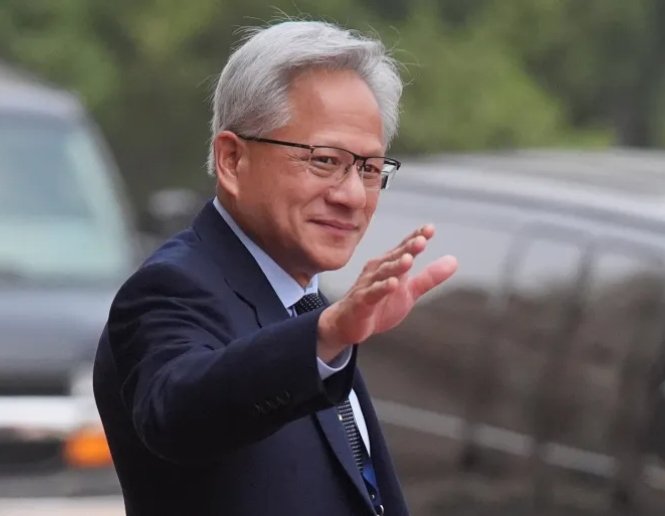
SANTA CLARA, Calif. — Jensen Huang is back as NVIDIA’s President, CEO, and Board Director, but the investigation that shadowed his tenure is far from over.
The company confirmed Monday, November 23, 2026, that a committee of independent directors, assisted by independent counsel, will “proceed to conclusion” its investigation into recent reporting that Huang was the target of a foreign intelligence effort.
The Board said Huang “fully supports the investigation and is committed to cooperating with it.”
The disclosure means NVIDIA’s leader is returning to the helm while questions about a foreign intelligence operation targeting him remain unresolved. The Board did not say what the investigation has found, when it is expected to conclude, or whether the probe could affect Huang’s role.
“The Board believes Jensen is the right person to lead NVIDIA, and that his reinstatement is in the best interests of our stockholders, employees, partners and customers,” said Harvey C. Jones, Chair of the Board. The Board voted unanimously to reinstate Huang after “a series of discussions and meetings” in which it was satisfied with his “candor and ability to lead.”
The investigation was launched after “recent reporting that Mr. Huang has been the target of a foreign intelligence effort.” The Board formed the committee solely of independent directors and retained independent counsel to assist. It reiterated Monday that the committee’s work will continue.
The reinstatement, effective immediately, returns Huang to a company he built into one of the world’s most valuable technology firms. Colette Kress, who served as interim CEO while retaining her CFO role, was thanked for her “outstanding service.”
“I am honored to return to NVIDIA and lead one of the most consequential technology companies in the world at the beginning of a new industrial revolution,” Huang said. “I take this responsibility with the greatest humility and renewed commitment.”
Alongside the ongoing investigation, NVIDIA said it has formed a National Security and Export Control Committee of independent directors to oversee trade compliance and national security risks. The company is also creating a Chief Compliance Officer position and said it will continue cooperating with government investigations.
For NVIDIA’s investors and partners, the dual reality — a celebrated CEO’s return paired with an unresolved intelligence probe — presents a governance question that the Board has not fully answered: what happens if the investigation produces findings that complicate Huang’s leadership?
For now, the Board is projecting confidence. But the probe continues, and so do the questions
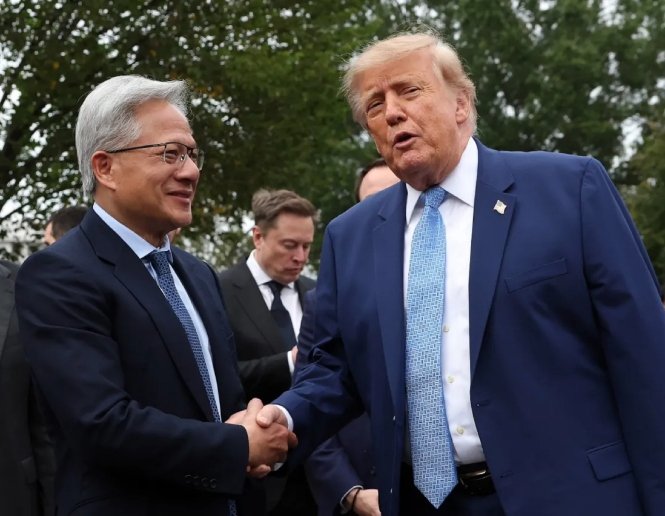
SANTA CLARA, Calif. — NVIDIA disclosed Monday, November 23, 2026, that its Board of Directors received input from “senior levels of the United States government” before unanimously voting to reinstate Jensen Huang as President, CEO, and Board Director, an extraordinary revelation that many say demonstrates how closely Washington is watching the company at the center of the global artificial intelligence boom.
In a press release announcing Huang’s return, the Board said it was “confident that Mr. Huang’s reinstatement poses no national security risk,” based on that government input. The disclosure marks a rare instance of a major public company acknowledging direct consultation with senior federal officials over a CEO appointment.
“The Board believes Jensen is the right person to lead NVIDIA, and that his reinstatement is in the best interests of our stockholders, employees, partners and customers,” said Harvey C. Jones, Chair of the Board.
The news release did not specify which government officials were consulted, what concerns were raised, or what the input consisted of. NVIDIA did not immediately respond to questions about the nature and extent of the government’s involvement.
The consultation comes as NVIDIA faces intensifying scrutiny over export controls, trade compliance, and the security of its technology.
The company said the Board also recently formed a National Security and Export Control Committee, comprised solely of independent directors, to oversee trade compliance and national security risks. The committee is engaging counsel with national security experience, who will in turn retain advisors with expertise in the field.
NVIDIA is also commencing a search for a new Chief Compliance Officer to oversee compliance across the company, reporting to the Nominating and Corporate Governance Committee. The company said it will continue to cooperate with ongoing government investigations and inquiries.
The government’s involvement in the reinstatement decision raises fresh questions about the relationship between Washington and the semiconductor giant, whose chips power much of the world’s AI infrastructure. Analysts said the disclosure signals that national security considerations now extend to the highest levels of corporate governance at America’s most strategically important technology firms.
Huang, who was reinstated effective immediately, said he was “honored to return to NVIDIA and lead one of the most consequential technology companies in the world at the beginning of a new industrial revolution.”
“I take this responsibility with the greatest humility and renewed commitment,” he said.
Colette Kress, who served as interim CEO while continuing as Chief Financial Officer, was thanked by the Board for her “outstanding service.” Jones will remain as Board chair.
The Board’s consultation with the U.S. government adds a new dimension to a story that has already drawn intense interest: the return of the man who built NVIDIA into a trillion-dollar company, now with Washington’s apparent blessing.


‘I Didn’t Sell My Likeness to AI. I Licensed It’: Woman Behind Viral AI Avatar ‘Emma’ Speaks Out

Ghana Moves to Establish Permanent Direct Flights and Shipping Links With the Caribbean

How Much Did Ghana’s New Aircraft Cost? The Question the Handover Didn’t Answer
-

 Africa Watch2 days ago
ECOWAS Gives The Gambia $480,000 for December Presidential Election
-
 Ghana News1 day ago
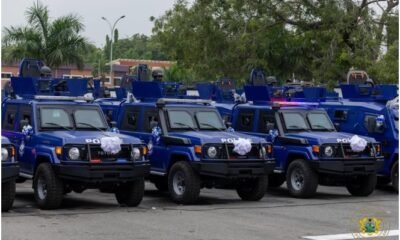
Ghana’s Police Force Enters New Era of Safety: 110 Armored Vehicles, Tasers and Body Armor Deployed Nationwide
-

 From the Diaspora1 day ago
Mahama to Honor Victims of Transatlantic Slave Trade at New Barbados Memorial
-
 Ghana News1 day ago
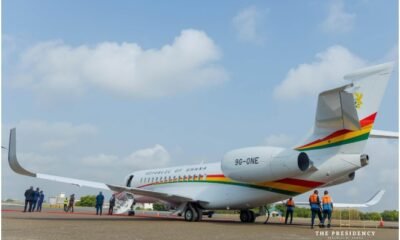
How Much Did Ghana’s New Aircraft Cost? The Question the Handover Didn’t Answer
-
 Global Update4 hours ago
Ghana Moves to Establish Permanent Direct Flights and Shipping Links With the Caribbean