
Arts and GH Heritage
Who Owns the Right to Be Called an Artist? A Debate in Togo Challenges the Rules of Art

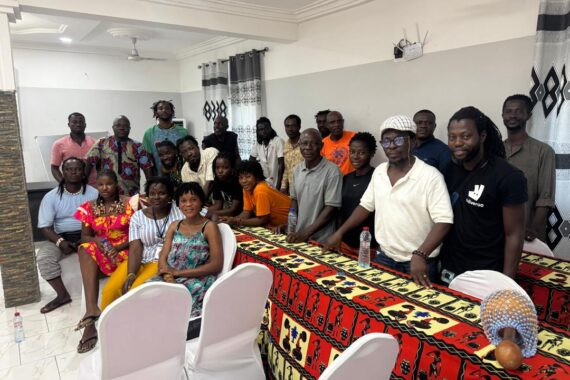
From Ghana’s traditional craftsmen to self-taught street artists, creative excellence rarely follows a single road.
An artist may spend years in a university studio learning perspective, composition and art history.
Another may acquire the same confidence with materials through years of observation, experimentation and work passed down through generations. Which deserves greater recognition?
At Hotel Hong Kong in Atakpamé, Togo, this question became a starting point for a wider conversation about who gets to define artistic excellence.
Beyond the walls of the academy
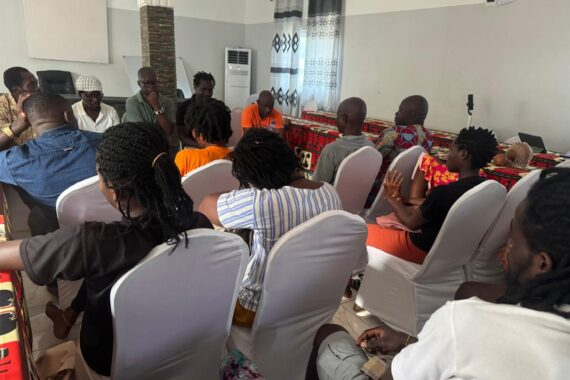
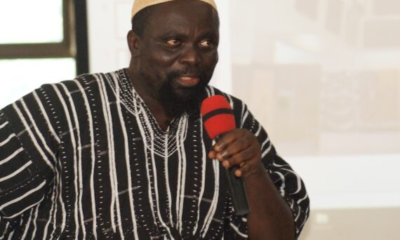
The panel discussion, organised as part of the ongoing Karp Kamina Artists and Researchers Residency, brought together Ghanaian artists Frederick Bamfo, Livingstone Amoako and Ray Agbo.
Moderated by Kojo Biney, with Samuel Olou, the residency’s director, translating into French, the conversation examined the opportunities and limitations of formal and self-directed artistic education.
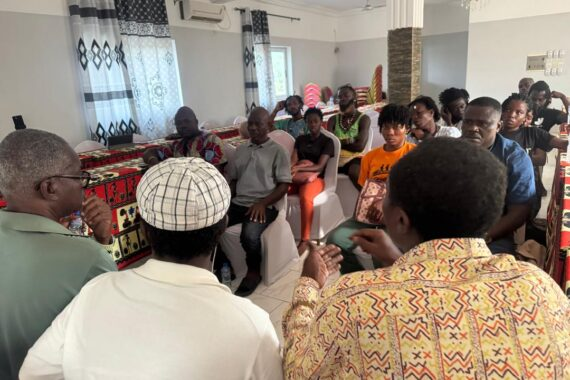
Art academies offer structured training, experienced mentors, studio facilities and access to professional networks.
Yet these advantages do not automatically produce originality. Outside institutional settings, artists often develop distinctive approaches through everyday encounters, community knowledge, apprenticeships and experimentation.
Ghana’s traditions offer another lesson
Ghana’s fantasy coffin makers illustrate why artistic knowledge cannot be measured by academic qualifications alone.
These craftspeople transform wood into elaborate forms representing professions, personal identities and family histories.
Their expertise is built through practical experience, inherited techniques and close relationships between makers and their communities.
Such traditions challenge institutions to reconsider what counts as legitimate artistic training and whose work deserves exhibition space, critical attention and commercial support.
Making room for different creative journeys
The discussion at Hotel Hong Kong did not present formal education and independent practice as opposing forces.
Instead, it highlighted the need for an art world that values technical knowledge without dismissing unconventional paths.
For African artists navigating galleries, museums and international exhibitions, that distinction matters.
Creativity may begin in a classroom, a workshop or on the street. The greater challenge is ensuring that opportunity does not depend solely on where an artist learned to create.

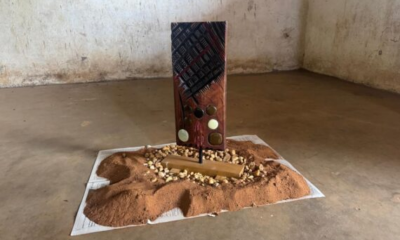

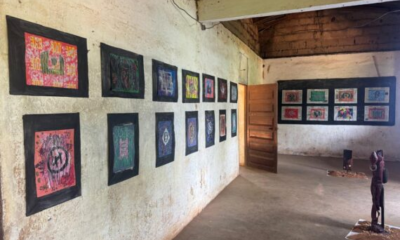

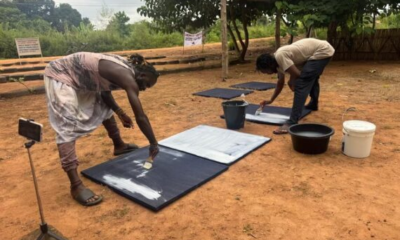




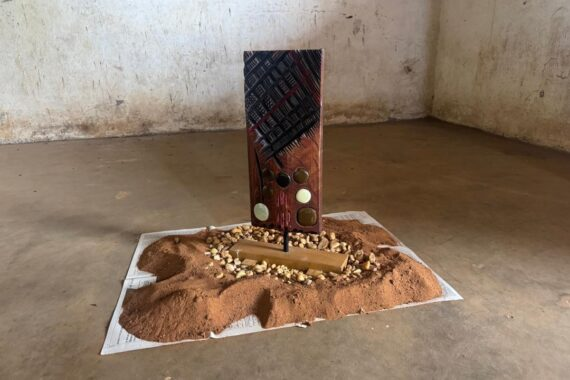
An old building can hold more than dust and silence. In Atakpamé, Togo, an abandoned German colonial structure is finding a new purpose as a space where African cultural expression challenges the weight of history.
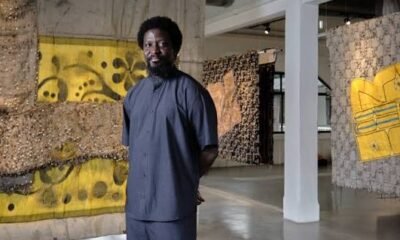
Through Conversations: Symbolism and Lifestyle, Ghanaian artists Kojo Biney and Ray Agbo invite audiences to look afresh at the ordinary encounters that bind communities together.
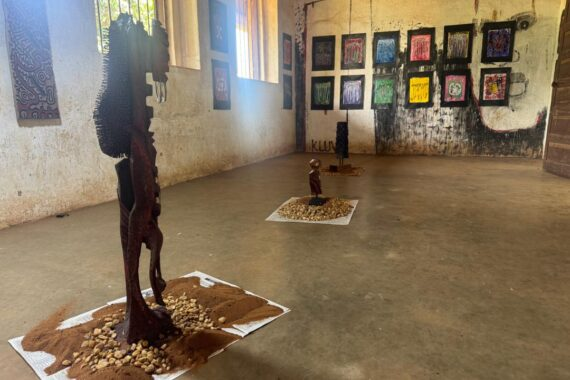
Their paintings and sculptures explore a language that often needs no words: the exchange of kola nuts, bargaining between market traders and customers, and the sharing of palm wine.
These gestures may appear familiar, yet each carries social meaning. They can express welcome, negotiate relationships, establish trust and pass knowledge between generations.
By bringing such moments into the gallery, the artists suggest that culture is not preserved only in museums or ceremonial performances. It lives in everyday interactions.
A building becomes part of the conversation
Presented during the Karp Kamina Artists and Researchers Residency 2026, the exhibition draws on Atakpamé’s cultural landscape, where Ana and Ewe-speaking communities meet. Known as the “city of seven hills”, the town provides a fitting setting for an exploration of identity and shared heritage.
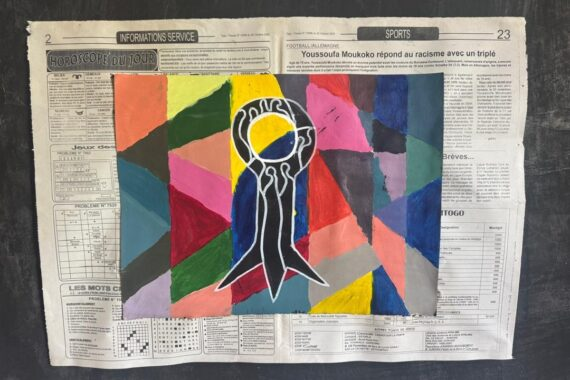
The installation also places paintings alongside newspaper pages, linking artistic interpretation with the ways public events and personal memories become part of the historical record.
Yet the building itself may be the exhibition’s most powerful statement. Once associated with German colonial rule, the structure now houses contemporary African perspectives. Its past is not erased; instead, it becomes part of the encounter.
For older visitors, the space may recall another era. For younger audiences, it offers an opportunity to question how history shapes the present.
As the exhibition closes on Friday, October 16, 2026, its lasting invitation is to recognise that heritage is not frozen in time. Like conversation itself, it remains alive through the meanings people continue to create and share.
Arts and GH Heritage
Inside Togo’s Abandoned Colonial Building, African Artists Reclaim Cultural Memory
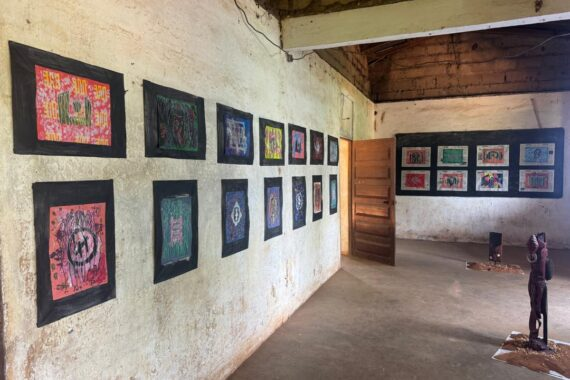
A shared bowl of palm wine, a handful of kola nuts or a lively exchange between market traders can tell a story that words alone cannot capture.
In Atakpamé, Togo, artists Kojo Biney and Ray Agbo are exploring these everyday encounters as powerful expressions of African identity, using art to reconnect cultural memory with a complicated colonial past.
Their exhibition, Conversations: Symbolism and Lifestyle, forms part of the Karp Kamina Artists and Researchers Residency 2026.
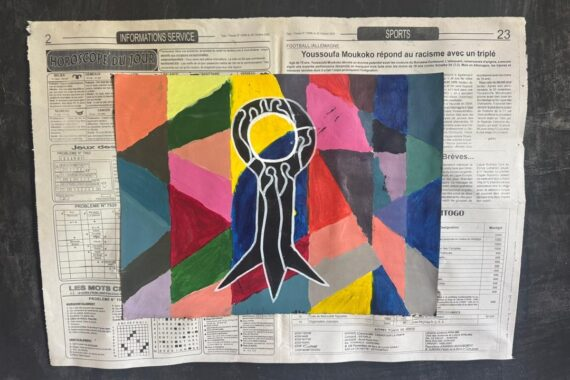
Presented inside an abandoned German colonial building, the exhibition brings paintings and sculptures into dialogue with newspaper pages, creating an unusual encounter between personal memory, public history and contemporary African expression.
Reading the Symbols of Everyday Life
Atakpamé, known as the “city of seven hills”, sits within a cultural landscape shaped by Ana and Ewe-speaking communities. Here, social relationships are often expressed through gestures, shared rituals and objects whose significance extends beyond their practical use.
Biney and Agbo draw attention to these familiar practices, inviting audiences to recognise the cultural knowledge embedded in ordinary interactions.
Their work suggests that traditions survive not only through formal ceremonies or written records, but also through repeated acts of hospitality, negotiation and togetherness.
A Colonial Space, Reclaimed Through Art
The exhibition’s setting adds another dimension. A building associated with German colonial rule becomes a place where contemporary African artists examine the identities and relationships that history cannot fully contain.
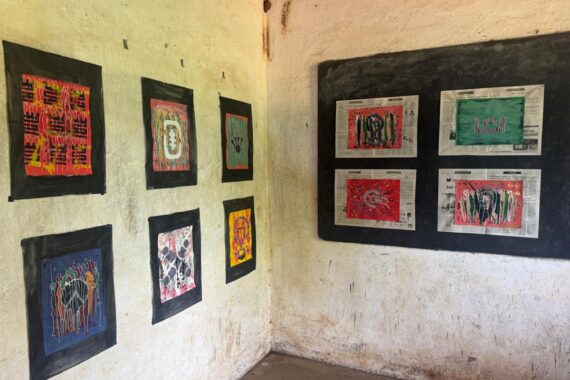
The newspapers displayed alongside the artworks further complicate the encounter, prompting questions about whose stories are recorded and how collective memory is preserved.
Closing on October 16, 2026, the exhibition offers a timely reminder that heritage is not simply inherited; it is continually interpreted.
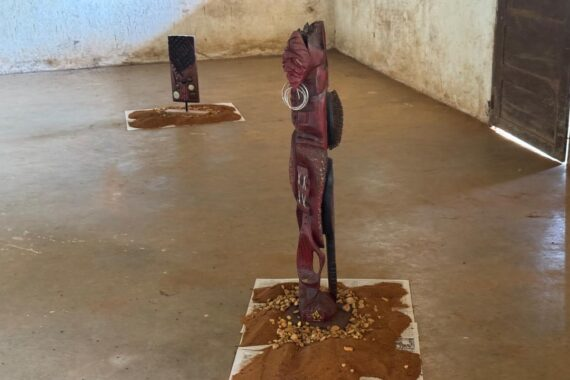
By transforming an abandoned building into a space for artistic exchange, Biney and Agbo invite visitors to see cultural memory as something communities can actively question, share and renew.
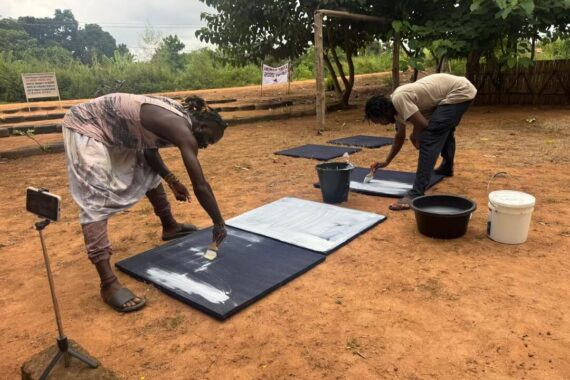
An international residency in Togo is bringing history into conversation with contemporary art, inviting a new generation to rethink how cultural heritage is preserved and experienced.
The ruins of an old radio station might appear to belong to another time. At Karp Kamina in Togo, however, the past is finding new expression through music, dance, research and artistic experimentation.
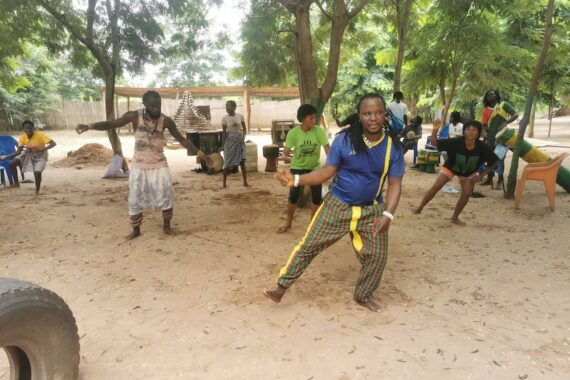
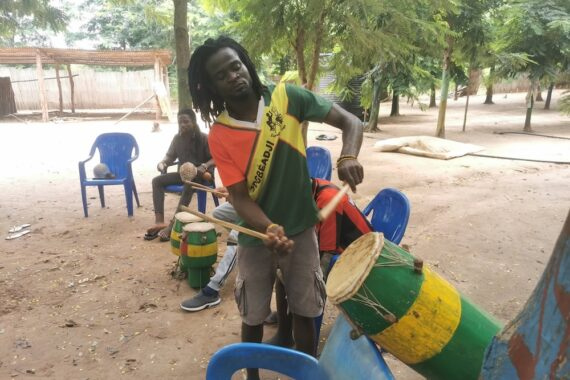
On October 5, 2026, the Karp Artists and Researchers Residency opened with traditional music and dance, welcoming participants from Togo, Ghana, Benin, Norway and beyond for two weeks of creative exchange.
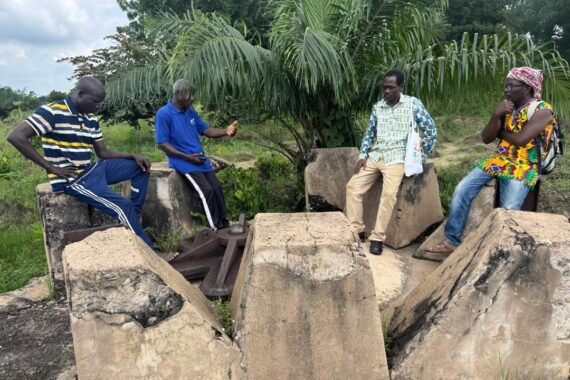
Their mission reaches beyond documenting history: it is about finding new ways to make that history matter today.
When History Becomes Creative Material
At the centre of the residency is Radio Kamina, whose history has shaped the site’s significance. Between 2016 and 2022, the programme concentrated on exploring more than a century of the station’s past.
The current initiative expands that work, inviting artists, academics, dancers, musicians and culinary practitioners to interpret the site through different creative disciplines.
The 2026 edition, themed Cultural Revitalization II: Reclaim • Reimagine • Revive, treats heritage as something that can evolve rather than remain confined to archives and physical remains.
Visits to historical and tourist sites around Karp Kamina provide further inspiration, connecting participants’ work to the surrounding cultural landscape and community.
A Shared Responsibility for Heritage
The residency also raises a question relevant across West Africa: who should shape the future of historic places?
Preservation requires more than artistic vision. Local residents, traditional leaders, public institutions and investors all have roles to play in ensuring that heritage initiatives benefit the communities connected to them.
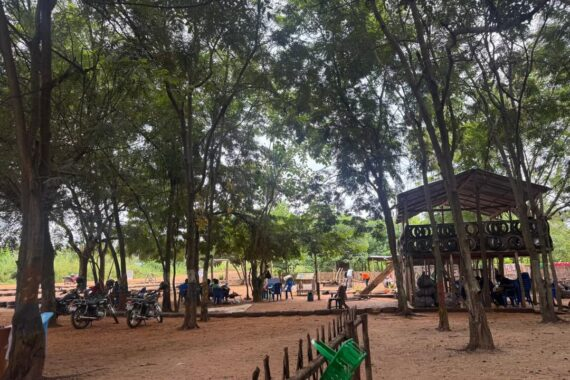
With support from local authorities and other sponsors, the project hopes to strengthen Kamina’s artistic life and attract wider cultural and research interest.
For Ghanaian audiences familiar with ongoing efforts to preserve historic forts, palaces and traditional arts, the initiative offers a related lesson: history becomes more meaningful when communities can engage with it creatively.
At Karp Kamina, the past is not simply being remembered. It is being given room to speak again.


Stronger for Longer: Why Women Should Make Weight Training Part of Their Fitness Routine

Who Owns the Right to Be Called an Artist? A Debate in Togo Challenges the Rules of Art

Ghana’s Social Media Erupts Over Mining Violence and Celebrity Controversy
-
 Ghana News1 day ago
A Century of Enterprise: How Ghana’s Kalmoni Family Built a Business Dynasty and Why It Matters for Global Investors
-

 Ghana News1 day ago
ECOWAS and Sahel States Agree to Form Joint Working Groups After Talks Resume
-

 Ghana News1 day ago
Former Nigerian Spy Chief Claims Dictator Sani Abacha Died During Intimate Encounter With a Woman
-
 Sights and Sounds1 day ago
From Fresh Sushi to Korean Bulgogi: Discovering Ninano in Ghana
-
 Homes & Real Estate2 days ago
Before You Buy a Home in Ghana: Five Financial Questions Every Buyer Should Ask
-
 Ghana News1 day ago
As Ghana Eyes BRICS Finance, Its $28.9bn External Debt Remains Shrouded in Secrecy
-

 Perspectives1 day ago
Policy Brief: ‘A Test of Agency: Ghana’s BRICS Application and the Future of Strategic Diversification’ | By Col Festus Aboagye (rtd)
-
 Festivals & Events1 day ago
Apatwa Festival: A Month of Tradition and Community Spirit in Dixcove