
Ghana News
ECOWAS and Sahel States Agree to Form Joint Working Groups After Talks Resume

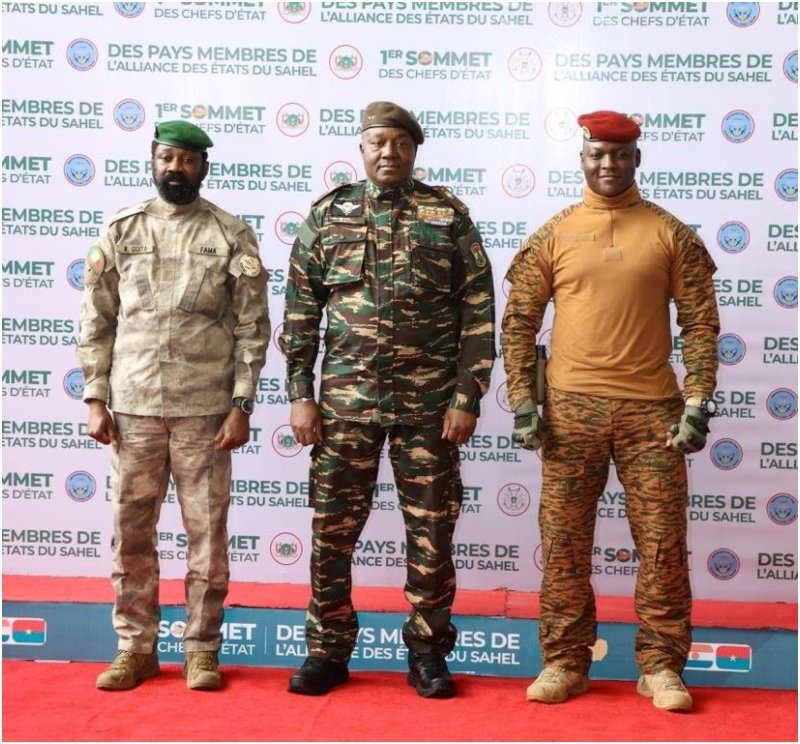
The Economic Community of West African States (ECOWAS) and the Confederation of Sahel States (AES) have agreed to establish joint working groups to develop a proposed cooperation agreement, marking a formal resumption of dialogue between the two blocs after more than a year of rupture.
The decision was announced in a communiqué issued following talks in Dakar, Senegal, co-chaired by Senegal’s Minister of African Integration, Foreign Affairs and Senegalese Abroad, Cheikh Niang, who chairs the ECOWAS Council of Ministers, and Burkina Faso’s Foreign Minister, Karamoko Jean-Marie Traoré, who chairs the AES ministerial steering committee.
Technical Discussions Toward a Cooperation Agreement
According to the communiqué, the working groups will conduct technical discussions aimed at producing a cooperation agreement between ECOWAS and the AES, which comprises Burkina Faso, Mali and Niger.
The working groups are expected to submit their findings to ministers for consideration before the next ministerial session. The date and venue of that meeting will be determined through diplomatic consultations.
The Dakar meeting follows earlier consultations held in Bamako, Mali, on May 22, 2025, where the two sides exchanged views on areas of common interest that could form the basis for further discussions.
Spirit of Fraternity and Mutual Respect
The communiqué said both sides welcomed the spirit of fraternity, mutual respect and openness that characterized the discussions.
They acknowledged the historical, socio-cultural and economic ties between their peoples and agreed that future relations should be guided by good neighborliness and respect for sovereignty, dignity and the well-being of West African populations.
Both blocs expressed the desire to develop a cooperation arrangement that would be “balanced, realistic” and protect the interests of their peoples.
Background: The January 2024 Split
Burkina Faso, Mali and Niger announced their withdrawal from ECOWAS in January 2024 following tensions with the regional bloc after military takeovers in the three countries.
Their departure raised concerns about the future of regional trade, the free movement of people and security cooperation across West Africa, issues the new working groups are expected to address.
The communiqué thanked Senegalese President Bassirou Diomaye Diakhar Faye, who chairs the ECOWAS Authority of Heads of State and Government, as well as the Senegalese government and people, for their hospitality and support for West African integration.
What Comes Next
The establishment of joint working groups represents the most concrete step toward reconciliation since the three Sahel states formally exited ECOWAS. However, the communiqué stops short of signaling a return to full membership, framing the process instead as the development of a cooperation arrangement between two distinct blocs.
Observers will be watching closely for the composition of the working groups, the timeline for their findings, and whether the original grievances that prompted the 2024 withdrawal, including sanctions and disputes over election timelines, are addressed in the eventual agreement.







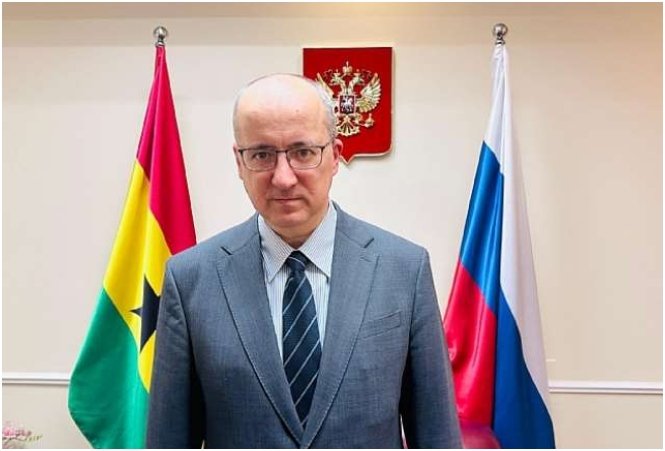
Russia has thrown its weight behind Ghana’s quest to join BRICS, but Moscow’s endorsement comes with a pointed caveat: enthusiasm alone will not secure a seat at the table.
In written responses to questions on Ghana’s BRICS ambition, Russian Ambassador to Ghana Andrei Ordash said Moscow “welcomes Ghana’s growing interest” in the grouping and regards it as evidence of Accra’s readiness to deepen cooperation with states playing an increasingly prominent role in the global economy and international politics.
But the Ambassador was equally clear that political signalling must be matched by economic delivery.
“It is important that such work is underpinned by concrete measures, the development of trade, investment, industrial cooperation, scientific and technical ties, and other areas that serve the long-term interests of the Ghanaian people,” Ordash said.
The formulation amounts to a diplomatic reality check for Accra: Russia’s backing is supportive, but not unconditional, and not sufficient on its own.
Consensus, Not a Single Backer
Ordash stressed that decisions on BRICS expansion are taken “by all BRICS members by consensus and in accordance with established procedures,” a reminder that Moscow’s goodwill cannot single-handedly deliver membership for Ghana.
Russia, he said, is ready to “engage in constructive dialogue with its Ghanaian partners on matters relating to cooperation with BRICS, to share its experience and to facilitate the development of ties with this organization.”
The Ambassador framed BRICS as an association built on “sovereign equality, mutual respect, consideration of national interests and consensus,” insisting it is “not directed against any countries” and does not require members to cease cooperation with other international partners.
The Economic Case and Its Limits
Ordash laid out the scale of the bloc: BRICS member states account for 47 per cent of the world’s population, over 30 per cent of global agricultural land, 40 per cent of global GDP at purchasing power parity and 23 per cent of total global trade.
But he was candid about what BRICS is not.
“It is also important to understand that BRICS is not a single trade market with a common customs territory, nor does it have a universal financial fund that automatically provides funds to all participants,” he said. “Tangible economic results will depend on the substance of the agreements concluded, the competitiveness of enterprises, the quality of investment projects and the willingness of the partners themselves to participate in their implementation.”
Russia, he added, sees opportunities to expand collaboration with Ghana in energy, industry, agriculture, education, science and technology, including joint projects involving partners from other BRICS countries.
No ‘Either-Or’ With the West
Addressing concerns that closer alignment with BRICS could complicate Ghana’s relations with Western partners, Ordash said a potential partnership “should not be viewed as a choice between one set of partners and another.”
“Ghana is entitled to determine for itself how to balance its cooperation with BRICS states, Western countries, African partners and international financial institutions,” he said, adding that Russia does not make cooperation with Moscow “contingent upon such decisions.”
He conceded that expanding partnerships “does not rule out commercial and financial risks,” but argued these should be assessed on specific circumstances rather than on “the mere fact of participation in the group.”
The Takeaway
For Accra, the message from Moscow is supportive but sober: Russia will champion Ghana’s BRICS interest and share its experience, but the onus is on Ghana to build the trade, investment and industrial case an,d to win over every BRICS member, not just the Kremlin.
As Ordash put it, Ghana’s interest “deserves serious and substantive consideration.” The caveat, unmistakably, is that substance, not just signals, will decide how far that interest travels.
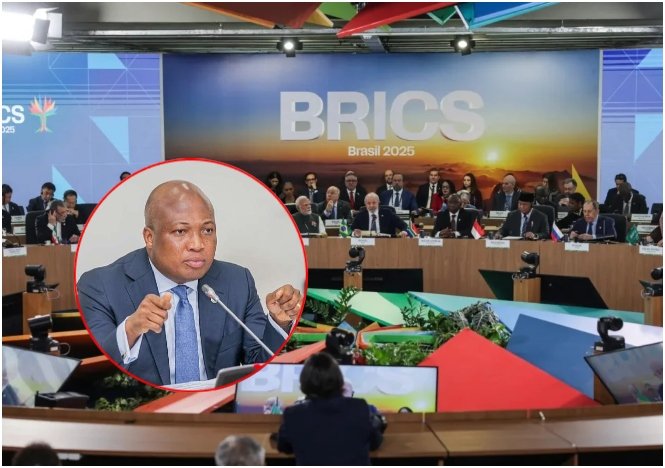
As Ghana’s government pursues membership of the BRICS bloc partly to unlock alternative development finance, a new policy brief by Col. Festus Aboagye (rtd) has highlighted a transparency gap at the heart of the country’s external borrowing: the government does not publish a breakdown of its bilateral debt by creditor country.
According to Ghana’s Ministry of Finance Public Debt Statistical Bulletin for the second quarter of 2026, the country’s external public debt stood at $28.9 billion at the end of June 2026, equivalent to 45.6 per cent of total public debt.
Multilateral creditors held 41.9 per cent of that external debt, international capital markets 29.0 per cent, bilateral creditors 20.0 per cent and commercial lenders 9.2 per cent.
But the bulletin does not break bilateral debt down by creditor country — a gap the policy brief, published by Ulinzi Africa Resources (UAR), describes as “itself a gap in transparency.”
A Financing Push Meets an Accountability Question
The disclosure comes as President John Dramani Mahama’s Cabinet has approved a decision to formally apply for BRICS membership, announced by Foreign Affairs Minister Samuel Okudzeto Ablakwa on 6 October 2026.
The government has presented the move as a way to diversify international partnerships, expand economic options and deepen South-South cooperation without abandoning traditional partners.
The UAR brief, authored by Colonel Festus Aboagye (Retired), argues that any additional financing from BRICS-linked institutions — most notably the New Development Bank — creates opportunities but also fiscal risks that demand the same scrutiny regardless of the lender.
“Additional financing creates opportunities, but poorly understood arrangements create fiscal risks,” Col Aboagye (rtd)’s brief states. “Transparency, repayment obligations, collateral, and public accountability deserve the same scrutiny, regardless of who the lender is. A financing arrangement should be judged by its terms, not by whether it originates in Washington, Beijing, New Delhi or elsewhere.”
The New Development Bank Question
The brief notes that BRICS is associated with alternative development-finance mechanisms, most notably the New Development Bank, but that membership of the bank is not automatic and requires a separate accession process.
Ghana could eventually gain an additional source of project financing beyond existing multilateral institutions, but the brief warns that the benefits are conditional and must be measured against a published baseline.
It recommends that the government publish baselines covering trade, debt and investment exposure, and report periodically against measurable indicators including export diversification, productive investment, domestic employment, technology transfer, financing costs and project implementation.
Calls for Parliamentary Scrutiny
The brief urges Parliament to request a ministerial statement on the BRICS application and to require regular reporting on significant commitments that arise from it.
It also calls on legislators to scrutinise long-term costs and exit implications alongside immediate benefits, and to require that any confidentiality around agreements be “legally justified, time-limited and reviewable.”
For the media, the brief recommends focusing on agreements rather than announcements, tracking projects from signature through implementation, and investigating financing terms, ownership structures and long-term obligations.
A Question of Terms, Not Origins
The brief’s central argument is that Ghana’s BRICS application should be judged by whether it strengthens the country’s “strategic agency” — its ability to choose, scrutinise, alter and, where necessary, exit external partnerships.
“The decisive issue is not whether Ghana joins, but whether participation strengthens its capacity to act independently, diversify intelligently and retain strategic flexibility,” the brief concludes.
For now, the immediate question is narrower: as Accra courts new financiers, will Ghanaians be told who the country already owes, and on what terms?
Ghana News
Former Nigerian Spy Chief Claims Dictator Sani Abacha Died During Intimate Encounter With a Woman
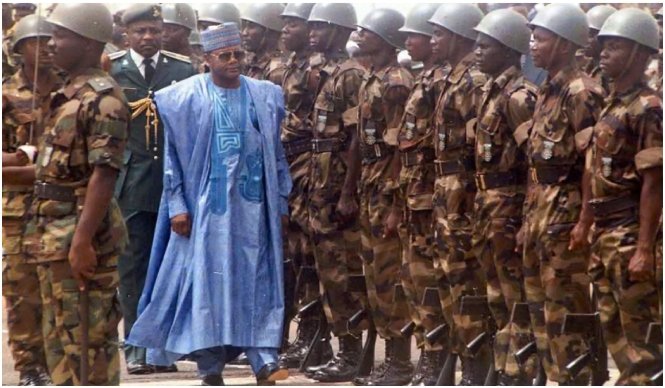
A former senior official of Nigeria’s Department of State Services (DSS) has offered a new account of the death of former military ruler General Sani Abacha, claiming the late head of state died during an intimate encounter with a woman at the presidential villa in Abuja.
Dennis Amachree, a former assistant director of the DSS, recounts the events surrounding Abacha’s death in his book, DSS at 40: My Journey Behind the Shield, challenging previously circulated accounts of how the military leader died.
According to the account discussed on Nigeria’s Arise News, Abacha died of cardiac arrest at about 4:05 am on June 8, 1998, at a guest house within the Aso Rock Presidential Villa.
Spy Chief Personally Interrogated the Woman
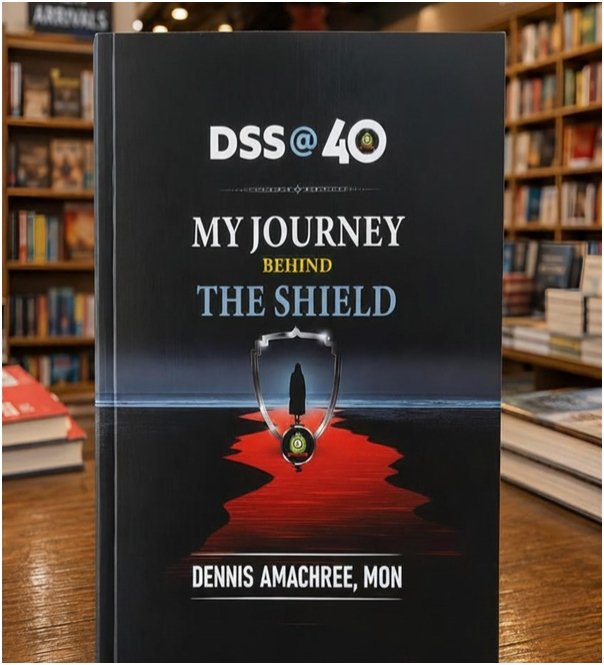
Amachree said he personally interrogated the woman, described as a pharmacist, after she fled the presidential complex following the incident.
He recalled that when questioned about the circumstances surrounding Abacha’s death, the woman insisted she was not responsible.
“I did not kill him. He died on top of me. He died on top of me,” she reportedly told him.
The account has reignited discussions about the circumstances surrounding the death of Abacha, who ruled Nigeria from November 1993 until his death in June 1998.
How the Pharmacist Escaped Aso Rock
According to Amachree’s account, the pharmacist panicked after discovering that Abacha was unresponsive and had no pulse.
She quickly dressed and left the guest house, telling the soldier on guard duty that the Head of State had asked for a car to take her back to her hotel. The soldier, unaware of what had happened inside, reportedly arranged transportation for her.
The woman returned to the Nicon Noga Hilton Hotel, where her elder sister, who was reportedly Abacha’s girlfriend, was staying. She informed her sister about the incident, after which they arranged for her to be driven to the Abuja airport.
She subsequently boarded a 7 am Okada Airline flight to Lagos, leaving before security officials established who had last been with the military ruler.
Traced to Lagos
Amachree said the security services initially went to the hotel to arrest the girlfriend but discovered that the pharmacist they wanted to question had already left for Lagos. He said he later received instructions from the DSS national headquarters to locate the woman.
At about 8 am on June 9, 1998, Amachree said his team traced the pharmacist to an address in Ogudu, Lagos, and brought her to his office for questioning. He recalled that her first words were:
“I did not kill him; he died on top of me.”
After obtaining her account, Amachree said he contacted his superiors in Abuja, following which the woman was flown back to the capital for further questioning.
A Controversial Legacy
Abacha’s death has long been the subject of speculation and conspiracy theories in Nigeria, with official accounts citing cardiac arrest while other theories have pointed to poisoning or foul play. The new book adds a fresh dimension to a debate that has persisted for nearly three decades.
The disclosure has been widely discussed on Nigerian television and social media, with clips of the Arise News report circulating online.


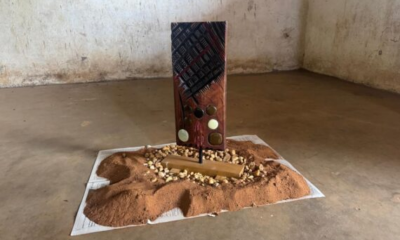
Who Owns the Right to Be Called an Artist? A Debate in Togo Challenges the Rules of Art

Ghana’s Social Media Erupts Over Mining Violence and Celebrity Controversy

Moscow Backs Ghana’s BRICS Ambition, With a Caveat: ‘Substance, Not Just Signals’
-

 Ghana News1 day ago
A Century of Enterprise: How Ghana’s Kalmoni Family Built a Business Dynasty and Why It Matters for Global Investors
-
 Ghana News1 day ago
Former Nigerian Spy Chief Claims Dictator Sani Abacha Died During Intimate Encounter With a Woman
-

 Sights and Sounds1 day ago
From Fresh Sushi to Korean Bulgogi: Discovering Ninano in Ghana
-
 Homes & Real Estate2 days ago
Before You Buy a Home in Ghana: Five Financial Questions Every Buyer Should Ask
-
 Ghana News1 day ago
As Ghana Eyes BRICS Finance, Its $28.9bn External Debt Remains Shrouded in Secrecy
-
 Perspectives1 day ago
Policy Brief: ‘A Test of Agency: Ghana’s BRICS Application and the Future of Strategic Diversification’ | By Col Festus Aboagye (rtd)
-
 Festivals & Events1 day ago
Apatwa Festival: A Month of Tradition and Community Spirit in Dixcove
-
 Arts and GH Heritage12 hours ago
When Art Gives a Colonial Building a New Voice