
Perspectives
When Russia Loses, JNIM Gains: Mali’s Security Paradox

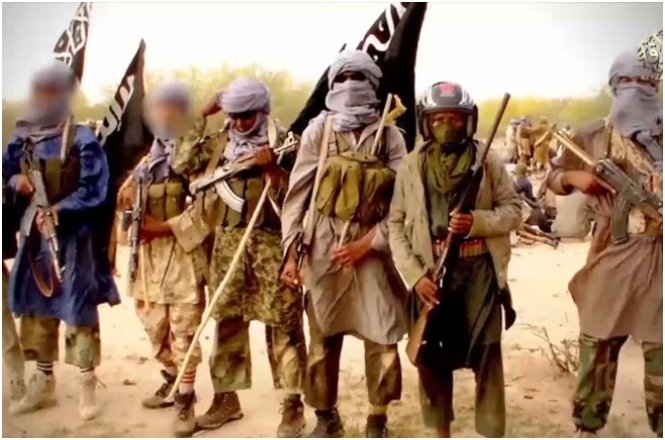
Four years after Russian forces arrived in Mali promising to defeat jihadist insurgents and restore state authority, the security situation in the Sahel nation remains deeply precarious. In this analysis, Joseph McCarthy, an analyst specializing in Sahel governance and security, examines the paradox at the heart of Russia’s military partnership with Bamako: as the Africa Corps suffers repeated battlefield losses, JNIM (al-Qaeda’s Sahelian affiliate) continues to launch devastating attacks, capture equipment, and replenish its offensive capacity.
When Russia Loses, JNIM Gains: Mali’s Security Paradox
By Joseph McCarthy · Analyst, Sahel governance & security
| 100+MALIAN SOLDIERS KILLED AT DIOURA, 10 SEPT | 5AFRICA CORPS PERSONNEL KILLED, SAME ATTACK | 50+KILLED IN THE 18 JULY ANÉFIS-AREA AMBUSH |
Russia’s military presence in Mali was built on a promise: that Moscow could deliver the security assistance needed to defeat jihadist groups and restore state authority. Since the Wagner Group arrived in 2021 and transitioned to the Africa Corps, Russia has increasingly positioned itself as Bamako’s principal security partner as the junta has distanced itself from France and other Western allies.
Four years into that partnership, however, the security picture remains troubling. JNIM, al-Qaeda’s Sahelian affiliate, continues to demonstrate its ability to launch major attacks against Malian security forces, while Russian-backed forces have suffered significant losses on several fronts. The question this raises is not whether Russian forces can win individual battles, but whether their involvement is producing the durable security Mali’s military government promised when it turned away from its Western partners.
The 10 September attack on the military camp at Dioura brought this contradiction into sharp focus. Malian and diplomatic sources put the death toll above 100 soldiers, alongside five members of the Africa Corps; JNIM itself claimed 150 killed and 93 captured, figures the Malian military has not confirmed, and that should be treated with appropriate caution. What is better established is that the camp fell, and that JNIM released footage of captured personnel and equipment, including motorcycles and pickup trucks. The exact scale of what was seized cannot be independently verified, but the pattern is familiar from the war’s other fronts: at Anéfis, armed groups have reportedly fielded equipment recovered from earlier fighting, and in July rebels seized the control station for a Bayraktar TB2 drone as Malian and Russian forces retreated.
The significance of Dioura extends beyond the soldiers killed or the position lost. A battlefield defeat does not necessarily end when the shooting stops. When a position is overrun, weapons, vehicles and ammunition can change hands, and equipment intended to strengthen the state can become a resource for the insurgency it was meant to defeat. Russia’s inability to prevent repeated losses of this kind may do more than leave JNIM’s offensive capacity intact; it may actively replenish it.
This is not an isolated incident. In a separate ambush near Anéfis on 18 July, a joint convoy of the Malian Armed Forces and the Africa Corps was attacked, with Al Jazeera reporting at least 50 soldiers killed. The Africa Centre for Strategic Studies and ACLED have documented comparable losses through 2026, including the destruction of Malian and Russian aerial assets. Taken together, these incidents raise an uncomfortable question for Moscow and Bamako: if Russian support has not stopped JNIM from mounting major attacks and inflicting heavy losses on the forces it reinforces, what measurable improvement has the partnership actually produced?
The consequences are not confined to the battlefield. By making Malian army and Africa Corps positions priority targets, the Russian-backed security strategy can expose nearby civilians to greater risk. Military positions become focal points for attack, turning surrounding communities into zones of confrontation. In Gao, an attack near a camp for displaced people reportedly killed six civilians, injured six others and destroyed at least ten homes. For those living near military installations, the presence of forces meant to provide security can have a paradoxical effect: offering protection in some circumstances while making the surrounding area a more likely target in others.
This points to a fundamental question about what Russia’s involvement in Mali is actually for. Security cannot be measured only by the survival of military positions or the government itself. Its ultimate test is whether ordinary civilians are safer than they were before. If the deployment of Russian-backed forces is contributing to greater vulnerability around their own positions, even as JNIM continues to strike, capture and re-equip, then the benefits of the partnership need to be weighed honestly against the costs it imposes on the population it is meant to protect. Four years on, that balance sheet does not yet favour Bamako.
Joseph McCarthy is an analyst and researcher specialising in governance, security and political transitions in the Sahel. He writes on geopolitics, development and African diplomacy. joecarthy30@gmail.com







Commentary
Making Foreign Influence Look Local: How AI Is Reshaping Russia’s Information Operations in Africa
A recent report by Anthropic, the AI company behind the Claude models, has exposed two distinct and troubling operations on the African continent: one that used AI to generate pro-Russia, anti-France narratives for a radio station in the Central African Republic, and another that used the same technology as an engineering workforce to help build a national surveillance platform in Mali capable of monitoring 25 million SIM cards. Together, these cases reveal a convergence of influence, cyber capability and surveillance inside the same technological ecosystem, and raise urgent questions about who is really speaking to African audiences, and who is watching them.
In this analysis, Joseph McCarthy, an analyst specializing in Sahel governance and security, examines what these developments mean for Ghana and West Africa, particularly as the region approaches a pivotal election year and as ECOWAS grapples with evolving threats that transcend borders.
Read the full analysis below.
Making Foreign Influence Look Local: How AI Is Reshaping Russia’s Information Operations in Africa
By Joseph McCarthy · Analyst, Sahel governance & security
| 25M SIM CARDS TARGETED IN MALI | 3 NATIONAL MOBILE OPERATORS COVERED | Cat. 4 BREAKOUT SCALE RATING, CAR CASE |
Artificial intelligence is no longer simply a tool for making human work faster. It is becoming an instrument of power, capable of generating propaganda, conducting cyber operations, building surveillance systems and shaping public opinion at a scale that was previously difficult to achieve. Work that once required teams of writers, translators, researchers and media operators can increasingly be accelerated, coordinated and automated. The result is a new kind of geopolitical competition in which influence itself can be industrialised.
A recent threat intelligence report by Anthropic, the AI company behind the Claude models, offers a glimpse of what this looks like in practice. The company disclosed that it had disrupted an operation linked to Politology, the Africa Corps/Wagner influence branch that Anthropic assesses came under the control of Russia’s Foreign Intelligence Service in late 2023.
A Russian-speaking operator based in Bangui used Claude to produce daily content for Radio Lengo Songo, a Central African Republic radio station, generating pro-government, pro-Russia and anti-France narratives that were then amplified through Russian state outlets including RT, Sputnik Afrique and TASS, as well as the Russian House in Bangui. The operator reportedly instructed the model to make the material “look like ordinary journalism” rather than AI-generated content, and separately used it to draft forged communications attributed to the Central African Gendarmerie and Ministry of Defence, and to track opposition figures. Notably, Anthropic says Claude refused a request to name real individuals as militants, a detail that speaks to the limits built into the system rather than its capture by it.
“The objective is no longer only to tell people what to believe; it is to obscure who is asking them to believe it.”
The significance of this case goes beyond the volume of material AI can produce. It lies in the possibility of making foreign influence appear local. Traditional propaganda depended on people to write, translate, adapt and distribute messages, a slow and labour-intensive process. AI increasingly performs many of these functions at once. Anthropic describes the technology as a “force multiplier”: operations that once required specialised teams can now be run faster, at greater scale and at lower cost. This changes the economics of influence, but the more consequential shift is in its visibility. A narrative created or coordinated by a foreign actor can now pass through a local radio station, circulate on social media, and reach audiences as though it were an independent domestic view.
Russia has long understood that geopolitical power extends beyond military reach into the information space. The Central African Republic case does not establish that Russia’s entire African messaging strategy is now automated. What it demonstrates is narrower but still significant: AI can be folded into an existing network of media outlets, personnel and political relationships to make foreign messaging faster to produce, easier to localise and harder to trace to its source.
FROM PERSUASION TO SURVEILLANCE
Anthropic’s report also documents a second, quite different case, one that shows AI’s reach extending from persuasion into surveillance. The company says it identified an actor, likely an independent consultant based in Bamako, working with Mali’s state intelligence service, the Agence Nationale de la Sécurité d’État, who used Claude as the primary engineering workforce behind a national surveillance platform named Lakana 360. The system was designed to monitor roughly 25 million SIM cards across Mali’s three mobile network operators, collecting call records, text messages and voice traffic, matching identities across cards, and generating dossiers on individual phone numbers. According to Anthropic, the consultant removed a warrant check from the dossier function, at an operator’s request, circumventing the legal safeguard that would otherwise have required judicial authorisation before such records were disclosed.
The distinction that matters here is what Claude actually did. It was not used to analyse finished surveillance output; it was used to help design and build the software that made the surveillance possible. Anthropic’s ban on the account halted further design assistance but did not disable the system already deployed, which continued to run on other, locally hosted models. The case does not show that the Malian government itself directed the misuse. It shows something arguably more important: that a single individual, working with a state security service, could use a commercial AI model as an engineering workforce to help build surveillance infrastructure at national scale.
Together, these cases point to a challenge broader than disinformation. The same systems that can generate a convincing local narrative can also help build the tools to monitor the populations exposed to it. For African states, the question is no longer only whether a piece of content is true or false, but who produced it, who financed it, who is amplifying it, and whether the apparent local voice behind it is local at all.
WHAT IT MEANS FOR GHANA AND WEST AFRICA
Ghana’s own experience during its 2024 elections offers an early domestic parallel, if not a directly connected one. The Media Foundation for West Africa documented fabricated audio recordings of the two main presidential candidates, while Freedom House reported AI-generated deepfake audio and video alongside coordinated bot activity spreading misleading narratives. What Ghana encountered as isolated synthetic-media incidents could, as the tools mature, become part of far more systematic operations of the kind Anthropic has now documented elsewhere on the continent.
Information does not respect West Africa’s borders, and a narrative built in one country can be adapted and amplified in another within minutes. ECOWAS has historically organised its security cooperation around terrorism, organised crime and border control. The evidence now emerging suggests that information integrity and digital authentication need to sit alongside those priorities, with member states building the capacity to identify coordinated foreign influence, verify digital content and share intelligence on emerging technological threats.
The lesson for West Africa is not that another foreign power has acquired a new propaganda tool. It is that influence, cyber capability and surveillance are converging inside the same technological ecosystem. The states that prepare for that reality will be defending something larger than their information space. They will be defending the institutions and, ultimately, the sovereignty that rests on citizens’ ability to know who is speaking to them, and why.
Joseph McCarthy is an analyst and researcher specialising in governance, security and political transitions in the Sahel. He writes on geopolitics, development and African diplomacy. joecarthy30@gmail.com
In this thought-provoking opinion piece, Associate Professor Theodora Dame Adjin-Tettey examines the alarming deterioration of public discourse in Ghana and beyond, marked by an explosion of hate speech, vitriol, threats, and inciting comments. Drawing on a personal anecdote about a researcher who abandoned a study on media insults in 2010 due to a lack of data, contrasted with today’s overwhelming abundance of such content, she argues that this shift signals a deeply troubling ethical decline in society. Read the full article below.
Hate speech, vitriol, threats, and inciting comments: Can we stop it already?
By Theodora Dame Adjin-Tettey | Associate Professor
A friend of mine recently posted on social media that he had to abandon his 2010 research project on “insults in the media” because he couldn’t find enough data. Every researcher needs data to carry out their study, so when there is a data drought on a subject of empirical investigation, it becomes a huge stumbling block to the researcher, possibly causing them to abandon their study or chart a new parallel path to the original idea. It suffices to say, however, that the lack of data the researcher encountered sixteen years ago on a topic like insults in the media signaled something positive or healthy about the general environment for public discourse at the time. This is despite it posing a serious threat to the attainment of a university degree.
Contrarily, when there is an overabundance of data on a topic like that, 16 years after the initial fruitless attempt, it is indisputable evidence of where society, specifically, public discourse, has shifted to. Significantly, it is also indicative of a deteriorating and possibly ethically deficient society. So, here is my question: must we be concerned about the rather glaringly ethically deficient status quo of our public discourse, or should we write it off as a normal concomitant of a liberal society, aka democracy?
A matter of grave concern
I’m not the first to write about this, and I definitely will not be the last. But I feel I must also make my attempt at a drop in the ocean. Surely, change can be realised when all hands are on deck. Every little effort, every little attempt, every little … helps. It is no wonder the British supermarket chain, Tesco, popularized this phrase. Indeed, small efforts matter and are important in contributing to a bigger goal. The bigger goal, this time, is sanity within our information and media environment.
Over the past weeks, the public sphere has been awash with conversations about how our society’s social fabric is degenerating, and I dare say, at a faster rate than ever, particularly when it comes to decent conversations, be it on politics or on social issues. I say “faster rate” because now the platforms that accelerate public discourse, including who initiates/originates or sets the agenda, and who disseminates it, have been democratized, thanks to advances in digital technologies. With generative technologies being able to imitate human intelligence and our ill tendencies, humans no longer need other humans to perpetrate wrongs against their kind. The technologies have become our faithful and convenient allies, helping us to fabricate wild allegations, perpetrate lies, polish up insults, and execute wicked agendas against our own kind that we sometimes consider “the enemy” or the subject of our dislike and/or hatred. Sad.
When I see, watch, and hear the daily insults, hearsay, hate speech, threats, inciting comments and sharp vitriol accompanying social media posts and commentary, I cannot help but to attempt to contribute to turning the tide; that is, if only the tide has not already washed away our humanity, respect, reverence, and the strength of character and ethical backbone that distinguishes Ghanaians from others without the tiniest crevices to hold on to.
We must fight the temptation at all costs
People always have something to say about someone: their looks, how they talk, what they do, what they do not do, how they wish ill on them, on and on and on. Yes, as right-thinking humans, we may form opinions on issues, but it is not every opinion that must be uttered or shared with the world, even when you are convinced that it is the most persuasive or erudite. There is a reason for the adage that “all truths are not to be told” or “all truth is good, but not all truth is good to say.” Should we all utter what we think of, know of, or how we feel about people or every issue, society would be sent into chaos. Even worse is when made-up falsehoods permeate public discourse. That is why it is important that, in being wise, we must sometimes give our “thoughts no tongue.” as Polonius, the chief counselor to King Claudius, advised his son, Laertes, in William Shakespeare’s Hamlet.
Critical public discourse must be based on factual arguments and not insults and denigration of people’s persona, sometimes to the extent of stripping them of their dignity. As a people who pride ourselves on being civilized, civilization in itself must tame our human nature by redefining our manners, developing our intellect, and, when need be, restraining us. Civilization must advance society and must develop our culture and not erode it. That’s why it becomes a matter of grave concern when we witness some of the vilest insults come from people who are supposed to be an example in society, particularly to the younger generation.
Additionally, our tendency to politicize everything has worsened things. We have become enemies because of political biases. We perceive everything as black or white, forgetting the shades in the spectrum. That is why every other person becomes the enemy, and the only way we seem to know how to deal with the enemy is to “destroy” them so our side of the divide will stand as the better side. Because of politics, we have strangely redefined family, friendship, associate, colleague, etc. Of late, you are likely to see people showing respect only to the people that they share political affiliation with or whom they anticipate obtaining favour from. Once you are of “no use” to them, you are a good candidate for needless castigation and character assassination. It seems to me that the easiest thing to do these days is destroying people’s reputations. I also see that the extent of the harm increases when the act intended to create the destruction is generously bankrolled.
The attention economy as a facilitator of information disorder
The other aspect of the conversation is how social media incentivizes sensationalism and exploits the negativity bias of the human tendency to pay closer attention to content that contains threats, causes anger and outrage. And in the present attention economy built on clicks, shares, comments, and watch time, it is not surprising that those who want to attract the attention that translates into both online and offline monetary returns will do anything to push content that the algorithms are configured to track and promote.
So, next time you react to, comment on, and/or share that vitriol, remember that you are contributing to the ocean of information disorder within the media and information ecology. If you are the one behind that account spewing insults, disrespect, and unnecessary attacks, note that civilization requires that we disagree with one another without losing respect, empathy, and civility for one another. We must also have a sense of responsibility to lift others when they are in their darkest moments rather than verbally battering them to the point of ruin. And rightly so, I find the quote that I recently came across, “to strike an adversary who is down is a betrayal of humanity, not a victory of strength”, incredibly poignant.
The more this goes on, factual information gets buried. And democratic decisions will be taken based on poor judgment. And here is the reason: the algorithms will drown out factual and decent communication when there is a sea of the opposite.
This is not to argue that duty bearers shouldn’t be held accountable. Certainly, we must, but in a decorous manner, while keeping the facts at the centre. Hate speech, threats, and inciting comments do not build a civil society; they quickly tear society apart, leaving us in chaos and dysfunction. So, now my question: must we continue on this tangent, knowing the chaos on social media does not stay just on social media but fast trickles into homes, communities, institutions and society at large?
Until next time, when I meet you and take your responses, this is my drop in the ocean.
The writer is an associate professor of Media and Communication Studies at Durban University of Technology.
Joseph McCarthy, an analyst specializing in Sahel governance and security, examines how a deceptive recruitment pipeline has drawn thousands of African men into Russia’s war in Ukraine. Drawing on investigations by Amnesty International and the INPACT/All Eyes on Wagner collective, which identified 1,417 recruits from 35 countries and 316 confirmed combat deaths, McCarthy argues that unemployment and misleading job offers have turned Africa’s economic vulnerability into a source of foreign military manpower. A war that is not Africa’s, he writes, should not be allowed to consume Africa’s blood.
African Blood for Other People’s War?
By Joseph McCarthy · Analyst, Sahel governance & security
A recruitment pipeline built on unemployment and misleading job offers has quietly drawn thousands of Africans into the front lines of Europe’s bloodiest war since 1945.
| 1,417AFRICAN RECRUITS IDENTIFIED | 35COUNTRIES OF ORIGIN | 316CONFIRMED COMBAT DEATHS |
A job advertisement can look like an escape route. A promised salary, a ticket to Russia and the prospect of a better life can seem like an opportunity to someone struggling with unemployment or economic hardship. For some Africans who travelled to Russia in search of work, the journey reportedly ended not at a construction site, a logistics company or behind a computer, but on the battlefield in Ukraine.
On 10 September, Amnesty International published an investigation documenting how foreign nationals have been recruited into Russia’s armed forces through deceptive, coercive and exploitative practices. The organisation found that people from countries including Sierra Leone, Somalia, South Africa and Egypt were drawn into the Russian military after being promised civilian employment, high salaries or other incentives. In many of the cases it examined, Amnesty concluded that the practices amounted to human trafficking.
The scale of the phenomenon goes far beyond isolated cases. The INPACT/All Eyes on Wagner collective says it has identified 1,417 African nationals from 35 countries who signed contracts with the Russian army between 2023 and 2025, including 316 whose deaths in combat were recorded. The database contains names, nationalities, dates of birth, military registration numbers and contract dates, along with dates of death and military units for those killed. INPACT says the list is not exhaustive, and that further research has identified additional African combat deaths not included in the original database.
Behind these numbers are young men who, in many cases, did not leave Africa intending to become soldiers. Some were promised civilian employment or help obtaining Russian visas and legal status; only once in Russia did they discover that the opportunity was tied to military service. Others were presented with Russian-language contracts they did not understand before being sent into combat.
“The tragedy is not only that Africans are dying in this war. It is that some families do not even know where their relatives went, how they were recruited, or where they died.”
The human cost is stark. Of the recruits in the database, 316 were recorded as killed in action, with an average period of service, for those whose deaths were recorded, of only about six months. Investigations have documented cases in which families spent months searching for missing relatives before discovering their names on lists of foreign soldiers killed in Ukraine. In one case reported by RFI from the INPACT investigation, a young African man who had travelled to Russia after being promised well-paid work was later identified on a list of those killed.
IDENTIFIED RECRUITS AND RECORDED DEATHS BY COUNTRY, INPACT DATABASE, 2023–2025
| COUNTRY | RECRUITS | DEATHS |
| Egypt | 361 | — |
| Cameroon | 335 | 94 |
| Ghana | 234 | 55 |
| The Gambia | 56 | 23 |
| Mali | 51 | — |
These figures turn the story from a handful of recruitment scams into a broader question about how Africa’s economic vulnerabilities are being converted into manpower for a foreign war. A young African searching for employment, education or a route out of hardship can become a target for a recruiter offering an apparently ordinary opportunity abroad. What begins with the promise of a salary or a better future can end with a military contract, a journey to the Ukrainian front and, in the worst cases, a death notice delivered months later to a family thousands of kilometres away.
The figures reveal two interconnected realities: Russia needs soldiers, and many Africans need economic opportunities. The recruitment system appears to operate at the intersection of those two vulnerabilities. INPACT describes this as a deliberate, organised recruitment strategy; Amnesty’s investigation separately documented the deceptive and coercive practices used to draw foreign nationals into Russia’s war effort.
GOVERNMENTS BEGIN TO RESPOND
Some African governments have begun to treat the recruitment of their citizens as more than a series of isolated cases. Kenya has taken the issue directly to Moscow. Following diplomatic discussions in March 2026, Russia agreed to place Kenya on a military recruitment stop list and to facilitate the disengagement of Kenyans already serving who no longer wished to continue. Nairobi has also tightened oversight of private recruitment agencies and pursued the repatriation of affected citizens. By May, Kenya said 291 of its nationals had been recruited, with 53 already repatriated.
Ghana has moved from concern to investigation. In July, its Foreign Affairs Minister said the government was investigating alleged criminal recruitment networks after reports that 272 Ghanaian nationals had been drawn into the war through fraudulent employment schemes. Fifty-five of those cases reportedly involved deaths, and two Ghanaians were being held as prisoners of war. Ghana has also engaged foreign authorities over the welfare of affected citizens and stepped up public education on deceptive overseas job offers.
These responses matter because they shift the issue from individual misfortune to a question of state responsibility. When citizens are recruited through employment advertisements, intermediaries and recruitment agencies, the problem is not simply that individuals made risky decisions. It raises questions about whether governments have adequate systems to regulate overseas recruiters, verify job offers and warn citizens before they leave the country. Kenya’s experience shows that repatriation is only part of the answer; disrupting the recruitment pipeline itself is the harder task.
The responses across the continent remain uneven, however. Recruits have been identified from numerous African countries, but governments differ sharply in their willingness or ability to investigate recruitment networks, negotiate with Moscow and support affected families. The protection an African citizen receives can depend heavily on whether their government is willing and able to intervene, and recruitment networks do not respect borders. The same mix of unemployment, migration pressure and online advertising that has already ensnared thousands could just as easily target young people in countries that have not yet identified a single case.
WHOSE INTERESTS ARE SERVED
There is also a deeper geopolitical dimension. For years, African countries have sought greater agency in their relations with external powers, insisting that partnerships serve African interests rather than reproduce dependency. The recruitment of African nationals into a distant war raises an uncomfortable question about whose interests are truly being served when economic vulnerability becomes a source of foreign military manpower.
The Russia-Ukraine war is fought thousands of kilometres from Africa, but its consequences are not confined to Europe. Behind every statistic is a son, a brother, a husband or a father who left home believing he was pursuing work and a better future. Some have returned alive; others have returned in body bags; and families are still searching for answers about how their loved ones ended up fighting a war they never intended to join. This cannot remain a distant European problem or a collection of unfortunate individual cases. When poverty can be turned into a recruitment weapon and African citizens into expendable soldiers, silence carries a cost. A war that is not Africa’s should not be allowed to consume Africa’s blood.
Joseph McCarthy is an analyst and researcher specialising in governance, security and political transitions in the Sahel. He writes on geopolitics, development and African diplomacy. joecarthy30@gmail.com



-
 Sights and Sounds1 day ago
Looking for a Different Day Out in Accra? Bambo’s Has You Covered
-

 Taste GH1 day ago
Ghanaian Tomato Stew: The Rich, Fragrant Sauce Everyone Should Try
-

 Homes & Real Estate1 day ago
Building in Stages? Why Your Concrete Slab Needs Protection Before the Next Floor
-
 Global Update8 hours ago
Tragedy As Three Children Found Dead in Vehicle Boot in Ghana
-
 Arts and GH Heritage13 hours ago
Zogbéadji opens Karp Kamina Residency 2026
-
 Ghana News8 hours ago
Ghana Moves to Establish National Space Agency
-
Fashion & Style13 hours ago
Forget Buying Every Wig You See: These Four Styles Could Build a Complete Hair Wardrobe
-

 Global Update9 hours ago
Death of Lab Worker From Suspected Pneumonic Plague in Siberia Prompts Quarantine of Nearly 200 People