
Global Update
New Free Database Offers Nearly 4 Million Records of People Enslaved in British Colonies


Ancestry.com and UCL launch searchable archive spanning Caribbean, South Africa and beyond in early 1800s
A new online database containing close to 4 million records of people enslaved in British colonies from the Caribbean to South Africa during the early 1800s is now free and searchable, offering an unprecedented window into the lives of the last generation of Africans enslaved in British territories.
The database, titled “Former British Colonial Dependency Slave Registers 1813 to 1834,” was created by Ancestry.com in cooperation with the Centre for the Study of the Legacies of British Slavery at University College London. It draws on the registers of enslaved persons held principally at the National Archives in the UK under the T71 catalogue.
Matthew Smith, director of the UCL centre, told The World that the records are remarkable for their detail.
“You get details on all of the individuals who were enslaved, which essentially is the last generation of Africans brought to the British territories before slavery ended by abolition decree in 1834,” he said, noting that the apprenticeship system ended in 1838.
The records span roughly 1813 to 1840 and were compiled every three years. They generally include a name—not always a surname—age, and maternal lines. Some islands recorded occupations. They also include “increase and decrease” columns tracking births and deaths, which Smith described as “very upsetting aspects of this material.”
Why the Records Were Created
After the transatlantic slave trade was abolished in 1807, many abolitionists believed slavery would naturally end in British colonies. Instead, the system deepened, and officials worried about illegal trafficking. The registers were meant to monitor trafficking and keep control of enslaved societies.
Smith said digitization is a game changer.
“What we’re able to do is essentially use the database … to find connections in ways that would have been much more labor intensive using the paper records,” he said. Researchers can now trace family lines and community stories, and make detailed comparisons across colonies.
Ancestry decided to make the records free and open access globally, partnering with the National Archives UK. UCL was brought in to provide historical context for sensitive records. Smith said he was encouraged that Ancestry did not require payment to view the material.
“Everything we do is public history and it’s meant for free, open access,” he said.
Reparations and Public History
The database arrives amid renewed public reckoning with slavery’s legacy. Recent projects include the Register of British Slave Traders, the book “The Crown Silence” about the British monarchy’s role, and new DNA evidence reaffirming Thomas Jefferson had children with Sally Hemings. Caribbean nations have pushed for reparations from the UK.
Smith said the records could affect those debates by identifying enslaved people as individuals.
“When you begin to look at sets of records that actually identify human beings as individuals, as unique persons … that gives you a very different understanding of what the cost, the human cost of enslavement was,” he said.
He added that the records document the last phase of British slavery, and many people enslaved during centuries before will never be identified.
“That shadow has really been cast quite large,” he said.
Smith hopes the database will fuel generations of new research.
“We’ll begin to understand and learn more about the history of slavery and why we need to relate it to the afterlives that came long after the emancipation bills were passed,” he said.












Global Update
Content Creation Is Now a College Degree: Universities Turn Influencing Into a Professional Career Path

Content creation is moving beyond social media hobbyism and self-taught influencing, as universities in the United States increasingly recognize the creator economy as a professional industry worthy of formal academic training and dedicated degree programs.
Several colleges are now offering bachelor’s degrees, undergraduate minors and postgraduate qualifications in content creation, digital storytelling, social media strategy and creator entrepreneurship, reflecting the growing commercial importance of online platforms and the businesses built around digital audiences.
The programs are designed to equip students with skills that extend beyond producing videos, posting photographs or attracting followers. They explore the creative, technical and commercial dimensions of digital media, including brand partnerships, audience development, multimedia production, content monetization and digital marketing.
Among the institutions embracing this emerging academic discipline are Emerson College, Arizona State University, St. Bonaventure University, Syracuse University and Quinnipiac University.
Emerson College: Bachelor’s degree in Content Creation

Emerson College in Boston, Massachusetts, is introducing a Bachelor of Arts in Content Creation, with its first class scheduled to begin in Fall 2027.
The program is designed to prepare students for careers across content creation, media production, marketing and the commercial side of the creator economy.
Its introduction reflects the increasing demand for professionals who understand not only how to produce compelling digital content but also how to develop sustainable careers and businesses around it.
Arizona State University: Bachelor’s degree in Content Creation

Arizona State University in Arizona is also offering a Bachelor of Arts in Content Creation.
The program focuses on teaching students how to create, grow and monetize content across digital platforms.
The emphasis on monetization is particularly relevant as creators increasingly operate as entrepreneurs, building personal brands, developing audiences and generating income through advertising, sponsorships and other digital business models.
St. Bonaventure University: Content Creation with practical experience

St. Bonaventure University in New York has introduced a dedicated Bachelor of Arts in Content Creation.
Its curriculum combines social media, digital storytelling, multimedia production and community management.
An important feature is the inclusion of real-world internship experience, giving students opportunities to apply their skills in professional environments rather than relying exclusively on classroom instruction.
The approach recognizes that successful content creation requires practical knowledge of audiences, production processes and the demands of the digital media industry.
Syracuse University: Creator Economy minor

Syracuse University in New York is approaching the emerging industry through an undergraduate Creator Economy minor.
The program explores content creation, monetization, brand partnerships and the business of digital media.
It places particular emphasis on creator entrepreneurship and media strategy, helping students understand how digital creators build commercial relationships, develop business opportunities and turn online influence into sustainable enterprises.
Quinnipiac University: Content Creation and Influencing

Quinnipiac University in Connecticut offers a Content Creation and Influencing minor that combines content production, audience growth, platform strategy and ethical digital influence.
The university also offers a Content Creation Certificate and a master’s degree in Digital Content Creation and Strategy.
Its postgraduate offering signals that the discipline is developing beyond entry-level social media skills into a broader field involving strategic communication, digital business and professional media management.
The creator economy is becoming a serious profession
The emergence of these programs reflects a significant change in how universities and employers view the creator economy.
Content creators are increasingly functioning as independent media businesses, managing production teams, negotiating brand partnerships, analyzing audience behavior and developing multiple revenue streams.
What once appeared to be an informal activity built around posting online has developed into a commercial ecosystem involving advertising, entertainment, public relations, marketing, journalism and entrepreneurship.
For students, formal academic qualifications could provide a structured route into an industry where creativity must increasingly be supported by business knowledge, technical expertise and an understanding of digital audiences.
The development also raises opportunities for universities outside the United States, including institutions in Africa, where a growing population of young digital entrepreneurs is exploring careers in social media, video production, online entertainment and digital marketing.
As the creator economy expands globally, the question is no longer simply whether people can make a living creating content. Increasingly, it is whether universities can prepare the next generation to build sustainable careers and businesses in an industry that continues to reshape media and communication.
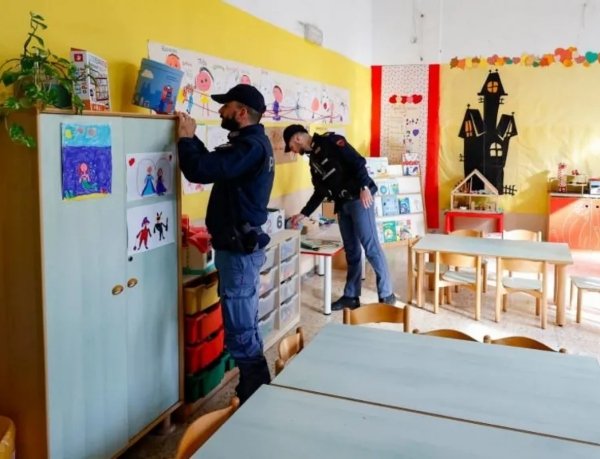
Hundreds of schools in Italy, Ireland, and the United Kingdom received bomb threats on Wednesday, November 11, 2026, triggering evacuations and renewed concern over a growing pattern of suspected hybrid attacks targeting public institutions, transport networks and media organizations across Europe.
Authorities found no explosives, and the threats were assessed as hoaxes. No group has credibly claimed responsibility for the incidents. However, the latest warnings follow dozens of similar threats last week against airlines and media outlets, intensifying security concerns as European leaders gather for a security summit in Ireland.
The incidents have raised questions about whether hostile actors are exploiting digital communications and easily recruited individuals to disrupt everyday life, undermine public confidence and place pressure on European governments.
Threats disrupt schools and national broadcaster
Among the organizations targeted last week was Ireland’s national broadcaster, RTÉ, which abruptly interrupted its radio programming on Friday morning after receiving an email warning that explosives would detonate inside its building within 45 minutes.
The message was signed by a man using the name Mikhail Andropov and claimed to represent the group responsible for the bomb threats against dozens of airlines. It threatened further attacks on aircraft, cruise ships, subway stations and trains.
The warning prompted an interruption to broadcasting, but no explosion occurred. RTÉ resumed its regular programming within approximately an hour.
On Wednesday, around 300 schools in Italy were evacuated after receiving similar threats, also signed with the name Mikhail Andropov. Schools in Ireland and the UK were among those targeted in the wider wave of warnings.
The repeated use of the same name has attracted attention. The surname Andropov is associated with former Soviet leader Yuri Andropov, who previously headed the Soviet Union’s KGB intelligence agency.
Russia suspected, but attribution remains difficult
European officials have raised concerns about a possible Russian connection to the incidents, although governments have so far stopped short of establishing direct responsibility.
Irish Prime Minister Micheál Martin said the pattern of recent attacks appeared coordinated and that there was a general view linking the increase in hybrid attacks to Russia.
However, intelligence and security specialists say identifying the people behind such operations, and establishing whether they are acting on behalf of a state, can be extremely difficult.
Erik Skouten, a former Dutch intelligence officer and head of security consultancy Diami, explained that hostile actors can recruit individuals through online platforms, including Telegram groups and gaming communities, without revealing who is directing the activity.
People, sometimes teenagers, may be offered money to make threatening calls or carry out disruptive actions. Such recruitment methods can create distance between the individuals executing an operation and any organization or government that may be directing it.
That separation makes it difficult to establish state involvement at the outset of an investigation.
Irish defense analyst and former army soldier Declan Power described the apparent pattern as a form of deliberate ambiguity: perpetrators may signal that an operation is theirs while avoiding an admission that would establish responsibility.
Airline disruptions expose the wider impact
The threats have also affected air travel, with dozens of flights diverted or cancelled last week following bomb warnings.
One passenger, Katie McAteer, was travelling from Dublin to Rome for a friend’s wedding when her flight was diverted to Paris.
She told Irish Radio that the aircraft had been in the air for approximately an hour to an hour and 15 minutes when the pilot announced a problem and said the plane would have to land in Paris. Passengers subsequently saw a fighter jet flying alongside their aircraft.
McAteer said passengers remained relatively calm during the incident.
Although the threats have caused financial losses and travel disruption, security analysts argue that the broader objective may be to create uncertainty and weaken public trust.
Power said the aim of such activity could be to generate confusion and disruption across society, ultimately damaging the relationship between citizens and their governments.
He also suggested that undermining European public support for Ukraine could be part of the wider strategic objective.
Iran allegations add another dimension to Europe’s security concerns
Russia is not the only country facing scrutiny over suspected hostile activity in Europe.
French Foreign Minister Jean-Noël Barrot said on Monday that France had summoned Iran’s ambassador to Paris after French authorities attributed a cyberattack against hundreds of supermarket refrigerators to Iran’s Islamic Revolutionary Guard Corps.
Similar systems in other European Union countries were reportedly targeted earlier in the month.
However, cybersecurity expert Benoit Grunemfalt of ESET in Paris cautioned against assuming that the incidents were connected. He said similarities between attacks were not sufficient to establish a common source.
Grunemfalt also highlighted weaknesses in the security of the affected refrigeration systems, noting that they were poorly protected and directly connected to the internet. He described direct internet exposure of industrial automation systems as a basic security vulnerability.
Iran’s Foreign Ministry rejected the accusations as baseless and hostile.
Separately, the United States Department of Justice announced charges against three Iran-backed operatives whom it accused of involvement in a series of plots in Europe and the United States. The alleged activities included a plot targeting a UK airbase where American forces were stationed.
These developments have added to concerns that European countries are facing multiple forms of cyber and security threats, potentially involving different actors and methods.
Experts warn of an invisible conflict
For security specialists, the combination of bomb threats, cyberattacks, online recruitment and disruption to critical services points to the growing importance of hybrid warfare.
Unlike conventional military attacks, hybrid operations can combine cyber activity, intimidation, disinformation, sabotage and other methods designed to destabilize a country without necessarily triggering an immediate military response.
Former Dutch intelligence officer Skouten described the situation as an invisible war and urged political leaders to explain the nature of the threat to European citizens.
He also advised households to maintain supplies of essential items, including medicines and basic necessities, as part of wider preparedness.
European governments, he argued, need a more coordinated response because the threats are unlikely to disappear.
The latest bomb warnings have so far produced no reported explosions, but their repeated occurrence has exposed vulnerabilities in public institutions, transport systems and digital infrastructure.
As European leaders meet in Ireland, the challenge is not simply to identify who is sending the threats. It is also to strengthen cooperation, protect vulnerable systems, improve public communication and prevent repeated disruptions from eroding confidence in democratic institutions.
For Europe, the emerging security test is whether governments can respond collectively to threats that are designed to remain difficult to trace, attribute and deter.

A newly emerging COVID-19 variant, PJ.2.1, is attracting scientific attention because of an unusual number of genetic changes in its spike protein and evidence that it may attach more efficiently to human cells. However, researchers say there is currently no evidence that it causes more severe illness or significantly evades vaccine-induced antibody protection.
According to a study published in the Journal of Infection, PJ.2.1 is a lineage of SARS-CoV-2, the virus responsible for COVID-19. It emerged from MC.10.1.7, a branch of the JN.1 lineage, and has been described by scientists as a saltation variant, i.e. a variant that appears to have acquired numerous genetic changes in a relatively sudden evolutionary leap rather than through gradual accumulation.
Researchers have identified more than 25 mutations in its spike protein, the structure the virus uses to attach to and enter human cells. These changes are important because the spike protein also plays a central role in how the immune system recognizes the virus.
Why scientists are watching PJ.2.1
One of the most notable findings from early laboratory research is that PJ.2.1 appears to have an enhanced ability to interact with ACE2, a receptor on human cells that SARS-CoV-2 uses to gain entry.
The study published in the Journal of Infection found that laboratory-created viral particles carrying the PJ.2.1 spike protein entered several tested cell lines more efficiently than particles carrying the LP.8.1 spike protein. Researchers also found evidence of increased ACE2-binding efficiency.
These findings could help explain why the lineage is gaining ground in some locations. However, laboratory experiments do not establish how quickly a variant spreads among people. Real-world transmission depends on several factors, including population immunity, behavior and the characteristics of the circulating virus.
There is also encouraging evidence concerning vaccine protection. In the same research, antibodies from people who received an LP.8.1-adapted COVID-19 vaccine were still able to neutralize PJ.2.1. Its susceptibility to antibody neutralization was only moderately reduced compared with LP.8.1, and researchers did not find the substantial immune escape observed with some other variants examined. <Cite refs={[“turn964909search0″,”turn964909search6”]}/>
Is PJ.2.1 more dangerous?
At present, there is no established evidence that PJ.2.1 causes more severe COVID-19 than earlier variants.
The research so far has focused largely on its genetic characteristics, ability to enter cells and susceptibility to antibodies. More clinical and epidemiological evidence will be needed to determine whether its unusual mutations translate into differences in symptoms, hospitalization rates or deaths.
Some research has found the lineage more frequently among older individuals. However, this does not establish that PJ.2.1 specifically targets older people or causes more serious disease in that age group.
Older adults and people with underlying health conditions remain important groups for COVID-19 prevention because of their general vulnerability to severe respiratory infections, regardless of the variant involved.
Where has the variant been detected?
PJ.2.1 was first identified in Ontario, Canada, and has subsequently been reported in other countries.
Research published in the Journal of Infection describes its spread in Canada, the United States and Spain. <Cite refs={[“turn964909search0″,”turn964909search1”]}/> The supplied surveillance information also identifies detections in Singapore, Australia, New Zealand, Israel and France.
The variant’s growth in Ontario has attracted particular attention. According to the figures provided from Public Health Ontario, PJ.2.1 represented 25.2% of sequenced SARS-CoV-2 samples collected between September 20 and October 17, 2026, compared with 16.9% in the preceding four-week period.
These percentages describe the share of samples that were sequenced, not the proportion of the entire population infected with the variant. Nevertheless, the increase suggests that PJ.2.1 is becoming more prominent in Ontario’s genomic surveillance.
Canada’s national respiratory-virus surveillance has also documented a sharp rise in the lineage, with PJ.2.1 accounting for 27.8% of sequenced samples in the two-week period beginning September 13, 2026.
What symptoms should people look out for?
There is currently no established evidence that PJ.2.1 produces a distinct set of symptoms compared with other COVID-19 variants.
Possible symptoms include:
- Fever or chills
- Cough
- Sore throat
- Runny or blocked nose
- Headache
- Muscle and body aches
- Fatigue and weakness
Some people may also experience breathlessness, digestive problems or changes in their sense of smell or taste.
Because COVID-19 and influenza can produce similar symptoms, it may not be possible to distinguish between them based on symptoms alone. Testing can help establish the cause of an illness.
Anyone experiencing severe symptoms, particularly difficulty breathing, should seek prompt medical attention.
What is the WHO’s position?
The World Health Organization continues to monitor the evolution of SARS-CoV-2 and maintains classifications for variants requiring different levels of attention.
Based on the WHO’s published variant-tracking list available at the time of writing, PJ.2.1 is not listed as a Variant of Interest or Variant of Concern. It is also not among the lineages identified in the WHO’s published list of Variants Under Monitoring dated July 27, 2026.
These classifications are not declarations that a variant is harmless. They reflect the WHO’s assessment of the available evidence and the need to monitor changes that could affect public health.
Should the public be worried?
The emergence of PJ.2.1 is a reminder that SARS-CoV-2 continues to evolve, even years after the initial COVID-19 pandemic.
Its numerous spike-protein mutations and apparent ability to bind more efficiently to human cells make it scientifically important. Its increasing representation in sequencing data in parts of North America also justifies continued surveillance.
However, the available evidence does not establish that PJ.2.1 causes more severe illness or substantially escapes the protection offered by LP.8.1-adapted vaccines.
There is no reason for panic, but public health vigilance remains important. People should follow current vaccination recommendations, stay home and limit contact with others when ill, consider testing when COVID-19 is suspected and seek medical care when symptoms become severe.
For now, PJ.2.1 is a variant scientists are watching closely, not evidence that another major COVID-19 crisis is inevitable. More real-world data will determine whether its unusual genetic characteristics translate into a significant public health threat.


Ghanaian-Born Entrepreneur Mawena Tafa Turns Viral Brooklyn Encounter with Strange Man Into Business Opportunity

German President Steinmeier Arrives in Ghana to Boost Trade and Skills Partnerships

Fat Joe Makes Emotional Appeal to Bronx Youth After Ghanaian Teen Javits Frimpong’s Killing
-

 Ghana News2 days ago
Top Ghanaian School Wins 26 Awards at 2026 Pearson Learner Awards
-

 Ghana News1 day ago
Ghanaian Teen’s Bronx Funeral Sparks NY Attorney General’s Demand to Repeal Law Protecting Gunmakers
-

 Opinion1 day ago
The Sahel’s Dangerous Calm: What Does the Lull in Jihadist Fighting Really Hide?
-
 Ghana News1 day ago
‘We Didn’t Come Here to Beg’: Ghana’s Zanetor Agyeman-Rawlings Demands Climate Justice and Funding for Africa at COP31
-
 Uncategorized4 hours ago
Fat Joe Makes Emotional Appeal to Bronx Youth After Ghanaian Teen Javits Frimpong’s Killing
-
 Ghana News3 hours ago
German President Steinmeier Arrives in Ghana to Boost Trade and Skills Partnerships
-

 Ghana News2 days ago
‘Stop Taking Our Money to Hide in Switzerland’: Dangote Challenges Wealthy Africans to Invest at Home
-
 From the Diaspora1 hour ago
Ghanaian-Born Entrepreneur Mawena Tafa Turns Viral Brooklyn Encounter with Strange Man Into Business Opportunity