
Homes & Real Estate
Why Cantonments and Labone Still Define Prime Real Estate in Accra


In many global cities, living close to an airport is rarely considered desirable. The constant movement, noise, and congestion often push property values down rather than up. Yet in Accra, two neighborhoods have turned that logic on its head.
Cantonments and Labone remain among the most prestigious and expensive residential areas in the city, despite their proximity to Kotoka International Airport. Their status, however, is no accident. It is the result of decades of history, government planning and strategic location.
A Colonial Blueprint for Prestige
The story begins during the colonial era, when urban planning in Accra followed a clear hierarchy. Areas close to key infrastructure were reserved for colonial administrators and senior officials.
Cantonments was originally developed as a residential enclave for colonial military officers and high-ranking government staff. The neighbourhood’s name itself reflects this past, referring to military quarters.
Being located near the airport carried strategic importance. In uncertain times, proximity meant quick access for travel or evacuation. Over time, this practical advantage helped elevate the area’s importance.
When Ghana gained independence in 1957 under Kwame Nkrumah, the pattern largely remained intact. The neighbourhood continued to house senior government officials, diplomats and expatriates, reinforcing its reputation as one of the capital’s most secure and exclusive districts.
Diplomacy and Security
Today, Cantonments still carries a distinctly diplomatic character. Many embassies, ambassadorial residences and international offices are based there, contributing to the area’s calm and carefully maintained atmosphere.
Security and infrastructure have played a major role in maintaining the neighbourhood’s appeal. Wide streets, controlled development and relatively low congestion make it stand out from the denser parts of Accra.
Just next door, Labone developed as a quieter but equally attractive residential community. Over the years, it has evolved into a blend of upscale homes, boutique apartments, restaurants and creative spaces.
Together, the two areas have created a corridor of high-end living that continues to attract both local elites and international investors.
Prime Location, Lasting Value
Another factor behind their enduring popularity is connectivity. Residents can reach Accra’s central business districts, diplomatic missions, and the airport within minutes.
For business travelers, expatriates, and professionals working with multinational companies, this convenience is invaluable.
Property values in these neighbourhoods reflect their status. Luxury apartments, gated villas, and modern developments have steadily replaced older homes, pushing prices upward while maintaining the districts’ prestige.
Yet despite new construction, strict planning guidelines help preserve the leafy character that distinguishes them from the rest of the city.
A Symbol of Accra’s Real Estate Evolution
In many ways, Cantonments and Labone represent the evolution of Accra itself. What began as colonial residential planning has transformed into some of the city’s most sought-after property markets.
For investors and homebuyers alike, these neighbourhoods remain a reminder that in real estate, history and location often shape value for generations.









The moment the landlord returned, the mood in the building changed.
At first, it was subtle. A longer stare than usual. A tone in conversation that carried more edge than courtesy. Then came the attempts to intimidate—quiet pressure meant to remind a tenant who held the power.
But the response was simple: silence.
“I don’t respond well to intimidation,” the tenant recalls. “And honestly, nobody should.”
That brief encounter highlights a reality many renters quietly face around the world, including in Ghana: the delicate power balance between landlord and tenant. Renting a home should mean security and privacy. Yet for some tenants, it becomes a test of boundaries.
In this case, the warning signs appeared quickly. The apartment had seemed fine at first. But once the landlord returned to the property, his behavior began to raise concerns.
Conversations carried an undercurrent of control. There were moments that felt less like routine property management and more like attempts to assert dominance.
For the tenant, the realization came suddenly: this was no longer a comfortable place to live.
“I wouldn’t want to stay in an apartment where someone might try to harm me,” the tenant explains. The decision to leave came soon after.
Across Ghana’s growing rental market, stories like this surface more often than people expect. As cities expand and housing demand rises, many tenants find themselves navigating agreements that rely heavily on trust. While most landlords operate responsibly, the few who abuse their authority can create environments where tenants feel vulnerable.
Housing advocates say intimidation can take many forms. It may appear as repeated unannounced visits, aggressive communication, or subtle threats about deposits and eviction. These actions rarely make headlines, yet they shape the daily experiences of renters.
The larger issue isn’t just one difficult landlord. It’s the question of rights.
In Ghana, tenant protections exist, but awareness remains uneven. Many renters—especially young professionals or newcomers to a city—enter agreements without fully understanding the boundaries landlords are legally required to respect.
The result is that some tenants endure uncomfortable situations longer than they should.
Walking away from a lease is rarely easy. It means packing up, searching for another home, and often losing money in the process. Yet for many renters, personal safety outweighs convenience.
“No landlord should ever use their position to dominate a tenant,” the former resident says. “A home should never feel like a place where you’re being watched or threatened.”
It’s a reminder that renting a space is more than a transaction. At its best, it provides stability and peace of mind. When that balance disappears, the only real option may be the hardest one—leaving.
And sometimes, leaving is the strongest response to intimidation.
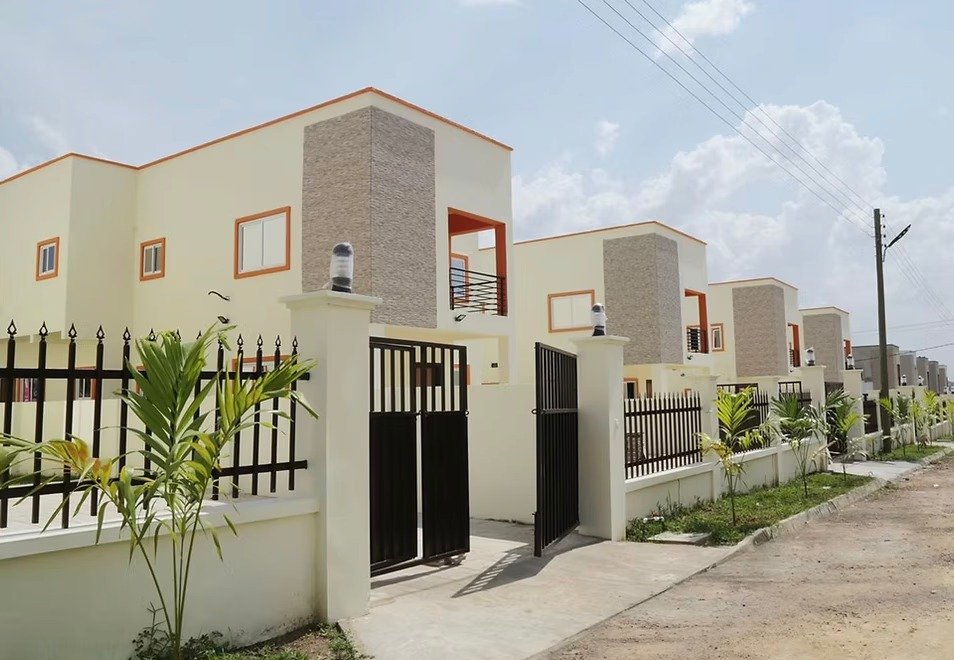
A freshly listed apartment can feel like a promise. Bright white walls, polished tiles, modern furniture arranged just so. Scroll through the photos online and you can already imagine your life there — morning coffee by the window, quiet evenings after work, maybe a balcony view of the city lights.
Then you arrive.
The couch in the pictures is gone. The once-pristine walls are smudged and dull. The bathroom that looked spa-like online now has peeling sealant around the shower and a faint smell of dampness. Same apartment, same layout — but the reality feels like a completely different place.
Anyone who has searched for property online knows this moment. The property “catfish.”
The term, borrowed from online dating culture, has found its way into the housing market as renters increasingly rely on polished listing photos to decide where to live.
And in cities like Accra, where demand for decent apartments continues to climb, the gap between what’s advertised and what’s actually available can feel especially frustrating.
Real estate agents often defend the practice by saying the photos were taken when the property was first completed or after a renovation. Technically, they aren’t lying. But they also aren’t telling the full story.
For renters, especially young professionals or international visitors relocating to Ghana, that missing context matters.
A listing might show a newly furnished apartment with spotless paint and sleek interiors. By the time a prospective tenant walks through the door months later, the furniture may be gone, the paint scuffed, and maintenance clearly overdue.
Social media has made the issue harder to hide. Increasingly, frustrated renters are sharing side-by-side comparisons: the glossy online photos versus the real-life version they encountered during viewings. The difference can be startling.
The frustration isn’t only about aesthetics. It’s about trust. Renting a home is one of the biggest financial decisions many people make each year.
When listings exaggerate reality, the viewing process becomes a game of skepticism rather than excitement.
Some property platforms are beginning to respond by encouraging more recent photos or virtual tours that show the property as it currently stands. It’s a small step toward transparency in a market where first impressions travel faster than facts.
Until then, seasoned renters have developed their own rule: never fall in love with the pictures.
Always visit first.

There is a story that gets whispered in Accra real estate circles. A man, let us call him Kwame, had been saving for years.
He found a beautiful house in a quiet neighborhood, handed over a hefty deposit, and began making plans to move his family in.
Six months later, a stranger arrived with a key. The house had been sold to two different people. Kwame’s documents were sitting in a drawer, worthless. The other buyer’s documents were sitting at the Lands Commission, stamped and registered.
Kwame learned the hard way what too many Ghanaian homebuyers discover: in property, love at first sight is not enough. You need paperwork that holds up in a courtroom.
For Ghanaians abroad and locals alike, buying a house is the dream. It is the anchor. The inheritance you leave your children.
The thing that tells you, after years of rent receipts and moving boxes, that you have finally arrived. Areas like Tema are buzzing with modern developments, and the calls from diaspora buyers are coming in faster than ever.
But here is the thing about Ghana’s property market that no glossy brochure will tell you: the person holding the key does not always own the land.
The Documents That Will Save You
Before you hand over a single pesewa, there are three things you need to hold in your hand. Not promises. Not handshake agreements. Paper.
First is the Land Title Certificate. This is the gold standard. It means the property has walked through the doors of the Lands Commission and emerged with a clear name attached. If the seller’s name does not match this certificate, stop right there.
Second is the Indenture. Think of this as the marriage certificate between buyer and seller. It should name both parties, describe the property down to its boundaries, and bear signatures that were witnessed by people who actually saw them sign. A proper indenture is not just signed; it is stamped and registered with the state.
Third is the Consolidated Search Report. This is your insurance policy. It is a formal check with the Lands Commission to confirm that the property belongs to the seller, that it has not been sold to someone else, and that no family dispute or court case is lurking in its past.
The Unspoken Rule
Here is what experienced buyers know: a developer who hesitates to show you documents is a developer who has something to hide.
The right developers will hand you these papers before you ask. They will walk you through the process because they know that a buyer who feels secure is a buyer who will tell their friends.
At the end of the day, buying a home in Ghana is not just about square footage or kitchen finishes. It is about peace of mind. It is about knowing that the house you paid for will be the house your children inherit.
Do not let the excitement of the purchase blind you to the paperwork. A beautiful house without clean documents is not a home. It is a headache waiting to happen.


Before the Cedi: The Fascinating Journey of Money in Ghana

Why Cantonments and Labone Still Define Prime Real Estate in Accra

UK-France Led Coalition Intensifies Push to Reopen Strait of Hormuz as the World Faces Soaring Fuel Costs
-
 Global Update2 hours ago
UK-France Led Coalition Intensifies Push to Reopen Strait of Hormuz as the World Faces Soaring Fuel Costs
-

 Ghana News23 hours ago
Ghana Prepares for Nationwide Biometric SIM Re-Registration: What You Need to Know
-

 Ghana News1 day ago
Catholic Bishops Back President Mahama on LGBTQ+, Call for Swift Passage of Anti-Gay Bill
-

 Ghana News2 days ago
EU Clarifies Abstention on Ghana’s Slavery Resolution: “It Does’nt Mean Don’t Support the Moral Underpinnings”
-
 Ghana News2 hours ago
Ghana to Build Global Coalition Around CARICOM’s 10-Point Reparations Plan
-

 Ghana News1 day ago
Power Cuts to Hit Several Accra Communities from April 8 to 17
-

 Ghana News2 days ago
Content Creator Priscilla Ansong Arrested, Otumfuo Urges Timely Completion of KNUST Hospital and Other Big Stories in Ghana Today
-

 Ghana News24 hours ago
Meet Zaina Adamu: Political Communications Strategist Ranked Among 40 Most influential People of African Descent