
Travel
Where Wildlife Meets History: Exploring the Shai Hills Resource Reserve


Just after sunrise, the savannah begins to glow. Golden light spills across wide grasslands while rocky hills rise abruptly from the earth like ancient watchtowers.
A troop of baboons darts across the path, pausing long enough to study the arriving visitors before disappearing into the brush.
This is Shai Hills Resource Reserve, a striking stretch of protected land less than an hour from the bustle of Accra, where wildlife, history, and landscape meet dramatically.
The reserve sits between Accra and the Volta Region, covering more than 50 square kilometers of savannah plains and rocky outcrops.
Unlike Ghana’s dense rainforest parks, Shai Hills feels wide and open. Tall grasses sway in the wind, acacia trees dot the terrain, and clusters of hills break the horizon.
These hills once sheltered the Shai people before colonial conflicts in the late 19th century forced communities to relocate to nearby settlements.
Today, remnants of that past remain in the caves carved into the rock faces—quiet spaces that once served as homes, shrines, and lookout points.
Exploring Shai Hills is as much about movement as it is about scenery. Visitors often begin with a guided drive through the reserve, where antelopes graze calmly in the distance and zebras wander the plains.
Birdlife is everywhere, bright flashes of color in the trees, accompanied by constant chatter in the warm air. For travelers eager to stretch their legs, hiking trails lead up the rocky slopes, rewarding the climb with sweeping views of the savannah below.
One of the most memorable stops is the Obonu Tem Cave, perched high within a hillside. The path up is steep and rocky, but the view from the entrance stretches across the entire reserve.
Standing there, with wind moving through the grasslands and the quiet hum of nature all around, it’s easy to imagine how the Shai people once watched the land from this very vantage point.
@_mtravels_ Here are a few things I noticed during my visit to Shai hills and if you’re visiting soon, I hope you’ll find this video helpful. If you’ve visited already, share your thoughts in the comments and share to help someone. #ghanatiktok🇬🇭 #fyp #travel #traveltips ♬ original sound – Mtravels
Beyond wildlife and hiking, Shai Hills offers smaller moments that linger with travelers—the rustle of grass underfoot, the distant call of birds, the sudden appearance of a curious baboon along the roadside.
Its proximity to Accra makes it one of the easiest nature escapes in Ghana, yet once inside the reserve, the city feels far away.
For travelers searching for wildlife, culture, and open landscapes without a long journey into the interior of the country, Shai Hills delivers an experience that feels both wild and deeply rooted in Ghana’s past.









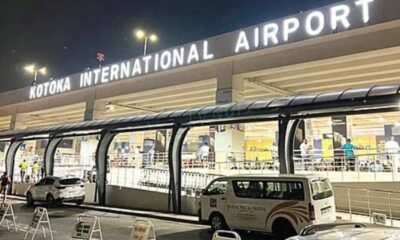




Passengers flying through Ghana who feel stranded by delays or frustrated by poor service now have a new place to turn—one designed to make their voices harder to ignore.
The Ghana Civil Aviation Authority (GCAA) has launched an airline passenger complaints portal, a move aimed at strengthening consumer protection and boosting trust in the country’s aviation sector. The platform was introduced during World Consumer Rights Day 2026, under the theme “Safe skies, confident passengers.”
For many travelers, filing complaints about cancellations, lost baggage, or poor service can be confusing or fruitless. The new system seeks to change that by offering a structured and transparent way to escalate unresolved issues.
Speaking at the launch, GCAA’s Director of Economic Regulations and Business Development, Pat Bonsu, said the initiative is meant to ensure passengers are treated fairly and have a clear path to seek redress.
“It is a reminder that when passengers feel respected and protected, they travel with greater confidence,” she said.
Under the new process, passengers must first report their concerns directly to the airline, airport operator, or service provider involved. If the issue is not resolved, they can then escalate the complaint through the GCAA’s portal, which will act as a central platform for tracking and addressing cases.
The regulator says the system will also help monitor service standards across the industry, improve transparency, and speed up dispute resolution. It forms part of Ghana’s broader effort to align its aviation sector with international consumer protection practices.
Officials emphasized that the success of the initiative will depend on cooperation among airlines, airport authorities, service providers, and consumer groups—especially as global passengers increasingly demand accountability and better service.
The launch positions Ghana as one of the countries in West Africa working to strengthen passenger rights enforcement, at a time when aviation regulators worldwide are under pressure to respond more effectively to traveler complaints.
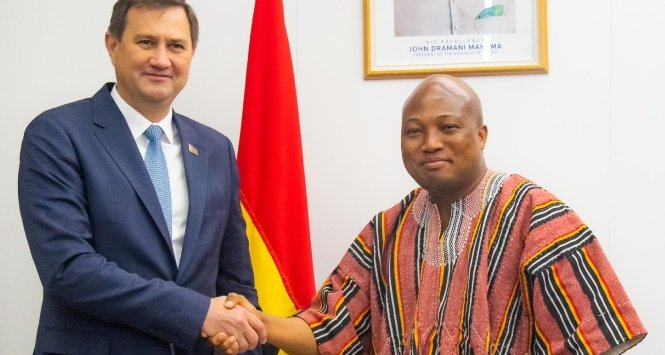
Accra, Ghana – Ghana has formally commenced negotiations with Belarus on a visa waiver agreement that would significantly ease travel between the two nations, Foreign Minister Samuel Okudzeto Ablakwa announced following high-level talks in Minsk.
The announcement came after a bilateral meeting between Minister Ablakwa and his Belarusian counterpart, Foreign Minister Maxim Ryzhenkov, where the two sides agreed to fast-track discussions on mutual visa exemption alongside expanded cooperation in education, defence, cybersecurity, and agricultural mechanisation.
“This visa waiver negotiation is a key step toward strengthening people-to-people contacts and facilitating business, academic and cultural exchanges,” Ablakwa stated. “Both countries are committed to deepening our historic friendship through practical, mutually beneficial partnerships.”
The talks also produced concrete commitments to advance educational exchange programmes, joint defence initiatives, and cybersecurity collaboration. A major focus was placed on agriculture, with Belarus offering expertise in tractor manufacturing, modern farming technologies, and mechanised services to support Ghana’s Feed Ghana initiative under President John Dramani Mahama.
“Ghana and Belarus cherish our strong relations and we are poised to enhance our cooperation particularly in the area of mechanized agriculture and tractor production as we aim to anchor President Mahama’s Feed Ghana initiative,” the minister added.
Diplomatic relations between the two countries were established on June 5, 1992. Since then, Ghana and Belarus have held regular political consultations, including meetings on the margins of the Munich Security Conference and bilateral rounds in Accra and Minsk covering education, medicine, trade and security.
The visa waiver talks form part of Ghana’s broader visa diplomacy strategy, which has already seen negotiations launched with Pakistan and the Republic of Korea to improve global mobility for Ghanaian passport holders and attract investment and tourism.
Belarus, a major producer of agricultural machinery and tractors, is positioning itself as a strategic partner for Ghana’s push toward food security and agricultural transformation.
Officials from both sides described the current engagements as “very productive” and expressed optimism that the visa waiver and other agreements could be finalized within the coming months.
Tourism
U.N. Chief António Guterres Calls for Peace as Global Tourism Emerges as Bridge Between Nations

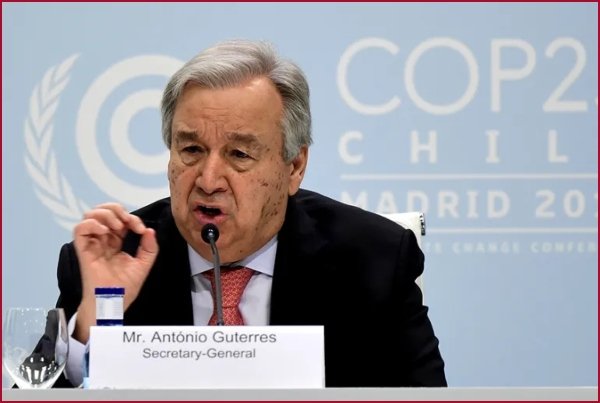
António Guterres has renewed calls for peace amid rising global tensions, warning that escalating conflicts threaten international cooperation while highlighting the need for dialogue and solidarity across cultures.
Speaking during a period when Muslims observe Ramadan and Christians mark the season of Lent, Guterres expressed concern about growing violence in Lebanon and called for an end to war.
“These sacred weeks are meant for compassion, generosity and solidarity — not war,” Guterres said, urging global leaders to pursue peace.
A Consistent Call for Global Cooperation
Since becoming secretary-general of the United Nations in 2017, Guterres has repeatedly warned that geopolitical rivalries are weakening the systems of international cooperation established after World War II.
Before assuming the role, Guterres led the United Nations High Commissioner for Refugees for a decade, where he witnessed firsthand the humanitarian consequences of conflict.
During the COVID-19 pandemic, he issued a global appeal for a ceasefire, urging countries to halt armed conflicts and focus on the shared threat posed by the virus.
While the call did not stop all conflicts, it reinforced the UN’s role as a moral voice advocating for peace and cooperation.
Tourism’s Emerging Diplomatic Influence
At the same time, leaders in the global tourism sector say the travel industry may play a growing role in promoting international understanding.
Officials with UN Tourism argue that travel fosters connections between cultures and helps break down stereotypes by allowing people to experience other societies firsthand.
Former UN Tourism chief Taleb Rifai often described tourism as a “passport to peace,” emphasizing that travelers build trust between societies through direct interaction.
Other global leaders have also highlighted tourism’s diplomatic value. Former UN Secretary-General Kofi Annan promoted the concept of global citizenship, while his successor Ban Ki-moon designated 2017 as the International Year of Sustainable Tourism for Development.
Changing Leadership in Global Tourism
More recently, the UN tourism sector has shifted focus toward economic recovery following the pandemic’s devastating impact on travel.
Under former UN Tourism chief Zurab Pololikashvili, the organization concentrated on rebuilding tourism economies and encouraging investment and innovation.
Leadership has since transitioned to Shaikha Al Nowais, who now faces the challenge of strengthening tourism’s development role while navigating complex international politics.
Private Sector’s Growing Role
Alongside UN institutions, private travel organizations are increasingly involved in global tourism diplomacy.
One of the most influential groups is the World Travel & Tourism Council, led by Gloria Guevara.
Guevara previously served as Mexico’s tourism minister and is widely recognized as a key figure connecting public and private sectors within the global travel industry.
The council represents major airlines, hotels, cruise lines and tourism operators, giving it significant influence within an industry that supports hundreds of millions of jobs worldwide.
Tourism as a Bridge Between Cultures
Analysts say tourism’s global reach positions the industry as a potential force for peace and stability.
Travel networks connect countries and cultures in ways that transcend political divisions, making the industry dependent on international stability and open borders.
As global conflicts and political tensions continue to challenge traditional diplomacy, observers say partnerships between international organizations and the tourism sector could play a role in fostering dialogue and mutual understanding.


American Expat Shares Fleeing Philadelphia for “Softer Life” in Ghana

The Muscle Clock: What Happens to Your Body After 30—and Why Lifting Weights Matters

Ghanaians Among Thousands of Africans Facing Higher UK Visa Fees from April 2026
-
 Ghana News1 day ago
This is What Comes Next After Landmark UN Slave Trade Resolution
-
 Ghana News1 day ago
Ghana Secures Landmark UN Victory as Transatlantic Slave Trade Declared Gravest Crime Against Humanity
-
 Ghana News2 days ago
Deputy Israeli Ambassador to Ghana Strongly Condemns Iran’s Missile Attacks on Civilian Areas
-
 Ghana News1 day ago
Mahama Takes a Subtle Swipe at Trump in Bold UN Speech
-

 Ghana News2 hours ago
Escalating Violence in Oti Region Town Claims 5 Lives, Parliament Passes Legal Education Bill 2025, and Other Big Stories in Ghana Today
-

 Health & Wellness1 day ago
3 Simple Morning Infused Drinks That May Improve Digestion and Metabolism
-

 Ghana News1 day ago
Ghanaian Official Drags Lincoln University Over Mahama Doctorate Concelation, Gov’t Dismisses Sole-Sourcing Claims and Other Big Stories in Ghana Today (March 25)
-

 Ghana News2 days ago
Newspaper Headlines Today: Wednesday, March 25, 2026