
Global Update
Two Caribbean Nations to Receive U.S. Asylum-Seekers


In a move that reflects shifting global migration dynamics, the Caribbean nations of Dominica and Antigua and Barbuda have agreed to accept asylum-seekers turned away by the United States.
The announcement comes after both nations were recently targeted by expanded U.S. travel restrictions, effective January 1, as part of the Trump administration’s broader immigration strategy.
Dominica’s Prime Minister, Roosevelt Skerrit, described the arrangement with Washington as “one of the primary areas of collaboration” following partial U.S. visa restrictions on the island. While specific timelines and numbers of incoming asylum-seekers remain undisclosed, Skerrit emphasized that the government is committed to ensuring the safety of its citizens.
“There have been careful deliberations of the need to avoid receiving violent individuals or individuals who will compromise the security of Dominica,” Skerrit said during discussions with the U.S. State Department.
Despite assurances, local concerns remain. Thomson Fontaine, leader of Dominica’s main opposition party, questioned the government’s readiness to accommodate asylum-seekers.
“The prime minister still has not told the Dominican public what exactly he has agreed to, in terms of the numbers of persons that are going to come to Dominica, where will they be housed, how will they be taken care of,” Fontaine told the Associated Press.
Antigua and Barbuda also announced on Monday, January 5, 2026, that it signed a non-binding memorandum of understanding with the U.S. Government. Officials clarified that the island nation would not accept asylum-seekers with criminal records, aligning with the U.S. push for shared responsibility in managing global refugee flows.
The move by Dominica and Antigua and Barbuda follows a pattern of similar agreements with other countries, including Belize and Paraguay, as the U.S. seeks to limit the influx of asylum-seekers at its borders.












Democrats wrested control of both the House and Senate from Republicans in the 2026 midterm elections, riding a historic wave that swept the party into power in Congress and in statehouses across the country.
On Tuesday, November 3, 2026, American voters delivered a stunning rebuke of President Donald Trump and rejected many of the candidates he had personally recruited and endorsed.
With new majorities set to take office in January, here is a comprehensive update on the key takeaways from a night that reshaped American politics:
1. A historic blue wave — and a visceral rejection of Trump
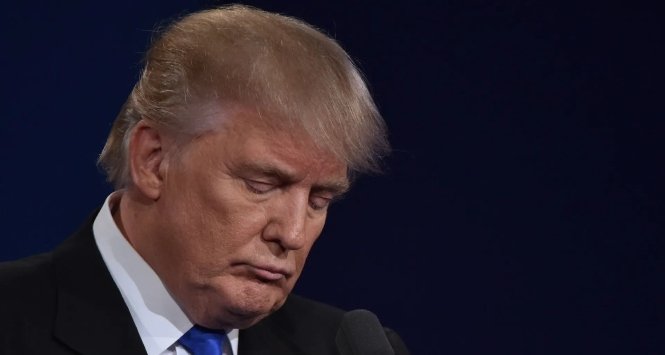
In an election in which Trump urged his faithful to vote as if he were on the ballot, Republicans were washed out of power in places the party hadn’t lost in a generation, and sometimes far longer. Democrats won a Senate race in Kansas for the first time since 1932, a South Carolina Senate seat the GOP had held since Strom Thurmond switched parties in 1964, and a slew of statewide offices in Texas, where they hadn’t won any since the 1990s. The gains the GOP had made during the Trump era, particularly among Latinos and in rural areas, were wiped out in a single night. After a decade of dismal showings in the Rust Belt and Great Plains, the Democratic Party roared back to life in Middle America, winning both the governor’s office and a Senate race in each of Iowa, Michigan, Minnesota and Ohio. The White House is already deflecting blame, but the results were a clear rejection of Trump’s second term.
2. Democrats retake the Senate, flipping seven seats
Democrats flipped the seven Republican-held Senate seats they needed to claim the majority, winning races in Iowa, Kansas, Maine, North Carolina, Ohio, South Carolina and Texas — and doing so by defeating several candidates hand-picked by Trump. The party also retained all of its Senate seats, including a closely watched Michigan contest in which progressive former public health official Abdul El-Sayed defeated Republican former Rep. Mike Rogers, and Minnesota, where Lt. Gov. Peggy Flanagan held off former sports broadcaster Michele Tafoya. The Mississippi Senate race remained too close to call, with Democrat Scott Colom and Republican Sen. Cindy Hyde-Smith separated by a razor-thin margin in a state Trump won by 23 points two years ago.
3. Texas breaks the dam — Democrats win statewide for the first time since 1994
No state illustrated the Democratic wave more dramatically than Texas, which had not elected a Democrat to statewide office in over three decades. The dam broke on Tuesday: Democrat James Talarico won the high-profile open Senate race, the most expensive Senate race in U.S. history, defeating scandal-plagued Republican Attorney General Ken Paxton, who was endorsed by Trump. In an even more striking result, Democrat Gina Hinojosa won the governor’s race, defeating three-term Republican Gov. Greg Abbott, who entered the race with a war chest of over $100 million. Other Republican statewide officials were trailing, including Lt. Gov. Dan Patrick. Taken together, the results augur profound change in what has long been the country’s biggest Republican stronghold.
4. Republican redistricting gambit backfires as Democrats retake the House
Republicans sought an early advantage by redrawing a slew of House districts in red states to pick up more seats. By most accounts, the strategy backfired. Democrats will maintain control of at least eight of the 15 districts targeted by GOP redistricting efforts and have flipped at least four seats away from Republicans, according to CNN projections. In Texas, Democrats were on track to win most of the five seats Republicans reconfigured to help themselves, including the 34th Congressional District in South Texas, which the GOP redrew to be one Trump would have carried by 10 points, but where Democratic Rep. Vicente Gonzalez was winning by double digits. In Alabama, Democratic Rep. Shomari Figures held on despite being drawn into a district Trump would have carried by 14 points.
“We have crushed the Republican gerrymander all across the land,” House Minority Leader Hakeem Jeffries — now on the path to become the first Black speaker of the House — said on X.
5. Trump’s long list of recruitment and endorsement missteps
The political environment might have wiped Republicans out anyway, but a series of GOP recruiting missteps, largely on Trump’s part, appear to have worsened the party’s problems. In Texas, Trump ignored Republicans who lobbied him to endorse the more moderate incumbent, Sen. John Cornyn, stayed out of the primary, and then endorsed Paxton after the runoff — saddling the party with a nominee who was a lackluster campaigner, poor fundraiser and easy target after decades of scandals. In Georgia, his endorsement boosted Rep. Mike Collins over a more moderate alternative backed by popular GOP Gov. Brian Kemp; Democrat Jon Ossoff won easily. In Ohio, Trump effectively cleared the field for Vivek Ramaswamy, whose ad featuring the estranged mother of his Democratic opponent backfired, and Trump and Vice President JD Vance doubled down in defending it. Democrat Amy Acton won.
6. Jon Ossoff and the 2028 shadow campaign
Georgia Sen. Jon Ossoff was viewed as vulnerable just two years ago, after Trump won the state in 2024. On Tuesday, his race was among the first of the closely watched elections to be called as he thumped Republican Mike Collins. While Ossoff has claimed he’s not interested in running for president, calls for him to enter the race will only grow louder after he proved he could win resoundingly in a battleground state. The results were full of encouraging signs for other potential 2028 contenders: Govs. JB Pritzker of Illinois and Josh Shapiro of Pennsylvania cruised to reelection, and Kentucky Gov. Andy Beshear scored a big win when his former aide flipped a GOP-friendly House district. Pritzker nodded to the speculation in his victory speech:
“We climbed one mountain tonight, but we are sitting at the base of another.”
7. The polling industry vindicated
Tuesday night’s results vindicated pollsters who had been calling a blue wave. Republicans, and even some Democrats, were hesitant to predict Democratic domination due to underrepresentation of Trump voters in polls. But surveys accounted for this in their models, and the results held up.
8. A huge swing among Latino voters — and warning signs for the GOP in Florida
In Florida, the results offered evidence of a potentially enormous swing among Latino voters in Democrats’ favor. Democrats held onto three seats Republicans had redrawn to guarantee victories this fall, with CNN projecting Reps. Kathy Castor and Jared Moskowitz will win in redrawn districts, as will Democrat Pia Dandiya in the 22nd District. In central Florida’s heavily Hispanic 9th District, Democratic Rep. Darren Soto narrowly led his Republican challenger. But the biggest eye-opener may come in South Florida’s 27th District in overwhelmingly Latino Miami-Dade County, where Republican Rep. Maria Elvira Salazar won by 20 points two years ago but led Democratic challenger Eliott Rodriguez by just over a thousand votes as of early Wednesday. A swing of that size means the gains Trump made with Latino voters in 2024 have effectively evaporated, at least in Florida.
9. A roster of historic firsts
Before this year, only three Black candidates had ever won governor’s races in the United States, and multiple Black governors had never served simultaneously. Those ranks are rapidly growing, with four Black candidates winning Tuesday. In Georgia, former Atlanta Mayor Keisha Lance Bottoms became the first Black woman elected governor of any state in U.S. history when she became the first Democrat to win the office in 28 years. In Florida, Rep. Byron Donalds became the first Black Republican elected governor in U.S. history. In Wisconsin, Milwaukee County Executive David Crowley won the race to replace outgoing Gov. Tony Evers, and Maryland Gov. Wes Moore won a second term. In Senate races, Rep. Chris Pappas of New Hampshire became the first openly gay man elected to the Senate; Annie Andrews is projected to become the first elected female U.S. senator from South Carolina; and Abdul El-Sayed became the first Muslim elected to the Senate in Michigan. Democrat Deb Haaland became the first Native American woman to win a race for governor with her victory in New Mexico.
10. Musk’s money onslaught meets its match — and Trump declines to accept blame
Tech mogul Elon Musk poured $168 million into two Texas super PACs aimed at salvaging Paxton’s Senate bid and helping the GOP retain its majority, plus millions more through his America PAC and over $5 million to Abbott’s reelection campaign, making him the country’s largest publicly disclosed political donor this cycle, with nearly half a billion dollars pumped into federal committees.
“We just proved that all the money in the world is no match for the people of Texas,” Talarico said in his victory speech. Musk, on X, quipped: “Guess my election-interfering space lasers didn’t work this time.”
Meanwhile, Trump watched returns from the White House East Room, where the mood was described as tense. He went silent on Truth Social for three hours as Democrats kept winning, before posting just after 10:30 p.m.:
“I wasn’t on the Ballot and if I was, we would have won IN A LANDSLIDE!”
He later told Fox News the results were only a “little surprise” and blamed the candidates — many of whom he had selected himself, rather than accept responsibility. “But I don’t view it as a hit on me,” he said.
As votes continue to be counted, Democrats have opportunities to build on a historic night, leading in several competitive Senate races in which the outcome is too early to call.
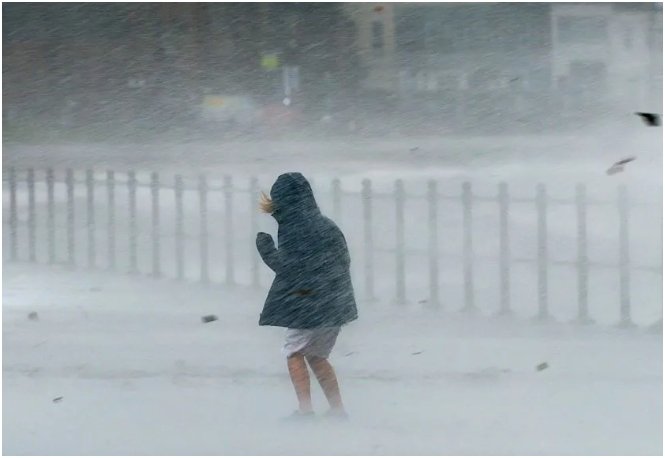
Two men have been killed by falling trees as Storm Boelo continues to batter the United Kingdom with severe weather, leaving more than 90,000 properties without power and causing widespread travel chaos.
A man in his 20s was pronounced dead in north London on Sunday after the car he was driving was struck by a falling tree. The fatality came hours after a 60-year-old man died in Dumfries and Galloway, Scotland.
The Energy Networks Association (ENA) said that as of 19:00 GMT on Sunday, more than 90,000 properties remained without electricity. The association warned that dangerous conditions were “limiting network engineers’ opportunities to safely start the work,” causing delays for affected households.
Fatalities Across the Country
The Metropolitan Police were called to Dollis Road in Finchley at around 12:40 GMT following reports that a tree had fallen onto a moving car. The driver was pronounced dead at the scene.
Chief Inspector Guy Ellwood, from the North West Command Unit, said: “This is a deeply tragic incident and our thoughts are with the loved ones of the young man who lost his life.”
A London Ambulance Service spokesperson confirmed it sent incident response officers, paramedics from its hazardous area response team, and a trauma team from London’s Air Ambulance to the scene.
Earlier, Police Scotland reported that a man died after being hit by a falling tree at Mid Kelton near Castle Douglas. In a separate incident in Aberfeldy, Perth and Kinross, two women were taken to hospital after being struck by a fallen tree at around 12:50 GMT.
Record Power Cuts
Across Storm Boelo and the earlier Storm Austen, which hit the UK on Friday, a combined 838,700 properties faced power cuts, according to the ENA.
Wind gusts peaked on Sunday morning at 85mph in Machrihanish, Argyll and Bute, and 84mph in both Stornoway in the Outer Hebrides and Capel Curig in north Wales.
An amber wind warning issued by the Met Office remained in place until 21:00 on Sunday across Scotland and parts of northern England. A yellow warning covering areas including Liverpool, Manchester, Leeds, Sheffield and Newcastle-upon-Tyne, as well as parts of the East and West Midlands and North Wales, also expired at 21:00.
The Met Office urged people to “stay indoors as much as possible,” adding: “If you do go out, try not to walk, or shelter, close to buildings and trees.”
Flooding and Travel Disruption
Four flood warnings were issued for parts of England and Wales on Sunday, while 17 flood warnings remained in place in Scotland. High rainfall totals were recorded in the Scottish Highlands, peaking at 130mm in Cluanie Inn.
The towns of the Clyde coast in Scotland were hit particularly hard. The main Skelmorlie to Largs road has been badly damaged, and a number of businesses in Largs were flooded overnight on Saturday. In Gourock, a boat ended up on the side of the road, and reports emerged of power being out in Girvan throughout Sunday.
In Dumbarton, on the north bank of the River Clyde, Muhammad Zubair Ashraf’s mobile phone shop was flooded overnight. He estimated between £5,000 and £10,000 of damage was caused and said he was “heartbroken” at the scale of the losses.
Travel has been severely affected across the country. Police in Scotland warned against unnecessary road journeys, ferry services have been impacted, some flights to and from Belfast, Glasgow, Aberdeen and Dublin airports have been cancelled, and train services across the UK have faced disruption.
Government Response
Scottish government ministers and officials gathered on Sunday afternoon to discuss the impact of Storm Boelo.
In a statement, the Scottish government said that while conditions may ease later on Sunday, there is potential for adverse weather to return in the coming days.
Global Update
‘There was a Coordinated Disclosure Plan’: AI-Discovered Flaw in PHP Triggers Global Internet Chaos as Cybercriminals Race to Exploit It


A critical vulnerability in PHP, a programming language that powers much of the internet, was discovered by artificial intelligence, setting off a global scramble that took down websites worldwide and sparked a race between cybercriminals and IT teams to exploit and patch the flaw.
The discovery, made by cybersecurity researchers at Calif and Wiz through OpenAI’s “Patch the Planet” program, was described by Wiz as the “most severe vulnerabilities ever discovered” by AI. The flaws had gone undetected for more than a decade before advanced AI tools found them in a matter of weeks.
What Happened
The vulnerability was found in PHP, the programming language behind roughly 70% of the internet, according to Wiz’s estimate. PHP quietly powers WordPress, Drupal, Joomla, Magento, shared hosting platforms, control panels, and countless software products that don’t even advertise their use of it.
The PHP Foundation intended to release the discovery later this month alongside a complete patch. But details of the flaw were leaked on social media on Tuesday—forcing the Foundation to rush out its announcement and triggering a cascade of emergency responses.
Global Fallout
Governments and organizations worldwide took drastic action:
- Finland temporarily shut down the government’s public web services.
- The Netherlands’ cybersecurity agency took its own website offline, and the Dutch parliament’s lower house website became inaccessible.
- The BBC took several programme pages offline, including those for Doctor Who and The Traitors.
- Edinburgh Council’s website became inaccessible.
- The Wikimedia Foundation took down a number of systems as a precaution, temporarily affecting access to parts of Wikipedia.
- DeviantArt went “temporarily down for maintenance.”
The US National Security Agency issued advice on X for organizations unable to update in time to take their systems offline, warning that “these vulnerabilities often provide a direct path to the server’s file system or database.” The UK’s National Cyber Security Centre, along with counterparts in the EU and Australia, issued similar warnings. Japan’s Prime Minister Sanae Takaichi urged people to check if their publicly available websites ran on PHP.
The White House said federal agencies were working with leading AI labs to speed up a fix.
The AI Factor
Speaking to The World, Matthew Green, a professor of computer science at Johns Hopkins University, explained why AI has fundamentally changed the cybersecurity landscape.
“Human beings are just kind of bad at writing code. The result of that is that we have all of these systems like websites that are full of bugs,” he said. “And the good news is that human beings are bad at finding bugs, or at least that used to be the good news. And unfortunately, AI is very good at finding bugs.”
Green likened traditional vulnerability hunting to finding a weak padlock among a thousand. “That’s incredibly time-consuming. And that’s the kind of thing that AI is great at. It can do millions of padlocks in a day.”
The discovery process itself was ironic: researchers essentially asked an AI model to “find me some great bugs in PHP and try really hard.”
The Leak and the Race
Traditionally, vulnerabilities are disclosed through a coordinated process—notifying organizations quietly so they can patch their systems before details become public. But that process broke down.
“What seems to have happened is there was a coordinated disclosure plan… and one party said, ‘You know what? This is not going fast enough. We’re just going to tell the whole world what the patches are and publish everything,'” Green said. “Once they did that, that kind of opened the floodgates wide for attackers too.”
By the end of Wednesday, even before patching was close to complete, there were thousands of attempts to break into websites, Green said. Cloudflare CTO Dane Knecht said he was “seeing early attacks emerging and are updating mitigations as new vectors show up.”
The Asymmetry Problem
Green highlighted a troubling imbalance: attacking is now AI-automated, while patching remains stubbornly human.
“Fixing things can break parts of the website you don’t expect to be broken. So unfortunately, this patching process is still very human oriented, whereas the attacking process is now AI automated and it’s bad asymmetry,” he said.
He cautioned against simply deploying AI to fix systems autonomously. “Imagine somebody finds a bug in an important piece of software or hardware that’s running inside a water treatment plant. Yes, you could go in there with a good AI model… But I don’t know that you want to do that. Because what if the AI model screws something up?”
China’s Open-Weight Models
Green also pointed to the role of Chinese AI models in the chaos. China has been leading the way in developing open-weight models—models that can be downloaded to local hardware and modified, including removing safety guardrails.
“Those models have just very recently gotten very good at hacking things,” Green said. “So now all of the safety guardrails that we’re kind of keeping the big hackers away are going away. And we’re just starting to see, I think, the first generation of attacks that are powered by those.”
Asked whether the situation scared him, Green was candid: “It’s not great. And I’m not sleeping perfectly well right now.”
He noted that Anthropic published a report identifying a particular Chinese model with safety rails removed that is “really good at hacking”—which he described as “a warning shot” to the Chinese government. “There have been a few hints from China that they’re considering this… But I wouldn’t say we’ve seen a definite shift in strategy yet.”
What’s Next
The PHP Foundation has issued updates only for the latest versions, urging users of PHP 8.1 or older to upgrade. CERT-EU warned the vulnerability could affect all versions dating back to PHP 5, launched in 2004.
Green described the situation as an accelerating game of whack-a-mole.
“It’s always been people finding bugs, people fixing bugs. What’s changing is the velocity of the bugs,” he said. “We saw three or four major bugs just pop up yesterday alone.”
“I think eventually we’ll hit a steady state where we fix everything or most of everything and it’ll be OK,” he added. “I just don’t know what’s going to happen in the time between now and then.”


-

 Global Update2 hours ago
2026 U.S. Midterms: The 10 Key Takeaways From a Historic Democratic Wave
-

 Fashion & Style2 days ago
Larry Jay: Reimagining Ghanaian Heritage Through Modern Fashion
-

 Fashion & Style1 day ago
Steve French: Turning Ghanaian Childhood Memories into Contemporary Fashion
-

 Taste GH13 hours ago
Is Ghana’s Kpogulo a Dumpling? Exploring a Northern Ghanaian Food Tradition
-

 Ghana News11 hours ago
Ghanaian Community in the Bronx Reels After Second Tragedy: 24-Year-Old Church Organist Found Dead at Dumpsite
-
 Festivals & Events10 hours ago
Inspire Cape Coast 2026: Can Tourism, Events and Media Put Oguaa on the Global Map?
-
 Sights and Sounds3 hours ago
Building Africa’s Architectural Future: Inside the African Futures Institute
-

 Health & Wellness2 days ago
Your Phone Doesn’t Belong on the Toilet: Why Prolonged Sitting Could Harm Your Health